Music, Brain Rhythms, and Exercise
Jordan MillsMay 10, 2026 · 11 min read
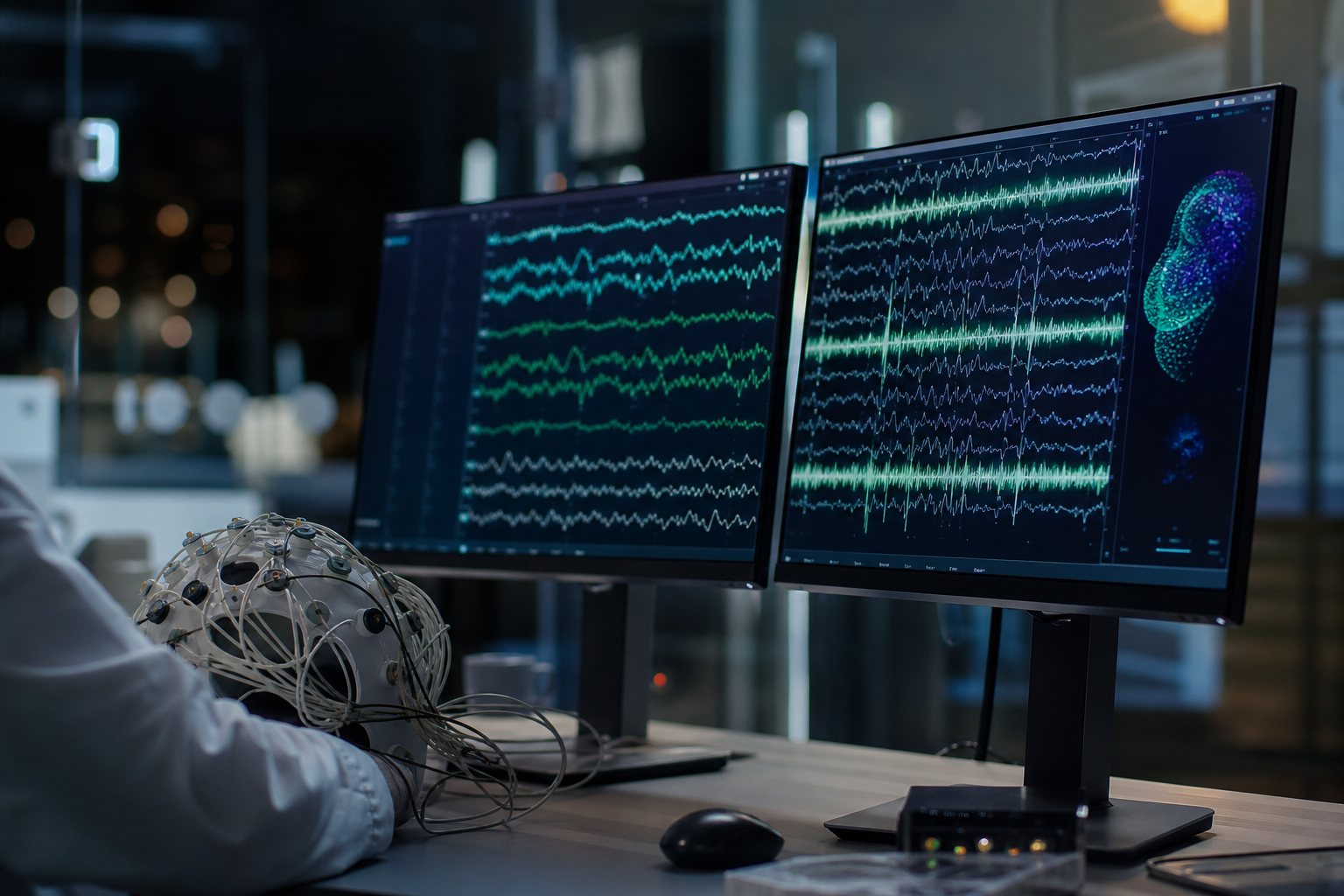
Neural oscillations are real: ensembles of neurons fire in periodic bands loosely labeled delta through gamma. EEG picks up mixtures of sensory, cognitive, motor, and noise components. Listening to structured sound predictably interacts with auditory cortices-but “syncing brains to BPM” headlines usually oversimplify. For the applied side-what dopamine and motor entrainment actually do during a workout-we go deeper in a companion piece.
The listening chain
Acoustic waves hit basilar motion → brainstem temporal encoding → auditory cortex feature extraction (pitch, onset, harmonic timbre). Motor planning areas join when you nod, drum fingers, predict downbeats or match stride. Motor imagery alone can light premotor circuitry without audible output.
What entrainment really means
Entrainment means coupled oscillators fall into phase alignment given periodic input-and evidence exists for auditory-motor coupling at beat frequencies in many contexts. That does not mean every listener’s γ-band EEG matches the kick drum like a tuner needle; skull conductivity, artefacts from muscle, and cognition all smear naive readings.
- Beat synchronization tasks (tap along) show tighter coupling versus passive listening-you are training an internal oscillator.
- Groove perception interacts with swing, micro-timing, harmonic rhythm-two tracks at identical BPM often “feel different” neurologically.
- Expertise biases DJs and percussionists outperform novices predicting syncopations; training matters as much as volume.
Where neuro-marketing overstretches
Claims such as definitive “brainwave playlists for productivity” extrapolate fragile lab paradigms. Still, evidence supports music as a behavioral lever-not a deterministic dial-when structuring attention, arousal or movement.
For athletes building tempo literacy
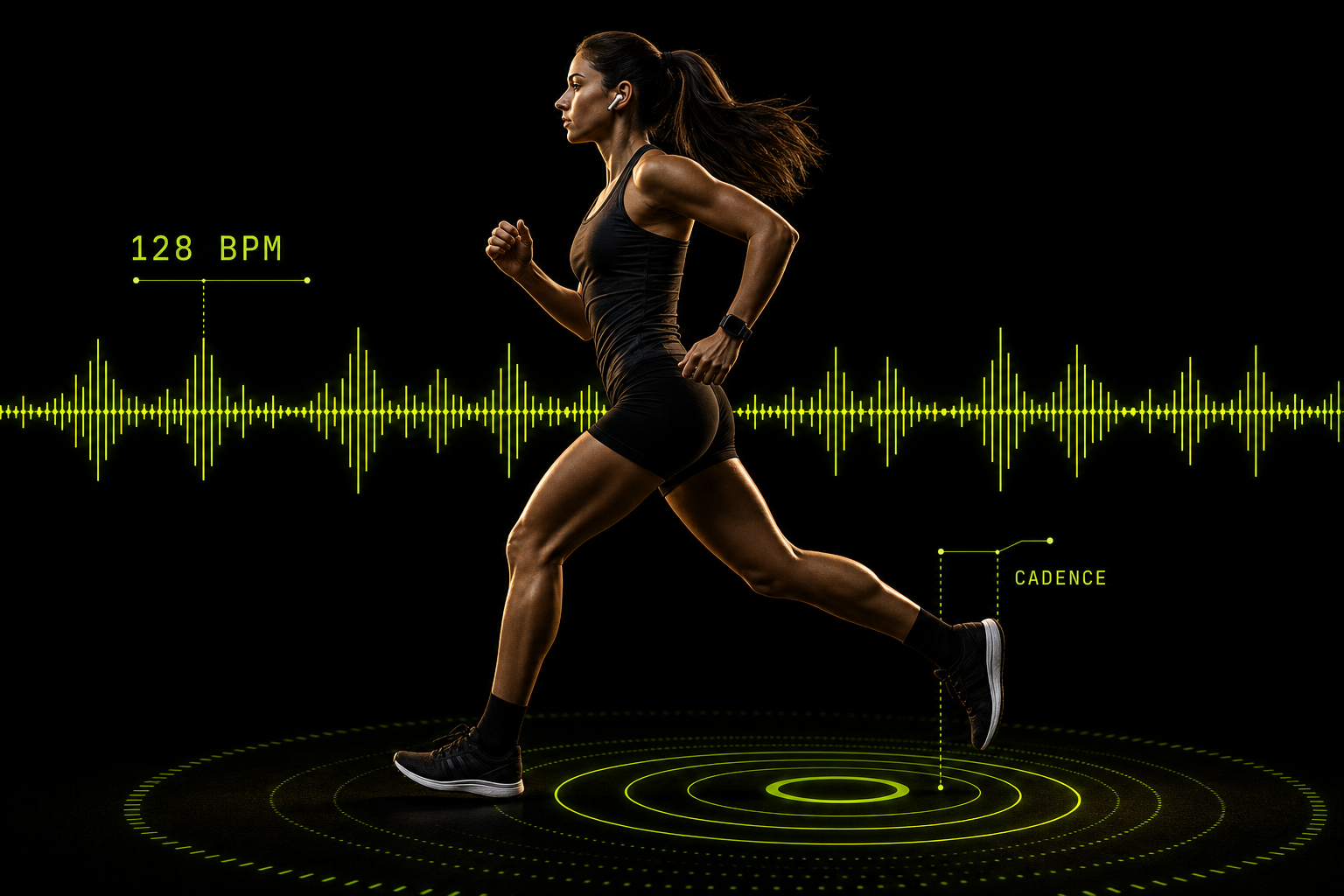
Practical experimentation: bracket sessions with BPM bins (±5% from target cadence) and log RPE-not just instantaneous pace. When wearables quantify HR slope and stability, juxtapose playlists that vary harmonic density versus identical BPM but sparse versus busy arrangements. You tune affective response, not just raw periodicity. For the practical payoff, see how tempo specifically changes your running pace and stress response.
Repbeats’ bias: treat BPM as physiology-first control input, audit loudness ladders for sustained sessions, surface transparent device ownership for biometrics powering decisions.