How Music Tempo Affects Your Workout
Jordan MillsMay 3, 2026 · 12 min read

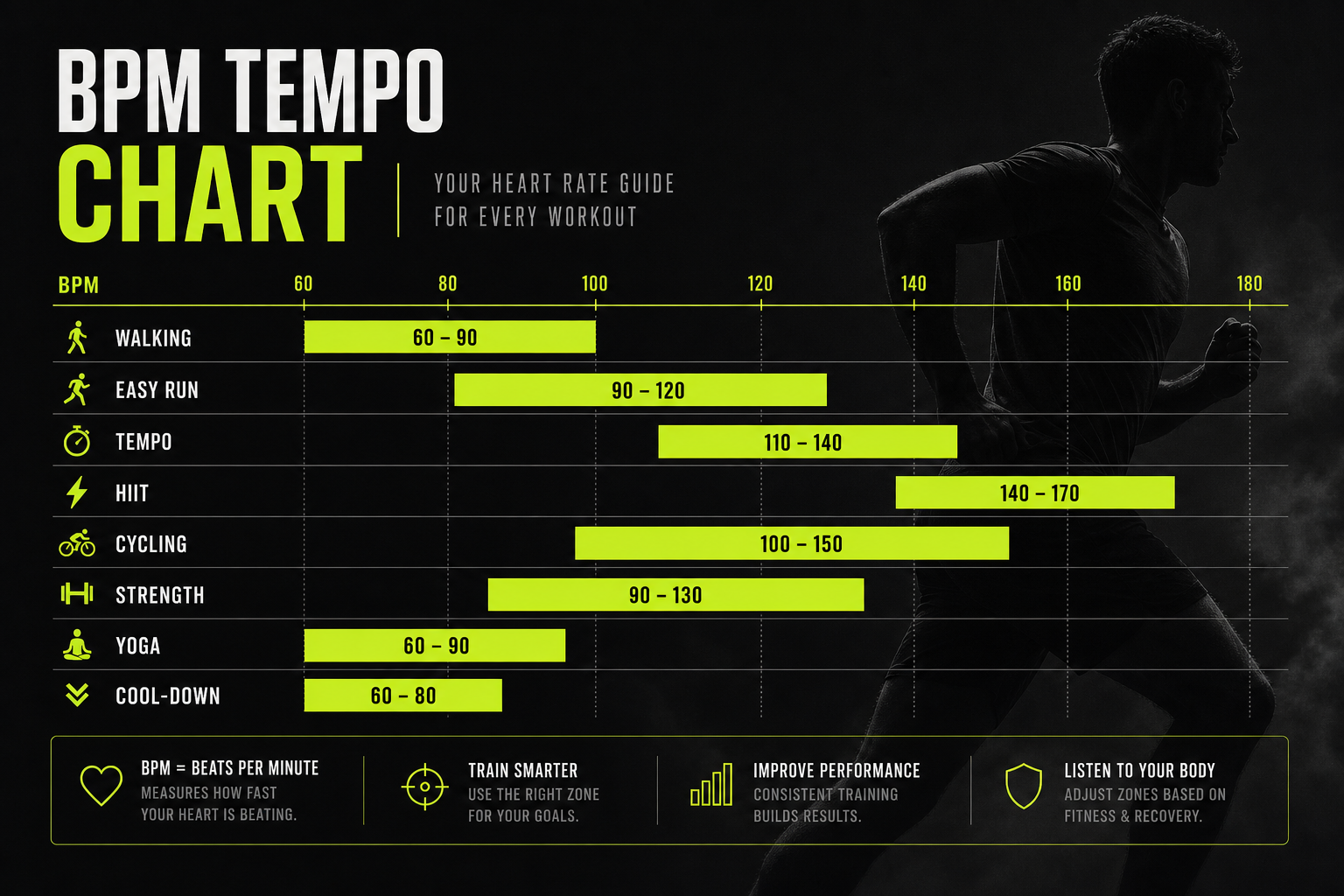
Movement is rhythmic long before anyone opens a playlist. Heartbeats, footsteps, pedal strokes-all periodic. Music sits in the middle of this loop because it stacks another rhythm on top: beats per minute that your brain can latch onto. Start with what BPM means for your workout if tempo is new, or how your brain processes music during exercise for the neuroscience layer.
This article is grounded in widely cited exercise physiology and neuroscience themes. It is not medical advice-always defer to clinicians for conditions, medications, hearing health, or pain.
Perceived effort and pacing
One of the most replicated findings is that appropriately chosen music lowers rating of perceived exertion (RPE) at matched workloads. Loudness and tempo both matter-but tempo aligns with gait and cadence, which is why a ballad suddenly feels unbearable halfway through a sprint.
- Tempo consonance. Drift too far below your stepping or pedaling cadence and it feels lethargic; too far above and it creates micro-rushes that skew pacing.
- Session arc. Warm-up, progressive overload, taper, cooldown-psychology differs in each corridor. Tracks that insist on climax during your recovery block fight the physiology you are chasing.
- Masking discomfort-within reason. Mild distraction reduces how much frontal attention burns on unpleasant signals-but it is not anesthesia. Train with and without cues so you recognize true limiters.
Autonomic arousal
Fast harmonic rhythm, bright spectra, louder passages-listeners often show shifts toward sympathetic arousal markers (heart-rate variability patterns, skin conductance) compared with quieter material. Coaches use this deliberately for block starts; recovery blocks usually want sympathetic load to step down. For the deeper neuroscience, see the neural entrainment research behind rhythm and focus.
Pain, pleasure, dopamine-not magic, but linkage
Music pleasurable to the listener recruits reward circuitry overlapping with motivational brain networks. Exercise already does similar work. Combining them ethically is about dosing: enough engagement to adhere, enough quiet to perceive real injury signals.
Cadence coupling and ergonomics
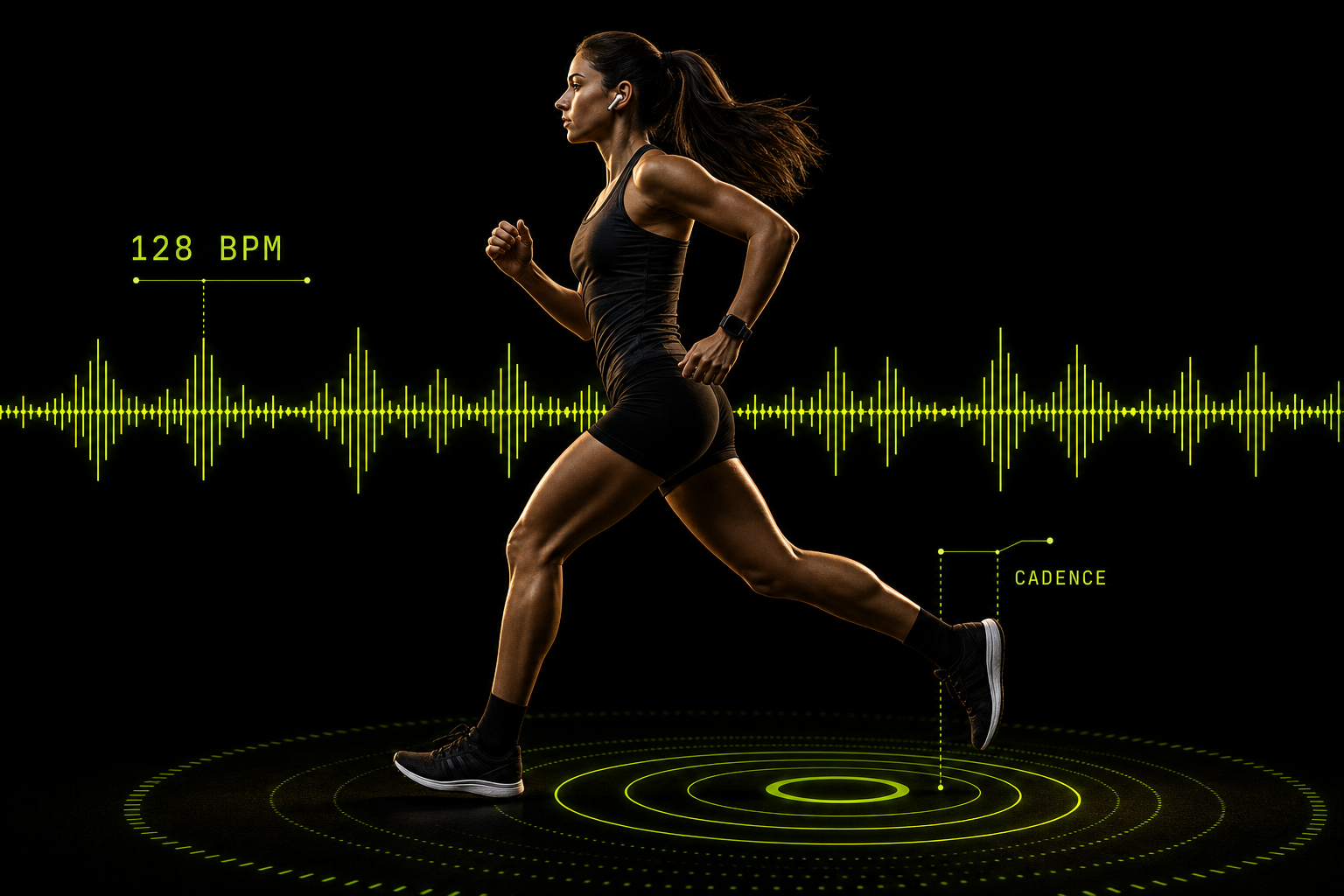
Cycling, rowing, treadmill, rope skipping-modes where cadence is visible as a numeric target-show coupling between beat and SPM/RPM across populations. Adaptive systems (including DJs that chase live vitals rather than sticking to Spotify’s guessed workout mix) minimize the paradox where BPM and HR diverge halfway through repeats.
For Repbeats listeners: consider building weeks where Mondays stay rhythm-forward and Saturdays leave headroom-your wearables flag drift before your ears confess it. It is also why a fixed playlist can't keep up the way adaptive BPM can.