Rest Days: Rhythm, Not a Magic Weekday
Jordan MillsMay 17, 2026 · 10 min read

Fitness improvements happen when stress + recovery coexist. Stress without recovery erodes tissues and mood; recovery without stimulus plateaus-or backslides-in capacity. Your mix of intensities shapes the math too-HIIT, LISS, and MISS have very different recovery demands. Searching for THE universal “best weekday” is less valuable than inspecting your sequencing window.
Weekly architecture beats calendar dogma
Block plans (mesocycles) distribute high neuromuscular cost sessions with ≥24-48h spacing for similar patterns depending on modality. If Tuesday and Wednesday both pound identical glycolytic pathways unsafely while weekend social plans stack steps late Sunday, metabolic fatigue bleeds-not because Sunday is “evil,” but sequencing ignored density.
- Cluster hard sessions early week only if weekends reliably deliver sleep-you cannot compress recovery arbitrarily.
- Shift load when life loads spike exams, launches, childcare rotations-recovery is logistical as much hormonal.
- Active recovery (zone-1 locomotion, skill drills) differs from neurological quiet-know which lever you pulling; on easy days, music's effect on perceived effort and recovery can make the session feel lighter.
Circadian overlays
Core temperature nudges maximal strength windows later day for many; morning fasted compliance helps adherence for others. Choosing “rest Mondays” arbitrarily may ignore your maximal cognitive fatigue curve-maybe Wednesday is objectively calmer socially even if folklore loves Sunday resets.
Signs your rest pattern is insufficient
- Morning resting HR creeping across two weeks unrelated to hydration or caffeine shifts.
- Rep quality decay at unchanged intended RPE (bar speed slows early in sets unexpectedly).
- Sleep latency rising or fragmentation without environmental changes.
- Joint irritability localizing-not delayed onset muscle soreness that migrates logically.
Easy-day music tempo
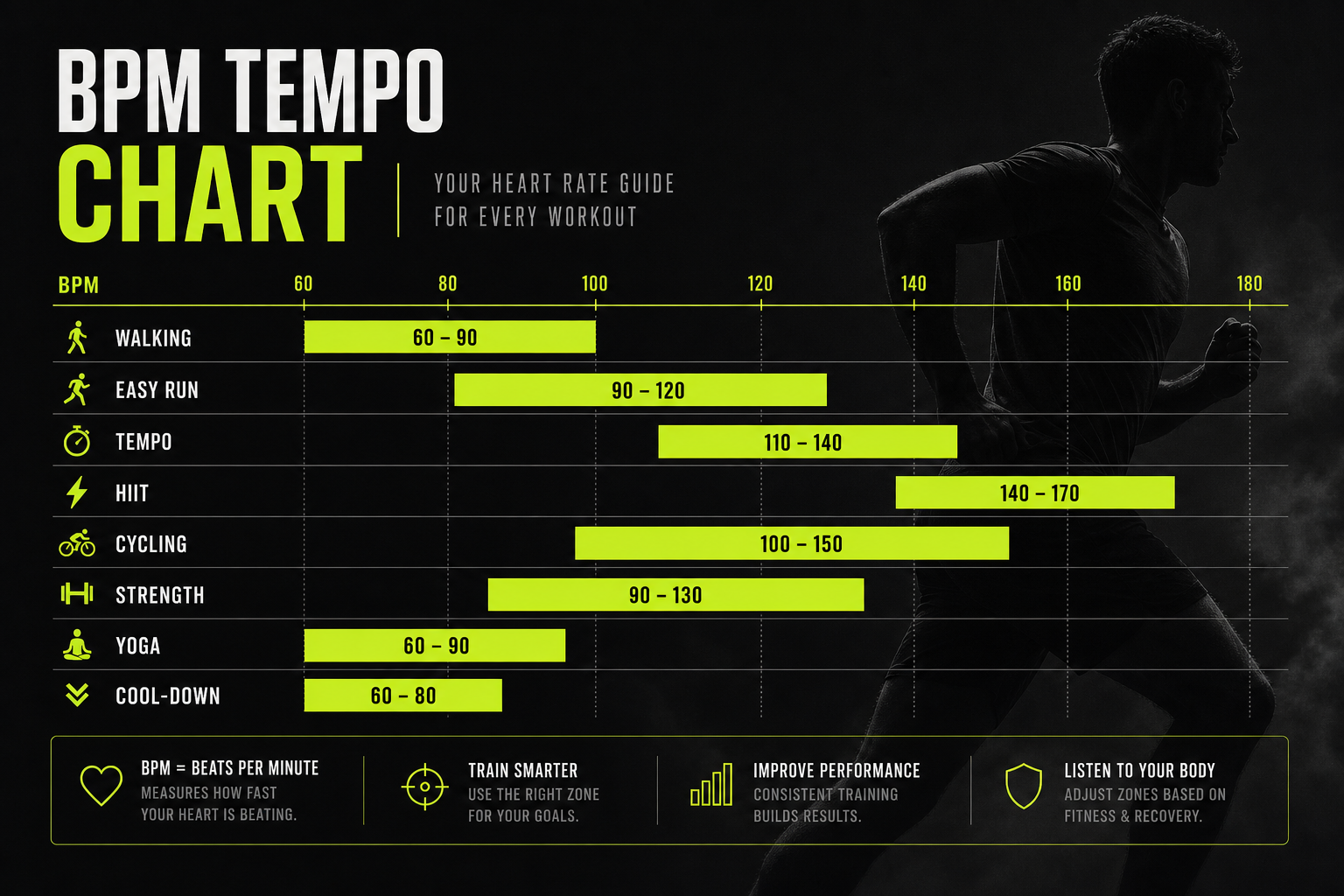
Recovery walks and light spins still benefit from a slower BPM band-usually around 100–120 beats per minute. If pacing by tempo is new, what BPM means for your workout is a practical starting point before you tune hard-day playlists.
Sample recovery weeks
- HIIT-heavy week: two hard interval days, one moderate flush, two full rest or sleep-priority days.
- MISS-balanced week: three moderate sessions, one short HIIT touch, active recovery on off days.
- LISS base week: four easy aerobic blocks, strength twice, one full rest day with no structured work.
A pragmatic mantra
Treat rest as programmable volume-much like intensity-rather than leftovers. Decide full cessation, density reduction, active flush, sleep extension priority consciously. Rotate these by stress rather than Gregorian accidents.