BPM Explained: Fitness Performance Through Tempo
Jordan MillsJuly 6, 2026 · 11 min read

BPM Explained: Fitness Performance Through Tempo
TL;DR:
- BPM measures both heart rate and musical tempo, directly influencing exercise effort and efficiency. Athletes benefit from syncing music BPM to heart rate zones, which helps reduce perceived exertion and improve performance. Personalized training and adaptive playlists further enhance workout effectiveness and enjoyment.
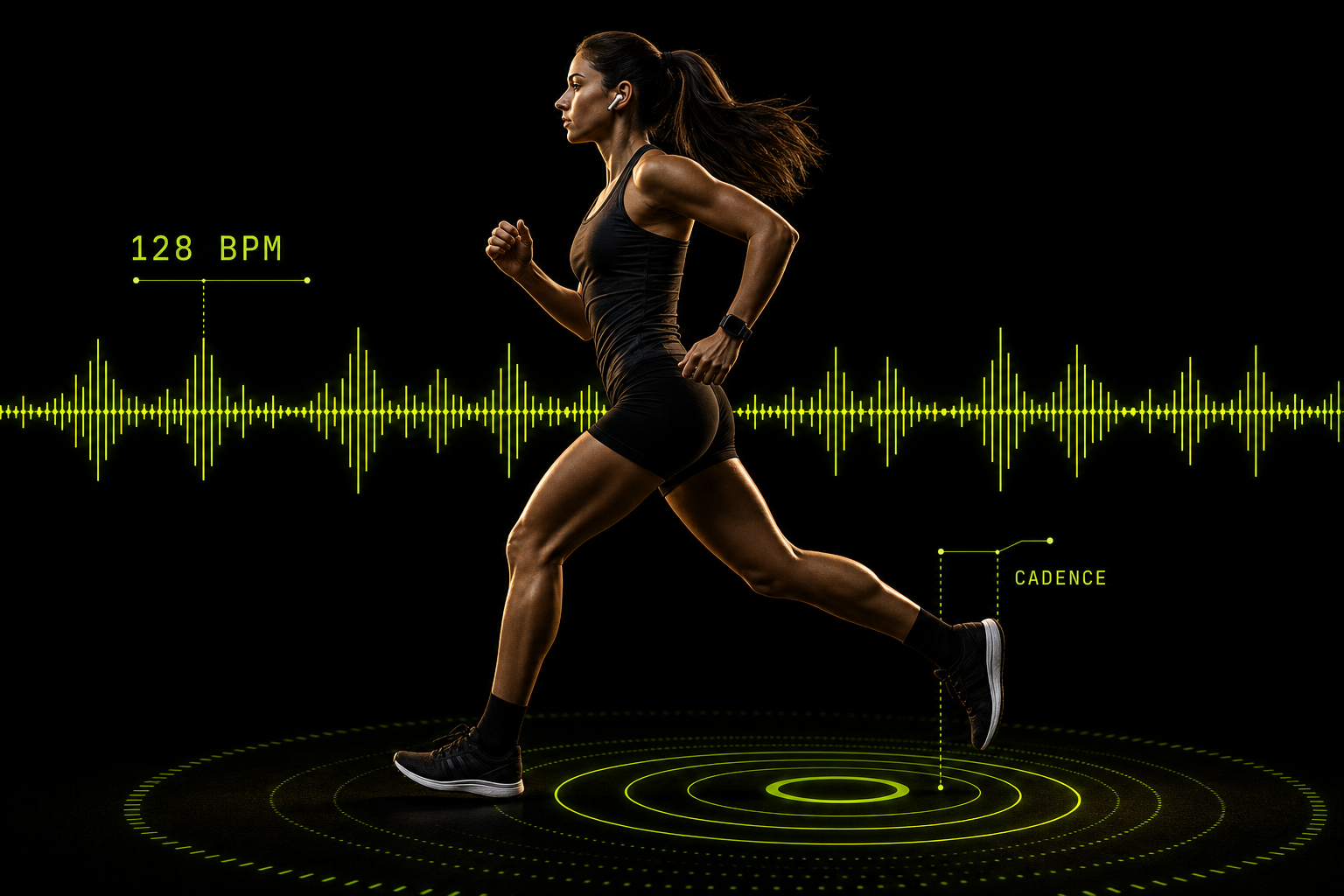
BPM, or beats per minute, is the standard measure of both musical tempo and heart rate, and it directly controls how hard your body works during exercise. Every serious athlete tracks it. Every effective playlist is built around it. Understanding BPM in fitness means understanding the single number that ties your music, your effort, and your results together. Whether you are running, lifting, or recovering, BPM governs the rhythm of your workout from start to finish.
What is BPM explained in fitness terms?
BPM in fitness refers to two connected measurements: the number of heartbeats per minute your body produces, and the number of musical beats per minute a track plays at. Both numbers matter because they interact. Your heart rate tells you how hard your body is working. The music’s tempo tells your nervous system how fast to move. When the two align, your workout becomes more efficient and more sustainable.
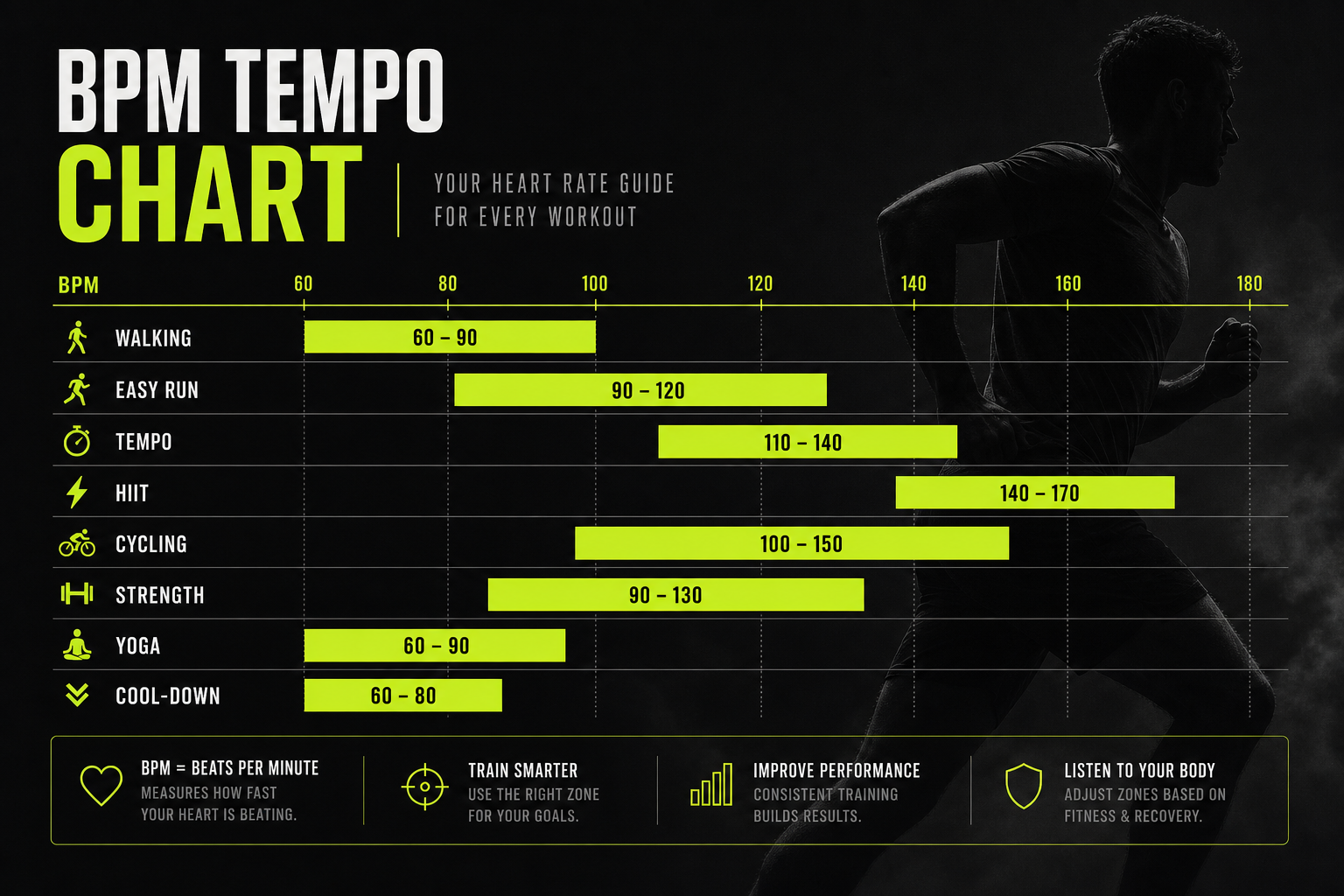
Fitness tempo guidelines specify BPM ranges tailored to each workout type. Yoga and meditation sit at 60–90 BPM. Strength training lands in the 125–140 BPM range. High-intensity interval training pushes 185 BPM and above. These ranges are not arbitrary. They reflect the pace at which your body naturally wants to move given the physiological demand of each activity.
The phrase “heart rate in fitness” is the industry’s standard term for tracking cardiovascular output during exercise. BPM is the unit that makes heart rate measurable and actionable. Without it, you are training by feel alone, which works until it doesn’t.
How do heart rate zones correspond to BPM?
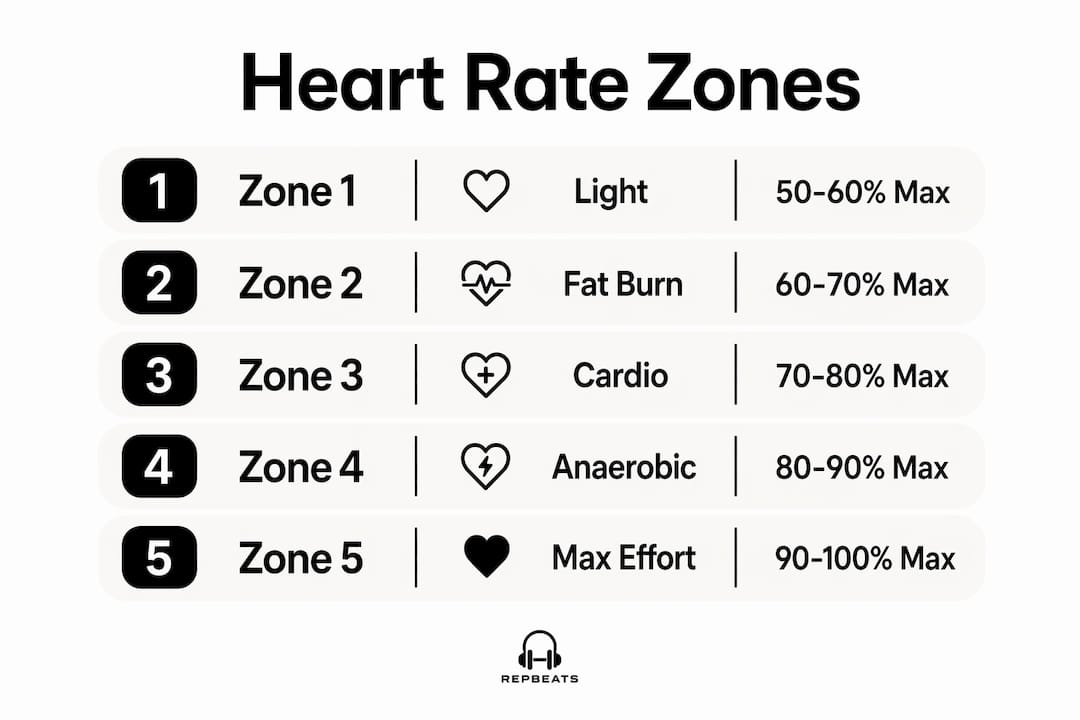
Heart rate zones are the five bands of cardiovascular effort that define how your body responds to exercise intensity. Each zone is expressed as a percentage of your maximum heart rate, and each produces a different physiological outcome.
- Zone 1 (50–60% max HR): Active recovery. Walking, gentle movement. Your body repairs and adapts here.
- Zone 2 (60–70% max HR): Aerobic base building. Easy running, light cycling. Fat is the primary fuel source.
- Zone 3 (70–80% max HR): Aerobic endurance. Moderate effort. Cardiovascular efficiency improves here.
- Zone 4 (80–90% max HR): Lactate threshold training. Hard effort. Your body learns to clear lactic acid faster.
- Zone 5 (90–100% max HR): Maximum output. Sprint intervals, peak power. Sustainable only in short bursts.
Recreational athletes should spend 80% of training in Zones 1 and 2 to build endurance without burning out. That finding runs counter to how most people actually train. Most athletes spend too much time in Zone 3, which is hard enough to feel productive but not targeted enough to drive real adaptation.
The fat-burning zone myth deserves a direct correction. Zone 2 burns a higher percentage of fat as fuel, but higher intensity zones burn more total calories. Fixating on fat-burn percentage at the expense of overall training variety limits your fitness progress. A balanced program across all five zones produces better results than camping in Zone 2 indefinitely.
Pro Tip: Pair a heart rate monitor with a wearable like Apple Watch or Fitbit to see your zone in real time. Knowing your zone mid-workout removes the guesswork from effort calibration.
How does music BPM affect workout performance?
Music tempo changes how your body perceives effort, and the mechanism is specific. Auditory-motor synchronization is the brain’s tendency to align physical movement to a rhythmic beat. Your footsteps, pedal strokes, and rep timing naturally fall into sync with the music playing around you. This happens largely without conscious effort.

The practical result is significant. When your movement syncs to a beat, your body uses oxygen more efficiently. You produce the same physical output with less perceived strain. That is not a motivational trick. It is a measurable reduction in the energy cost of movement.
Research on music tempo and cardiovascular regulation shows that fast-tempo music above 100 BPM stimulates the sympathetic nervous system, raising heart rate and priming the body for effort. Slow music below 80 BPM activates the parasympathetic system, which supports recovery and cool-down. The tempo of your playlist is not just background noise. It is a physiological input.
“Music tempo between 120 and 140 BPM reduces perceived exertion and improves efficiency for steady aerobic exercise. Subconscious alignment of footsteps or reps to BPM eases workload perception without changing the underlying physiological strain.”
Key practical ranges by workout type:
- Yoga and meditation: 60–90 BPM. Slow tempos support breath control and parasympathetic activation.
- Warm-up and cool-down: 90–110 BPM. Gradual tempo eases the body in and out of effort.
- Steady-state running: 120–140 BPM. The sweet spot for perceived exertion reduction during aerobic work.
- Strength training: 125–140 BPM. Drives focus and rep rhythm without overstimulating.
- HIIT and sprints: 150–185+ BPM. High tempo matches the explosive demand of maximum-effort intervals.
Music benefits are greater for recreational athletes than for elite performers at maximal effort. At near-maximum intensity, the body’s physiological signals override the auditory input. For most training sessions, though, the right BPM playlist is a genuine performance tool.
What BPM should you use for each workout type?
Matching BPM to your workout phase is as important as matching it to your activity. A single playlist set at 140 BPM does not serve a warm-up, a peak effort interval, and a cool-down equally well. Each phase has a different physiological goal, and the tempo should reflect that.
| Workout phase or type | Recommended BPM range | Example music genres |
|---|---|---|
| Warm-up | 90–110 BPM | Pop, light electronic, acoustic |
| Yoga / meditation | 60–90 BPM | Ambient, lo-fi, classical |
| Strength training | 125–140 BPM | Hip-hop, rock, mid-tempo electronic |
| Endurance running | 120–140 BPM | Pop, dance, indie |
| HIIT / sprints | 150–185+ BPM | EDM, drum and bass, fast hip-hop |
| Cool-down | 60–90 BPM | Ambient, acoustic, slow R&B |
The best BPM for every workout type follows a clear pattern: tempo rises with intensity and falls with recovery. Building a playlist that mirrors this arc across a session turns your music into a pacing tool, not just entertainment.
Genre choice matters beyond BPM alone. A track at 130 BPM with a heavy bass line and driving rhythm hits differently than a 130 BPM acoustic folk song. The energy of the music, not just its tempo, shapes your psychological state during a workout. Choose genres that match both the BPM and the emotional tone of the effort you are asking from your body.
Pro Tip: Build separate playlists for each workout phase rather than one long playlist. A dedicated warm-up playlist at 100 BPM and a peak-effort playlist at 155 BPM gives you precise control over your training arc.
How do you personalize BPM and heart rate zones?
The formula “220 minus age” gives a rough estimate of maximum heart rate, but standard formulas carry significant error margins. Two athletes of the same age can have maximum heart rates that differ by 20 beats or more. Using a population average to set your training zones means your Zone 4 might actually be someone else’s Zone 3.
Personalized threshold testing produces more accurate zones. Options include:
- Lactate threshold field test: Run or cycle at a hard but sustainable effort for 30 minutes. Your average heart rate in the final 20 minutes approximates your lactate threshold, which anchors Zone 4.
- Respiratory threshold test: The point at which you can no longer hold a conversation during exercise marks the aerobic threshold, which defines the Zone 2 ceiling.
- Ramp test: Progressively increase effort every minute until failure. The heart rate at which you drop out estimates your maximum.
Music preference adds another layer of personalization. Athletes perform better with favorite songs even when the BPM is not perfectly matched to their cadence. The psychological engagement from a song you love overrides minor tempo mismatches. Strict BPM adherence matters most for steady-state cardio. For strength training or HIIT, emotional connection to the music often drives more output than tempo precision.
The half-time sync technique solves the problem of finding music at very high or very low BPM. A runner with a cadence of 170 steps per minute can match to an 85 BPM track by syncing one foot strike to every other beat. This approach broadens music selection considerably and works well for athletes who find their preferred genres cluster outside the ideal BPM range for their activity.
Key Takeaways
Matching music BPM to heart rate zones is the most direct way to control workout intensity, reduce perceived exertion, and sustain performance across every training phase.
| Point | Details |
|---|---|
| BPM governs both music and heart rate | Beats per minute measures musical tempo and cardiovascular output, and both affect exercise intensity. |
| Five heart rate zones guide training | Zones 1–5 range from 50% to 100% of max heart rate, each producing distinct physiological adaptations. |
| Music at 120–140 BPM cuts perceived effort | Fast-tempo music syncs movement to rhythm, reducing the energy cost of steady aerobic exercise. |
| Personalize zones beyond formulas | Field tests like lactate threshold runs produce more accurate training zones than the 220-minus-age estimate. |
| Half-time sync expands music options | Matching cadence to half the song’s BPM lets athletes use a wider range of genres without losing rhythm benefits. |
The part most athletes skip entirely
I have worked with BPM-synced training long enough to notice a consistent pattern. Athletes obsess over the science, buy the wearables, build the playlists, and then ignore the most important variable: how they actually feel on a given day. BPM data is a guide, not a command.
The biggest mistake I see is treating heart rate zones as rigid boxes. Zone 2 on a well-rested Tuesday looks different from Zone 2 after a poor night of sleep. Your heart rate on a hot day runs higher than on a cool one. The number on your wrist is real, but it needs context to be useful.
The second mistake is chasing perfect BPM matching at the expense of enjoying the workout. Mental engagement from music preference drives more performance than strict tempo adherence for most athletes. If a song at 118 BPM makes you feel unstoppable, play it during your 125 BPM strength session. The motivational lift is worth the two-beat gap.
My honest recommendation: use BPM as a starting framework, then let your body and your preferences refine it over time. The athletes who train consistently for years are the ones who find the intersection of data and enjoyment. Pure data without enjoyment leads to burnout. Pure enjoyment without data leads to stagnation. The goal is both.
— Jordan Mills
How Repbeats puts BPM science to work for you
Knowing the right BPM range for your workout is one thing. Having your music automatically adjust to match it is another.
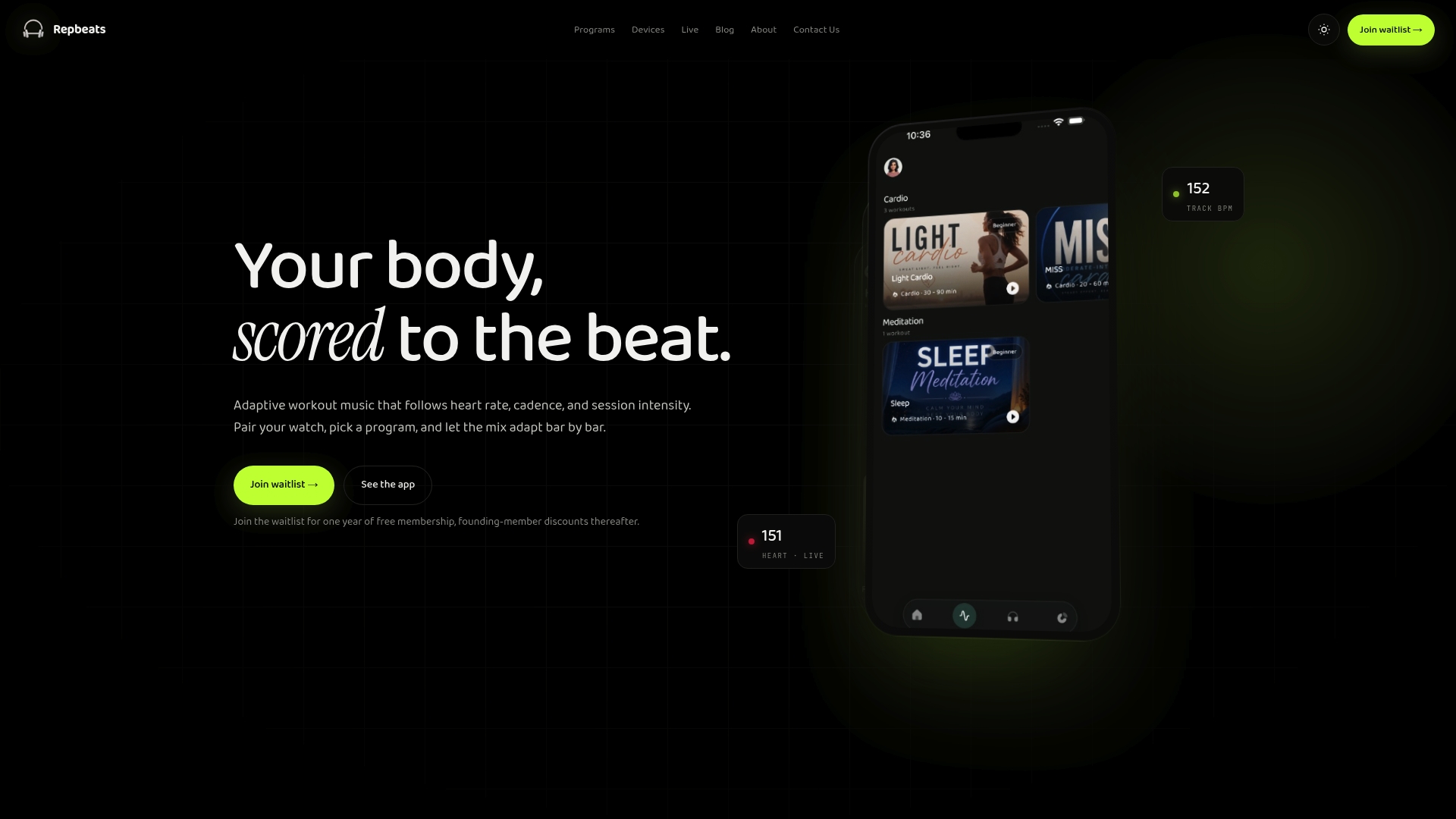
Repbeats is an adaptive workout music app that reads live data from Apple Watch and Fitbit and updates your music’s BPM every bar to match your heart rate, cadence, and session intensity. Its auto-DJ technology means your playlist shifts from warm-up tempo to peak-effort tempo without you touching your phone. Whether you are in Zone 2 on a long run or pushing Zone 5 in a sprint interval, the adaptive BPM playlists from Repbeats keep your soundtrack locked to your effort. Athletes who want to apply everything covered here without manually managing tempo can join the Repbeats waitlist and be among the first to train with music that moves with them.
FAQ
What does BPM mean in a fitness context?
BPM stands for beats per minute and measures both heart rate and musical tempo. In fitness, it quantifies exercise intensity and helps match music rhythm to workout effort.
What BPM is best for running?
A BPM range of 120–140 is most effective for steady-state running. This range reduces perceived exertion through auditory-motor synchronization without overstimulating the nervous system.
How do I calculate my heart rate zones?
Estimate your maximum heart rate with 220 minus your age, then multiply by each zone’s percentage range. For more accuracy, use a lactate threshold field test to anchor your zones to your actual physiology.
Does music BPM actually improve workout performance?
Yes. Fast-tempo music above 100 BPM stimulates the sympathetic nervous system, raises heart rate, and reduces perceived effort during aerobic exercise. Benefits are strongest for recreational athletes at moderate intensities.
What is the half-time sync technique?
Half-time sync means matching your movement cadence to half the song’s BPM. A runner at 170 steps per minute syncs to an 85 BPM track by landing one foot on every other beat, which expands usable music selection significantly.