Heart Rate Calming Soundtracks: 10 Best Examples
Jordan MillsJuly 4, 2026 · 11 min read
Heart Rate Calming Soundtracks: 10 Best Examples
TL;DR:
- Heart rate calming soundtracks with tempos near 60 beats per minute promote relaxation by synchronizing the heart rate through neurological entrainment. These tracks, including ambient music, adagios, and singing bowls, effectively lower heart rate when played for at least 15 minutes with minimal lyrics and seamless looping. Consistent use of such soundtracks can enhance parasympathetic activity, improve heart rate variability, and support stress reduction during meditation or relaxation practices.
Heart rate calming soundtracks are music tracks designed with tempos near 60 beats per minute and minimalistic instrumentation to reduce heart rate and promote deep relaxation through neurological entrainment. The term “entrainment” describes how your heartbeat synchronizes to an external rhythm, pulling your cardiovascular system toward a slower, steadier pace. Research confirms that music near 60 BPM can reduce anxiety by 65% when the tempo gradually slows from 60 to 50 BPM over eight minutes. That physiological response is not a coincidence. It is a predictable neurological mechanism that specific soundtracks are built to trigger, making the right examples of heart rate calming soundtracks one of the most accessible relaxation tools available.
1. Examples of heart rate calming soundtracks by genre
The most effective calming soundtracks share three traits: slow tempo, minimal or no lyrics, and steady acoustic patterns. Knowing which genres deliver those traits consistently saves you from trial and error.
Ambient music
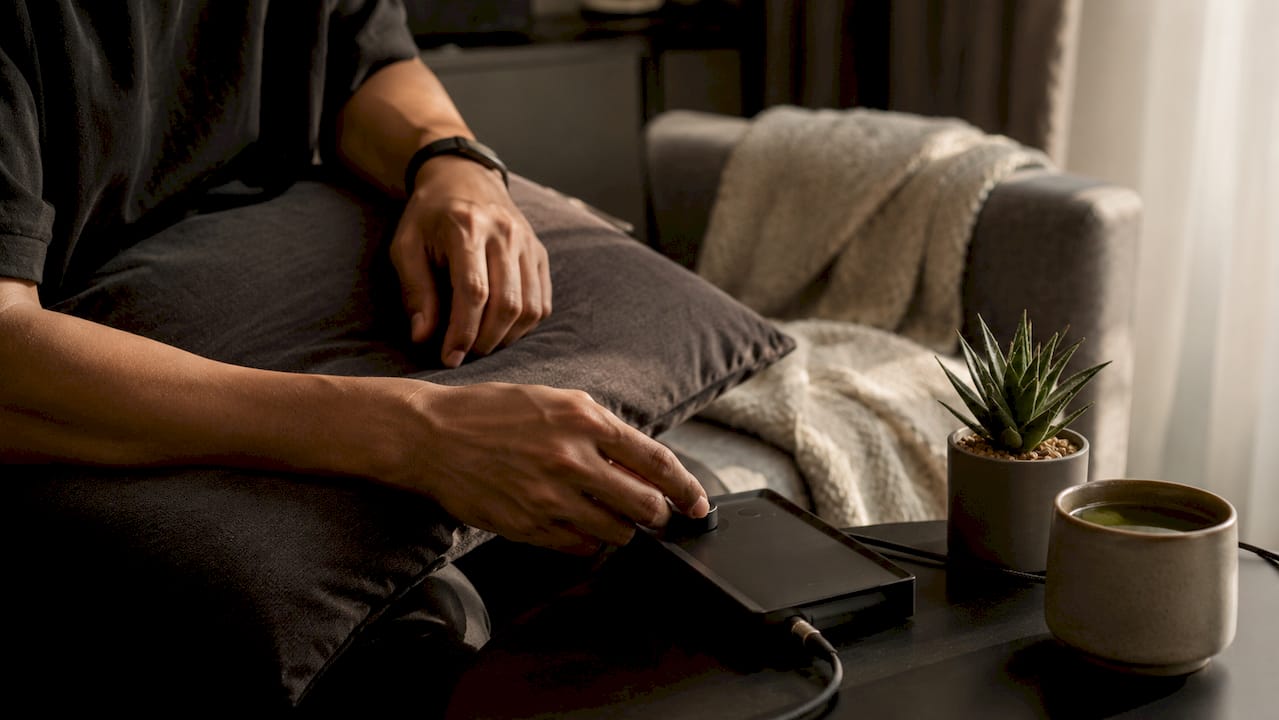
Ambient tracks use layered, slowly evolving textures with no strong rhythmic pulse. The genre’s defining feature is its refusal to demand attention. Your nervous system can settle into the sound without tracking melody or lyrics.
Classical adagios
Selecting “classical music” broadly is too vague to produce reliable results. Specific slow movements like adagios deliver the consistent, slow tempo that actually lowers heart rate. Beethoven’s “Moonlight Sonata” (first movement) and Barber’s “Adagio for Strings” are two widely cited examples.
Binaural beats
Binaural beats use two slightly different frequencies played in each ear, creating a perceived third tone that guides brainwave activity. Tracks in the Alpha range (8–14 Hz) are the most practical choice for relaxation and light meditation.
Tibetan singing bowls
Singing bowl therapy boosts heart rate variability and promotes parasympathetic nervous system activation beyond what standard rest or silence achieves. A 30-minute session is the research-supported minimum for measurable cardiovascular benefit.
Nature sounds
Rain, ocean waves, and forest recordings stimulate the parasympathetic nervous system and reduce the “fight or flight” stress response. Nature sounds work well layered under slow instrumental music, reinforcing the calming signal without adding cognitive load.
Marconi Union’s “Weightless”
This track is the most studied example in the field. Its tempo slows progressively from 60 to 50 BPM, its bass tones are tuned to 432 Hz, and it contains no repeating melodic phrase that the brain can anticipate and “complete.” That design prevents mental engagement and keeps the listener in a passive, receptive state.
Pro Tip: Build a playlist that starts at 65 BPM and ends at 50 BPM. The gradual descent mirrors the tempo structure of “Weightless” and gives your heart rate time to follow the music down.
2. How calming soundtracks physiologically reduce heart rate
Music acts as a direct physiological input, not just an emotional one. It engages the autonomic nervous system to regulate heart rate in measurable, repeatable ways.
Entrainment: the core mechanism
Entrainment is the process by which a biological rhythm locks onto an external periodic signal. When you listen to music near 60 BPM, your heart rate is nudged toward that tempo because 60 BPM closely mirrors a healthy resting heart rate. Heart rate entrainment takes 5–7 minutes to initiate and requires a session longer than 15 minutes for sustained physiological change. A 10-minute session simply does not give the nervous system enough time to fully shift.
Brainwave changes
Slow instrumental music with natural acoustic patterns shifts brainwaves from Beta (14–30 Hz) to Alpha (8–14 Hz) and then Theta (4–8 Hz). Beta is the state of active thinking and alertness. Alpha is calm focus. Theta is the edge of sleep, where deep relaxation and creative insight occur. This shift explains why calming soundtracks feel effective even when you are not consciously trying to relax.
Parasympathetic activation
Slow tempos favor parasympathetic activity, the “rest and digest” branch of the autonomic nervous system. Fast rhythms do the opposite, triggering the “fight or flight” response. This is why the same person who feels energized by a 140 BPM running track will feel noticeably calmer within minutes of switching to a 60 BPM ambient piece.
Heart rate variability (HRV)
HRV measures the variation in time between heartbeats. Higher HRV indicates a more adaptable, healthier cardiovascular system. Tibetan singing bowl sessions lasting 30 minutes increase HRV indices more effectively than standard relaxation methods. That result places sound therapy alongside progressive muscle relaxation as a clinically meaningful intervention.
| Mechanism | Effect | Minimum session |
|---|---|---|
| Entrainment | Heart rate follows music tempo | 15 minutes |
| Brainwave shift | Beta to Alpha/Theta states | 10–15 minutes |
| Parasympathetic activation | Lowers heart rate and cortisol | 15–30 minutes |
| HRV improvement | Better cardiovascular adaptability | 30 minutes |
Pro Tip: Pair your calming soundtrack with slow diaphragmatic breathing at a 4-count inhale and 6-count exhale. The combined effect on parasympathetic activation is stronger than either technique alone.
3. How to identify an effective calming soundtrack
Not every slow, quiet track qualifies as a heart rate calming soundtrack. Specific structural features separate tracks that produce physiological results from those that simply feel pleasant.
- Tempo in the 60–80 BPM range. The closer to 60 BPM, the stronger the entrainment signal. Tracks that gradually slow from 60 to 50 BPM, like “Weightless,” produce the most consistent results. You can check BPM ranges for relaxation to confirm a track’s tempo before committing to a session.
- No complex or repetitive lyrics. Lyrics engage the brain’s language centers, pulling cognitive resources away from the relaxation response. Even familiar, comforting lyrics reduce the depth of physiological calming.
- Minimal dynamic changes. Sudden volume spikes or dramatic shifts in instrumentation trigger an alert response. The track should feel like a steady, predictable current rather than a series of events.
- Seamless looping. Gaps in audio loops create brief startle responses that break relaxation and increase alertness. Any track you plan to loop must transition without an audible gap.
- Track length of 15 minutes or more. Short tracks force you to restart or skip, interrupting the entrainment process. A single continuous track of 20–30 minutes is the most practical format for a full session.
- Natural acoustic patterns. Tracks with organic “1/f fluctuations,” the subtle, irregular variations found in nature sounds and live acoustic instruments, sustain relaxation more effectively than purely synthesized tones.
Pro Tip: Before a meditation or yoga session, test a new track for five minutes with your eyes closed. If you find yourself mentally tracking the melody or waiting for the next phrase, the track is too engaging. Switch to something with less melodic movement.
4. How to use calming soundtracks during meditation, yoga, or anxiety relief
- Set a minimum session length of 20 minutes. Entrainment takes 5–7 minutes to begin and needs sustained input to produce lasting change. A 20-minute session gives you roughly 13 minutes of full physiological effect after the initial sync period.
- Choose a distraction-free environment. Headphones or quality speakers block ambient noise and deliver a richer sound field. Noise-canceling headphones are the most effective option for urban environments where background noise competes with the soundtrack.
- Start your session before you feel peak anxiety. Calming soundtracks work best as a preventive tool, not a crisis intervention. Beginning a session when stress is moderate allows entrainment to work before the nervous system is fully activated.
- Pair the soundtrack with a breathing pattern. Slow, rhythmic breathing at a pace that matches the music tempo reinforces the entrainment signal. A breath cycle of roughly 10 seconds (4-count inhale, 6-count exhale) aligns naturally with a 60 BPM track.
- Avoid mentally engaging with the music. Treat the soundtrack as background, not foreground. If you catch yourself analyzing the melody or waiting for a specific sound, gently redirect attention to your breath or body sensations. The music should be present but not the focus.
- Build a personal playlist with gradual tempo descent. Start with tracks at 65–70 BPM and end with tracks at 50–55 BPM. This mirrors the structure of scientifically validated examples and guides your heart rate down progressively. Understanding how music tempo affects the body helps you make smarter playlist decisions.
- Rotate genres to prevent habituation. The brain adapts to repeated stimuli. Alternating between ambient, classical adagios, and nature sounds keeps the relaxation response fresh across multiple sessions per week.
Key takeaways
The most effective heart rate calming soundtracks use a tempo near 60 BPM, contain no lyrics, and run for at least 15 minutes to allow full physiological entrainment.
| Point | Details |
|---|---|
| Optimal tempo is 60 BPM | Tracks near 60 BPM mirror resting heart rate and trigger entrainment most reliably. |
| Sessions need 15+ minutes | Entrainment takes 5–7 minutes to start; shorter sessions produce no sustained effect. |
| Lyrics reduce effectiveness | Vocal tracks engage language centers and weaken the physiological relaxation response. |
| Seamless loops are critical | Audio gaps create startle responses that break relaxation and raise alertness. |
| Genre specificity matters | Adagios, ambient tracks, and singing bowls outperform generic “classical” or “relaxing” playlists. |
What I’ve learned from years of listening to the science
By Jordan Mills
The most common mistake people make with calming soundtracks is treating them like background noise they can swap in and out freely. They queue up a slow playlist, check it off as “done,” and wonder why they still feel tense after 10 minutes. Entrainment is not instant. It is a biological process with a timeline, and most people give up before it kicks in.
The second mistake is trusting genre labels over structure. “Classical music” is not a calming soundtrack. Beethoven’s “Fifth Symphony” will raise your heart rate. A Barber adagio will lower it. The difference is tempo and dynamic consistency, not the composer’s name on the label.
What I find genuinely surprising is how much individual variation exists in entrainment response. Some people sync to 60 BPM within five minutes. Others need closer to 10. The research on brainwave shifts during music suggests this variation tracks with baseline stress levels and prior meditation experience. Beginners often need longer sessions to achieve the same depth of relaxation as practiced meditators.
My honest recommendation: commit to a 25-minute session with a single, well-chosen track before deciding whether a soundtrack works for you. One attempt at 12 minutes tells you almost nothing. The physiological effects are real, but they require patience to access.
— Jordan Mills
Repbeats and adaptive BPM playlists for relaxation
Repbeats builds adaptive playlists that adjust tempo in real time based on your heart rate data from Apple Watch or Fitbit. For relaxation sessions, that means the music follows your physiology rather than forcing you to find a track that happens to match where your body already is.
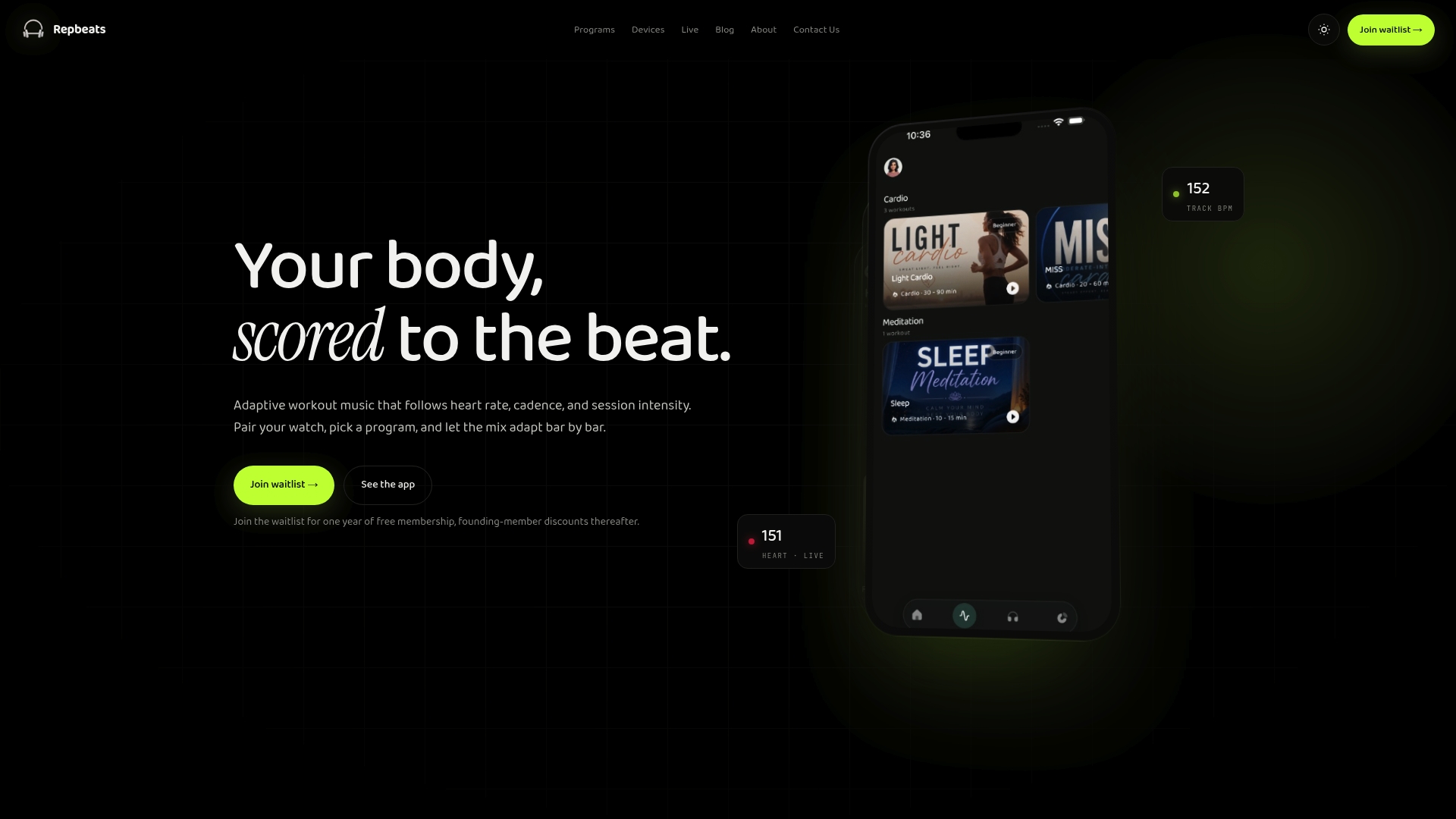
The app’s auto-DJ technology updates BPM every bar, so a session that starts at 70 BPM can drift down to 55 BPM as your heart rate settles, without any manual adjustment. That mirrors the tempo descent structure found in the most effective calming soundtracks, applied dynamically to your actual physiological state. For meditation, yoga, or anxiety relief, Repbeats offers adaptive BPM playlists that remove the guesswork from soundtrack selection and keep your music aligned with your body throughout the session.
FAQ
What tempo is best for lowering heart rate?
Music near 60 BPM is the most effective tempo for heart rate reduction. Tracks that gradually slow from 60 to 50 BPM over eight minutes produce the strongest calming response through entrainment.
How long should I listen to calming music for it to work?
Sessions shorter than 15 minutes are insufficient for sustained heart rate reduction. Entrainment takes 5–7 minutes to initiate, so a minimum of 20 minutes gives you meaningful physiological benefit.
Do lyrics in calming music reduce its effectiveness?
Yes. Lyrics engage the brain’s language processing centers, which competes with the relaxation response. Instrumental tracks consistently produce deeper physiological calming than vocal tracks at the same tempo.
Are Tibetan singing bowls effective for heart rate calming?
Tibetan singing bowl sessions lasting 30 minutes increase heart rate variability and promote parasympathetic activation more effectively than standard rest or silence. The acoustic and vibratory stimulation directly influences cardiovascular function.
Does audio loop quality affect relaxation?
Gaps in audio loops create brief startle responses that break relaxation states and increase alertness. Any track used for an extended session must transition without an audible gap to maintain the entrainment effect.