How Music Reduces Running Fatigue: A Science Guide
Jordan MillsJuly 2, 2026 · 11 min read

How Music Reduces Running Fatigue: A Science Guide
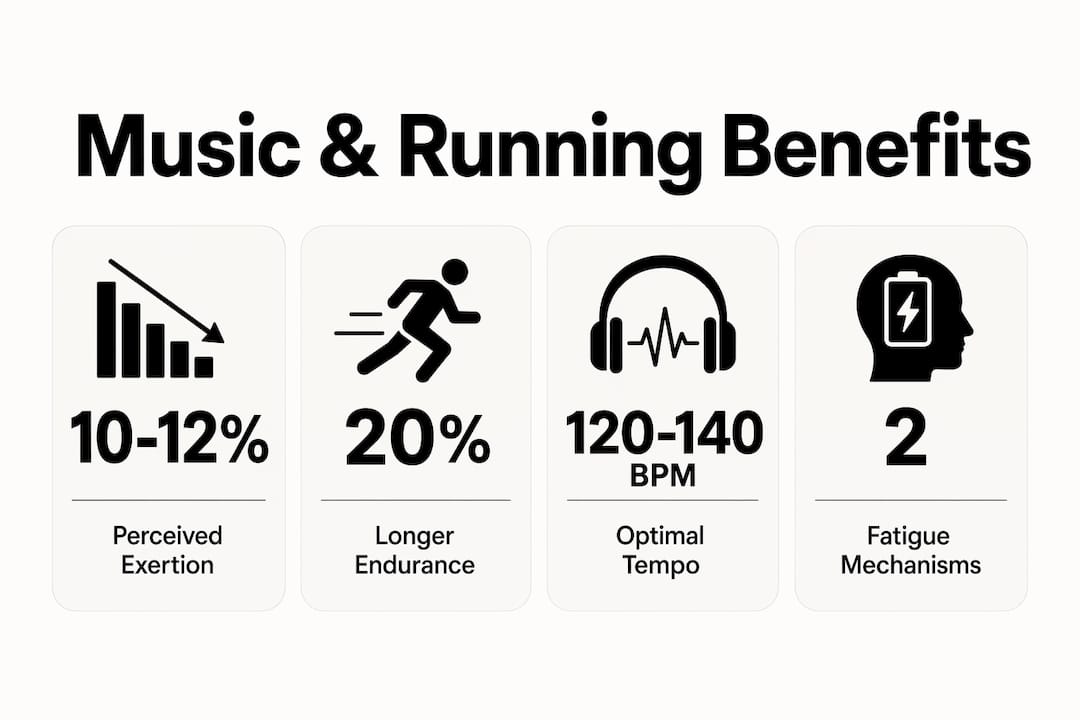
Music reduces running fatigue by lowering your perceived effort, not by changing your physical output. Your heart rate, oxygen consumption, and lactate levels stay the same. What changes is how hard your brain thinks you’re working. Research confirms that music cuts perceived exertion by 10–12% during submaximal exercise, a finding drawn from meta-analyses covering 139 studies. That gap between actual strain and felt strain is exactly what lets you run longer, push through late miles, and finish strong. Understanding how music reduces running fatigue gives you a real tool, not just a motivational trick.
What does the science say about music and running performance?
The strongest recent evidence comes from a 2026 University of Jyväskylä study. Participants who cycled with self-selected music lasted nearly 20% longer than those who rode in silence. Specifically, the music group averaged 35.6 minutes versus 29.8 minutes for the silent group, with no increase in reported exhaustion. That result matters because the extra endurance came without extra perceived cost.
Meta-analyses back this up at scale. Across 139 studies, music consistently reduces ratings of perceived exertion by 10–12% during moderate-intensity exercise. That reduction is reliable enough to be called an ergogenic effect, meaning music genuinely aids physical performance the same way a legal supplement might.
Two mechanisms drive these results: rhythm entrainment and attentional management. Rhythm entrainment means your body naturally synchronizes its movement to a beat, which can improve movement economy. Attentional management means music competes with fatigue signals for your brain’s processing bandwidth, crowding out the discomfort before it reaches full awareness.

Key research findings at a glance
| Metric | With music | Without music |
|---|---|---|
| Cycling endurance (minutes) | 35.6 | 29.8 |
| Perceived exertion reduction | 10–12% | Baseline |
| Brain network efficiency | Improved post-exercise | Standard recovery |
| Fatigue signal perception | Reduced via dissociation | Unmodulated |
Pro Tip: Self-selected music, meaning tracks you personally enjoy, outperforms researcher-assigned playlists in every endurance study. Your emotional connection to a song amplifies the attentional effect.
How does tempo and lyrical content affect fatigue perception?
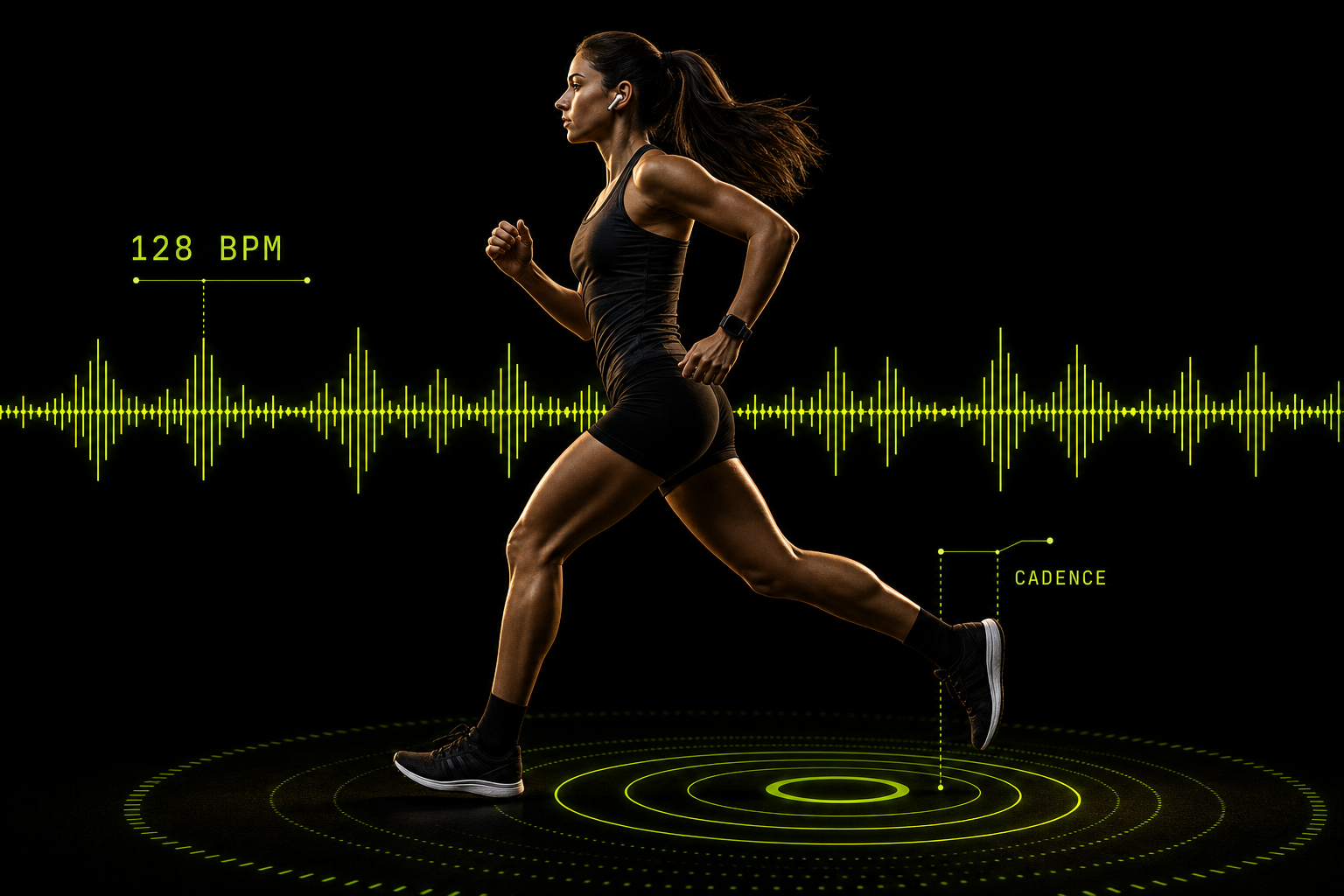
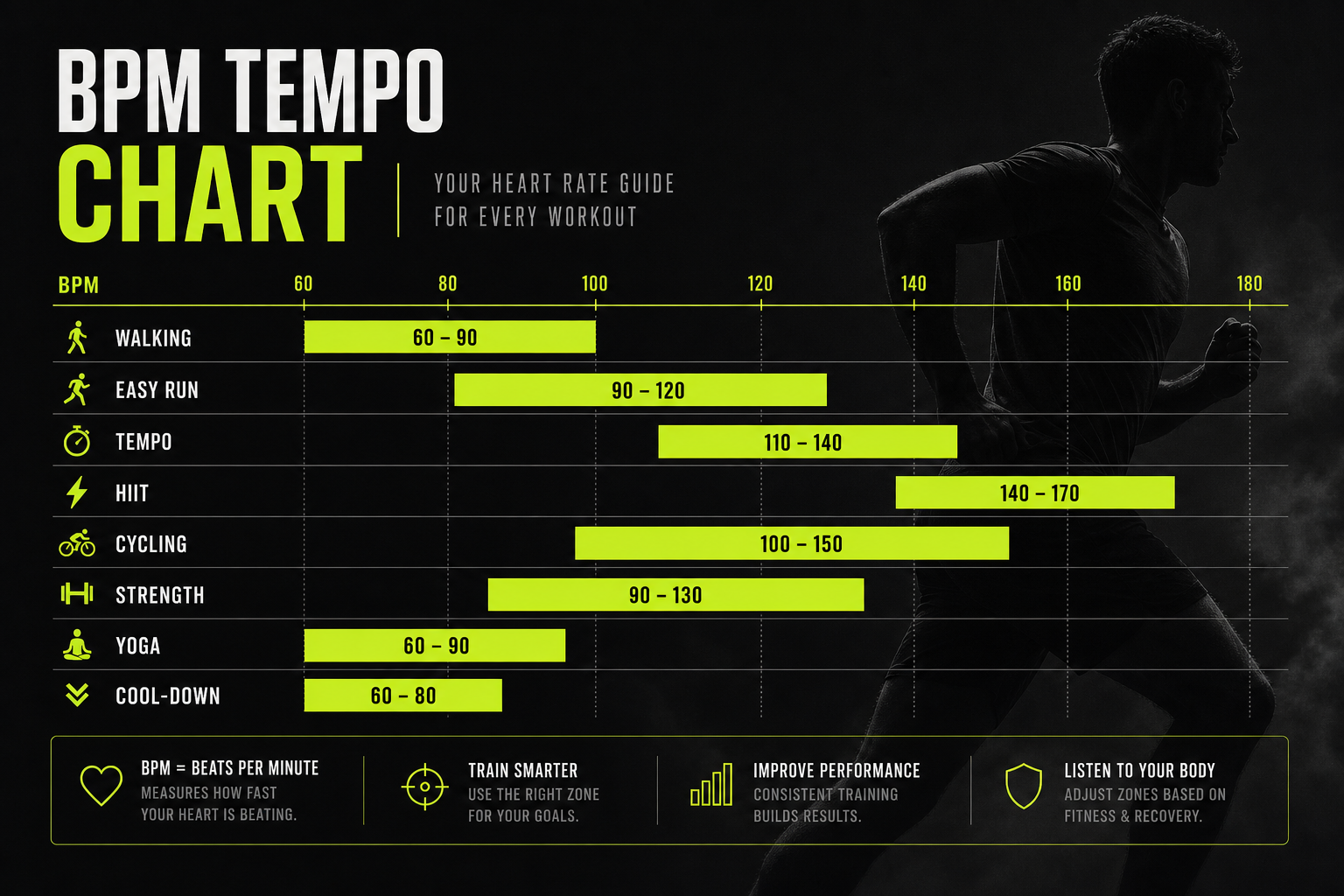
Tempo is the most studied variable in music and running performance research. The optimal BPM range for easy to moderate runs sits between 120 and 140 beats per minute. Music in that range matches most runners’ natural cadence, which triggers auditory-motor synchronization. When your footstrike aligns with the beat, your movement becomes more rhythmically consistent and slightly more efficient.
Lyrical content adds a separate layer. A 2026 study found that motivational lyrics delay fatigue beyond what rhythm alone achieves. The distraction effect of emotionally engaging words occupies cognitive resources that would otherwise process pain and effort signals. This means a song with a driving beat and motivational lyrics outperforms an instrumental track at the same BPM.
Tempo vs. lyrical content: how each reduces fatigue
| Factor | Primary mechanism | Best use case |
|---|---|---|
| Tempo (120–140 BPM) | Rhythm entrainment, cadence sync | Easy runs, warmups, steady-state pace |
| Motivational lyrics | Distraction, attentional override | Late miles, mental fatigue phases |
| Combined (tempo + lyrics) | Dual-channel fatigue suppression | Long runs, race-day playlists |
Key practical points for runners building playlists:
-
Match BPM to your target cadence, not your current mood.
-
Use high-energy lyrics in miles 4 through 6 of a long run, when mental fatigue peaks.
-
Instrumental tracks work well for warmups when rhythm matters more than distraction.
-
Songs with a clear, consistent beat produce stronger entrainment than tracks with variable tempo.
Pro Tip: Pair motivational lyrics with a tempo close to your natural cadence. Research on rhythmic and distraction effects confirms this combination yields the best fatigue management results.
What neurological mechanisms let music reduce fatigue during running?
Music does not reduce the metabolic cost of running. Your muscles burn the same fuel, produce the same lactate, and demand the same oxygen whether you’re listening to a playlist or running in silence. What music changes is how your brain processes the signals those muscles send back.
An EEG study published in 2026 found that music improves brain network efficiency after exhaustive exercise. Specifically, music promotes efficient large-scale brain network configuration during recovery from hard effort. That means your central nervous system returns to a calmer, more organized state faster when music is present. The practical result is that you can sustain effort longer before your brain decides the strain is intolerable.
The second mechanism is dissociation. Music competes for attentional bandwidth, crowding out fatigue signals before they fully register as discomfort. Think of it as your brain having a limited number of processing slots. Music fills several of those slots, leaving fewer available to amplify the sensation of tired legs or burning lungs. This is why the effect works best at 60–80% of VO2max. At that intensity, fatigue signals are present but not yet overwhelming.
Near maximal effort, the physiology wins. When you’re sprinting at 95% capacity, the pain signals are too loud for music to drown out. Elite runners avoid music during maximal training sessions for exactly this reason. They need full access to internal pacing cues, and music interferes with that feedback loop.
Pro Tip: Use music for brain network recovery during easy and moderate runs. Save your hardest interval sessions for silence so you can read your body’s real signals accurately.
How can runners use music practically to minimize fatigue?
The most effective approach to using music for fatigue management is matching your playlist structure to your run’s intensity arc. Music selection is not one-size-fits-all across a single session.
-
Start with 120–130 BPM tracks during your warmup. Your body is still warming up, and a moderate tempo encourages smooth cadence without pushing pace too early.
-
Hold steady at 130–135 BPM through the middle miles of a long run. This range supports rhythm entrainment without overstimulating your pace.
-
Switch to 135–140 BPM with motivational lyrics in the final miles. Mental fatigue peaks late in a run, and high-tempo music in late miles is specifically effective at delaying that cognitive wall.
-
Skip music entirely for hard intervals and tempo runs. At high intensity, you need to hear your breathing, feel your form, and respond to real fatigue signals.
-
Schedule one silent run per week. Running without music builds your internal metronome and keeps you calibrated to your body’s honest feedback.
The self-selection principle matters here too. A playlist built from songs you genuinely love will outperform any algorithmically generated list at the same BPM. Your emotional response to familiar, meaningful music amplifies the attentional effect and adds a motivational layer that pure tempo cannot replicate.
Pro Tip: Learn what BPM means for your specific cadence before building a playlist. A mismatch between your stride rate and your music’s tempo reduces the rhythm entrainment benefit significantly.
What are the limitations of using music to reduce running fatigue?
Music is a powerful tool, but it carries real risks when used without awareness. The most overlooked limitation is biomechanical. A study found that music subtly alters ankle eversion during the stance phase of running at moderate intensity. The global kinematics, meaning overall stride pattern, stayed the same, but localized joint mechanics shifted. For runners with ankle instability or a history of lower-leg injuries, that small change can accumulate into a problem over long training blocks.
The second risk is masking real fatigue. Music’s dissociation effect is its strength, but it can also hide signals you need to hear. Runners who always train with music may not recognize the early signs of overtraining, injury, or illness because the discomfort never fully registers. This is not a theoretical concern. It shows up in practice when runners push through what feels like normal tiredness and later discover they were running injured.
Key cautions to keep in mind:
-
Runners with ankle instability should monitor form carefully when training with music.
-
Never use music as a reason to ignore sharp, localized pain during a run.
-
Silent runs build internal pacing skills that music-only runners tend to lose over time.
-
Elite runners treat music as a race-day tool, not a daily training crutch, for exactly these reasons.
The goal is balance. Music works best as a deliberate choice for specific sessions, not a default setting for every run.
Key Takeaways
Music reduces running fatigue by lowering perceived exertion through attentional distraction and improved brain network efficiency, without changing the actual metabolic cost of running.
| Point | Details |
|---|---|
| Perceived exertion drops 10–12% | Meta-analyses of 139 studies confirm music reliably reduces how hard running feels. |
| Optimal BPM is 120–140 | Matching music tempo to cadence triggers rhythm entrainment and improves movement consistency. |
| Lyrics amplify the effect | Motivational lyrics add a distraction layer that delays fatigue beyond tempo alone. |
| Effects diminish at max effort | Music works best at 60–80% VO2max; at near-maximal intensity, physiology overrides perception. |
| Silent runs are necessary | One music-free run per week preserves internal pacing skills and honest fatigue awareness. |
What I’ve learned from running with and without music
Running with music changed how I train, but not in the way I expected. The science is real. The 10–12% drop in perceived exertion is not a placebo. I’ve felt it on long Sunday runs when mile 7 felt like mile 4 because the right playlist was doing its job. But the more interesting lesson came from the runs without music.
The first few silent runs felt uncomfortable, not because they were harder physically, but because I had to sit with the effort honestly. No distraction, no beat to follow. Just breathing and footstrike and the actual sensation of fatigue. Those runs taught me things about my pacing and my real fitness that music had been quietly hiding.
My honest take is that runners who only train with music are leaving something on the table. The dissociation effect is useful, but it can become a crutch. When race day comes and the crowd noise fades at mile 8, you need to know what real fatigue feels like and how to manage it without a soundtrack.
The best approach I’ve found is treating music like a training variable, not a constant. Use it for easy runs, long runs, and warmups. Pull it out for hard intervals and tempo work. Experiment with BPM changes mid-run to see how your body responds. The runners who get the most from music are the ones who also know how to run without it.
How Repbeats matches your music to your effort level
Knowing the science is one thing. Having a tool that applies it automatically is another.
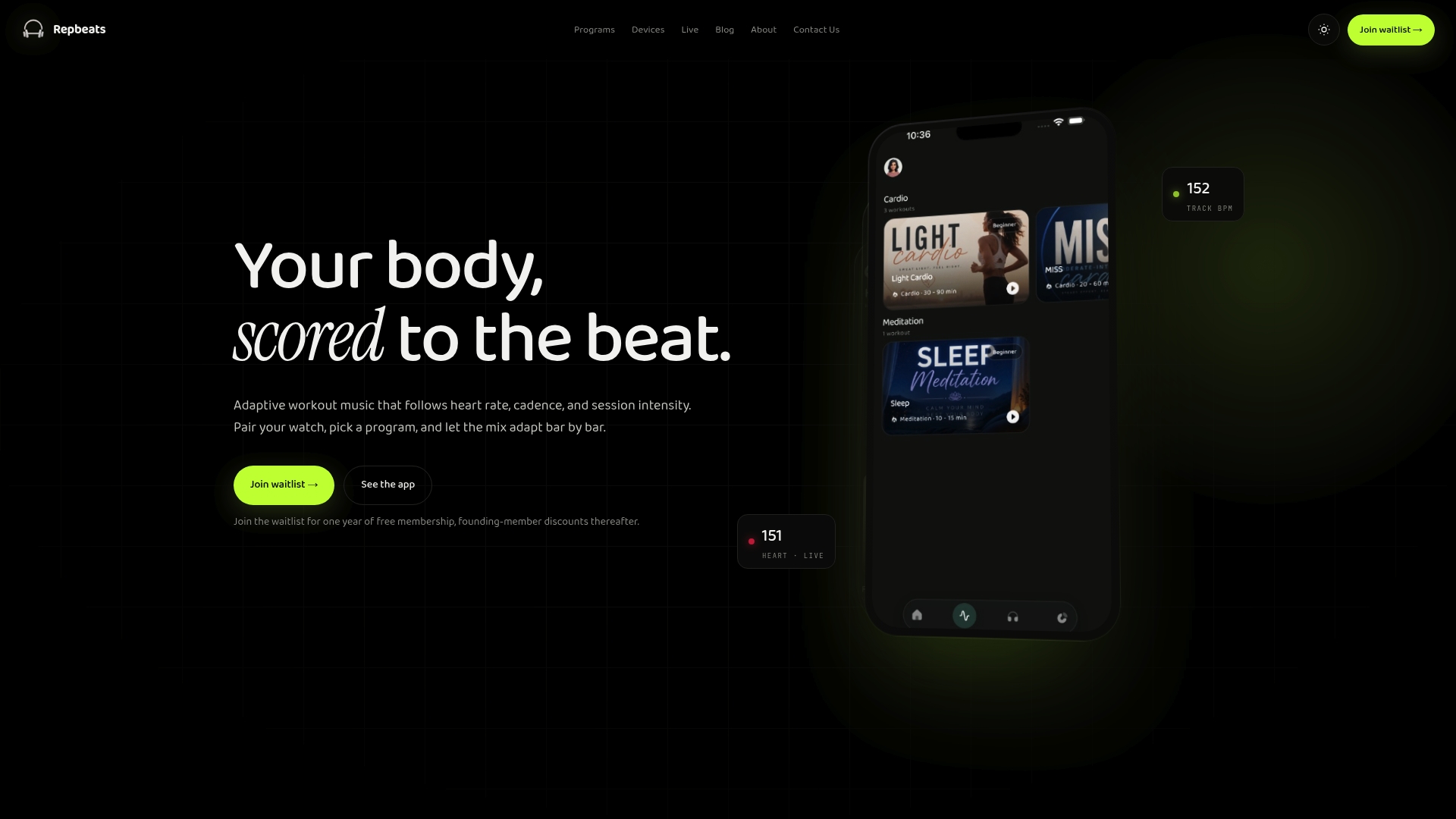
Repbeats is an adaptive workout music app that syncs BPM to your real-time heart rate, cadence, and session intensity using live data from Apple Watch and Fitbit. Its auto-DJ technology updates the music’s beats per minute every bar, so your playlist shifts from 125 BPM during your warmup to 138 BPM when your heart rate climbs in the final miles. You never have to manually manage a playlist mid-run. The music adjusts to where you actually are in your effort, not where you planned to be. For runners who want the fatigue-reducing benefits of adaptive workout music backed by the research in this article, Repbeats puts the science to work automatically. You can join the waitlist for iOS and Android beta access now.
FAQ
How does music reduce perceived exertion during running?
Music competes for the brain’s attentional resources, crowding out fatigue signals before they fully register as discomfort. Meta-analyses of 139 studies confirm this effect reduces perceived exertion by 10–12% during moderate-intensity exercise.
What BPM is best for reducing fatigue on a long run?
A range of 120–140 BPM covers most running scenarios. Use 120–130 BPM for warmups and easy miles, then shift to 135–140 BPM with motivational lyrics in the final segments where mental fatigue peaks.
Does music actually improve running endurance?
Yes. A 2026 study found that runners using self-selected music lasted nearly 20% longer than those in silence, averaging 35.6 minutes versus 29.8 minutes, with no increase in reported exhaustion.
When should runners avoid music during training?
Avoid music during hard intervals, tempo runs, and any session near maximal effort. At high intensity, physiological signals override music’s attentional effect, and you need accurate internal feedback to pace correctly and avoid injury.
Can running with music cause any physical problems?
Research shows music can subtly alter ankle eversion during the stance phase of running. Runners with ankle instability or a history of lower-leg injuries should monitor their form carefully and include regular music-free runs to maintain accurate body awareness.