How Real-Time Heart Rate Guides Your Soundscapes
Jordan MillsJuly 6, 2026 · 11 min read
How Real-Time Heart Rate Guides Your Soundscapes
TL;DR:
- Real-time heart rate guided soundscapes adapt music dynamically based on your physiological signals, enhancing workout and relaxation. Wearable devices capture heart signals using optical sensors or electrical methods, and smoothing algorithms prevent erratic tempo changes. These soundscapes improve endurance, reduce anxiety, and support focus by creating a feedback loop between your effort and the music.
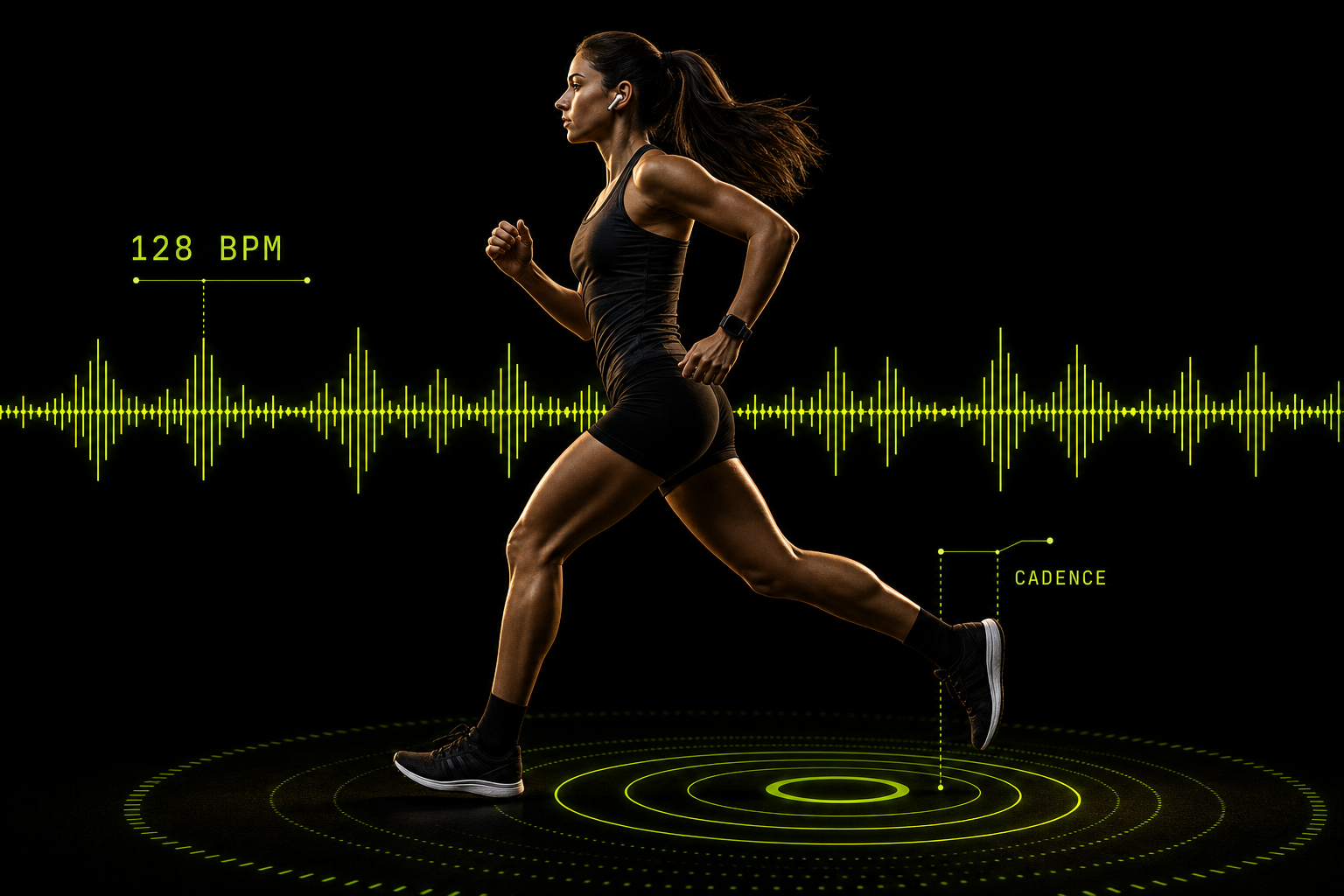
Real-time heart rate guided soundscapes are audio environments that change dynamically as your heartbeat changes, mapping physiological signals directly to musical elements like tempo, reverb, and tone. This process, formally called cardiac biofeedback sonification, creates a live loop between your body and your music. Your heart rate rises during a sprint, and the beat accelerates to match. Your breathing slows in meditation, and the sound softens around you. Repbeats applies this exact principle, using live BPM data from wearables like Apple Watch and Fitbit to update music every bar, keeping your audio environment locked to your exercise intensity at all times.
How real-time heart rate guides soundscapes through physiological signals
The two primary signals used in heart rate influenced soundscapes are beats per minute (BPM) and Heart Rate Variability (HRV). BPM measures how fast your heart beats. HRV measures the time variation between individual beats. These are different things, and they serve different purposes in sound design.
BPM is the blunt instrument. It tells a system whether you are resting, warming up, or pushing hard. HRV is the subtle one. A high HRV generally signals that your autonomic nervous system is in a calm, recovered state. A low HRV signals stress or fatigue. HRV maps to secondary sound parameters like reverb depth, spectral brightness, and grain size, creating audio textures that reflect your internal state rather than just your speed.
How wearables capture heart signals
Modern wearables use three main sensing methods:
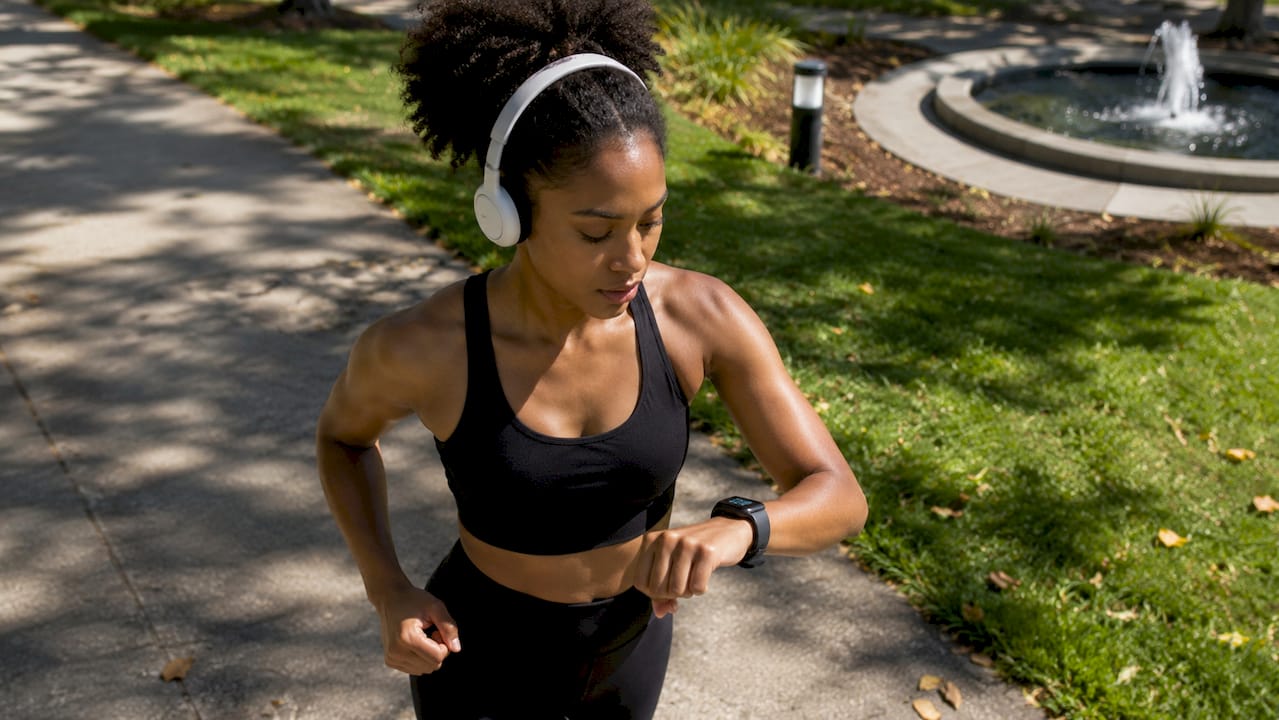
- Optical PPG (photoplethysmography): A light sensor on the wrist detects blood volume changes under the skin. This is the standard method in consumer devices like the Garmin Vivoactive 6 and Apple Watch. A Garmin Vivoactive 6 or similar device streams this data via Bluetooth to a connected app in near real time.
- Electrocardiography (EKG/ECG): Measures electrical signals from the heart directly. More accurate than PPG, but requires chest straps or medical-grade patches.
- Chest strap HRM: Combines electrical sensing with Bluetooth transmission. Delivers lower latency than optical wrist sensors, which matters when sound needs to respond within a beat.
Each method produces a stream of data that an app then interprets. The raw signal is noisy. A single missed beat or motion artifact can spike the BPM reading by 20 points. That spike, left unfiltered, would cause a jarring tempo jump in your music.
Pro Tip: If you use a wrist-based optical sensor for real-time music sync, keep the band snug and positioned two finger-widths above your wrist bone. Loose fit is the single biggest cause of erratic BPM readings during runs.

How does heart rate data shape musical elements in soundscapes?
The translation from heartbeat to sound happens in layers. BPM handles the obvious layer: tempo. But the more interesting work happens in the layers below.
Mapping BPM to tempo
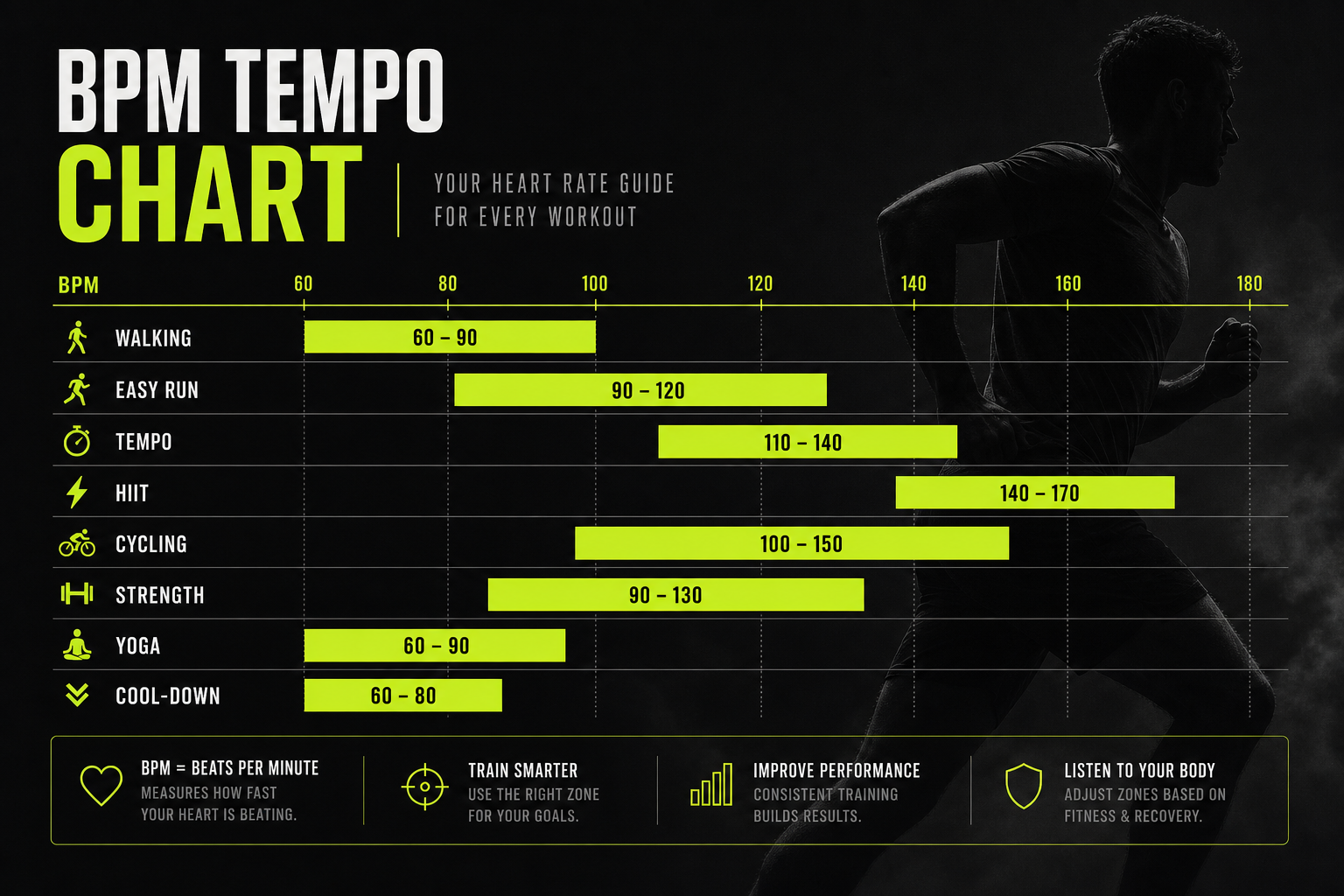
Modern adaptive music systems classify exercise intensity into BPM zones, ranging from calm states at 40–80 BPM up to maximal intensity at 160–200 BPM. Each zone maps to a corresponding music tempo range. When your heart rate crosses a zone boundary, the system selects a new track and crossfades into it.
The problem is that raw heart rate data is jittery. Your BPM can fluctuate by 5–10 points between readings even during steady effort. Without smoothing, the music would stutter constantly. Exponential moving averages applied to raw heart rate input prevent erratic tempo fluctuations, creating a musically consistent experience. This technique weights recent readings more heavily than older ones, so the system responds to real changes while ignoring momentary noise.
Preventing disruptive track switches
- Set a minimum change threshold. A threshold requiring more than 3 BPM change before triggering a track crossfade prevents frequent, distracting switches. Small fluctuations in effort do not cause a new song to load.
- Use hysteresis logic. Once a zone boundary is crossed, the system requires your BPM to drop back a set amount before switching back. This prevents rapid toggling at the boundary.
- Apply crossfade transitions. Abrupt cuts between tracks break focus. A 4–8 second crossfade keeps the audio environment continuous even when the underlying track changes.
- Layer secondary parameters. While BPM drives tempo, HRV drives texture. HRV-to-MIDI CC conversion scripts map physiological states to reverb, brightness, and grain size simultaneously, so the soundscape evolves continuously rather than jumping between fixed states.
Pro Tip: When building or choosing a heart rate music system, look for one that updates BPM every bar rather than every song. Bar-level updates keep the music tight to your effort without the jarring experience of full track switches.
Repbeats uses exactly this approach. Its auto-DJ technology updates the music’s BPM every bar, which means the tempo tracks your effort in near real time without ever feeling abrupt.
What are the real benefits of heart rate guided soundscapes for fitness?
The benefits go well beyond motivation. Heart rate is intrinsically tied to human perception of time, making it a natural control parameter for sound. When music tempo matches your heart rate, the two systems reinforce each other in a feedback loop. Your cadence aligns with the beat. Your perceived effort drops. You push harder without feeling like you are.
Performance and endurance
Auditory-motor synchronization during exercise improves workout consistency. When the beat matches your stride or pedal rate, your movement becomes more efficient. This is not a placebo effect. The motor cortex responds to rhythmic audio cues, and that response reduces the metabolic cost of repetitive movement. Fitness enthusiasts who train with tempo-matched music report sustaining higher intensities for longer periods compared to training with static playlists.
Anxiety reduction and stress management
The benefits extend beyond the gym. Music-enhanced resonance-paced breathing using real-time HRV modulation produces greater anxiety reduction than visual pacing alone. A study with 27 participants showed significant preference and relaxation improvements when musical biofeedback replaced visual cues. The audio environment does the pacing work for you, removing the cognitive load of watching a screen or counting breaths.
Calming audio tracks produce larger parasympathetic improvements than energizing tracks during real-time HRV sonification, with a median RMSSD increase of 2.48. RMSSD is a standard HRV metric that rises when the parasympathetic nervous system is active. A higher RMSSD means your body is recovering and calming down. The right soundscape accelerates that process.
Focus and mood regulation
- Instant focus improvement: Users report immediate focus gains when heart-synced audio adapts dynamically to physiological spikes, pulling attention back to the task at hand.
- Sleep support: Syncing music to heart rate during sleep bypasses conscious effort and supports parasympathetic nervous system dominance. Audio structure mimics relaxing heart rate and breathing pace, easing sleep onset without requiring active relaxation techniques.
- Mood regulation during training: When the music matches your effort level, the emotional tone of the audio reinforces your mental state. A hard interval set sounds and feels different from a recovery jog, because the music is actually different in tempo, energy, and texture.
How do fitness apps and wearables implement heart rate soundscapes?
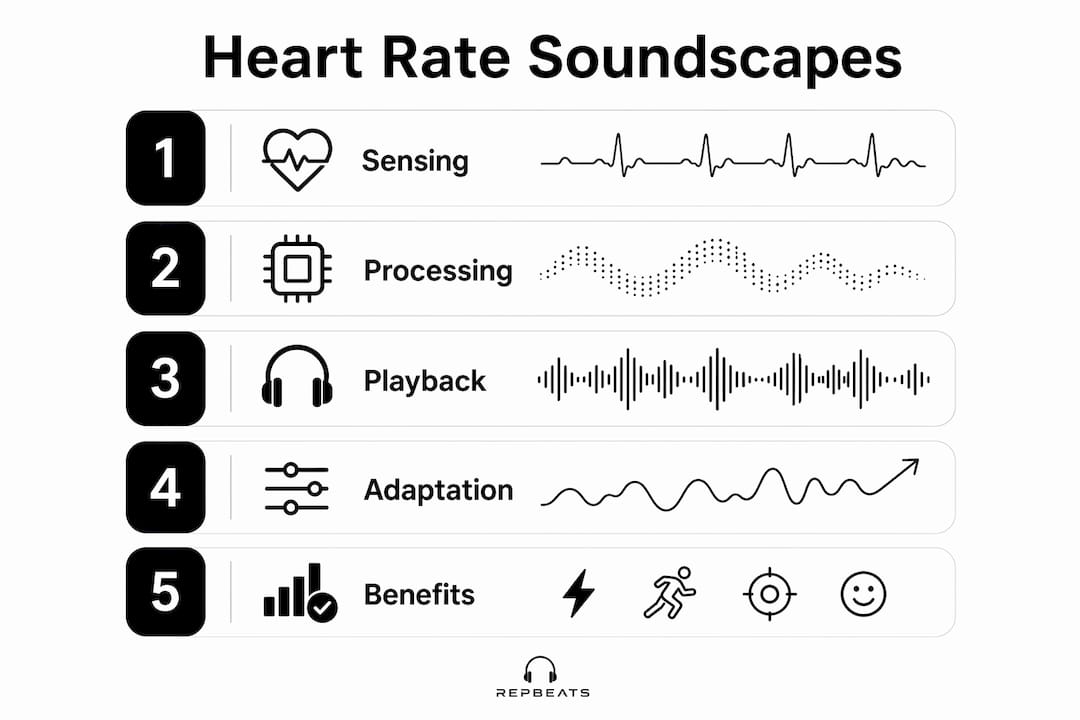
The technology stack behind heart rate influenced soundscapes has three layers: sensing, processing, and playback.
The sensing layer is the wearable. Devices like the Huawei Band 9 and Apple Watch stream BPM data via Bluetooth Low Energy to a connected app. The latency on this connection is typically under 1 second, which is fast enough for bar-level tempo updates but not fast enough for beat-level synchronization.
The processing layer is where the real work happens. Apps apply smoothing algorithms, zone classification, and threshold logic to the raw BPM stream. The output is a clean, stable signal that drives music selection and parameter modulation. Developer tools like the HeartSync plugin for digital audio workstations demonstrate how this processing works at the software level, mapping heart rate to DAW tempo with exponential smoothing built in.
The playback layer handles the actual audio. Zone-based music libraries store tracks tagged by BPM range. When the processed heart rate signal crosses a zone boundary, the system selects the closest BPM match and crossfades into it. More advanced systems modulate reverb, filter cutoff, and layering in real time without switching tracks at all, creating a continuously evolving soundscape from a single audio source.
Repbeats integrates all three layers. It reads live data from Apple Watch and Fitbit, applies BPM zone logic, and updates the music’s tempo every bar. The result is a workout music experience that feels like a DJ is watching your heart rate and mixing in real time.
Key Takeaways
Real-time heart rate guided soundscapes work because the body and music share a common language: rhythm. The most effective systems combine BPM zone matching, HRV-based texture modulation, and smoothing algorithms to create audio environments that feel natural, not mechanical.
| Point | Details |
|---|---|
| BPM drives tempo | Heart rate zone classification maps your effort level to matching music tempo ranges automatically. |
| HRV enriches texture | Heart Rate Variability controls reverb, brightness, and grain size for deeper, more expressive soundscapes. |
| Smoothing prevents jitter | Exponential moving averages on raw BPM data keep tempo transitions musical rather than erratic. |
| Thresholds prevent disruption | A minimum BPM change of more than 3 BPM is required before a track switch triggers, avoiding constant audio interruptions. |
| Benefits span fitness and wellness | Heart-synced audio improves endurance, reduces anxiety, sharpens focus, and supports sleep onset. |
The part most fitness apps still get wrong
The conversation around heart rate music almost always stops at tempo. Your BPM goes up, the music speeds up. That is the whole story, according to most apps. But that framing misses what makes this technology genuinely useful.
The real value is in the feedback loop. Heart rate as a control parameter allows sound to change your heart rate in return. A well-designed soundscape does not just reflect your effort. It shapes it. When the music slows and softens during a recovery interval, your nervous system follows. When the beat locks to your cadence, your stride efficiency improves without conscious effort. That bidirectional relationship is what separates a good implementation from a gimmick.
The other thing most people underestimate is the importance of smoothing. I have tested systems that update tempo on every raw BPM reading. The result is music that sounds like it is being played by someone having a seizure. The exponential moving average is not a technical detail. It is the difference between an experience that feels alive and one that feels broken.
My practical advice: prioritize bar-level BPM updates over song-level switches. The more granular the update, the more the music feels like it is breathing with you rather than reacting to you. And if you are serious about using heart-synced audio for training, invest in a chest strap or a wrist device with low-latency Bluetooth. The sensor is the foundation. Everything else depends on it.
— Jordan Mills
Repbeats: adaptive music built around your heart rate
Repbeats is built specifically for fitness enthusiasts who want their music to do more than play in the background.
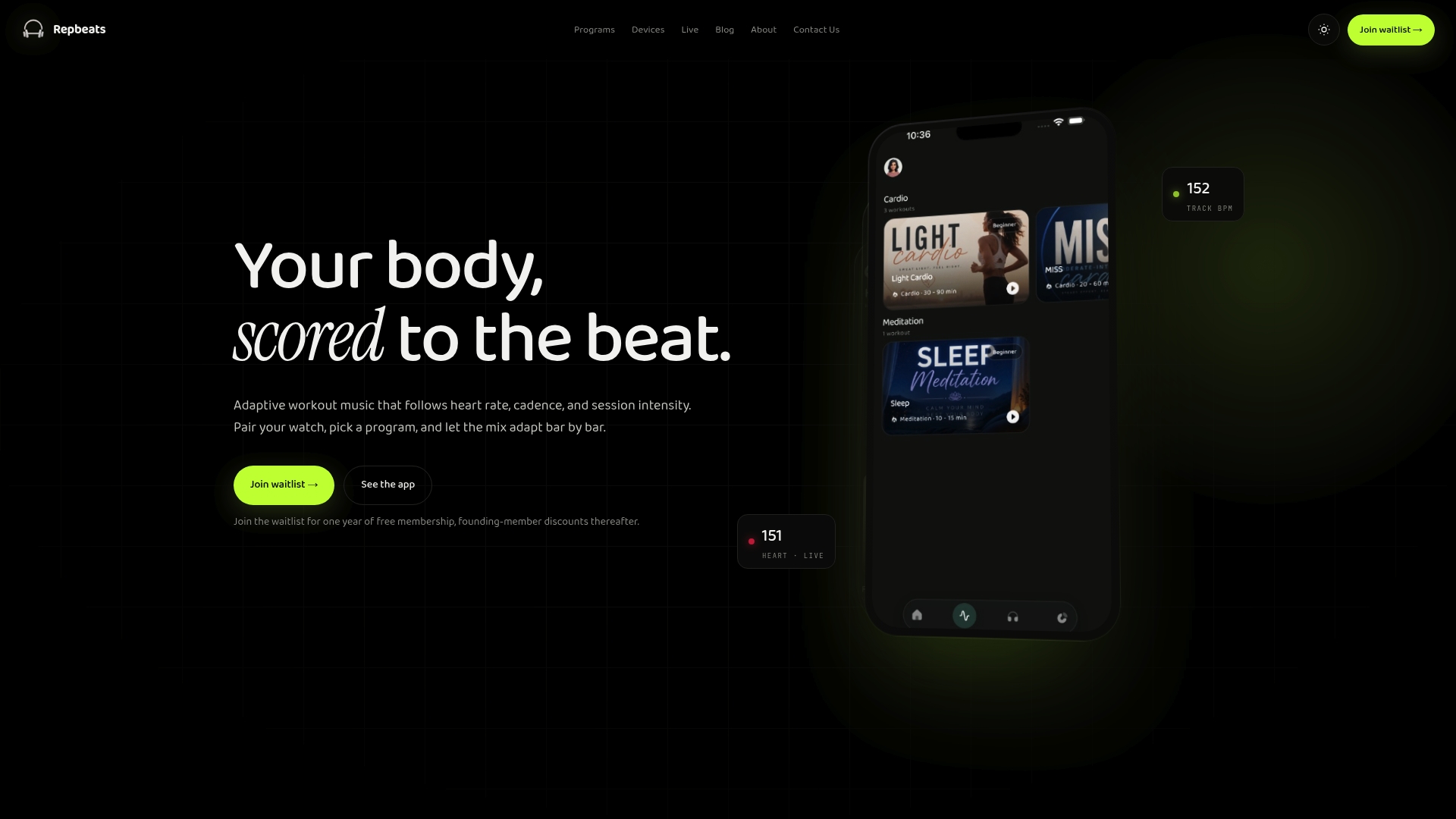
The app reads live BPM data from Apple Watch and Fitbit, classifies your effort into training zones, and updates the music’s tempo every bar using its auto-DJ technology. You get a soundtrack that accelerates with your intervals and eases back during recovery, without touching your phone. Whether you run, cycle, or meditate, Repbeats keeps your audio locked to your physiology. Join the waitlist for early iOS and Android access, or visit Repbeats to learn how adaptive BPM playlists work in practice.
FAQ
What is a heart rate guided soundscape?
A heart rate guided soundscape is an audio environment that changes in real time based on your BPM and HRV data. Musical elements like tempo, reverb, and tone shift automatically to match your physiological state.
How does BPM zone classification work in music apps?
Apps divide heart rate into zones, typically from 40–80 BPM for calm states up to 160–200 BPM for maximal intensity, then match music tracks to the corresponding tempo range for each zone.
Why does smoothing matter in heart rate music systems?
Raw heart rate data fluctuates constantly. Exponential moving averages filter out noise so tempo changes feel musical rather than erratic, which is the difference between an immersive experience and a distracting one.
Can heart rate guided audio actually reduce anxiety?
Research with 27 participants found that music-enhanced resonance-paced breathing using real-time HRV modulation produced greater anxiety reduction than visual pacing alone, making it a practical tool for stress management.
What wearables work best for real-time heart rate soundscapes?
Chest strap heart rate monitors deliver the lowest latency. Optical wrist devices like Apple Watch and Fitbit work well for most fitness applications when worn snugly and positioned correctly on the wrist.