Walking Cadence Music: BPM Playlists to Match Your Stride
Jordan MillsAugust 17, 2026 · 9 min read
Walking Cadence Music: BPM Playlists to Match Your Stride
Music with a beat that matches your steps per minute reliably helps you hold a walking cadence, and it can even train you to walk faster over time. Start here:
- Check your cadence: count your steps for 15 seconds and multiply by 4.
- Pick your BPM: match songs to that number, or add 5 to 10 BPM to nudge your pace up gradually.
- Test it: walk 5 minutes to one song at your target BPM and see if your steps lock into the beat.
Key Takeaways
Music with a beat matched to your walking cadence helps you sustain and gradually raise your pace, and the effect is backed by controlled research on entrainment and intensity.
| Point | Details |
|---|---|
| Measure first | Count steps for 15 seconds and multiply by 4, or use a wearable’s cadence readout. |
| Match 1 beat to 1 step | Choose songs at your target BPM, or add 5 to 10 BPM to push your pace up. |
| Use 100 BPM as a moderate-intensity marker | Research ties roughly 100 steps per minute to moderate-intensity walking in most adults. |
| Prefer steady, simple beats | Syncopated or buried rhythms make entrainment harder even at the right BPM. |
| Consider adaptive music for changing terrain | Repbeats adjusts tempo automatically from live cadence and heart rate data, unlike a fixed playlist. |
Table of Contents
- How to Measure Your Walking Cadence and Match It to BPM
- BPM Ranges for Every Walking Pace, With Song Examples
- Building Your Own Tempo-Matched Walking Playlist
- Where to Find Ready-Made BPM Playlists and Tools
- The Research Behind Tempo-Matched Walking Music
- Why an Adaptive Soundtrack Beats a Static Playlist
- Try Repbeats for Cadence That Never Falls Out of Sync
- Frequently Asked Questions
- Sources
How to Measure Your Walking Cadence and Match It to BPM
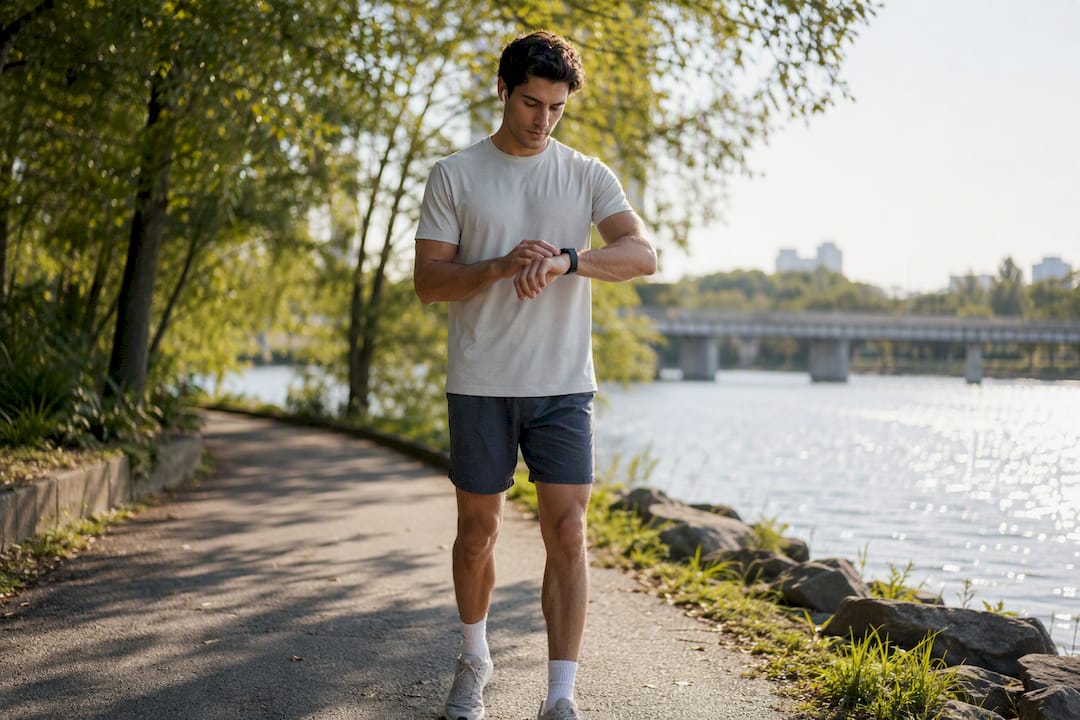
Your cadence is just your steps per minute, and you can find it three ways. The fastest is the 15 second count: tally your steps for 15 seconds, multiply by 4, and you have your number. A full 60 second count is more accurate if you have the patience. Most fitness watches, including Apple Watch and Garmin devices, display a live cadence reading during a walk, which saves you the math entirely.
Once you know your cadence, the mapping is simple: 1 beat equals 1 step. If you walk at 115 steps per minute, look for songs around 115 BPM. Some tracks carry a strong double beat that feels like two hits per step. If a song at 60 BPM feels oddly slow, it’s probably meant to be felt at double time, so treat it as 120.
- Count your cadence using the 15 second method or a wearable readout.
- Match songs to that BPM, or add 5 to 10 BPM if you want to pick up the pace.
- Increase your target by no more than about 5 BPM per week to avoid overstriding or joint strain.
- Adjust for treadmills, where a fixed belt speed makes cadence more consistent than outdoor walking with stops and turns.
Pro Tip: Play your chosen track and count your steps for one minute while listening. If your natural cadence drifts within a few steps of the song’s BPM without you consciously trying, you’ve found a track that actually entrains your stride, not just one that happens to share a number.
BPM Ranges for Every Walking Pace, With Song Examples
Cadence and intensity move together, and a widely cited review in the British Journal of Sports Medicine identifies 100 steps per minute as a consistent, practical threshold for moderate-intensity walking in adults, even accounting for differences in height and stride length. Below that, you’re in easy warmup territory. Above it, you’re working.
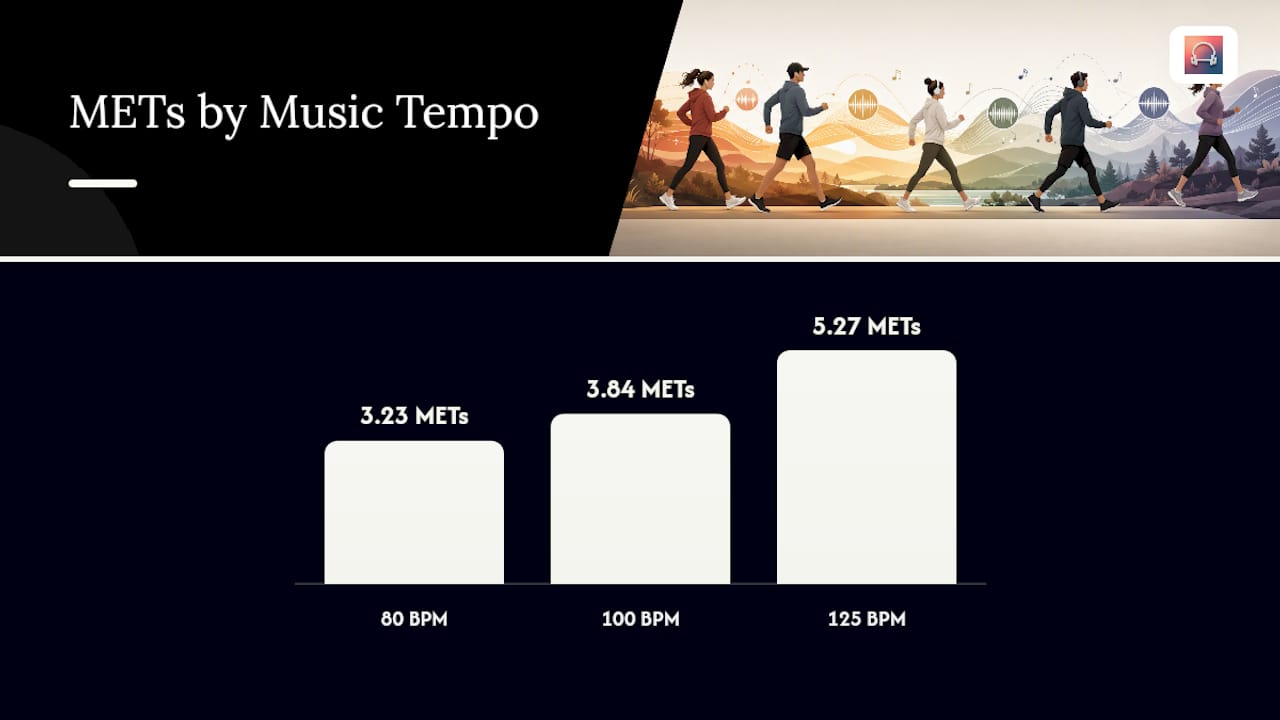
Controlled tempo trials back this up with actual metabolic data. When researchers modulated music tempo at 80, 100, and 125 BPM, participants entrained closely to each speed, and effort climbed with it: about 3.23 METs at 80 BPM, 3.84 at 100 BPM, and 5.27 at 125 BPM. That’s a real jump in output for a modest tempo increase.
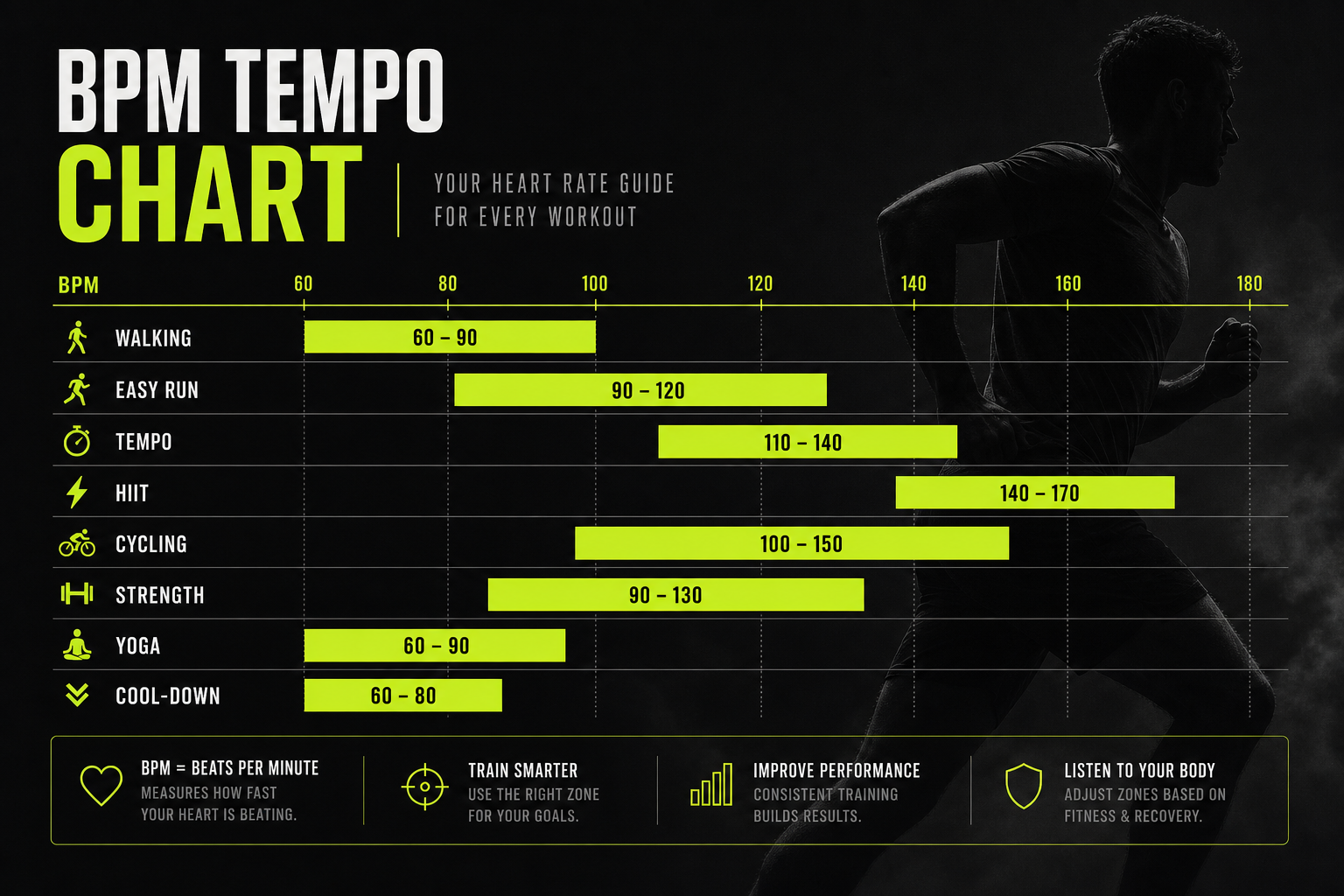
| Pace Band | BPM Range | Typical Steps/Min | Intensity |
|---|---|---|---|
| Warmup | 90–110 | 90–110 | Easy, conversational |
| Moderate | 110–125 | 110–125 | Moderate (≥100 steps/min heuristic) |
| Brisk | 125–140 | 125–140 | Vigorous-leaning |
| Fast/power walk | 140+ | 140+ | Vigorous |
Sample tracks by band, drawing on commonly cited BPM figures used by fitness playlist curators:
- Warmup (around 100 BPM): “Walking on Sunshine” by Katrina and the Waves
- Moderate (around 120 BPM): “Don’t Stop Believin’” by Journey
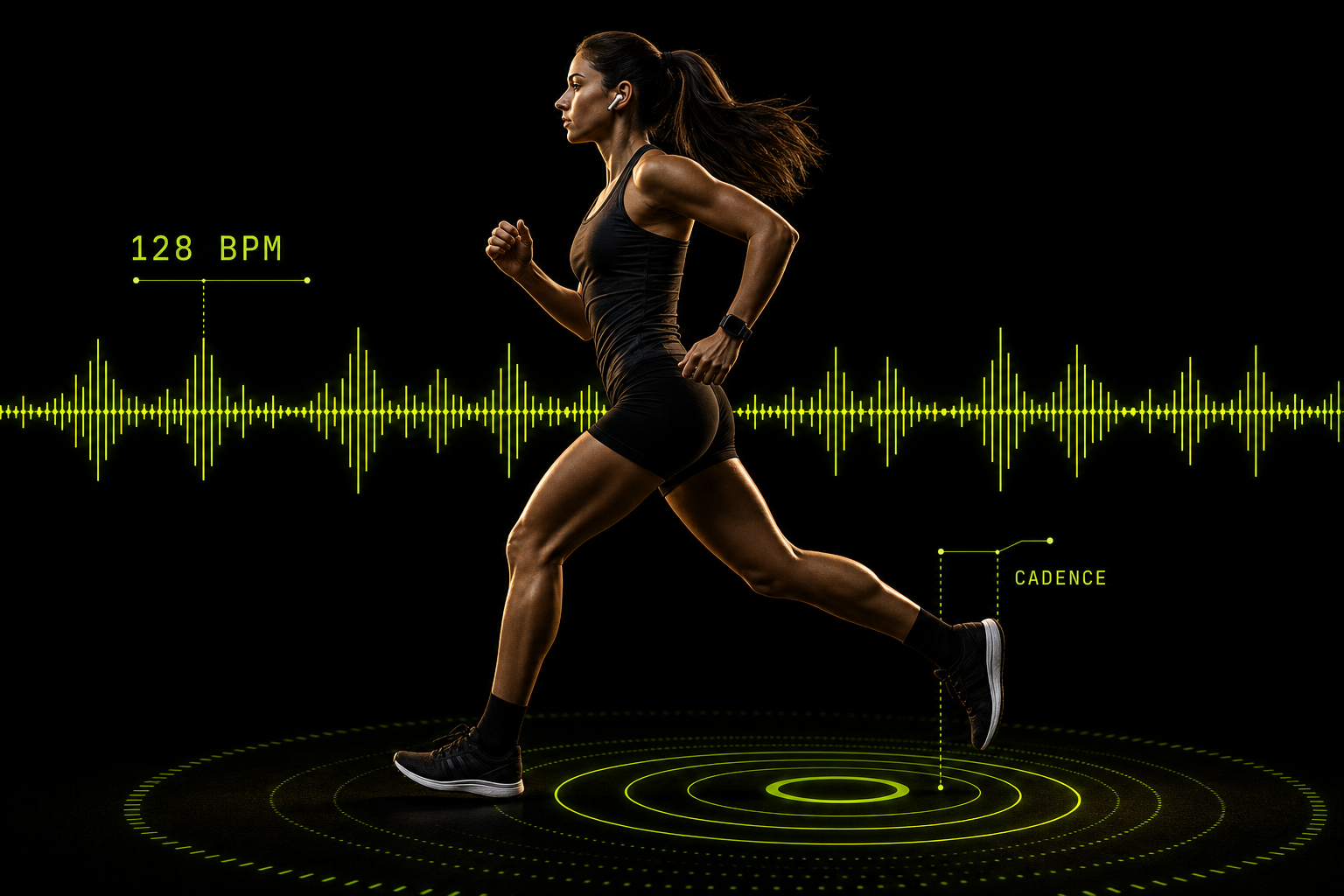
- Brisk (around 128 BPM): “Levitating” by Dua Lipa
- Fast (around 140+ BPM): “Can’t Hold Us” by Macklemore & Ryan Lewis
Verywell Fit’s walking music guide uses similar bands, generally 90 to 115 for warmup, 120 to 140 for moderate walks, and 140 plus for brisk sessions, which lines up with what fitness editors and playlist curators recommend across the board.
One caveat worth knowing: a song can match your target BPM on paper and still fail to sync with your steps. Tracks with buried or syncopated rhythms are harder to entrain to than songs with a plain, upfront beat, according to physical therapist Dr. Tim Nordahl. A simple four-on-the-floor kick drum will get your feet moving in time far more reliably than a track buried in syncopation, no matter how close the numbers line up.

Building Your Own Tempo-Matched Walking Playlist
Building a playlist that actually works is less about picking your favorite songs and more about sequencing them by tempo.
- Pick your target BPM band based on the workout you want (warmup, moderate, brisk).
- Search by BPM using a music app’s tempo filter, a dedicated BPM lookup tool, or existing “walking BPM” playlists on streaming platforms.
- Gather 3 to 5 steady-beat tracks per band, favoring simple, upfront rhythms over songs with tempo shifts.
- Order them for a gradual build: roughly 5 minutes at 100 BPM to warm up, 25 minutes at 120 to 130 BPM for the main set, and 5 to 10 minutes back down to 90 to 100 BPM to cool down.
- Test the full playlist on a real walk and swap out any track your feet don’t naturally lock into.
Remixes and extended mixes are worth hunting down, since they often hold a fixed tempo longer than the radio edit, which matters more than genre or lyrics.
Pro Tip: If a song has a bridge or breakdown that slows the tempo, either cut the track short in your playlist or accept a brief dip in pace. Fighting a tempo change mid-song usually breaks your rhythm more than skipping it would.
Where to Find Ready-Made BPM Playlists and Tools
You don’t have to build every playlist from scratch. Several reliable sources cover most walkers’ needs:
- Spotify hosts numerous walking and tempo-matched playlists, including the long-running Mall Walking Music album, built specifically around a steady, moderate pace.
- YouTube offers hour-long walking mixes organized by BPM, useful for longer sessions where you don’t want to manage a playlist manually.
- BPM lookup sites and apps let you search your own music library or streaming catalog by tempo, which beats guessing from memory.
- Apps like Pointy tie music suggestions to your actual walking context, which is worth exploring if you want less manual curation.
A pre-made playlist is faster to start with. Building your own gives you more control over song choice and beat clarity, which matters if you’re sensitive to syncopated rhythms.
The Research Behind Tempo-Matched Walking Music
The case for tempo-matched music isn’t just intuitive. In a within-persons study of 23 participants, music produced significantly higher intensity and more positive affect than general walking guidelines, and a larger share of participants reached moderate intensity while listening to music (p = .03) than when following generic advice alone.
The effect goes beyond a single walk. A 9-month intervention with overweight adults found that walking to self-selected, tempo-set music raised habitual cadence over time, from roughly 110 to nearly 122 steps per minute, with some of that gain holding even without music playing.
Quick numbers worth remembering:
- ≥100 steps/min is the practical threshold for moderate intensity in most adults.
- 3.23 to 5.27 METs is the measured range across 80 to 125 BPM in controlled trials.
- p = .03 marks the statistically significant jump in participants reaching moderate intensity with music versus without.
Why an Adaptive Soundtrack Beats a Static Playlist
A fixed playlist assumes your cadence stays constant, but real walks don’t work that way. Hills, fatigue, and distractions all shift your pace mid-session, and a static BPM track can’t follow you there.
Adaptive music that reads live cadence or heart rate data from a wearable and adjusts tempo bar by bar solves that mismatch automatically. If you already track your walks with Apple Watch or Fitbit, that kind of hands-free tempo matching is worth trying before you spend more hours hand-picking playlists.
Try Repbeats for Cadence That Never Falls Out of Sync
Static playlists get you close, but they can’t feel the hill you’re climbing or the fatigue creeping into your stride at minute 40. Repbeats reads live cadence and heart rate data straight from your Apple Watch or Fitbit and updates the music’s BPM every bar, so the soundtrack adjusts to you instead of the other way around.
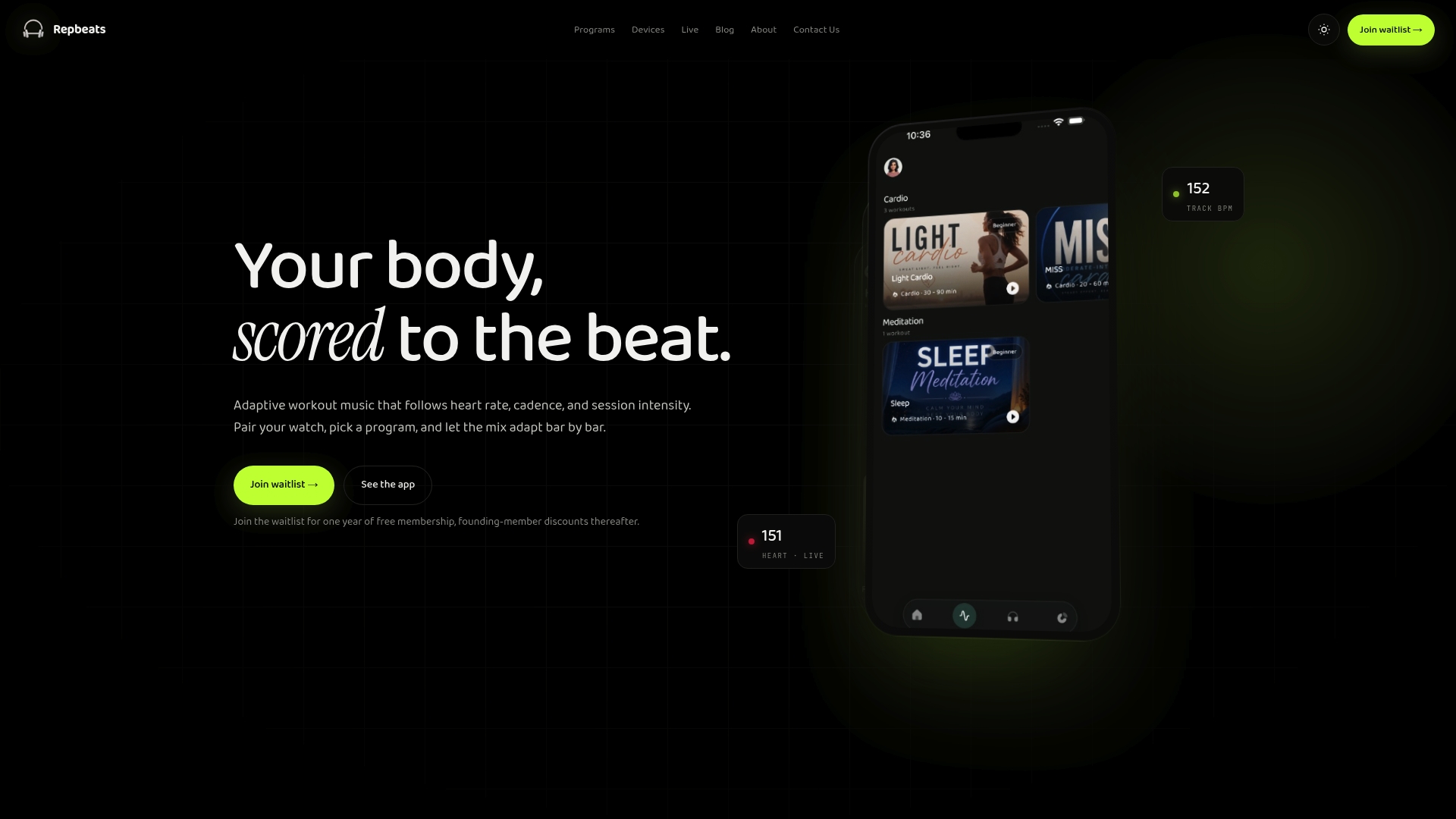
That matters most on walks where your pace naturally shifts, hills, wind, tired legs, distracted stretches, since a fixed BPM playlist just keeps playing at the wrong tempo until you manually skip ahead. Repbeats also runs guided cardio and meditation programs if you want structure beyond a single walk. If you’re already tracking steps on a wearable, try Repbeats and let your music follow your actual pace instead of a playlist built for someone else’s stride.
Frequently Asked Questions
What is the best BPM for walking? It depends on your pace, but 100 to 125 BPM covers most moderate to brisk walking cadences, since research ties roughly 100 steps per minute to the threshold for moderate-intensity activity in most adults.
How do I find songs that match my walking pace? Count your cadence with a 15 second step count or a wearable readout, then search a music app’s tempo filter or a BPM lookup tool for songs at that number.
Can music actually help me walk faster? Yes. A 9-month intervention found that walking to tempo-set music raised participants’ habitual cadence over time, with some gains holding even without music playing.
Should I use a metronome or music to keep pace? Metronomes give more precise timing, while music adds motivation and emotional engagement, according to physical therapist Dr. Tim Nordahl. Many walkers benefit from both depending on the goal.
Is it safe to walk with music outdoors? Keep the volume low enough to hear traffic and surroundings, use one earbud in busier areas, and stay aware of your environment rather than relying entirely on the beat to guide your pace.
Sources
- Music may provide an acceptable and effective alternative to cadence prescription for promoting moderate-intensity walking (PMC article)
- How fast is fast enough? Walking cadence (steps/min) as a practical estimate of intensity in adults (British Journal of Sports Medicine)
- Walk to the beat: how music can help your walking (Stanford Parkinson’s community blog / APDA webinar notes)