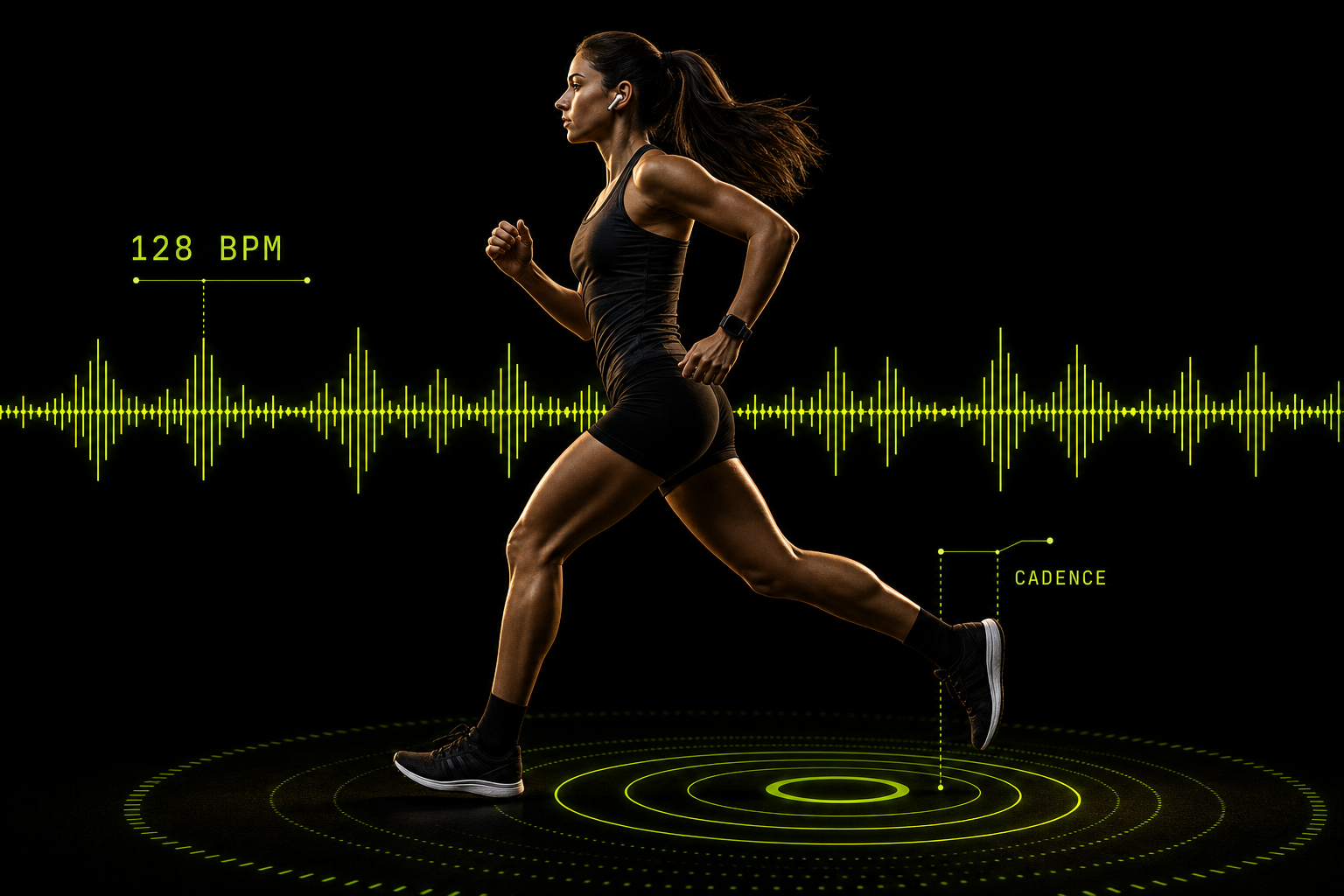
What Is Adaptive Workout Music? A Fitness Guide
Jordan MillsJuly 7, 2026 · 10 min read

What Is Adaptive Workout Music? A Fitness Guide
TL;DR:
- Adaptive workout music synchronizes tempo with exercise effort using biometric data, improving motivation and flow. Verification of BPM accuracy within 2% is crucial for optimal entrainment and performance benefits. Repbeats offers real-time, BPM-verified playlists that adapt automatically to effort during any workout.
Adaptive workout music is defined as technology that synchronizes music tempo and rhythm to your exercise intensity in real time, adjusting automatically as your effort rises or falls. Known formally as Personalized Interactive Music Systems (PIMSs), these systems use biometric data from wearables like Apple Watch and Fitbit to keep your soundtrack locked to your body’s output. Research confirms that this approach boosts both physical activity and emotional engagement far beyond what a static playlist can deliver. The result is a workout experience that feels less like a grind and more like a flow state you never have to manually manage.
What is adaptive workout music and why does it work?
Adaptive workout music is a real-time audio system that reads your body and adjusts your music to match. Traditional playlists are fixed. You pick songs before you train, and the music plays regardless of whether you’re warming up, sprinting, or cooling down. Adaptive systems remove that disconnect entirely.

The technology reads inputs like heart rate, cadence, and movement intensity. It then maps those inputs to music tempo, measured in beats per minute (BPM), and shifts the soundtrack to stay within your current effort zone. Repbeats, for example, updates BPM every bar using live data from Apple Watch and Fitbit, so the music never lags behind your body.
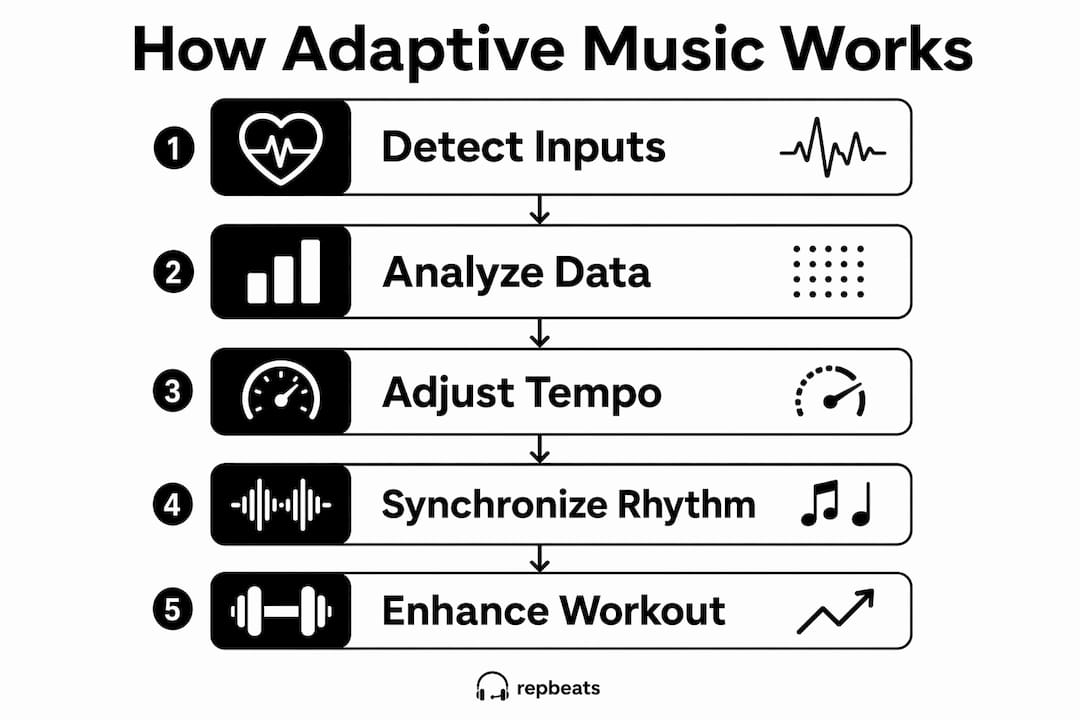
The core mechanism is called tempo entrainment. Your brain naturally synchronizes motor output to rhythmic audio cues. When the music BPM matches your movement cadence, your body locks in without conscious effort. Adaptive music creates flow by acting as a subtle ambient tool that stabilizes effort through each workout phase, so you stop counting steps and start moving.
What does science say about adaptive music and exercise?
The scientific case for adaptive workout music is strong and growing. A recent meta-analysis comparing adaptive versus non-adaptive music found an effect size of g=0.49 for physical activity levels and a striking g=1.6 for affective valence. That second number means adaptive music produces a very large positive shift in how good exercise feels, which directly affects whether people stick with a routine.
“Personalized Interactive Music Systems that adjust tempo and rhythm in real time based on movement data significantly boost exercise enjoyment and adherence, with effect sizes that outperform standard motivational playlists by a wide margin.”
Three psychological mechanisms drive these results. First, auditory-motor coupling locks your movement rhythm to the beat, reducing the mental effort required to maintain pace. Second, music regulates mood by triggering dopamine release, which lowers perceived exertion. Third, rhythmic audio acts as a distraction from physical discomfort, particularly during high-intensity phases.
Tempo accuracy is not optional. Music tempo works best within plus or minus 1% to 2% of your natural cadence. Performance benefits drop sharply when tempo deviates beyond 2.5%. That narrow entrainment window explains why a playlist that “feels fast” is not the same as a playlist that is accurately matched to your pace. Faster tempo music also tends to produce greater motivational benefits, which is why adaptive systems push BPM upward as intensity climbs. You can read more about how music tempo lowers perceived exertion in research-backed detail.
How does adaptive workout music technology actually work?
Adaptive music systems depend on three components working together: sensors, algorithms, and audio output. Each one has to perform accurately for the system to deliver real benefits.
Sensors capture your biometric data in real time. Common inputs include:
- Heart rate monitors (optical or chest strap)
- Accelerometers measuring cadence and stride frequency
- GPS tracking movement speed and elevation
- Galvanic skin response (GSR) sensors measuring arousal level
Algorithms translate that raw data into music decisions. The software maps your current heart rate or cadence to a target BPM range, then selects or modifies audio to match. Some systems shift tempo by time-stretching existing tracks. Others switch between pre-tagged songs organized by BPM and energy level. Repbeats uses an auto-DJ approach that updates BPM every bar, which produces a continuous, uninterrupted tempo shift rather than a jarring track change.
Audio output is where accuracy problems often appear. Standard music platform BPM metadata frequently deviates by 6 or more BPM from the actual track tempo. That error alone is enough to break the entrainment window and eliminate the performance benefit.
Pro Tip: Before adding a song to a zone-specific playlist, verify its BPM using a tap-tempo tool or a dedicated BPM analyzer. Do not trust the metadata from general streaming platforms.
How do you set up a dynamic workout soundtrack?
Setting up an adaptive music experience starts with mapping your workout to heart rate zones. Most fitness frameworks use five zones, from light activity at Zone 1 to maximum effort at Zone 5. Each zone needs its own playlist with a consistent BPM range and energy profile.
- Define your zones. Use a heart rate monitor and your maximum heart rate to calculate zone boundaries. A common formula is 220 minus your age for a rough maximum heart rate estimate.
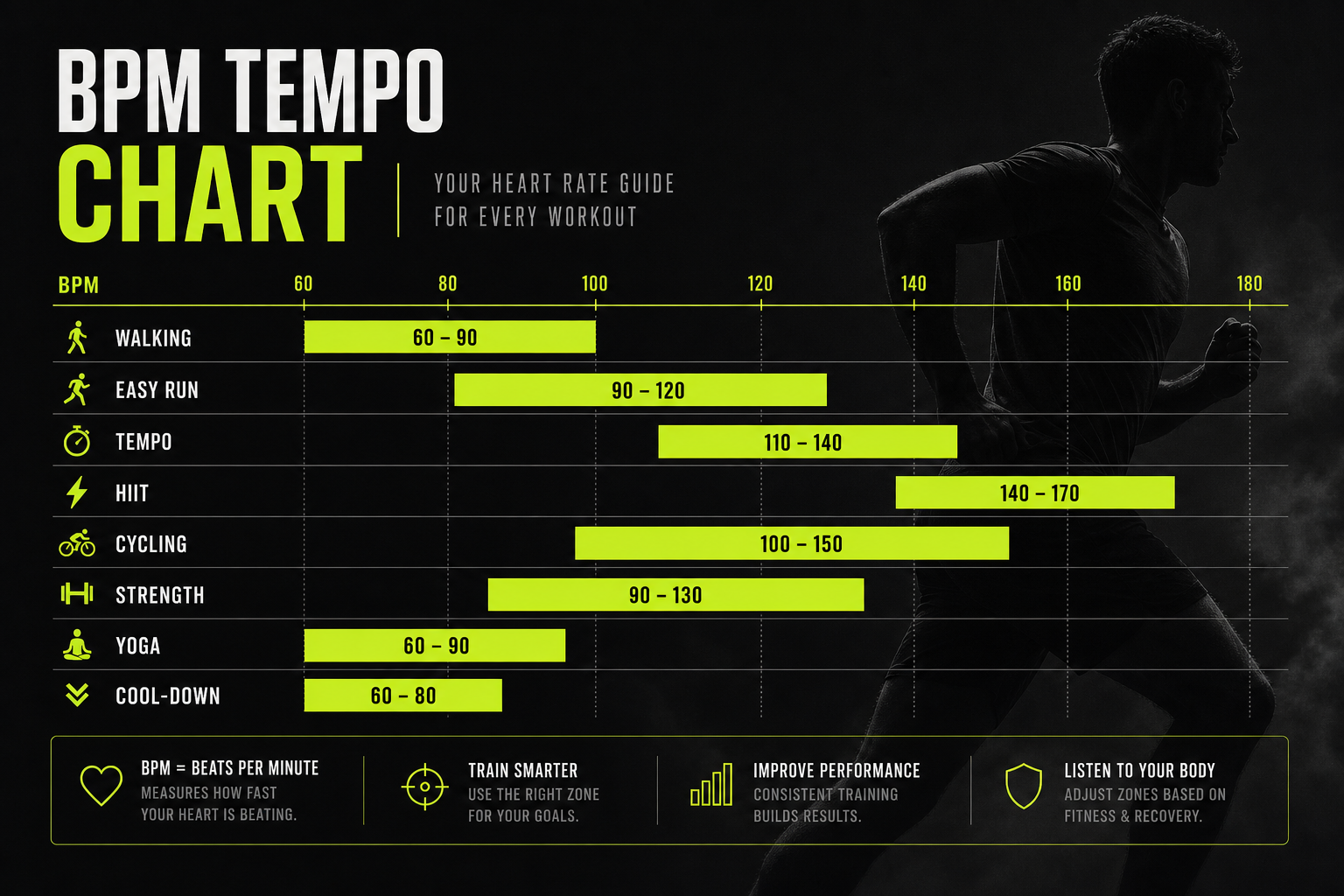
- Assign BPM ranges to each zone. Zones 1 and 2 (walking, light jogging) work well with 100–130 BPM. Zones 3 and 4 (moderate to hard running, cycling) suit 140–165 BPM. Zone 5 (sprints, HIIT peaks) calls for 170 BPM and above. For a full breakdown, the BPM chart by workout type from Repbeats covers every major exercise category.
- Curate playlists with consistent energy. Mixing energy profiles within a single zone playlist creates disruptive mood mismatches. A slow ballad dropped into a high-intensity playlist kills momentum immediately.
- Connect your wearable. Apps that support adaptive music, including Repbeats, sync directly with Apple Watch and Fitbit to pull live heart rate data and trigger zone transitions automatically.
- Test and adjust. Run a single workout session with your new setup and note where the music felt misaligned. Adjust BPM ceilings and floors for each zone based on real feedback.
Pro Tip: During interval training, use a “zone pause” function if your app supports it. This prevents the system from immediately dropping back to low-intensity music during rest periods between sets, keeping your psychological intensity high for the next effort.
For group or family fitness settings where multiple people train together, family fitness activities that incorporate rhythmic movement pair naturally with zone-based adaptive playlists.
Does adaptive music help across all workout types?
Adaptive music is not only for elite athletes or high-intensity training. Research shows that adaptive music is equally effective for low-concentration activities like walking or light jogging, helping maintain motivation and prevent workout dread during easier sessions. The mechanism differs slightly: at lower intensities, music primarily regulates mood and reduces boredom rather than driving mechanical synchronization.
| Workout type | Ideal BPM range | Primary music benefit |
|---|---|---|
| Walking / light activity | 100–120 BPM | Mood regulation, reduced boredom |
| Jogging / Zone 2 cardio | 130–150 BPM | Cadence matching, sustained effort |
| Running / cycling | 150–170 BPM | Auditory-motor coupling, pace control |
| HIIT / sprints | 170–185 BPM | Arousal, psychological intensity |
| Weightlifting | 120–140 BPM | Focus, rhythm between sets |
A few points worth knowing about adaptive music across workout types:
- Weightlifting benefits more from consistent energy and mood regulation than strict cadence matching, since rep tempo varies widely.
- Indoor cycling responds especially well to BPM-matched music because pedal cadence is measurable and consistent, making tempo entrainment highly effective.
- Meditation and cooldown phases benefit from descending BPM tracks that guide the nervous system toward recovery.
The brain science behind music during exercise explains why these effects hold across such different activity types. Auditory processing and motor control share neural pathways, which means rhythmic audio influences movement regardless of whether you are sprinting or stretching.
Key Takeaways
Adaptive workout music works because it keeps your soundtrack locked to your body’s real-time output, using tempo entrainment to reduce perceived exertion, improve mood, and increase the likelihood you finish what you started.
| Point | Details |
|---|---|
| Core definition | Adaptive workout music syncs BPM to heart rate and cadence automatically in real time. |
| Scientific backing | Meta-analysis shows effect sizes of g=0.49 for activity levels and g=1.6 for positive mood. |
| Tempo accuracy matters | Effective entrainment requires BPM within 1%–2% of your cadence; errors above 2.5% kill the benefit. |
| Setup requires zone mapping | Assign consistent BPM ranges and energy profiles to each heart rate zone for best results. |
| Works for all intensities | Adaptive music benefits walkers and sprinters alike through different but equally valid mechanisms. |
Why most fitness apps are still getting music wrong
Most popular fitness platforms treat music as decoration. They offer curated playlists labeled “high energy” or “pump-up,” but most platforms lack any systematic BPM-to-intensity matching. That gap matters more than most people realize.
I’ve spent years watching people train with music that actively works against them. A runner hitting Zone 4 with a 140 BPM track is fighting the entrainment effect the entire time. Their body wants to sync to the beat, but the beat is too slow. The result is subtle but real: more perceived effort, less enjoyment, and a slightly higher chance they cut the session short.
The fix is not complicated, but it requires treating music as a functional tool rather than background noise. That means knowing your BPM zones, verifying track accuracy, and using a system that updates in real time. Generic playlists will not do it. The science is clear that adaptive music enhances exercise by facilitating a flow state that static playlists cannot replicate.
My honest recommendation: stop picking music by feel and start picking it by BPM. Even without a fully automated system, manually curating zone-specific playlists with verified BPM data will produce a noticeably better workout experience. Once you feel the difference, you will not go back to shuffling a generic playlist.
— Jordan Mills
Repbeats brings real-time adaptive music to your workouts
Repbeats is built specifically for fitness enthusiasts who want their music to work as hard as they do. Its auto-DJ technology reads live data from Apple Watch and Fitbit, then updates the BPM of your soundtrack every bar to match your current heart rate zone.
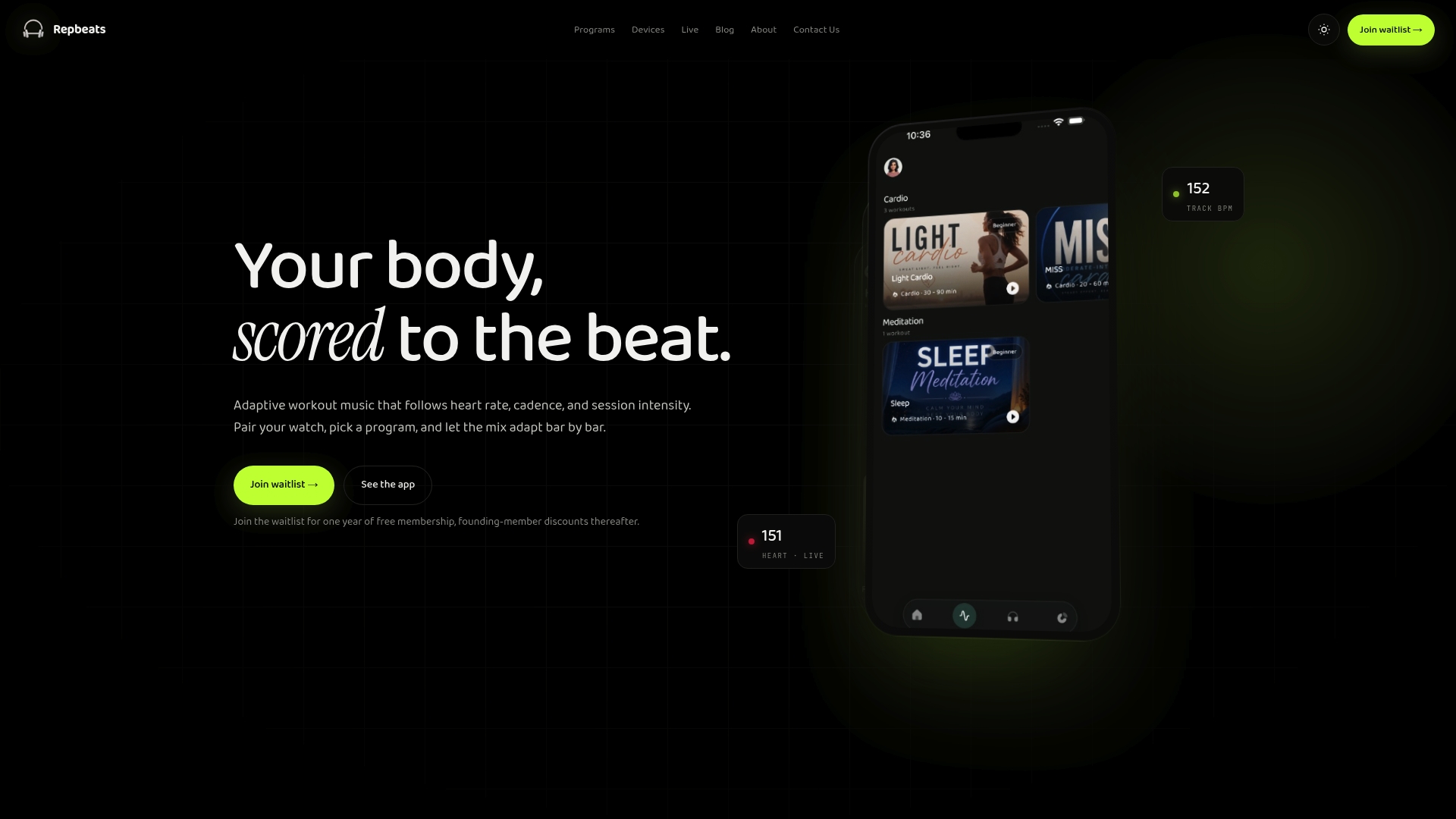
Whether you run, cycle, lift, or meditate, Repbeats keeps your music locked to your effort without manual adjustments. Every playlist on the platform is BPM-verified and organized by intensity zone, so you never deal with a slow song killing your sprint interval. Visit Repbeats to explore BPM-accurate playlists built for every workout type, or join the waitlist to get early access to the iOS and Android app.
FAQ
What is adaptive workout music in simple terms?
Adaptive workout music is a system that automatically changes your music’s tempo to match your exercise intensity as it rises and falls. It uses biometric data like heart rate and cadence to keep the beat aligned with your effort.
How accurate does BPM matching need to be?
BPM must stay within 1% to 2% of your natural cadence for tempo entrainment to work. Performance benefits drop sharply when the deviation exceeds 2.5%, which is why BPM-verified playlists matter.
Does adaptive music only work for high-intensity workouts?
No. Research confirms adaptive music improves motivation and enjoyment for low-intensity activities like walking and light jogging, not just HIIT or running. The mechanism shifts from cadence matching to mood regulation at lower intensities.
Why does indoor cycling benefit so much from adaptive music?
Indoor cycling has a measurable, consistent pedal cadence, which makes tempo entrainment highly effective. When music BPM matches pedal RPM precisely, the auditory-motor coupling effect is strong and sustained throughout the session.
Can I build an adaptive playlist without a specialized app?
Yes. Manually curate zone-specific playlists using a tap-tempo tool to verify each track’s BPM, then assign playlists to heart rate zones. Keep energy profiles consistent within each zone and avoid mixing slow and fast tracks in the same playlist.