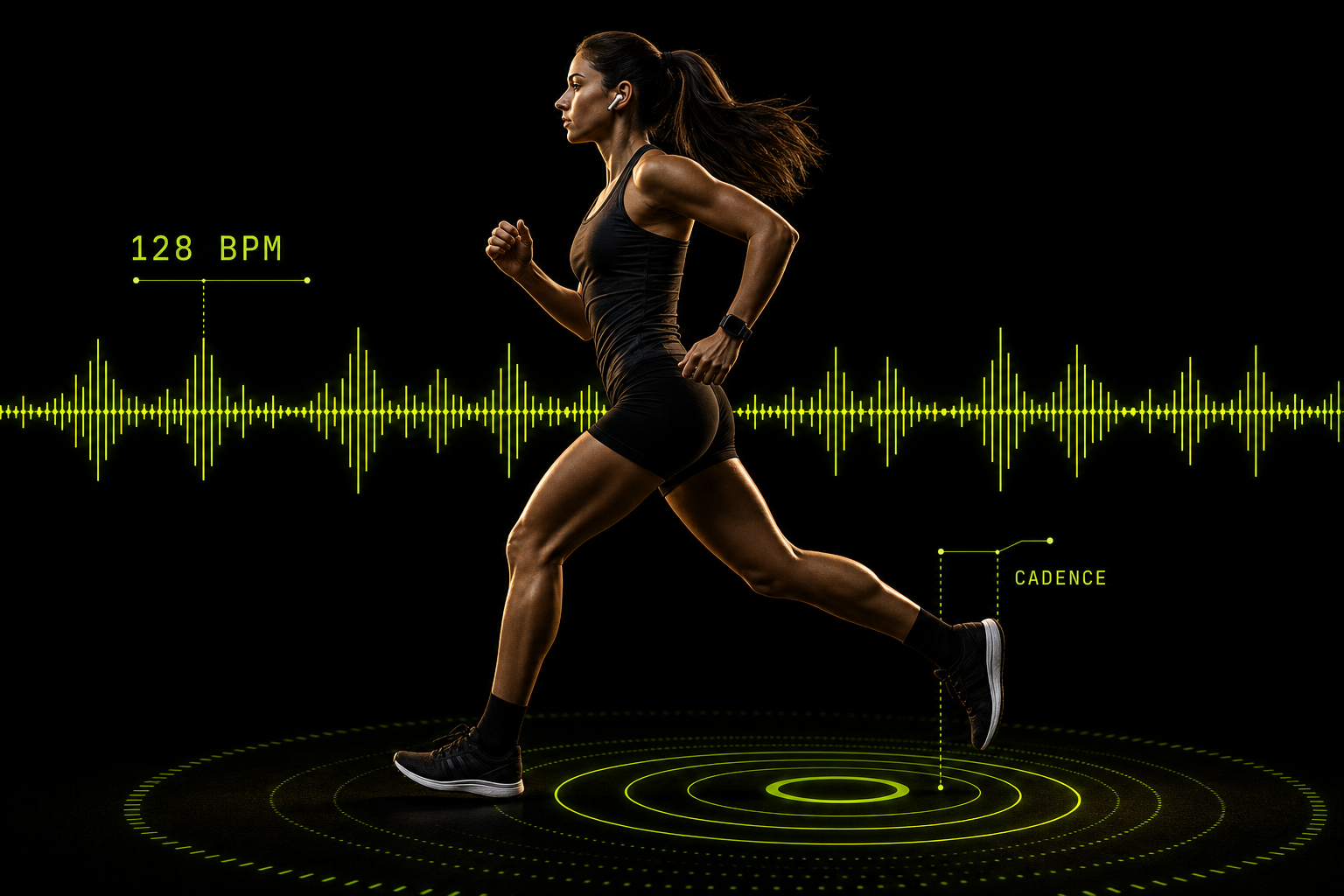
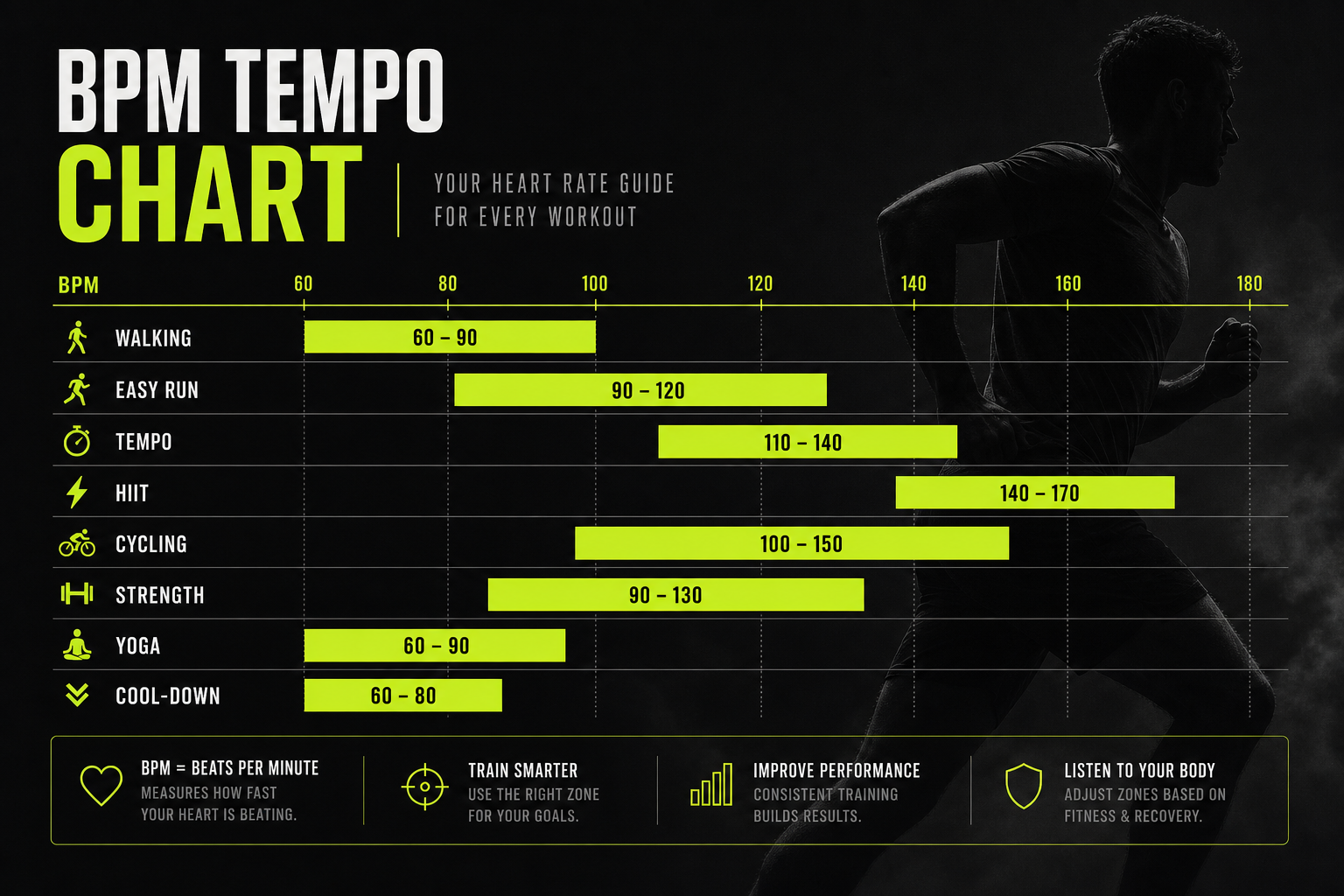
5K Race Music: Match BPM or Let Your Wearable Adjust the Tempo
Jordan MillsOctober 10, 2026 · 8 min read

5K Race Music: Match BPM or Let Your Wearable Adjust the Tempo
For a 5K, use a tempo-matched playlist of moderate length or turn on live adaptive BPM sync to hold a steady pace and pick up speed at the finish. Pick a playlist block that matches your target pace or pair a wearable for real-time adjustments. Either way, check your race’s headphone policy before you line up.
TL;DR:
- For a steady 5K, use 160 to 175 BPM; tempos within 3 to 5 BPM of your cadence usually feel synchronized.
- Build a 30 to 45 minute set with warmup, steady running, one or two surges, and a finish song; test its flow during training.
- A personally meaningful song can provide more motivation than a technically exact tempo match, so keep one or two in the rotation.
- Major championship races may advise against headphones, while most local 5Ks allow them; keep one ear free to hear traffic and instructions.
- For adaptive playback, pair your wearable before race day, test tempo changes during training, and confirm offline access and battery life.
Table of Contents
- Ready-made playlists for your 5K
- BPM bands and how to match cadence to pace
- How to build your own 5K playlist
- Race-day etiquette and safety with headphones
- How adaptive, wearable-synced music supports your pacing
- A runner’s playlist from the start line to the finish
- Try adaptive race music with Repbeats
- FAQ
- Sources
Ready-made playlists for your 5K
You don’t need to build a playlist from scratch. Pick the option that fits how you like to run, then load it the night before.
- Steady pacer (30 to 45 minutes): tracks in the 160 to 175 BPM range to lock in an even effort across the whole 5K.
- High-energy variety (45 to 90 minutes): a mix of tempos for runners who warm up slowly or like surprises in their rotation.
- Emotional build: opens with a personal favorite, shifts into driving mid-tempo tracks, and closes with your highest-energy song for the final stretch.
- Wearable-synced option: adaptive BPM through Repbeats, which adjusts tempo to your heart rate and cadence as the race unfolds instead of locking you into a fixed track order.
The steady pacer works best if you already know your goal pace and just want the music to hold you there. The high-energy mix suits runners who get bored easily or run with friends at different paces. The emotional-build option leans on a point one review makes clearly: a song’s personal meaning often matters more than its exact tempo, and preferred or emotionally significant tracks tend to produce bigger performance gains than a technically perfect BPM match. The adaptive option removes the guesswork entirely, since the tempo updates itself as your effort changes.
BPM bands and how to match cadence to pace
Music does more than pass the time. A meta-analytic review found that listening to music during exercise lowers perceived exertion and can improve performance through its motivational pull and its ability to sync with movement. For shorter, harder efforts, a separate review of anaerobic testing found music produced measurable gains on some peak-power metrics, which matters for the final sprint of a 5K.
Use these general bands as a starting point:
- Warmup: 120 to 135 BPM.
- Easy jog: 135 to 150 BPM.
- Steady 5K pace: 160 to 175 BPM.
- Fast effort or surge: 175 to 185 BPM.
- Finish sprint: 185 BPM and up.
You don’t need an exact match. A song within 3 to 5 BPM of your cadence still feels right, since stride rhythm naturally drifts with fatigue, terrain, and effort.
Pro Tip: Test your BPM bands on an easy training run first, not on race morning, so you know which tempos actually match your natural cadence.

How to build your own 5K playlist
A 5K playlist doesn’t need to be long. Most runners do well with a 30 to 45 minute block that covers warmup through finish, though a longer 45 to 90 minute set works fine if you like extra variety before the gun goes off.
Structure it in four parts: warmup, steady pace block, one or two surge tracks, and a finish or celebration song. Keep one or two personally meaningful tracks in the mix even if the tempo isn’t perfect, since the emotional lift often outweighs a precise BPM match. Watch for sudden energy spikes between songs that could throw off your rhythm mid-race.
- Pick your total length (30 to 45 minutes is the common choice).
- Sort songs into warmup, steady pace, surge, and finish categories.
- Match tempo to each category’s BPM band.
- Drop in one or two songs that mean something to you, regardless of tempo.
- Play the full list on a training run to check the order and energy flow.
- Trim anything that feels jarring or breaks your rhythm.
Race-day etiquette and safety with headphones
Headphone rules vary by race, so check your event’s guidelines before you show up; for example, some races ensure proper safety with professional security services during events. Major championship events, including the World Athletics Road Running Championships, advise against headphones to keep runners aware of their surroundings, but most local mass-participation 5Ks don’t enforce a strict ban.
- Keep one ear free or use bone-conduction headphones so you can hear traffic, volunteers, and other runners.
- Keep volume low enough to hear race instructions.
- Download your playlist for offline playback in case of spotty signal along the course.
- Practice pacing with music in training so race day isn’t the first time you’ve run to it.
Your official time is usually your net time (from when you cross the start line) rather than gun time, so don’t panic if the first minute feels crowded and off-rhythm.
How adaptive, wearable-synced music supports your pacing
Static playlists are fixed before you start. Adaptive music changes with you. Repbeats syncs tempo to heart rate, cadence, and session intensity using data from wearables like Apple Watch and Fitbit, and its auto-DJ feature updates BPM bar by bar so the music tracks your effort instead of a pre-set order.
To get the most out of it on race day:
- Pair your wearable before you leave home, not at the starting line.
- Set a target BPM band or cadence range that matches your goal pace.
- Run at least one short test session in training to see how the adjustments feel.
- Confirm offline mode and battery life, since race routes don’t always have reliable signal.
Pro Tip: Run a short test session with adaptive sync at least once before race day, so the real-time tempo shifts feel familiar instead of distracting.
A runner’s playlist from the start line to the finish

One runner opened her 5K with a slow favorite during the warmup walk, shifted into a steady 165 BPM block for the first two miles, then let two surge tracks carry her through a hill at mile two. For the final half mile, she switched to the song that got her through marathon training the year before, tempo be damned. She crossed the line four seconds under her goal.
The takeaway: test your playlist, carry a backup, and keep one ear tuned to the race around you.
— Jordan Mills
Try adaptive race music with Repbeats
If you run with a wearable, adaptive sync takes the guesswork out of race-day music. Instead of hoping a fixed playlist still fits your pace by mile two, Repbeats adjusts tempo to your heart rate and cadence as the race unfolds.
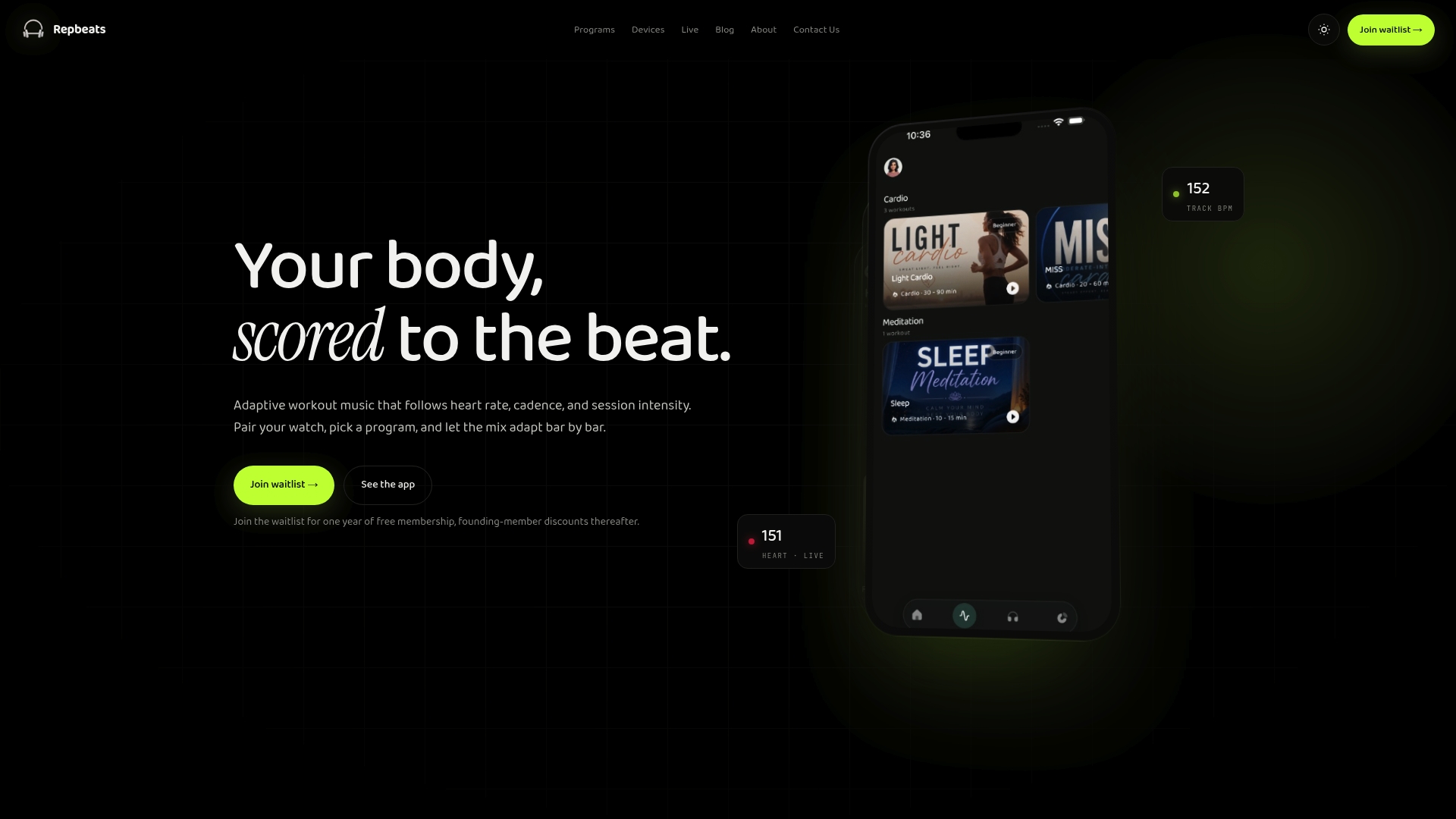
Getting started takes a few minutes: install the app, pair your wearable, and set your target BPM band before your next training run. Check out Repbeats to see how adaptive music fits into your race prep.
FAQ
What BPM is best for running?
Most runners hold a steady 5K pace well with music in the 160 to 175 BPM range, with warmups closer to 120 to 135 BPM and finishing sprints above 185 BPM. A tempo within 3 to 5 BPM of your actual cadence still feels in sync, since exact matching isn’t necessary.
What songs work best for a hype-up moment before the race?
The best hype song is usually the one with personal meaning to you, not the one with the highest tempo. Research on music preference shows that emotionally meaningful tracks tend to produce bigger motivational effects than songs chosen for tempo alone.
Can you listen to music during a 5K race?
It depends on the race. Most local mass-participation 5Ks allow headphones, but some larger or championship events, including the World Athletics Road Running Championships, advise against them for safety, so check your specific event’s rules beforehand.
How does adaptive music like Repbeats differ from a regular playlist?
A regular playlist plays songs in a fixed order regardless of your effort level. Adaptive music from Repbeats updates tempo bar by bar based on live heart rate and cadence data from your wearable, so the music shifts with your pace instead of staying static.
Sources
- Effects of music in exercise and sport: A meta-analytic review
- Effect of Listening to Music on Wingate Anaerobic Test Performance. A Systematic Review and Meta-Analysis
- The Influence of Music Preference on Exercise Responses and Performance: A Review
- FAQ | Copenhagen 26 | World Athletics