Adaptive Music Workout Best Practices for Athletes
Jordan MillsJuly 8, 2026 · 10 min read

Adaptive Music Workout Best Practices for Athletes
TL;DR:
- Adaptive workout music aligns tempo with each training phase to improve performance and endurance. Self-selected tracks at matching BPM levels outperform generic playlists by reducing perceived effort and enhancing motivation. Using structured playlists and real-time BPM adjustment tools maximizes the benefits of tempo entrainment during exercise.
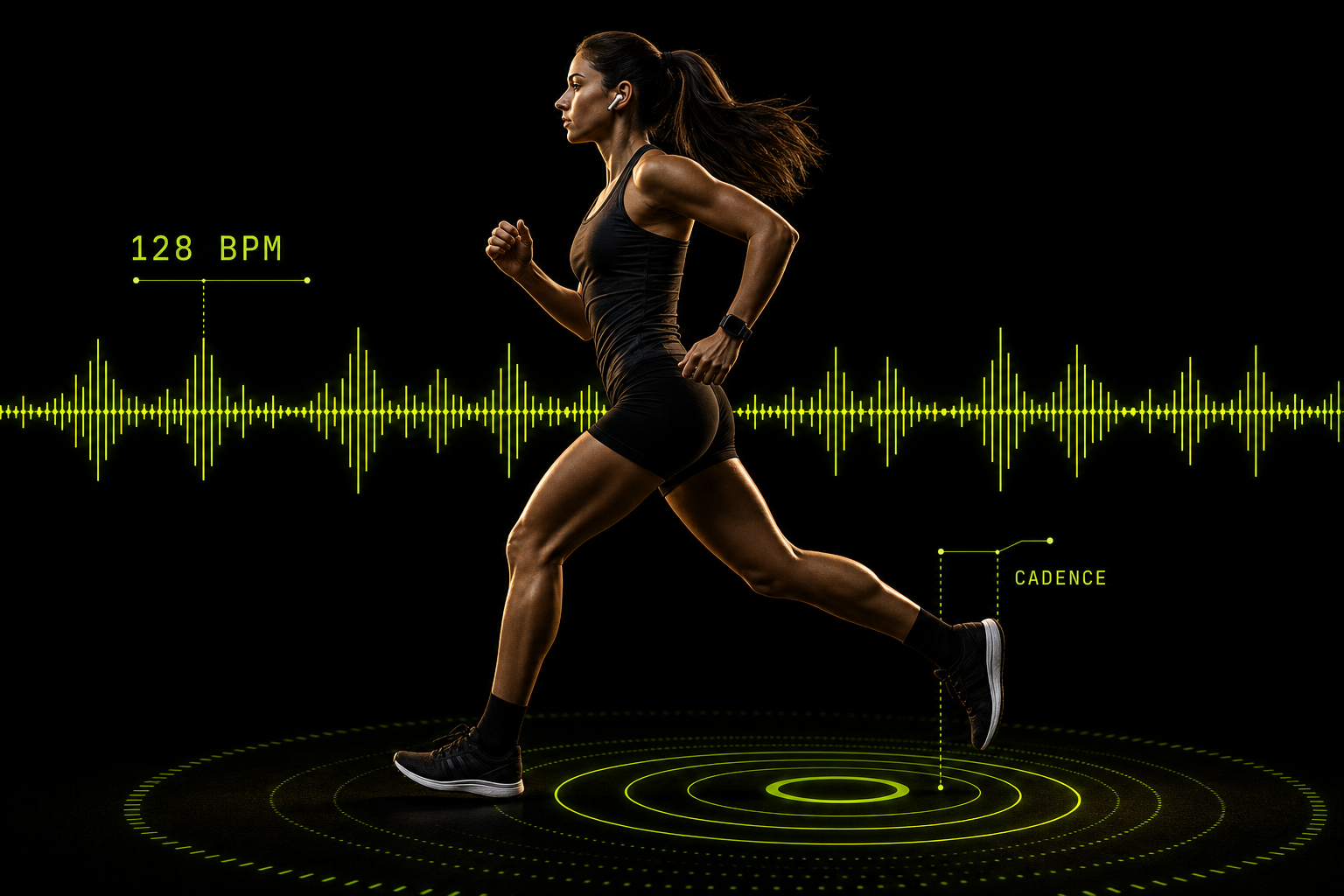
Adaptive music workout best practices are defined as the science-backed methods for synchronizing music tempo and intensity to each phase of a training session. Research shows that self-selected music extended time to exhaustion by nearly 20% in high-intensity cycling, with cyclists lasting 35.61 minutes versus 29.80 minutes without music. The industry term for this approach is tempo entrainment, where beats per minute (BPM) align with movement cadence to reduce perceived exertion and improve metabolic efficiency. Getting this right requires more than pressing play on a random playlist. It demands deliberate tempo selection, playlist structure, and track curation matched to your workout’s energy demands.

1. Adaptive music workout best practices start with BPM
Tempo is the single most important variable in workout music selection. Genre matters far less than whether the beat matches your movement cadence. A track at 130 BPM drives a steady running stride; the same song at 95 BPM kills momentum during a cardio block.
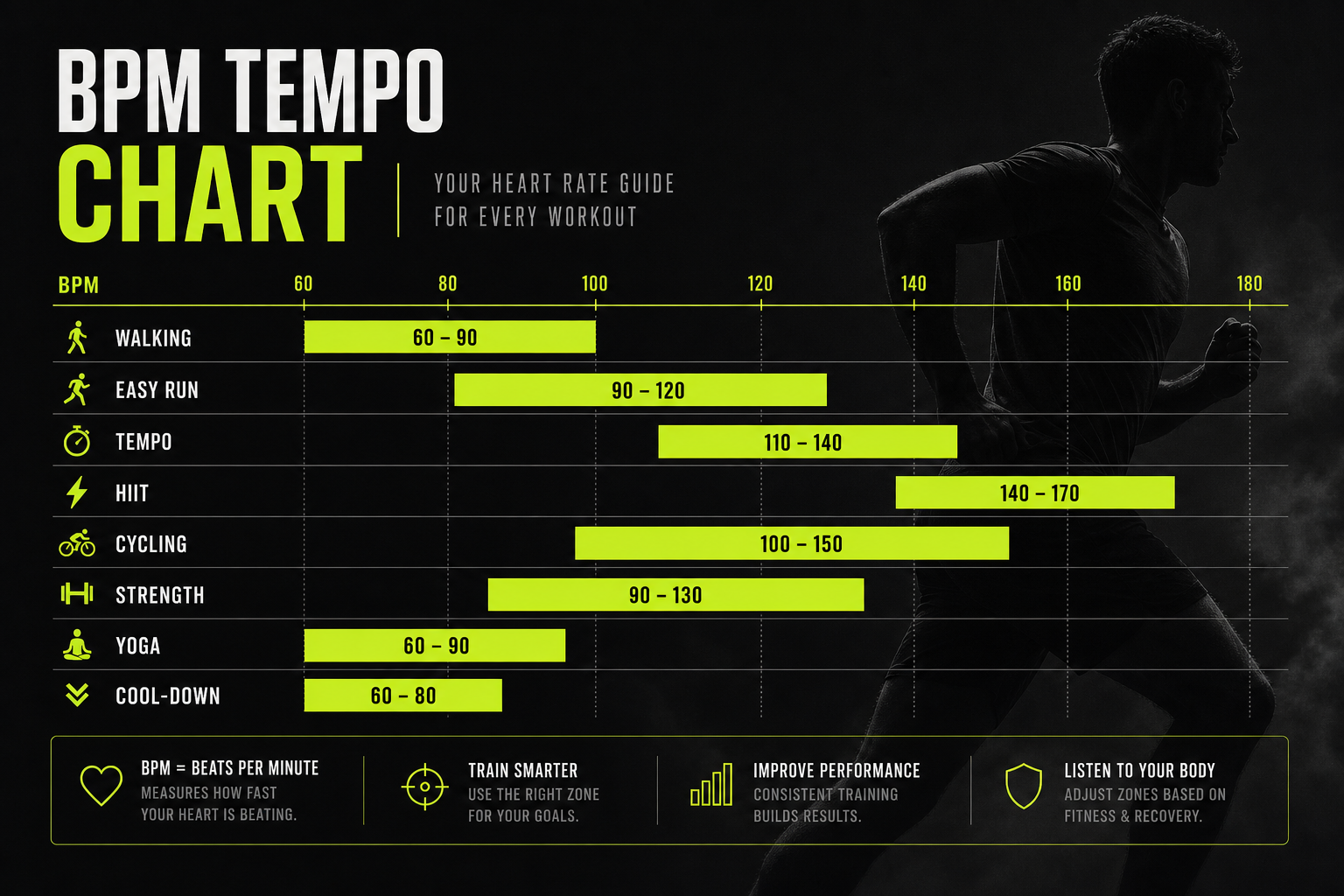
The recommended BPM ranges by exercise phase are:
| Workout Phase | BPM Range | Purpose |
|---|---|---|
| Warm-up | 100–115 BPM | Gradual arousal, joint prep |
| Main cardio / strength | 125–140 BPM | Sustained effort and cadence lock |
| HIIT / sprint intervals | 140–180+ BPM | Maximum arousal and output |
| Cool-down | 60–80 BPM | Nervous system recovery |
These ranges reflect how tempo affects arousal, cadence, and perceived effort. A mismatch between music tempo and movement speed forces your brain to work harder to stay in rhythm, which costs energy and focus. Matching BPM to phase removes that friction entirely.
Pro Tip: If you use unfamiliar or instrumental tracks, set the tempo about 10 BPM higher than you normally would. Lower familiarity reduces the motivational pull of a track, and the extra tempo compensates for that gap.
2. How to design an energy arc playlist
The most effective playlists follow an energy arc structure: warm-up, build, peak, and recovery. This mirrors the natural intensity curve of a well-designed training session. Experts recommend deliberate sequencing so the music acts as a psychological anchor, helping you pace effort and recovery without checking a timer.
A practical energy arc for a 45-minute run looks like this:
- Warm-up (minutes 0–8): Tracks at 100–110 BPM. Keep the energy low and steady.
- Build phase (minutes 8–20): Tracks climbing from 115 to 130 BPM. Your pace increases naturally.
- Peak phase (minutes 20–35): Tracks at 130–140 BPM. This is your sustained effort zone.
- Recovery (minutes 35–45): Tracks dropping to 70–80 BPM. Signal the body to wind down.
Ordering tracks by increasing BPM through the build and peak phases, then tapering at the end, manages fatigue without conscious effort. Your body follows the music’s lead. For interval training, alternate between high-BPM tracks (140–180+) during work sets and low-BPM tracks (80–100) during rest periods. The tempo shift itself becomes the interval signal.
Leitmotif audio cues are another tool worth using. A short, repeated sound or musical motif at the start of each phase tells your brain a transition is coming. Athletes who use these cues report staying in rhythm without checking timers, which keeps flow state intact.
Pro Tip: Build two versions of your peak-phase playlist: one for days when you feel strong and one for days when you need extra motivation. Rotate them weekly to prevent habituation.
3. Why self-selected music outperforms generic playlists
Self-selected music consistently delivers better results than researcher-assigned or algorithm-generated tracks. A review of 32 peer-reviewed studies confirmed that choice music enhances exercise capacity, motivation, and perceived effectiveness across aerobic and strength training contexts.
The mechanism is psychological. When you choose a track, you already associate it with energy, confidence, or a specific memory. That association lowers perceived exertion before the first beat drops. Generic playlists lack that primed response, so they require more effort to produce the same motivational effect.
“Self-selected music shifts emotional response during high-intensity exercise, lowering perceived difficulty without changing physiological load. The body works just as hard. The mind just doesn’t register it as painfully.”
Curating your own tracks does not mean ignoring BPM guidelines. The best approach combines personal preference with tempo prescription. Pick songs you love, then verify their BPM fits the phase you need them for. Beat clarity matters more than genre. A track with a strong, consistent pulse at 128 BPM will entrain your cadence better than a complex jazz arrangement at the same tempo. Mood-matched playlists that align emotional tone with workout intensity amplify this effect further.
4. How tempo synchronization improves performance
Tempo synchronization reduces oxygen consumption by up to 7% and lowers perceived exertion by about 10–15% at moderate intensities. That is a meaningful efficiency gain for any endurance athlete. The body entrains its movement cadence to the beat, which reduces wasted motion and improves metabolic output.
This effect is strongest when the music tempo closely matches your natural movement frequency. Runners benefit most when BPM aligns with step cadence. Cyclists see gains when BPM matches pedal stroke rate. Strength athletes benefit during rep-based movements where a consistent tempo keeps rest periods tight and rep speed controlled.
Real-time heart rate data takes this further by adjusting BPM dynamically as your intensity shifts. Static playlists require you to pre-plan every phase. Dynamic tempo adjustment responds to what your body is actually doing, which is a more accurate match for variable-intensity sessions like trail running or circuit training.
5. Common pitfalls in adaptive workout playlists
Most athletes make the same mistakes when building workout playlists. Avoiding them is as important as following the best practices above.
- Inconsistent tempo within phases. A track that shifts from 120 to 145 BPM mid-song breaks cadence lock and forces your body to readjust. Stick to tracks with a steady, consistent pulse.
- Playlists that are too long. Playlists over 15 tracks per hour cause decision fatigue, which reduces workout flow and motivation. Limit curated playlists to 10–15 purposeful tracks per hour.
- Tempo too fast for the movement. A 180 BPM track during a heavy squat session pushes rep speed beyond what is safe or sustainable. Match tempo to the movement, not just the intensity.
- Volume set too high. Loud music masks environmental cues like traffic, gym equipment, or a training partner’s call. Keep volume at a level where you can still hear your surroundings clearly.
- Never updating the playlist. Habituation reduces the motivational effect of familiar tracks over time. Rotate at least two or three new tracks into each phase every two weeks.
Pro Tip: Use a BPM detection app like GetSongBPM or a DAW plugin to verify the exact tempo of every track before adding it to a phase. Streaming services often round BPM values, which creates mismatches you won’t notice until your cadence breaks mid-run.
6. Streaming apps and the BPM gap
Most streaming fitness apps lack systematic BPM-to-intensity matching. They generate playlists based on genre, mood tags, or popularity, not on verified tempo ranges matched to workout phases. That gap means athletes who rely entirely on algorithm-generated playlists often train with music that is mismatched to their effort level.
The fix is straightforward. Verify BPM before you commit a track to a phase. Cross-reference the tempo against the ranges in the table above. If a track you love sits at 118 BPM but you need it for a 130 BPM build phase, save it for the warm-up instead. Forcing a mismatch wastes the track’s motivational potential and disrupts cadence synchronization.
Adaptive workout music technology addresses this gap by reading live biometric data and adjusting BPM in real time. For athletes who train across variable intensities, this removes the need to pre-plan every tempo shift manually.
Key takeaways
Adaptive music workout best practices require matching BPM to workout phase, curating self-selected tracks, and structuring playlists as an energy arc to maximize endurance and reduce perceived exertion.
| Point | Details |
|---|---|
| Match BPM to workout phase | Use 100–115 for warm-up, 125–140 for cardio, 140–180+ for HIIT, and 60–80 for cool-down. |
| Build an energy arc | Sequence tracks from low to high BPM through the session, then taper for recovery. |
| Choose your own tracks | Self-selected music outperforms generic playlists across 32 peer-reviewed studies. |
| Limit playlist length | Cap curated playlists at 10–15 tracks per hour to avoid decision fatigue. |
| Verify BPM before adding tracks | Streaming apps round tempo values; use a BPM detection tool to confirm accuracy. |
What I’ve learned after years of training with music
The research on tempo entrainment is solid, but the real lesson I’ve taken from applying it is this: most athletes underestimate how much their playlist structure shapes their perceived effort. You can be running the same pace on the same route, and a well-sequenced playlist makes it feel like a different workout entirely.
The mistake I see most often is treating the playlist as background noise. Athletes spend hours planning training blocks, nutrition timing, and recovery protocols, then spend three minutes throwing together a playlist. That mismatch shows up in performance. A poorly sequenced playlist during a long run can make the last 20 minutes feel brutal when the right tempo would have carried you through.
The other thing worth saying: personal taste and tempo science are not in conflict. You do not have to abandon your favorite tracks to follow BPM guidelines. You just have to place them in the right phase. A song you love at 132 BPM belongs in your peak block, not your warm-up. That single adjustment changes how the track lands and how your body responds to it.
Tempo-matched playlists also reduce the mental load of training. When the music signals the transition, you stop watching the clock. That shift in attention, from monitoring time to moving with the beat, is where flow state lives. It is also where your best performances happen.
— Jordan Mills
Repbeats and adaptive workout music
Repbeats is built specifically for athletes who want their music to work as hard as they do.
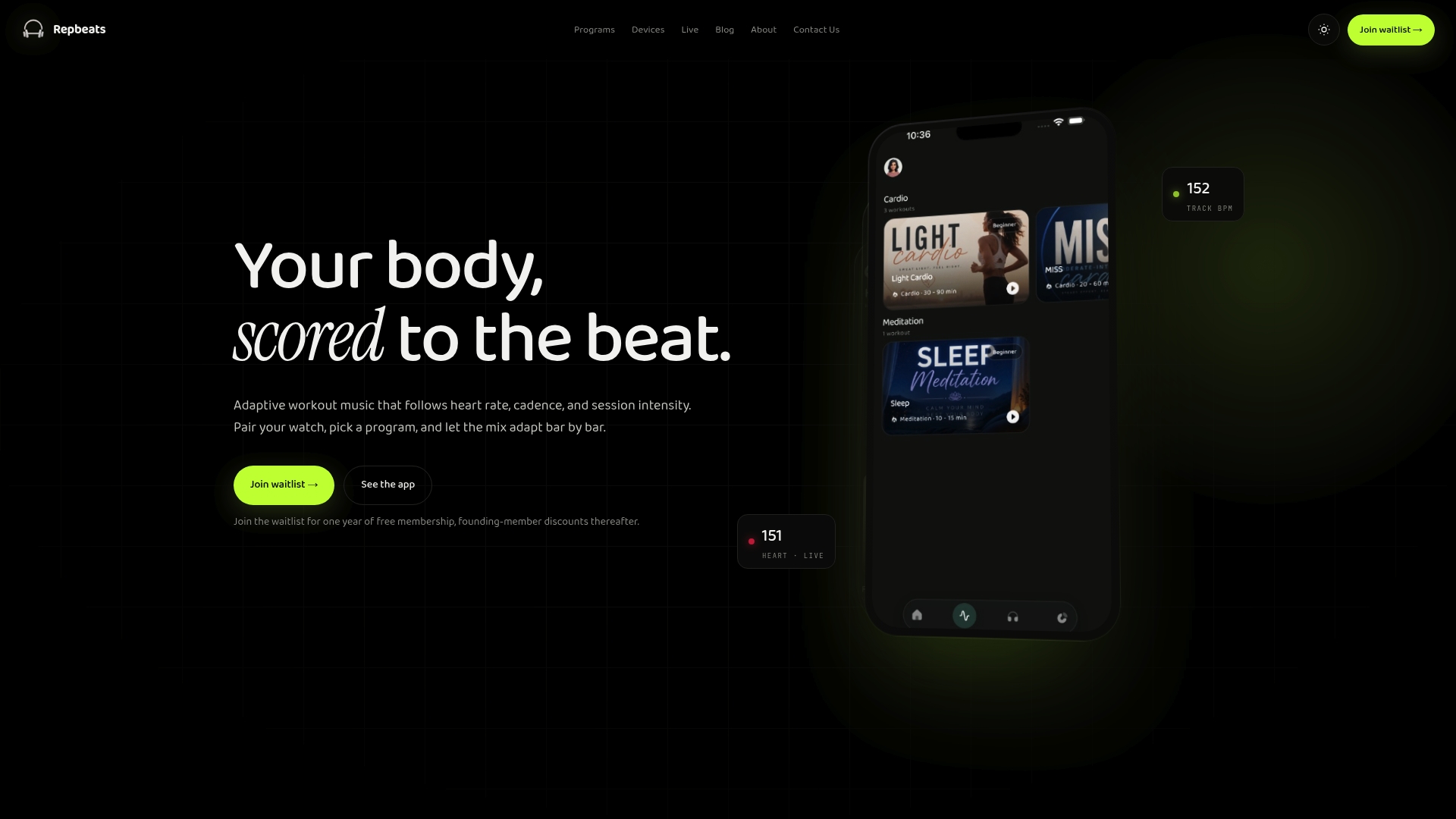
Repbeats uses live data from Apple Watch and Fitbit to adjust BPM every bar, matching your soundtrack to your actual heart rate and cadence in real time. There is no manual playlist building required. The app reads your intensity and shifts the music to match, whether you are in a warm-up, a peak effort block, or a cool-down. For runners, cyclists, and anyone training across variable intensities, this removes the guesswork from adaptive workout music entirely. If you are ready to train with music that responds to your body, Repbeats is where to start.
FAQ
What BPM is best for running?
The optimal BPM for running is 125–140 for steady-state cardio and 140–180+ for sprint intervals. Warm-up runs benefit from 100–115 BPM.
Does self-selected music really improve performance?
Yes. A review of 32 peer-reviewed studies confirmed that self-selected music improves exercise capacity, motivation, and perceived effectiveness compared to researcher-assigned tracks.
How many tracks should a workout playlist have?
Limit playlists to 10–15 tracks per hour. Playlists exceeding 15 tracks per hour cause decision fatigue, which reduces workout flow and motivation.
What is tempo entrainment?
Tempo entrainment is the process where your body synchronizes its movement cadence to the beat of the music. It reduces oxygen consumption by up to 7% and lowers perceived exertion by 10–15% at moderate intensities.
Does genre matter for workout music?
Genre matters far less than tempo and beat clarity. A track with a strong, consistent pulse at the right BPM will outperform a genre-appropriate track with an inconsistent rhythm every time.