C25K Music for Beginners: Playlists First, Then Wearable Synced Music
Jordan MillsOctober 7, 2026 · 9 min read

C25K Music for Beginners: Playlists First, Then Wearable Synced Music
For C25K sessions, use an alternating run/walk playlist or an app that syncs tempo to your cadence: both give clear cues and keep motivation high through the toughest intervals. Pick one playlist, one official audio guide, or one adaptive music app today and test it on your next run. The right choice depends on how much setup you want to do versus how much you want the music to do for you.
TL;DR:
- Choose alternating fast and slow tracks whose lengths match your intervals, and save two or three backups before running to avoid midworkout searches.
- Use an official audio guide for interval timing early on; switch to personal music and a timer for control throughout all nine weeks.
- Keep tempo shifts gradual and within about 3%, because larger changes can force unnatural steps; test one session and adjust awkward track transitions.
- After two to four weeks, consider adaptive music if your cadence feels steady and you own a wearable that shares live cadence or heart rate.
Table of Contents
- Where to find C25K playlists that match your intervals
- Official C25K audio guides and what to look for in an app
- How to match music tempo to your run/walk intervals
- What the research says about music, cadence, and effort
- How adaptive, wearable-synced music fits into a C25K routine
- A simple progression from playlists to adaptive music
- Try hands-free, tempo-matched music for your next C25K run
- FAQ
- Sources
Where to find C25K playlists that match your intervals
Most run/walk playlists fall into three types. The first alternates fast and slow songs so the beat itself signals when to run and when to walk. The second groups tracks by beats per minute, giving you a pool of running-pace songs and a separate pool of walking-pace songs to mix as needed. The third is a long, continuous playlist meant to run underneath voice cues from a separate app or audio guide, with no built-in interval signal at all.
Runner’s World recommends alternating fast and slow songs sized to your session length, which works well for beginners because you do not need to watch a clock. Public playlists based on the Couch to 5K format, such as those labeled “NHS Couch to 5K” on Spotify, compile tracks sorted into this structure.
To choose a playlist that fits your week of C25K, check for:
- Track lengths close to your interval times, so songs do not cut off mid-walk or mid-run.
- A noticeable tempo shift between the fast and slow sections, not just a change in mood.
- Enough total runtime to cover your full session without repeating the same four songs.
Pro Tip: Save two or three backup playlists before your run. If one feels wrong mid-session, switching mid-interval is easier than stopping to search.
If you build your own list, pairing songs by the same artist across fast and slow sections makes the transitions feel less jarring, since the vocal style and production carry over even as the tempo changes.
Official C25K audio guides and what to look for in an app
The official Couch to 5K audio guides pair recorded voice cues with background music, telling you exactly when to run and when to walk without checking a screen. For a beginner, that combination removes two decisions at once: when to switch pace, and what to listen to while doing it.
If you want more control over your music, look for an app that offers:
- Play-your-own-music support, so voice cues layer over your chosen tracks instead of replacing them.
- Clear interval timing, with distinct audio cues for run and walk segments.
- Wearable integration, pulling pace or heart rate data from a device like an Apple Watch or Fitbit.
- Offline playback, since many routes have patchy signal.
Some C25K apps already support listening to personal music while still delivering voice cues and interval timing, which gives you the structure of the official program without locking you into its soundtrack.
The tradeoff is simple. The official audio guide asks nothing of you beyond pressing play, which suits week one. A separate music-plus-timer setup takes a few minutes to configure but lets you run to music you actually like for all nine weeks, not just the parts the default guide covers.
How to match music tempo to your run/walk intervals
Start by estimating your natural cadence, the number of steps per minute you take while running. Many coaches suggest setting the music so one beat lines up with one step, though some runners prefer a beat every other step. Either approach works for C25K as long as the match feels natural rather than forced.
From there, two workflows get you most of the way:
- Playlist pairing: map faster songs to your run intervals and slower songs to your walk intervals, checking that each track roughly covers the interval length.
- Tempo-matched or adaptive tools: use an app or tempo tool that adjusts BPM to your pace automatically, removing the manual matching step entirely.
Once you have a setup, test it on a single session before committing. Run it start to finish, then adjust volume so cues stay audible over traffic or wind. Many beginners find one earbud in, one out, keeps them aware of surroundings without losing the beat. Pre-queue your next few tracks before you start so a song choice never interrupts an interval.
Pro Tip: If a song transition lands awkwardly mid-interval during your test run, swap just that one track rather than rebuilding the whole playlist.
What the research says about music, cadence, and effort
The link between music and running form is not just a feeling. A nine-month field study found that predetermined music tempo can train habitual walking cadence, with participants sustaining a faster stride rate even after the music stopped. That suggests tempo-matched music during C25K is not just a short-term motivator. It can shape cadence habits that stick.
Lab research backs this up from the performance side. Matching music tempo to cadence increased time to exhaustion and helped maintain pace, while motivational music independently lowered perceived effort at moderate intensities. The two effects are separate but complementary: a clear beat helps you hold a rhythm, and music you find motivating makes that rhythm feel easier to sustain.
A related study found that small, imperceptible tempo shifts, within about 3%, caused runners to spontaneously adjust their cadence to match the beat. That is the practical ceiling for beginners: modest BPM nudges work with your stride, while large jumps force an unnatural change in step length.
For your own playlist or app choice, a few takeaways hold up across this research:
- Favor tracks with a clear, consistent beat over ones with complex or shifting rhythms.
- Keep tempo changes small and gradual, not sudden jumps between songs.
- Pick music you find genuinely motivating, since that quality works independently of tempo.
How adaptive, wearable-synced music fits into a C25K routine
Matching playlists to intervals by hand works, but it takes trial and error. Adaptive music removes that step by adjusting to your body in real time instead of asking you to predict the right BPM in advance.

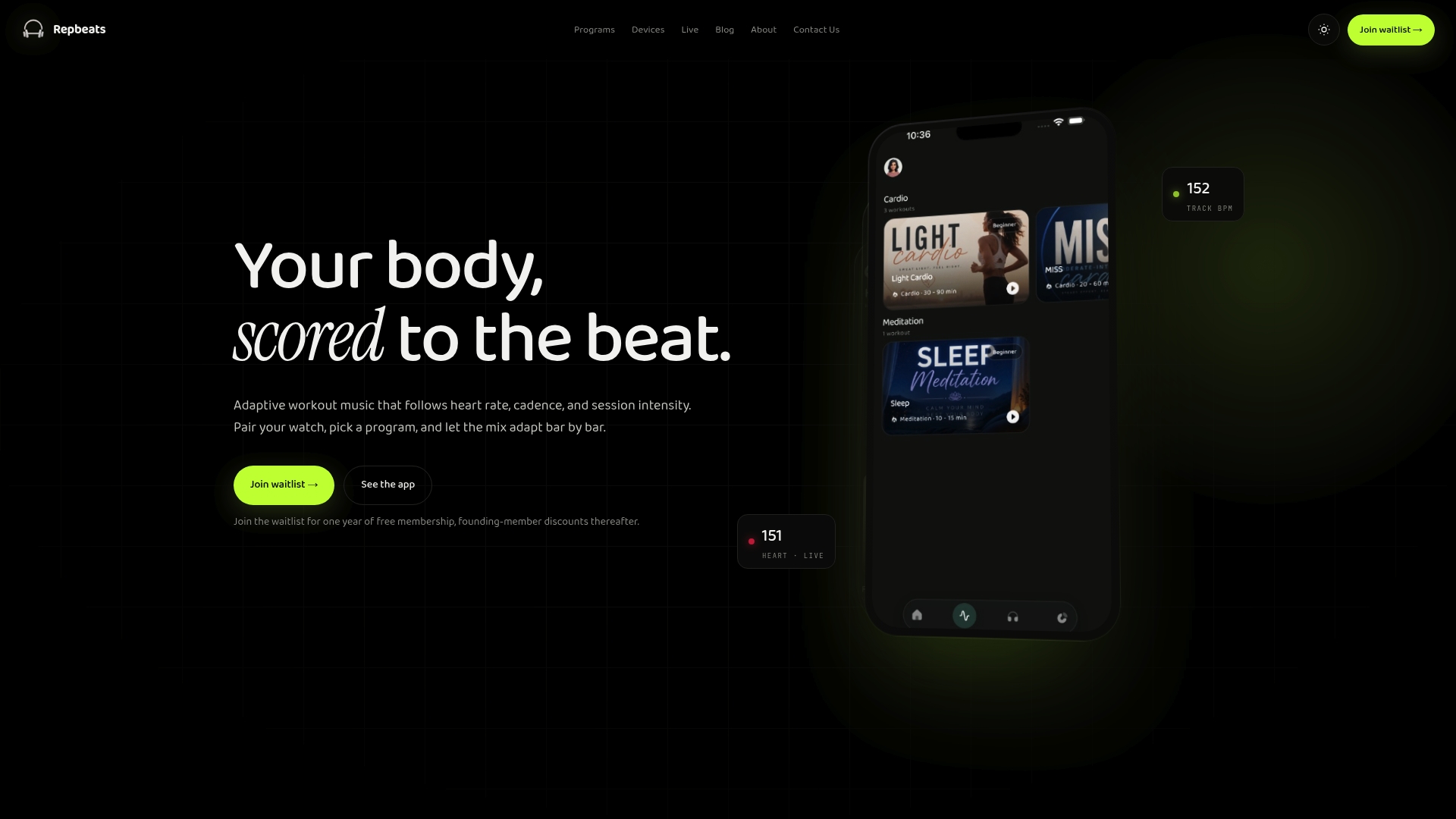
Some adaptive music apps sync music tempo to heart rate, cadence, and session intensity using live data from wearables like Apple Watch and Fitbit. These apps may use auto-DJ technology to update the music’s BPM every bar, allowing the soundtrack to shift dynamically with your run and walk intervals without manual playlist building.
For a C25K session, that looks like:
- Connecting a wearable so cadence and heart rate data flow into the app.
- Starting a run program and letting the auto-DJ adjust BPM as intervals change.
- Skipping the manual tempo matching described in the workflow above entirely.
A simple progression from playlists to adaptive music
I’d tell any beginner to start simple: an official audio guide or an alternating playlist is enough for the first few weeks of C25K, and fussing over BPM too early just adds friction you do not need yet.
Once your cadence feels consistent, usually after two to four weeks of regular intervals, tempo training starts paying off, and that is the point where adaptive music tends to add the most value rather than just novelty.
Try one session each way and compare how the effort felt, not just which one you enjoyed more.
— Jordan Mills
Try hands-free, tempo-matched music for your next C25K run
Building a playlist for every interval week gets old fast, and that is exactly the gap adaptive music closes. Some fitness apps adjust your music to cadence and heart rate automatically by using live data from wearable devices, removing the need to re-sort songs as your pace changes.
What that means for a C25K session:
- No manual playlist matching, since our auto-DJ updates BPM every bar as you move between run and walk intervals.
- Wearable-driven adjustments, so the music responds to your actual effort, not a fixed guess at your pace.
- One soundtrack across all nine weeks, rather than rebuilding playlists as your intervals change.
Check out the Repbeats app to see how adaptive music works for your training.
FAQ
Does Couch to 5K work well with music?
Yes. Alternating run/walk playlists and tempo-matched music both support C25K training, since a clear beat helps regulate pace and effort during intervals. Many beginners pair the official audio guide’s voice cues with their own music for the best of both.
Is Couch to 5K still free to use?
The original Couch to 5K audio guides remain available as free downloadable or streaming sessions through the official program. Some newer apps with added features, like custom music integration or wearable syncing, may charge for premium access, so check the specific app’s listing before assuming it is free.
What is the hardest week of Couch to 5K?
Most beginners find the middle weeks hardest, when run intervals lengthen and walk breaks shrink, asking for more sustained cadence than earlier weeks required. Tempo-matched music can help here, since small tempo shifts within about 3% encourage runners to hold a steady rhythm through longer stretches.
What are good songs to listen to while running a 5K?
Songs with a strong, steady beat and a tempo that matches your natural cadence tend to work best, rather than any specific genre. Runner’s World recommends alternating faster and slower tracks sized to your run and walk segments, which gives the playlist its own built-in interval cue.
Sources
- The power of auditory-motor synchronization in sports: motivational music and metronome effects (PLOS One)
- Music tempo: a tool for regulating walking cadence (Faulkner et al., 2021)
- Spontaneous entrainment of running cadence to music tempo (Sports Medicine - Open, 2015)
- The best playlist for your run/walk routine (Runner’s World)