Run to 170 BPM Drum and Bass and Match Your Cadence
Jordan MillsAugust 14, 2026 · 12 min read
Run to 170 BPM Drum and Bass and Match Your Cadence
Queue a playlist locked to 170–175 BPM and you have the right tempo for most easy-to-moderate runs, full stop. That range sits at the heart of modern drum and bass, and it happens to overlap with the cadence most recreational runners land on when they run relaxed and tall. Start with DJ KTWO’s DnB Workout & Running mix on Spotify. It holds a steady 170–175 BPM the whole way through, so you don’t get thrown off by a sudden tempo spike two miles in.
Here’s how to get moving in the next two minutes:
- Open Spotify or Apple Music and search “DnB Workout & Running” or “RUNNING 175 BPM.”
- Set your volume so you can still hear traffic, your breathing, and anyone talking to you.
- If 170 steps per minute feels too fast, run on the half beat instead. Land a foot every other snare hit.
Pro Tip: Test your headphones’ bone conduction or single-ear mode before race day. You want the bass, not the isolation.
Key Takeaways
Drum and bass at 170–175 BPM matches natural running cadence closely enough that most runners can queue a playlist and go without any manual tempo adjustment.
| Point | Details |
|---|---|
| Target BPM | Aim for 165–175 BPM for most runs; push toward 180+ only for short, hard intervals. |
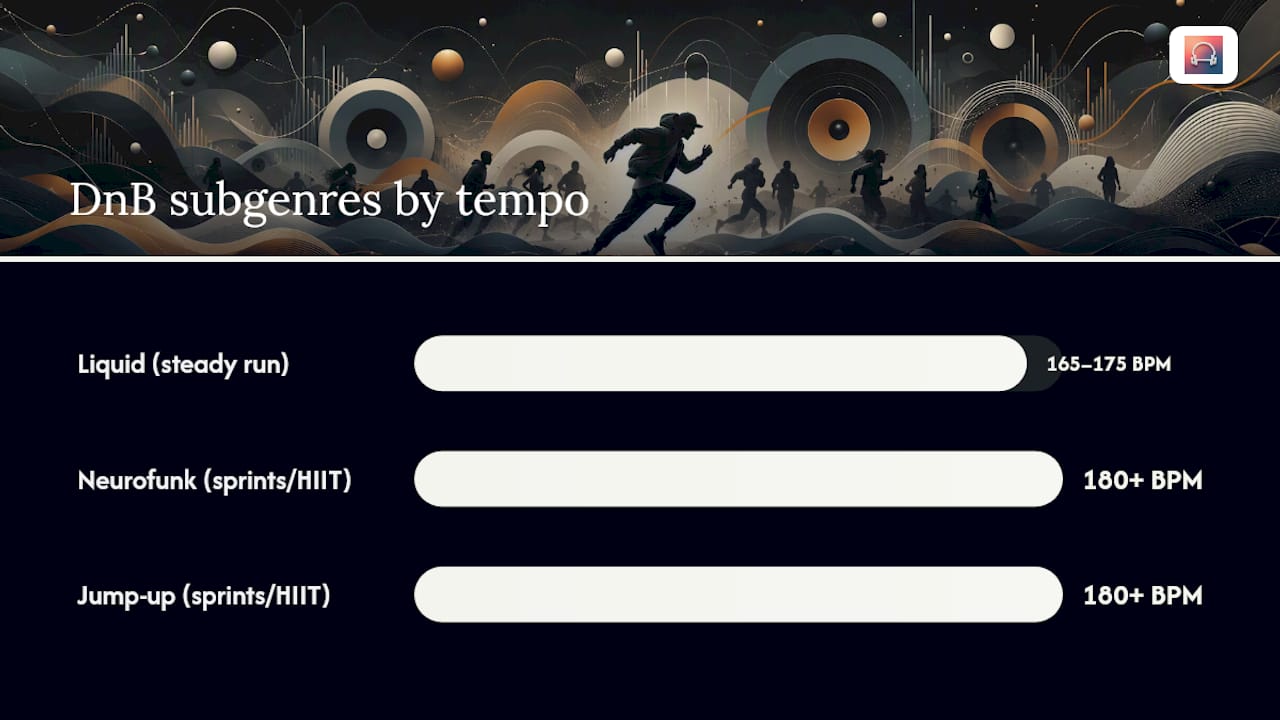
| Match subgenre to workout | Liquid for steady runs, neurofunk or jump-up for sprints and HIIT intervals. |
| Fastest playlist pick | Queue DJ KTWO’s DnB Workout & Running mix or RUNNING 175 BPM by Max Link. |
| Use half-time stepping | A 170 BPM track maps to roughly 85 steps per minute for endurance running. |
| Go adaptive next | Try Repbeats to let BPM adjust automatically to your cadence and heart rate. |
Where the Playlists and Facts Come From
The tempo claims and playlist recommendations in this article draw from a mix of music-reference sources and the curators who build these mixes for a living.
- Drum and bass — Wikipedia, for canonical BPM range and genre origin.
- Splice’s drum and bass explainer, for the modern 170–175 BPM production norm.
- DJ KTWO’s running playlist, for a hand-curated, tempo-consistent example.
- Sample Spotify and Apple Music playlists cited throughout, for real-world track lists and lengths.
| Source | Platform | Why it was chosen |
|---|---|---|
| DJ KTWO’s DnB Workout & Running | Spotify | Steady, curator-built 170–175 BPM flow |
| RUNNING 175 BPM (Max Link) | Spotify | Exact BPM labeling for tempo-locked runs |
| Drum ‘n’ Bass Workout | Apple Music | Long-form, frequently updated for sustained sessions |
| Wikipedia: Drum and bass | Reference | Canonical tempo range and genre background |
Table of Contents
- Best Drum and Bass Running Playlists to Queue Right Now
- Why Drum and Bass Actually Works for Running
- Which DnB Subgenre Fits Your Workout
- How to Build a Drum and Bass Playlist for Your Run
- Running Safely to High-Energy Music
- Turning 170 BPM Into a Cadence You Can Actually Run
- What I Queue Before a Long Run
- Let Your Playlist Adjust to You Instead of the Other Way Around
- Sources
Best Drum and Bass Running Playlists to Queue Right Now
You don’t need to build anything from scratch. A handful of curators have already done the tempo work for you, and they update often enough that the tracklists stay fresh. The strongest options split into two camps: playlists with an exact BPM in the title, and long-form mixes meant to carry you through an entire session without a repeat.
DJ KTWO’s DnB Workout & Running playlist is the clearest example of the first camp. It runs around 30 tracks at a steady 170–175 BPM and gets refreshed weekly, which matters more than people think. A playlist that never changes gets skipped, and a skipped playlist means you’re fumbling with your phone at mile three.
RUNNING 175 BPM by Max Link takes the opposite approach: a large number of songs, all locked to a single tempo, built for runners who want zero tempo guesswork. On Apple Music, the Drum ‘n’ Bass Workout playlist is a long playlist suitable for long runs or back-to-back training sessions where you don’t want to hit the end of a playlist mid-stride. Also worth a search: “DNB Run,” a naming convention that shows up across multiple curator pages and Spotify itself, including a Closer Music running playlist built the same way.
A few sample tracks and artists that show up repeatedly across these lists:
- Sub Focus, “Tidal Wave” and “Rock It”
- Wilkinson, “Afterglow”
- Metrik, “Freefall”
- Pendulum, “Propane Nightmares”
- Noisia, “Split the Atom”
Why Drum and Bass Actually Works for Running
The answer isn’t just “it’s fast and loud.” Drum and bass sits in a canonical tempo range of roughly 165 to 185 BPM, and modern production has settled into a narrower sweet spot of 170 to 175 BPM. That range lines up almost perfectly with the cadence coaches recommend for efficient running form, which is one reason curators keep landing on the same numbers instead of scattering across the genre’s full range.
The number that matters: Drum and bass runs 165–185 BPM overall, but the running sweet spot narrows to 165–175 BPM, close enough to natural cadence that most runners don’t need to consciously count steps.
There’s a second reason it works, and it has less to do with math and more to do with feel. DnB’s rhythmic structure puts the emphasis on a rolling breakbeat and a heavy, continuous bassline rather than a simple four-on-the-floor thump. That constant low-end pressure gives your body something to lean into during the middle miles, when motivation naturally dips.
- Full-frequency bass creates a physical pulse you feel in your chest, not just your ears.
- Breakbeat patterns keep the rhythm interesting without breaking tempo, so your form doesn’t drift.
- Curators consistently pick 170–175 BPM for workout mixes because it’s fast enough to feel urgent, but not so fast it fights natural stride length.
Which DnB Subgenre Fits Your Workout
Not all drum and bass sounds the same, and picking the wrong subgenre for the wrong run is a real mistake. Liquid DnB, with its smoother vocals and softer low end, works best for steady aerobic runs where you want energy without aggression. Artists like Netsky and High Contrast are common entry points here, and the genre’s mellower edges make it easy to hold a conversational pace for 40 minutes straight.

Rollers and minimal DnB sit a notch up in intensity, built for tempo runs where you’re pushing but not sprinting. Dancefloor-style DnB, the kind you’ll hear in playlists like NCS’s “drum & run”, leans harder into hype and works well for the middle third of a workout when you need a lift.
Neurofunk and jump-up are the two to save for intervals and sprints. Coaches and producers who work with running-focused mixes point to neurofunk’s darker, more aggressive low end as the right match for short, hard efforts, with artists like Noisia and Black Sun Empire leading that lane. Jump-up, with its bouncier basslines from acts like DJ Hazard, suits explosive HIIT intervals where you want a jolt, not a groove.
- Warm-up: liquid DnB, slower build, lighter percussion.
- Peak effort: neurofunk or jump-up, maximum aggression and drive.
- Cool-down: back to liquid or a rollers mix to bring your heart rate down gradually.
How to Build a Drum and Bass Playlist for Your Run
Building your own playlist beats grabbing a random mix once you know your target run length and effort profile. The rule is simple: match your BPM target to your natural cadence, or deliberately choose half-time stepping if the tempo runs too hot for comfortable full-step matching.
- Set a BPM goal. Most runners do well at 165–175 BPM for steady runs; sprinters and interval athletes can push toward 180+ for peak segments.
- Choose subgenres by phase. Liquid for the first ten minutes, dancefloor or neurofunk for the working set, liquid again for the cool-down.
- Check the transitions. A playlist that jumps from 165 to 180 BPM without warning breaks your rhythm; scan the tracklist order before you commit.
- Set the length to your run time plus a five-minute buffer, so you’re never scrambling to restart music at the finish line.
- Test one lap. Run the first ten minutes, check how your stride feels against the beat, and swap tracks or subgenres if something’s off.
Streaming platforms let you search by BPM directly in some cases, and pairing that with your wearable’s live cadence data turns guesswork into a real number you can chase.
Pro Tip: Check your actual cadence on a treadmill or watch app before picking a target BPM. Most people run 5 to 10 steps per minute slower than they think.
Running Safely to High-Energy Music
You can run to drum and bass safely, but only if you treat volume and awareness as non-negotiable rules rather than afterthoughts. Bass-heavy music has a way of creeping louder without you noticing, especially outdoors where ambient noise competes for your attention.
- Keep volume low enough to hear cars, cyclists, and other runners approaching from behind.
- Use one earbud, or a bone-conduction headset, on roads without dedicated sidewalks.
- Stick to familiar routes when running with music you haven’t tested before.
- Scan intersections and blind corners manually. Music should never replace a head check.
As for whether the pros do this: elite runners are split, and it usually comes down to the session. Many skip music entirely during races and hard workouts where pacing feedback and crowd energy matter more, but plenty use it for solo tempo runs and long steady efforts where motivation, not tactics, is the limiting factor. There’s no universal rule here, just a pattern worth borrowing: save the music for the runs where your only competition is your own attention span.
Turning 170 BPM Into a Cadence You Can Actually Run
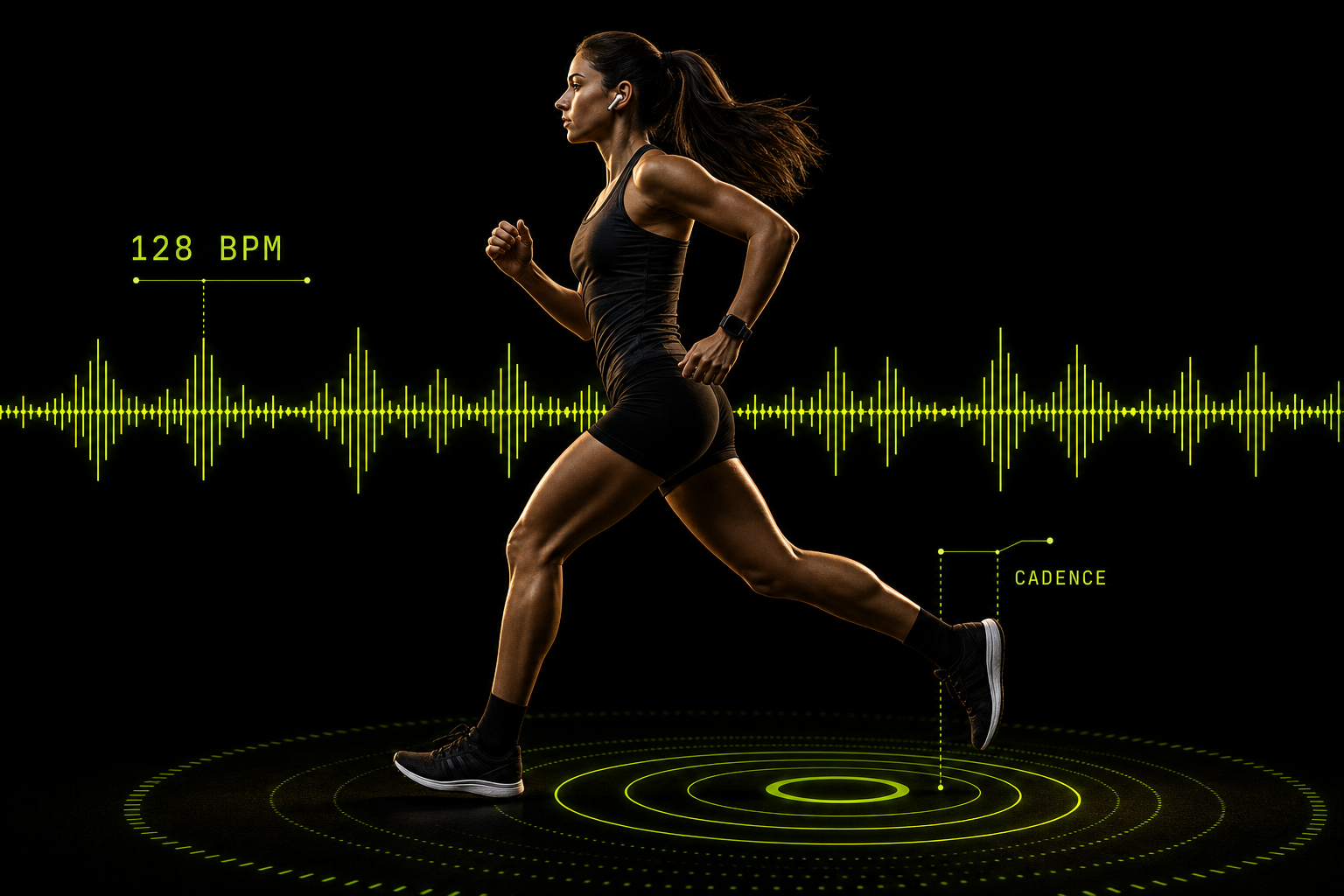
Here’s the math that makes drum and bass usable instead of exhausting: a 170 BPM track doesn’t require 170 steps per minute. Most runners step to every other beat, known as half-time stepping, which turns 170 BPM into an approximate 85 steps per minute cadence, well within normal running range.
- Warm up for five minutes without music and check your natural cadence on a watch or running app.
- Multiply that number by two. If your natural cadence is 168, you’re looking for tracks around 168 BPM for full-step matching, or 336 BPM equivalents (meaning any DnB track in the 165–175 range) for half-time matching.
- Load a playlist in that range and run the first mile paying attention to whether your foot strike naturally lands on the beat.
- Adjust. If you’re consistently landing off-beat, shift subgenres rather than fighting the mismatch.
Quick reference: A 170 BPM track maps to roughly 85 steps per minute in half-time stepping, the standard approach for endurance runners rather than sprinters chasing full-tempo turnover.
Sprinters and interval runners are the exception. Short, explosive efforts benefit from full-tempo matching where every beat corresponds to a footfall, since the effort is brief enough that turnover doesn’t need to be sustained. For everything else, half-time is the more sustainable approach, and it’s exactly the kind of calculation that wearable-synced apps can automate instead of leaving to mental math mid-run.
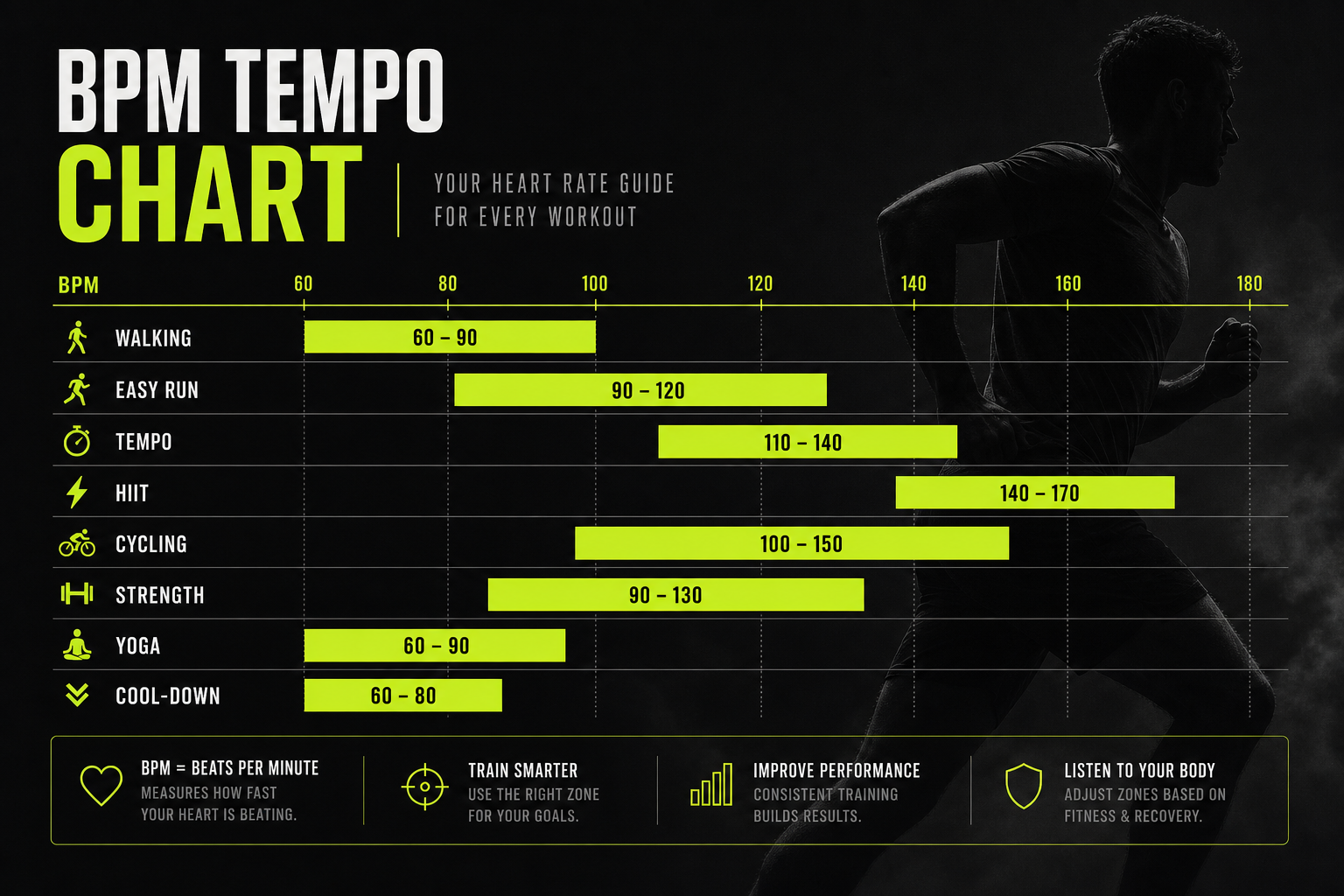
Pro Tip: If you run with a heart rate monitor, watch what happens to your BPM when the music tempo jumps. A sudden 15+ BPM cadence spike from a track change is a sign your playlist needs smoother transitions.
What I Queue Before a Long Run
My starter pick is DJ KTWO’s DnB Workout & Running playlist, and it’s not close. The tempo holds steady at 170–175 BPM from the first track to the last, which means you’re not renegotiating your stride every four minutes the way you would with a mixed-genre playlist that swings from 128 BPM house to 140 BPM trap and back.
I’ve spent enough time studying playlist curation and tempo theory to know that consistency beats novelty for anything longer than 20 minutes. A playlist that keeps surprising you with tempo shifts sounds exciting on paper, but it wrecks your rhythm in practice. What DJ KTWO gets right is structure: the tracklist flows like a DJ set built for a specific job, not a random shuffle of “good DnB songs.”
Try one run with it. Pay attention to where your foot lands relative to the beat around minute 15, when fatigue starts to change your form. If the tempo still feels right, you’ve found your baseline. If it doesn’t, that’s your signal to explore liquid DnB or drop toward the lower end of the 165–175 range instead of forcing it.
Let Your Playlist Adjust to You Instead of the Other Way Around
Static playlists get you most of the way there, but they can’t respond when your pace drops in mile eight or your heart rate spikes on a hill. Repbeats adapts the music’s BPM to your actual cadence and heart rate in real time, updating the beat every single bar instead of locking you into one fixed tempo for 45 minutes straight.
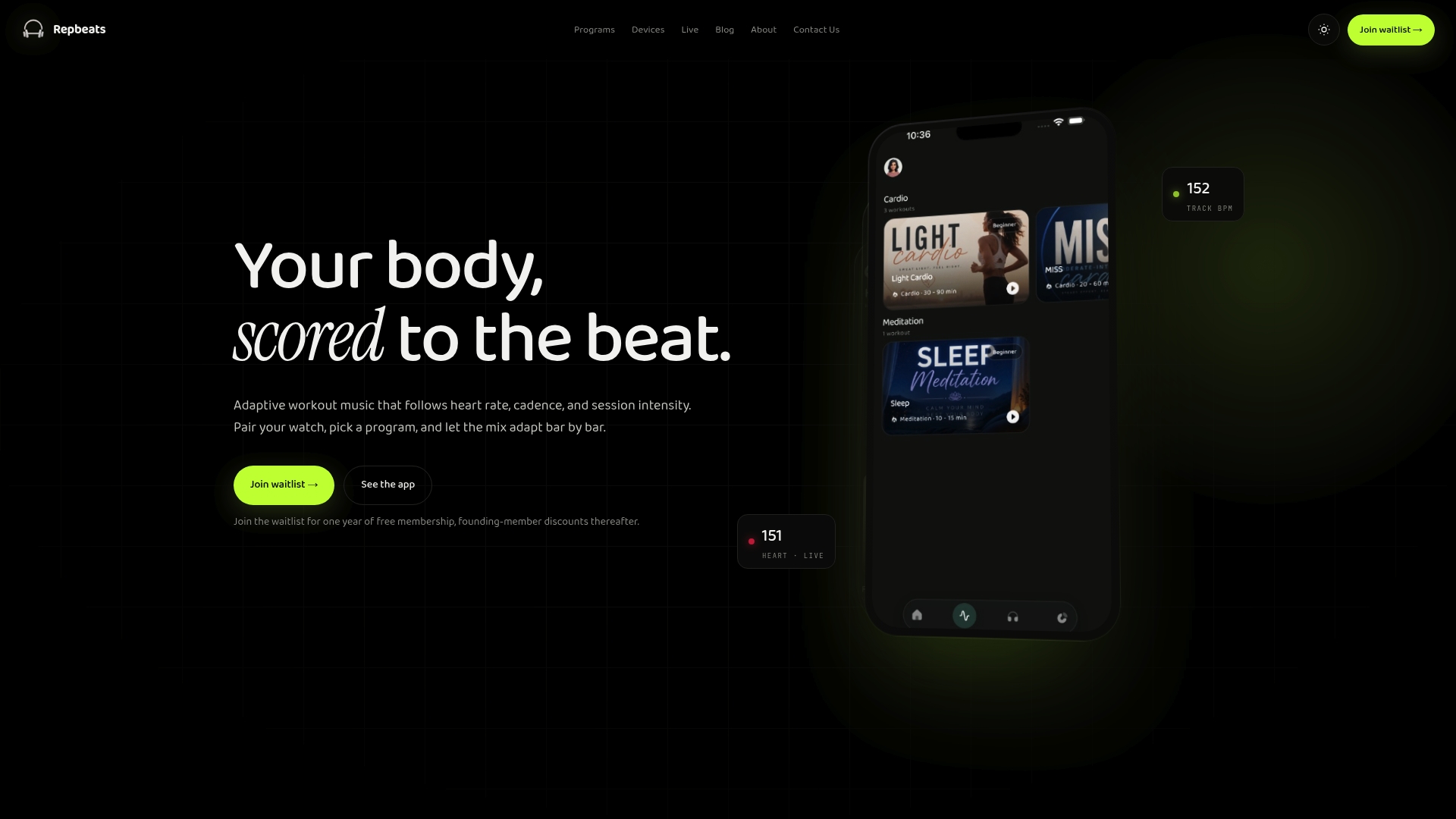
It works by pulling live data from wearables like Apple Watch and Fitbit, so the drum and bass you hear speeds up or eases off based on what your body is actually doing, not a static tracklist someone built for an average runner. Core features that matter here: automatic BPM adaptation synced to cadence, heart rate zone alignment, BPM-based track search so you can still hunt for that 175 BPM neurofunk cut, and training-mode presets for easy runs versus intervals. If curated playlists have gotten you this far, start a free trial with Repbeats and see what your run feels like when the music keeps pace with you instead of the other way around.
Sources
- Drum and bass - Wikipedia
- What is drum and bass music? — Splice
- DnB Workout & Running — Dancefloor Drum & Bass Playlist | DJ KTWO
- Drum ‘n’ Bass Workout - Playlist - Apple Music