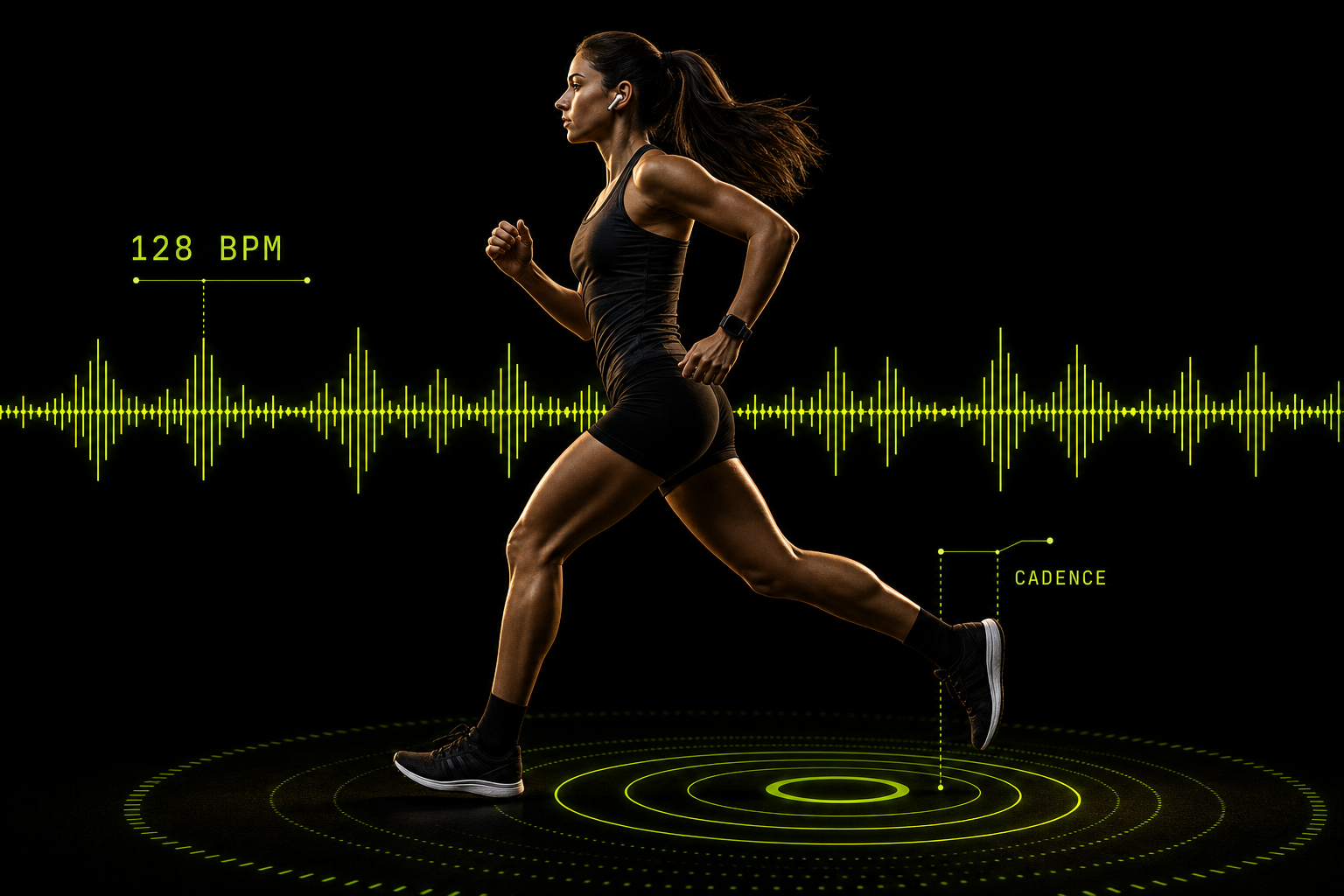
Fat Burn Zone Music: Pair 101 BPM With Heart Rate Sync
Jordan MillsOctober 11, 2026 · 8 min read

Fat Burn Zone Music: Pair 101 BPM With Heart Rate Sync
Fat-burn-zone music means a phase-matched playlist or adaptive soundtrack that cues your warm-up, steady-state work, intervals, and cooldown using tempo and, ideally, wearable syncing. Guidance from the American College of Sports Medicine and the American Heart Association supports using tempo and heart rate together, and adaptive tools like Repbeats build on that. Pick phase-matched tracks, monitor your heart rate, and treat music as a training aid, not a fat-loss shortcut.
TL;DR:
- Moderate activity generally falls at 50% to 70% of maximum heart rate, while vigorous activity reaches 70% to 85%; follow heart rate, not tempo.
- ACSM examples place steady cycling near 101 BPM and hard intervals around 137 BPM, but age, fitness, medication, and activity type affect what feels right.
- A 2019 review of 139 studies found music improved exercise affect and modestly helped performance, but barely affected heart rate or directly burned fat.
- Adaptive systems can adjust BPM using live heart rate or cadence, but test wearable accuracy and tempo shifts during an easy session before hard intervals.
- Save faster tracks for planned intervals, use calmer music for warm ups and cooldowns, and test songs against your actual effort.
Table of Contents
- 1. Playlist Ideas by Workout Phase and BPM
- 2. How BPM Tempo Relates to Your Heart-Rate Zones
- 3. Syncing Adaptive Music to Your Heart Rate and Cadence
- 4. What the Research Says About Music and Fat Loss
- 5. Steps to Build Your Own Fat-Burn-Zone Playlist
- 6. Why Adaptive Soundtracks Keep Workouts Consistent
- Try Adaptive Zone Templates With Repbeats
- FAQ
- Sources
1. Playlist Ideas by Workout Phase and BPM
Each phase of a workout calls for a different tempo, and matching tracks to the phase makes the session feel more structured and manageable.
- Warm-up: light pop or mid-tempo rock tracks ease your joints and heart rate up gradually.
- Steady-state zone work: house, synth-pop, or uptempo indie keeps a consistent cadence without pushing you into a sprint.
- Intervals: hip-hop, EDM, or drum-and-bass tracks with sharp beats cue hard efforts and recovery bursts.
- Cooldown: acoustic, lo-fi, or ambient tracks signal your body to slow down and your breathing to settle.
The logic behind each workout phase is simple: slower tempos keep your stride or pedal cadence relaxed, while faster tempos naturally encourage quicker movement. Testing matters here. A track that feels perfect for a steady run can cause overstriding if the beat is too aggressive for that phase. Save your most stimulating, high-BPM tracks for planned hard intervals instead of your warm-up, so you do not burn out early or strain your form before the real work starts.
2. How BPM Tempo Relates to Your Heart-Rate Zones
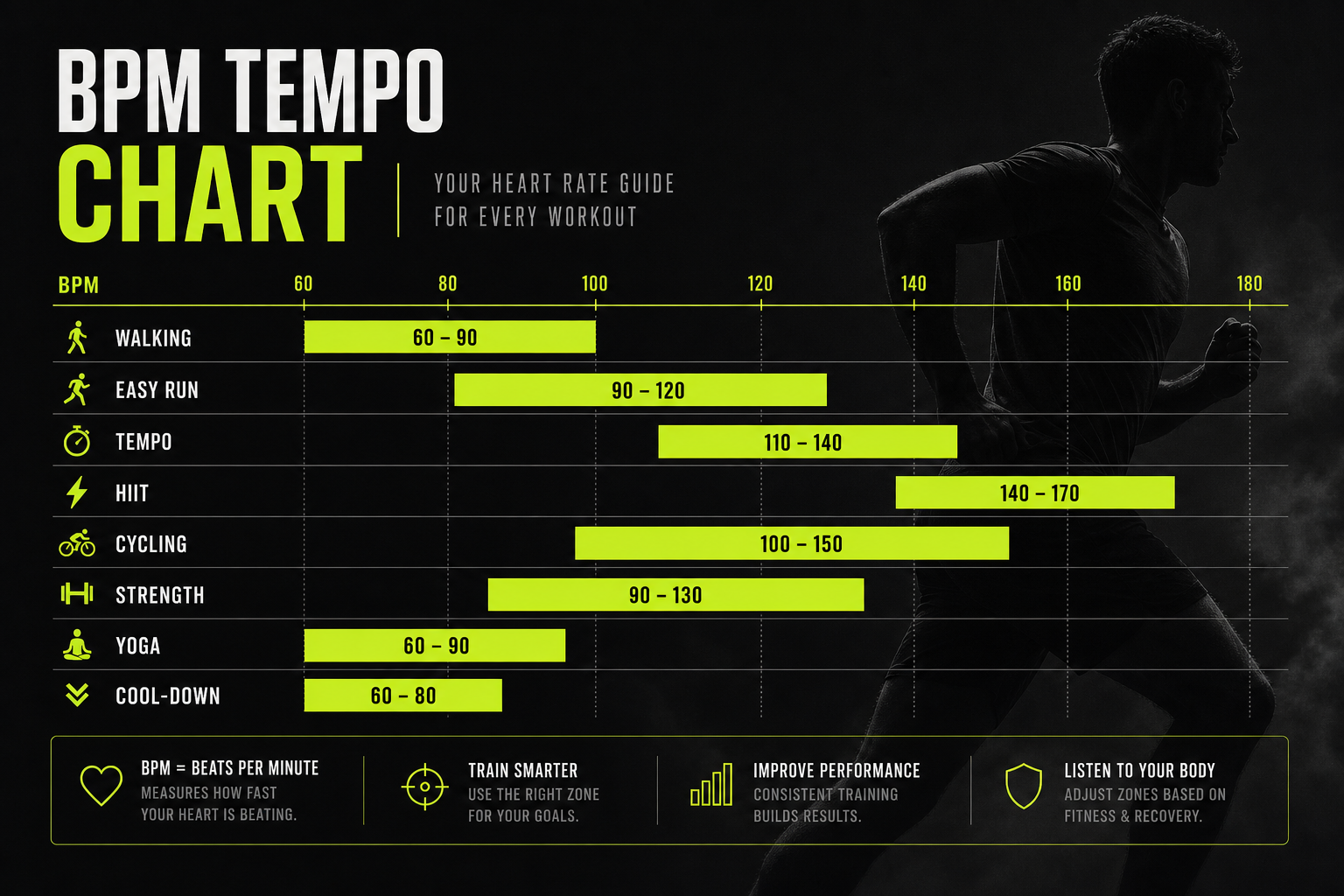
Beats per minute and heart rate are related but not the same thing. A song’s tempo is a cue that can nudge your pace or effort, while your heart-rate zone is an actual physiological measure. According to AHA target heart-rate guidance, moderate activity sits around 50 to 70% of your maximum heart rate, and vigorous activity runs about 70 to 85%.
ACSM’s playlist guidance offers example BPMs tied to workout phases, such as around 101 BPM for a steady-state ride and roughly 137 BPM for high-intensity segments. These numbers are starting points, not rules. Your age, fitness level, medications, and even the type of cardio you are doing all shift where your real heart-rate zones land. A 101 BPM track might match a comfortable pace for one person and feel slow for another whose steady-state zone sits higher. Use tempo as a guide and your heart rate as the actual feedback that tells you whether you are training where you intend to be.

3. Syncing Adaptive Music to Your Heart Rate and Cadence
Wearables changed what music can do during a workout. Instead of picking a static playlist and hoping the tempo holds up, adaptive systems read live data, heart rate, cadence, or session intensity, and adjust the soundtrack in real time. We built our app around this idea: auto-DJ technology updates a track’s BPM every bar, pulling live data from wearables so the music adjusts as your effort changes.
The practical benefit is that you get a constant tempo cue instead of a playlist that drifts out of sync with your pace halfway through a run. That can mean steadier pacing, fewer moments of checking a watch mid-interval, and better adherence to the workout you planned. Setting it up involves a short checklist:
- Pair your wearable with the app and confirm it is reading heart rate or cadence accurately.
- Choose a zone template that matches your planned session, whether that is steady cardio or intervals.
- Run a short test session first to confirm the tempo shifts feel natural before committing to a full workout.
Pro Tip: Test your wearable sync on an easy, low-stakes session before trying it during a hard interval day.
4. What the Research Says About Music and Fat Loss
A 2019 multilevel meta-analysis of 139 studies and 3,599 participants found that music reliably improves affect during exercise, with a moderate effect size, and produces smaller but measurable gains in physical performance and perceived exertion. The same analysis found a negligible effect on heart rate itself, meaning faster music does not automatically push your heart rate higher or burn more fat on its own.
A more recent systematic review of personalized interactive music systems found preliminary but promising evidence that adaptive systems improve physical activity levels and affect, though clear benefits for perceived exertion were not established. These reviews point to the same practical conclusion: music, especially adaptive music, helps you stay consistent and manage how hard a workout feels. It is a tool for training more regularly and controlling intensity, not a mechanism that burns fat by itself.

5. Steps to Build Your Own Fat-Burn-Zone Playlist
Building a playlist that actually supports your training takes a bit of planning before you touch a music app.
- Map your session timeline first. Decide how long your warm-up, steady work, intervals, and cooldown will each run.
- Assign BPM ranges to each segment using the phase guidance above as a starting point.
- Find two or three candidate tracks per segment so you have backups if one does not fit once you are moving.
- Use remixes or fitness edits when a song you love sits outside your target BPM range.
- Match track lengths to your interval timing so a song does not cut off mid-effort or mid-recovery.
- Run a low-stakes test session and adjust tracks based on how your heart rate and perceived effort actually respond.
Pro Tip: Keep a running note of which tracks consistently match your real effort level, then reuse them as your playlist’s dependable core.
6. Why Adaptive Soundtracks Keep Workouts Consistent
In my experience covering workout tools, the biggest advantage of phase-based or adaptive playlists is not intensity, it’s consistency. A runner who keeps the same warm-up and cooldown tracks session after session builds a reliable cue for their body to shift gears. That small routine, paired with checking heart rate rather than trusting tempo alone, keeps training sustainable over months rather than a single motivated week.
— Jordan Mills
Try Adaptive Zone Templates With Repbeats
We built Repbeats so you don’t have to build and rebuild playlists by hand every time your pace changes. Our app pairs with wearables, reads your heart rate and cadence live, and updates BPM every bar to keep the soundtrack matched to your effort.
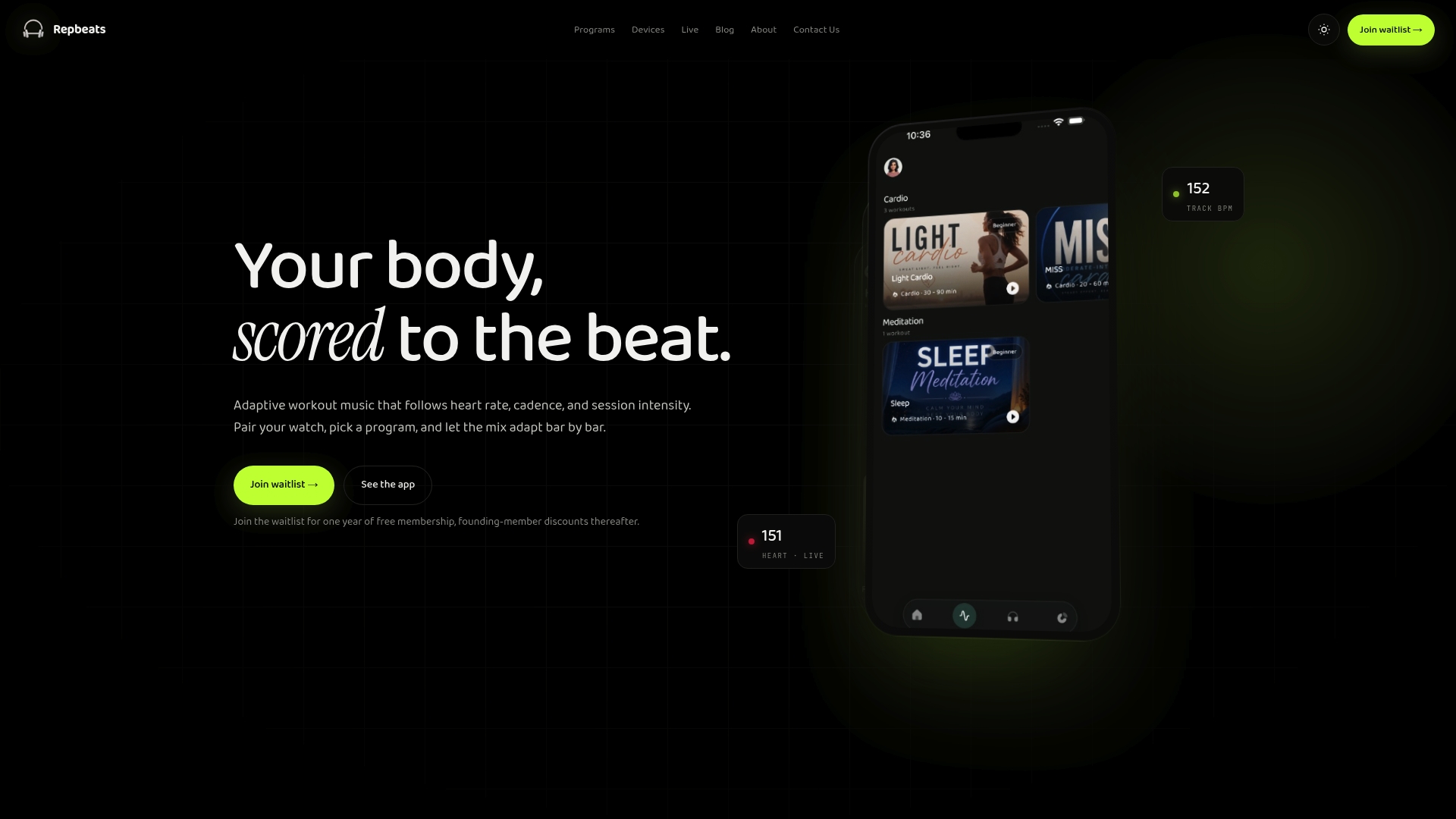
If you want to test a zone template without guessing at tempo math, pair your wearable and try a session through the Repbeats app to see how adaptive syncing feels in practice.
FAQ
What is the fat burn zone and how does music relate to it?
The fat burn zone refers to a moderate heart-rate range, roughly 50 to 70% of your maximum heart rate, where your body relies more heavily on fat for fuel. Music does not create this zone; it offers a tempo cue that can help you hold a steady, sustainable pace while your heart rate stays in range.
Does faster music burn more fat?
No, faster music does not directly increase fat burning. A 2019 meta-analysis found music has a negligible effect on heart rate itself, even though it can improve how a workout feels and modestly boost performance.
What BPM is best for fat-burning workouts?
ACSM guidance suggests around 101 BPM for steady-state cardio and higher ranges, up to 137 BPM or more, for high-intensity intervals. The right BPM depends on the workout phase and your individual pace, so treat these as starting points rather than fixed rules.
Can adaptive music apps like Repbeats help with zone training?
Adaptive systems that sync tempo to live heart rate and cadence data, like Repbeats, can help you maintain pacing and stay engaged with a workout by adjusting BPM in real time. Research on personalized interactive music systems shows promising adherence benefits, though evidence on direct performance gains is still preliminary.
How do I monitor my heart rate during music-based workouts?
A wearable device gives the most convenient real-time reading, but you can also check manually by counting your pulse for 30 seconds and doubling it. Always prioritize how your body feels and your actual heart-rate reading over the tempo of the music playing.
Sources
- Effects of Music in Exercise and Sport: A Meta-Analytic Review
- Music that moves: Building a playlist that hits (ACSM)
- Target heart rates (American Heart Association)
- Personalised interactive music systems for physical activity and exercise (systematic review)