The Right VO2 Max Workout Music: BPM Zones That Work
Jordan MillsAugust 22, 2026 · 13 min read
The Right VO2 Max Workout Music: BPM Zones That Work
For running VO2 max intervals, match cadence with tracks in the 160-180 BPM range. For cycling-based high-intensity efforts, the 120-140 BPM window does more work than most people expect. Both numbers exist for the same reason: music that lines up with your body’s rhythm lowers perceived effort and helps you hold intensity longer than silence or a random shuffle ever will.
The fastest way to test this yourself:
- Pick 2 to 3 songs already tagged in your target BPM range using a metadata tool.
- Load them for your next VO2 max block and note how the effort feels compared to your usual playlist.
- If you have a compatible wearable, try an adaptive music app that adjusts BPM in real time instead of locking you into a static list.
Key Takeaways
Tempo-matched music, whether hand-built or wearable-synced, extends high-intensity effort duration and lowers perceived exertion during VO2 max training.
| Point | Details |
|---|---|
| Match BPM to mode | Use 160-180 BPM for running VO2 max repeats and 120-140 BPM for cycling efforts. |
| Entrainment lowers effort | Syncing movement to a beat reduces perceived exertion without changing physiological demand. |
| Zone-specific tempo matters | Warm-up, threshold, and VO2 max blocks each need a different BPM range, not one playlist. |
| Verify before you trust it | Cross-check streaming metadata with a dedicated BPM tool before building hard intervals around a track. |
| Adaptive apps close the gap | Repbeats adjusts BPM in real time from wearable data instead of locking you into a static list. |
Table of Contents
- Why Tempo-Matched Music Changes VO2 Max Performance
- VO2 Max Training Zones and Their BPM Ranges
- Playlist Examples Mapped to BPM and Workout Role
- Building a VO2 Max Playlist Step by Step
- Syncing Music to Your Cadence or Heart Rate
- About the Author and How Repbeats Approaches This Problem
- What Most Playlist Advice Gets Wrong
- Try Adaptive, Wearable-Synced Music for Your Next VO2 Max Session
- Sources
Why Tempo-Matched Music Changes VO2 Max Performance
Your body has a natural tendency to sync movement to external rhythm. Exercise scientists call this entrainment, and it is the reason a strong beat can make a hard interval feel a notch easier without changing the actual physiological demand. When footstrike or pedal stroke locks onto a musical pulse, movement becomes marginally more efficient, and that shows up as lower perceived exertion at the same power output or pace.
The strongest recent evidence for this comes from a 2026 study on high-intensity cycling involving 29 fit adults. Cyclists using self-selected music, commonly falling in the 120-140 BPM range, sustained high-intensity efforts about six minutes longer than they did in silence.
Six minutes is a massive margin in a VO2 max context, where most repeats last two to five minutes total.
That finding comes with a real caveat: it was a cycling protocol, and cycling cadence tolerates a lower BPM range than running does. Running mechanics are less forgiving. Runner’s World points out that runners chasing faster paces often need tracks in the 170-180 BPM band, since running cadence typically sits higher than cycling RPM. Drop a runner onto a 128 BPM cycling anthem during a VO2 max repeat, and stride mechanics can drift as the body tries (and fails) to entrain to a beat that’s mismatched with its natural cadence.
A few mechanisms worth knowing before you build a playlist:
- Entrainment syncs stride or pedal stroke to the beat, which can lower the metabolic cost of a given pace.
- Perceived exertion drops when tempo matches movement, even though heart rate and oxygen consumption stay the same.
- Arousal from an energetic track can push you through the mental low point of an interval, separate from any tempo effect.
- Individual variability is real. Some athletes respond strongly to music, others barely notice it, and that difference alone means testing your own response matters more than chasing an exact number.
Editorial guidance from Lucid Therapeutics frames 125-140 BPM as a general motivational sweet spot for moderate-to-high intensity work, but warns that tempos outside that window start to lose their entrainment effect. That range works well for cycling and general conditioning. Running VO2 max intervals usually need to push past it.
VO2 Max Training Zones and Their BPM Ranges
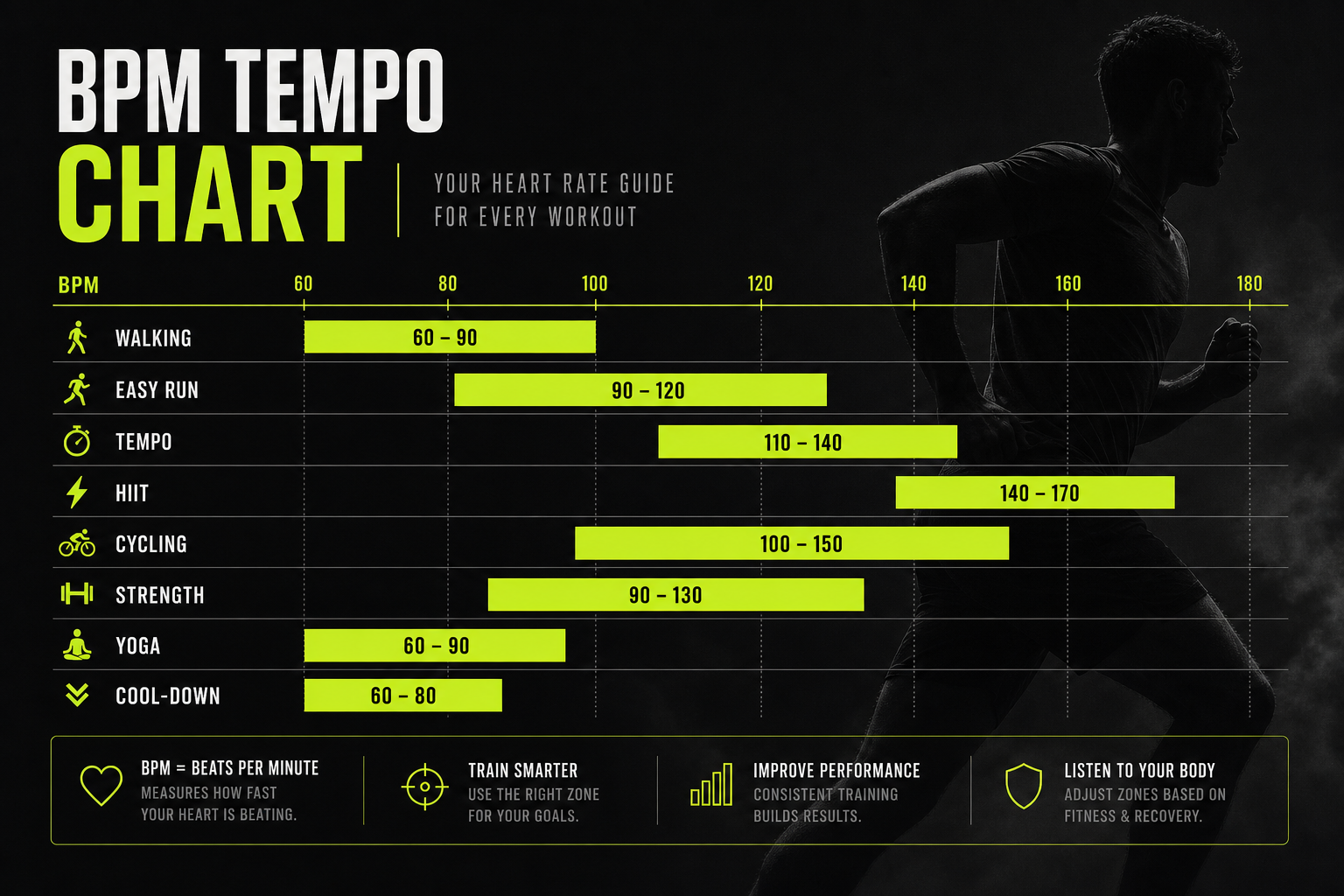
VO2 max training breaks down into zones defined by intensity and purpose, and each zone benefits from a different tempo range. Treating every zone with the same playlist wastes the entrainment effect where it matters least and misses it where it matters most.
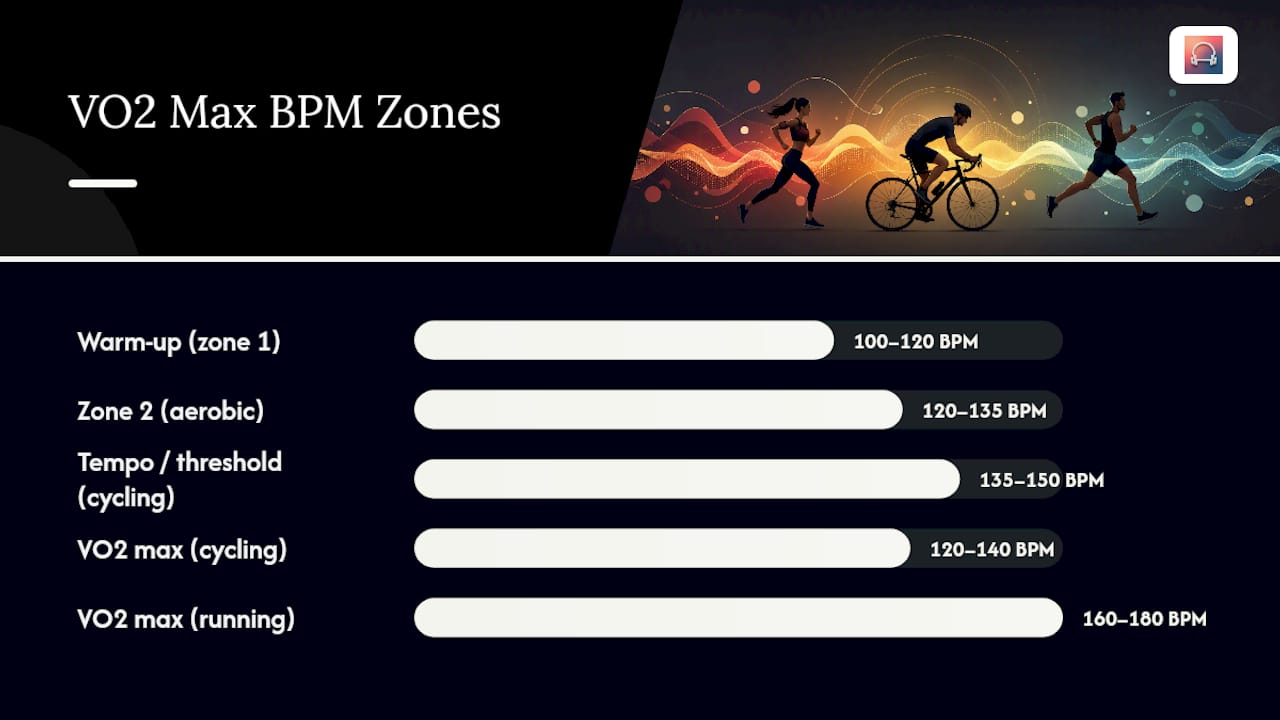
Warm-up (zone 1, easy effort). Target 100-120 BPM. The goal here is gradual activation, not motivation, so slower tracks help you settle into pace without over-arousing before the hard work starts.
Zone 2 (aerobic base). Target 120-135 BPM for either mode. This is steady, conversational-pace work, and moderate tempo keeps rhythm consistent without pushing arousal higher than the effort calls for.
Tempo/threshold work. Target 135-150 BPM for cycling, 150-165 BPM for running. This zone sits right below VO2 max intensity, and tempo needs to climb accordingly to match the faster cadence or higher power output.
VO2 max intervals. Target 120-140 BPM for cycling, 160-180 BPM for running. This is where the biggest split between modes shows up, because cycling cadence rarely needs to exceed 140 BPM even at maximal effort, while running cadence at hard pace commonly runs 170-180 steps per minute.
A few practical notes worth flagging by mode:
- Cycling RPM stays relatively stable across intensities, so cycling playlists can lean on the same 120-140 BPM band across tempo and VO2 max work.
- Running cadence rises meaningfully as pace increases, which means a single “workout playlist” rarely covers both threshold and VO2 max running effectively.
- Short, all-out intervals (30-90 seconds) tolerate higher BPM tracks better than longer efforts, since fatigue and form breakdown matter less over a short window.
- Longer VO2 max repeats (3 to 5 minutes) call for BPM choices that you can actually sustain mechanically for the full interval, not just survive for 20 seconds.
Pro Tip: If you’re a runner and a track feels “too fast” to hold form on, don’t force it. Drop to the nearest half-time subdivision (a 176 BPM track often has a comfortable 88 BPM double-time feel) or pick a slightly slower song instead of fighting the beat.
Running at high BPM without adequate mileage base can encourage overstriding as you chase the beat rather than your natural mechanics. If a track pushes your cadence higher than your usual efficient range, treat that as a signal to swap it, not a target to chase.
Playlist Examples Mapped to BPM and Workout Role
Building a VO2 max playlist works best as blocks, not one long shuffle. Each block has a job, and the BPM should match that job.
Short VO2 repeats (30-90 seconds), 160-180 BPM for running, 130-140 BPM for cycling:
- Instrumental or remix versions of high-energy electronic tracks work well here, since lyrics can pull focus during an all-out effort where breathing is labored.
- Drum-and-bass or hard-house remixes commonly sit in the 170-180 BPM range natively, which lines up directly with running VO2 max cadence.
- For cycling, uptempo pop remixes tagged around 128-135 BPM (a common dance remix standard) slot in cleanly.
Longer tempo/threshold sets, 150-165 BPM for running, 135-150 BPM for cycling:
- Rock and alternative tracks with a driving, steady beat tend to sit in this range naturally and hold energy over 5 to 10 minute blocks.
- Hip-hop and pop remixes tagged in the 140s work well for cycling threshold sets, where sustained power matters more than peak arousal.
Warm-up and cooldown windows, 100-120 BPM:
Place your slowest tracks at the very start and very end of the session. A warm-up block that ramps from 100 to 120 BPM over 8 to 10 minutes mirrors the physiological ramp of a proper warm-up, and a cooldown that mirrors it in reverse helps signal the session is winding down.
If you love a track that’s slightly off your target tempo, you don’t have to abandon it. Many streaming platforms and remix communities offer sped-up or slowed-down edits, and searching a song title alongside “BPM edit” or checking a remix pool like BBC Sounds’ pace-setter mixes often turns up a version that fits your zone. Instrumental edits are worth prioritizing for any interval where breathing gets labored. Trying to sing along or track lyrics during an all-out 90 second repeat is its own kind of distraction. For more structured interval-specific examples, Repbeats has a breakdown of BPM playlists built specifically for interval running.
Building a VO2 Max Playlist Step by Step
A workable VO2 max playlist takes about 20 minutes to assemble the first time, and less on repeat sessions once you have a template.
- Define your workout structure first. Know your interval length, rest length, and target zone before picking a single song. A 4x4 minute VO2 max session needs a different BPM plan than 10x30 second all-outs.
- Verify BPM before you trust it. Streaming platform metadata isn’t always accurate. Cross-check suspect tracks with a dedicated BPM tool like SongBPM or Tunebat before building them into a hard interval block.
- Assemble blocks in the order you’ll use them. Warm-up, then work intervals, then rest-interval tracks (slightly lower BPM), then cooldown. Order matters more than most people assume, since a jarring tempo jump between songs can throw off pacing mid-session.
- Smooth the transitions. Crossfading between tracks in a similar BPM range prevents the abrupt tempo shifts that break entrainment. A jump from 175 BPM straight into 110 BPM mid-interval is disruptive even if both songs are individually fine.
- Test it over 2 to 4 sessions and adjust. A playlist that feels perfect on paper sometimes doesn’t hold up against real fatigue. Swap tracks that feel mismatched once you’re a few sessions in.
Pro Tip: Keep a simple running note of which specific tracks you skip mid-workout. That pattern tells you more about your real tempo preference than any BPM chart will.
Syncing Music to Your Cadence or Heart Rate
Manual BPM matching gets you most of the way there, but it has a ceiling: a static playlist can’t adjust when your pace drops in the third interval or your heart rate climbs faster than expected on a hot day.
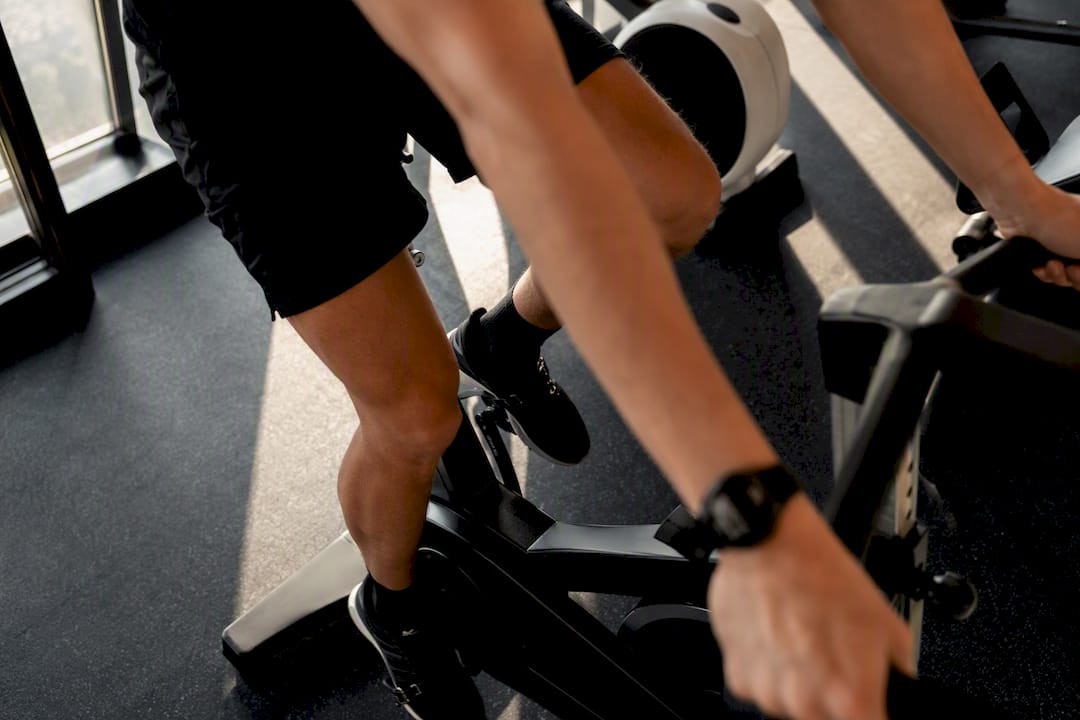
Two approaches solve different problems. Cadence-synced music matches tempo to your actual stride rate or pedal cadence in real time, which works well when your pacing target is mechanical (steps or revolutions per minute). Heart-rate-synced music adjusts tempo based on physiological load, which fits VO2 max work better since the whole point of the zone is a heart-rate or oxygen-consumption target, not a fixed pace.
This is the gap adaptive music apps are built to close. Rather than locking you into a pre-built list, they update BPM continuously, often bar by bar, using live data pulled from wearables like Apple Watch or Fitbit. A Filtr HIIT playlist on Spotify is genuinely useful and tempo-consistent, but it’s fixed the moment you press play. It doesn’t know your heart rate spiked ten seconds early on interval three.
Setup is usually simple: pair your wearable through Bluetooth, grant the app heart-rate and cadence permissions, and let Fortivus’s AI Training System read live data during your session. A few things worth expecting going in:
- Cadence sync works best for running and cycling where a mechanical rhythm target exists.
- Heart-rate sync fits VO2 max and threshold work best, where the training target is physiological, not just a pace number.
- Static BPM playlists still have a place. They’re free, easy to build, and fine for a workout where perfect precision matters less.
- Adaptive syncing won’t turn a mediocre training plan into a good one. It removes tempo friction, but the actual interval structure still has to be sound.
For a deeper look at wearable-based setups and integration tips, Repbeats covers adaptive music best practices for athletes in more detail.
About the Author and How Repbeats Approaches This Problem
Jordan Mills writes about training methodology and the intersection of music and endurance performance, drawing on published exercise science and hands-on testing of tempo-based training tools. This article’s zone-to-BPM mapping and playlist structure reflect that combined approach: peer-reviewed findings on entrainment paired with practical workflows readers can put into a session the same day.
Repbeats builds on that same foundation with technology rather than manual playlist curation. Its core capabilities:
- Real-time BPM adjustment tied to live heart rate and cadence data, updated every bar rather than locked at the start of a session.
- Direct integration with Apple Watch and Fitbit, so the app reads your actual physiological state instead of guessing from a fixed plan.
- Auto-DJ technology that transitions between tracks without the jarring tempo jumps a manually built playlist can produce.
- Program support for both cardio intervals and meditation, covering the full range of a training week rather than just hard sessions.
For readers who want to see how tempo-syncing behaves during actual VO2 max repeats rather than reading about it, Repbeats’ explainer on why music tempo affects exercise breaks down the underlying mechanics further.
What Most Playlist Advice Gets Wrong
Most workout music guides treat BPM like a universal dial: pick a number, apply it to every session, done. That’s backwards. The data on cycling and the data on running point in different directions for a reason, and treating VO2 max training as one uniform tempo problem is how people end up frustrated that their “hype playlist” isn’t actually helping during the interval that matters most.
The bigger blind spot is static thinking. A playlist built for your fitness level in January doesn’t automatically fit your cadence in June, and a track that felt perfect on interval one can feel wrong by interval five once fatigue sets in.
Pro Tip: Adjust your target BPM in small increments, roughly 3 to 5 BPM at a time, rather than jumping straight from 140 to 170. Your body adapts to tempo the same incremental way it adapts to training load.
Test any BPM range across more than one session before deciding it works. A single good workout can be luck.
— Jordan Mills
Try Adaptive, Wearable-Synced Music for Your Next VO2 Max Session
Building a tempo-matched playlist by hand works, but it means re-checking BPM metadata, reordering blocks, and still ending up with a static list that can’t react when your heart rate spikes early or your pace drifts mid-interval. Repbeats removes that manual work entirely.
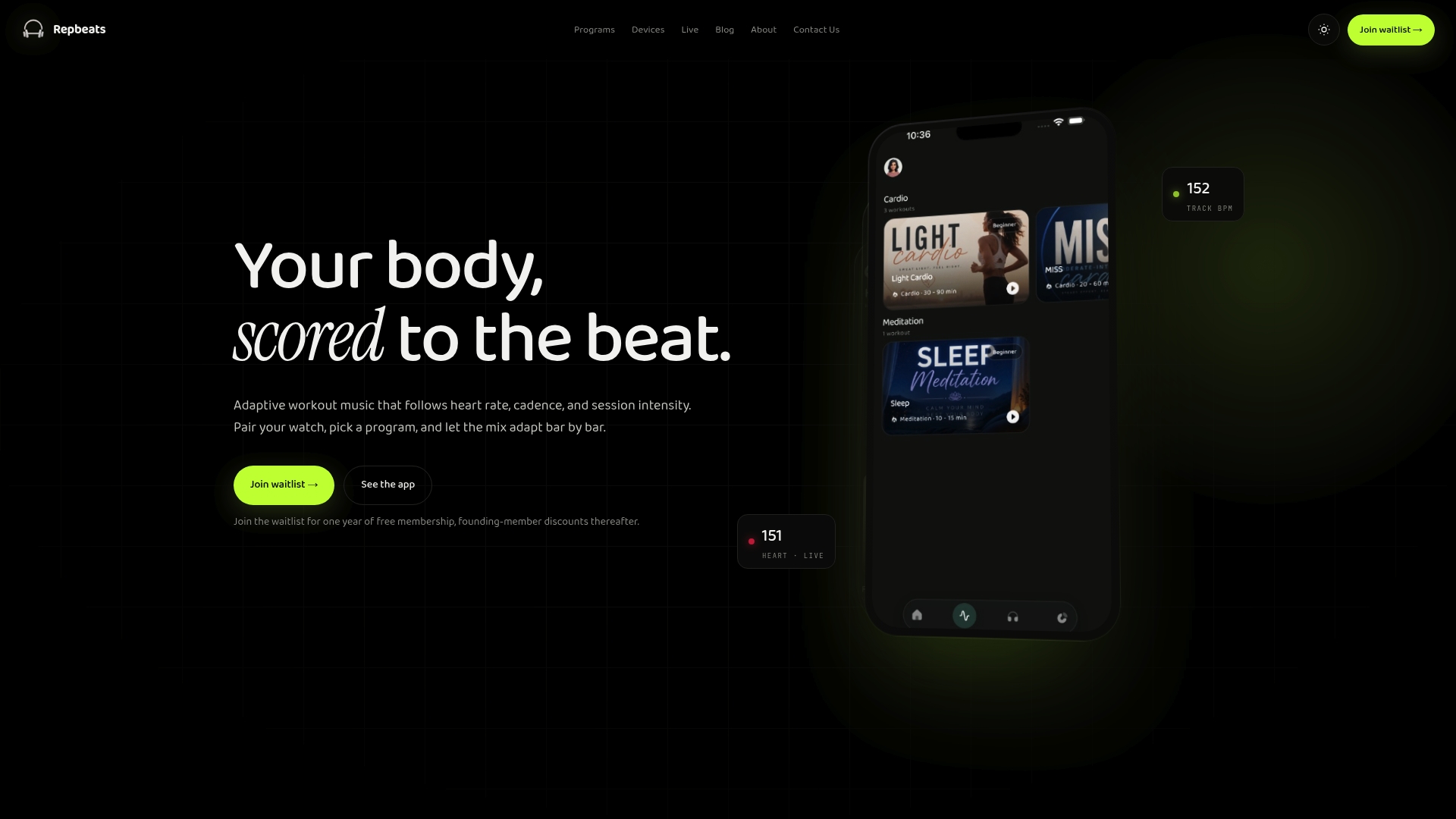
Repbeats reads live data from Apple Watch or Fitbit and adjusts BPM every bar, so the soundtrack tracks your actual heart rate and cadence through warm-up, VO2 max repeats, and cooldown without you touching a single setting mid-session. The auto-DJ engine handles transitions, so there’s no jarring tempo jump between blocks and no time spent hunting for the right remix. If you’ve already tried the manual BPM approach in this article and found it works but is a hassle to maintain, this is the natural next step. Start with Repbeats and let it build your first adaptive VO2 max session around your own live data.
Sources
- The best running playlists for every workout (Runner’s World)
- Your hype playlist is lying to you (Lucid Therapeutics)