How to Adapt Music to Meditation Depth
Jordan MillsJuly 3, 2026 · 11 min read
How to Adapt Music to Meditation Depth
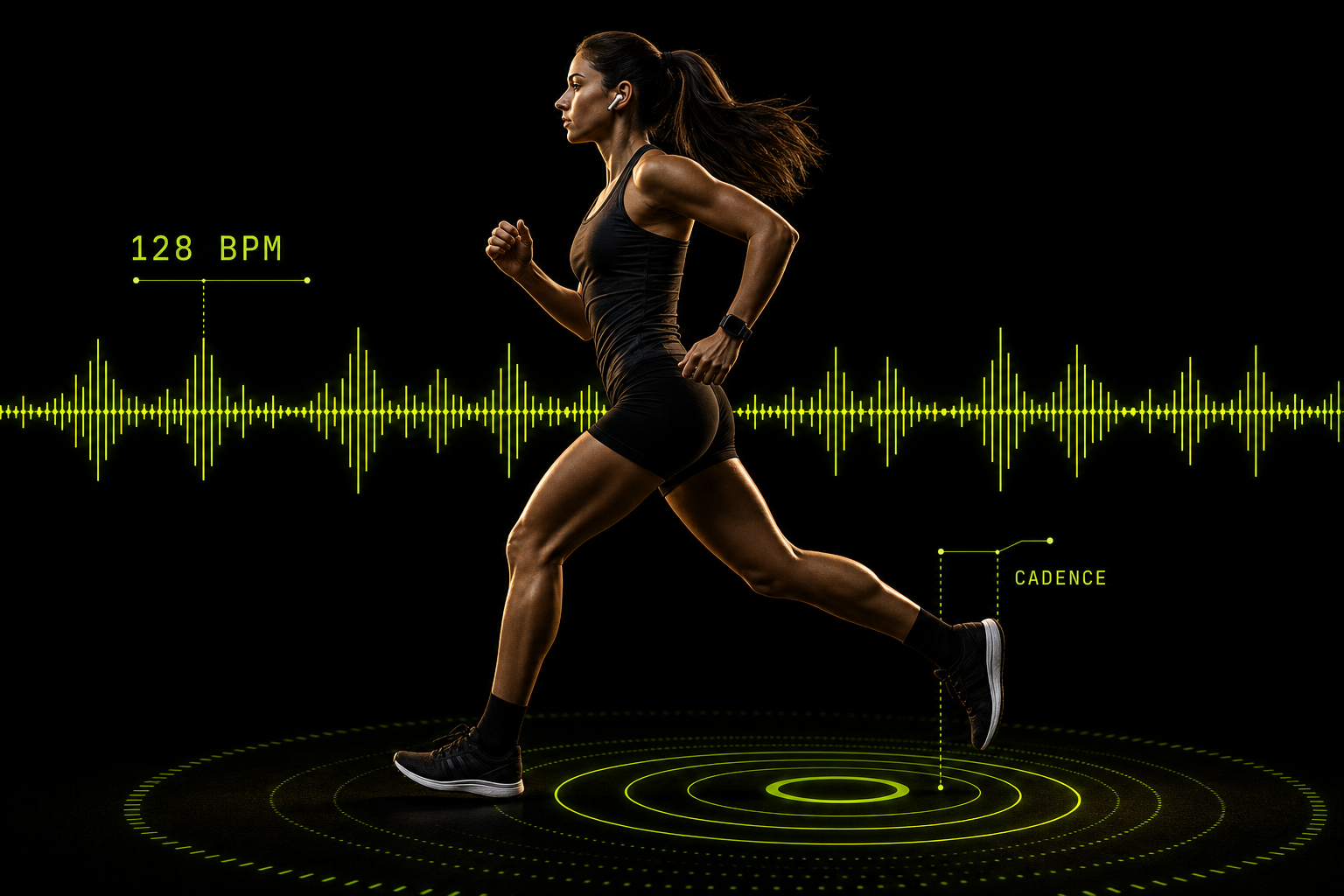
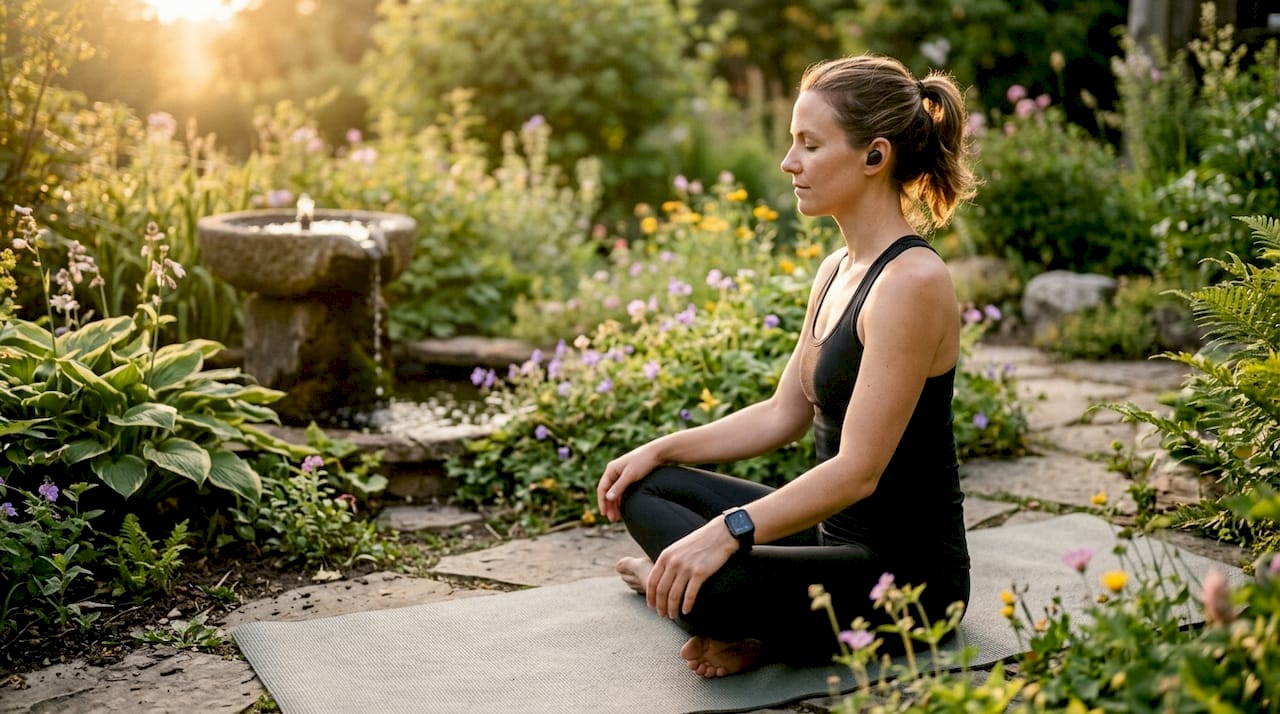
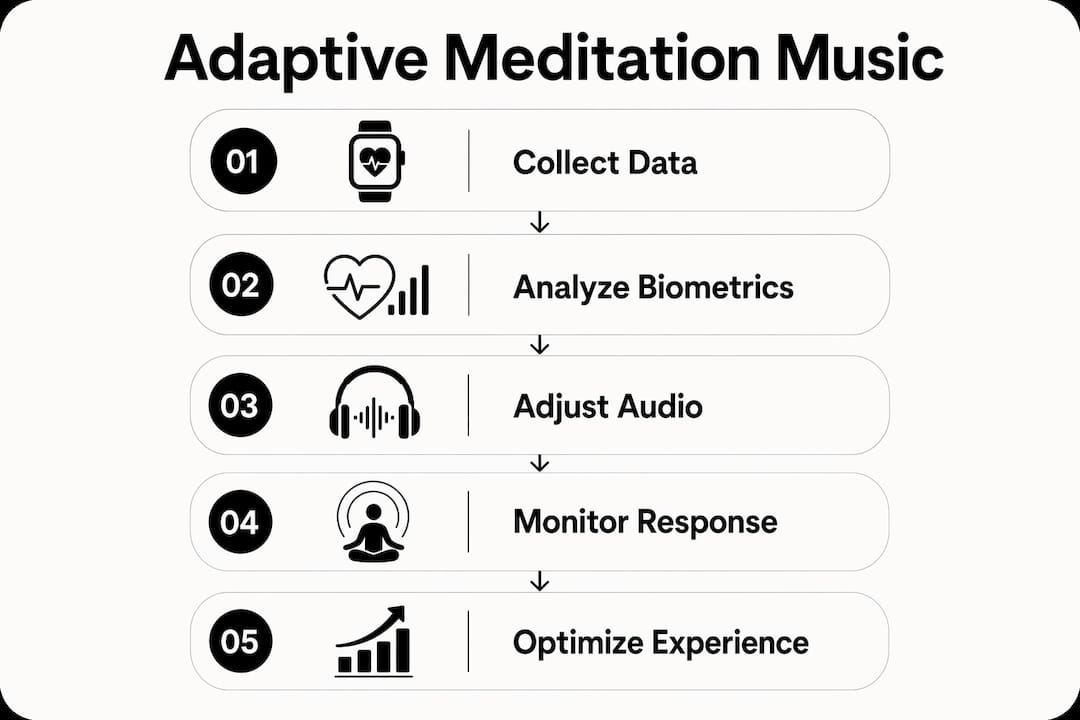
Adapting music to meditation depth means using dynamic soundscapes that respond in real-time to your body’s rhythms, deepening relaxation and sharpening mindfulness. Static playlists treat every meditator the same, regardless of how far into a session they’ve gone. The result is music that either overstimulates a light session or fails to carry you into deeper states. Adaptive meditation music, the recognized term for this practice, solves that by syncing audio properties like tempo, complexity, and instrumentation to your physiological signals. Repbeats applies this same biometric-responsive logic to fitness and meditation, updating music every bar based on live wearable data from devices like Apple Watch and Fitbit.
How to adapt music to meditation depth using soundscapes
The most effective music for deep meditation changes as you do. Static tracks set a fixed mood, but they cannot respond when your heart rate drops, your breathing slows, or your nervous system shifts into a parasympathetic state. Adaptive soundscapes solve this by reading those signals and adjusting the audio in real time.
Adaptive audio engines adjust tempo, key, and texture every 1–5 seconds based on biometric data to maintain meditation depth and prevent auditory fatigue. That interval matters because it is fast enough to feel continuous but slow enough to avoid jarring transitions. The result is music that breathes with you rather than playing over you.
Dynamic mapping reduces musical complexity as relaxation deepens, shifting from active melodies to drone-like structures. This mirrors what your brain actually needs: less cognitive input as awareness narrows inward. Music that stays complex while you try to rest creates a subtle tug-of-war between attention and stillness.
The standard industry term for this process is biometric-responsive audio adaptation. It covers any system that reads physiological input and adjusts musical parameters accordingly. Understanding that term helps you evaluate apps and platforms with precision rather than relying on vague marketing language.
What types of music work best for deep meditation?
Seven music types consistently support deeper meditative states, and each works through a different mechanism.
| Music Type | Primary Benefit | Best For |
|---|---|---|
| Ambient | Minimal cognitive demand | General relaxation and open awareness |
| 432 Hz tuning | Perceived warmth and resonance | Tonal sensitivity and body-focused practice |
| Binaural beats | Brainwave entrainment | Theta and delta state induction |
| Nature soundscapes | Familiarity and safety response | Beginners and anxiety-prone meditators |
| Breath-paced soundscapes | Nervous system regulation | Deep relaxation and breathwork sessions |
| Gentle lo-fi / electronic | Soft rhythmic anchor | Focus-based mindfulness |
| Minimalist classical | Emotional neutrality | Extended silent-adjacent sessions |
Breath-paced soundscapes targeting 4–6 breaths per minute improve nervous system regulation 30–40% more than standard ambient tracks. That gap is significant. It means the pacing of the music, not just its genre, determines how effectively it supports physiological calm.
Binaural beats work differently. They require headphones and deliver two slightly different frequencies to each ear. The brain perceives the difference as a third tone, which can guide neural activity toward theta states associated with deep meditation. This is one of the few music types with a direct neurological mechanism rather than a mood-based effect.
Instrument choice matters as much as genre. Low-activity instruments like drone synth pads and Tibetan bowls support peripheral auditory awareness, which allows deeper relaxation than instruments with sharp attacks. A piano melody demands tracking. A sustained synth pad does not. That distinction separates music that accompanies meditation from music that competes with it.
How does adaptive music technology use biometric feedback?
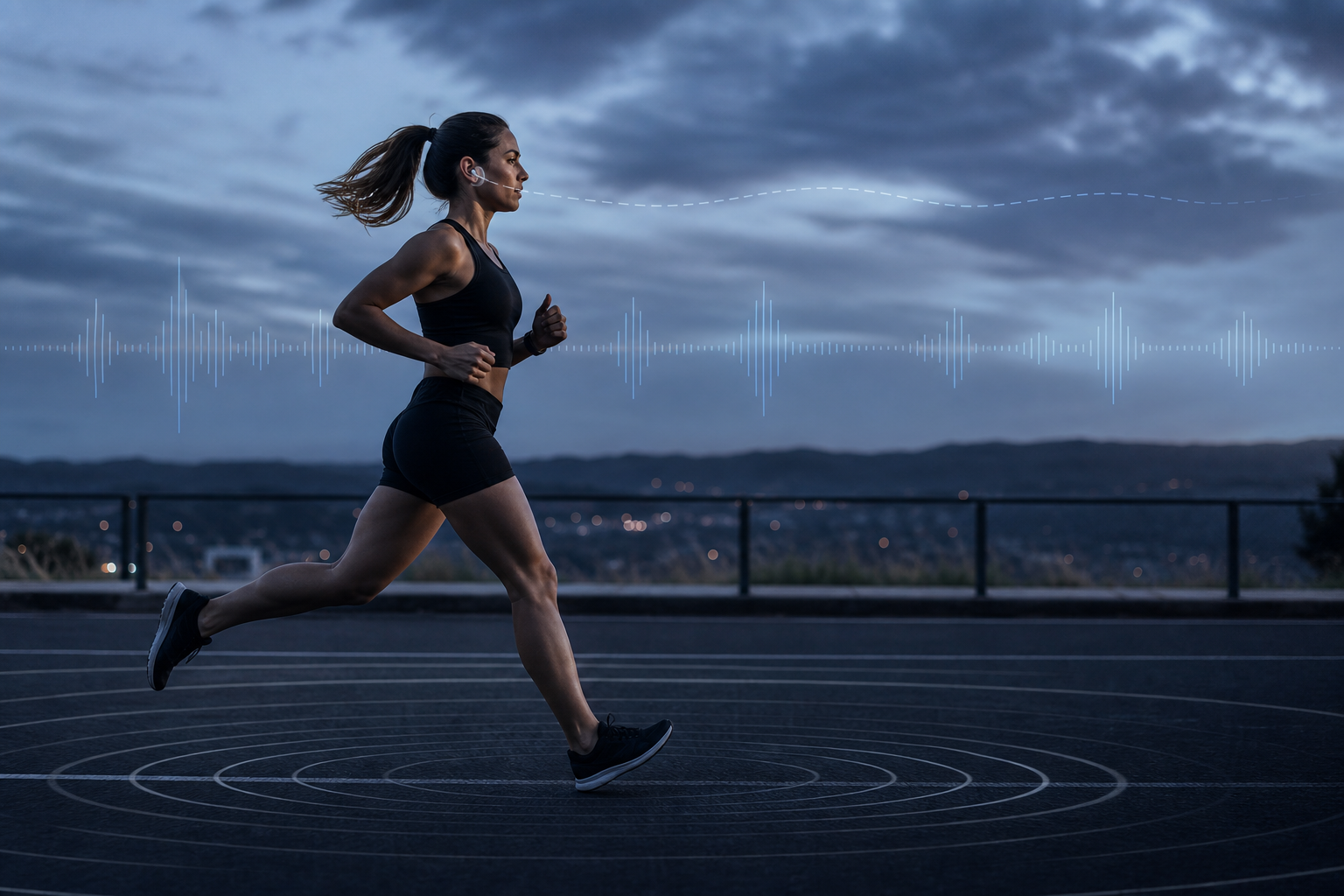
Wearable devices capture heart rate variability and breathing rate continuously during a session. That data feeds into an AI feedback loop that adjusts the music’s tempo, harmonic key, and audio density in near real time. The goal is to keep the soundscape one step ahead of your physiological state, supporting depth rather than reacting to it after the fact.
Spectral simplification removes high-frequency percussion and narrows the stereo field as meditation deepens. This mirrors the narrowing of human awareness during deep relaxation. A wide, busy stereo image feels appropriate for light sessions. As you go deeper, a centered, sparse sound field feels more natural and less stimulating.
The key benefits of biometric-responsive audio adaptation include:
-
Auditory fatigue prevention. Music that never changes forces your brain to tune it out, breaking the meditative anchor. Adaptive systems vary just enough to stay present without demanding attention.
-
Nervous system support. Tempo reductions that match a slowing heart rate reinforce the body’s own calming signals rather than working against them.
-
Cognitive load reduction. As musical complexity drops with deepening relaxation, the brain has fewer elements to process, freeing attention for inward focus.
-
Session continuity. Neural network-generated loops maintain continuous calm essential for deep focus beyond 2–3 minutes, avoiding the jarring reset of a short loop restarting.
Repbeats uses this same biometric feedback model, reading live data from Apple Watch and Fitbit to update music every bar. The auto-DJ technology was built for workouts, but its core logic applies directly to meditation: the music follows your body, not a preset schedule.
Pro Tip: When evaluating adaptive music platforms, check whether they adjust at least two audio parameters simultaneously, such as tempo and spectral density. Single-parameter systems feel mechanical. Multi-parameter systems feel organic.
Step-by-step guide to choosing music that adapts to your sessions
Getting the right setup requires a few deliberate choices before you press play.
-
Choose a wearable that exports biometric data. Apple Watch, Fitbit, and Garmin devices all support heart rate variability output. Without live data, adaptive systems default to time-based changes rather than physiological ones.
-
Match music type to session goal. Breathwork sessions benefit most from breath-paced soundscapes. Body scan practices pair well with ambient or 432 Hz tracks. Insight meditation works with minimalist classical or near-silence with subtle drone underlays.
-
Use AI music generators for session-specific tracks. Generative audio tools can produce royalty-free, personalized tracks from 10 seconds to 60 minutes via text-to-music engines. Prompts like “slow drone, Tibetan bowl, no percussion, 20 minutes” produce usable results in under 30 seconds.
-
Set dynamic mapping rules if the platform allows it. Map high heart rate variability to denser textures and lower variability to sparser ones. Map slower breathing to lower tempo. These rules make the system respond to you rather than running on autopilot.
-
Test before committing to a full session. Run five minutes with your chosen setup and notice whether the music demands attention. If you find yourself listening to it rather than meditating with it, the track is too active.
Common mistakes to avoid:
-
Vocals in any language. Music that demands conscious interpretation interferes with detachment from thought patterns. Even instrumental tracks with strong melodic hooks can trigger the brain’s language-processing regions.
-
High rhythmic complexity. Syncopated rhythms and drum patterns pull attention outward. Stick to pulse-free or very slow pulse structures.
-
Short loops under two minutes. The moment a loop restarts, your brain registers the repetition and breaks focus. Generative or long-form tracks avoid this entirely.
Pro Tip: For sessions longer than 30 minutes, use a generative AI track rather than a curated playlist. Playlists introduce micro-transitions between tracks that can surface awareness at exactly the wrong moment.
How do you troubleshoot music that isn’t supporting depth?
The clearest sign that music is working against you is noticing it. If you catch yourself listening rather than meditating, the track is too active. That is not a personal failure. It is a calibration problem with a specific fix.
Generative audio removes library fatigue by generating unique, session-specific soundscapes that fit the session’s emotional tone and length. Library fatigue happens when familiar tracks trigger associations rather than neutrality. A track you’ve heard 40 times carries memory. A freshly generated one does not.
Common issues and their fixes:
-
Repetitive loops breaking focus. Switch to neural network-generated long-form audio. These tracks avoid the cognitive break that occurs when a short loop restarts.
-
Music feeling too present. Lower the volume until the track sits at the edge of perception. Meditation music should function as a background sensory anchor, not a foreground experience.
-
Stereo width causing distraction. Narrow the stereo field in your audio settings or choose mono-compatible tracks. Wide stereo images activate spatial processing, which pulls attention outward.
-
Melody tracking pulling focus. Replace melodic tracks with drone-based or textural audio. Synth pads, Tibetan bowls, and sustained strings sit in the peripheral auditory zone without demanding tracking.
The relationship between music and brain stimulation during meditation follows the same principle as exercise: too much input prevents the state you’re trying to reach. Calibrating the audio environment is as important as posture or breathing technique.
Pro Tip: If you practice guided meditation, layer your adaptive soundscape 6–8 dB below the guide’s voice. The music should be audible in silence between spoken cues but never compete with the voice for attention.
Key takeaways
Adapting music to meditation depth requires biometric-responsive audio that reduces complexity, tempo, and spectral density as relaxation deepens, keeping the soundscape aligned with your physiological state throughout the session.
| Point | Details |
|---|---|
| Biometric feedback drives adaptation | Wearables like Apple Watch and Fitbit supply the live data adaptive systems need to adjust music in real time. |
| Instrument choice determines depth support | Drone synth pads and Tibetan bowls stay in the peripheral auditory zone; melodic instruments pull focus outward. |
| Spectral simplification mirrors relaxation | Removing high-frequency percussion and narrowing stereo field as depth increases prevents over-stimulation. |
| Generative audio prevents loop fatigue | AI-generated long-form tracks avoid the cognitive break caused by short loops restarting during deep sessions. |
| Music should not demand attention | Effective meditation music functions as a background anchor, not a foreground experience the meditator tracks consciously. |
Why I think most meditators are using music wrong
Most people treat meditation music as a mood-setter. They pick a playlist that feels calm, press play, and assume the job is done. That approach works for light relaxation. It breaks down the moment you try to go deeper.
The problem is that static music has a fixed emotional temperature. It cannot follow you as your nervous system shifts from alert to calm to deeply still. At some point in a serious session, the music stops matching where you are and starts pulling you back toward where you were when you started. That is the opposite of what you need.
What I’ve found actually works is treating music as a physiological tool rather than an aesthetic one. The question is not “does this sound peaceful?” The question is “does this track reduce its complexity as I relax, or does it stay the same?” Those are very different standards, and most curated playlists fail the second one entirely.
The future of this practice is biometric synchronization. As wearables become more accurate and AI audio engines become more responsive, the gap between a static playlist and a truly adaptive soundscape will become impossible to ignore. Meditators who experiment with music and brain wave synchronization now will have a significant head start. The technology is already good enough to make a real difference. The barrier is awareness, not access.
Repbeats and adaptive music for meditation
Repbeats was built around one principle: music should follow your body, not the other way around. Its auto-DJ technology reads live biometric data from Apple Watch and Fitbit, then updates the music’s BPM every bar to match your current physiological state.
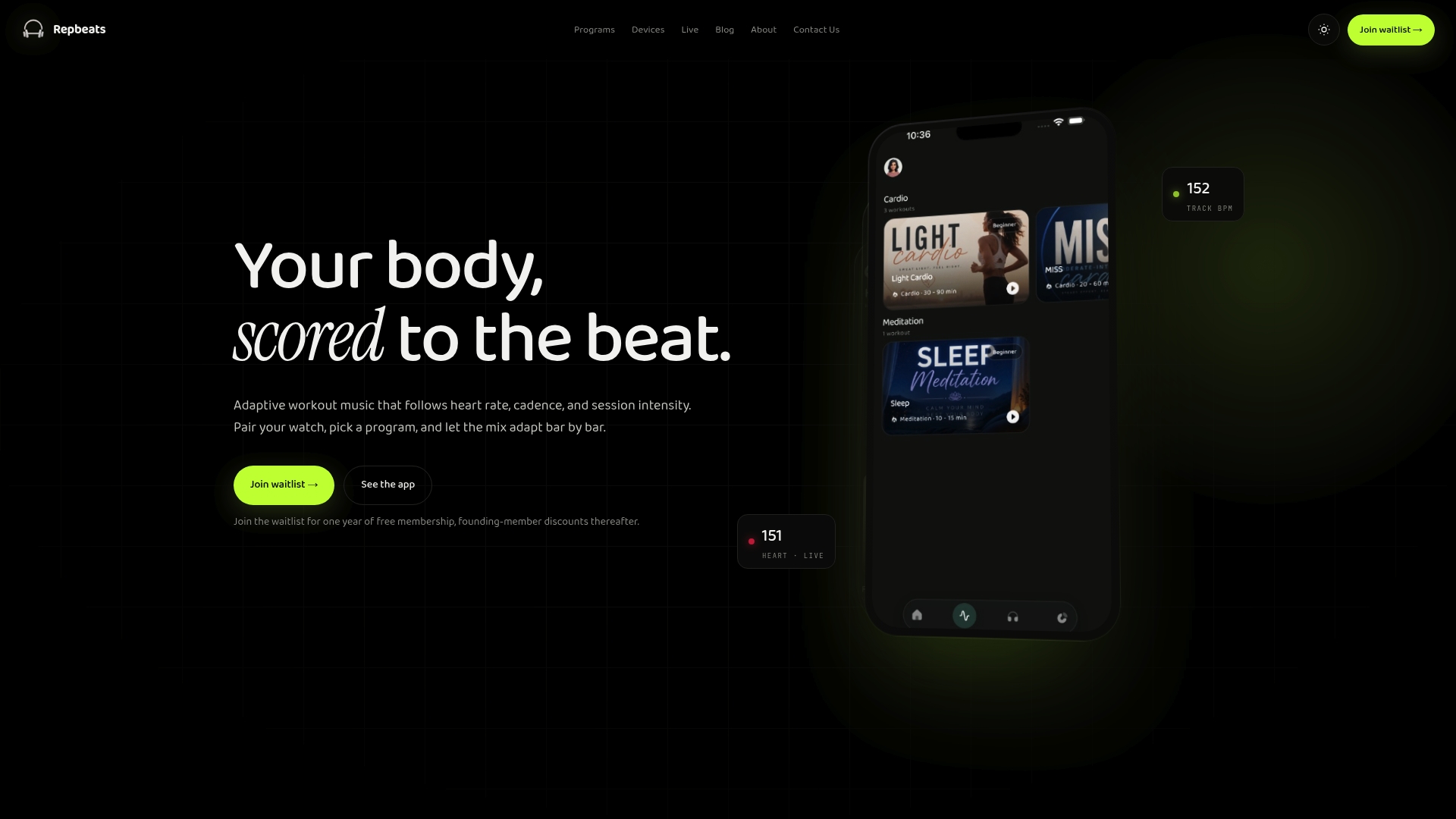
That same logic that keeps a runner in their optimal training zone applies directly to meditation. As your heart rate drops and your breathing slows, Repbeats adjusts the adaptive music experience to match. The result is a soundscape that deepens with you rather than holding you at a fixed level. Meditators who want early access to the full app can join the Repbeats waitlist for iOS and Android beta access and experience biometric-responsive audio firsthand.
FAQ
What does it mean to adapt music to meditation depth?
Adapting music to meditation depth means adjusting audio properties like tempo, complexity, and instrumentation in real time based on physiological signals such as heart rate and breathing rate. The goal is a soundscape that deepens with the meditator rather than staying fixed at one level.
What is the best music type for deep meditation?
Breath-paced soundscapes and binaural beats are the most effective types for deep meditation. Breath-paced tracks targeting 4–6 breaths per minute improve nervous system regulation 30–40% more than standard ambient music.
How do binaural beats support meditation depth?
Binaural beats deliver two slightly different frequencies to each ear, and the brain perceives the difference as a third tone that can guide neural activity toward theta states associated with deep meditation. Headphones are required for the effect to work.
Why do short music loops break meditation focus?
Short loops restart at a predictable interval, and the brain registers that repetition as a pattern change, which surfaces awareness and interrupts depth. Neural network-generated long-form tracks avoid this by producing non-repetitive audio that maintains continuous calm beyond 2–3 minutes.
Can AI generate personalized meditation music?
Yes. Generative audio tools can produce royalty-free tracks from 10 seconds to 60 minutes using text prompts that specify instruments, mood, and duration. These session-specific tracks avoid library fatigue and adapt their emotional tone to the session’s length and goals.