Best melomed.io Alternatives for Emotional Wellness in 2026
Jordan MillsJuly 18, 2026 · 6 min read

Best melomed.io Alternatives for Emotional Wellness in 2026
TL;DR:
- MeloMind, Youper, and Moodfit are effective alternatives to melomed.io, each emphasizing different approaches to emotional self-care.
- Choosing the right app depends on your preferred recognition style, privacy standards, and whether you want analytic insights or conversational support.
What are the top melomed.io alternatives right now?
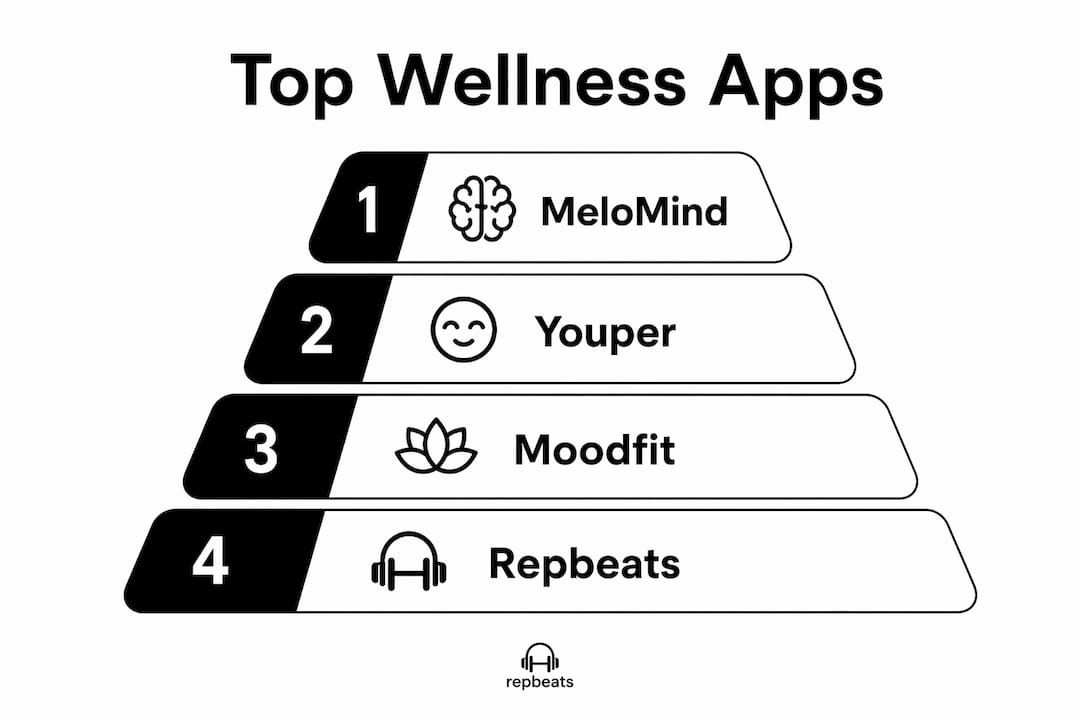
The strongest melomed.io alternatives available in the United States are MeloMind, Youper, and Moodfit. Each takes a different angle on emotional self-care, and the right pick depends on whether you want conversational AI support, detailed mood analytics, or guided journaling with exercises.
- MeloMind: Mood tracking, journaling, and guided self-care exercises. Best for users who want structured emotional reflection with daily check-ins.
- Youper: An AI-powered chat assistant built around Cognitive Behavioral Therapy techniques. Talks you through emotional patterns in real time rather than asking you to log them manually.
- Moodfit: Mood tracking paired with habit tracking and data visualization. Built for users who want to see patterns across weeks and months, not just today’s check-in.
All three are available on iOS and Android. None of them are clinical tools. Like melomed.io itself, they sit firmly in the self-awareness and wellness category, not the therapy or crisis-intervention space.
How do these apps compare on features, privacy, and price?
The differences between these apps come down to three things: how they recognize your emotional state, what they do with that data, and how much they cost.
| App | MeloMind | Youper | Moodfit |
|---|---|---|---|
| Emotional recognition approach | Journaling and guided exercises | Conversational AI chat | Mood logs and habit data |
| Data privacy policy | Not publicly detailed | Not publicly detailed | Not publicly detailed |
| Mood-adaptive features | Guided practices that respond to mood entries | Personalized AI responses based on conversation | Data-driven insights from tracked patterns |
| Platform availability | iOS, Android | iOS, Android | iOS, Android |
| Price | Free tier available | Free tier; premium subscription | Free tier; premium subscription |
| Best for | Interactive journaling and guided self-care | Conversational emotional support | Detailed analytics and habit tracking |
For context: melomed.io itself sets a high bar on privacy. Its ethics policy commits to never selling journal or emotional data to advertisers, insurers, or data brokers, and gives users a clear path to permanently delete everything. When evaluating any alternative, that standard is worth using as a benchmark.
Youper leans hardest into the conversational model. Instead of asking you to rate your mood on a scale, it asks you what is going on and responds with CBT-based prompts. That works well for people who find logging numbers cold or disconnecting.
Moodfit is the most data-forward of the three. If you want charts showing how your sleep, exercise, and mood correlate over a month, Moodfit delivers that. The tradeoff is a steeper learning curve than the other two.
MeloMind sits in the middle: structured enough to guide you through exercises, personal enough to feel like more than a spreadsheet.
How to choose the right melomed.io alternative for your needs
Picking among similar services to melomed.io is less about features and more about how you actually want to engage with your emotional life day to day.
- Emotional recognition style: Do you prefer typing freely, answering prompts, or rating your mood on a scale? Youper suits free-form conversation; MeloMind suits guided reflection; Moodfit suits structured logging.
- Privacy standards: Check whether the app sells or shares your data with third parties. MeloMed’s zero-monetization commitment is the clearest public standard in this category. Ask the same question of any alternative before you commit.
- Platform fit: All three alternatives run on iOS and Android. If you need web access, verify before subscribing since web support varies.
- Wearable integration: Syncing biometric data like heart rate to a wellness app adds a layer of real-time context that manual logging cannot match. Check whether your preferred app connects to Apple Health, Google Fit, or your specific device.
- Cost and exit terms: Free tiers let you test before paying. Before subscribing, confirm whether the app offers a refund window and whether you can export or delete your data on the way out.
- Clinical boundaries: None of these apps replace therapy. MeloMed is explicit that it is not a diagnostic tool and not a crisis service. The same applies to every app on this list.
Pro Tip: Before committing to any wellness app, search for its data deletion policy specifically. An app that makes deletion easy is one that genuinely respects your autonomy over your own emotional history.
What kind of support and community do these apps offer?
Customer support quality varies more than feature lists suggest, and it is worth checking before you pay.

Youper has the largest public user base of the three, which tends to translate into more community-generated content, forum threads, and third-party guides. That informal ecosystem can be genuinely useful when you hit a feature you do not understand.
MeloMind and Moodfit both offer in-app support, though neither publishes a dedicated community forum. Moodfit’s data-heavy design means its support documentation tends to be more detailed, since users frequently have questions about interpreting their charts and correlations.
None of the three offer live human coaching as a built-in feature at the free tier. If peer community and real-time human support matter to you, factor that into your decision alongside the feature comparison above.
Repbeats takes a different approach to emotional wellness
The apps above focus on mood logging and reflection. Repbeats works from the other direction: it uses live physiological data to adapt music in real time during workouts, meditation, and active recovery.
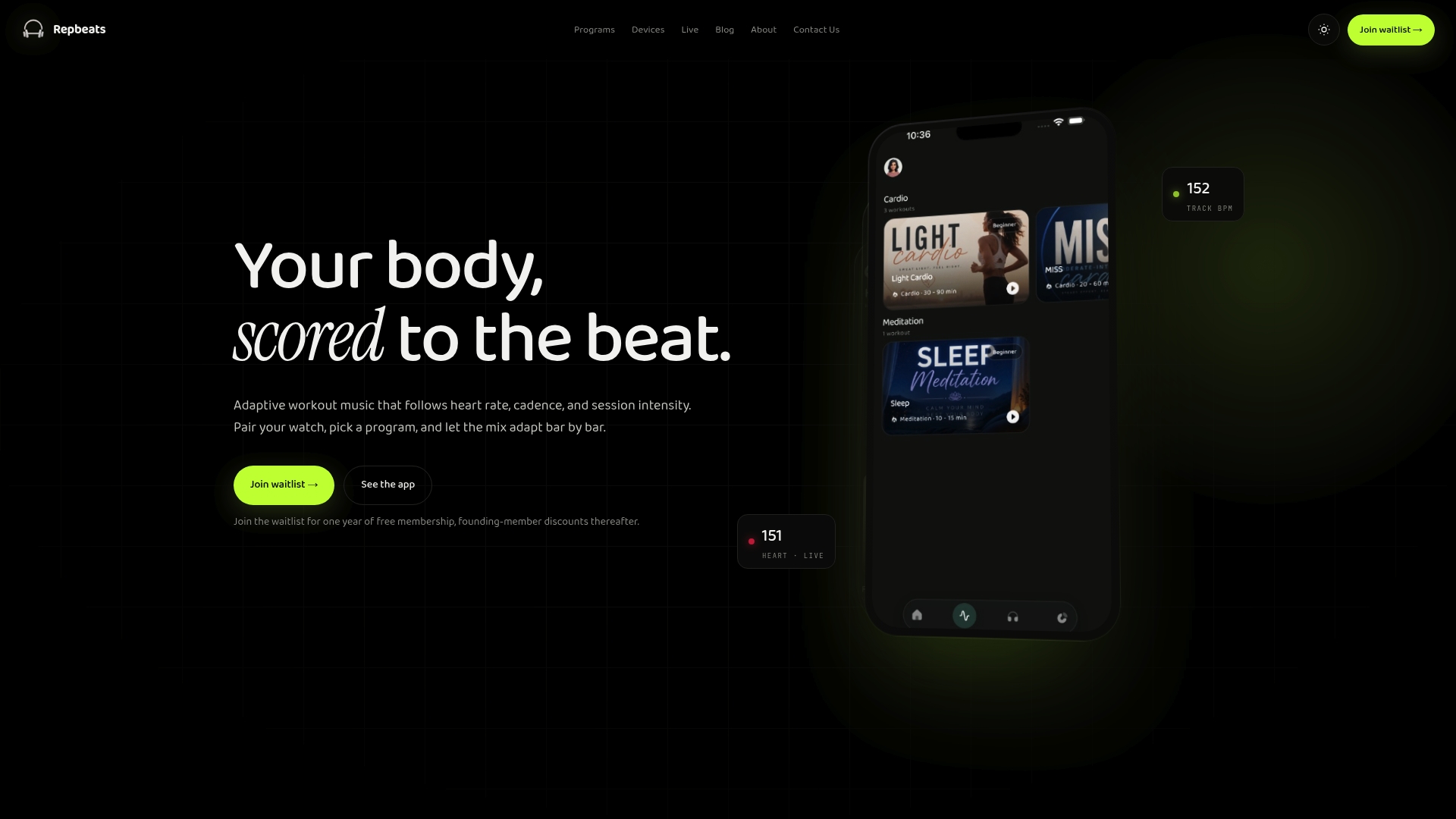
Where MeloMind, Youper, and Moodfit ask you to describe how you feel, Repbeats reads your heart rate and cadence through Apple Watch or Fitbit and adjusts the music’s BPM every bar to match your actual state. That means a run that starts tense and ends calm gets a soundtrack that moves with you, not one you picked before you laced up. For people who find that emotional regulation through movement works better than journaling, that is a meaningful difference. Repbeats also supports meditation sessions, where adapting music to meditation depth can shift the experience considerably compared to a static playlist. If you want to add a physical, music-driven layer to your wellness routine alongside one of the apps above, explore Repbeats and see how it fits.
Key Takeaways
MeloMind, Youper, and Moodfit are the strongest melomed.io alternatives in 2026, each suited to a different emotional self-care style, with privacy policy transparency being the most important factor to verify before subscribing.
| Point | Details |
|---|---|
| Top alternatives | MeloMind, Youper, and Moodfit cover journaling, conversational AI, and analytics-driven mood tracking. |
| Privacy benchmark | MeloMed’s zero-data-selling policy is the clearest public standard; hold any alternative to the same test. |
| Choosing by style | Match the app to how you engage: conversation (Youper), guided exercises (MeloMind), or data charts (Moodfit). |
| Wearable integration | Syncing biometric data adds real-time context that manual mood logging cannot replicate. |
| Repbeats | Repbeats adapts music to live heart rate and cadence, adding a physical, sound-driven layer to emotional self-care. |