How to Use Heart Rate for Meditation Music
Jordan MillsJuly 11, 2026 · 11 min read
How to Use Heart Rate for Meditation Music
TL;DR:
- Heart rate biofeedback enhances meditation music selection by grounding choices in physiological data rather than guesswork. Using heart rate variability as an indicator, practitioners can select tracks within the 60–80 BPM range to promote relaxation and improve HRV over time. Adaptive tools that respond to real-time heart rate data further strengthen the calming effects of meditation sessions.
Heart rate biofeedback for meditation music selection is defined as the practice of reading your real-time beats per minute (BPM) and heart rate variability (HRV) data to choose audio that actively steers your autonomic nervous system toward calm. When you use heart rate for meditation music, you stop guessing which playlist “feels relaxing” and start making decisions grounded in physiology. Research confirms that music interventions increase HRV within sessions as short as 30 minutes, shifting the nervous system toward parasympathetic dominance. The result is a measurable drop in stress, not just a subjective sense of peace.
How to use heart rate for meditation music selection
Your heart rate tells you two things during meditation: how fast your heart is beating (BPM) and how much it varies between beats (HRV). HRV is the more sensitive signal. A high HRV means your nervous system is flexible and relaxed. A low HRV signals stress or fatigue.
The metric most researchers use is RMSSD, which stands for root mean square of successive differences. You do not need to calculate it manually. Most modern wearables, including Apple Watch and Fitbit, surface RMSSD-derived HRV scores automatically. Think of RMSSD as a real-time stress meter: the higher the number, the deeper your relaxation.
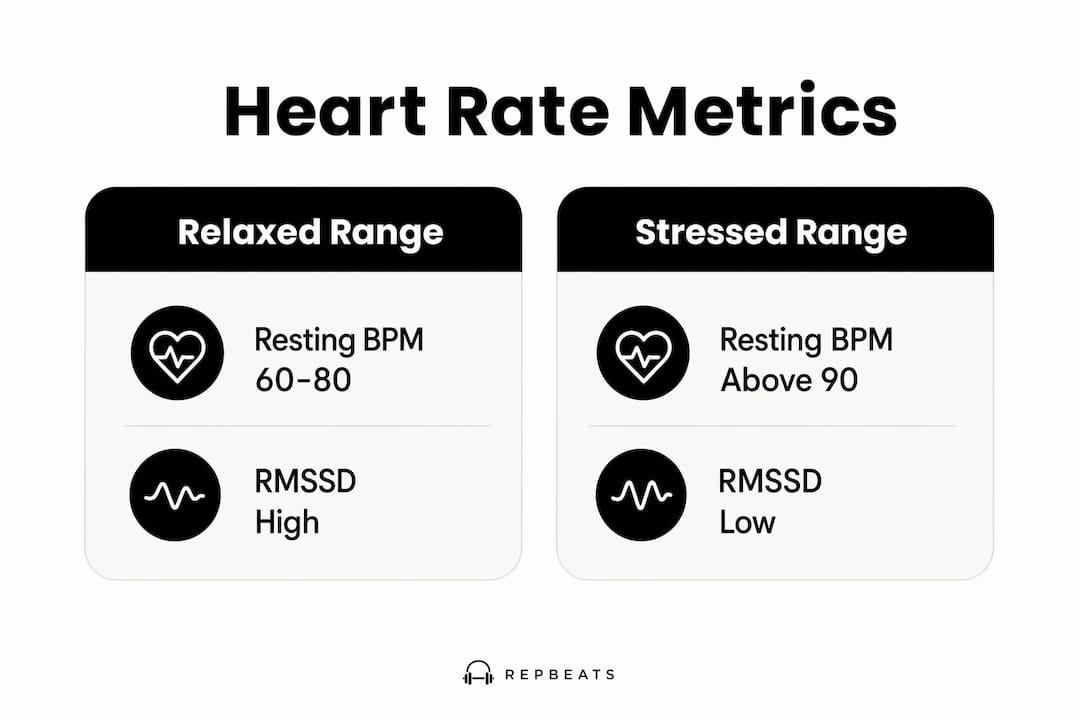
Knowing your baseline matters before you pick any music. A resting heart rate between 60 and 80 BPM and a rising HRV score during a session both signal that your music choice is working. Meditation sessions of 15 or more minutes produce acute RMSSD increases of 10–25%, and eight weeks of regular practice raises baseline HRV by 12–15%. That range gives you a concrete target to aim for each session.
Here is what each metric tells you in practice:
- Resting BPM above 90: Your nervous system is activated. Start with slower, lower-tempo music (60–70 BPM) before moving deeper.
- Resting BPM between 60 and 80: You are in a ready state. Music at 60–80 BPM will reinforce calm without jarring the system.
- RMSSD rising during a session: Your music choice is supporting parasympathetic activation. Stay with it.
- RMSSD flat or falling: The music may be too stimulating. Drop the tempo or switch to a quieter ambient track.
| Metric | Relaxed Range | Stressed Range |
|---|---|---|
| Resting BPM | 60–80 | Above 90 |
| RMSSD (HRV proxy) | Rising during session | Flat or declining |
| Session duration | 15+ minutes | Under 10 minutes |
What tempo and frequencies work best for calming music?
The 60–80 BPM range is the most evidence-backed target for heart-rate-aligned meditation music. Music at 60–80 BPM significantly boosts parasympathetic activation and HRV compared to standardized tracks at other tempos. The effect is strongest when you choose music you actually prefer within that range, not music assigned to you.
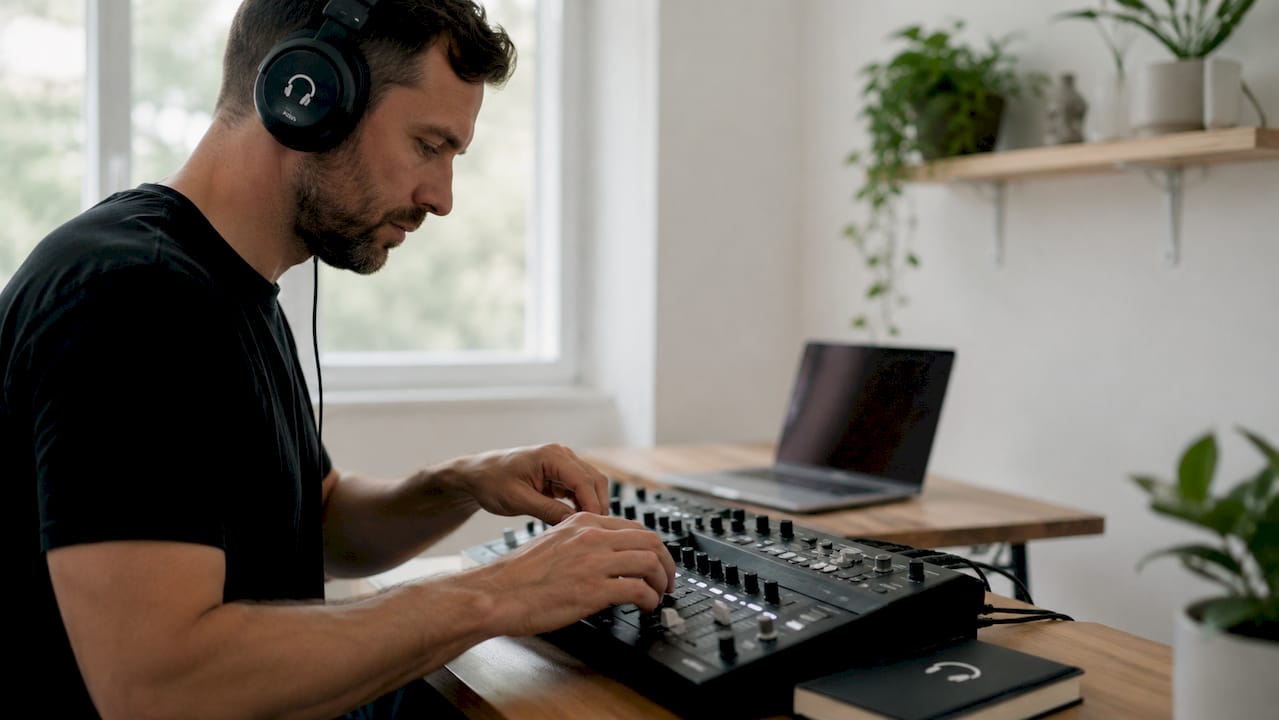
That last point matters more than most people realize. User autonomy in music selection within the 60–80 BPM window produces stronger HRV gains than genre-matched playlists chosen by an algorithm without personal input. Your nervous system responds to familiarity and preference, not just tempo numbers.
Beyond tempo, frequency content shapes the depth of your session. Binaural beats in the theta range (4–8 Hz) are associated with deep meditative states, while alpha frequencies (8–12 Hz) support relaxed alertness. These are not magic frequencies. They work by giving the brain a rhythmic reference point, a process called brainwave entrainment. You hear a slightly different tone in each ear, and your brain synchronizes to the difference.
Music with arc-like phrase structures induces physiological changes aligned with heart rate and breathing patterns more reliably than genre labels alone. King’s College London research identified that objective musical arrangements, not subjective categories like “ambient” or “new age,” drive cardiac and respiratory rhythm synchronization. This means a well-structured classical piece at 65 BPM can outperform a poorly structured “meditation” track at the same tempo.
Pro Tip: Before your session, check your resting BPM. If it sits above 80, start with a 10-minute track at 60–65 BPM to bring your system down, then shift to your preferred tempo within the 60–80 BPM range for the main session.
For a deeper look at why tempo is the primary lever, the science behind low BPM music and its calming effects is worth reading before you build your first playlist.
How to build a heart rate feedback loop for meditation
The most effective approach to heart-rate-guided mindfulness uses a biofeedback loop: set up your tracking, meditate with a specific music preset, review your HRV data afterward, and adjust. Repeat that cycle over several sessions until you find your personal optimal settings.
Here is how to build that loop step by step:
- Set up your wearable. Pair your Apple Watch, Fitbit, or similar device with an app that displays real-time HRV or RMSSD. Confirm it is reading accurately before you start.
- Choose a starting preset. Pick a track or playlist in the 60–80 BPM range. Binaural beats in the theta or alpha range are a good starting point for most people.
- Meditate for at least 15 minutes. Shorter sessions do not give HRV enough time to shift meaningfully. Set a timer and commit to the full duration.
- Log your HRV data immediately after. Note whether RMSSD rose, held steady, or fell during the session. Most wearable apps store this automatically.
- Adjust one variable at a time. If RMSSD did not rise, lower the tempo by 5 BPM or switch from binaural beats to pure ambient sound. Change only one thing per session so you know what worked.
- Track across eight sessions. Patterns emerge over time. A single session is noise. Eight sessions give you a reliable signal.
One critical mistake to avoid: relying on music alone without controlling your breath. Music functions as an external pacer for slow, rhythmic breathing, with the optimal rate sitting at six breaths per minute to activate the vagus nerve and raise HRV. Music sets the rhythm, but your breath completes the circuit.
Pro Tip: Use the phrase structure of your chosen track as a breathing cue. Inhale for one musical phrase, exhale for the next. This naturally paces you toward six breaths per minute without counting.
For a practical guide on matching music to different stages of a session, Repbeats covers adapting music to meditation depth in detail.
What technology supports heart rate guided mindfulness?
Several categories of tools now make heart-rate-guided mindfulness accessible without technical expertise. The key distinction is between adaptive apps that shift tempo in real time and static apps that offer curated playlists you select manually.
Adaptive apps use continuous heart rate monitoring to shift music tempo as your physiology changes. Heartbeat-synced music produces an average 23% increase in HRV and reduces anxiety by up to 65% by entraining autonomic rhythms in real time, according to a University of Sussex study. That is a significant effect for a passive intervention.
Real-time HRV feedback tools go one step further. Bio-resonance apps let you view live HRV data while adjusting music frequencies and tempos, creating a direct feedback loop between your physiology and your audio environment. This approach suits people who want to actively calibrate their sessions rather than trust a preset.
For those interested in the broader field of technology-enabled music therapy, digital health innovation research is validating these approaches in clinical and wellness contexts.
Key features to look for in any tool:
- Real-time BPM or HRV display during the session, not just a post-session summary
- Tempo adjustment range that covers at least 55–85 BPM
- Wearable integration with Apple Watch, Fitbit, or Garmin
- Session logging so you can compare HRV trends across multiple sessions
Repbeats takes this further with auto-DJ technology that updates music BPM every bar based on live heart rate data from Apple Watch and Fitbit. That level of granularity means your audio environment responds to your nervous system in near real time, not just at the start of a session. You can explore how real-time heart rate shapes your soundscape on the Repbeats blog.
Key Takeaways
Using heart rate data to select meditation music is the most direct way to align your audio environment with your nervous system’s actual state.
| Point | Details |
|---|---|
| Track HRV, not just BPM | RMSSD rising during a session confirms your music is activating the parasympathetic nervous system. |
| Target 60–80 BPM | This tempo range produces the strongest HRV gains, especially when you choose preferred music within it. |
| Breathe at six breaths per minute | Music paces your breath, but conscious slow breathing completes the vagus nerve activation loop. |
| Use a biofeedback loop | Adjust one variable per session and track HRV trends across at least eight sessions for reliable results. |
| Choose adaptive tools | Real-time tempo-shifting apps produce stronger HRV and anxiety-reduction effects than static playlists. |
What I’ve learned from treating heart rate as a meditation instrument
I spent years treating meditation music as a mood choice, picking whatever felt calming in the moment. The problem with that approach is that “feels calming” and “is physiologically calming” are not the same thing. A track can feel familiar and comfortable while doing nothing measurable for your HRV.
The shift happened when I started treating my wearable data as feedback, not just a number to glance at. Watching RMSSD climb during a session with a 65 BPM ambient track, then stay flat during a session with a “meditation” playlist at 90 BPM, made the case better than any study could. The data does not lie, and it does not care about genre labels.
What surprised me most was how much personal preference amplified the effect. The research on user autonomy in tempo selection matches my experience exactly. A track I genuinely enjoy at 68 BPM outperforms a technically “correct” binaural beat track I find grating. Your nervous system is not neutral about music you dislike.
The breath piece is the part most people skip, and it is the part that matters most. Music at 60 BPM naturally invites you to breathe slowly, but you have to consciously accept that invitation. Six breaths per minute feels uncomfortably slow at first. After a few sessions, it becomes automatic, and that is when the HRV numbers start moving consistently.
My honest recommendation: start with eight sessions, change one variable at a time, and trust the data over your gut feeling about what “should” work. The combination of real-time tracking and intentional music selection is the closest thing to a reliable protocol for meditation that I have found.
— Jordan Mills
Repbeats and adaptive music for your meditation practice
Meditation benefits from the same principle that makes Repbeats effective for running and cycling: your body’s state should drive the music, not the other way around.
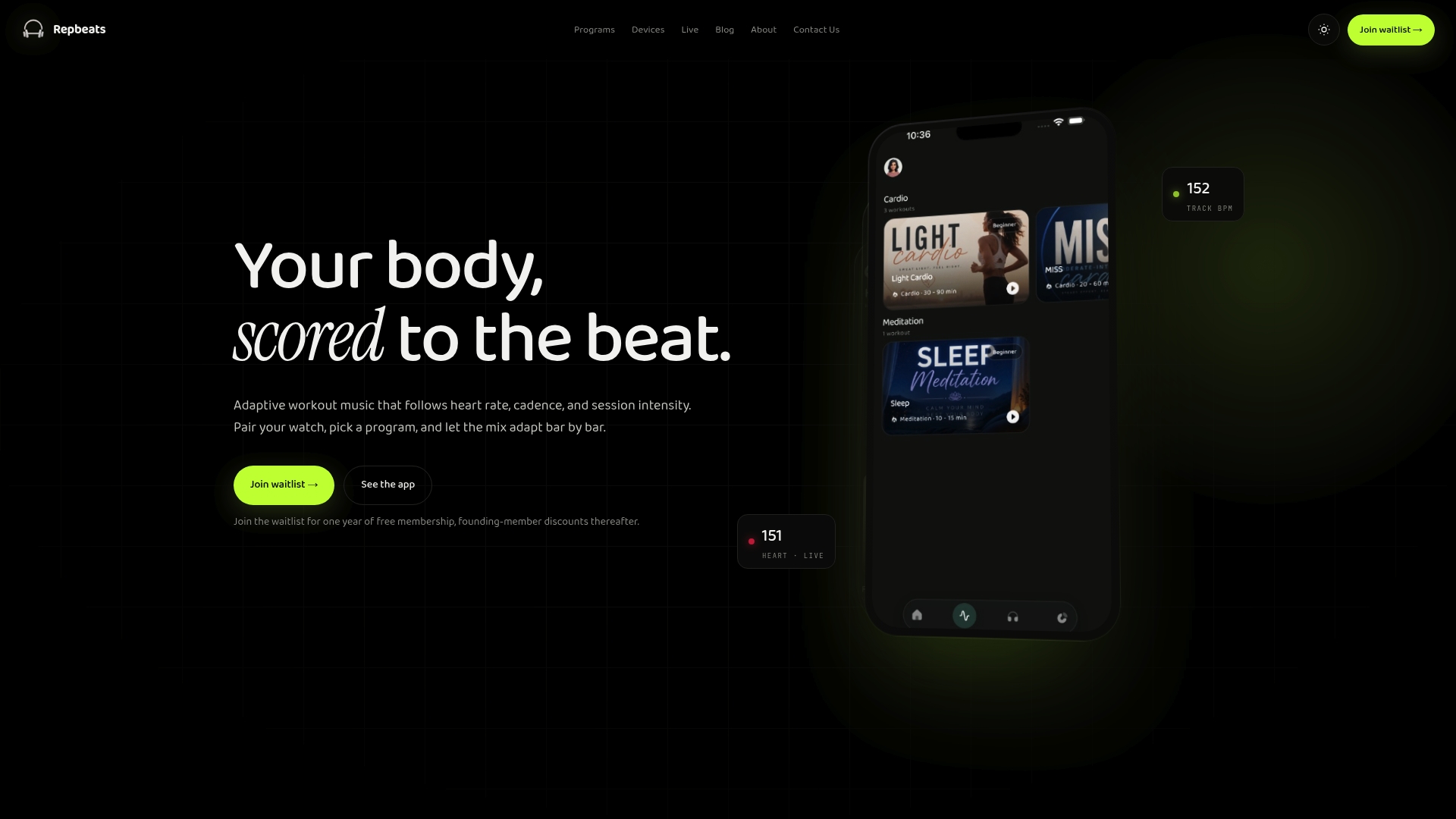
Repbeats connects directly to Apple Watch and Fitbit to read your live heart rate data, then adjusts music BPM every bar through its auto-DJ technology. For meditation, that means your audio environment responds to your nervous system as it shifts toward calm, rather than playing a fixed track that may or may not match where you are physiologically. If you want a soundtrack that actually tracks your relaxation in real time, explore Repbeats and see how adaptive music changes what a meditation session can feel like.
FAQ
What is the optimal heart rate for meditation?
A resting BPM between 60 and 80, combined with a rising RMSSD score during the session, indicates effective parasympathetic activation. Music in the 60–80 BPM range supports this state most reliably.
How does heart rate variability measure meditation effectiveness?
RMSSD, the most common HRV metric from wearables, rises when the parasympathetic nervous system is active. Sessions of 15 or more minutes typically produce RMSSD increases of 10–25%, confirming the session is working.
Can music tempo directly lower my heart rate?
Music at 60–80 BPM acts as an external pacer for slow breathing, which activates the vagus nerve and lowers heart rate indirectly. The effect is strongest when you pair the music with conscious slow breathing at six breaths per minute.
How long does it take to see HRV improvements from meditation music?
Eight weeks of regular practice raises baseline HRV by 12–15%. Acute improvements in RMSSD appear within a single 15-minute session, giving you immediate feedback even before long-term gains accumulate.
Do binaural beats actually improve meditation depth?
Binaural beats in the theta (4–8 Hz) and alpha (8–12 Hz) ranges provide a rhythmic reference for brainwave entrainment, supporting deeper meditative states. Their effectiveness depends on using headphones and pairing them with music structured in the 60–80 BPM range.