Why Meditation Music Tempo Matters for Deep Focus
Jordan MillsJuly 9, 2026 · 11 min read
Why Meditation Music Tempo Matters for Deep Focus
TL;DR:
- Meditation music tempo influences brainwave entrainment, activating relaxation or deep meditation states. Using slow tempos between 40 and 80 BPM, especially with minimal harmony and repetition, fosters parasympathetic nervous system engagement. Adaptive tools like Repbeats adjust BPM in real time for optimal meditative depth.
Meditation music tempo is defined as the speed of a musical track measured in beats per minute (BPM), and it directly shapes your brainwave activity, nervous system state, and ability to reach deep relaxation. Why meditation music tempo matters comes down to neuroscience: specific BPM ranges entrain your brain toward alpha waves (8–14 Hz) and theta waves (4–8 Hz), the frequencies associated with calm focus and deep meditation. Music at 60–80 BPM promotes relaxed wakefulness through alpha wave entrainment, while 40–60 BPM supports the slower theta states linked to deep meditative absorption. Choosing the wrong tempo, even from music that sounds pleasant, can activate your stress response instead of quieting it.
Why does meditation music tempo matter for brainwave activity?
Tempo drives brainwave entrainment, the process by which your brain synchronizes its electrical activity to an external rhythmic stimulus. This is not a metaphor. Neuroscientists call it the frequency-following response, and it works whether you are aware of it or not.
Slow tempos in the 40–80 BPM range are the most studied for meditation because they map onto the two brainwave states that define meditative depth:
- Alpha waves (8–14 Hz): Associated with relaxed wakefulness, reduced mental chatter, and light meditation. Music at 60–80 BPM most reliably entrains this state.
- Theta waves (4–8 Hz): Associated with deep meditation, vivid imagery, and the edge of sleep. Music at 40–60 BPM supports theta entrainment.
- Delta waves (0.5–4 Hz): Associated with dreamless sleep. Very slow ambient tracks can nudge the brain toward this range, though most meditators aim for theta rather than delta.
Rhythmic sound meditation quiets brain activity in planning and self-awareness regions, producing lowered brainwave power across all primary types. That reduction in frontal brain activity is what experienced meditators describe as “mental quieting.” The music does not create the silence. It creates the conditions for the brain to stop generating noise.
Pro Tip: If your mind keeps drifting during meditation, try music in the 60–70 BPM range rather than complete silence. The rhythmic pulse gives your attention something to rest on without engaging your analytic brain.
The rhythm also functions as an external focus point. Repetitive rhythms prevent analytic brain centers from engaging, which anchors wandering attention the same way breath counting does. This is why a consistent, slow beat often works better than melodically complex music during meditation. Complexity gives the analytic mind something to track. Simplicity lets it rest.
How does slow tempo activate the parasympathetic nervous system?
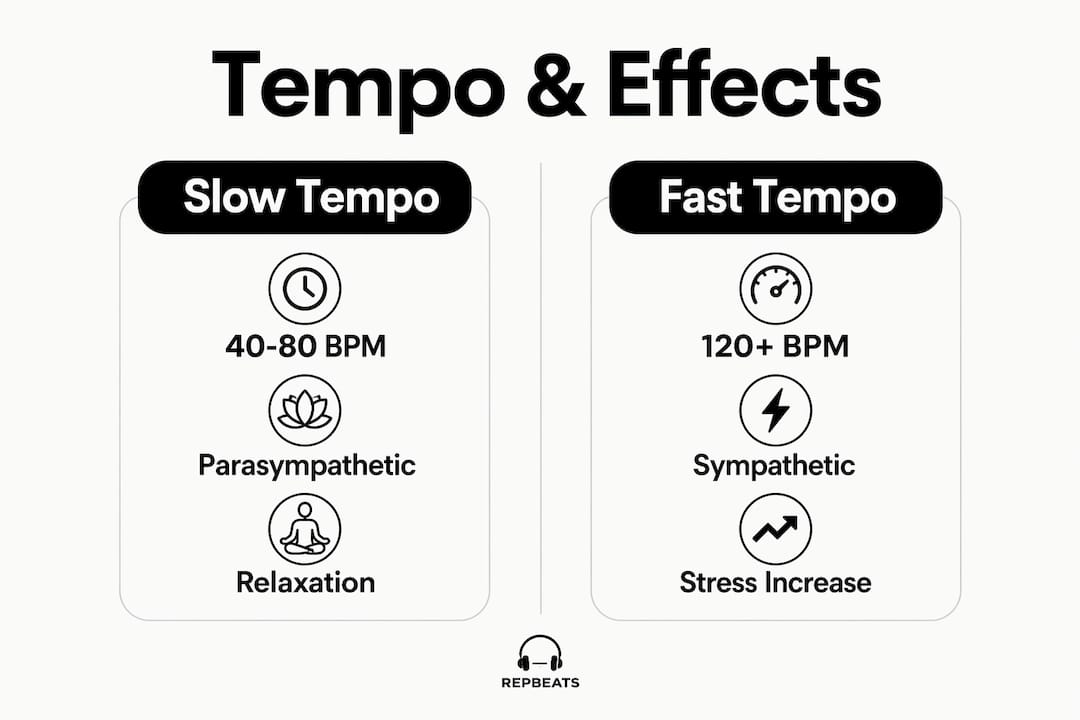
Slow BPM music shifts your body from sympathetic (“fight-or-flight”) to parasympathetic (“rest-and-digest”) dominance. This shift is measurable and physiologically significant.
Slower music tempos activate the parasympathetic nervous system, reducing cortisol and reversing the stress cascade that keeps most people tense even when they sit down to meditate. Cortisol suppression is not a minor benefit. Chronic cortisol elevation disrupts sleep, impairs memory, and raises cardiovascular risk. A meditation session that genuinely lowers cortisol is doing real biological work.
The table below shows how your body responds differently to slow versus fast tempo music during a seated meditation session.
| Physiological response | Slow tempo (40–80 BPM) | Fast tempo (120+ BPM) |
|---|---|---|
| Heart rate | Decreases | Increases or stays elevated |
| Breathing depth | Deepens and slows | Stays shallow or quickens |
| Muscle tension | Releases | Stays contracted |
| Cortisol level | Drops | Stays elevated or rises |
| Nervous system state | Parasympathetic dominant | Sympathetic dominant |
Slow tempo music reduces heart rate, deepens breathing, and relaxes muscles, aligning your body with the parasympathetic state that makes deep meditation possible. These are not subtle effects. You can feel the difference within two to three minutes of switching from a 130 BPM track to a 60 BPM one.
Pro Tip: Pair slow tempo music with a 4-count inhale and 6-count exhale breathing pattern. The extended exhale reinforces parasympathetic activation and compounds the effect of the music.
The practical implication is direct. If you finish a meditation session feeling only slightly less tense than when you started, your music tempo may be the problem, not your technique.
How does tempo shape your emotional and cognitive experience during meditation?
Tempo does not work alone. It interacts with harmony, repetition, and melodic texture to shape what you feel and think during a session. Understanding this interaction helps you choose music that deepens insight rather than just providing background sound.
Music that induces aesthetic chills during meditation enhances emotional breakthrough, self-transcendence, and psychological insight. Those chills are not random. They are replicable markers of prosocial and transformative experience, and they tend to occur when slow tempo music builds gradually rather than shifting abruptly. The emotional depth of a meditation session can be directly influenced by whether your music is designed to move you or merely to fill silence.
Classical music with slow tempos improves metacognitive awareness and empathy over structured listening programs. An 8-week study found that participants who meditated with carefully selected slow classical pieces showed measurable gains in monitoring their own mental states and in empathic response. That is a cognitive benefit most people do not associate with music choice. The role of meditation in spiritual health is increasingly understood through this lens: music tempo is not decoration but a tool for shaping inner experience.
Several musical features work together with tempo to produce these effects:
- Minimal harmonic complexity: Simple chord progressions prevent the analytic mind from tracking musical structure, keeping attention inward.
- Repetitive rhythmic patterns: Repetition acts as an auditory anchor, redirecting wandering attention back to the present moment without requiring conscious effort.
- Absence of lyrics: Words activate language processing regions, pulling attention outward. Instrumental tracks keep the cognitive load low.
- Gradual dynamic shifts: Slow builds and fades support emotional depth without triggering the startle response that abrupt changes cause.
Ambient soundscapes at 40–60 BPM with minimal percussion and long track lengths maintain focus and relaxation better than tracks with frequent structural changes. The silence between notes matters as much as the notes themselves. Minimalist arrangements avoid engaging the analytic brain regions that pull you out of meditative depth.
What are the practical guidelines for choosing meditation music tempo?
Selecting the right tempo starts with knowing your meditation goal. Different goals call for different BPM ranges, and mixing them up produces inconsistent results.
- For relaxation and stress relief: Choose tracks in the 60–80 BPM range. This range entrains alpha waves and activates the parasympathetic response without pushing you toward sleep.
- For deep meditation and insight work: Drop to 40–60 BPM. Theta entrainment at this range supports vivid inner experience and emotional processing.
- For focus and mindfulness practice: Stay at 60–75 BPM. This keeps you alert enough to observe thoughts without getting caught in them.
- For transitions into meditation: Start at 70–80 BPM and let the track slow naturally over 10–15 minutes. Gradual tempo reduction mirrors the body’s natural settling process.
- Avoid anything over 120 BPM. Tracks over 120 BPM or with sudden changes activate the sympathetic nervous system, which directly counteracts the parasympathetic state you are trying to build.
Slow harmonious melodies with minimal dynamic range and no lyrics give you the best structural foundation regardless of genre. Whether you prefer ambient electronic, classical strings, or Tibetan singing bowls, the tempo and structural simplicity matter more than the genre itself.
Technology now makes tempo selection more precise. Adaptive music tools that sync BPM to your real-time physiological data remove the guesswork entirely. Repbeats uses live data from wearables like Apple Watch and Fitbit to adjust music tempo bar by bar, matching the track’s BPM to your heart rate and session intensity. For meditation, this means the music responds to your actual state rather than a preset you chose before sitting down. You can read more about adapting music to meditation depth to understand how dynamic tempo adjustment works in practice.
Pro Tip: Experiment with one tempo range for at least three sessions before switching. Your nervous system needs repetition to learn the association between a specific BPM and a relaxed state. One session is not enough data.
Music also serves as a soft entry point for people who find silence intimidating. Starting with slow, structured music and gradually reducing its volume over multiple sessions trains the nervous system to access meditative states with less external support over time.
Key Takeaways
Meditation music tempo directly controls brainwave entrainment and nervous system state, making BPM selection the single most consequential choice in building an effective meditation practice.
| Point | Details |
|---|---|
| Optimal BPM range | Use 40–80 BPM to entrain alpha and theta brainwaves for relaxation and deep meditation. |
| Parasympathetic activation | Slow tempos reduce cortisol, lower heart rate, and deepen breathing within minutes. |
| Avoid fast tempos | Tracks over 120 BPM trigger sympathetic activation and disrupt meditative states. |
| Musical simplicity matters | Minimal harmony, no lyrics, and repetitive rhythm prevent analytic brain engagement. |
| Adaptive technology helps | Tools like Repbeats adjust BPM in real time to match your physiological state during meditation. |
The tempo mistake most meditators never think to fix
Most people treat meditation music as background noise. They pick something that sounds calm and assume it is doing the right job. That assumption is where most meditation sessions quietly fail.
I have spent years watching people struggle with consistency in their practice, and the pattern is almost always the same. The technique is fine. The intention is genuine. But the music is running at 95 BPM with a subtle rhythmic drive that keeps the nervous system just alert enough to prevent real depth. It sounds relaxing. It is not.
The counterintuitive truth is that music you find emotionally moving is often more useful in meditation than music that simply sounds quiet. A slow classical piece that gives you chills does more neurological work than a flat ambient drone at the same BPM. The emotional response is not a distraction. It is the mechanism. Research on low BPM music and mental calm confirms that the physiological response to slow, emotionally resonant music is distinct from the response to slow but emotionally flat music.
The other mistake I see constantly is treating tempo as fixed. Your nervous system is not the same at 7:00 AM after a poor night’s sleep as it is at 8:00 PM after a calm day. A static playlist cannot account for that. Adaptive tools that read your real-time state and adjust BPM accordingly are not a luxury. For serious practitioners, they are the logical next step.
Start paying attention to your music tempo the same way you pay attention to your breath. It is not a minor variable.
— Jordan Mills
How Repbeats supports your meditation practice
Repbeats builds adaptive music experiences that respond to your body in real time, making tempo selection something that happens automatically rather than by guesswork.
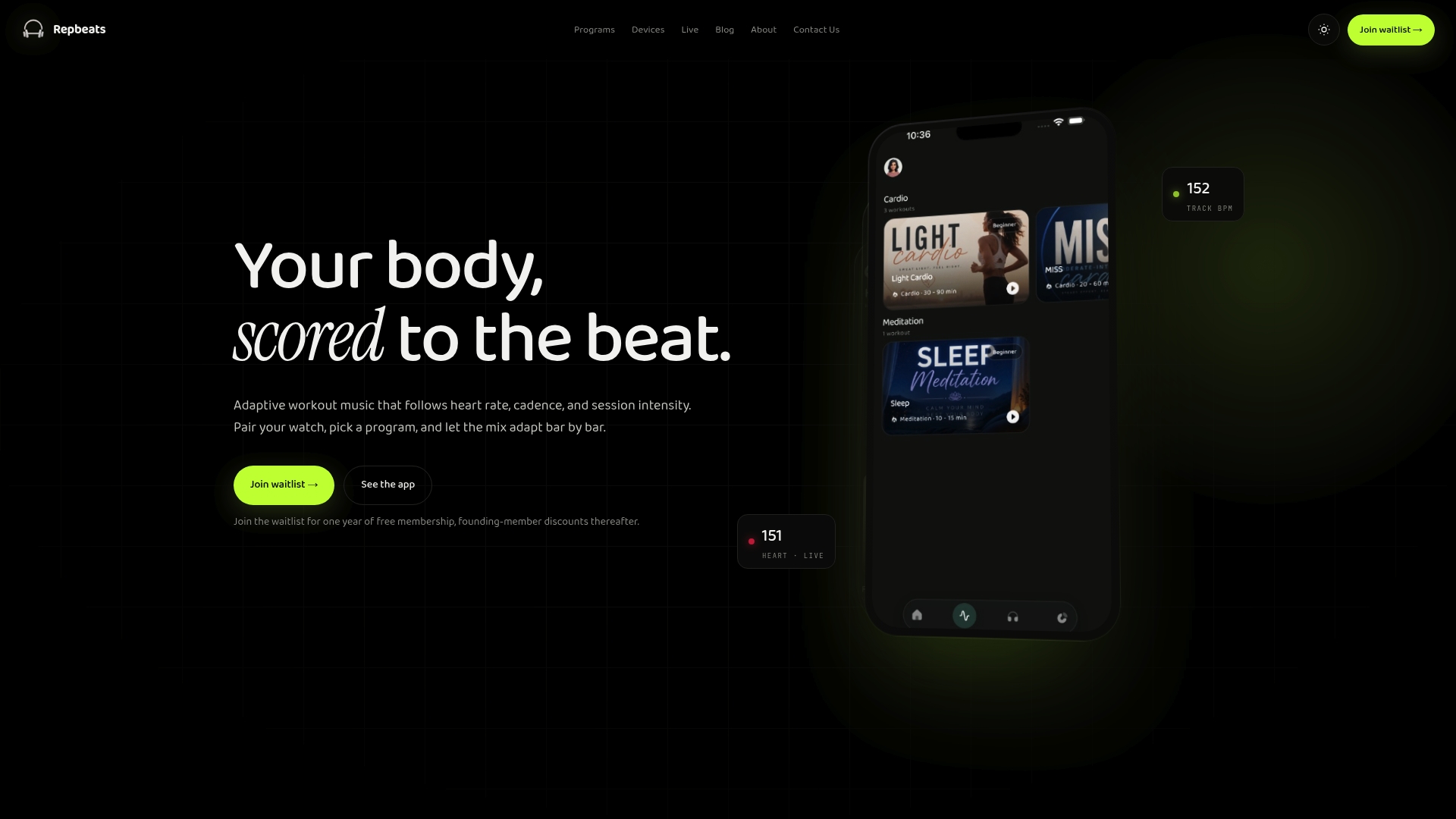
Repbeats syncs with Apple Watch and Fitbit to read your heart rate and session intensity, then adjusts the music’s BPM every bar to match your actual physiological state. For meditation, that means the soundtrack moves with you as your nervous system settles, rather than holding a fixed tempo that may not fit where you are in the session. Explore adaptive BPM playlists for meditation and see how real-time tempo adjustment changes the quality of your practice from the first session.
FAQ
What BPM is best for meditation music?
The optimal range is 40–80 BPM. Tracks at 60–80 BPM entrain alpha waves for relaxed wakefulness, while 40–60 BPM supports deeper theta states associated with profound meditation.
Does music tempo actually affect relaxation?
Yes. Slow tempo music activates the parasympathetic nervous system, reducing cortisol and lowering heart rate. These are measurable physiological changes, not subjective impressions.
Can fast music disrupt meditation?
Tracks over 120 BPM or with sudden volume and instrumentation changes trigger sympathetic nervous system activation, which directly counteracts the relaxation response meditation requires.
Should meditation music have lyrics?
Lyrics activate language processing regions in the brain, pulling attention outward. Instrumental tracks with slow tempos and minimal harmonic complexity keep cognitive load low and support sustained meditative focus.
How does Repbeats help with meditation music tempo?
Repbeats uses live wearable data from devices like Apple Watch and Fitbit to adjust music BPM in real time, matching the track’s tempo to your heart rate and session intensity throughout your meditation.