Why Low BPM Music Calms the Mind: Science Explained
Jordan MillsJuly 8, 2026 · 10 min read

Why Low BPM Music Calms the Mind: Science Explained
TL;DR:
- Low BPM music calms the mind through rhythmic entrainment, shifting brainwaves from alert Beta to relaxed Alpha and Theta states. Listening to 60–80 BPM music activates the parasympathetic nervous system, reducing stress and promoting deep relaxation. Practicing gradual tempo slowing with the Iso-Principle enhances anxiety relief and mindfulness.
Low BPM music calms the mind by synchronizing your heart rate and brainwaves to slower rhythms through a process called rhythmic entrainment. When music tempo drops into the 60–80 BPM range, your nervous system follows, shifting from a stressed “fight or flight” state into a calmer “rest and digest” mode. This is not a placebo effect. EEG measurements confirm that brainwave activity shifts from alert Beta waves toward relaxed Alpha and meditative Theta waves within seconds of exposure. Understanding why low BPM music calms the mind gives you a tool you can use anywhere, anytime, without medication.
Why low BPM music calms the mind: the entrainment mechanism
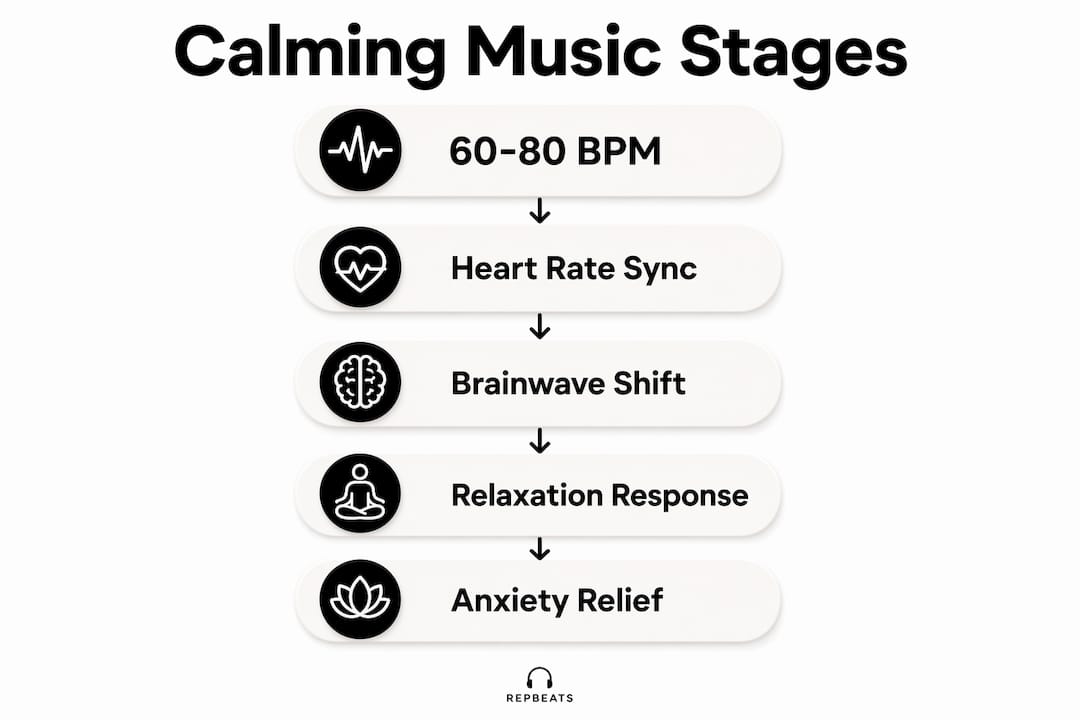
Rhythmic entrainment is the biological tendency of one oscillating system to sync with another. Your heartbeat, breathing rate, and brainwave cycles all qualify as oscillating systems. When you hear a steady, slow beat, your body’s internal rhythms gradually match it. This is the same principle that causes two pendulum clocks on the same wall to eventually swing in sync.
The effect on your brain is measurable and fast. Slow-tempo music shifts brainwaves from alert Beta waves (14–30 Hz) toward relaxed Alpha waves (8–14 Hz) and meditative Theta waves (4–8 Hz) within seconds. Alpha states are associated with calm focus, while Theta states support deep relaxation and creativity. Moving your brain from Beta to Alpha is the difference between anxious rumination and clear, settled thinking.
The parasympathetic nervous system plays a central role here. Low BPM music increases high-frequency Heart Rate Variability (HRV) components, which signals stronger vagal tone and suppressed sympathetic activity. Higher vagal tone means your body is actively pumping the brakes on stress. This is why slow music feels physically calming, not just emotionally pleasant.
Pro Tip: Pair slow music listening with diaphragmatic breathing at the same tempo. Breathing in for four beats and out for four beats accelerates the entrainment effect and deepens parasympathetic activation.
Rhythmic entrainment also explains why the effect is not purely psychological. You can experience it while distracted, half-asleep, or even skeptical. The body responds to tempo the way it responds to gravity. You can understand it intellectually, but it works on you regardless.
- Beta waves (14–30 Hz): Alert, anxious, or actively thinking state
- Alpha waves (8–14 Hz): Calm, focused, and lightly relaxed state
- Theta waves (4–8 Hz): Deep relaxation, meditation, and early sleep state
What is the optimal BPM range for relaxation and anxiety relief?
The science is specific here. Slow-tempo music between 60–80 BPM is optimal for relaxation because it matches a healthy resting heart rate. That alignment is what triggers the entrainment response most reliably. Music above 100 BPM tends to maintain or elevate arousal, which is useful for exercise but counterproductive for calming down.
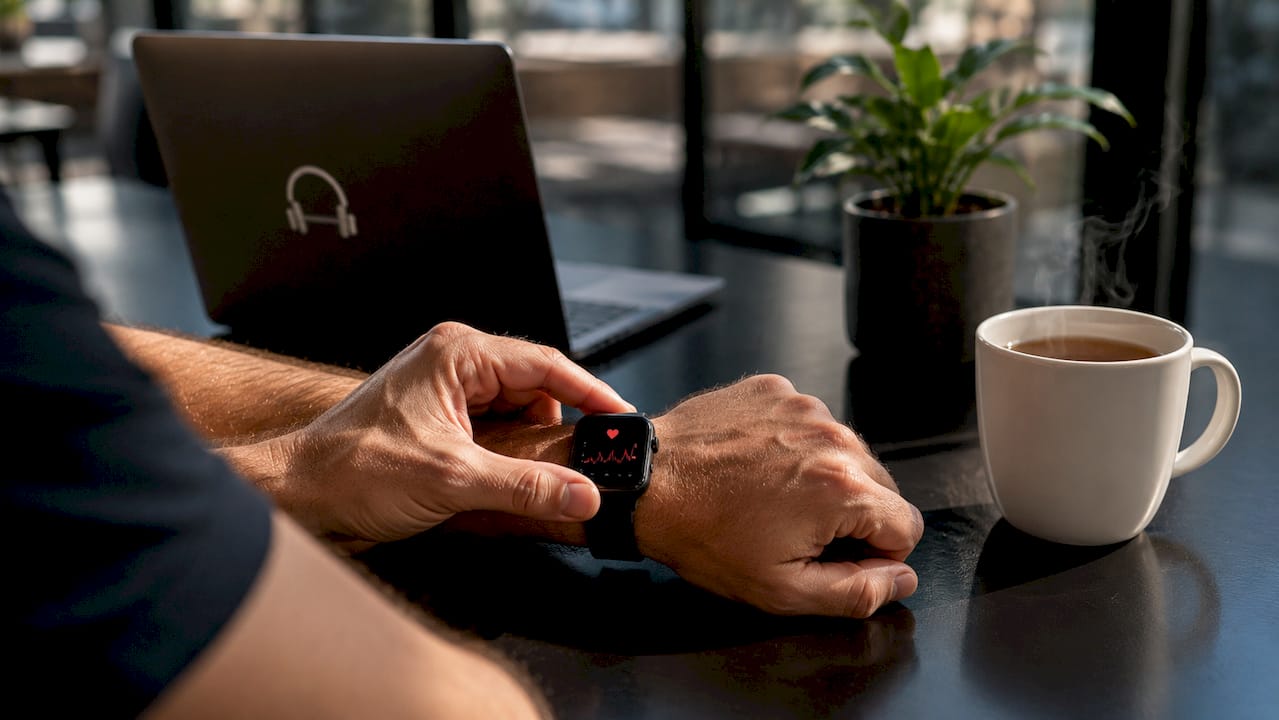
Beyond tempo, the structure of the music matters just as much as the speed. Predictable, consonant harmonies keep your brain from engaging in active analysis. Effective calming tracks avoid repetitive melodies and sudden dynamic changes, which helps the brain disengage from stress processing and enter deeper relaxation. A sudden volume spike or unexpected chord change can interrupt the entrainment process entirely.
Key features of effective calming music
- Tempo of 60–80 BPM aligned with resting heart rate for maximum entrainment
- Instrumental composition with no lyrics, since vocals activate language processing centers that compete with relaxation
- Consonant, predictable harmonies that avoid dissonance or jarring chord progressions
- Gradual dynamic shifts with no abrupt volume changes or rhythmic breaks
- Ambient or nature-based textures such as rain, ocean waves, or soft strings that support passive listening
Duration also determines how much benefit you get. Listening for 24 minutes yields strong anxiety reduction, while 36 minutes optimizes the effect. Twelve minutes produces minimal results. This is a time-dependent response, not an instant fix.
| Listening Duration | Effect on Anxiety |
|---|---|
| 12 minutes | Insufficient for measurable relief |
| 24 minutes | Strong anxiety reduction achieved |
| 36 minutes | Peak effect and mood improvement |
The vocal question deserves special attention. Avoiding vocals enhances relaxation efficacy because lyrics engage your brain’s language centers. Even a slow, beautiful song with words keeps part of your brain actively processing meaning. Instrumental ambient music sidesteps that entirely, letting the entrainment process run without interference.
What psychological and emotional effects explain how slow music relaxes you?
The calming effect of slow music is not purely mechanical. Two processes run in parallel: rhythmic entrainment and emotional resonance. Entrainment handles the physiological side. Emotional resonance handles the psychological side. Both are required for the full effect.
Effective calming music combines rhythmic entrainment with emotional resonance through predictable, consonant harmonies. Dissonant or unpredictable music increases stress-related brain activity even when the tempo is slow. This is why a slow, chaotic jazz improvisation does not calm most people the same way a slow, melodic ambient track does. The brain needs both the right speed and the right emotional texture.
“Tempo-congruent music produces more positive emotional states and sustained tranquility than silence alone by improving affective valence and engagement. The brain does not simply relax in the absence of stimulation. It relaxes when given the right kind of stimulation.”
This finding corrects a widespread misconception. Many people assume silence is the gold standard for relaxation and focus. Tempo-congruent music outperforms silence for producing positive emotional states and sustained calm. Silence can actually increase mental chatter for anxious people, while slow music gives the brain a gentle anchor.
Music also triggers dopamine and serotonin release, which directly improves mood. These neurochemicals do not just make you feel good in the moment. They reduce the physiological markers of stress, including cortisol levels and muscle tension. The dual-process mechanism of entrainment plus emotional resonance is why low tempo music effects feel both physical and emotional at the same time.
- Harmonic predictability reduces the brain’s need to actively analyze incoming sound
- Emotional resonance amplifies the parasympathetic response beyond what tempo alone achieves
- Dopamine release during pleasant music listening reinforces the calming habit over time
How to use low BPM music for mindfulness and anxiety relief
The Iso-Principle is the most effective method for using slow music to reduce anxiety. The Iso-Principle recommends starting music at a tempo matching your current elevated heart rate, then gradually slowing it over 10–20 minutes. This prevents the jarring effect of jumping straight into very slow music when you are already stressed. Your nervous system follows the music down rather than resisting it.
For beginners, the best starting point is ambient or nature-based instrumental music in the 70–80 BPM range. Genres like lo-fi instrumental, classical guitar, or nature soundscapes work well. You can find curated examples in heart rate calming soundtracks that are specifically selected for this purpose. Start with 24-minute sessions and build toward 36 minutes as the practice becomes comfortable.
Pro Tip: Track your resting heart rate before and after a 30-minute slow music session using a wearable like Apple Watch or Fitbit. Seeing the numbers drop reinforces the habit and helps you identify which tracks work best for your physiology.
Practical guidelines for daily use:
- Morning: Use 60–70 BPM ambient music for 20–30 minutes before checking your phone or email to set a calm baseline for the day
- Midday reset: A 24-minute session during lunch reduces afternoon cortisol spikes
- Pre-sleep: Drop to 55–65 BPM music 30 minutes before bed to guide your body toward sleep readiness
- Mindfulness sessions: Pair slow music with breath-focused meditation for compounded parasympathetic activation
One important caution: do not listen to deeply relaxing, low BPM music while driving or operating machinery. The shift toward Alpha and Theta brainwave states reduces reaction time and alertness. The same effect that makes this music excellent for meditation makes it genuinely unsafe behind the wheel. Reserve it for stationary, intentional listening. You can also explore how real-time heart rate guides soundscapes to understand how technology can make this process even more precise.
Key Takeaways
Low BPM music calms the mind by triggering rhythmic entrainment, shifting brainwaves from Beta to Alpha and Theta states, and activating the parasympathetic nervous system through sustained, structured slow-tempo listening.
| Point | Details |
|---|---|
| Optimal tempo range | Music at 60–80 BPM matches resting heart rate and reliably triggers entrainment. |
| Listening duration matters | 24 minutes produces strong anxiety relief; 36 minutes achieves peak effect. |
| Avoid vocals | Instrumental music allows deeper relaxation by bypassing language processing. |
| Use the Iso-Principle | Start at your current heart rate tempo, then slow the music gradually over 10–20 minutes. |
| Music beats silence | Tempo-congruent music produces more sustained calm than silence for anxious listeners. |
The case for treating slow music as a daily practice
I have spent years tracking how different audio environments affect physical and mental performance. The most consistent finding is that people underestimate how much tempo shapes their internal state. They reach for silence when stressed, or they put on whatever playlist is convenient, and then wonder why they still feel wired an hour later.
The research on the best way to meditate consistently points to structured audio environments as a key variable, not an optional add-on. What I find most compelling is the specificity of the effect. It is not “relaxing music” in a vague sense. It is a defined BPM range, a defined duration, and a defined structure. That specificity means you can actually test it, adjust it, and improve it over time.
The Iso-Principle is the piece most people skip. Jumping straight to 60 BPM music when your heart rate is at 90 creates friction. Your nervous system resists the mismatch. Starting closer to your actual state and walking the tempo down is the difference between music that works and music that just plays in the background.
My honest recommendation is to treat this like any other health practice. Consistency matters more than perfection. A 24-minute session four days a week will produce more measurable change than an occasional 60-minute session when you remember to do it. Track your heart rate, notice which tracks actually move the needle for you, and build a short list of go-to options. The science gives you the framework. Your own data tells you what works for your body.
— Jordan Mills
How Repbeats adapts music tempo to your body’s calming needs
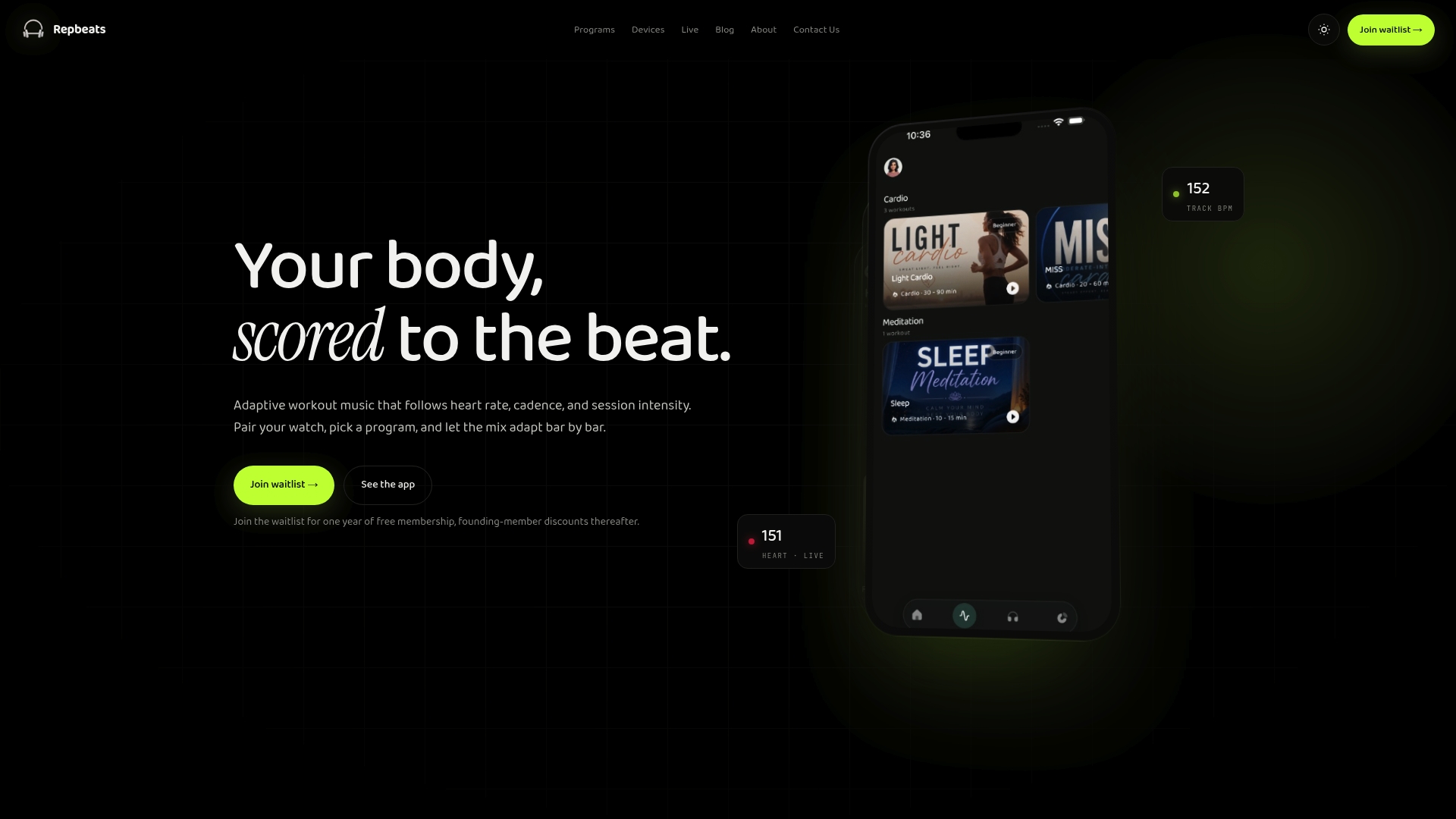
Repbeats takes the science of rhythmic entrainment and applies it in real time. The app reads live heart rate data from wearables like Apple Watch and Fitbit, then adjusts music BPM every bar to match your physiological state. For relaxation and mindfulness sessions, that means the music follows your body down as you calm, rather than staying fixed at a tempo that may no longer match where you are. You can explore the full range of adaptive BPM playlists built for calming, meditation, and recovery. Repbeats removes the guesswork from music selection and makes the Iso-Principle automatic, so your soundtrack always fits your actual state.
FAQ
Why does slow music calm anxiety faster than silence?
Tempo-congruent music outperforms silence for anxiety relief because it gives the brain a rhythmic anchor, reducing mental chatter and triggering parasympathetic activation. Silence can increase rumination in anxious people.
What BPM is best for deep relaxation?
Music between 60–80 BPM is the optimal range for relaxation because it aligns with a healthy resting heart rate and reliably triggers rhythmic entrainment.
How long should I listen to calming music for anxiety relief?
24 minutes produces strong anxiety reduction, while 36 minutes achieves the peak effect. Sessions shorter than 12 minutes show minimal measurable benefit.
Does music with lyrics reduce relaxation depth?
Yes. Vocals activate language processing centers in the brain, which compete with the relaxation response. Instrumental ambient music consistently produces deeper relaxation than vocal tracks at the same tempo.
What is the Iso-Principle in music therapy?
The Iso-Principle means starting your listening session at a tempo close to your current heart rate, then gradually slowing the tempo over 10–20 minutes to guide your nervous system into a calmer state without resistance.