Lab Backed: Nature Sounds, Music or Adaptive Tracks for Meditation
Jordan MillsSeptember 2, 2026 · 10 min read
Lab Backed: Nature Sounds, Music or Adaptive Tracks for Meditation
Nature sounds win for stillness and restoration; music wins for mood-shaping and easing you into a session. A large randomized experiment with 7,636 participants found natural sounds boosted calmness and a sense of restoration, while adding music mainly increased excitement, not deeper rest. The right pick still depends on your goal, your history with music, and how easily your mind wanders. Adaptive, physiology-synced music can bridge both worlds.
TL;DR:
- Nature sounds are more effective for promoting calmness and sleep, especially with steady, predictable recordings like birdsong or flowing water.
- Music can boost mood and provide emotional resets, but its effects vary widely depending on tempo, familiarity, and personal associations.
- Combining natural soundscapes with low-BPM music enhances heart rate variability and reduces stress more than either alone, particularly when layered thoughtfully.
- Adaptive, physiology-synced music that adjusts BPM in real time offers a personalized meditation experience, especially for those sensitive to static playlists.
- Volume and session duration are critical; starting with five to ten minutes at a comfortable level and tracking responses optimizes long-term benefits.
Table of Contents
- Nature Sounds vs Music Meditation: A Quick Comparison
- The Real Benefits and Limits of Nature Sounds
- What Music Actually Does for Your Brain During Meditation
- How to Choose Between Nature Sounds and Music
- Layering Nature Sounds and Music for Better Sessions
- Why Adaptive, Physiology-Synced Music Changes the Equation
- Setting Up Your Sessions: Volume, Timing, and Tracking
- Stop Guessing and Start Testing Your Own Sound Setup
- Try Adaptive Meditation Music That Matches Your Actual Body
- Sources
Nature Sounds vs Music Meditation: A Quick Comparison
Neither option is universally “better.” Each does a different job, and the job you need done should decide your pick.
Nature sounds tend to work best for quiet focus, sleep prep, and any session where you want your mind to settle without being pulled toward anything. Music does better work when you need a mood shift, like coming down from a stressful afternoon or easing into a guided practice that requires some emotional lift.
The physiological evidence backs this split. The same 7,636-person study found music raised excitement without adding restorative value beyond silence, while natural sound reliably produced calm, awe, and even nostalgia. A separate 14-day field experiment with 69 participants found something else worth noting: natural sounds grew more restorative than people’s favorite music over repeated listening, especially for listeners who don’t already use music to regulate mood.
Here’s the quick breakdown:
- Quiet focus or sleep: nature sounds, consistently across listeners
- Mood-lift or emotional reset: music, but with variable results person to person
- Guided or transition-heavy sessions: either works, though music often carries the pacing better
- Repeated daily use: nature sounds tend to hold up longer without fatigue
Both can distract. Music does it through melody hijacking your attention; nature sounds do it when the recording includes wind gusts or traffic bleed that reads as noise instead of ambiance.
The Real Benefits and Limits of Nature Sounds
Nature sounds earn their reputation as the more forgiving background choice, but not every natural sound behaves the same way in your brain.
An EEG study with 30 participants found flowing water and birdsong reduced measured stress and increased EEG-alpha activity, the brainwave pattern associated with relaxed, alert calm. Wind sounds told a different story: they sometimes increased stress in the same experiment.

The numbers that matter: in that 30-person trial, birdsong and flowing water consistently outperformed silence on both subjective stress ratings and alpha-wave markers, while wind produced inconsistent, occasionally negative results.
Why does this happen? Water and birdsong are steady, patterned, and predictable. Your brain stops actively monitoring them almost immediately, which frees up attention for stillness. Wind and distant traffic, by contrast, carry irregular bursts that your nervous system reads as something worth tracking, even at low volume.
Good starter picks:
- Gentle rainfall (steady, no sudden peaks)
- Birdsong recordings without wind interference
- Flowing stream or small waterfall audio
Avoid heavy wind, thunder, or ocean recordings with unpredictable wave timing if you’re prone to distraction.
What Music Actually Does for Your Brain During Meditation
Music’s effect on your body is real and measurable, but it’s far less consistent from person to person than nature sound’s effect.
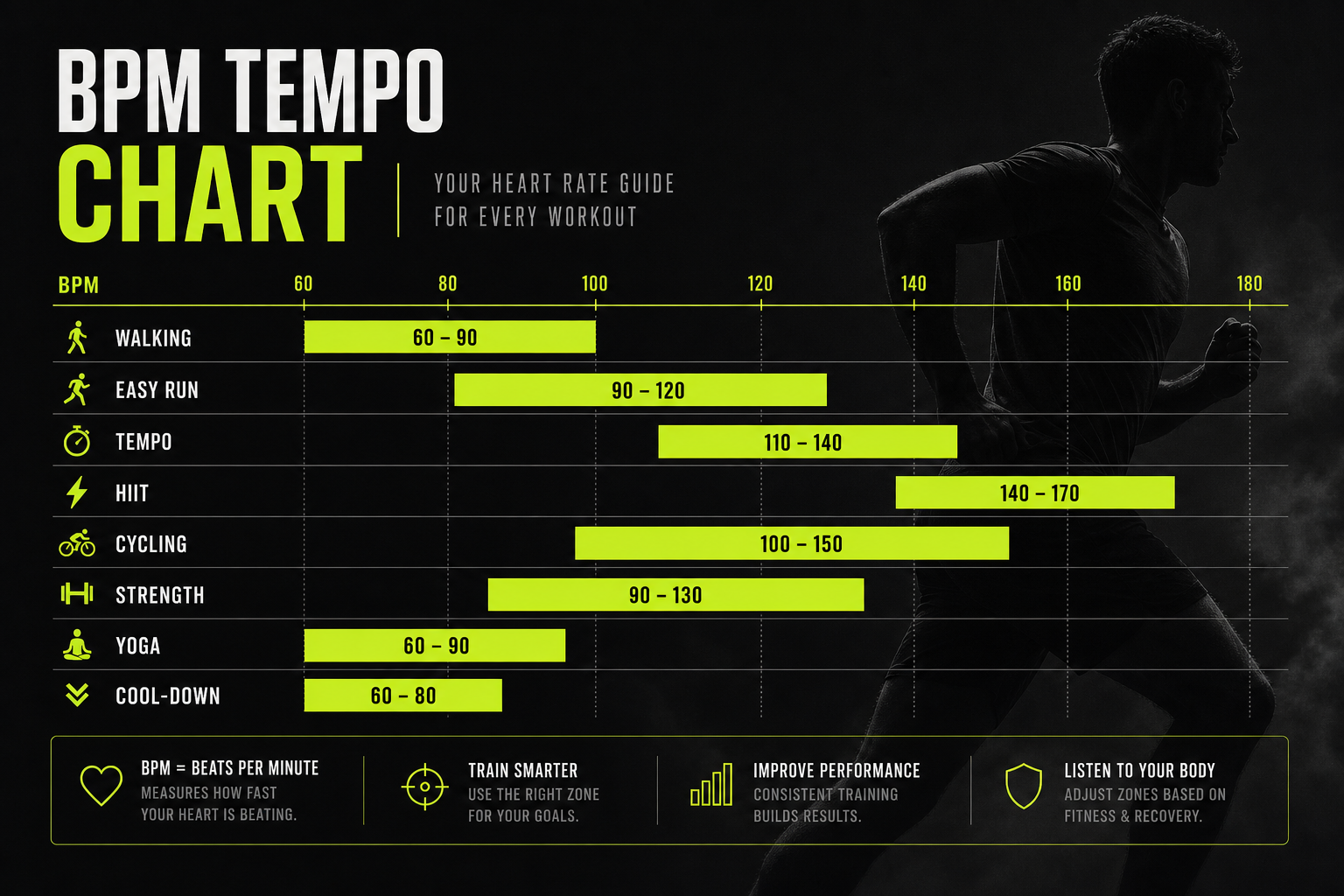
Research on music interventions shows consistent shifts in heart rate variability, blood pressure, and autonomic arousal, but the direction and size of those shifts depend heavily on tempo, arrangement, and whether the listener actually likes what’s playing. A driving 140 BPM track will not calm most people down, no matter how “peaceful” the artist intended it. And a song tied to a breakup or a funeral can undo ten minutes of stillness in about three seconds.
Melody and rhythm are double-edged. They can anchor wandering attention during a guided transition, but they can also become the main event, pulling focus away from the breath and onto the chord progression.
What tends to work:
- Low-BPM tracks (generally under 70 BPM) with minimal melodic movement
- Instrumental pieces with no lyrics, which sidestep language processing entirely
- Familiar-enough structure that your brain doesn’t need to “figure out” the song
Pro Tip: If a track brings back a strong memory the moment it starts, don’t fight it. Swap it out. Meditation is not the place to work through nostalgia or grief, even when the melody is objectively calming.
Skip music entirely if you’re emotionally volatile that day, or if your go-to playlist is loaded with songs tied to specific people, breakups, or major life events.
How to Choose Between Nature Sounds and Music
You don’t need a lab to figure out what will work for your next session. A few honest questions will get you most of the way there.
- What’s the goal? Stillness and focus point toward nature sounds. Mood repair or emotional reset points toward music.
- How experienced are you? Beginners often do better with a guided voice plus a soft nature bed underneath, since vocal guidance tends to produce stronger immediate effects than silence or sound alone.
- Do specific songs trigger strong memories? If yes, default to nature sounds or instrumental-only music with no personal history attached.
- How noisy is your environment? Loud or unpredictable settings call for nature sounds, which mask better without demanding attention.
- Have you tried this sound for two weeks straight? Give any choice repeated exposure before judging it. Restorative value often changes with familiarity.
Novices: guided voice, soft rain underneath. Experienced meditators: nature sounds alone, or silence. Anyone with intrusive musical memories: instrumental-only tracks or pure nature audio, no exceptions.
Layering Nature Sounds and Music for Better Sessions
The strongest results often come from combining both, not picking one and sticking with it forever.
A randomized cross-over study with a moderate number of participants found that nature-based soundscapes blended with musical elements improved heart rate variability and lowered respiratory rate more than urban reference sounds. The model that works: nature as a nonintrusive floor, sparse music as an occasional anchor layered on top only when needed.
Three recipes to try:
- Beginner grounding: rainfall at low volume, no music, five minutes, eyes closed
- Midday reset: birdsong bed plus a single low-BPM instrumental cue every few minutes to mark time
- Guided-depth transition: nature sound throughout, a short music swell only at the moment you shift from settling into deeper focus
Pro Tip: Use looped nature tracks for stillness work and slowly evolving (non-looping) music for anything longer than fifteen minutes. Loops eventually become background noise your brain tunes into, which is good for nature and bad for music that’s supposed to guide you somewhere.
If intrusive thoughts creep in, add a single sound layer rather than removing one. More structure, not less silence, usually settles a wandering mind faster.
Why Adaptive, Physiology-Synced Music Changes the Equation
Static playlists have one obvious flaw: they don’t know how you’re actually doing. Your heart rate, breathing, and stress level shift throughout a session, but a fixed track keeps playing the same tempo regardless.
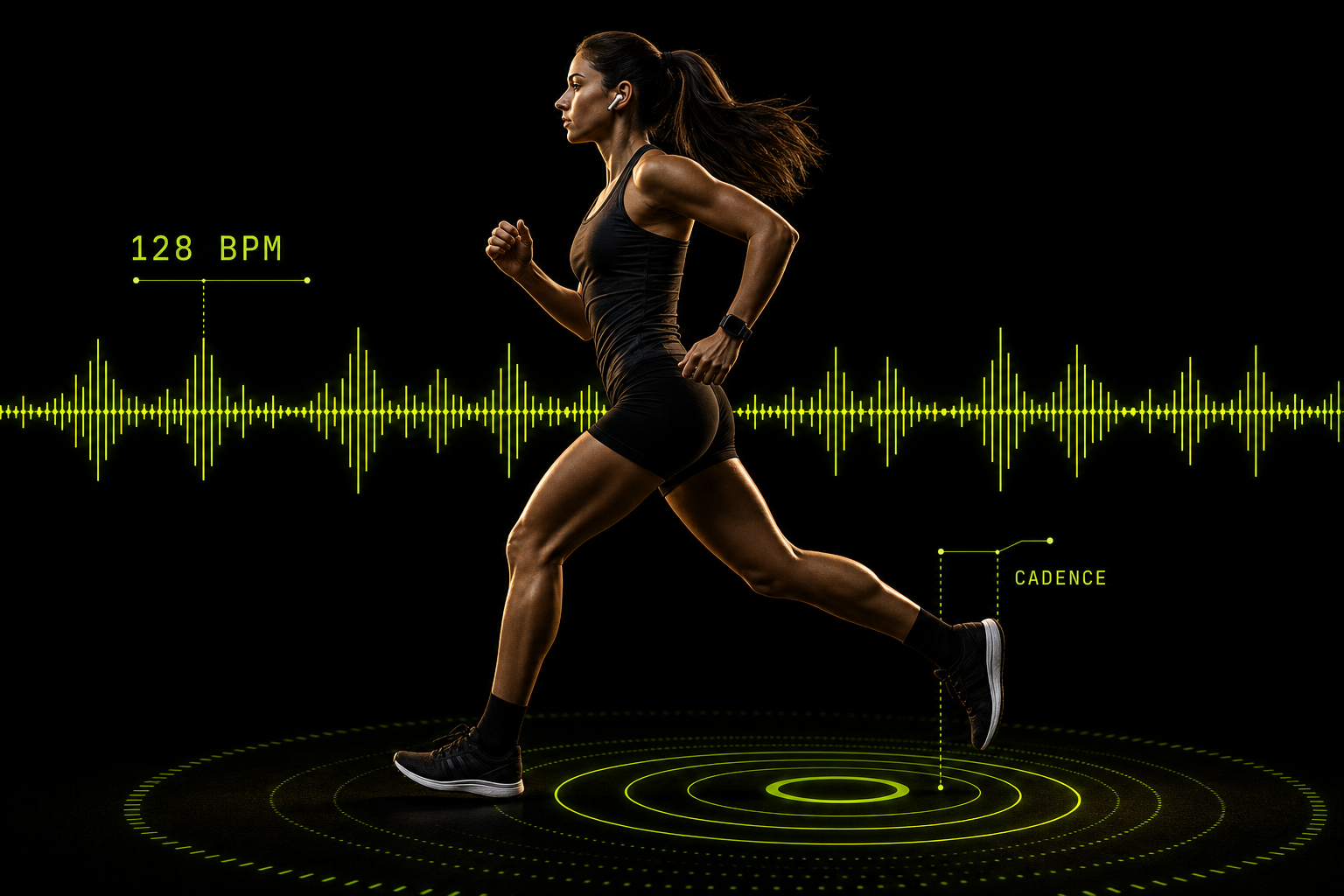
Adaptive music that follows live physiology closes that gap. Repbeats uses auto-DJ technology that updates BPM every bar, pulling live data from wearables like Apple Watch and Fitbit to match the soundtrack to your actual heart rate and session intensity rather than a guess made when the track was recorded.
This matters most when static music has given you inconsistent results in the past, or when you need a session that transitions smoothly from active settling into deeper stillness without you manually switching tracks.
Where it helps most:
- You’ve noticed the same song calms you one day and distracts you the next
- You want a guided transition without picking three separate tracks yourself
- You’re combining meditation with cardio and need one soundtrack that adjusts to both
For the mechanics of tempo and depth, There are detailed guides available on how to adapt music to meditation depth and how to use heart rate for meditation music.
Setting Up Your Sessions: Volume, Timing, and Tracking
Getting the sound right matters less than getting the setup right. A great track at the wrong volume or length will underperform a mediocre one used correctly.
- Volume: keep it low enough that you could hold a quiet conversation over it. If you’re straining to hear it or straining to ignore it, it’s too loud or too quiet.
- Session length: start at 5 to 10 minutes for new sound choices, and extend to 15 to 20 minutes once a sound proves restorative over a few sittings, following the pattern from the 14-day repeated-listening study.
- Headphones vs speakers: closed-back headphones for shared or noisy spaces, open speakers at home when you want sound to feel less “inside your head.”
- Track your response: rate calm on a simple 1 to 10 scale before and after. If you own a wearable, a dropping heart rate or rising HRV over the session is a solid signal the sound choice is working.
Give any new sound at least three or four sessions before judging it. First impressions during meditation are notoriously unreliable.
Stop Guessing and Start Testing Your Own Sound Setup
Here’s what I keep coming back to: most people treat their meditation soundtrack like a fixed decision instead of an ongoing experiment. You pick “rain sounds” or “calm piano” once, and then you never revisit it, even when it stops working.
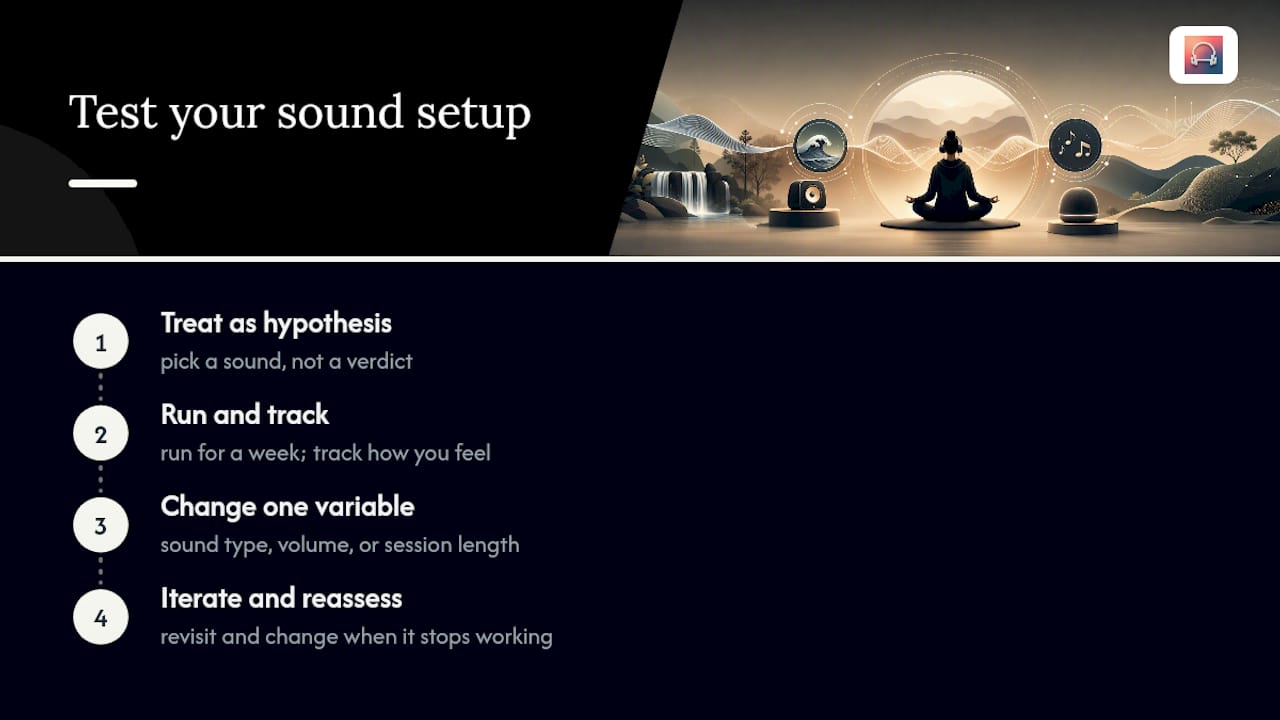
That’s backwards. The evidence is clear that individual response varies enormously, and that a sound’s restorative value can shift with repeated exposure. Treat your first choice as a hypothesis, not a verdict. Run it for a week, track how you feel, and change one variable at a time, either the sound type, the volume, or the session length.
For readers who want to go deeper on tempo and structure specifically, Guides on meditation music BPM can provide useful insights.
— Jordan Mills
Try Adaptive Meditation Music That Matches Your Actual Body
Picking between a rain playlist and a piano track only gets you so far when neither one knows how your body is actually responding in real time. Certain apps take a different approach by using auto-DJ technology that updates BPM every bar, pulling live heart rate and cadence data from wearables like Apple Watch or Fitbit so the soundtrack adjusts to the user instead of the other way around.

That means a meditation session that eases the tempo down as your heart rate settles, rather than a static loop that stays at one speed whether you’re tense or already calm. It’s built for people who’ve noticed static music works some days and not others, and want something that responds instead of guesses.
Try a Repbeats meditation program and see how your own session data changes once the music actually follows you.
Sources
- Soundscapes, music, and memories: Exploring the factors that influence emotional responses to virtual nature content
- Natural sounds vs favorite music: which is the more restorative indoor leisure activity when listened to repeatedly?