HRV Meditation Music: Adaptive Tracks That Sync to You
Jordan MillsJuly 30, 2026 · 12 min read
HRV Meditation Music: Adaptive Tracks That Sync to You
TL;DR:
- Using slow-tempo music at 60–80 BPM and pacing breathing to six breaths per minute maximizes HRV gains during meditation. Adaptive music synced to wearable biometric signals provides a personalized, physiological feedback loop that outperforms static tracks.
For the strongest HRV gains during meditation, use slow-tempo audio in the parasympathetic sweet spot range, pace your breathing to roughly 6 breaths per minute, run sessions long enough for measurable HRV changes, and let a wearable-connected app adjust tempo in real time to match your physiology. That combination consistently outperforms any single element used alone.
Quick-start checklist:
- Tempo: 60–80 BPM (parasympathetic sweet spot)
- Breathing cadence: ~6 breaths/min (roughly 5 seconds in, 5 seconds out)
- Session length: 20–30 minutes for measurable HRV changes
- Wearable sync: on, reading heart rate or respiration continuously
- Metrics to monitor: SDNN, NN50, and RSA-specific measures
Short-term music interventions at 60–80 BPM show significant increases in high-frequency (HF) power, a direct marker of parasympathetic tone. A separate clinical study found that 30-minute Tibetan Singing Bowl sessions produced statistically significant improvements in both SDNN and NN50 (p < 0.05) in healthy young adults.
Table of Contents
- Why does tempo and breathing pace actually change your HRV?
- How do you pick tracks that actually help your HRV?
- How does adaptive music synchronization actually work?
- What does a 20–30 minute HRV meditation session look like?
- Which HRV metrics should you track after a session?
- How do you set up Repbeats for HRV-focused meditation?
- Safety notes and when to stop
- Key Takeaways
- Why static tracks will always leave gains on the table
- Repbeats brings adaptive HRV music to your next session
- Selected research and further reading
Why does tempo and breathing pace actually change your HRV?
Tempo and breathing rhythm don’t just feel calming. They directly entrain respiration and vagal tone, producing measurable rises in HF power and Respiratory Sinus Arrhythmia (RSA). RSA is the natural fluctuation in heart rate that occurs with each breath cycle. When you slow your breathing to match a 60–80 BPM track, you’re essentially giving your vagus nerve a metronome.
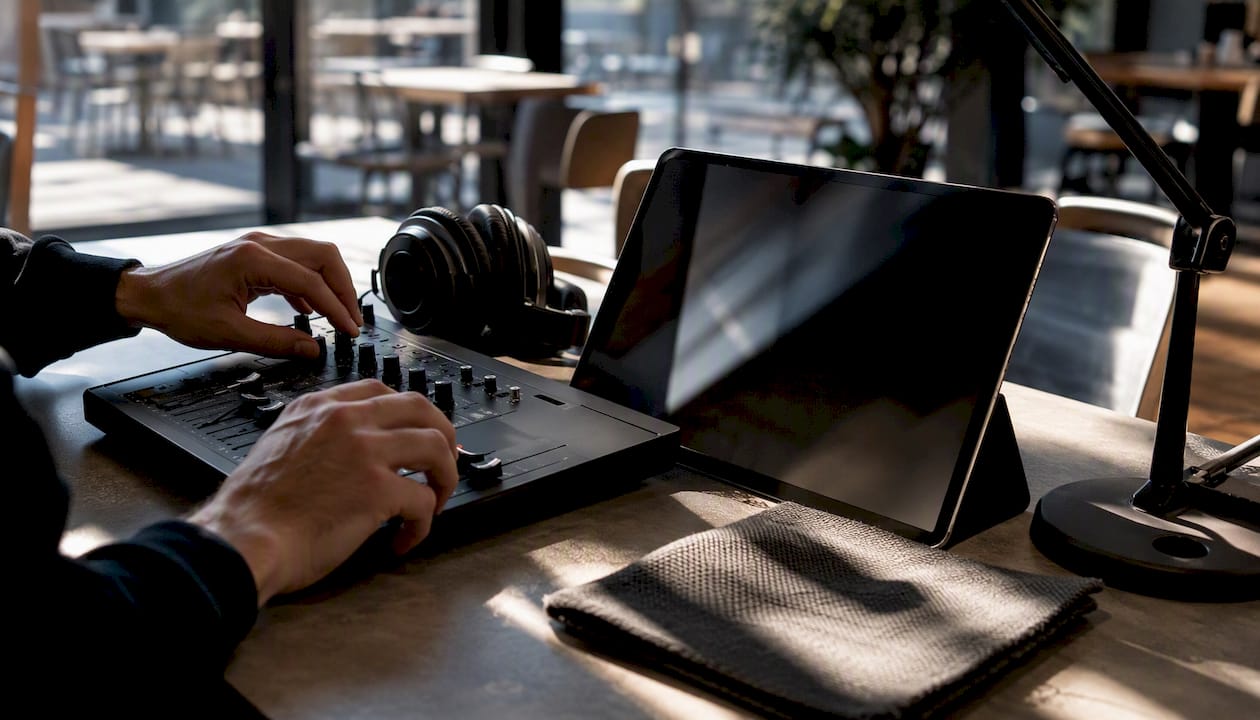
The consensus on resonance breathing places the strongest acute HRV stimulus at approximately 6 breaths per minute. At that rate, the RSA amplitude peaks and parasympathetic activity dominates. HRV changes can appear within minutes of starting a session, and consistent practice builds more durable baseline improvements over time.
Why RMSSD alone isn’t enough here. During slow, paced breathing, the RSA signal shifts into the low-frequency band of the HRV power spectrum. RMSSD preferentially weights higher-frequency modes, so it underestimates HRV during slow breathing and can be confounded by sympathetic markers. Researchers recommend prioritizing RSA-specific metrics like the Autonomic Balance Index (ABI), SDNN, and NN50 for evaluating slow-breathing meditation sessions.
Combining music with intentional, mindful listening amplifies the effect further. A Frontiers in Neuroscience review found that music-plus-mindfulness engages autonomic and frontotemporal networks simultaneously, shifting physiology toward parasympathetic dominance more effectively than either practice alone.
How do you pick tracks that actually help your HRV?
Tempo is the non-negotiable starting point, but structure matters almost as much. Here’s what to look for:
- BPM: 60–80, verified by a metronome app or the track’s listed tempo
- Rhythmic cues: clear, gentle swells that mark inhalation and exhalation phases
- Rhythmic complexity: minimal; syncopation or irregular patterns disrupt entrainment
- Amplitude consistency: avoid sudden crescendos or drops that spike arousal
- Instrumentation: resonant low-frequency tones work well, including Tibetan singing-bowl textures, ambient pads, and sustained drones
A randomized study of 242 participants found that white noise produced the highest HRV metrics overall, with classical music outperforming electronic or personal music in slow-tempo conditions. That doesn’t mean you should abandon music you love. A meta-analysis of 24 RCTs found that participant-selected music yielded superior outcomes compared to standardized tracks. The practical takeaway: if your preferred music fits the 60–80 BPM and low-complexity criteria, use it. If it doesn’t, white noise or ambient classical is a reliable fallback.
Paced-breathing libraries offer tracks mapped to specific breaths-per-minute rates (4.5–7.5), with discrete inhalation and exhalation cues built in. These are worth exploring if you want a structured starting point before moving to fully adaptive audio.
Pro Tip: Test adjacent breathing rates (5.5, 6.0, 6.5 breaths/min) across separate sessions. Your personal resonance frequency sits where HRV amplitude peaks, and it varies by individual. Finding it takes a few sessions but pays off in noticeably stronger parasympathetic response.
For more on ambient meditation track design, the Repbeats blog covers how tempo and texture interact in practice.
How does adaptive music synchronization actually work?
Adaptive sync closes a feedback loop: your wearable reads a biometric signal, the app maps it to a target BPM, and the music shifts to match. The result is audio pacing that follows your physiology rather than forcing your physiology to follow a fixed track.
The data inputs:
- PPG heart rate from Apple Watch or Fitbit (sampled continuously)
- Respiration rate when the wearable supports it
- Cadence as a secondary signal during movement-based sessions
The sync flow, step by step:
- Sensor reads heart rate or respiration rate
- Signal is smoothed over a short window to remove artifacts
- App detects proximity to resonance frequency range (4.5–6.5 breaths/min)
- Target BPM is calculated and applied to the track, bar by bar
- User receives audio feedback; the loop repeats
Heart Rhythm Meditation techniques breathe to a count of heartbeats (inhale across 6–8 heartbeats), which means the breathing cycle length changes as heart rate changes. Fixed audio tracks can’t replicate this without live biometric input. That’s the core argument for adaptive sync over static playlists.
PPG sensors introduce some latency, and smoothing windows add a small lag. True resonance frequency varies by individual (commonly 4.5–6.5 breaths/min), so a fixed track may miss your personal peak entirely. How wearables capture intensity data and translate it to BPM targets is worth understanding before you configure your app settings.
Pro Tip: Enable small per-bar tempo shifts rather than large jumps. A 0.5–1.0 BPM change per bar preserves musicality and keeps the transition below conscious perception, which prevents the arousal spike that larger jumps can cause.
What does a 20–30 minute HRV meditation session look like?
Aim for 20–30 minutes. The Tibetan Singing Bowl study used 30-minute sessions to produce measurable SDNN and NN50 changes. Shorter daily practice (5–10 minutes) still helps with baseline improvements over time.
Session timeline:
- Pre-session (2 min): Take a baseline HRV reading. Sit quietly, wearable on, app open. Note your resting heart rate.
- Grounding (3 min): Natural breathing, eyes closed, no tempo cues yet. Let arousal settle.
- Paced breathing with adaptive music (20 min): Start at 6.0 breaths/min. Let the app adjust BPM to match. Focus on the exhale cue.
- Cool-down (5 min): Tempo drops toward 55–60 BPM. Ambient sound only, no breath cues.
- Post-session (2 min): Take a second HRV reading. Log perceived relaxation on a 1–10 scale.
App settings to configure before you start:
- Target BPM band: 60–80
- Smoothing window: short (2–4 bars)
- Auto-sync: on
- Volume: low and even (avoid headphone spikes)
- Background noise: minimize; a quiet room or low-level white noise works best
Which HRV metrics should you track after a session?
Prioritize RSA-specific measures and time-domain metrics for slow-breathing meditation. Here’s the practical breakdown:
| Metric | What it captures | Direction during effective session | Measurement window |
|---|---|---|---|
| SDNN | Total HRV, general autonomic variability | Increases | 5–10 min snapshot |
| NN50 | Parasympathetic activity (beat-to-beat changes) | Increases | 5–10 min snapshot |
| ABI / RSA index | Fraction of HRV from respiratory sinus arrhythmia | Increases | 5–10 min snapshot |
| HF power (HFnu) | Parasympathetic tone (use cautiously below 6 breaths/min) | Increases | 5–10 min snapshot |
| RMSSD | Short-term beat-to-beat variance | Unreliable at slow breathing rates | Not recommended alone |
A few practical rules: use consistent posture (seated, not supine), measure at the same time relative to your session, and avoid measuring immediately after exercise. For baseline trends, a 24-hour HRV reading gives more signal than any single post-session snapshot.
How do you set up Repbeats for HRV-focused meditation?
Repbeats reads live data from Apple Watch and Fitbit and adjusts BPM every bar to follow your heart-rate or breathing-derived targets. That per-bar adjustment is what separates it from a static playlist. For a practical walkthrough of using heart rate to pace meditation audio, the Repbeats blog covers the mechanics in detail.
Setup steps:
- Open Repbeats and pair your Apple Watch or Fitbit
- Select the HRV meditation preset
- Set your BPM band to 60–80
- Set the smoothing window to short (2–4 bars)
- Enable inhale/exhale cues
- Start the session and let the auto-DJ sync to your live data
Settings by experience level:
- Novice: BPM band 65–75, smoothing window 4 bars, inhale/exhale cues on, fixed ambient track as base
- Intermediate: BPM band 60–80, smoothing window 2 bars, cues optional, user-selected track meeting tempo criteria
After each session, log your SDNN and NN50 readings in the app to track progress over time.
Pro Tip: Start with a slightly wider BPM band (±1.0 BPM around your target) for the first two or three sessions. Once you identify where your HRV peaks, narrow the band to ±0.5 BPM to lock in your personal resonance frequency.
Safety notes and when to stop
Adaptive music meditation is safe for most people. It does not involve electrical stimulation, medication, or physical exertion. That said, a few situations warrant caution.
Consult a clinician before starting HRV biofeedback or paced-breathing practices if you have an unstable cardiac condition, a pacemaker, uncontrolled arrhythmia, or a history of syncope. Slow, deep breathing can shift autonomic balance significantly, and that shift may not be appropriate for everyone.
Stop the session and seek medical attention if you experience:
- Dizziness or lightheadedness that doesn’t resolve when you return to normal breathing
- Chest pain or pressure
- Fainting or near-fainting (syncope)
- Irregular heartbeat that feels new or alarming
Practical limitations to keep in mind:
- PPG sensors on wrists produce artifacts during movement; stay still during meditation sessions
- Poor wearable placement (loose band, cold skin) degrades signal quality and throws off BPM targeting
- Individual resonance frequency varies; a track set to 6.0 breaths/min may not match your personal peak
- Fixed tracks, however well-designed, cannot fully replicate heartbeat-timed breathing practices without live biometric input
This article is general information, not medical advice. Confirm current guidelines with a qualified clinician for your specific situation.
Key Takeaways
Slow-tempo music at 60–80 BPM, combined with 6 breaths-per-minute pacing and adaptive wearable sync, produces the strongest acute parasympathetic HRV gains during meditation.
| Point | Details |
|---|---|
| Optimal tempo | Use 60–80 BPM tracks; short interventions at this range significantly increase HF power. |
| Breathing cadence | Pace to ~6 breaths/min; this rate produces the strongest acute RSA and vagal tone response. |
| Session length | 30-minute sessions show measurable SDNN and NN50 gains; 5–10 minutes daily builds baseline over time. |
| Metrics to track | Prioritize SDNN, NN50, and RSA-specific measures; treat RMSSD cautiously during slow-breathing sessions. |
| Repbeats setup | Pair Apple Watch or Fitbit, select the HRV preset, set BPM band to 60–80, and enable per-bar adaptive sync. |
Why static tracks will always leave gains on the table
The research on HRV meditation music is clear enough: slow tempo, paced breathing, and consistent practice all move the needle. What the research can’t tell you is your personal resonance frequency, because it’s yours alone, sitting somewhere between 4.5 and 6.5 breaths per minute. A static track set to 6.0 BPM might be exactly right, or it might miss your peak by enough to cut your HRV response in half.
That gap is where adaptive sync earns its place. When the music adjusts bar by bar to follow your actual heart rate and respiration, it’s not just a convenience feature. It’s the difference between a practice that approximates your physiology and one that tracks it. The subjective experience matters too: music that feels like it’s breathing with you keeps you in the session longer, and adherence is what turns acute HRV gains into durable baseline improvements.
The conventional wisdom says “just find a calming playlist.” That’s fine as a starting point. But if you’re using a wearable and a fitness app, you already have the data to do something more precise. The only question is whether your app is using it.
Repbeats brings adaptive HRV music to your next session
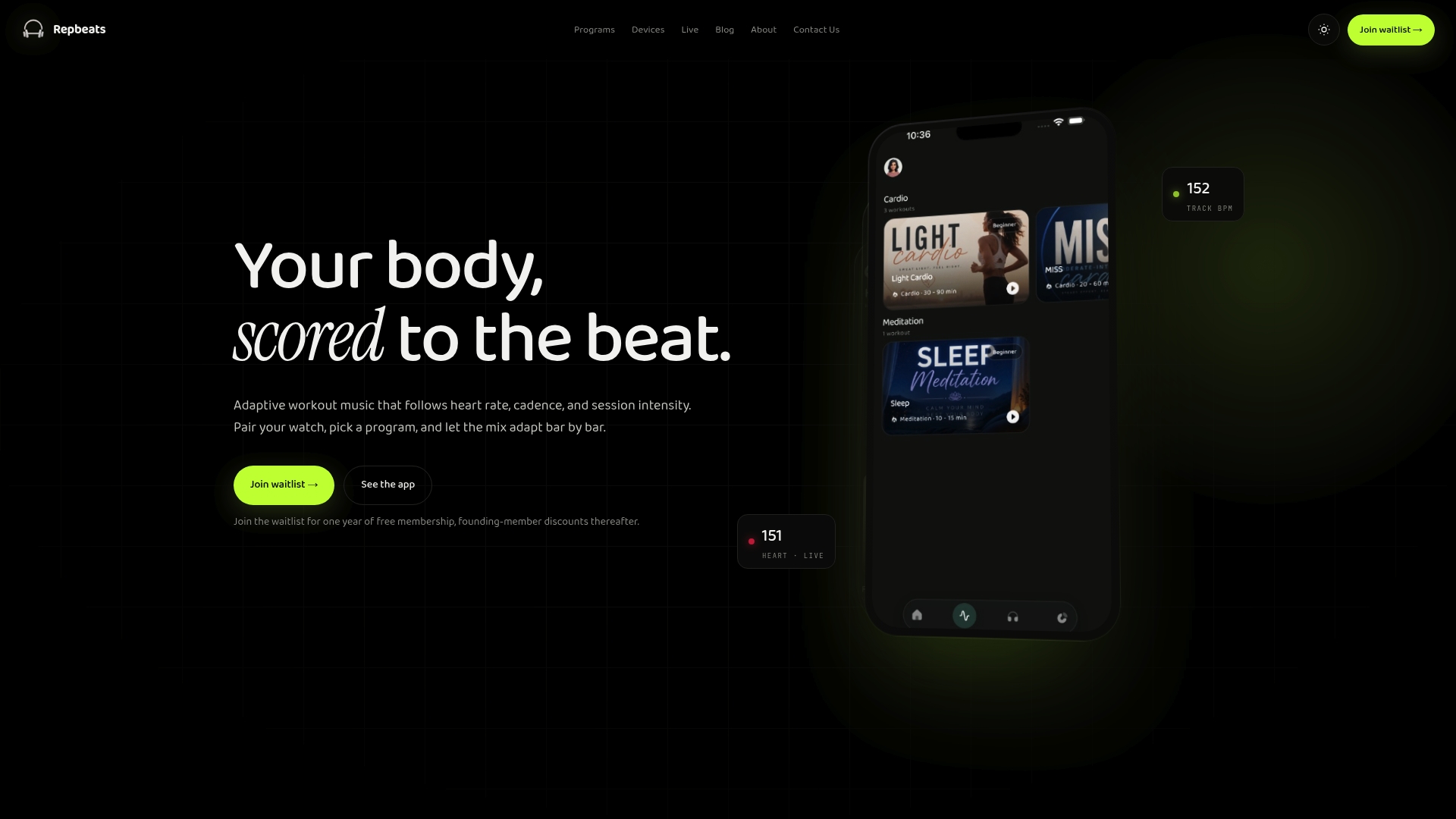
Most meditation apps hand you a static track and call it biofeedback. Repbeats does something different: it reads live data from your Apple Watch or Fitbit and shifts the music’s BPM every bar to match your actual heart rate and breathing targets, keeping you in the 60–80 BPM parasympathetic zone without manual adjustment.
What you get with the HRV meditation preset:
- Real-time BPM sync tied to wearable heart-rate data
- Built-in inhale/exhale cues calibrated to your target breathing rate
- Adjustable smoothing window so tempo shifts stay musical, not jarring
- Session logging so you can track SDNN and NN50 progress over time
Start your first adaptive HRV session with the free trial and run a 20–30 minute paced-breathing session today.
Selected research and further reading
The claims in this article draw from peer-reviewed studies, systematic reviews, and practitioner resources. The most relevant sources are listed below.
Key studies and resources:
- Music intervention and HRV: systematic review and meta-analysis of 24 RCTs — Frontiers in Psychology
- Tibetan Singing Bowls and HRV: SDNN and NN50 outcomes — IEEE EMBC 2025
- HRV during mindful breathing: RMSSD limits and the Autonomic Balance Index — Frontiers in Physiology
- Resonance frequency and HRV biofeedback: individual variability — PubMed
- Heart Rhythm Meditation and dynamic breathing requirements — PMC
- Music tempo and autonomic effects at 60–80 BPM — Frontiers in Cardiovascular Medicine
- Music mindfulness and autonomic-neural synergy — Frontiers in Neuroscience
- RSA metric guidance for slow-breathing meditation — Frontiers in Neuroscience
- HRV paced breathing music library (4.5–7.5 breaths/min) — Endo Education
- Resonance breathing 101: practical guidance — OHM Health
To find more literature, search PubMed or Frontiers using: “HRV paced breathing music,” “resonance breathing 6 breaths per minute,” “heart rate variability meditation music,” or “music autonomic nervous system slow tempo.”