Recovery Run Music That Matches Your Cadence, 30–60 Min Playlists
Jordan MillsSeptember 28, 2026 · 11 min read

Recovery Run Music That Matches Your Cadence, 30–60 Min Playlists
The ideal recovery run playlist sits close to your natural cadence or a touch below it, usually somewhere in the range that keeps your legs turning over without pushing pace. Load a 30 to 45 minute tempo-matched mix, press play, and let the beat set the ceiling on your effort rather than the floor. If manually building that mix sounds tedious, an adaptive option like Repbeats can handle the tempo matching for you.
TL;DR:
- Use a playlist with tracks at 130 to 145 BPM for 30-minute recovery runs, choosing music that aligns with or slightly below your cadence.
- Synchronize music to your body’s rhythm during the run to improve comfort and reduce perceived effort, especially with cadence- or heart-rate sync systems.
- Transition from active music during the run to slower, sedative tracks around 70 BPM during passive cooldown, with the last 15 minutes focused on hormonal and mood recovery.
- Confirm your recovery effort by performing a speak-test every 10 minutes, maintaining conversational breathing and a perceived effort of 2 to 3 out of 10.
- Use wearable technology to automatically adjust BPM in real time, eliminating manual playlist building and helping maintain consistent effort throughout the session.
Table of Contents
- Why tempo and synchronization matter for recovery runs
- How to match music to your recovery run: BPM, cadence, and perceived effort
- Curated playlist and mixes for 30, 45, and 60 minute runs
- Playback setup and device tips for consistent tempo
- How adaptive, wearable-synced music works: Repbeats as an example
- When to run easy with music and when to rest
- Repbeats: try adaptive BPM playlists for recovery runs
- Sources
- FAQ
Why tempo and synchronization matter for recovery runs
Music tempo does more than set a mood during exercise. It changes how hard a run actually feels. A within-subject experiment found that music tempo significantly affects perceived fatigue and time to fatigue, with the effect depending on how intense the exercise already is. That interaction matters for recovery runs specifically: the wrong tempo can make an easy session feel harder than it should, which defeats the point of the day.
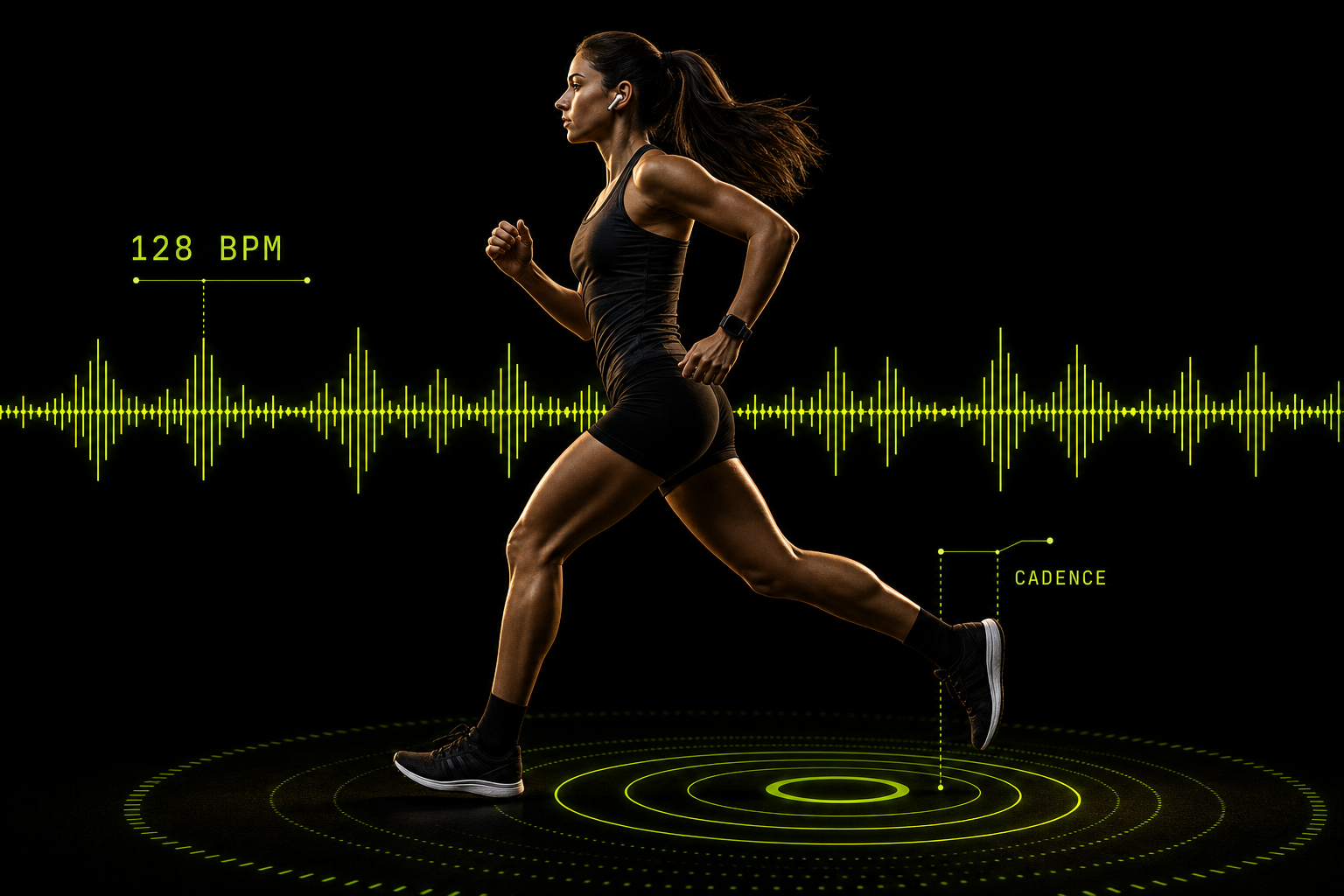
Synchronizing music directly to the body produces a similar effect. A randomized trial using a biosignal-synchronous system called HEARTBEATS found that cadence- or heart-rate-synchronous music improved performance and reduced perceived effort in trail runners, with heart-rate syncing showing a particular benefit for perceived comfort among female runners in the study. When the music tracks your body’s own rhythm instead of fighting it, the run feels smoother.
What happens after the run matters just as much. Research from Brunel University found that slow, sedative music during passive recovery lowers cortisol faster than fast music or silence. The recommendation from sport psychologist Costas Karageorghis is a two-stage cooldown: medium-tempo music first, then slower tracks once you’ve stopped moving.
- Choose a tempo that keeps your breathing conversational, not one that matches your race pace playlist.
- Save slow, sedative tracks for the minutes right after you stop, not for the run itself.
- Treat music as a governor on effort rather than a motivator to push harder on recovery days.
A Brunel University study found that medium-tempo cooldown music followed by roughly 15 minutes of slow, sedative music around 70 BPM produced better hormonal and mood recovery than fast music or no music at all. That two-stage approach, active cooldown then passive rest, is the backbone of the playlist advice below.
How to match music to your recovery run: BPM, cadence, and perceived effort
Getting the tempo right starts with knowing your own cadence, not borrowing someone else’s playlist.
- Count your steps for 30 seconds during an easy jog, using a running watch’s cadence reading or a manual foot-strike count, then double it to get steps per minute.
- Decide which beat mapping fits you. Some runners land one footstrike per beat, which means BPM should roughly equal cadence. Others feel better landing one footstrike every two beats, which allows a track with roughly half your cadence in BPM to still feel synchronized. Acoustic stimuli research found that synchronized music, whether matched one-to-one or two-to-one, helped runners hold a steadier pace and lowered perceived effort during sub-maximal efforts.
- Pick a BPM slightly below your training cadence if the goal is a true recovery day rather than a moderate aerobic run. A few beats slower is usually enough to keep the legs from chasing the music.
- Run the ten-minute check. After the first ten minutes, confirm you can speak in full sentences and that perceived effort sits around 2 to 3 out of 10. Practical recovery run guidance points to this speak-test as the simplest way to confirm the session is still doing its job.
- Adjust on the fly if the tempo pulls you faster. Skip the track or lower it half a step in your playlist app rather than letting the music dictate a harder effort.
Pro Tip: If a song makes you want to pick up the pace on a hill, that’s your cue to switch tracks, not push through it.
A few playback rules keep the session honest. Avoid ending your mix with a high-energy finisher track, since a strong closing song tends to invite a strong closing kick. Walk hills rather than let a beat drop tempt you into a stride you didn’t plan. If you notice your stride length or foot strike changing to match the music instead of the other way around, that’s a sign to drop the volume or switch to something slower. For more detail on picking music speed specifically for easy days, see Repbeats’ guide to recovery run music.

Curated playlist and mixes for 30, 45, and 60 minute runs
The right mix length depends on how long your recovery run typically runs, but the tempo logic stays consistent: keep it steady, keep it low, and don’t sneak in a build.
For a 30-minute restorative mix, aim for tracks in the 130 to 145 BPM range if you run one step per beat, or roughly half that if you prefer the two-step mapping. Lo-fi, downtempo electronic, or acoustic singer-songwriter tracks tend to sit naturally in this window without an obvious build-up that tempts a faster finish.

A 45 minute steady recovery mix works well as two segments: the first 30 minutes at the same easy BPM range as above, then a gradual step down for the last 10 to 15 minutes as you approach the end of the run. This mirrors the idea behind threshold-focused mixes at a much higher 130 to 140 BPM range, just inverted: instead of building energy, you’re easing it off before you even stop moving.
A 60 minute gentle run plus cooldown template extends the same logic through the finish line. Run the first 45 to 50 minutes at your easy BPM, then transition into medium-tempo cooldown tracks around 90 to 115 BPM once you slow to a walk, following the active-cooldown range Karageorghis recommends. Once you’re fully stopped, switch to slow, sedative tracks around 70 BPM for the final 15 minutes of passive recovery, the same range tied to faster cortisol recovery in the Runner’s World summary of the Brunel research.
- Favor longer, ambient tracks for the passive-recovery portion so you’re not skipping songs while trying to sit still.
- Avoid abrupt tempo jumps between tracks. A gradual BPM step-down feels smoother than a sudden switch from upbeat to sedative.
- Instrumental or minimal-vocal tracks work well for the cooldown phase since they’re less likely to distract from breathing and stretching.
For readers who alternate recovery runs with treadmill sessions, the same tempo principles apply indoors. Repbeats’ treadmill running music guide covers how to keep tempo consistent when the belt, not the road, is setting your pace.
Playback setup and device tips for consistent tempo
Getting the mix right on paper doesn’t help much if the playback experience keeps interrupting your run.
- Check your cadence before you leave the house. Most running watches display real-time steps per minute, which lets you pick a BPM-matched playlist before you start rather than guessing mid-run.
- Download your playlist for offline playback. Streaming hiccups on trails or in areas with weak signal are one of the most common reasons an easy run turns into a stop-and-start session.
- Charge your device and watch the night before. A dead phone mid-run often means finishing in silence or, worse, switching to whatever’s loudest and fastest on a backup device.
- Use a cadence lock or metronome-style overlay if your app supports it. Locking a target cadence, similar to the setup covered in Repbeats’ cadence lock running guide, helps prevent the common mistake of unconsciously speeding up to match a song you love.
- Consider hiding your live pace on the display. Runners who watch their pace number tend to chase it. Hiding it and trusting the tempo of the music instead keeps recovery runs honest.
- Keep volume low enough to hear traffic, other runners, or trail conditions. One earbud out, or a bone-conduction headset, is a simple way to stay aware without giving up the music entirely.
How adaptive, wearable-synced music works: Repbeats as an example
Some fitness apps are built around cadence-matching ideas, using technology that updates a track’s beats per minute every bar instead of locking in one tempo for an entire song, allowing music to track small shifts in effort throughout a run. By pulling live data from wearables, such apps can adjust music in response to heart rate, cadence, and session intensity instead of requiring a runner to manually pick a BPM range. For a recovery run, that means the tempo can stay tied to an easy cadence automatically rather than depending on a runner remembering to build the right playlist beforehand.
When to run easy with music and when to rest
A recovery run earns its place when your legs feel heavy but not sore, and your motivation is low but not absent. Music can lower the psychological barrier to lacing up on those days, but it shouldn’t talk you out of noticing a nagging ache or an off stride. If a playlist is the only thing getting you out the door and your body is sending real warning signs, the smarter call is rest, not a slower song.
— Jordan Mills
Repbeats: try adaptive BPM playlists for recovery runs
Building a tempo-matched mix by hand works, but it takes trial and error to find the right BPM range and keep it consistent mile after mile. Repbeats automates that process by syncing music tempo to your heart rate and cadence in real time, using its auto-DJ technology to adjust beats every bar instead of leaving you to guess at a playlist in advance.
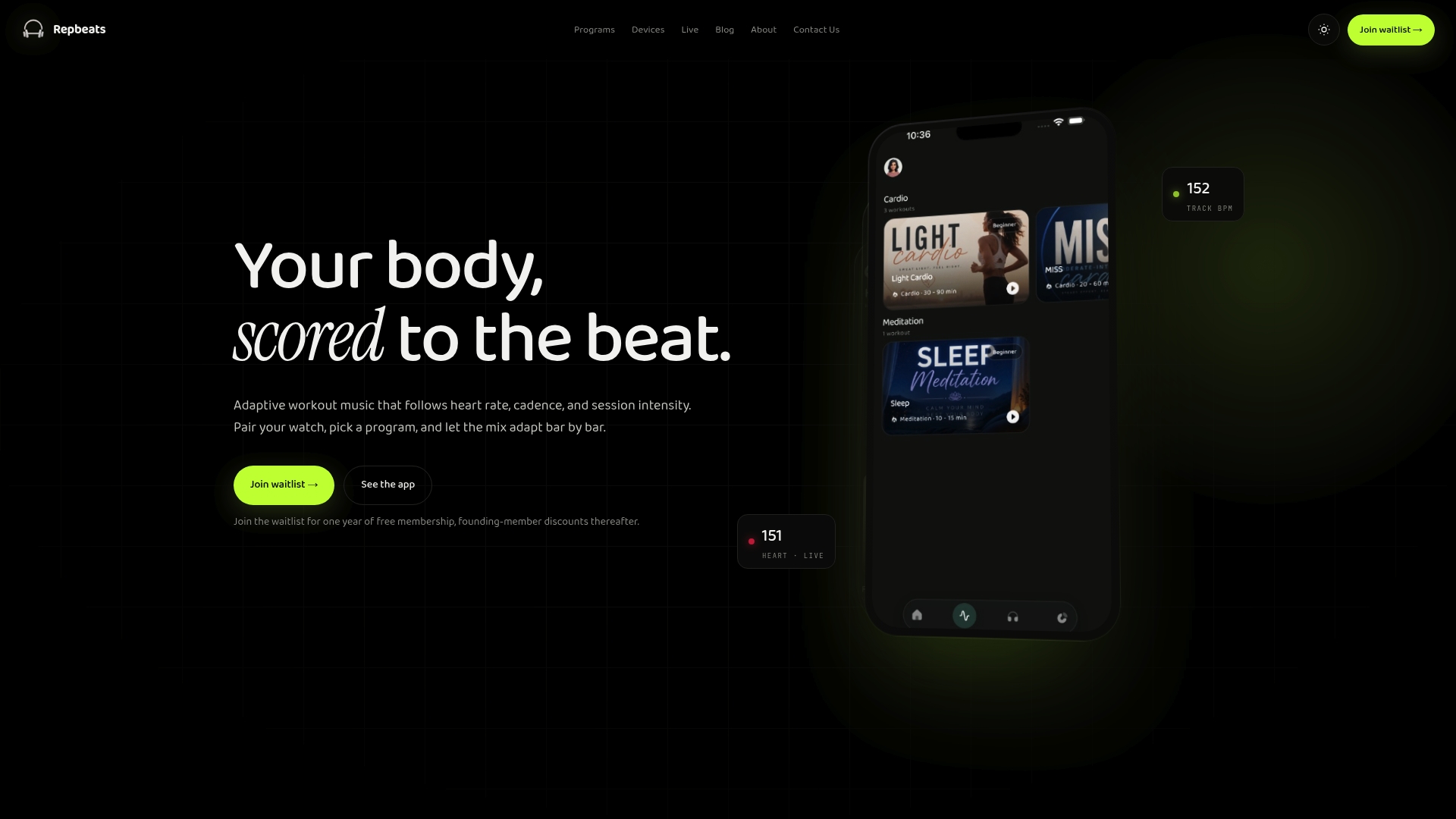
- Wearable sync with Apple Watch and Fitbit keeps the music tied to your actual effort, not a preset playlist.
- Automatic BPM adjustments make the transition from an easy run into a slower cooldown happen without swapping playlists manually.
Visit the Repbeats app page to see how adaptive tempo matching works across running, cycling, and meditation sessions.
Sources
For readers who want the underlying research, the Brunel University cooldown study and the PubMed trail runner sync trial are the two most directly useful. External coverage of adaptive fitness technology, including a broader look at apps that adjust music to physiological data, adds useful context on where this category is headed.
- The Effect of Music Tempo on Fatigue Perception at Different Exercise Intensities - PubMed
- On Performance and Perceived Effort in Trail Runners Using Sensor Control to Generate Biosynchronous Music - PubMed
- Chill-out tunes boost recovery after workout — Brunel University
FAQ
What are good recovery songs?
Good recovery songs sit at a tempo that matches or slightly trails your natural running cadence, followed by slower, sedative tracks once you stop moving. Research on passive recovery found that tracks around 70 BPM helped lower cortisol faster than faster music during the cooldown period.
What is a good song to use for a running post?
There’s no single universal track, since the right choice depends on your cadence and the mapping between steps and beats you personally prefer. What matters more than the specific song is picking one within your easy-run BPM range so the tempo supports a conversational effort rather than pushing pace.
What is a good recovery run?
A good recovery run keeps effort around 2 to 3 out of 10, with breathing easy enough to hold a conversation throughout. Practical guidance on recovery runs suggests using a ten-minute check early in the run to confirm your legs and breathing feel loose rather than strained.
What is a good song to sprint to?
Sprint-focused music sits well above recovery-run tempo, often in higher BPM ranges built for intervals or threshold efforts rather than easy days. That kind of high-tempo track defeats the purpose of a recovery run, where the goal is to keep the beat slow enough that it never tempts you to speed up.