Stair Climber Music: Match 120–150 BPM to Your Cadence
Jordan MillsOctober 13, 2026 · 10 min read

Stair Climber Music: Match 120–150 BPM to Your Cadence
Start testing energetic tracks around 120 to 150 BPM and use half-time stepping, landing one step every other beat, for a natural cadence near 60 to 75 steps per minute. Save slower songs for warm-up and recovery, and save faster tracks for short intervals only if they don’t push your pace past a sustainable level. Research on tempo and exercise performance backs this up: music can shift how hard a workout feels, and the right track for you beats a generic “ideal” BPM.
TL;DR:
- Count steps for 15 to 30 seconds to calculate cadence, then shift the music by 5 to 10 BPM if posture or pace slips.
- After a 20 minute steady climb, try four intervals at 150 to 160 BPM, each lasting one minute and followed by a 90 second recovery.
- A running study found preferred music increased distance by 10% and average speed by 14% during a six minute test, compared with no music.
- Keep volume low enough to hear alarms and announcements, and leave one earbud out in shared gyms rather than masking machine noise.
Table of Contents
- BPM ranges and how to match music to your cadence
- Playlist ideas and specific tracks for every workout phase
- How to build your own stair climber playlist step by step
- Safe listening and playback tips for stair climber sessions
- The science behind why music helps on the StairMaster
- A simple protocol to try on your next climb
- Let adaptive music handle the tempo matching for you
- FAQ
- Sources
BPM ranges and how to match music to your cadence
Half-time matching is the trick most stair climber users miss. If your machine cadence sits around 60 to 75 steps per minute, you don’t need a song at that exact tempo. A track at 120 to 150 BPM gives you one footfall every other beat, which opens the door to energetic pop, hip-hop, house, and EDM instead of limiting you to slow ballads. A treadmill study comparing 90 BPM and 140 BPM during 30 minutes of self-selected walking found that faster music changed perceived exertion and performance without shifting measurable physiological strain, which suggests tempo works more on perception and pacing than on raw output.
To find your real cadence, count steps for 15 to 30 seconds and multiply up to a per-minute rate. Then test a few songs in that half-time range and notice whether your posture holds or your knees start reaching for the beat instead of your own rhythm.
- Count your steps for 15 to 30 seconds, then multiply to get steps per minute.
- Test songs at double that cadence using the half-time approach.
- Keep tempo steady for endurance climbs and save faster bursts for short intervals.
Faster tempos may work for short intervals. For longer steady climbs, a consistent tempo protects your form better than a tempo that keeps climbing.
Pro Tip: Test a narrow band around your natural cadence instead of always reaching for the fastest track on the playlist.

Playlist ideas and specific tracks for every workout phase
A stair climber session has distinct phases, and your music should shift with them. Warm-up calls for something slower and loose, steady climbing wants a track that won’t rush you, and intervals benefit from a short burst of something faster.
For warm-up, look for slower songs that ease you into the motion. For steady climbing, stay in the 120 to 150 BPM band discussed above. For intervals, short tracks at 150 to 160 BPM work well for a minute at a time, then drop back down for recovery.
Genre matters less than consistency, but a few categories tend to work reliably:
- Pop and Top 40 for sing-along motivation during steady climbs.
- EDM and house for a driving, repetitive beat that’s easy to step to.
- Hip-hop for strong downbeats that cue footfalls naturally.
- Rock for power-focused intervals where you want intensity.
- Instrumental cardio mixes when lyrics distract from pacing.
A few concrete starting points worth searching for: Dancin King’s “Stair Climbing - Original Mix” runs over six minutes and fits a steady climb segment, while Workout Electronica’s “Step Up To The Stairmaster” offers an EDM option built around the machine itself. For a ready-made rock set, Apple Music’s “Stairmaster to Heaven” runs 14 songs across roughly 55 minutes, though streaming catalogs shift over time. If you want a specific half-time target, a track like “Stair Climber (144 BPM Trance Cardio Burn Mixed)” maps to about 72 steps per minute, a workable cadence for most climbers.
Most streaming platforms show BPM in track details, or you can check it with a third-party BPM lookup tool before building out a full set.
How to build your own stair climber playlist step by step
- Measure your cadence for 30 seconds and convert it to steps per minute.
- Pick a target BPM band roughly double your step rate using the half-time trick, or match tracks one-to-one if you prefer stepping on every beat.
- Arrange tracks by phase: slower for warm-up, steady BPM for the main climb, a short faster burst for intervals, and a slower track to close out.
- Run a short test session, note any cadence drift or posture strain, and adjust the BPM band up or down by 5 to 10 beats.
Pro Tip: If your cadence drifts upward mid-climb, drop to a slightly slower track rather than fighting the beat; chasing tempo usually breaks form before it builds fitness.
Three templates to start with:
A steady 30 to 40 minute session: 5 minutes warm-up, 25 to 30 minutes at a consistent BPM band, 5 minutes cooldown. An interval-focused 20 to 30 minute session: 5 minutes warm-up, alternating 1 to 2 minute faster bursts with 2 to 3 minute recovery tracks. A quick 15-minute express climb: 2 minutes warm-up, 10 minutes steady, 3 minutes cooldown.
Safe listening and playback tips for stair climber sessions
Keep your volume at a level where you can still hear gym announcements, alarms, or someone approaching the machine. CDC and WHO guidance on amplified sound points to a reference level of 100 dB(A) equivalent over 15 minutes for events, and the same logic applies to personal listening: lower the volume and take breaks rather than pushing louder to cover machine noise.
A significant share of U.S. adults show measurable hearing damage linked to noise exposure, which is part of why CDC safe-listening guidance recommends lowering volume and resting your ears after loud sessions rather than treating high volume as a workout requirement.
A few practical habits help:
- Use secure-fit headphones or earbuds so you’re not adjusting them mid-climb.
- Keep one earbud out in shared gym spaces so you can hear your surroundings.
- Use inline controls or a wearable to adjust volume without stopping your stride.
- Take periodic quiet breaks, especially after a loud interval segment.
The science behind why music helps on the StairMaster
Tempo changes how exercise feels before it changes anything measurable in your body. The treadmill study on 90 versus 140 BPM found shifts in perceived exertion and performance without matching shifts in physiological markers, meaning the beat is doing work on perception and pacing.
Preference carries real weight too. A 2022 study of 25 healthy young men running a six-minute all-out test found that preferred music increased total distance by 10% and mean running speed by 14% compared to no music, with an 8% distance gain when music played during warm-up as well. That’s a strong signal that a song you personally enjoy can outperform a track chosen purely for its BPM.
- Tempo shifts perceived exertion more reliably than it shifts physiological output.
- Personally preferred music can boost performance more than a theoretically ideal BPM track.
- Familiar, motivating songs within your tested BPM band beat a generic playlist every time.
A simple protocol to try on your next climb
Here’s a blueprint worth trying: 5 minutes warm-up around 110 to 120 BPM, 20 minutes steady at 130 to 140 BPM, four rounds of 1-minute intervals at 150 to 160 BPM with 90-second recoveries between them, then a 5-minute cooldown. This sequence keeps cadence sustainable during the bulk of the session while giving intervals enough tempo to feel genuinely harder.
Log your cadence, perceived effort, and total session length each time. Small adjustments, a few BPM up or down, tell you more about your own rhythm than any fixed chart ever will.
— Jordan Mills
Let adaptive music handle the tempo matching for you
Manually testing songs against your cadence works, but it takes trial and error every time your pace shifts. We built Repbeats to skip that step: our app uses wearable data and adjusts music tempo in real time to match your cadence and effort, updating BPM every bar through our auto-DJ technology.
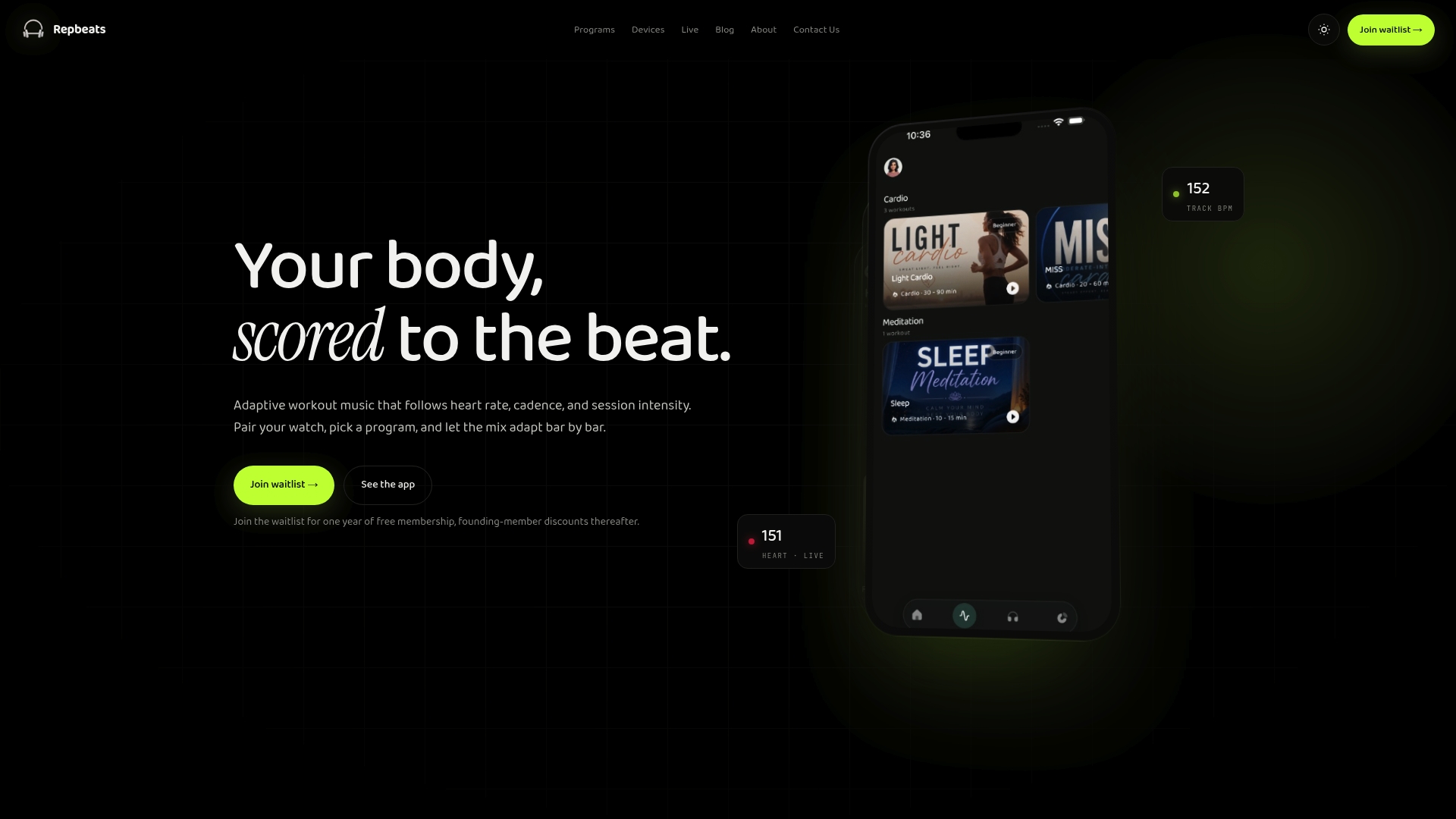
That matters most on a stair climber, where cadence drifts during intervals or as fatigue sets in. Instead of pausing to pick a faster or slower track, the music adjusts with you.
- We sync tempo to your workout, not a fixed playlist.
- Our auto-DJ updates BPM bar by bar as your intensity changes.
- Our privacy policy limits device access to workout data only.
If building your own BPM-matched playlist sounds like more trial and error than you want, visit the Repbeats app page to see how adaptive sessions work for stair climbing and other cardio workouts. A reliable cadence source helps too. For a simple wearable that can feed heart rate and step data into your workouts, these fitness tracker picks are a good place to start.
FAQ
What are some of the best step songs?
Songs that work well tend to sit in the 120 to 150 BPM range when used with half-time stepping, or have a steady, predictable beat that’s easy to match. Tracks like Dancin King’s “Stair Climbing - Original Mix” or Workout Electronica’s “Step Up To The Stairmaster” are built with stair cadence in mind, but any song in your tested BPM band works.
Is the stair climber effective?
Yes, when it helps you reach regular moderate-to-vigorous activity, which ACSM guidance recommends at 150 minutes moderate or 75 minutes vigorous per week. Actual intensity depends on machine level, cadence, and whether you use the handrails, not on music choice alone.
How can I listen to music while exercising?
Secure-fit headphones or earbuds with inline controls work best for a stair climber, since you can adjust volume without breaking stride. Keep volume low enough to hear gym alarms or announcements, following CDC safe-listening guidance on amplified sound exposure.
What is the best music to listen to while climbing?
There’s no single best track, since research on preferred music shows personal preference can boost performance more than a theoretically ideal BPM. Pick a song you genuinely enjoy within a 120 to 150 BPM band, then adjust up or down based on how your cadence feels.
Does music tempo actually change how hard a workout feels?
Yes, a treadmill study comparing 90 and 140 BPM found faster tempo changed perceived exertion and performance without a matching change in physiological measures. That means tempo shapes how effort feels more than it changes your body’s actual response.
Sources
- The Psychophysiological Effects of Different Tempo Music on Endurance Versus High-Intensity Performances - PMC
- Safe Listening at Venues and Events with Amplified Music — United States, 2022 | MMWR