Hit 150–185+ BPM: Treadmill Cadence Music With Live BPM Sync
Jordan MillsSeptember 16, 2026 · 10 min read
Hit 150–185+ BPM: Treadmill Cadence Music With Live BPM Sync
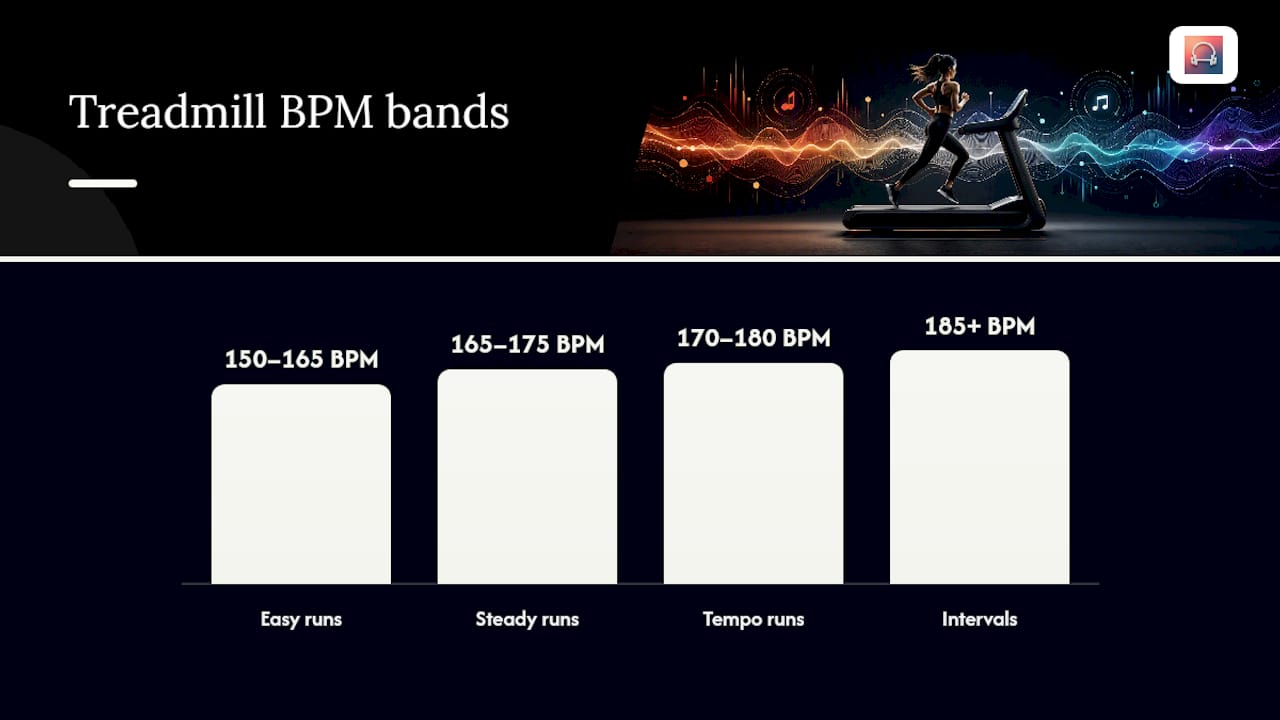
For easy treadmill runs, aim for music around 150 to 165 BPM. Steady efforts sit closer to 165 to 175 BPM, tempo work climbs to 170 to 180 BPM, and intervals often call for 185 BPM or higher. Matching the beat to your stride keeps your cadence honest and makes hard efforts feel more automatic, less like a grind. The playlists and step-by-step matching methods below turn that verdict into something you can actually run to.
TL;DR:
- Runners should aim for a cadence within a 10 BPM window of their target to gain perceptual and muscular benefits during treadmill runs.
- Using half-time (e.g., 90 BPM tracks for 180 SPM) or double-time methods widens playlist options, making cadence matching more flexible and less frustrating.
- Adaptive music apps like Repbeats can automatically sync BPM to live cadence and heart rate data, improving effort consistency across varying pace segments.
- Measuring cadence is quick and accurate through a 30-second step count or wearable data, helping runners choose appropriate BPM targets without guesswork.
- Longer playlists and specific BPM-tagged mixes from streaming platforms support steady, interval, and tempo efforts, but flexibility in tempo windows proves most effective.
Table of Contents
- Which BPM Bands Work Best for Treadmill Cadence Music?
- How Do You Measure Your Treadmill Cadence?
- Getting the Timing Right on a Treadmill
- What Does the Research Say About Cadence-Matched Music?
- Why Most Runners Overthink Their BPM Match
- Try Repbeats for Live BPM Matching on Your Next Treadmill Run
- Sources
- FAQ
Which BPM Bands Work Best for Treadmill Cadence Music?
Cadence for recreational runners typically falls between 155 and 175 steps per minute at easy to tempo paces, climbing past 185 spm during harder intervals. That range gives you a starting point, but the real trick is deciding whether your music should hit every step or every other one.
Here’s how the bands break down in practice:
- Easy runs (150 to 165 BPM): Recovery jogs and warmups. Music here should feel relaxed, not driving.
- Steady runs (165 to 175 BPM): Your bread-and-butter treadmill pace. Most cadence-tagged playlists cluster here.
- Tempo runs (170 to 180 BPM): Comfortably hard effort. The beat should push you slightly.
- Intervals (185+ BPM): Short, intense bursts where the tempo needs to match urgency, not just footfall.
You don’t always need a song that matches your cadence beat for beat. Running at 180 steps per minute doesn’t require 180 BPM music. Half-time syncing, where one beat covers two steps, works well for easy runs and widens your song pool considerably. Double-time, where two beats land per step, suits slower joggers who still want an energetic track. A 90 BPM song, played as half-time cadence music, actually supports a 180 spm stride, which is why plenty of runners get frustrated hunting for “180 BPM songs” when the better search term includes 90 BPM tracks too.
For ready-to-use options, streaming platforms have done a lot of the sorting work already. Apple Music’s running-focused pop playlists run 60 to 90 minutes and mix tempo throughout, which works fine for steady sessions where you’re not chasing a precise number. Spotify goes further with explicit BPM labeling. A 165 to 170 BPM playlist takes the guesswork out of a steady tempo run entirely. For intervals, longer mixes built specifically around higher tempos, like 186 BPM running compilations, give you an hour of material without needing to switch playlists mid-workout.
If building your own rotation feels tedious, Repbeats has a treadmill running music guide organized by cadence and pace, plus a tool for finding songs by BPM when you want full control over your library. The other option is adaptive, live-sync music that adjusts automatically as your pace shifts, which we’ll get into further down.
How Do You Measure Your Treadmill Cadence?
You can’t match music to a number you haven’t measured. Fortunately, getting that number takes less than a minute.
- Count your steps for 30 seconds. Count every time your right foot hits the belt, then multiply by four (or count both feet for 30 seconds and multiply by two). Either method gets you steps per minute.
- Cross-check with a wearable. Most running watches and fitness trackers display real-time cadence on the workout screen, usually labeled “cadence” or “spm.” If yours doesn’t show it live, check the post-run summary. It’s typically buried under running dynamics or advanced metrics.
- Convert your number to a BPM target. If your cadence reads 172, your 1:1 target is 172 BPM. Your half-time target, which pulls in slower, more melodic tracks, would be 86 BPM. Double-time, for high-energy remix versions, would be 344 BPM (rare, but electronic and drum-and-bass tracks sometimes hit that range).
Pro Tip: Run a 5-minute test at your usual treadmill speed with a metronome app set to your measured cadence. If your footstrike drifts off the click within a minute, your natural cadence is less fixed than you think, and a strict BPM match might feel forced rather than helpful.
Once you’ve got a working number, test it. Run three minutes at your current speed with a matched playlist, note how the pace feels, then bump the treadmill speed by 0.2 mph and see whether your foot strike naturally speeds up to stay with the beat or falls behind it. That tells you whether the music is actually driving your rhythm or just playing in the background.
Getting the Timing Right on a Treadmill
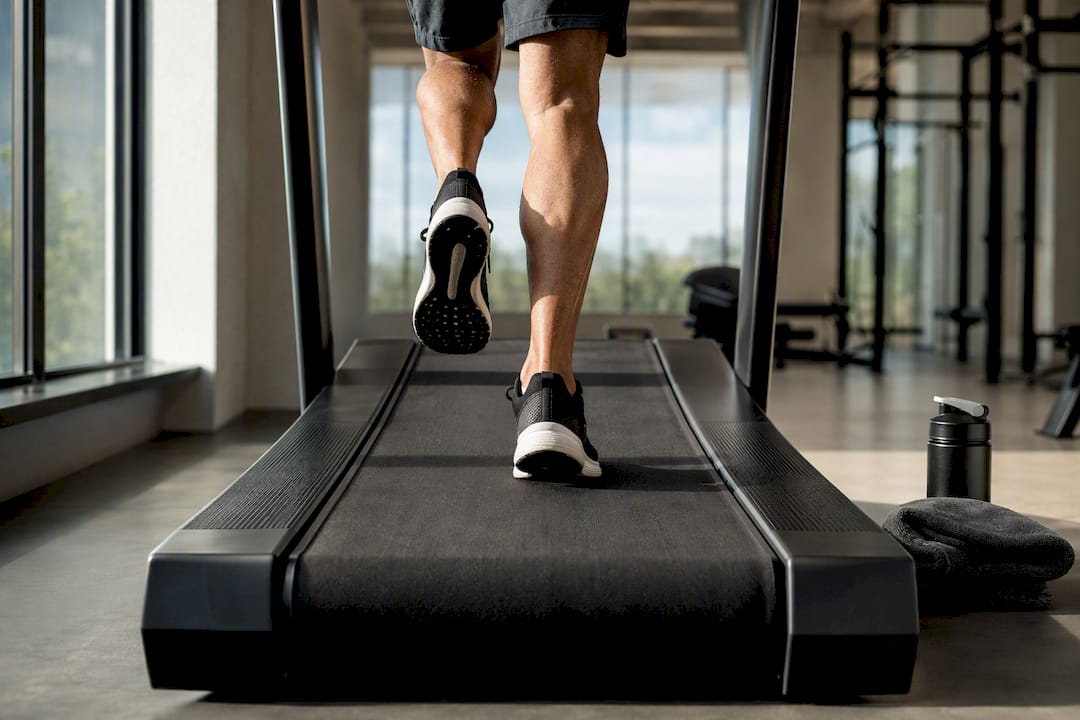
Treadmills are less forgiving than outdoor terrain because the belt sets an unyielding pace, so a steadier BPM usually beats an erratic one. Save dramatic tempo swings for interval blocks rather than sprinkling them through a steady run.
Two templates worth trying:
- 1:1 interval ladder: Run one minute at your steady BPM, then one minute at that BPM plus 10 to 15, alternating for 20 to 30 minutes.
- Progressive tempo block: Start 10 minutes at steady BPM, then shift to a tempo playlist 15 to 20 BPM higher for the middle 10 minutes, and close with 5 minutes back at steady pace.
On headphone safety, keep volume low enough to hear treadmill beeps and gym announcements. Single-ear or bone-conduction headphones are a reasonable option if you’re running near others on a gym floor. Guidance on treadmill-specific listening backs comfortable-volume, one-ear or bone-conduction setups as the safer defaults over closed-back headphones cranked loud.
Don’t force cadence jumps overnight. A gradual increase of 3 to 5 steps per minute every few weeks is a more realistic progression than trying to jump 15 spm in a single session, which tends to strain your calves and Achilles before your rhythm catches up.
What Does the Research Say About Cadence-Matched Music?
The core finding behind all of this: music synchronized to stride cadence reduces perceived exertion during treadmill running, and the effect holds strongest when the tempo mismatch stays within roughly 10 BPM. Drift further than that and the brain seems to stop treating the beat as a pacing cue.
The synchronization effect isn’t about motivation in the vague, “pump-up song” sense. It’s a measurable drop in how hard a run feels at the same physical output, which is a very different claim, and a more useful one for anyone training by feel on a treadmill.
Cadence progression research suggests that small, steady increases are preferable to aggressive jumps, supporting injury prevention and lasting stride rate improvements.
This is where adaptive tools change the equation. Static playlists, however well tagged, can’t adjust when your pace drifts mid-run. Some adaptive music technologies update BPM bar by bar, pulling live cadence and heart rate data from compatible wearables so the music tracks your actual effort instead of a static playlist. If you want to go deeper on the mechanics of pace-to-BPM mapping, Repbeats’ blog has a treadmill speed BPM chart worth bookmarking. The simplest next step is running one session in adaptive mode and comparing how the transitions feel against a fixed playlist you already know.
Why Most Runners Overthink Their BPM Match
The biggest mistake I see in how people approach cadence music is treating BPM matching as a precision exercise, down to the single beat, when the research actually supports a much looser target. A 10 BPM window still delivers the perceived-exertion benefit, which means the runner obsessing over 174 versus 176 BPM is spending energy on a distinction that doesn’t move the needle.
Where conventional advice falls short is in assuming static playlists are good enough forever. They’re good enough until your pace changes, which on a treadmill happens constantly, whether you’re easing into a warmup or pushing the last interval. A fixed playlist doesn’t know your third interval rep started ten seconds late.
What actually matters is fixing your cadence number first, then treating the exact BPM as a flexible target within that 10 BPM window rather than a rigid one. Get the range right, worry less about the decimal. Once you’ve done that, the case for adaptive, live-tracking music becomes obvious rather than aspirational. It’s solving a real gap, not a manufactured one.
— Jordan Mills
Try Repbeats for Live BPM Matching on Your Next Treadmill Run
Adaptive workout music apps can automatically adjust BPM in real time using live heart rate and cadence data from wearables, helping the soundtrack track your actual effort instead of a static mix.
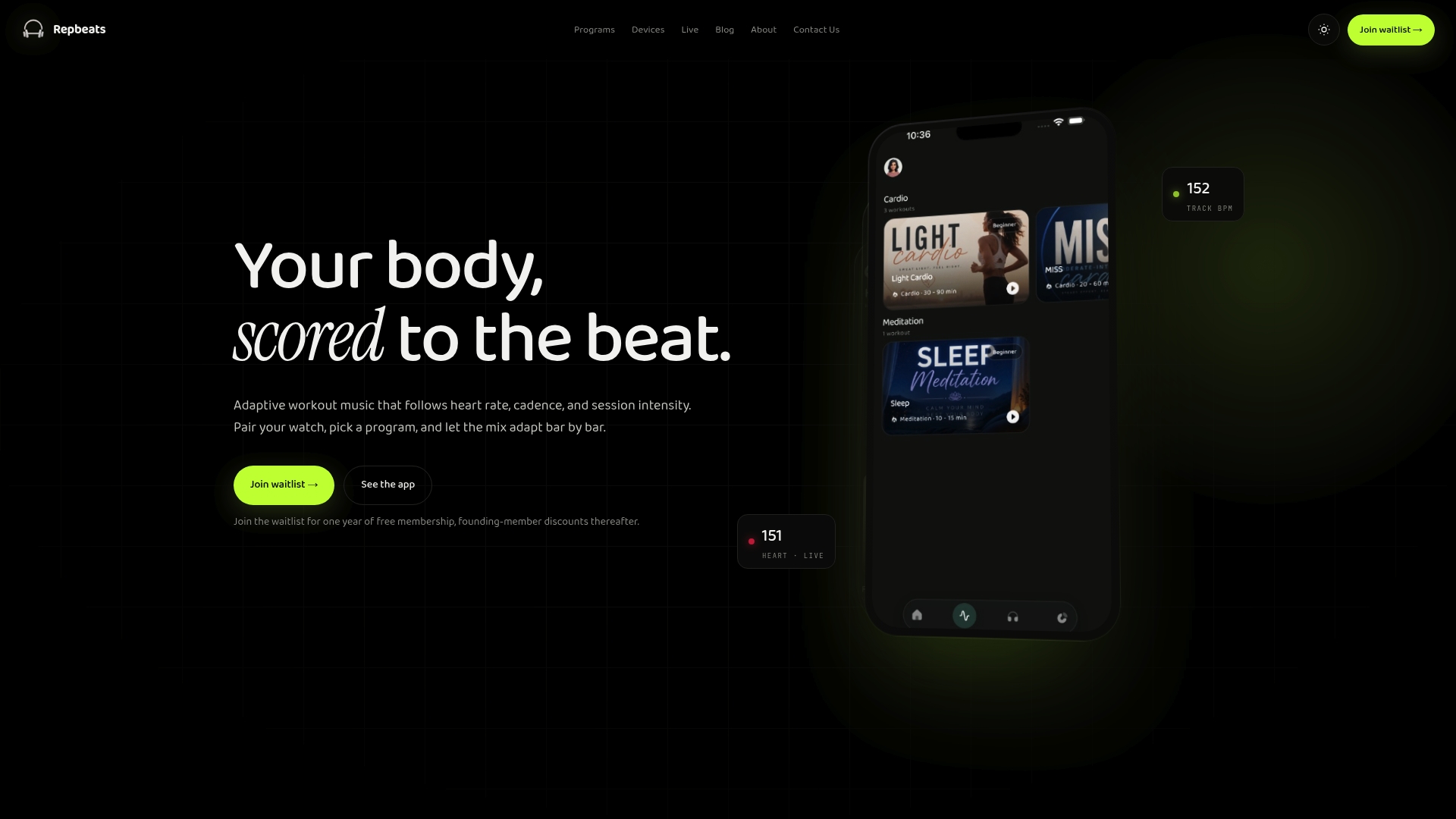
Getting started takes three steps: install the app, connect your wearable, and select cadence or adaptive mode before your next treadmill session. The privacy policy limits device access strictly to workout data. Visit the Repbeats about page for setup details, or head to the Repbeats landing page to download the app and try your first adaptive-mode run.
Sources
- Music for Running on the Treadmill — TeraMuse
- Running BPM & Music Pace Matcher | RunDida
- Running music: Pop hits 2026 — Apple Music
FAQ
What Is the Best Music to Listen to on the Treadmill?
The best treadmill music matches your effort level to a BPM band: roughly 150 to 165 BPM for easy runs, 165 to 175 BPM for steady pace, and 185 BPM or higher for intervals. Adaptive tools like Repbeats handle this automatically by adjusting BPM to live cadence and heart rate.
What Are the Best Songs for Matching Running Cadence?
There’s no single “best” song list since it depends on your personal cadence, but BPM-tagged playlists on Spotify and Apple Music, along with long-form mixes on YouTube, group tracks by tempo so you can pick songs matching your measured steps per minute.
What Is the TikTok Treadmill Trend?
The TikTok treadmill trend generally refers to viral incline-and-speed walking or running challenges performed on treadmills, often set to specific songs, rather than a formal cadence-training method backed by research.
What Is the 5-4-3-2-1 Treadmill Workout Method?
Definitions of this workout vary across fitness content, and no single standardized version is well documented, so treat any specific breakdown you find online as one interpretation rather than an established training protocol.
Does Matching Music BPM to Cadence Actually Improve Performance?
Synchronizing music tempo to stride cadence reduces how hard a run feels at the same effort level, with the strongest effect when the BPM stays within about 10 beats of your actual cadence.