Build BPM Matched Music in Under 20 Minutes to Beat Treadmill Boredom
Jordan MillsSeptember 12, 2026 · 16 min read
Build BPM Matched Music in Under 20 Minutes to Beat Treadmill Boredom
The fastest way to stop hating treadmill time is to use tempo-matched, session-specific audio that changes every block. Your brain locks onto rhythm and treats a repetitive run as something new, which is why entrainment and novelty together cut perceived effort more than either one alone. Below you’ll find playlist templates, BPM bands for each pace, and a quick way to build your own in under 20 minutes, plus where an adaptive tool like Repbeats fits in.
TL;DR:
- Matching music tempo to your cadence significantly improves synchronization, reducing perceived effort and enabling longer, more comfortable runs.
- Interval playlists that align BPM shifts with workout phases can make running feel like a game, helping time pass faster and boost motivation.
- Adaptive music tools that sync BPM in real time based on heart rate or effort outperform static playlists by adjusting to your effort instantly.
- Incorporating surprise genre switches or motivational lyrics can maintain engagement and mental focus during long or repetitive treadmill sessions.
- Using high-quality headphones or speakers enhances entrainment, making tempo cues clearer and stride locking more effective.
Table of Contents
- Quick Playlist Ideas to Beat Treadmill Boredom
- Why Matching Music Tempo to Your Cadence Works
- Use Intervals and Song Sequencing to Make Time Disappear
- When Podcasts and Audiobooks Beat Music
- Add Visuals to Make the Treadmill Feel Like a Real Route
- Build a Treadmill Playlist in Under 20 Minutes
- Why Adaptive, Tempo-Synced Music Beats a Static Playlist
- Set Small Goals and Challenges During Sessions
- Music With Motivational Lyrics or Themes Changes How Hard You Push
- Incorporate Surprise and Varied Genres to Maintain Interest
- Synchronize Music Changes With Workout Phases
- Use Headphones or a Sound System for Better Immersion
- Author Perspective: The One Habit That Fixed My Treadmill Boredom
- Try Repbeats for Music That Adjusts to Your Pace, Not the Other Way Around
- Sources
- FAQ
Quick Playlist Ideas to Beat Treadmill Boredom
You don’t need a music degree to build a playlist that carries you through 30 minutes. You need a structure, and then permission to break it occasionally.
Try one of these templates the next time you step on the belt:
- The Pyramid: slow warm-up tracks, climbing BPM through the middle, one peak song, then a cool-down fade.
- The Sprint Stack: five high-BPM tracks back to back for interval days, no filler between them.
- The Nostalgia Loop: songs from a specific year or era you associate with good memories, run in album order.
- The Genre Swap: hip-hop for the first ten minutes, electronic for the middle, rock for the final push.
- The Podcast Sandwich: music for the first and last third, a short podcast segment in the middle.
Rotate with a simple rule: swap one song per week instead of the whole list. A total overhaul feels exciting for a day and forgettable by the next run. Keep two or three proven favorites in permanent rotation. Research on workout songs suggests people push harder to tracks they already love, so don’t treat familiarity as a weakness. Save genuinely new music for easy days, when a distraction that doesn’t quite land won’t wreck your pace.
Why Matching Music Tempo to Your Cadence Works
Entrainment is the tendency for your steps to sync with a strong beat, and it’s the single biggest lever in this whole strategy. Once your stride locks to the rhythm, running stops feeling like a math problem and starts feeling automatic. Peer-reviewed research on music and exercise confirms music lowers perceived exertion at submaximal intensities and can pull cadence toward the tempo you’re hearing.
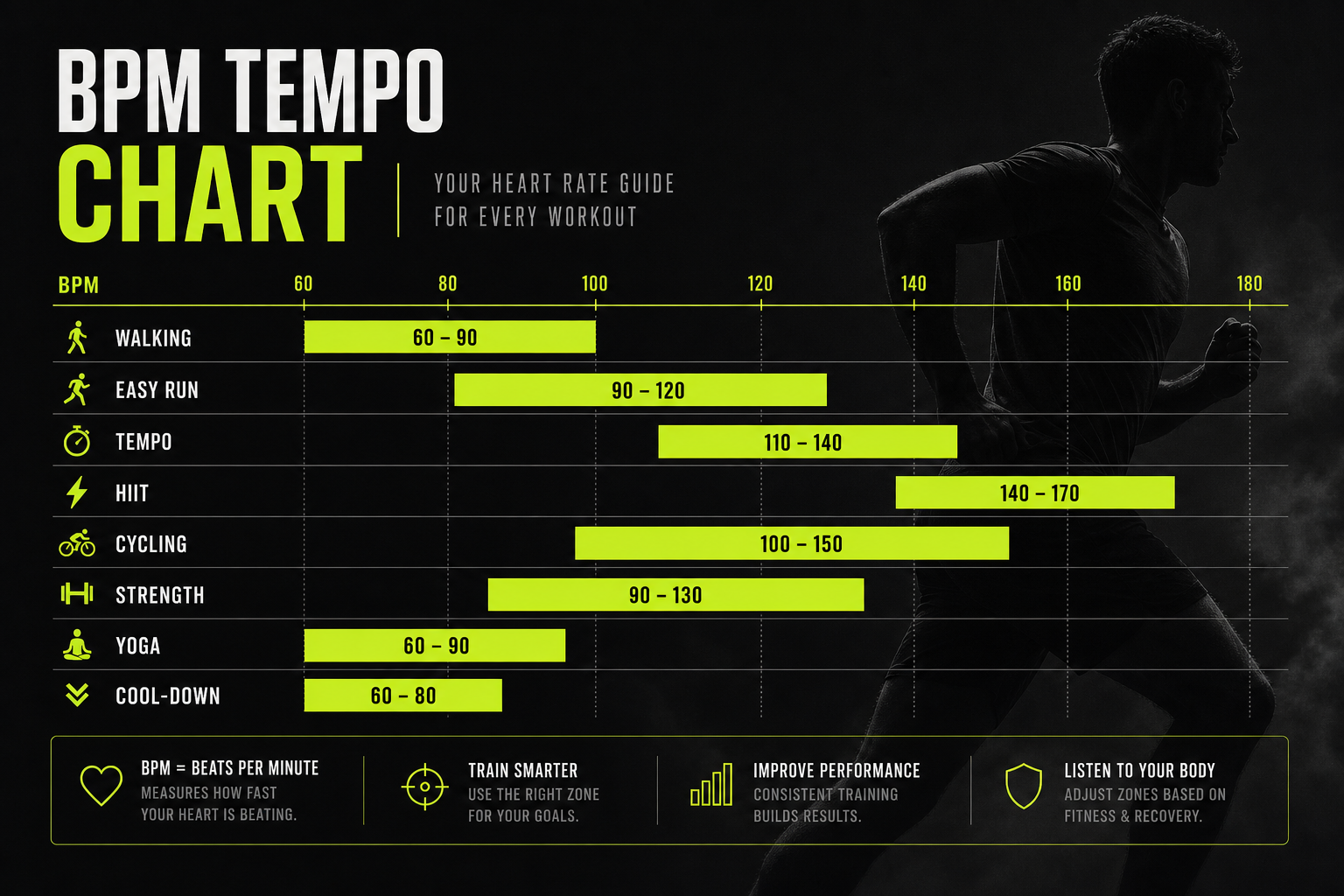
Here’s how the BPM bands typically break down:
| Activity | Typical BPM Range |
|---|---|
| Walking | 115–130 |
| Easy jog | 130–150 |
| Tempo run | 150–170 |
| Sprint intervals | 170–180 |
A 2026 study found recreational adults exercised 20% longer using self-selected music versus silence, with higher cardiovascular load and total energy expenditure.
To find your own number, count your steps for 30 seconds during an easy jog, double it, and that’s roughly your cadence in steps per minute. Pick songs at that BPM, or at half that tempo if the full speed feels frantic.
Pro Tip: Search “[song name] BPM” before your run. Most tracks are already logged in tempo databases, so you can build a pace-matched list in about ten minutes.
Tools built around this idea, like tempo-matched treadmill running music, automate the searching for you.
Use Intervals and Song Sequencing to Make Time Disappear
Pairing intervals with deliberate song placement turns a 20 minute grind into something closer to a game. The trick is treating each song as a rep, not just background noise.
Three templates worth trying:
- 4x4 Classic: four minutes at tempo pace, four minutes easy, repeated four times. Match one full song to each block.
- 30/30 Sprint Ladder: 30 seconds hard, 30 seconds easy, for 10 to 15 rounds. Use one high-energy track and let its natural sections cue your effort changes.
- Pyramid Build: effort climbs for five blocks then descends for five. Order your playlist so BPM rises and falls to match.
Front-load your two or three best songs into the hardest blocks, not the warm-up. Most treadmills let you glance at remaining interval time on the console, so use that number to anticipate a song’s chorus hitting right as your effort peaks.
When Podcasts and Audiobooks Beat Music
Music wins for anything above easy pace, but longer steady-state sessions are a different problem. A 45 minute walk or an easy 5 mile jog often benefits more from a story than a beat.
- Use podcasts when you want narrative pull. A serialized true-crime or interview show gives you a reason to keep going just to hear what happens next.
- Use audiobooks for the longest, steadiest efforts, where a consistent pace matters more than tempo.
- Mix formats mid-session: music for the high-effort middle, then a story for the cool-down, so your ears get a genre change along with your legs getting a pace change.
Keep volume low enough to hear gym announcements, and skip headphone use entirely if you’re on a shared treadmill bank where verbal cues from staff matter.
Add Visuals to Make the Treadmill Feel Like a Real Route
Sound handles your ears, but your eyes are staring at a wall or a TV bolted to the ceiling. Scenic running videos, filmed from a runner’s point of view along real trails, give you a visual sense of movement that a stationary belt can’t.
A few ways to layer this in:
- Scenic route videos on a tablet propped on the console, synced loosely to your pace rather than your music’s beat.
- Guided treadmill classes, where an instructor calls out speed and incline changes timed to music.
- Route simulators that mimic hills and turns from real courses, useful if you’re training for a specific race.
Keep the video’s pacing secondary to your music’s BPM. If both are trying to cue your effort at different rates, you’ll feel more scattered, not less. Prop your device at eye level and use a stand rather than resting it flat, since a downward glance disrupts posture over a long run.
Build a Treadmill Playlist in Under 20 Minutes
You don’t need hours to put together something that works. Here’s a workflow that takes less time than your warm-up.
- Pick your session template first. Steady run, intervals, or long walk each need a different BPM strategy.
- Set your target BPM range using the chart above, or check the treadmill speed BPM chart for exact pace-to-tempo matches.
- Choose 8 to 12 tracks in that range, and match song length to your interval duration so a song doesn’t cut off mid-chorus during a hard rep.
- Front-load your strongest two songs into the toughest middle section, not the start.
- Test it on one run, then swap one underperforming track before your next session.
- Adopt a weekly rotation rule, changing one song at a time instead of rebuilding the whole list.
Pro Tip: Keep a running note on your phone titled “cut list” for songs that sounded good on paper but killed your pace. Review it monthly instead of trusting memory.
Templates like the BPM-matched workout music sets skip most of this manual work by sorting tracks for you.
Why Adaptive, Tempo-Synced Music Beats a Static Playlist
Static playlists have one flaw: your effort changes constantly, but the music doesn’t. A study on music in sport found consistent evidence linking music to reduced perceived exertion and improved endurance across multiple experimental designs, but almost all of that benefit assumes the tempo is actually appropriate for the effort level in the moment.
That’s the gap adaptive music closes. Some adaptive music tools sync music tempo to heart rate, cadence, and session intensity in real time, using data pulled from wearables. Their auto-DJ engines update BPM every bar rather than waiting for a song to end, so a sudden effort spike gets matched almost instantly.
What this looks like in practice on a treadmill:
- Your easy warm-up plays lower BPM tracks automatically.
- A tempo block triggers a shift to higher BPM music without you touching your phone.
- A recovery interval brings the tempo back down before you consciously slow your legs.
If you’re already checking how wearables measure exercise intensity to fine tune your training, pairing that data with adaptive music closes the loop between what your body is doing and what you’re hearing.
Set Small Goals and Challenges During Sessions
Boredom often comes from staring at a countdown with nothing to aim for beyond the number itself. Small, specific goals fix that faster than any playlist change.
Try breaking a 30 minute run into five 6 minute “levels,” each with its own micro-target: hold pace through level two, increase incline for level four, negative-split the last two levels. The goal doesn’t need to be dramatic. It just needs to give your brain something to track besides elapsed time.
Song-based challenges work well here too. Pick a song and commit to increasing speed by 0.2 mph for its duration, then drop back down when it ends. This turns a three-minute track into a self-contained challenge with a clear finish line, which feels far shorter than three minutes of just watching the clock.
Some runners use a simple point system: one point for every completed interval, five points for a personal best pace, and a running weekly tally. It sounds almost too simple to matter, but a visible scoreboard, even one you keep in your head, changes how a session feels while you’re in it.
The key is variety in what counts as a “win.” Not every session needs a speed goal. Some days the challenge is holding a steady heart rate zone, other days it’s finishing a full audiobook chapter without checking the display. Rotating what you’re chasing keeps the treadmill from becoming one long, undifferentiated block of time.
Music With Motivational Lyrics or Themes Changes How Hard You Push
Lyrics matter more than most runners give them credit for. A song about pushing through, overcoming a setback, or grinding toward a goal gives your brain a narrative to attach to the physical discomfort you’re already feeling.
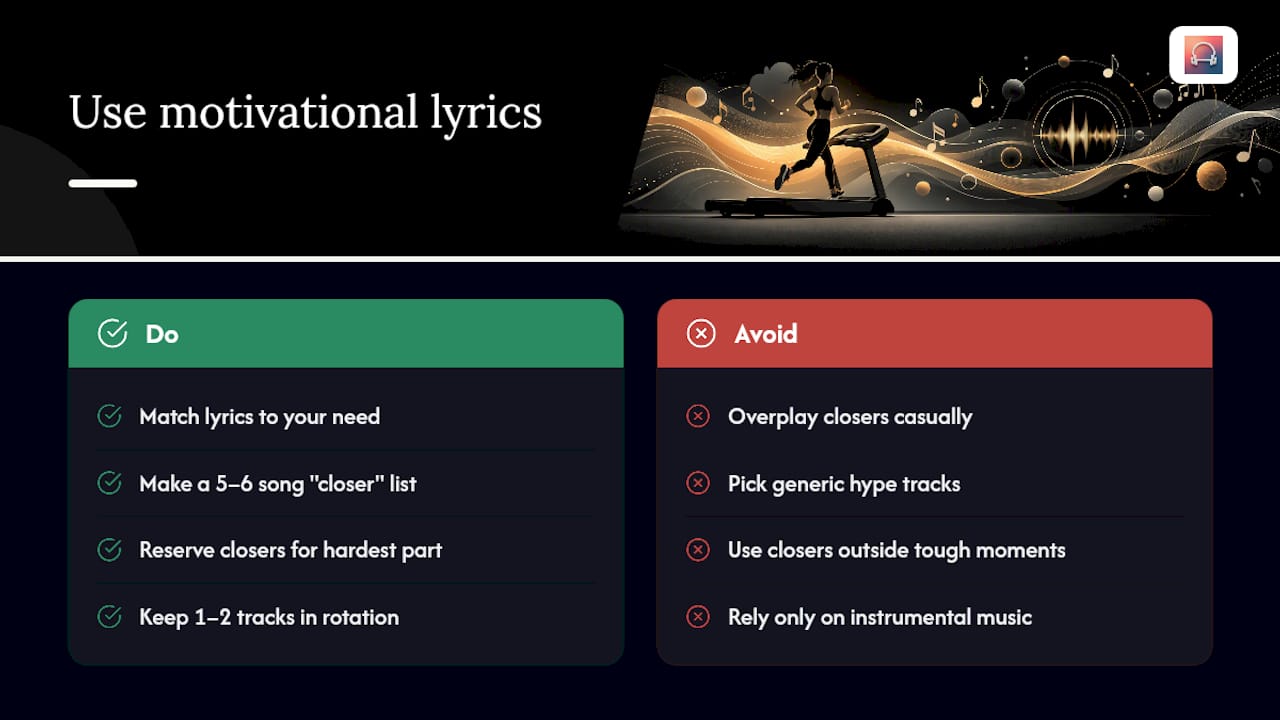
This isn’t about picking generic “hype” tracks. It’s about matching lyrical themes to what you personally need at that moment. Some runners respond to defiant, angry lyrics on hard interval days. Others need something closer to encouragement, a song that sounds like it’s rooting for them rather than challenging them.
Build a short list of five or six songs you reserve specifically for the hardest part of a run, the point where motivation usually cracks. These become your “closer” tracks, saved for the last interval or the final mile, never used casually. Overplaying them dilutes the psychological trigger they’re supposed to provide.
Instrumental music has its place for focus and steady pacing, but lyrics do something instrumentals can’t: they give you language for the effort you’re making. A line that echoes exactly what you’re trying to convince your body to do, “keep going,” “almost there,” “one more,” can function almost like a coach’s cue timed to the chorus.
Keep one or two of these motivational tracks in your permanent rotation across every playlist template, regardless of BPM band. Consistency with your “emergency” songs matters more than novelty here, since the whole point is a reliable emotional trigger you can return to when a session gets hard.
Incorporate Surprise and Varied Genres to Maintain Interest
Predictability is the enemy of a good treadmill session, even when the predictable thing is technically working. Your brain adapts to patterns fast, which means the exact structure that felt fresh three weeks ago can start to feel like background noise.
Genre-switching mid-run interrupts that adaptation. Running hip-hop for the first ten minutes, then shifting into electronic or even orchestral film scores for the middle stretch, gives your brain a reason to keep paying attention. The tempo can stay consistent even as the genre changes, so you don’t lose your cadence benefit while gaining the novelty benefit.
Some runners build a “wildcard” slot into every playlist: one song, placed at a random point, that doesn’t match the rest of the list’s genre or mood at all. It could be a song from a completely different decade, a language you don’t speak, or a genre you rarely listen to. The unpredictability itself becomes part of what keeps the session engaging, since you’re not entirely sure what’s coming next.
This doesn’t mean abandoning structure. Genre variety still needs to respect BPM targets for whatever effort block you’re in. A surprise track at 90 BPM during a tempo interval will drag your pace down regardless of how novel it sounds. Keep the tempo band fixed and let genre be the variable you play with.
Synchronize Music Changes With Workout Phases
The biggest mismatch in most treadmill sessions isn’t song choice. It’s timing. A great high-energy track that starts during your warm-up is wasted, and a slow, moody song that hits during your hardest interval actively works against you.
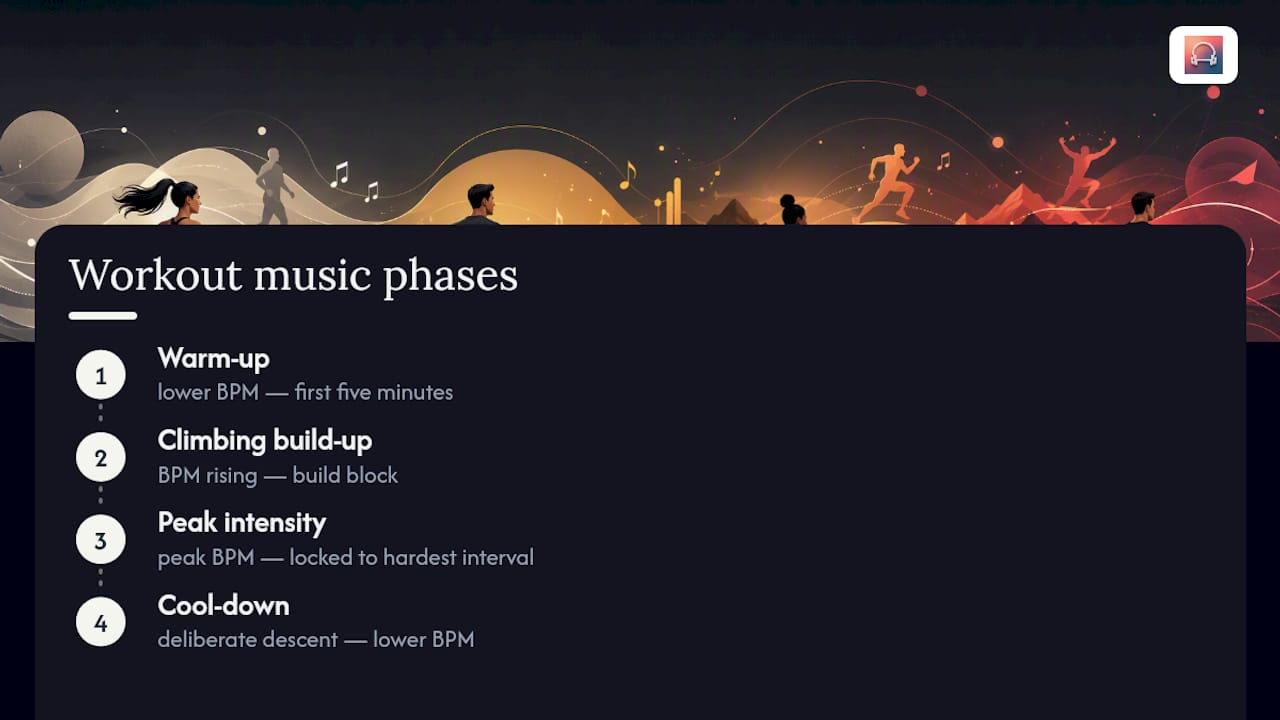
Building a playlist around workout phases, rather than just vibe, solves this. Structure your list in blocks that mirror your actual session: warm-up songs at lower BPM for the first five minutes, a climbing block for the build-up, peak-intensity tracks locked to your hardest interval, then a deliberate descent for cool-down. This is close to the pyramid structure DJs use when building fitness mixes, moving BPM up through a set and back down by the end.
The manual version of this takes planning. You need to know roughly how long each phase of your session lasts and pick songs whose length and energy match. A four-minute tempo block needs a four-minute song, not a two-minute track followed by an awkward gap or an abrupt cut.
This is exactly the friction adaptive tools remove. Instead of pre-planning every phase transition, a system that updates tempo based on live heart rate or cadence data adjusts the moment your effort shifts, whether that shift happens exactly on schedule or five minutes early because you felt strong.
Use Headphones or a Sound System for Better Immersion
Audio quality changes how effective all of this actually is. Tinny earbuds or a gym’s overhead speaker system flatten bass and blur the beat you’re trying to sync your steps to, which undercuts the entrainment effect before it even starts.
Over-ear or well-fitted in-ear headphones with decent bass response make tempo far easier to feel, not just hear. Bone-conduction headphones are worth considering if you run in a gym where you need to stay aware of your surroundings, since they leave your ear canal open while still delivering a clear beat.
If you’re running on a home treadmill with a connected sound system, positioning matters more than most people assume. Speakers placed too far from the belt lose the low-end punch that helps carry cadence. Bringing a speaker closer, or switching to headphones for genuinely bass-heavy tempo work, makes a measurable difference in how locked-in your stride feels.
Battery life is the unglamorous detail that ruins otherwise good sessions. A dead pair of headphones fifteen minutes into a planned 45 minute run kills momentum instantly. Charge before every session, not just when you remember, and keep a backup pair in your gym bag.
Author Perspective: The One Habit That Fixed My Treadmill Boredom
Tempo-matching plus deliberate variety is the only strategy on this list that actually held up past week three for me. The habit that made it stick was simple: swap one song every week and try one new format, a podcast, a new genre, an interval structure, once a month. Nothing dramatic, just enough friction against boredom to keep showing up. Try it for a month and see what changes.
— Jordan Mills
Try Repbeats for Music That Adjusts to Your Pace, Not the Other Way Around
Some apps solve the problem this article keeps circling back to: static playlists can’t keep up with how your effort actually changes minute to minute on a treadmill. They read live data from wearables and adjust music tempo automatically, updating BPM every bar so the soundtrack tracks your heart rate and cadence instead of forcing you to guess at song order in advance.
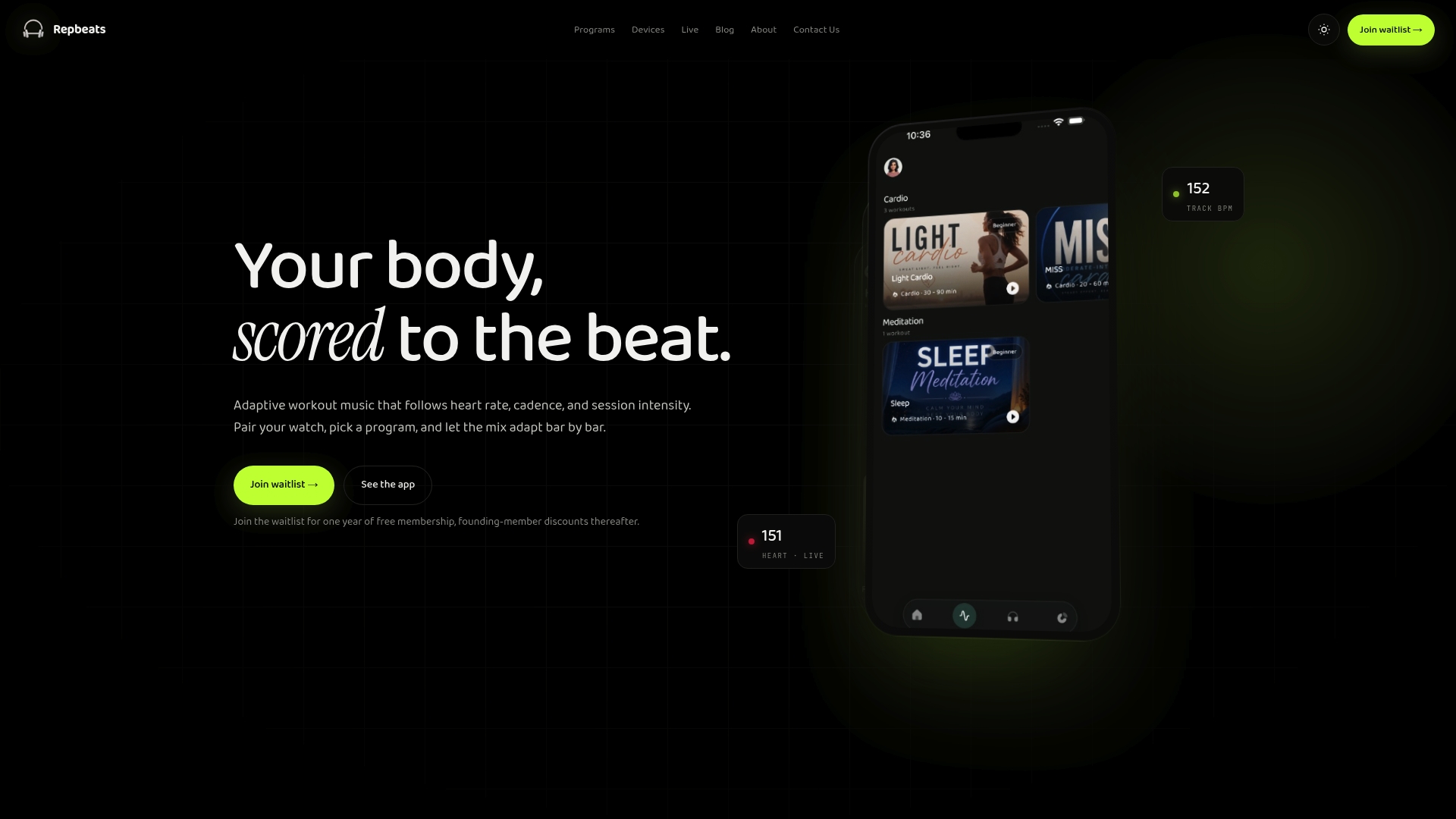
Wearable users get the most out of these kinds of tools, since they lean on live data to hold you in your target zone without manual playlist edits. Interval runners benefit because tempo shifts happen the moment effort changes, not on a fixed schedule you set beforehand. Treadmill walkers get steady, appropriately paced music without needing to build a BPM chart themselves.
If you’re tired of rebuilding playlists every few weeks just to stay interested, start a session with Repbeats and let the tempo adjust itself while you focus on the run.
Sources
- New research on music and endurance performance (Outside Online summary)
- Music and exercise: mechanisms and effects (NCBI/PMC)
FAQ
What Is the Best Music to Listen to on a Treadmill?
The best choice is tempo-matched music where BPM aligns with your pace, roughly 130 to 150 BPM for an easy jog and 150 to 170 for tempo work, rotated regularly to avoid staleness.
What Should I Listen to on a Treadmill Besides Music?
Podcasts work well for narrative-driven engagement, while audiobooks suit longer, steady-state sessions where a consistent pace matters more than beat matching.
What Are Good Songs to Strut to on a Treadmill?
Songs in the 115 to 130 BPM range with a strong, steady beat and confident, motivational lyrics tend to work best for a strut-paced walk or warm-up block.
Can I Lose Belly Fat by Walking on a Treadmill?
Consistent treadmill walking contributes to overall calorie expenditure that can support fat loss over time, but spot reduction in one area isn’t how the body burns fat. Total energy balance across your diet and activity matters more than the specific exercise.
Does Music Actually Help You Run Longer?
Yes. A 2026 study found recreational adults exercised 20% longer with self-selected music compared to silence, with higher cardiovascular load and energy expenditure.