Raise Endurance 15% With Adaptive Music, Not Playlists for Wearables
Jordan MillsOctober 5, 2026 · 9 min read

Raise Endurance 15% With Adaptive Music, Not Playlists for Wearables
Adaptive workout music that adjusts BPM to your heart rate or cadence gives clearer pacing and often better motivation than static playlists for tempo-driven training. Playlists still work well for easy days, strength sessions, or anytime you just want familiar songs in your ears. Research on synchronized and preferred music points the same direction: tempo-matched audio tends to lift motivation and ease perceived effort during structured training.
TL;DR:
- Adaptive music systems require wearable sensors and Bluetooth connections, which may introduce latency, battery drain, and occasional disconnections, unlike stable playlists.
- Synchronized, preferred adaptive music can increase motivation by large effect sizes and reduce perceived effort, especially during pacing or interval training.
- Adaptive systems are ideal for tempo-specific workouts like threshold runs and cadence drills, whereas playlists better suit recovery days and mood-focused sessions.
- Research indicates synchronized music can improve endurance by around fifteen percent and that real-time tempo adjustment enhances pacing precision.
- Choose adaptive music only if your workout demands pacing accuracy and device compatibility, but stick with playlists for offline, relaxed, or group sessions.
Table of Contents
- How adaptive music and playlists differ in mechanics and feel
- What the research says about motivation, effort, and pacing
- Decide between adaptive music and playlists in under a minute
- Setting up adaptive music with Apple Watch, Fitbit, and cadence sensors
- An editor’s honest take on when adaptive music earns its place
- Try Repbeats for your next adaptive session
- FAQ
- Sources
How adaptive music and playlists differ in mechanics and feel
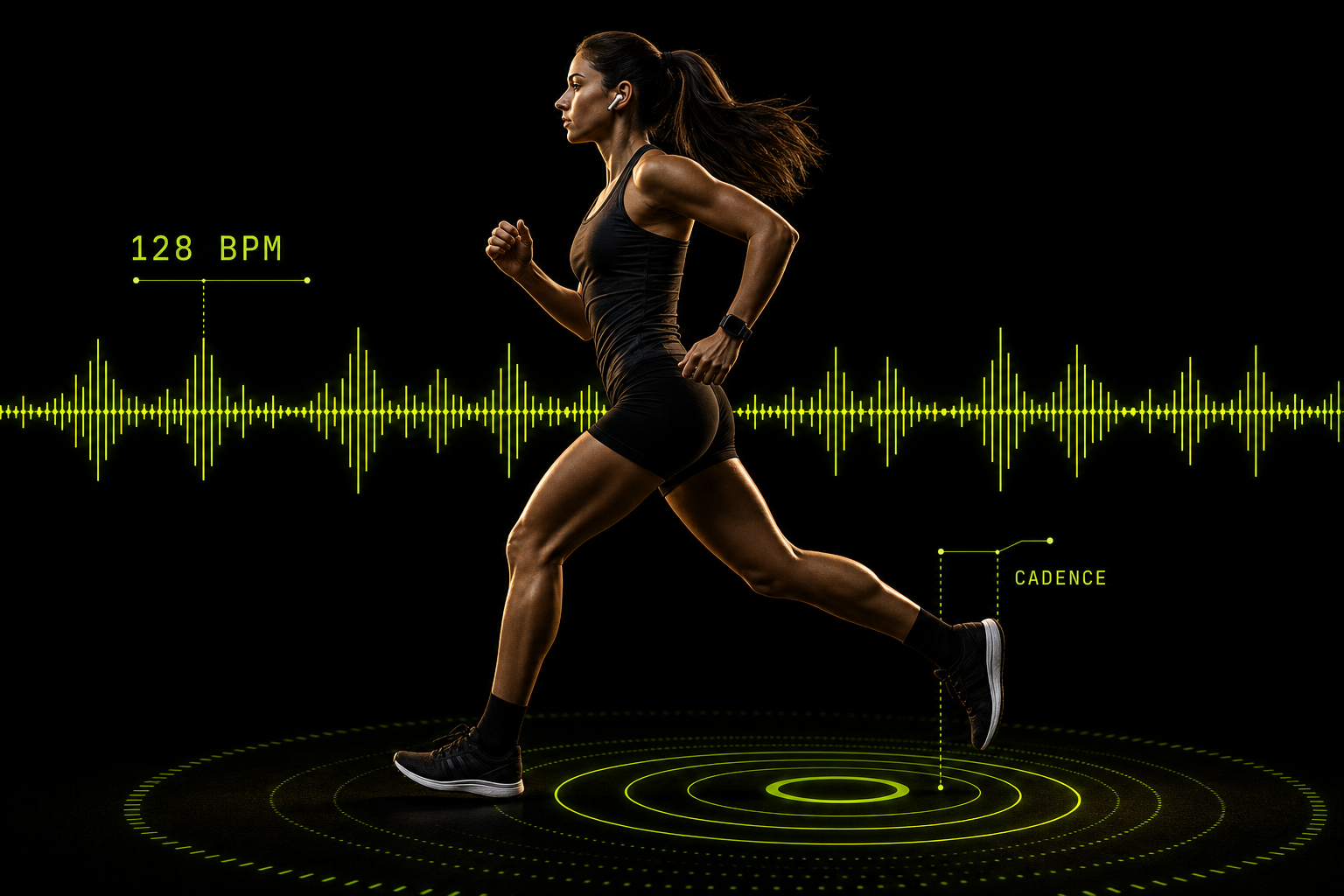
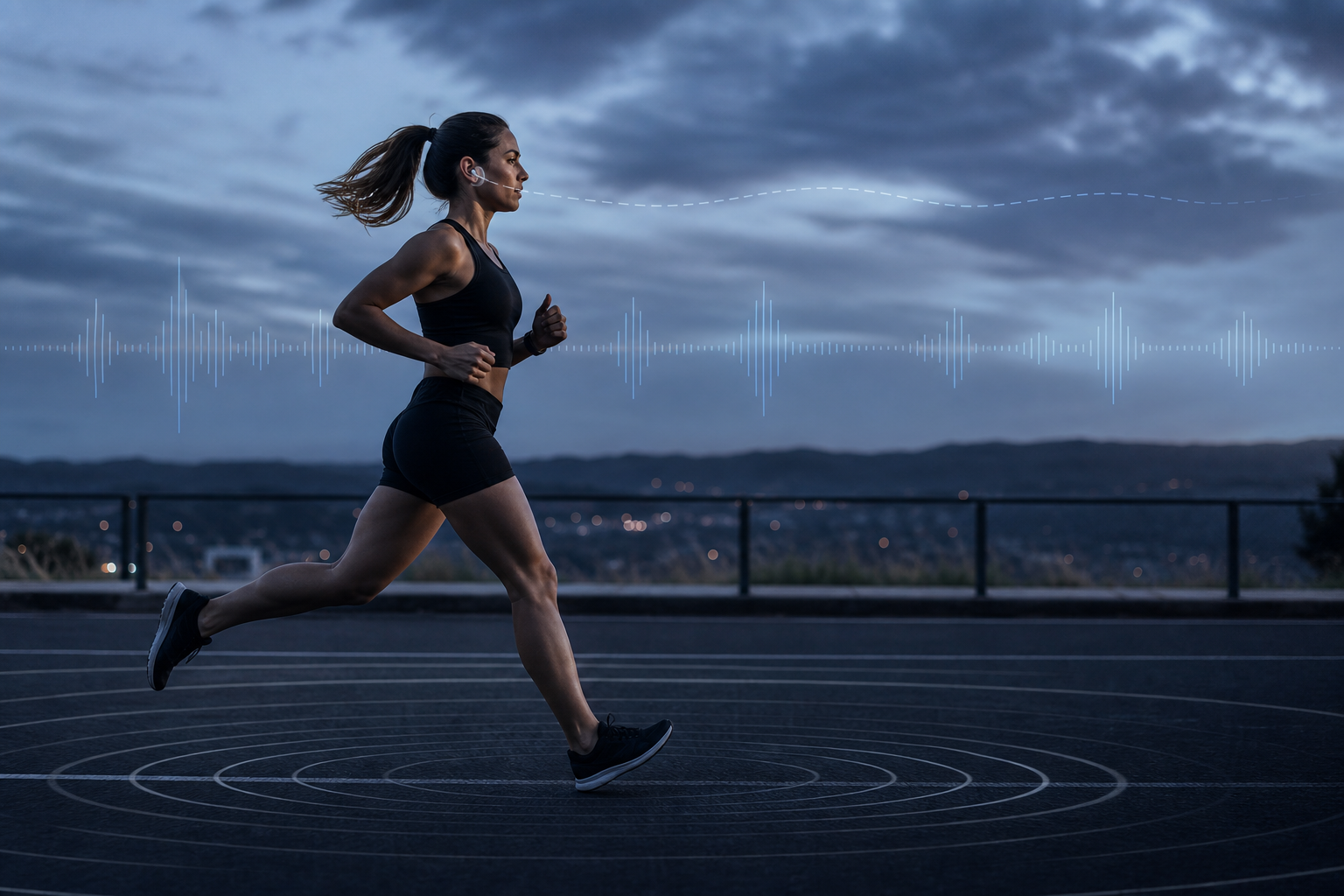
A playlist is a fixed sequence of songs at fixed tempos. You pick it, press play, and the music does not know whether your heart rate just spiked on a hill or your cadence dropped in mile four. Adaptive systems work differently: they pull live data from a wearable, usually heart rate or step cadence, and adjust the music’s BPM to match what your body is doing at that moment.
The mechanical difference drives the performance difference. When music tempo tracks your movement or effort, you get a kind of entrainment, where your pace or stride starts to sync with the beat. That synchronization is tied to measurable gains in endurance and more positive in-task affect, according to a circuit-exercise study from Brunel University. Static playlists cannot offer that because the tempo sequence was locked in before you ever laced up.
There are real trade-offs, though. Adaptive systems depend on a stable sensor connection, which means battery drain and occasional latency. Playlists never disconnect, never lag, and let you lean on songs you already love. Here’s where each approach tends to win:
- Adaptive music fits steady-state threshold runs, cadence retraining, and zone-based interval work where pacing precision matters.
- Playlists fit strength training, recovery days, or any session where mood and nostalgia matter more than tempo precision.
- Hybrid approaches exist too: some runners use wearable cadence data to curate playlists without full real-time adaptation.
Pro Tip: If you’re training for a specific pace, test adaptive music on a treadmill first, where you can compare the suggested BPM against your actual speed before taking it outdoors.
For a deeper technical breakdown of how these systems read your effort level, our guide to adaptive workout music covers the sensor logic in plain terms.
What the research says about motivation, effort, and pacing
The strongest evidence comes from a systematic review and meta-analysis covering music listening during sports performance. It found that preferred music significantly increases motivation, with a standardized mean difference of 0.85, and reduces perceived exertion, with an RPE effect of -0.36, alongside measurable gains in strength endurance and power compared to training without music, according to the meta-analysis on preferred music in sports.
That matters for adaptive systems because they combine two levers at once: tempo synchronization and (ideally) song preference. A separate trial using the HEARTBEATS generative music system compared cadence-synchronous and heart-rate-synchronous algorithms during trail running. Outcomes split by gender: cadence sync tended to improve pace for male runners, while heart-rate sync reduced perceived effort and extended duration for female runners in the trial, per the HEARTBEATS biosynchronous music study.
A few other findings round out the picture:
- Closed-loop systems that adjust tempo based on real-time heart-rate feedback significantly lowered RPE compared to asynchronous music, according to research on interactive tempo control.
- Synchronized music, more broadly, has been linked to endurance gains estimated at around fifteen percent over asynchronous or no music, per PLOS ONE research on synchronized music.
One finding worth remembering: preferred, synchronous music carries a motivation effect size of 0.85, a large effect in exercise psychology terms. Don’t expect that kind of lift from a single easy jog, though. Effects compound more clearly during harder, longer, or pacing-sensitive efforts, not casual walks.
Decide between adaptive music and playlists in under a minute
Run through this checklist before your next session:
- Name your goal. Pacing precision or cadence training points to adaptive music; mood or nostalgia points to playlists.
- Check your workout type. Threshold runs, tempo rides, and interval sets benefit most; strength circuits and recovery walks rarely need tempo sync.
- Confirm device compatibility. Adaptive apps need a heart-rate strap, a cadence sensor, or a watch that streams live data over Bluetooth.
- Gauge your tolerance for tempo shifts. Some people love the dynamic feel; others find shifting BPM distracting mid-song.
- Weigh familiarity against function. If you need your go-to pump-up songs, a playlist beats any algorithm.
When shopping for an adaptive app, look for wearable compatibility with common devices, low latency between sensor reading and tempo change, BPM updates that land on musical bar breaks rather than mid-phrase, and a clear privacy policy around how your workout data gets used. Our best practices guide for adaptive music walks through how to structure a session around these features.
Playlists remain the better call for group fitness classes, offline runs with no signal, or any session built purely around mood or dance energy rather than pacing.
Pro Tip: Keep one offline playlist saved for race day or low-signal routes, even if you train on adaptive music all season.
Setting up adaptive music with Apple Watch, Fitbit, and cadence sensors

Getting adaptive music to work smoothly starts with permissions. Enable heart-rate or cadence telemetry sharing in your watch app, confirm Bluetooth routing is pointed at your headphones rather than your phone speaker, and allow background app refresh so the connection doesn’t drop mid-run.
Latency matters more than most people expect. Systems that wait for a musical bar break before shifting tempo feel far smoother than ones that jump mid-phrase, since small, gradual BPM shifts avoid the jarring effect of abrupt tempo changes. For long runs, cache your tracks locally rather than streaming, favor Bluetooth Low Energy audio connections where your device supports them, and do a full dry run before race day rather than trusting a new setup cold.
- No sensor data showing up? Recheck telemetry permissions and confirm your watch app is actively broadcasting, not just paired.
- Audio keeps disconnecting? Toggle Bluetooth off and on, and check for interference from other paired devices nearby.
- Tempo feels mismatched to effort? Give the algorithm a minute to catch up after a pace change; most systems smooth updates rather than reacting instantly.
Our explainer on wearable telemetry covers how heart-rate and cadence signals get translated into tempo changes.
| Setup step | What to check | Why it matters |
|---|---|---|
| Permissions | HR/cadence sharing enabled | No data means no adaptation |
| Bluetooth | Routed to headphones, not phone speaker | Prevents audio dropouts |
| Background refresh | Turned on for the app | Keeps the sensor connection alive |
| Track storage | Cached locally for long runs | Avoids streaming gaps |
An editor’s honest take on when adaptive music earns its place
Adaptive music earns its keep on workouts where pacing is the whole point: tempo runs, cadence drills, structured intervals. On those days, a BPM track that nudges your stride rate without you thinking about it is worth more than any curated playlist. For everything else, strength days, easy recovery miles, group classes, I’d rather hear the songs I already know.
The auto-DJ approach, updating tempo every bar rather than every song, solves the biggest complaint people have about synced music: the jarring tempo jump. Try it yourself. Run one session on adaptive music, run a comparable one on your usual playlist, and compare how each felt by the end.
— Jordan Mills
Try Repbeats for your next adaptive session
We built our app around the exact mechanism the research points to: tempo that tracks your body instead of a fixed song order. Our technology updates BPM every bar based on live data from popular wearable devices, so the music shifts with your heart rate, cadence, and session intensity rather than against it.
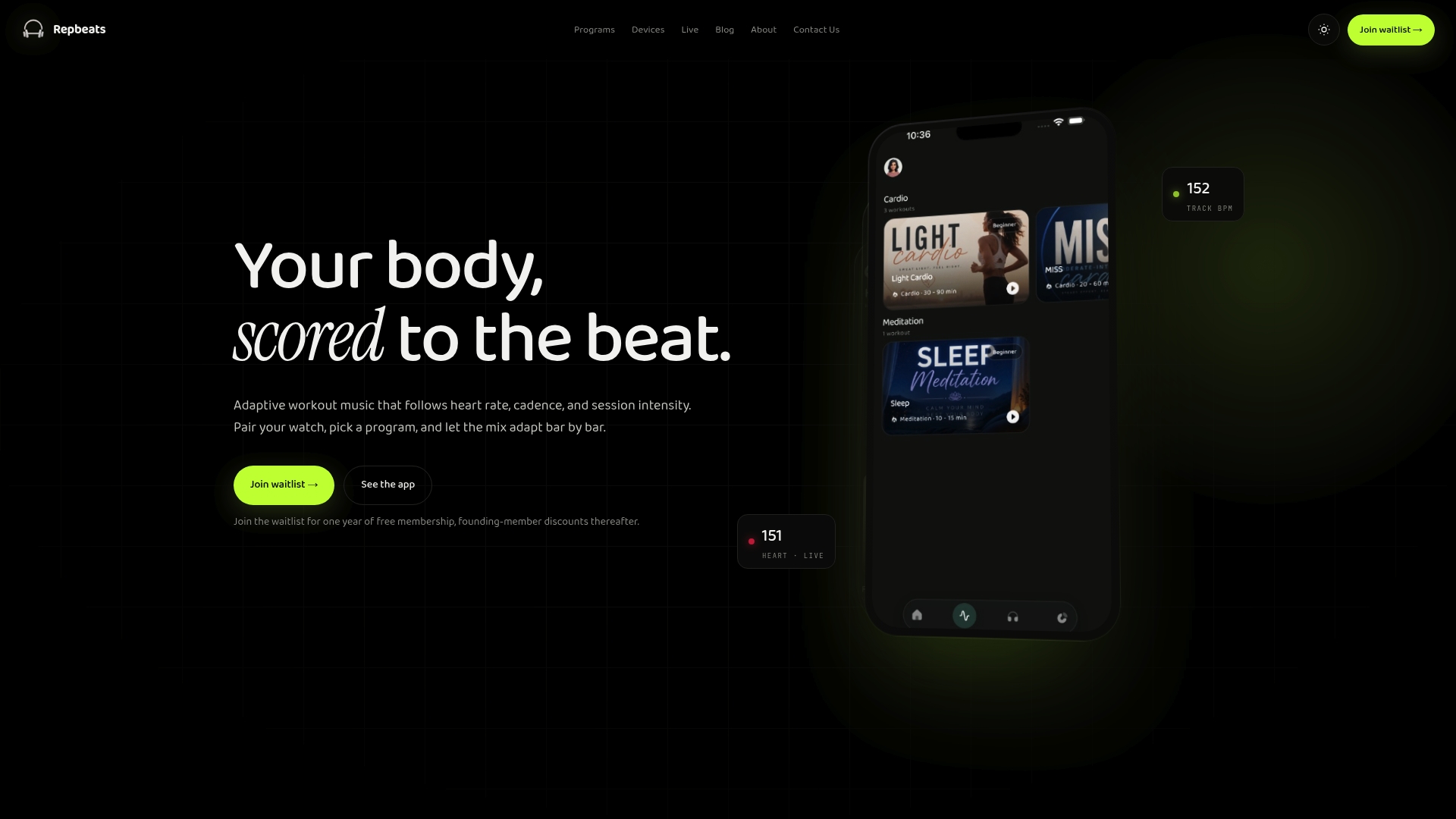
For your first session, we recommend a simple structure:
- Warm-up: let the tempo settle naturally as your heart rate rises.
- Adaptive main set: run your threshold or interval work with full sync active.
- Cool-down: let BPM taper as your effort drops.
If you’re shopping for a compatible device, a Fitbit Sense pairs well with heart-rate-based tracking. Our privacy policy limits device access strictly to workout data, nothing else. Check out the Repbeats app to get started.
FAQ
What is adaptive music in a fitness context?
Adaptive music is audio whose tempo and arrangement adjust in real time to your heart rate, cadence, or workout intensity, rather than staying fixed like a regular playlist. It relies on live sensor data from a wearable to make those adjustments during your session.
Does adaptive music actually improve workout performance?
Research suggests synchronized music can meaningfully help: one meta-analysis found preferred, synchronous music raises motivation (effect size of 0.85) and lowers perceived exertion. Gains tend to show up most clearly during pacing-sensitive efforts like threshold runs or interval training.
How does adaptive music compare to a dynamic playlist?
A dynamic playlist might reorder songs based on your activity type, but it still plays fixed-tempo tracks start to finish. True adaptive music changes the BPM within a track in real time, which is the mechanism tied to the entrainment and pacing benefits seen in synchronized music research.
Which wearables work with adaptive music apps?
Most adaptive music apps, including Repbeats, work with common wearables like Apple Watch and Fitbit, pulling heart-rate and cadence data over Bluetooth. Compatibility depends on the device streaming live telemetry rather than just logging data after your workout.
When should I stick with a regular playlist instead?
Playlists remain the better choice for strength training, recovery days, group fitness classes, or any session where you want familiar songs rather than shifting tempo. They’re also more reliable offline or in low-signal areas where a wearable connection might drop.
Sources
- Effects of preferred music listening on physical and psychological parameters in sports: a systematic review and meta-analysis with meta-regression - PMC
- PLOS ONE article on synchronized music and performance