Why Wearable Data Drives Adaptive Music Experiences
Jordan MillsJuly 15, 2026 · 11 min read

Why Wearable Data Drives Adaptive Music Experiences
TL;DR:
- Wearable data enables real-time adaptation of music by reflecting the user’s physical and emotional state. These biometric signals allow systems to personalize tempo, frequency, and composition for health and performance benefits. Feedback loops and user calibration enhance responsiveness, but privacy and emotional balance remain critical considerations.
Wearable data is defined as real-time biometric signals collected by devices like Apple Watch and Fitbit, and it is the engine behind adaptive music technology. Adaptive music, the industry term for soundscapes that change dynamically in response to a listener’s physical or emotional state, cannot function without a live data source. Static playlists guess at your mood. Wearable data knows your heart rate, cadence, and stress level right now. That is why wearable data drives adaptive music from passive background noise into a personalized performance tool.
Why wearable data drives adaptive music in real time
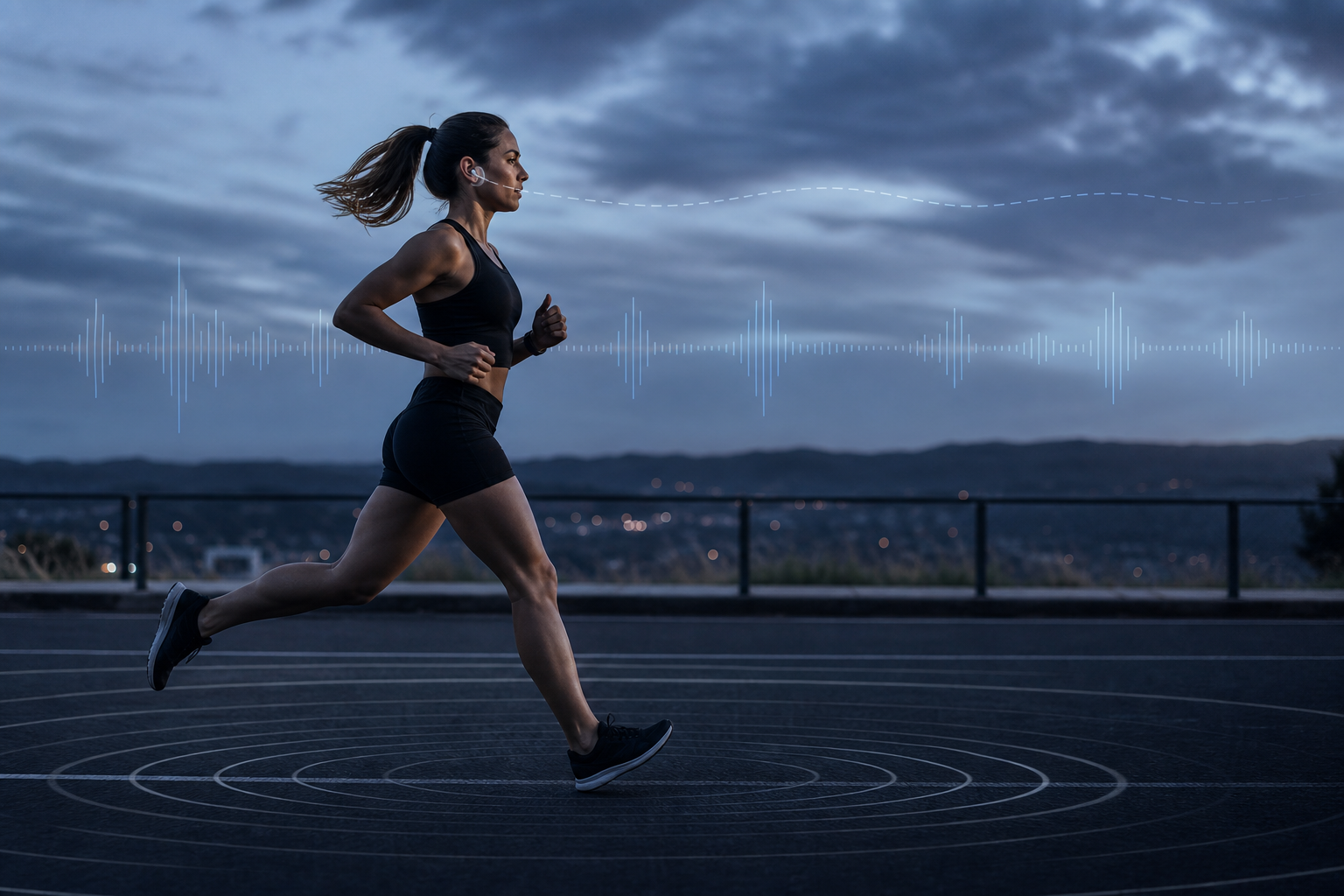
The core mechanism is simple: your body produces signals, your wearable captures them, and an algorithm translates them into music decisions. Wearable biometric data acts as an unfiltered window into your internal state, enabling music to actively support goals like focus, recovery, and training rather than serving as background entertainment. That distinction matters because a static playlist cannot respond when your heart rate spikes at mile three of a run. An adaptive system can, and does, within less than a second.
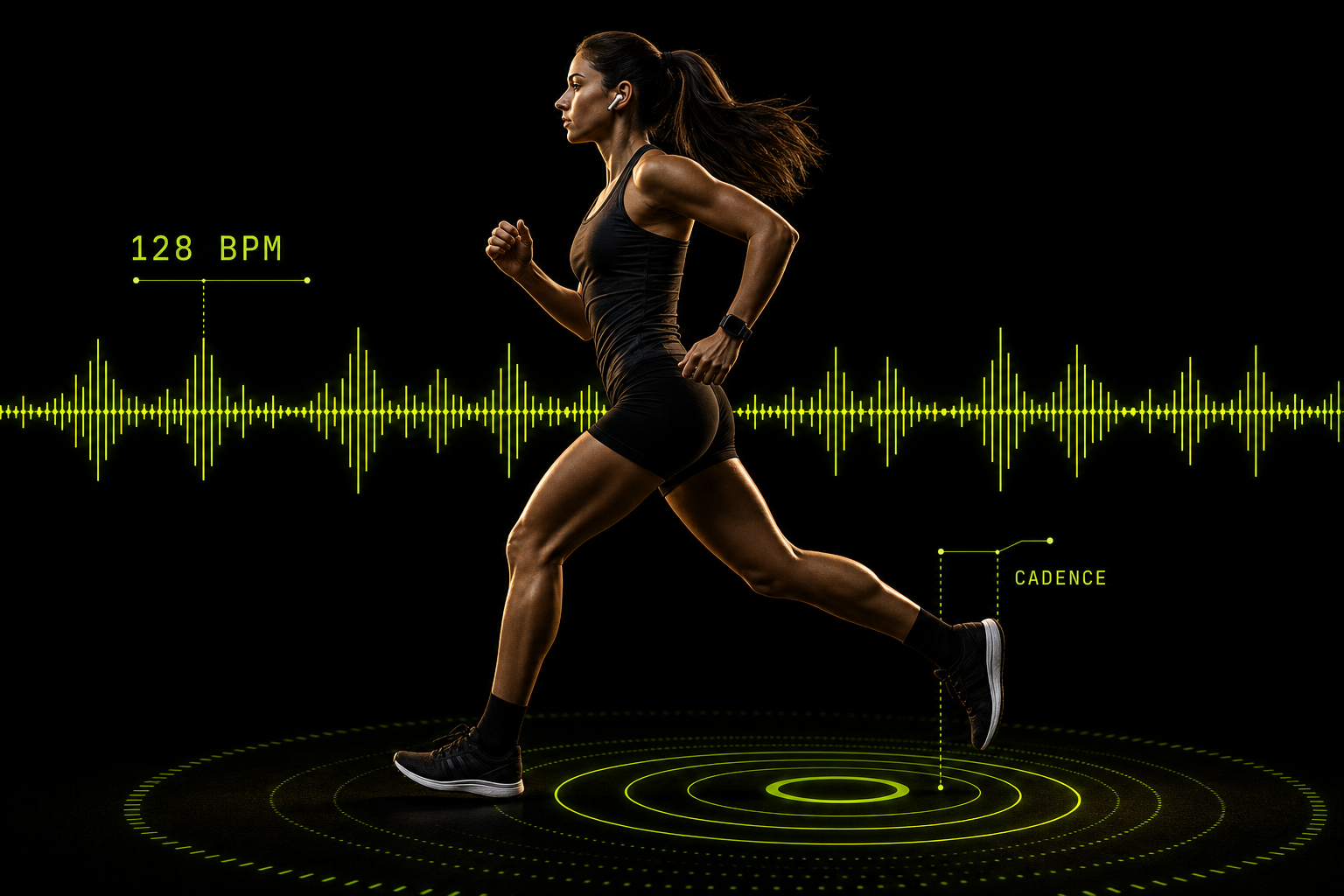
Repbeats demonstrates this principle directly. Its auto-DJ technology reads live data from Apple Watch and Fitbit, then updates the music’s beats per minute every bar to match your current heart rate zone. The result is a soundtrack that accelerates with you during a sprint and settles during a cooldown, without any manual input.

What types of wearable data shape music adaptation
Wearables collect a wider range of signals than most people realize. Each signal type informs a different musical dimension.
- Heart rate (HR): The most common input. Rising HR triggers faster tempo and higher energy tracks. Falling HR cues the system to soften the beat.
- Heart rate variability (HRV): Measures the gap between heartbeats. Low HRV signals stress or fatigue, prompting the system to introduce calming frequencies.
- Cadence and gait: Step rate and stride pattern sync music tempo to movement, keeping your pace locked to the beat.
- Galvanic skin response (GSR): Detects sweat-based electrical changes in the skin, which reflect emotional arousal. Multimodal AI systems integrate GSR alongside HRV and motion data to avoid mismatches between music energy and physical exertion.
- Brainwave monitoring via EEG: Earbuds equipped with EEG sensors read neural pleasure signals and focus states, allowing music to target specific brainwave frequencies.
- Respiration rate: Slower breathing cues meditative soundscapes; faster breathing triggers higher-intensity compositions.
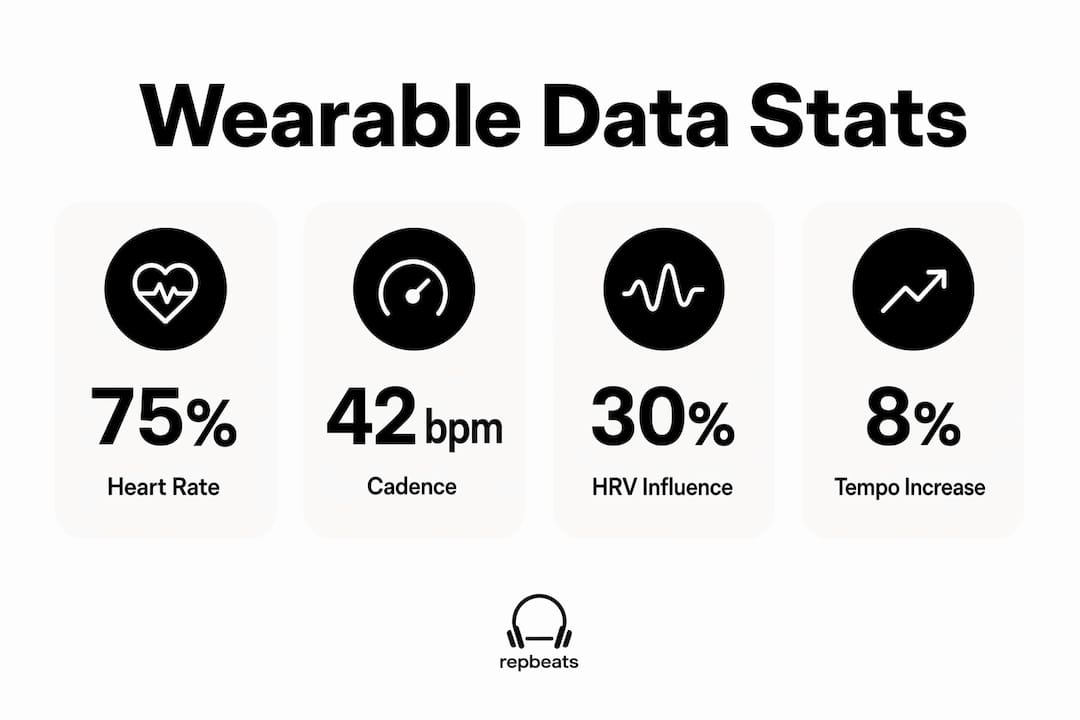
Biometric AI composition systems use these signals with notable precision. Tempo adjustments of 8% every 20 seconds, combined with binaural beats at 6Hz, target specific brainwave states. If no physiological improvement is detected within 90 seconds, the system recalibrates. That level of specificity is impossible with a standard playlist.
How adaptive music systems use wearable data technically
The technology behind adaptive music involves three layers: signal capture, AI processing, and audio output.
- Signal capture: Your wearable collects biometric data continuously and transmits it via Bluetooth to the music app.
- AI mapping: Machine learning models translate biometric signals into emotional and physical state classifications. A heart rate of 155 BPM during a run maps to a high-intensity state. A falling HRV maps to fatigue. The model selects or generates music that fits the classified state.
- Generative composition: Advanced systems do not just select tracks. They generate or layer audio in real time, responding to biometric triggers with sub-second latency. The benchmark for a natural, immersive experience is a response time around 0.82 seconds. Longer delays create latency fatigue, where the music feels out of sync with the body.
- Closed-loop feedback: Behavioral signals like skips and replays feed back into the model alongside biosignals, refining future compositions. If you consistently skip tracks at a certain heart rate zone, the system learns and adjusts.
- Continuous recalibration: The system distinguishes between long-term biometric trends and sudden real-time changes, applying different response strategies to each.
Pro Tip: If you want the most accurate adaptation, wear your device snugly and calibrate it before your session. Loose sensors produce noisy data, and noisy data produces music that feels random rather than responsive.
The difference between this and a static playlist is not just convenience. It is the difference between a soundtrack that reacts to you and one that ignores you entirely.
What are the physiological and psychological benefits?
The evidence for wearable-driven adaptive music is strongest in rehabilitation and emotional health contexts, but the findings translate directly to fitness and everyday use.
Adaptive systems integrating real-time wearable sensor data produce measurable improvements across multiple health dimensions. A 12-week study found emotional health improved by 25.1%, cognitive function by 22.5%, gait stability by 15.5%, and self-care ability by 14.1%. These are not marginal gains. They reflect how deeply music, when synchronized to the body’s actual state, can shift both physical and mental performance.
| Benefit Area | Improvement Over 12 Weeks |
|---|---|
| Emotional health | +25.1% |
| Cognitive function | +22.5% |
| Gait stability | +15.5% |
| Self-care ability | +14.1% |
Brain-reading earbuds add another dimension. By monitoring neural pleasure signals, they create personalized playlists that more than double goosebump frequency compared to standard listening. That finding matters because goosebumps during music are a reliable marker of deep emotional engagement. Doubling that response means the music is hitting harder, not just playing louder.
“Biometric AI composition’s power lies in feedback. Showing users the visible effect of music on their nervous system fosters user agency and emotional regulation.”
For fitness specifically, audio healing techniques grounded in biometric feedback help regulate the nervous system during and after physical exertion. Music synchronized to heart rate zones keeps you in your target training band longer, which compounds performance gains over time. The psychological effect is equally real: knowing your music is responding to your body creates a sense of control that static playlists simply cannot replicate.
Practical applications during physical activities
Wearable-driven adaptive music shows up across three main activity types, each with distinct use cases.
Fitness and running
- Repbeats syncs BPM to your live heart rate, so your music accelerates during interval sprints and slows during recovery without you touching your phone.
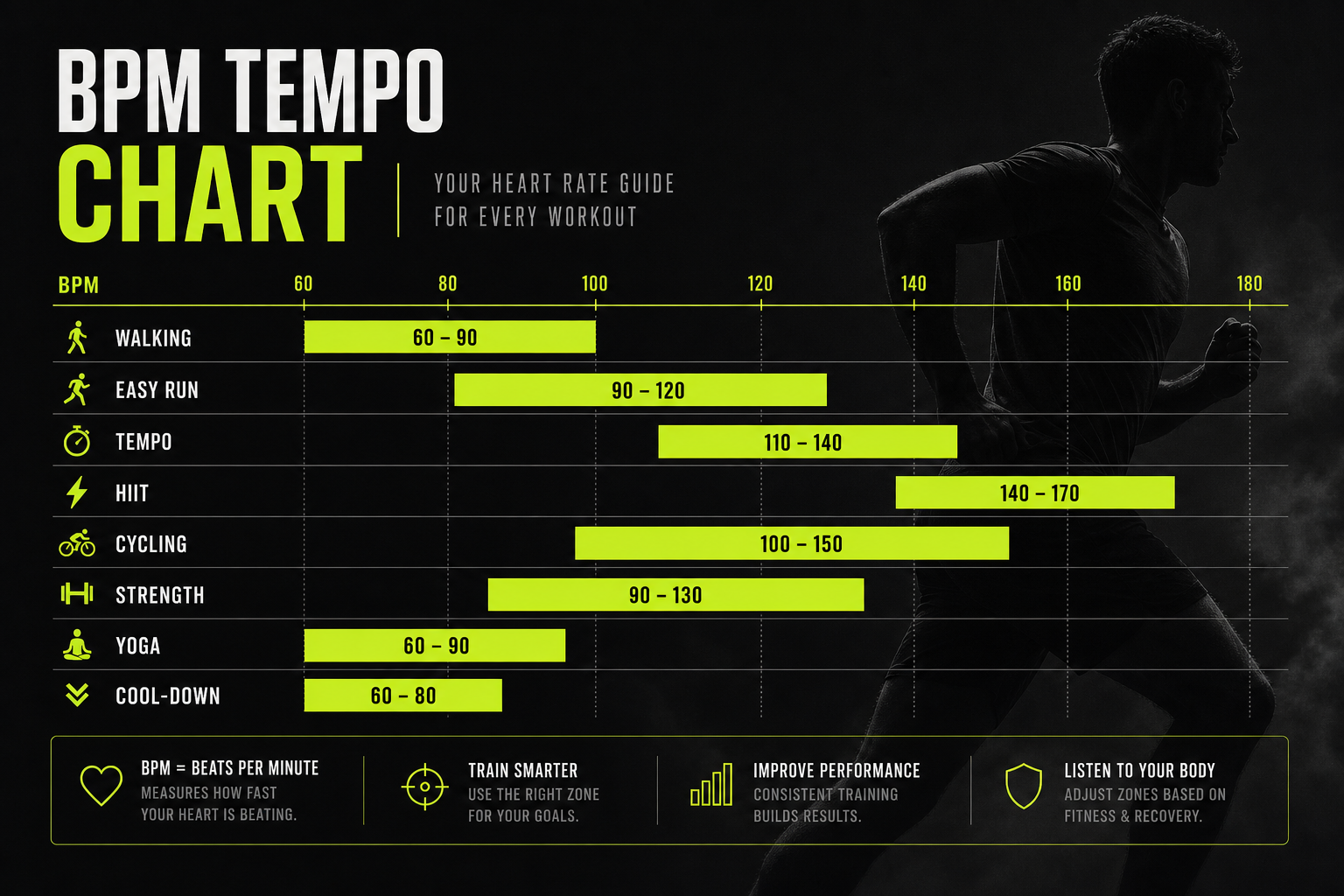
- Heart rate music zones let you define target training bands, and the system keeps your soundtrack locked to those zones throughout the session.
- Cadence matching reduces perceived effort during long runs by keeping your stride and beat aligned, a technique backed by sports science research on rhythmic entrainment.
Meditation and recovery
- HRV and respiration data guide the system toward lower-frequency compositions during cooldowns, supporting parasympathetic nervous system activation.
- Binaural beats at specific frequencies target brainwave states associated with relaxation and focus, making post-workout recovery more effective.
- Real-time heart rate monitoring during meditation sessions lets the music respond to stress spikes, gently guiding the listener back toward calm.
Rehabilitation
- Gait data from wearables helps adaptive music systems time rhythmic cues to support motor function recovery.
- Emotional health improvements of over 25% in 12-week rehabilitation programs show that music synchronized to biometric data does more than motivate. It actively supports recovery.
Pro Tip: For meditation sessions, pair a wearable that tracks HRV with an adaptive music app. HRV is a more sensitive stress indicator than heart rate alone, and it gives the system a cleaner signal for generating calming soundscapes.
Haptic feedback integration is an emerging layer. Some wearables now vibrate in sync with the beat, creating an embodied music experience that reinforces the audio signal through touch. This is particularly effective for users with hearing differences and for high-intensity training where audio alone can get lost in the noise.
Future trends and ethical considerations
The next wave of adaptive music technology moves beyond wrist-based sensors into more intimate territory.
- Brain-computer interfaces (BCIs): Thought-driven music composition is no longer theoretical. EEG-based systems already adjust music to neural states. Full BCI integration would allow music to respond to intention, not just physiology.
- Multimodal sensor expansion: Future systems will combine facial expression analysis, body temperature, and blood oxygen levels alongside existing biometric inputs for richer state modeling.
- Echo chamber risk: Hyper-personalized music risks creating sonic echo chambers where the system only reinforces existing emotional states rather than gently challenging them. Balancing personalization with surprise is a design challenge the industry has not fully solved.
- Privacy concerns: Biometric data is among the most intimate data a person generates. Heart rate, HRV, and brainwave patterns reveal health conditions, stress levels, and emotional states. Clear user control over data storage and sharing is not optional. It is a baseline requirement.
- Emotional dependency: If music always regulates your mood for you, your own emotional regulation skills may weaken over time. Music therapy frameworks emphasize user agency precisely to prevent this outcome. Adaptive music should support self-regulation, not replace it.
The technology is advancing faster than the ethical frameworks around it. Users who engage with adaptive music now should understand both what the system does for them and what it asks of them in return.
Key Takeaways
Wearable data drives adaptive music by supplying real-time biometric signals that allow AI systems to personalize tempo, frequency, and composition to your exact physical and emotional state.
| Point | Details |
|---|---|
| Biometric signals power adaptation | Heart rate, HRV, cadence, and GSR each inform specific musical dimensions like tempo and frequency. |
| Sub-second response is the standard | Adaptive systems must respond within 0.82 seconds to feel synchronous rather than delayed. |
| Health benefits are measurable | 12-week studies show emotional health gains of 25.1% and cognitive improvements of 22.5% with biometric-driven music. |
| Closed-loop feedback refines results | Behavioral data like skips and replays trains the system alongside biosignals for better future compositions. |
| Privacy and agency matter | Biometric data requires clear user control, and adaptive music should support emotional regulation, not replace it. |
The part most tech coverage gets wrong about adaptive music
Most articles about adaptive music focus on the technology and skip the implication. The implication is this: your music has always been a passive object. You chose it, it played, and that was the relationship. Wearable data ends that arrangement.
What I find genuinely interesting about this shift is not the AI or the sensors. It is the feedback loop. When your music responds to your heart rate, you start paying attention to your heart rate differently. The music becomes a mirror. I have seen this described in rehabilitation contexts, where patients notice their nervous system changing in real time because the music tells them so. That is not a small thing. That is a new form of body awareness.
The risk I keep coming back to is the echo chamber problem. A system that only ever gives you what your biometrics ask for will never surprise you. Surprise is where emotional growth happens in music. The best adaptive systems will need to build in deliberate friction, moments where the music challenges your current state rather than simply reflecting it. That design choice separates a wellness tool from a comfort trap.
Repbeats gets the core mechanic right by tying BPM directly to heart rate zones. The real-time soundscape approach keeps the feedback loop tight and the experience honest. The broader field still has work to do on the emotional agency side. But the foundation is solid, and the direction is right.
— Jordan Mills
Repbeats: adaptive workout music built on live biometric data
Repbeats connects directly to Apple Watch and Fitbit to pull your live heart rate, cadence, and session intensity into its auto-DJ engine. The system updates your music’s BPM every bar, keeping your soundtrack locked to your actual effort level across running, cycling, and meditation sessions.
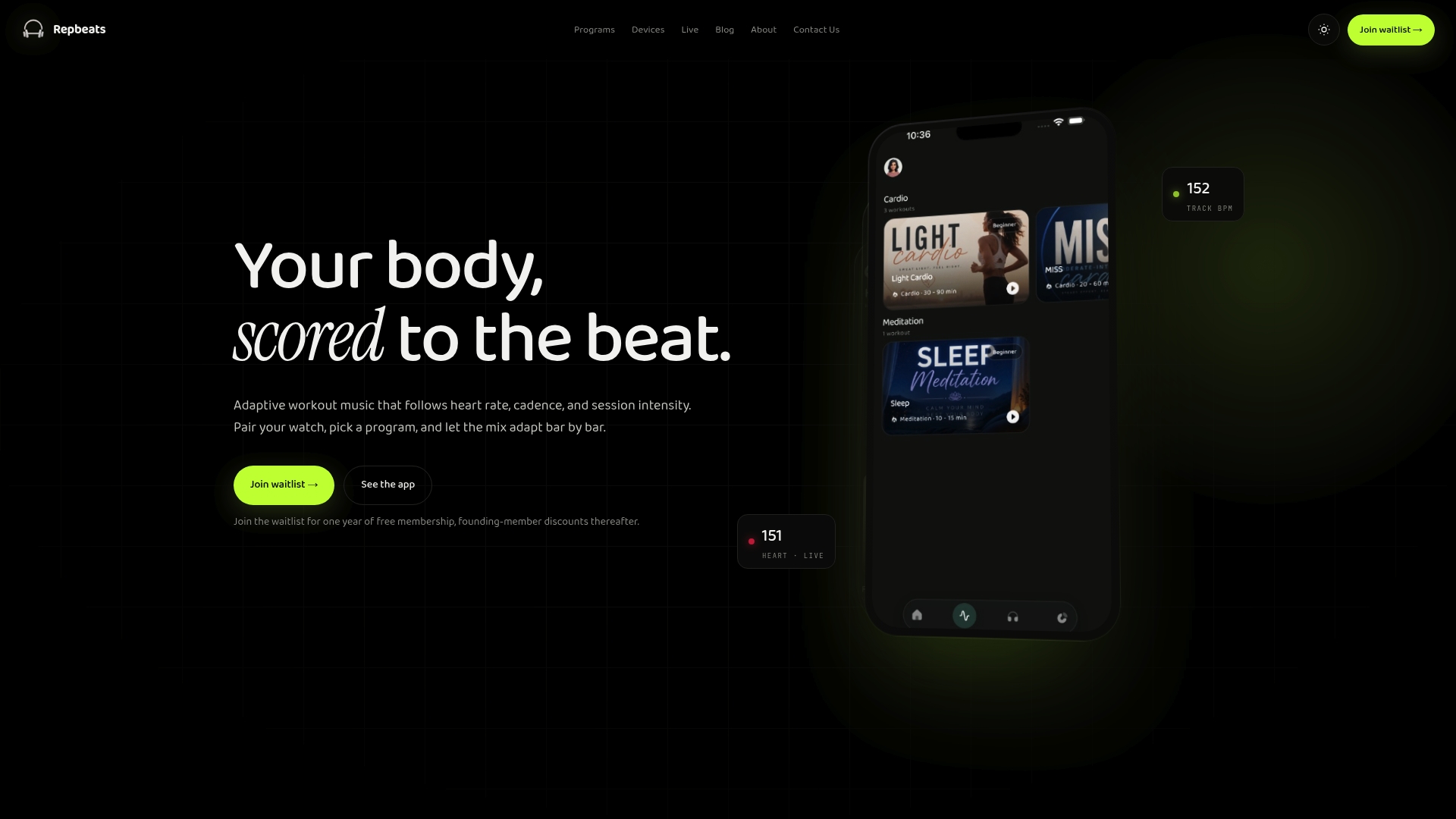
If you have been training with a static playlist, you already know the problem. The music does not know when you push harder. Repbeats does. Its adaptive workout music and BPM playlists are built specifically for people who want their sound to move with their body, not ahead of it or behind it. Whether you are chasing a personal record or winding down after a hard session, the soundtrack adjusts without you lifting a finger.
FAQ
What is adaptive music technology?
Adaptive music technology is a system that changes musical elements like tempo, frequency, and layering in real time based on user data. When driven by wearable biometrics, it responds to signals like heart rate and HRV rather than manual input.
Can wearables personalize music during a workout?
Yes. Wearables like Apple Watch and Fitbit transmit live heart rate and cadence data to apps like Repbeats, which adjust BPM every bar to match your current effort level and training zone.
How does wearable data shape music tempo?
Biometric AI systems adjust tempo by measurable increments, such as 8% every 20 seconds, based on real-time physiological signals. If no improvement is detected within 90 seconds, the system recalibrates.
What are the health benefits of wearable-driven adaptive music?
Studies show adaptive music systems improve emotional health by 25.1% and cognitive function by 22.5% over 12 weeks, with additional gains in gait stability and self-care ability.
Is biometric data from wearables private when used for music?
Biometric data including heart rate and HRV is sensitive personal health information. Users should review the data storage and sharing policies of any adaptive music app before connecting a wearable device.