Cycling Cadence Drills That Actually Build a Faster Pedal Stroke
Jordan MillsAugust 23, 2026 · 11 min read
Cycling Cadence Drills That Actually Build a Faster Pedal Stroke
Cadence drills train your nervous system to spin efficiently across a wider range of rpm, and that range is what lets you stay smooth on climbs, in sprints, and everywhere in between. The practical bands to know: 80 to 90 rpm for endurance riding, 95 to 110 rpm for threshold and VO2 work, 70 to 85 rpm (sometimes lower) on steep climbs, and 100 to 130+ rpm for sprints. One to two focused cadence sessions a week is enough to move the needle.
- Right now: try 6 x 30 second spin-ups, building cadence smoothly until your hips start to bounce, then backing off 5 rpm and holding.
- This week: slot one cadence session into your training instead of an easy Zone 2 ride.
- This month: track your max smooth cadence and watch it climb as your neuromuscular coordination improves.
Key Takeaways
Cadence drills work by expanding your usable rpm range through neuromuscular training, not by finding one ideal number to chase.
| Point | Details |
|---|---|
| Start with spin-ups | Build cadence smoothly to your bounce point, back off 5 rpm, and hold for 10 to 15 seconds. |
| Train 1 to 2 sessions weekly | Replace one easy ride with a cadence session rather than adding extra volume. |
| Match cadence to context | Aim for 80 to 90 rpm endurance, 95 to 110 rpm threshold, 70 to 85 rpm climbing, 100+ rpm sprints. |
| Track max smooth cadence | Log weekly progress instead of judging by how a single session felt. |
| Use adaptive music for pacing | Repbeats syncs BPM to live cadence and heart rate data, helping you hold target rpm during drills like spin-ups and cadence match. |
Table of Contents
- What Is Cycling Cadence and How Do You Measure It?
- Why Cadence Training Actually Improves Your Riding
- Core Cadence Drills You Can Start This Week
- Structured Cadence Workouts You Can Copy Today
- Indoor vs. Outdoor Cadence Work: What Changes
- Building Cadence Drills Into Your Weekly Training
- How Adaptive Music Supports Cadence Drills
- Sources
What Is Cycling Cadence and How Do You Measure It?
Cadence is how many times your pedals complete a full revolution per minute, measured in rpm. Most riders track it with a bike computer paired to a cadence sensor, a power meter with cadence built in, or a smartwatch reading data from a paired sensor.
If you don’t have a sensor, you can still get a rough estimate. Count pedal strokes on one leg for a certain period and extrapolate to a per-minute value.
- Endurance and tempo riding: roughly 80 to 90 rpm keeps effort steady without grinding your legs down over long miles.
- Threshold and VO2 efforts: cadence typically climbs to 95 to 110 rpm, since a quicker spin shares load between muscle and cardiovascular systems.
- Climbing: cadence often drops to 70 to 85 rpm, or lower on steep pitches, as gearing and gravity force a trade-off between torque and spin.
- Sprinting: cadence spikes past 100 rpm and can exceed 130 rpm in a full effort.
Gearing matters as much as leg speed here. Shifting to a harder gear at the same power output drops cadence and raises per-stroke force; a lighter gear does the opposite. Cadence drills teach you to control that relationship instead of letting the terrain dictate it.
Why Cadence Training Actually Improves Your Riding
High-cadence work is neuromuscular training, not just a leg-speed exercise. Spin-ups and similar drills teach your nervous system to recruit muscles through more of the pedal stroke, including the pull-through phase at the bottom that most riders barely use.
- Higher cadence reduces the force needed per pedal stroke, shifting strain toward your cardiovascular system and away from isolated leg muscles.
- That trade-off helps preserve muscle freshness across stage races or long training blocks, where repeated high-force efforts add up fast.
- A smoother stroke also means less localized fatigue late in a ride, and better ability to shift cadence quickly when a climb or a group surge demands it.
Coach’s note: Coach Kim Geist describes this kind of drilling as filling in the “dead spots” of the stroke, the parts where most untrained riders coast rather than push. That’s a specific, correctable habit, not a vague fitness problem.
The goal isn’t chasing one magic rpm number. The real win is a wider, more usable cadence range you can shift into and out of without losing power or form.
Core Cadence Drills You Can Start This Week
These are the drills coaches actually prescribe, in order of how often you’ll use them. Each one has a specific purpose, so don’t treat them as interchangeable.
-
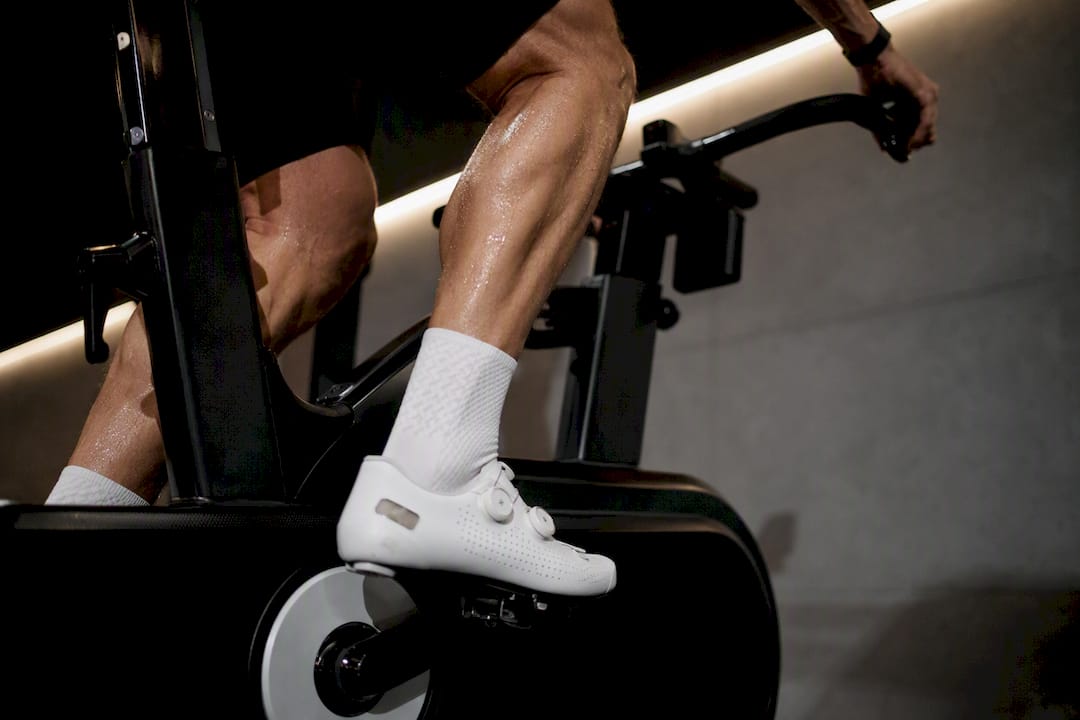
Spin-ups. Starting at your normal cadence, build smoothly over 20 to 30 seconds toward your fastest controllable rpm, staying seated with a relaxed upper body. Hold that peak for 10 to 15 seconds, then recover for 60 to 90 seconds. Repeat 6 to 8 times. The target isn’t a number; it’s staying smooth right up to the point your hips start to bounce in the saddle.
-
Cadence match. Pick a target rpm, say 95, and hold it steady for 3 to 5 minutes while keeping heart rate or power constant. Shift gears as needed to hit that number rather than letting effort drift. This drill builds the discipline of controlling cadence independent of terrain.
-
Low to high contrast intervals. Alternate 2 minutes at 60 to 70 rpm with 2 minutes at 95 to 100 rpm, holding the same power output across both. Alternating cadence blocks like this trains your nervous system to shift gears in effort without losing quality, which transfers directly to real race situations where pace and terrain change constantly.
-
One-leg pedaling. Unclip one foot and pedal with the other for short intervals at an easy effort, focusing on a full circle rather than just pushing down. Switch legs. This exposes dead spots and left-right imbalances fast.
-
Circle-drawing drills. At an easy cadence, focus on pulling through the bottom of the stroke and pushing forward over the top, as if tracing a smooth circle instead of stomping pistons. Do this for 3 to 5 minutes as a technique reset, often right after one-leg work.
-
Low-cadence strength ladder. In a moderately hard gear, ride at 50 to 60 rpm for 4 minutes at a controlled, sustainable intensity, then rest 2 minutes. Repeat 4 to 5 times. This builds torque and strengthens the mechanical side of your stroke.
Quick 10-minute version for busy days: 3 minutes easy spinning, 4 x 30 second spin-ups with 60 second recovery, then 2 minutes of circle-drawing to finish. It’s short enough to squeeze in before work and still moves your cadence range.
Pro Tip: Don’t judge a spin-up by rpm alone. If your hips are bouncing or your grip is white-knuckled on the bars, you’ve overshot your current ceiling. Back off 5 rpm, and that ceiling will move up on its own over a few weeks.
Structured Cadence Workouts You Can Copy Today
Three ready-to-use sessions cover the full range of what cadence training needs to accomplish: neuromuscular sharpness, low-cadence strength, and a fallback for days when time is tight.
- 60-minute neuromuscular session: 15 minute warm-up building to tempo, then 5 x 30 second spin-ups with 90 second recovery, followed by 4 x 3 minute cadence contrast intervals (60 rpm / 95 rpm) at steady power, then 15 minute cool-down in Zone 1 to 2.
- 75-minute low-cadence strength session: 20 minute warm-up, then 5 x 5 minutes at 50 to 65 rpm at roughly 85 to 95% of FTP or an RPE of 7 to 8, with 3 minute easy spinning between reps, closing with a 15 minute easy cool-down.
- 20 to 30 minute trainer session: warm-up 5 minutes, then 3 rounds of (2 minutes at 100+ rpm easy power, 2 minutes at 65 rpm moderate power), finishing with 5 minutes easy. Log cadence targets and actual rpm hit in your training software so you can see the range widen over weeks.
| Session type | Best week to use it |
|---|---|
| Neuromuscular (spin-ups, contrast) | Weeks 1 to 3, and again weeks 6 to 8 for a sharpening block |
| Low-cadence strength | Weeks 3 to 6, layered on top of base volume |
| Quick trainer session | Any week, as a substitute when time is short |
Across a 4 to 8 week block, front-load neuromuscular work while fitness is fresh, shift into strength-focused low-cadence sessions mid-block, then return to short neuromuscular touches before a key event or race.
Indoor vs. Outdoor Cadence Work: What Changes
A trainer is the better tool for focused cadence drills because you control gearing, gradient, and interruptions completely. In ERG mode, though, the trainer holds power constant regardless of cadence, which can mask the “feel” of a true spin-up. Switch to standard resistance mode for cadence-specific work so your effort actually responds to rpm changes.
- Indoors: use ERG mode for structured power intervals, but switch it off for spin-ups and cadence match drills where feel matters.
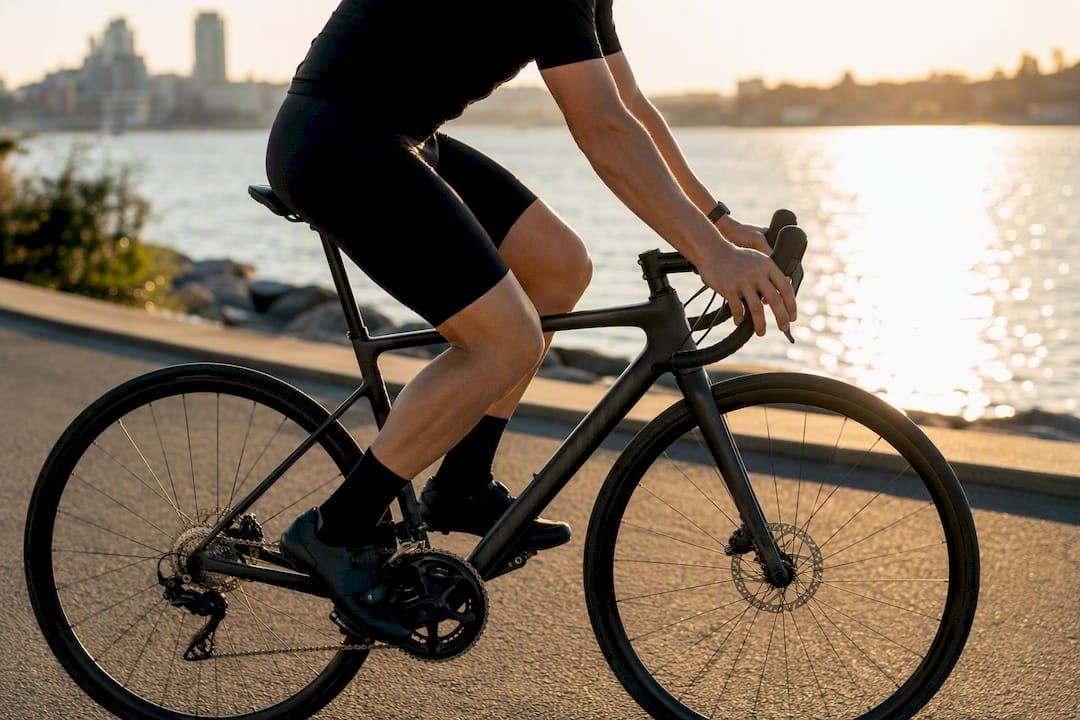
- Outdoors: pick a smooth, low-traffic road or bike path for spin-ups. High cadence work demands full attention, and a pothole at 120 rpm is a different problem than one at 80.
- Execution cue: the bounce point, where your hips start rocking in the saddle, is your real ceiling. Train just under it, not at it.
- Heart rate/power control: hold HR or power steady while cadence changes; if either spikes uncontrollably, the drill has turned into an interval instead of a skill session.
- Gearing limits: if your smallest gear won’t let you hit target rpm at low speed, do the drill on a slight downhill or in a lower gear at higher speed instead.
A performance monitoring setup for your home trainer makes tracking cadence and power together far easier than eyeballing a bike computer mid-drill.
Building Cadence Drills Into Your Weekly Training
Cadence work earns its place by replacing, not adding to, your training load. Swap one easy Zone 2 ride each week for a cadence-focused session, and keep a second session if you’re building toward a race.
- Weeks 1 to 2: two short neuromuscular sessions per week, spin-ups and cadence match only, to establish a baseline.
- Weeks 3 to 5: add one low-cadence strength session, dropping to one neuromuscular session per week.
- Weeks 6 to 8: progress by raising target rpm on spin-ups, extending contrast interval hold times, or shortening recovery, whichever moves the needle for your weak point.
Track three things to know it’s working: your max smooth cadence, how stable that cadence stays as you fatigue, and how consistently you hit target rpm and heart rate together. The most common mistake is loading too much power into a cadence session, turning a skill drill into an interval workout and burying the actual lesson.
Pro Tip: If you catch yourself bouncing in the saddle during every spin-up, that’s not a sign to push harder. Log the rpm where it started, back off, and check again in two weeks. That number moving up is the actual progress marker.
How Adaptive Music Supports Cadence Drills
Music with a tempo matched to your target cadence gives your legs an external rhythm to lock onto, which is why indoor cycling studios have used BPM-matched playlists near a 2:1 beat-to-pedal ratio for years (roughly 170 to 180 BPM for 85 to 90 rpm). Repbeats builds on that idea by adjusting BPM automatically every bar based on live cadence and heart rate data from your wearable.
- Spin-ups pair especially well with rising BPM tracks that build alongside your rpm target.
- Cadence match drills benefit from a steady, locked-in tempo that makes drift obvious the moment you fall behind the beat.
- High-cadence endurance blocks stay more tolerable with music that shifts intensity as your session does, rather than a static playlist.
Check out Repbeats’ guide to using wearable cadence data for playlists for a deeper walkthrough of the matching logic.
An Editor’s Note on Patience and Progress
Cadence gains are quiet at first. You won’t feel a dramatic shift after one session, because you’re retraining reflexes, not building fitness in the usual sense. Give it four to six weeks before judging whether it’s working, and log your max smooth cadence weekly rather than trusting how a single ride felt. If music-matched drills help you hold a target rpm without thinking about it, that’s not a gimmick. That’s the whole point of the exercise working as intended.
— Jordan Mills
Train Cadence Drills With Music That Adjusts to You
Repbeats is the difference between guessing at a playlist’s tempo and having music that actually tracks your rpm and heart rate in real time, adjusting BPM every bar instead of every song. That matters most on drills like spin-ups and cadence match work, where losing the beat means losing the drill’s entire point.
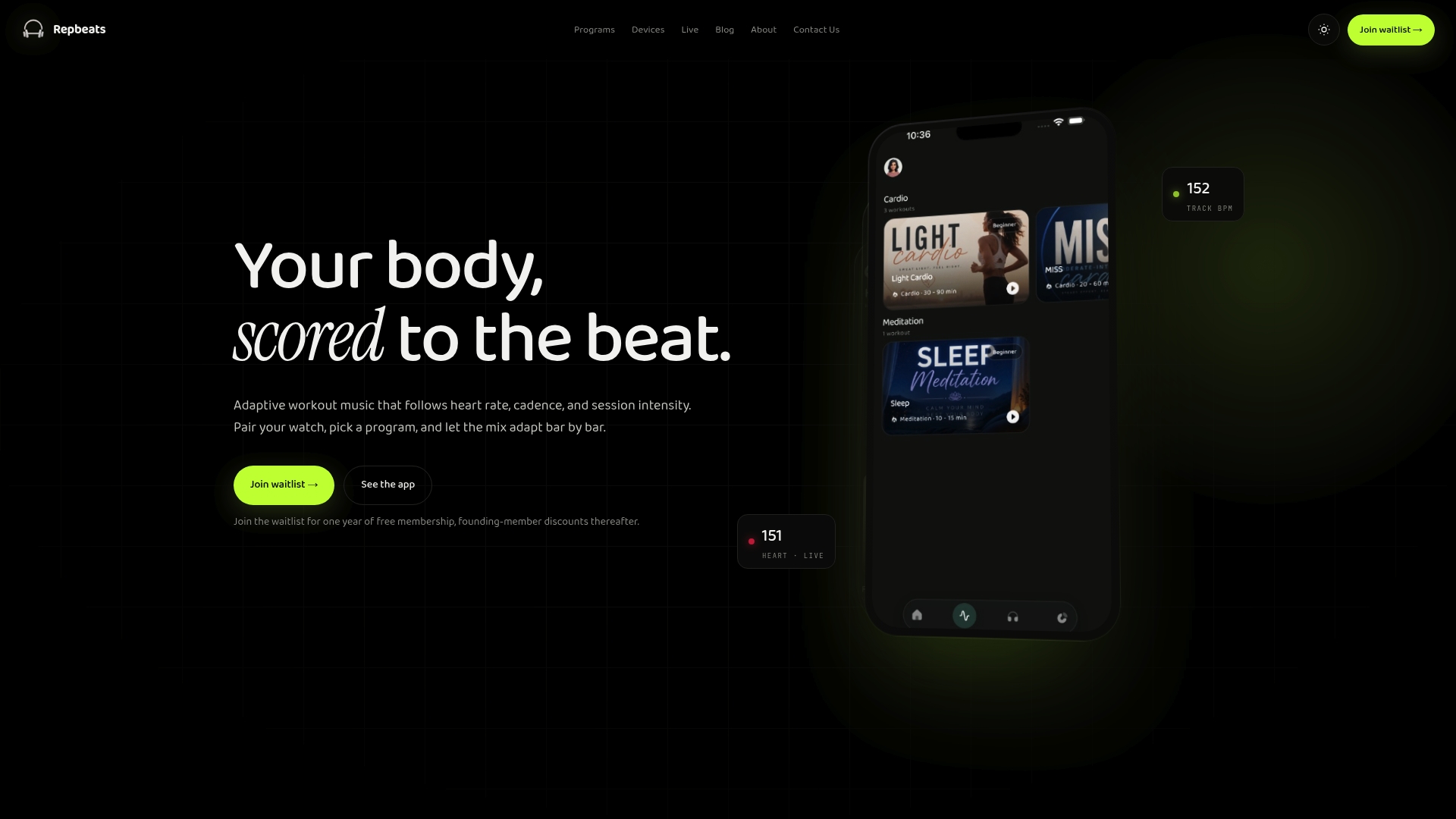
Pull up a spin-up session, sync your wearable, and let the auto-DJ technology build tempo alongside your cadence instead of fighting against it. For structured trainer rides, Repbeats’ EDM cycling workout playlists offer ready-made 20, 30, and 40-minute formats built around exactly this kind of tempo progression. Start your trial on the Repbeats app and run your next cadence session with music that keeps pace with you, not the other way around.
Sources
- Cadence Drills: Benefits and How to Incorporate Into Workouts — Bicycling
- 3 High-Cadence Cycling Workouts for Base Training — TrainingPeaks
- Cadence training for cyclists — drills, neuromuscular efficiency, and when to spin vs grind — Roadman Cycling