EDM Cycling Workout: 20, 30, and 40-Minute Rides
Jordan MillsAugust 13, 2026 · 15 min read
EDM Cycling Workout: 20, 30, and 40-Minute Rides
Pick a ride length, press play on a high-BPM EDM track, and follow the minute-by-minute cues below. That’s the fastest way to run an effective EDM cycling workout today. Research from Ghent University confirms that syncing your pedal cadence to music tempo through sensorimotor synchronization lowers perceived effort and keeps cadence more stable than riding without tempo-matched music. You don’t need a coach or a studio class to get that benefit.
Here’s what to do right now:
- Pick your ride: 20-minute HIIT, 30-minute tempo, or 40-minute intervals (all scripted below)
- Set your cadence target: aim for moderate cadence during moderate blocks, higher cadence on sprints
- Match your music: load a Spotify spinning playlist or a 30-minute EDM indoor cycling class on YouTube and let the beat set your pace
- Resistance cue: flat road feel for warm-up, +2 to +4 turns for hill blocks, back to flat for sprints
- Adaptive option: Repbeats auto-adjusts song BPM to your live cadence and heart rate via Apple Watch or Fitbit, so the music tracks you instead of the other way around
Key Takeaways
Syncing EDM tempo to pedal cadence through sensorimotor synchronization lowers perceived effort, stabilizes cadence, and makes every interval cue feel instinctive rather than forced.
| Point | Details |
|---|---|
| Match BPM to RPM | Use the 2:1 ratio: a 160 BPM track drives an 80 RPM cadence for sprint intervals. |
| Follow timed session scripts | Pick the 20, 30, or 40-minute ride above and use musical drops to trigger sprint and recovery cues. |
| Source playlists by BPM | Spotify’s spinning playlists and YouTube instructor rides give you pre-sequenced, BPM-tagged tracks. |
| Check intensity with HR zones | Target 85–95% max HR for sprint blocks; drop to 60–65% during active recovery. |
| Use Repbeats for adaptive sync | Repbeats auto-adjusts BPM to your live cadence and heart rate, removing manual playlist editing entirely. |
Table of Contents
- EDM cycling workouts you can follow right now
- How to map EDM BPM to your pedaling cadence
- Where to find EDM playlists for cycling
- Why syncing EDM to cycling actually works
- Safety, intensity targets, and common questions
- What I’ve learned from running EDM rides
- Repbeats makes your EDM ride adaptive
- Sources
EDM cycling workouts you can follow right now
Three complete session scripts. Each one gives you timestamps, resistance cues, and sample tracks. Scan the list, pick your length, and ride.
1. 20-minute HIIT ride
Goal: Maximum calorie burn in minimum time. Short, brutal, and built around 30-second sprint bursts.
Intensity profile: Warm-up (low) → Sprint intervals (high) → Active recovery (moderate) → Cool-down (low)
Minute-by-minute cues:
-
0:00–3:00 — Warm-up | Resistance: flat | Low effort Settle into the saddle. Find the beat. Target 75 RPM and match every pedal stroke to the downbeat. Sample track: any 120–125 BPM progressive house opener.
-
3:00–5:00 — Build | Resistance: +1 turn | Moderate effort Legs should feel warm. Increase cadence by 5 RPM and add a half-turn of resistance. You’re not sprinting yet.
-
5:00–12:00 — Sprint intervals | Resistance: flat | High effort Seven minutes of 30-seconds-on / 30-seconds-off sprints. On the drop of each chorus, push to 100 RPM. On the breakdown, ease to 85 RPM and breathe. Repeat seven times. Sample tracks: “Titanium” (David Guetta, 126 BPM), any 128–132 BPM electro-house track with a clear 4/4 drop.
-
12:00–15:00 — Tempo block | Resistance: +1 turn | Moderate-high effort Steady state. Hold cadence and resist the urge to slow down. This is where fitness is built.
-
15:00–18:00 — Final sprint push | Resistance: flat | High effort One last hard block. Use the energy of the final track’s build to push cadence. Sprint to the drop, hold for 8 bars, recover for 8 bars. Repeat twice.
-
18:00–20:00 — Cool-down | Resistance: flat | Low effort Slow the legs, let heart rate drop. Match a 110–115 BPM chill-house or ambient EDM track.
Beginner mod: Cut sprint intervals to 20 seconds on / 40 seconds off. Advanced mod: Add +1 resistance during every sprint block.
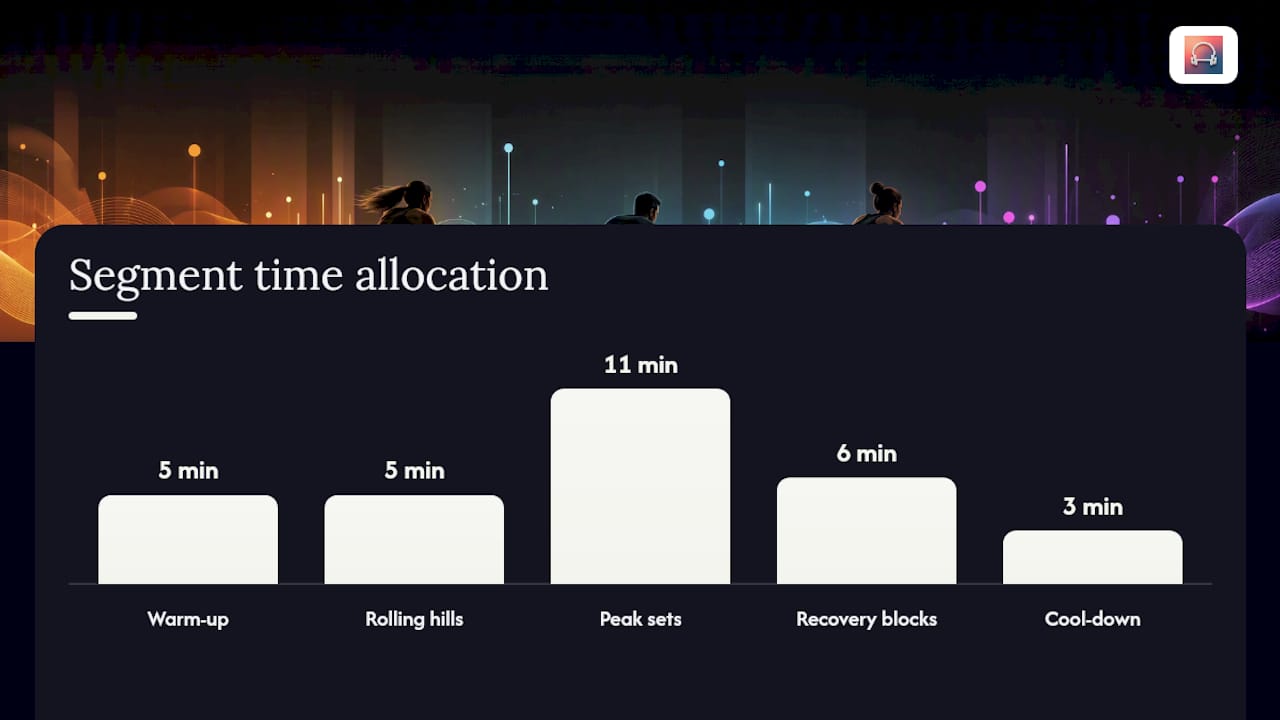
2. 30-minute tempo ride
Goal: Sustained aerobic effort with rolling hills and two peak sets. Great for building base fitness.
Intensity profile: Warm-up (low) → Rolling hills (moderate) → Peak set (high) → Recovery (moderate) → Cool-down (low)
Minute-by-minute cues:
-
0:00–5:00 — Warm-up | Resistance: flat | Low effort Easy spin. Use a 120–125 BPM track to find rhythm. Breathe through the nose.
-
5:00–10:00 — Rolling hills | Resistance: +2 turns | Moderate effort Simulate a gradual climb. Keep cadence steady even as resistance climbs. If cadence drops below 75 RPM, reduce resistance by half a turn.
-
10:00–15:00 — First peak set | Resistance: +1 turn | High effort Five minutes of sustained hard effort. Pick a 128–135 BPM track with a relentless build. Hold cadence through the whole track. Sample playlist: SPINNING MUSIC 2026: INDOOR CYCLING on Spotify.
-
15:00–18:00 — Active recovery | Resistance: flat | Low-moderate effort Drop resistance completely. Let legs spin freely. Use a 118–122 BPM melodic techno track to keep rhythm without pushing effort.
-
18:00–24:00 — Second peak set | Resistance: +1 to +2 turns | High effort Six minutes. Alternate 1-minute hard / 1-minute moderate every two minutes. On hard minutes, push to 95 RPM. On moderate, settle at 85 RPM. Sample track: any 130–135 BPM big-room house or trance track with a clear 8-bar structure.
-
24:00–27:00 — Tempo finish | Resistance: +1 turn | Moderate effort Controlled, steady pace. This is your “I can hold this all day” effort level.
-
27:00–30:00 — Cool-down | Resistance: flat | Low effort Slow and easy. A 110–115 BPM track works well here.
Beginner mod: Skip the second peak set; replace with a second active recovery block. Advanced mod: Extend both peak sets by 2 minutes each.
3. 40-minute intervals ride
Goal: Full aerobic and anaerobic development. Longer intervals, more hill work, and a structured cool-down.
Minute-by-minute cues:
-
0:00–7:00 — Warm-up | Resistance: flat | Low effort Longer warm-up for a longer ride. Gradually increase cadence from 70 to 80 RPM over 7 minutes.
-
7:00–15:00 — Hill climb block | Resistance: +3 to +4 turns | Moderate-high effort Heavy resistance, controlled cadence. Think seated climb. Use a 125–130 BPM progressive track with a slow build. Every 2 minutes, add half a turn of resistance.
-
15:00–22:00 — Sprint intervals | Resistance: flat | High effort Seven minutes of 45-seconds-on / 45-seconds-off sprints. Match sprint starts to the drop of each track. Sample: Spinning Music 2026 playlist for BPM-tagged workout edits.
-
22:00–27:00 — Active recovery | Resistance: flat | Low effort Full recovery. Drop everything and spin easy. Heart rate should drop 20–30 BPM from peak.
-
27:00–35:00 — Tempo block | Resistance: +1 to +2 turns | Moderate-high effort Eight minutes of sustained effort. This is the hardest mental block of the ride. Use a 130–138 BPM trance or big-room track to hold pace.
-
35:00–38:00 — Final sprint | Resistance: flat | High effort Three minutes, everything you have. Sprint to the beat. Match every pedal stroke to the kick drum.
-
38:00–40:00 — Cool-down | Resistance: flat | Low effort Slow it down. Breathe. Let the music carry you out.
Beginner mod: Replace the 8-minute tempo block with a 5-minute moderate effort and 3-minute rest. Advanced mod: Add +1 resistance to every sprint interval.
How to map EDM BPM to your pedaling cadence
The core rule is simple: match song BPM to pedal RPM using a 2:1 ratio for double-stroke pedaling (one full revolution = two beats) or a 1:1 ratio for single-stroke. Most indoor cyclists use the 2:1 method naturally, which means a 130 BPM track drives a 65 RPM cadence. Knowing this lets you sync music to workout intensity without guessing.
| Song BPM | 2:1 Cadence (RPM) | 1:1 Cadence (RPM) | Best For |
|---|---|---|---|
| 110–120 | 60 | 110–120 | Warm-up / cool-down |
| 120–130 | 60–65 | 120–130 | Easy tempo / recovery |
| 130–140 | 65–70 | 130–140 | Moderate hills / base |
| 140–160 | 70–80 | 140–160 | Tempo blocks / climbs |
| 160–180 | 80–90 | 160–180 | Sprint intervals |
| 180–190 | 90–100 | 180–190 | Max-effort sprints |
Cadence vs. resistance: which lever to pull
When a track’s BPM rises, you have two choices: increase cadence to match, or hold cadence and add resistance. The right call depends on the session goal.
- Sprint blocks: keep resistance flat, let cadence climb with the BPM. The music pulls your legs faster.
- Hill blocks: hold cadence at 75–80 RPM and add +2 to +4 turns of resistance. The BPM acts as a metronome, not a speed target.
- Tempo blocks: split the difference. Match cadence to the 2:1 ratio and add +1 resistance for sustained effort.
Cue prompts tied to musical structure
EDM tracks are built in 8-bar and 16-bar phrases. Use that structure to time your cues:
- “Hold cadence, add +2 resistance” on the 8-bar build
- “Sprint to the drop” when the bass drops at bar 16 or 32
- “Recover for 8 bars” on the breakdown
- “Last 16 bars, give everything” on the final chorus
Pro Tip: Use a cadence sensor paired with wearable cadence data or Repbeats to see your live RPM on screen. When your cadence drifts below the BPM target, you’ll catch it instantly instead of guessing by feel.
Where to find EDM playlists for cycling
The fastest sources for ride-ready EDM playlists are Spotify, YouTube, and BPM-tagged local files. Each platform has a different strength.
- Spotify: Search “spinning 2026” or “indoor cycling EDM” for playlists with pre-tagged BPM workout edits. The SPINNING MUSIC 2026: INDOOR CYCLING playlist is a solid starting point, with tracks explicitly labeled by BPM in their titles. A second option is the Spinning Music 2026 playlist, which collects high-BPM workout edits across house, trance, and techno.
- YouTube: Instructor-led EDM rides give you a complete session without any playlist building. The 30-minute EDM indoor cycling class at exercisevideos.club includes minute-by-minute cues and music timestamps you can follow directly. The EDM HIIT Calorie Burner 30-minute rhythm ride adds sprint-focused cue language for higher-intensity sessions.
- Local files with BPM tagging: Apps like Mixed In Key or DJ software tag your own music library with BPM metadata. Once tagged, you can sort tracks by BPM and build a session playlist in under 5 minutes.
- Adaptive apps: Repbeats removes the playlist-building step entirely by adjusting song BPM to your live cadence and heart rate in real time.
How to structure a playlist for each ride length
Match your playlist arc to the session structure, not just the duration.
- Warm-up songs (0–5 min): 110–125 BPM, melodic, lower energy. Progressive house or melodic techno works well.
- Main set (5 min to final sprint): 128–140 BPM for tempo blocks, 160–180 BPM for sprint intervals. Alternate between high-energy drops and breakdowns to signal interval changes.
- Cool-down (final 2–3 min): 110–115 BPM, ambient or chill-house. The drop in BPM cues the body to slow down.
To check a track’s BPM quickly, open Spotify’s desktop app and look at the audio features in the track details, or use a free tool like Tunebat or the BPM Analyzer in Mixed In Key. For personalized gym session music, sorting by BPM before you ride saves significant setup time.
Why syncing EDM to cycling actually works
Sensorimotor synchronization (SMS) is the mechanism behind it. When you hear a steady rhythmic beat, your motor system automatically tries to align your movement to it. On a bike, that means your pedal strokes drift toward the song’s tempo without conscious effort. The result is a more consistent cadence and, in most riders, a lower perceived effort at the same power output.
The Ghent University SoundBike research tested this directly. Researchers developed sonification strategies, including step-sequencer mapping and a Kuramoto-model phase alignment method, that continuously align music beats to a cyclist’s cadence. Their findings suggest that providing real-time auditory feedback tied to a rider’s actual cadence increases spontaneous synchronization and produces more stable pedaling compared to external music alone.
The TechnoBike project takes a related approach: it maps pedaling speed directly to music tempo, so the rider effectively becomes a participant in the music’s generation. That feedback loop sustains tempo and engagement in a way a static playlist cannot, because the music responds to what you’re doing rather than playing over it.
For practical EDM rides, the benefits stack up clearly:
- Cadence stays more consistent through interval transitions
- Perceived effort drops during sustained tempo blocks
- Sprint cues feel natural when tied to musical drops and builds
- Recovery periods feel genuinely restful when BPM drops with the breakdown
Music’s effect on cycling motivation goes beyond distraction. The tempo-movement link is a real physiological mechanism, and EDM’s predictable 4/4 structure makes it one of the most effective genres for exploiting it.
Safety, intensity targets, and common questions
Is 20 minutes enough? For HIIT-style work, yes. A 20-minute session with genuine high-intensity sprint intervals produces meaningful cardiovascular and metabolic stimulus. The key is actual intensity during the work periods, not duration.
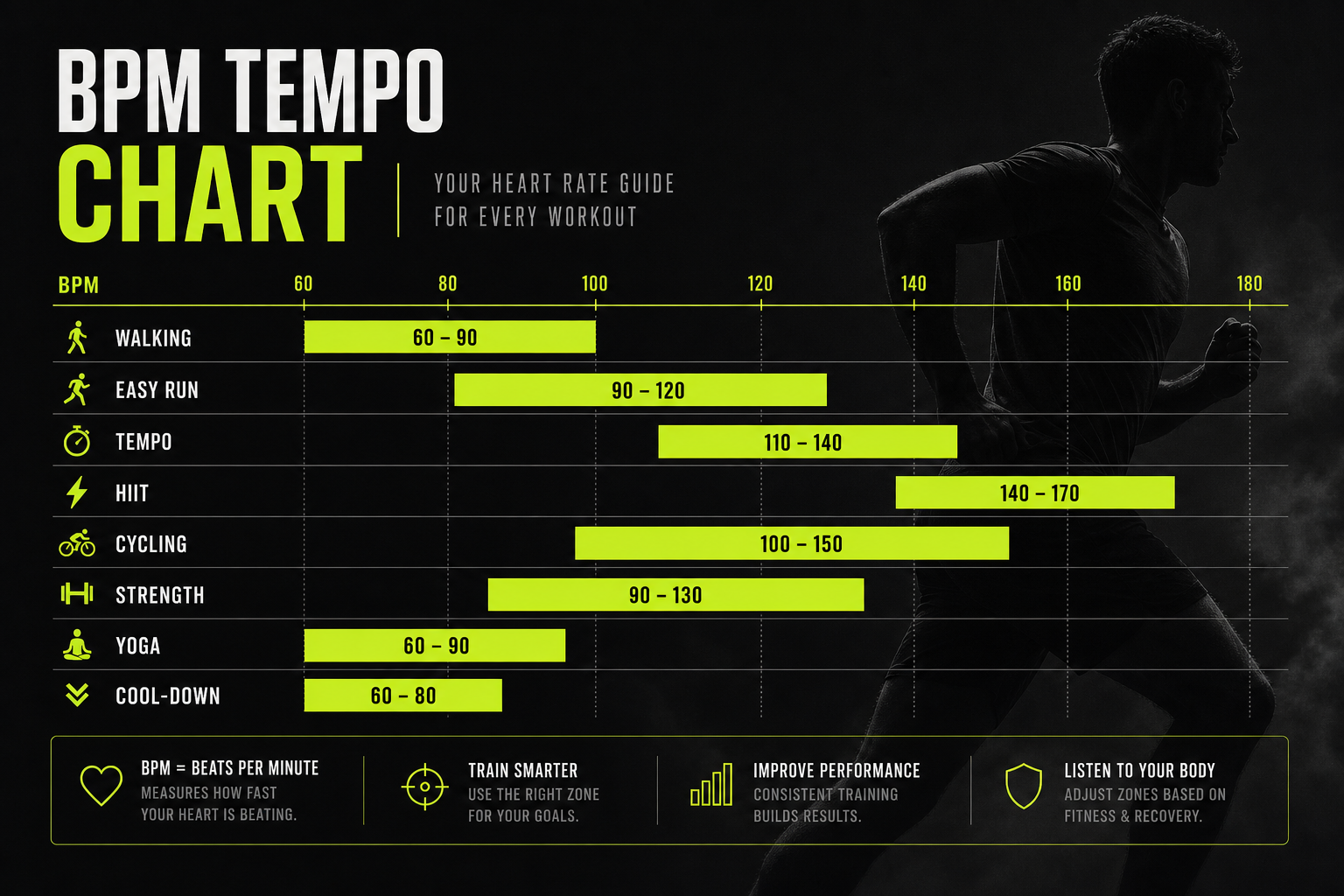
What does the 75%/80% rule mean? These refer to target heart rate as a percentage of your maximum (roughly 220 minus your age). Zone 2 training sits around 60–70% of max HR. Interval work targets 80–90%. Peak sprints push above 90%. For a 35-year-old, that means sprint peaks around 167 BPM heart rate.
Heart rate targets by session block
Wearables that measure exercise intensity give you live HR data during the ride, which removes the guesswork from zone targeting.
When to stop or scale back
- Dizziness or lightheadedness: stop immediately, sit, hydrate.
- Chest pain or tightness: stop and seek medical attention.
- Unusual breathlessness (can’t complete a short sentence): drop to recovery pace.
- Nausea: reduce resistance, slow cadence, and cool down early.
- Sharp joint pain (knees, hips): stop and check bike fit before continuing.
Modification options
- Beginners: stay seated for all hill blocks, shorten sprint intervals to 20 seconds, and keep resistance at +1 maximum throughout.
- Returning from injury: replace all sprint blocks with moderate tempo work at 80–85 RPM, and limit total session time to 20 minutes for the first two weeks.
- Advanced riders: add +1 resistance to every sprint block and extend tempo blocks by 2 minutes each.
What I’ve learned from running EDM rides
The single habit that separates a good EDM ride from a great one is timing your cues to the music’s 8-bar phrases, not to a stopwatch. When you call a sprint at the exact moment the bass drops, riders respond instinctively. When you call it mid-phrase, the cue fights the music instead of using it.
A few things that consistently work in practice:
- Announce the next cue one phrase early. Say “sprint coming in 8 bars” during the breakdown, so riders are ready when the drop hits. The music does the motivating; your job is to set the expectation.
- Use the breakdown to reset. When a track drops to a quiet breakdown, that’s your natural recovery window. Don’t fight it with a hard cue. Let the music breathe, and riders will too.
- Watch cadence drift during long tempo blocks. Around the 4-minute mark of a sustained effort, most riders slow down without realizing it. A quick “check your cadence, match the beat” cue at that point is usually enough to pull them back.
- For equipment: if you’re riding solo at home, a Bluetooth speaker positioned at ear height in front of the bike beats headphones for rhythm accuracy. The bass frequencies carry the beat more clearly than earbuds, and you won’t miss a drop. If you’re in a shared space, closed-back headphones with good low-frequency response (Sony WH-1000XM5 or similar) keep the beat tight without bleed.
The session flow that works most reliably: a 5-minute melodic warm-up, two hard blocks separated by a full recovery, and a cool-down that matches the BPM drop of the final track. Simple, repeatable, and the music does most of the work.
Repbeats makes your EDM ride adaptive
Manual playlist building works, but it has a ceiling. You pick tracks, tag BPM, sequence the set, and then ride a fixed script regardless of how your body is actually performing that day. Repbeats removes that ceiling.
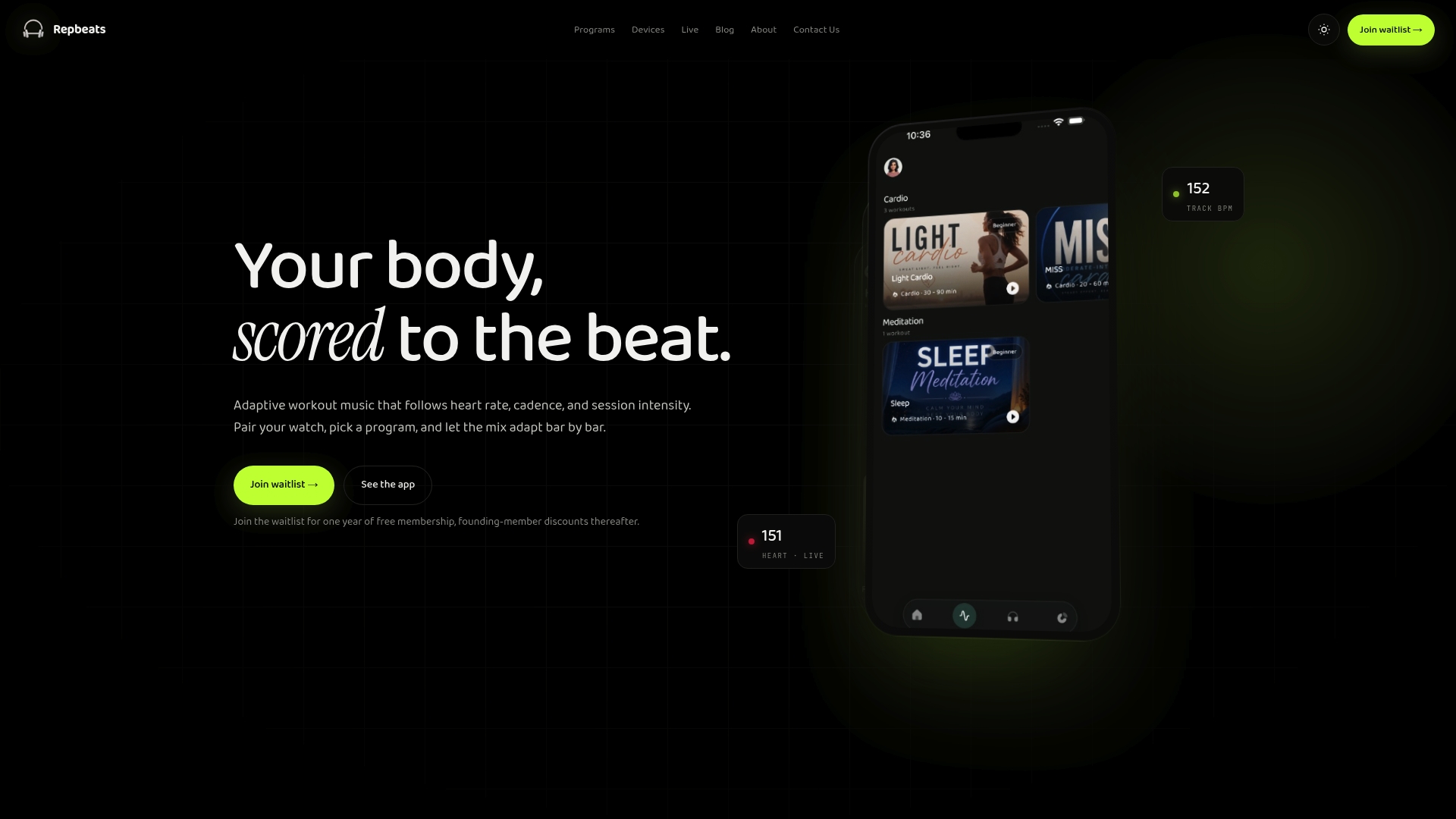
The app syncs music tempo directly to your live heart rate and cadence using data from Apple Watch, Fitbit, and other popular wearables. Its auto-DJ technology updates the BPM every bar, so during a sprint interval the music accelerates with you, and during a recovery block it pulls back automatically. For the three rides above, that means the 30-second sprint cue isn’t just a timestamp; it’s the music itself shifting tempo to match what your legs are doing.
The practical difference shows up most during the 40-minute ride’s tempo block, where cadence drift is hardest to catch manually. Repbeats flags the drift in real time through the music, not through a screen alert, so you stay in the zone without breaking focus. The app also handles wearable-driven adaptive music for meditation and running programs, so the same subscription covers your full training week.
Repbeats launches with a free trial, and the current waitlist includes a full free year. See how the Fitness Flywheel AI Fitness Platform has integrated adaptive music and interactive features to enhance cycling workouts. Start your trial at Repbeats and run your first adaptive EDM ride today.
Sources
Research:
- The SoundBike : musical sonification strategies to enhance cyclists’ spontaneous synchronization to external music
- The SoundBike : musical sonification strategies to enhance cyclists’ spontaneous synchronization to external music
- SPINNING MUSIC 2026: INDOOR CYCLING — Spotify playlist
Ready-to-follow rides:
Playlists: