How Music Affects Cycling Motivation and Endurance
Jordan MillsJuly 23, 2026 · 8 min read
How Music Affects Cycling Motivation and Endurance
TL;DR:
- Listening to self-selected music can help cyclists ride about 20 percent longer without increasing physical effort. Adaptive music technology that responds to biometric data maintains motivation, especially in indoor training. Proper setup of sensors and playlists enhances endurance while minimizing safety risks during outdoor rides.
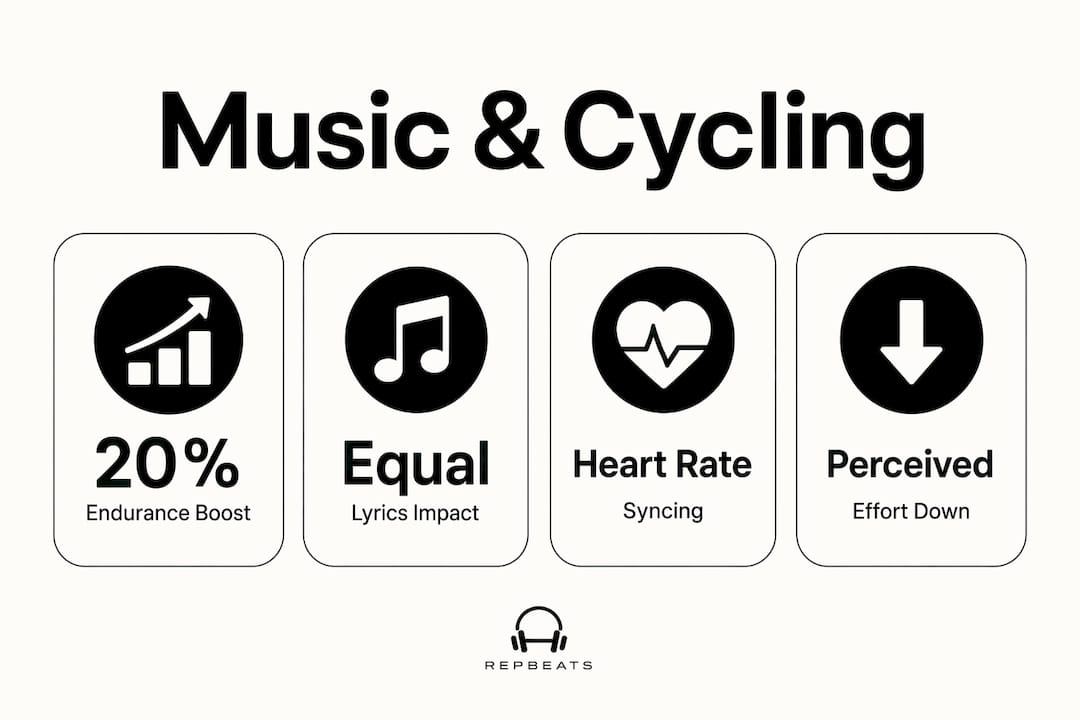
Cyclists who listen to self-selected music last about 20% longer before exhaustion than those riding in silence, according to University of Jyväskylä research published in Psychology of Sport & Exercise. That gap, nearly six extra minutes at high intensity, happens without any change in heart rate or blood lactate. The music does not make the ride physically easier. It makes cyclists willing to stay in the discomfort longer.
- Cyclists lasted notably longer with music than in silence, showing a significant endurance gain.
- Both lyrical and non-lyrical tracks boost motivation and arousal equally during moderate-intensity cycling.
- Music shifts the brain’s perceived effort ceiling, letting cyclists draw on more neuromuscular reserve before voluntary exhaustion.
- Adaptive music technology, using live heart rate and cadence data, extends these benefits by keeping the soundtrack matched to actual workout intensity.
Table of Contents
- How music affects cycling motivation: what the research actually shows
- Why music reduces perceived effort: the psychology behind it
- How adaptive music technology uses wearable data to sustain that effect
- Practical ways to use music and wearables to ride harder and longer
- Limitations and risks worth knowing before you plug in
- Key Takeaways
How music affects cycling motivation: what the research actually shows
The University of Jyväskylä study is the clearest quantification of music’s effect on cycling endurance to date. Twenty-nine recreationally active adults completed two high-intensity cycling tests at roughly 80% of peak power, one in silence and one with their own preferred music. The difference in time-to-exhaustion was statistically significant and practically meaningful.
| Condition | Avg. Time to Exhaustion | Heart Rate | Blood Lactate |
|---|---|---|---|
| Self-selected music | 35.6 min | Matched silence | Matched silence |
| Silence | 29.8 min | Matched silence | Matched silence |
| Difference | +20% | No change | No change |
The physiological markers stayed identical. That is the key finding. Music did not lower the body’s workload; it raised the ceiling on how long cyclists were willing to tolerate it.
20% longer endurance with self-selected music, despite identical heart rate and lactate levels, University of Jyväskylä, 2026.
Separately, a 2017 study confirmed that lyrical and non-lyrical music produce equivalent gains in motivation, affect, and arousal during moderate-intensity cycling. Song choice matters more than whether it has words.
Why music reduces perceived effort: the psychology behind it
Most cyclists assume music makes the ride feel easier because it distracts them. That is partly true, but the mechanism runs deeper. Motivation acts as a moderator of metabolic disruption, meaning the auditory environment directly influences where a cyclist sets their subjective effort ceiling. Music shifts that ceiling upward, allowing more neuromuscular reserve to be used before the brain signals voluntary exhaustion.
- Music modulates brain perception of effort, not the effort itself.
- It functions as a “decision-limit” tool, delaying the moment the brain votes to stop.
- Motivation and arousal increase with music regardless of lyrical content.
- The distraction effect is real but secondary to this neurological effort-ceiling shift.
Lead researcher Andrew Danso put it plainly: “Self-selected music doesn’t change your fitness level or make your heart work dramatically harder in the moment. It simply helps you tolerate sustained effort for longer. It may be an incredibly simple, zero-cost tool that lets people push further in training without feeling extra strain at the end.”
Pro Tip: Pick tracks you genuinely love and associate with high energy. Personal connection to the music, not genre or lyrics, is what drives the motivational effect.
How adaptive music technology uses wearable data to sustain that effect
Static playlists help, but they cannot respond when your heart rate spikes on a climb or drops during recovery. That is where wearable data integration changes the equation. Real-time biometric inputs, heart rate and cadence, feed directly into adaptive music apps that adjust tempo and energy on the fly.
Repbeats uses auto-DJ technology that updates music BPM every bar, syncing the soundtrack to live intensity metrics from Apple Watch, Fitbit, and other popular wearables. When your heart rate climbs into a higher zone, the music tempo follows. When you back off, it eases down. The result is a continuous motivational match between what your body is doing and what your ears are hearing.
Biofeedback systems like MusicalHeart demonstrate how effective this approach can be. That platform maintains target heart rate intensity with less than 12.2% average error, with activity-level detection accuracy averaging 96.8%. Those numbers show that real-time music adaptation is not just a concept; it works at a precision level that matters for training.
Key technology requirements for effective adaptive music cycling setups:
- Bluetooth LE pairing between heart rate monitor and the music app.
- Sensor accuracy: chest-strap monitors are more reliable than wrist-based sensors, which can lock onto pedaling cadence and produce false heart rate readings.
- Seamless audio cues: alerts should lower (“duck”) the music volume rather than cut it entirely, preserving flow state.
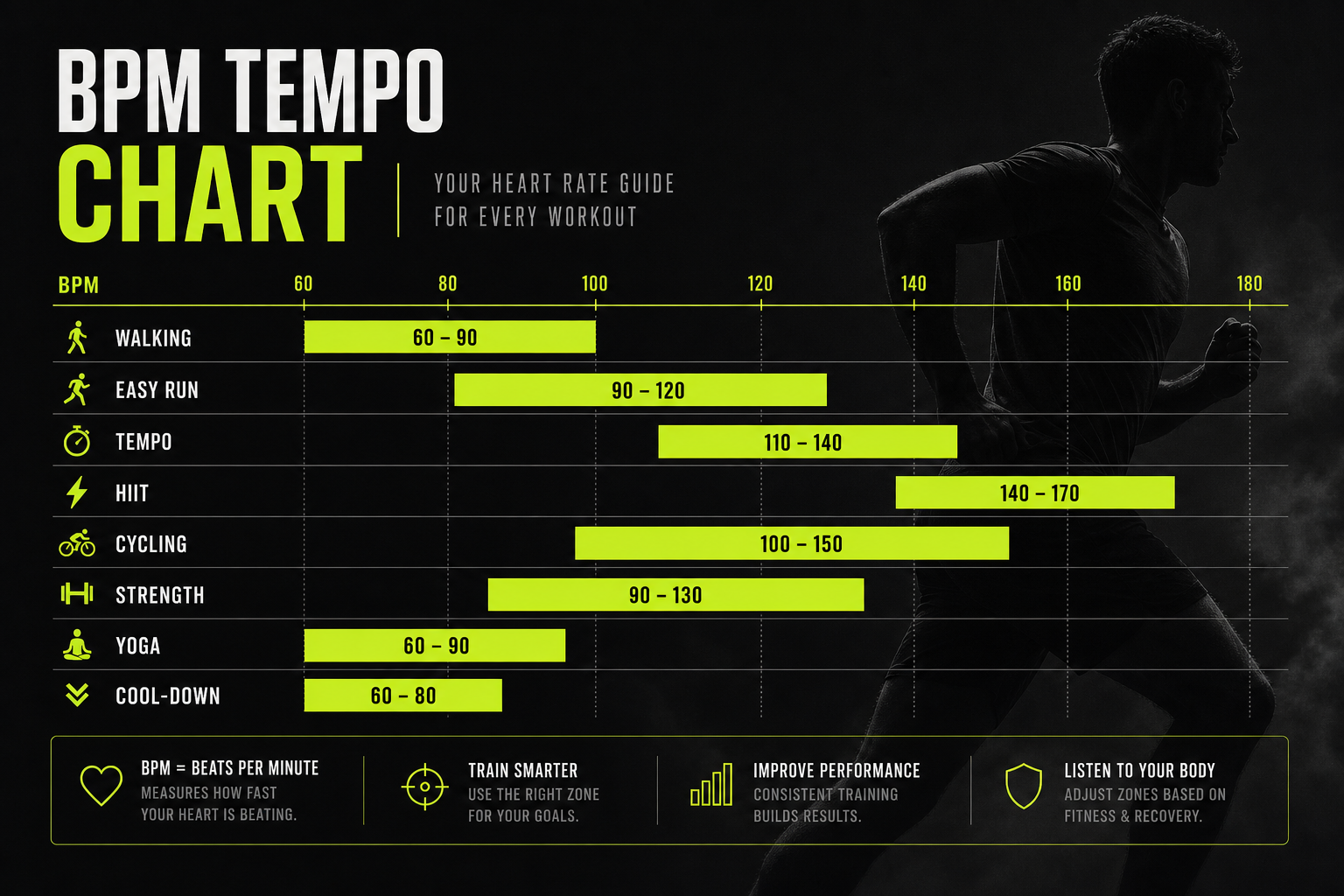
- BPM range targeting: tracks in the 120–140 BPM range align with optimal cycling cadence zones for motivation.
- Error mitigation: the app should handle signal dropout gracefully without interrupting playback.
Audio cue design matters more than most cyclists realize. Interrupting music to deliver a zone alert breaks concentration. Ducking the volume briefly, delivering the cue, then restoring the track keeps the motivational momentum intact.
Practical ways to use music and wearables to ride harder and longer
Understanding the research is one thing. Applying it during a Tuesday morning interval session is another. Here is how to translate the science into a setup that actually works.
- Match BPM to cadence. Tracks in the 120–140 BPM range correspond with the cadence zones where motivation enhancement is strongest. Most streaming platforms let you filter by tempo.
- Use a chest-strap monitor. Wrist sensors during intense cycling frequently lock onto pedal cadence instead of heart rate, feeding bad data to your adaptive app. A chest strap eliminates that error.
- Set heart rate zone alerts with music cues. Configure your app to shift music energy when you cross zone thresholds. This keeps you from drifting below target intensity without you having to check a screen.
- Let the app duck, not cut. Choose an adaptive music platform that lowers volume for alerts rather than pausing the track.
- Keep volume at a safe level. Sustained listening above 85 dB risks hearing damage over time. On outdoor rides, keeping one ear open or using bone-conduction headphones preserves situational awareness.
- Structure playlists by workout phase. Warm-up tracks at lower BPM, interval blocks at peak energy, cooldown tracks that ease off. Repbeats handles this automatically, but manual playlist structure works too.
Pro Tip: Refresh your playlist every two to three weeks. Familiarity with tracks boosts their motivational effect initially, but novelty sustains it over months of training.
Limitations and risks worth knowing before you plug in
Music during cycling is not without trade-offs. On outdoor rides, headphones reduce awareness of traffic, other cyclists, and road hazards. Even a brief moment of audio distraction at speed carries real risk. Bone-conduction headphones or a single earbud are safer options that keep ambient sound accessible.
Hearing damage is a legitimate concern. Riding with music at high volume for 60-plus minutes, especially with noise-isolating earbuds, can push cumulative exposure past safe thresholds. The World Health Organization recommends keeping personal audio device volume below 80 dB for extended sessions.
There is also a performance context where music may not help. In technical cycling, where terrain demands full cognitive attention, music can compete for the mental bandwidth you need for safe decision-making. Many competitive cyclists remove headphones entirely during races for exactly this reason. Music’s motivational benefits are strongest in controlled environments: indoor trainers, velodrome sessions, or familiar outdoor routes with low traffic.
Finally, adaptive music apps depend on accurate sensor data. A poorly fitted chest strap or a wrist sensor confused by cadence will feed bad heart rate readings into the BPM algorithm, producing music that fights your effort rather than matching it. Getting the wearable fitness music setup right from the start is not optional; it is the foundation the whole system runs on.
Key Takeaways
Music extends cycling endurance by roughly 20% by raising the brain’s perceived effort ceiling, not by reducing physical demand, and adaptive technology keeps that effect consistent across every phase of a ride.
| Point | Details |
|---|---|
| 20% endurance gain | Cyclists lasted about 20% longer with music (35.6 min vs 29.8 min), with identical heart rate and lactate. |
| Lyrics don’t matter | Both lyrical and non-lyrical tracks boost motivation and arousal equally during cycling. |
| Effort ceiling, not effort | Music shifts the brain’s willingness to stay in discomfort, not the body’s actual workload. |
| BPM targeting works | Tracks in the 120–140 BPM range align with optimal cycling cadence for motivational effect. |
| Sensor accuracy is critical | Chest-strap monitors prevent cadence-lock errors that corrupt adaptive BPM syncing on wrist sensors. |