One Session Sprint Gains Using Cadence Matched Cycling Sprint Music
Jordan MillsSeptember 9, 2026 · 11 min read
One Session Sprint Gains Using Cadence Matched Cycling Sprint Music
For sprint intervals, play tracks in a high BPM range or use an adaptive tool like Repbeats that adjusts tempo to your cadence in real time. Static playlists lose sync the moment fatigue drops your rhythm, but tempo-matched or adaptive tracks keep pushing you back to speed. That combination, high-BPM songs during max efforts plus adaptive support when you fade, is what separates a playlist that just sounds good from one that actually improves sprint output.
TL;DR:
- Adaptive music tools like Repbeats continuously adjust tempo in real time to match rider cadence and effort, preventing fatigue from breaking synchronization.
- Most effective sprint tracks are high-BPM EDM, rock remixes, or curated playlists with seamless transitions that avoid tempo drops or silence gaps.
- Matching song BPM to pedaling RPM generally involves 170 to 190 BPM for sprints, with earlier efforts at lower BPMs for recovery and endurance phases.
- Using music cues such as drops or choruses can improve pacing and reduce reliance on visual timers, especially when combined with resistance or cadence adjustments.
- Static playlists lose their effectiveness during fatigue, whereas adaptive systems respond to effort decline, maintaining motivation and output through session end.
Table of Contents
- Best Cycling Sprint Music: Songs and Playlists Ready to Ride
- How Do You Match Song Tempo to Sprint Cadence?
- Sample Sprint Playlists and Session Templates
- Using Music as an On-Bike Coach: Cues and Safety
- Why Adaptive Music Beats a Static Playlist for Sprints
- What I’d Actually Play, and How I’d Test It
- Try Repbeats for Sprint Sessions That Adjust to You
- Sources
Best Cycling Sprint Music: Songs and Playlists Ready to Ride
Sprint intervals need a specific kind of track: unbroken kick drums, no quiet bridges, and a tempo that matches your sprint cadence. A song with a breakdown in the middle of your 20-second effort kills momentum right when you need it most. Below are three categories worth building around, plus a few names to start with.
High-BPM EDM. Electronic tracks dominate sprint playlists for a reason: four-to-the-floor kicks act like a metronome you don’t have to think about, and remix culture means you can find nearly any song re-cut to a specific tempo. Look for tracks explicitly labeled with a workout BPM, since remix editors already stripped out the slow intros and breakdowns that would otherwise interrupt your rep.
- “Levels” (Skrillex Remix) by Avicii, roughly 128 BPM in its original form but widely available in 160+ BPM workout edits
- “Titanium” (Workout Mix) by David Guetta featuring Sia, commonly found around 150 to 160 BPM in gym remix packs
- Kraftwerk’s “Tour de France” holds a steady, mechanical pulse that mimics pedaling rhythm almost exactly, which is why cycling-focused playlist curators still point to it as a template for the genre
Rock remixes and power-pop. If pure EDM feels sterile, driving rock tracks with a strong backbeat work just as well for sprints, especially anything built around a steady eighth-note guitar or drum pattern.
- “Blitzkrieg Bop” by the Ramones clocks in around 160 BPM with almost zero tempo variation start to finish
- “Seven Nation Army” (remix versions) by The White Stripes gets pushed into workout tempo territory in several DJ edits, and its riff gives you an obvious beat to chase
- “Harder, Better, Faster, Stronger” by Daft Punk sits near 123 BPM natively but works well doubled for sprint counting
Curated gapless playlists. Building a track-by-track list takes time most cyclists don’t have between sessions. Public playlists solve that problem by front-loading the curation work. The SPINNING MUSIC 2026: INDOOR CYCLING playlist on Spotify runs close to 200 tracks, mostly EDM and remix material, updated regularly enough that you won’t burn out on the same 20 songs every week. Treat it as a starting library, then pull your favorites into a shorter sprint-specific set rather than playing the whole thing on shuffle.
Music and Perceived Effort: A 2011 study and subsequent reviews found that music during exercise lowers perceived exertion and can increase endurance compared to training in silence. A broader 2019 review confirmed the effect extends across mood, motivation, and measurable performance in a wide range of exercise settings. Neither study claims music makes a sprint physically easier. It changes how hard that same effort feels, which is often the difference between finishing a rep at full power and easing off early.
Bicycling’s guidance on building cycling playlists makes a similar point: tempo matched to movement keeps riders engaged longer and pushes harder efforts than a random shuffle ever will. The lesson for sprint work specifically is to keep your highest-BPM tracks reserved for your hardest reps, not spread evenly across an entire ride.
How Do You Match Song Tempo to Sprint Cadence?
A common rule cyclists use is one pedal stroke per two beats of music, so a song’s BPM roughly relates to half the pedaling RPM. Some riders prefer counting every beat as a stroke instead (double time), which works fine as long as you’re consistent, since feel matters more than strict math once you’ve found a system that clicks for you.
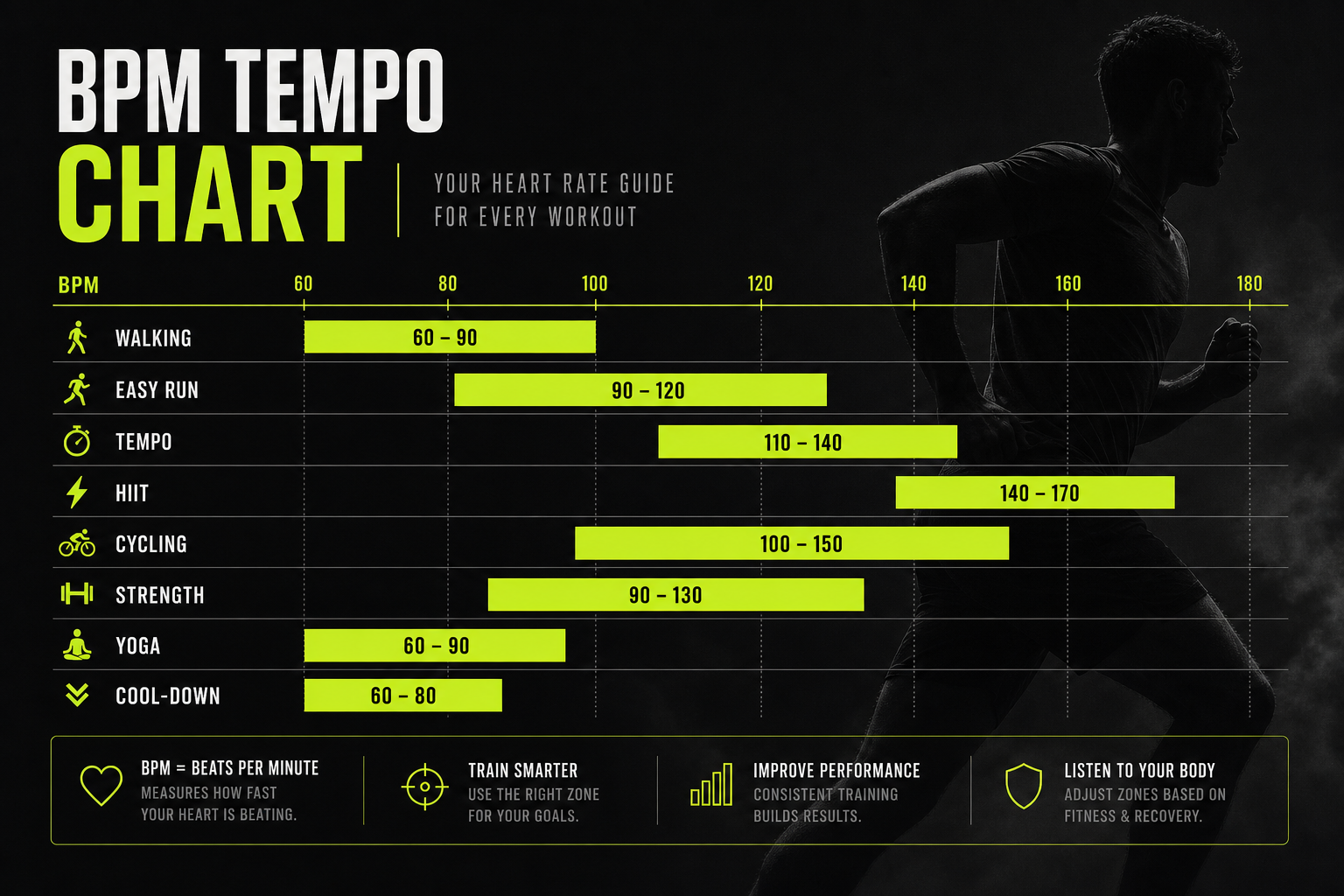
Different training zones call for different tempo windows. Curators and instructors generally place indoor cycling music between 120 and 170 BPM, with harder efforts pulling from the top of that range:
- Recovery pace (50 to 65 RPM): 100 to 130 BPM. Slower tempo tracks or half-time counting on faster songs both work here.
- Endurance pace (70 to 85 RPM): 140 to 160 BPM. This is the bulk of most rides and the widest useful range for standard playlists.
- Tempo/threshold pace (85 to 95 RPM): 160 to 180 BPM. Songs start feeling urgent here even before you clip in.
- Sprint pace (95 RPM and above): 170 to 190+ BPM, sometimes counted in double time from a 90 BPM track if nothing faster fits the mood.
Checking a song’s actual BPM takes seconds. Many streaming services list tempo in the track’s metadata, and dedicated BPM-finder apps can analyze tracks and provide BPM estimates. If you already know your target cadence from a baseline test, matching the number is straightforward. Readers who haven’t nailed down that baseline yet can run a short cadence test before building a sprint list around it.
Pro Tip: If a song’s natural tempo is close but not quite right, look for a “workout mix” or “gym edit” version before giving up on it. These edits are built specifically to hit round BPM targets, and they usually cut the slow intro and outro that would otherwise throw off your first and last few pedal strokes.
Sample Sprint Playlists and Session Templates
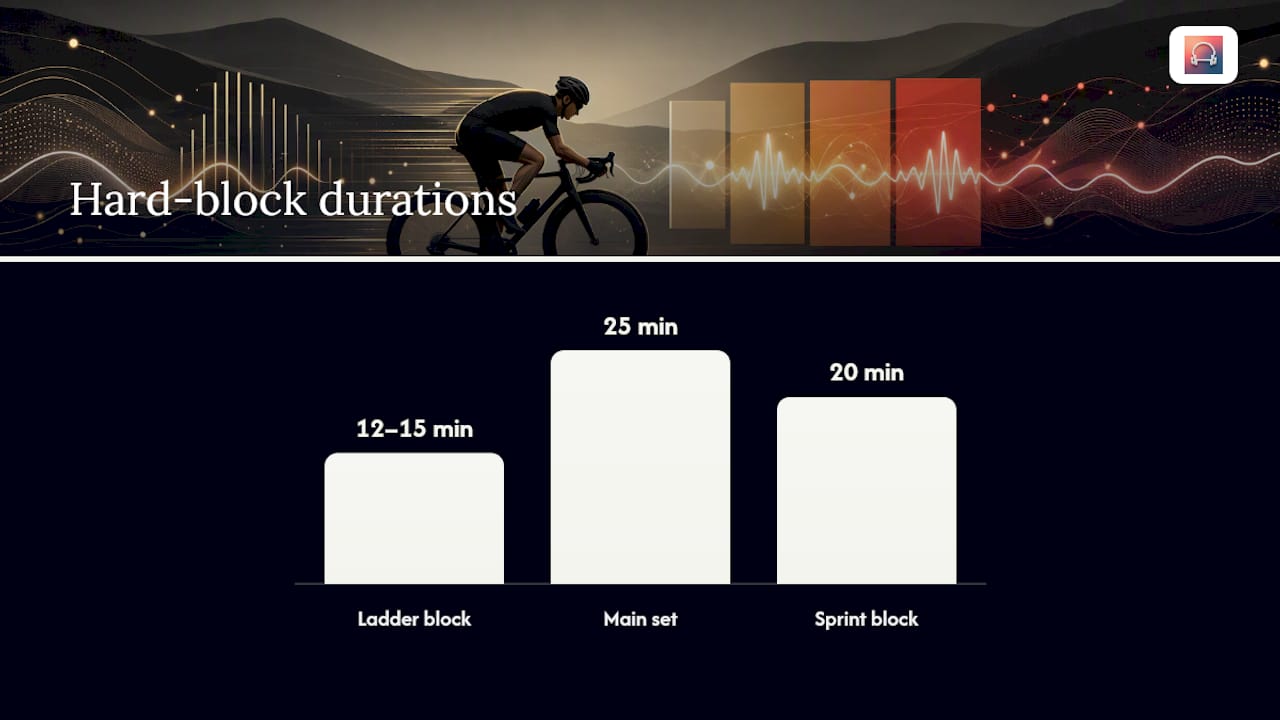
An effective playlist is structured around your actual intervals rather than just a random collection of fast songs. Common session templates include warm-up, sprint blocks, and cooldown phases.
20 to 30 minute ladder session
- Warm-up (5 minutes): 100 to 120 BPM, easy spin
- Ladder block (12 to 15 minutes): alternate 20, 30, and 40 second sprints at 170 to 190 BPM with equal or double-length recovery at 120 to 130 BPM
- Cooldown (5 minutes): 90 to 100 BPM
40-minute interval block
- Warm-up (8 minutes): building from 100 to 140 BPM
- Main set (25 minutes): 8 rounds of 30 second sprints at 175 to 185 BPM with 90 second recovery at 130 BPM
- Cooldown (7 minutes): dropping to 90 BPM
60-minute group session
- Warm-up (10 minutes): 100 to 130 BPM
- Tempo block (15 minutes): 150 to 160 BPM steady effort
- Sprint block (20 minutes): 6 to 8 sprints of 20 to 30 seconds at 180+ BPM with full recovery between
- Cooldown (15 minutes): tapering from 130 down to 90 BPM
For all three templates, gapless playback and crossfade settings matter more than most riders realize. A two-second silent gap between tracks is enough to break cadence right as you’re pushing into a sprint, so check your streaming app’s crossfade setting before you start. Ad interruptions cause the same problem on free-tier accounts, which is one more reason curated, ad-free playlists or offline downloads work better for sprint-specific blocks than casual listening does. Readers who want pre-built structures instead of assembling their own can check Repbeats’ sprint workout music guide or its EDM cycling workout templates for 20, 30, and 40 minute session formats.
Using Music as an On-Bike Coach: Cues and Safety
Music can function as a pacing tool if you treat specific beats as cues rather than background noise. A drop or chorus hit is a natural signal to start a sprint; the point where a track’s energy dips is your cue to ease into recovery. Riders who train to this instinctively stop watching a screen for interval timers and start reacting to the music itself.
A few practical rules make this work on a trainer or outdoors:
- Set your sprint start to land on a song’s drop or chorus, and let the following 20 to 30 seconds carry the effort naturally
- Use resistance changes for endurance blocks and cadence changes for sprint blocks. Music should track the one you’re actively adjusting, not both at once
- On an indoor trainer, lock your screen before starting so accidental taps don’t cut the track mid-sprint
- Confirm gapless playback and turn crossfade on if your app supports it, since silent gaps disrupt rhythm exactly when you can least afford it
Outdoor sprinting adds a safety layer indoor training doesn’t. Earbuds that block ambient sound are a real hazard in traffic, at intersections, or on shared paths, so many experienced riders keep one ear free or use bone-conduction headphones instead of in-ear buds. On open roads with vehicle traffic, skip the earbuds entirely and rely on a bike computer’s audio cues or a coach’s callouts instead. Save full-volume, fully immersive sprint music for closed courses, velodromes, or the trainer.
Pro Tip: If you’re riding with a wearable, set your device’s audio cues (heart rate zone alerts, interval timers) to a moderate volume that layers over your music rather than getting drowned out by it. You want to hear both without fumbling for your phone mid-sprint.
Why Adaptive Music Beats a Static Playlist for Sprints
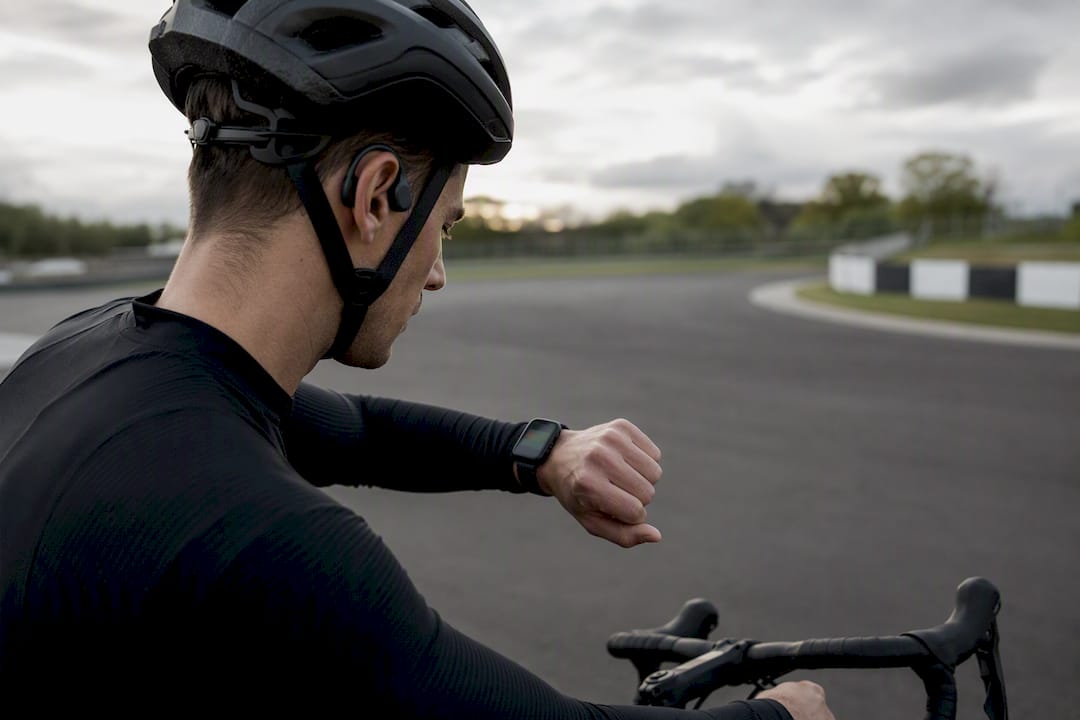
Repbeats syncs music tempo to heart rate, cadence, and session intensity, updating BPM regularly through adaptive technology. That last detail matters more than it sounds. A fixed playlist assumes your cadence stays constant, but sprint sessions are built on the opposite: you go hard, fade, recover, and go again.
Static playlists hit a plateau during late-interval fatigue: the tempo stops matching effort right when a rider needs the most support. Adaptive systems that respond to cadence and heart rate data avoid that gap by adjusting tempo in real time instead of locking it in before the ride starts.
That responsiveness shows up most in the last few reps of a session, exactly when cadence naturally drops and a subconscious tempo cue can help pull it back up, something a fixed 160 BPM track simply can’t do once your legs disagree with the beat.
What I’d Actually Play, and How I’d Test It
My three go-to sprint tracks: “Blitzkrieg Bop” for its dead-steady 160 BPM with zero variation, a workout-mix edit of “Titanium” for the buildup right before the chorus hits, and anything motorik-style like “Tour de France” when I want a beat I don’t have to think about at all.
If you want proof this actually works, run two identical sprint sets a week apart. One with tempo-matched music, one in silence. Rate perceived exertion after each. Most riders notice the difference immediately.
— Jordan Mills
Try Repbeats for Sprint Sessions That Adjust to You
Repbeats is the alternative to building your own sprint playlist by hand, no BPM hunting, no swapping tracks when a song’s tempo drifts from your cadence. It adapts music tempo in real time to keep pace with your effort instead of the other way around.
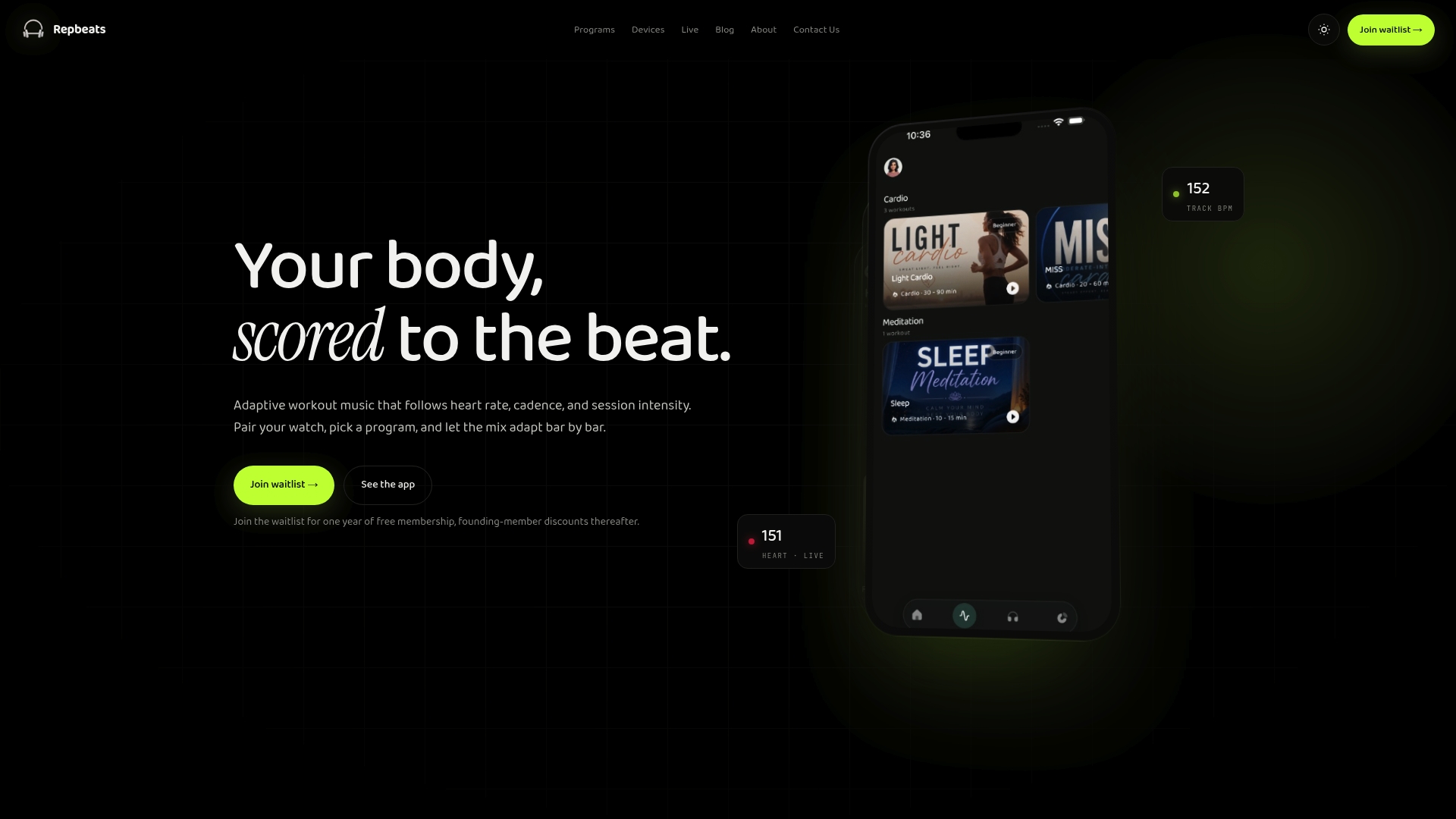
That means during a sprint interval, when your cadence spikes and then fades, the soundtrack adjusts in real time rather than sitting at a fixed tempo that stops matching your effort halfway through the rep. It’s built for exactly the scenario this article covers: sessions where static playlists fall behind and adaptive tempo actually changes how the workout feels. Head to Repbeats to start a free trial and load an adaptive sprint session before your next ride.
Sources
- Effects of music on exercise performance and perceived exertion (PubMed entry)
- Music in sport and exercise: a review (PMC)
- The Best Songs for Bike Riding — Bicycling
- Cycling music player and curated playlists (Mixtuby)