4–10 BPM Window: Sync Time Trial Music to Your Cadence for True Pace
Jordan MillsAugust 28, 2026 · 13 min read

4–10 BPM Window: Sync Time Trial Music to Your Cadence for True Pace
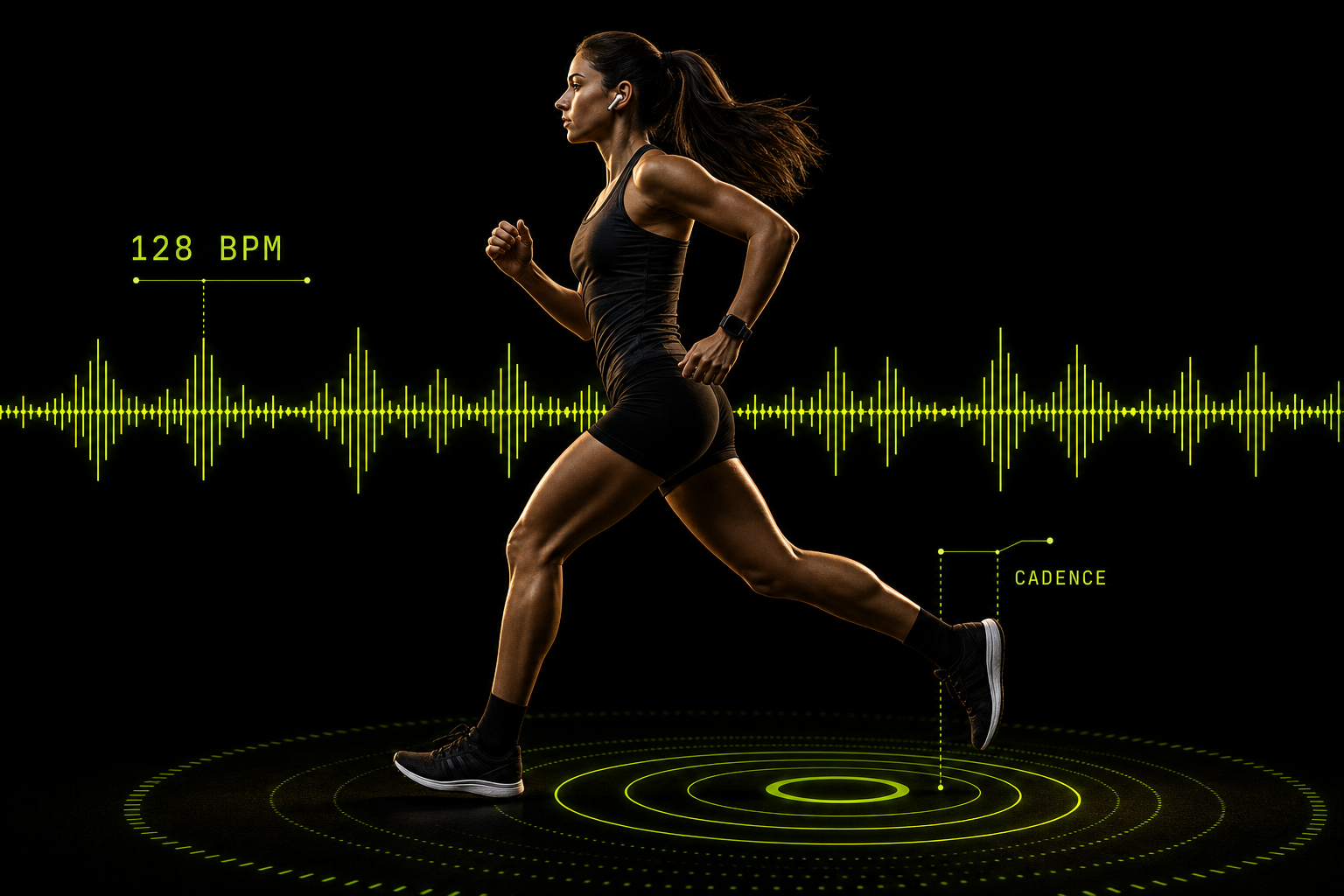
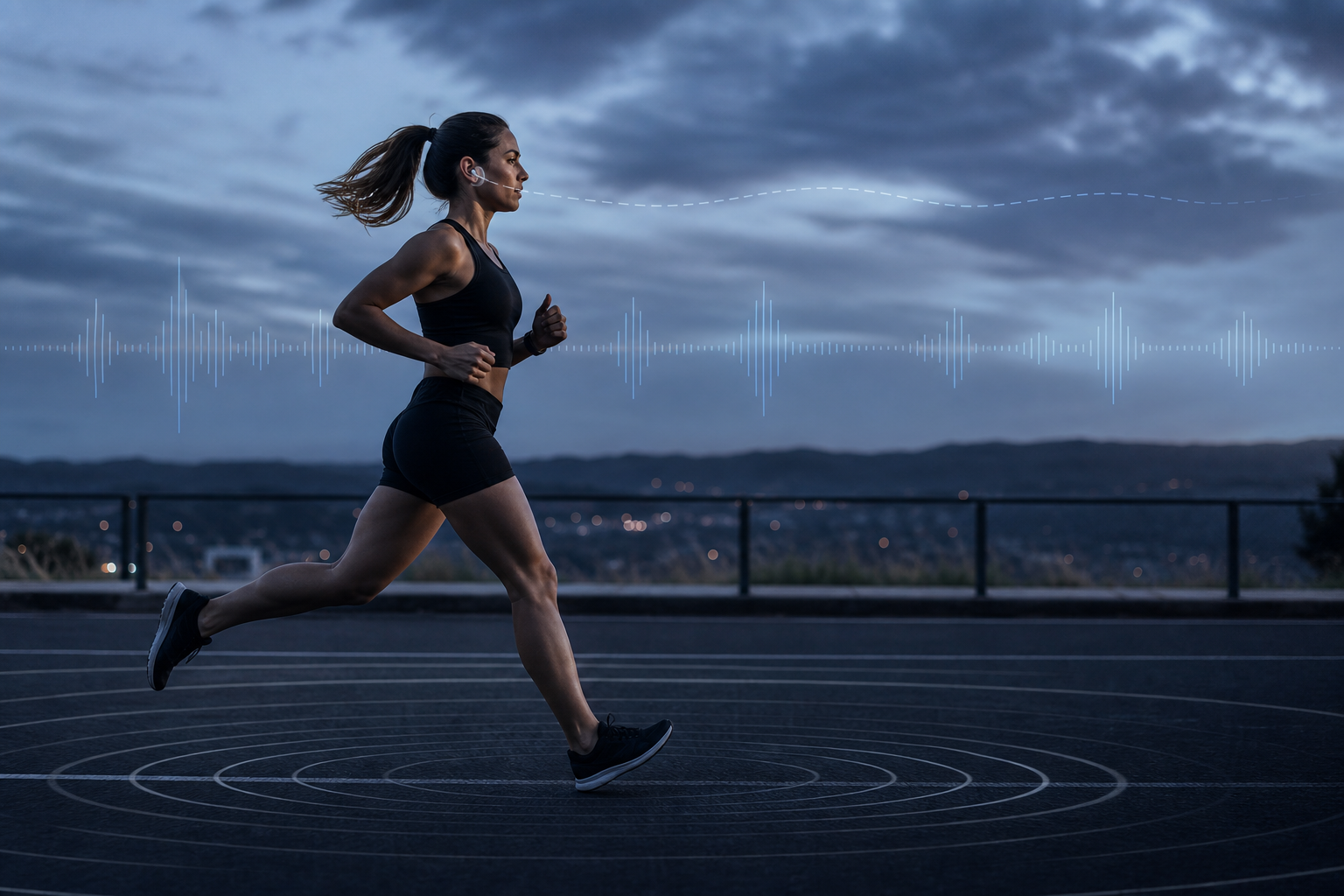
Time trial music means BPM- or cadence-synced tracks that pace a hard, sustained effort instead of just filling silence. Peer-reviewed research backs the approach: synchronous music has been shown to extend time-to-exhaustion by 66.59% in hot, humid conditions while lowering perceived exertion. Get the tempo matched to your cadence, using something like Repbeats, and your legs and your soundtrack move as one system.
TL;DR:
- Synchronizing music to your cadence can extend your exercise duration and reduce perceived effort, especially in hot, humid conditions.
- Matching BPM within a 4 to 10 BPM range of your target cadence is effective, but testing during warm-up ensures it feels natural at higher heart rates.
- Building playlists aligned with the energy arc—settle, maintain, surge, sprint—optimizes pacing and motivation for each effort phase.
- Algorithmic platforms like Repbeats can automatically adjust BPM in real time, eliminating manual playlist curation and potential drift issues.
- Consider race rules and individual differences, as cadence-based music benefits vary, and some events restrict headphone use for safety.
Table of Contents
- Why Synchronous Music Actually Works
- How to Set Your Tempo: Converting Cadence Into BPM
- Building a Playlist That Paces the Whole Effort
- Setting Up the Tech: Wearables, Apps, and Playback
- What Kind of Music Actually Works for a Time Trial
- Sample Playlists and Where to Start
- Where the Science Runs Into Real Limits
- Why This Method Only Works If the Tech Keeps Up
- Get Adaptive BPM Music Without Building It Yourself
- Sources
Why Synchronous Music Actually Works
Two mechanisms explain why cadence-matched music beats a random playlist. The first is auditory-motor synchronization: your body naturally locks its movement rhythm to a steady beat, which smooths out stride or pedal stroke and cuts the mental effort of holding pace. The second is motivational quality, the emotional lift from music you actually want to hear. Research on auditory-motor synchronization in sport found that combining both, a clear beat plus a track that pumps you up, produces the biggest performance gains, not either factor alone.
The trial data backs this up hard. A separate pilot study found synchronous music dropped heart rate and RPE compared to asynchronous playlists or plain white noise, and participants rated it 8.27 out of 10 for satisfaction, versus 5.2 for mismatched tempo and 2.73 for white noise.
The broader picture holds up too. A meta-analysis of 139 studies found music produces measurable benefits across:
- Affective valence, or how good the effort feels (the largest effect)
- Physical performance output
- Perceived exertion, meaning the workout feels easier than it is
- Oxygen consumption efficiency
Effects were strongest in structured exercise settings and with faster tempo tracks, exactly the conditions of a time trial.
How to Set Your Tempo: Converting Cadence Into BPM
Matching music to your body starts with knowing your own numbers, not grabbing a “workout hits” playlist off a streaming app. Cadence is the variable that matters, and it converts to BPM almost directly.
For running, count your steps per minute (SPM) over a clean 30-second stretch and double it, or use a running watch that already tracks cadence. Most trained runners fall in the 150 to 180 SPM range, and matching your music to that band, or a full or half multiple of it, keeps your foot strike locked to the beat. A runner at 168 SPM wants tracks close to 168 BPM, though 84 BPM tracks (half tempo) work fine too since your brain naturally doubles the perceived rhythm.
For cycling, pedal cadence in RPM does not map one-to-one to BPM the way running does, since bike gearing changes the relationship between leg speed and forward motion. Many time trial cyclists hold a moderate pedal cadence, and tracks matched to that number, or double it, are effective once you find your own sweet spot.
Here is the setup sequence to run through before race day:
- Record your natural cadence during a relaxed warm-up effort.
- Note your target race cadence, which is usually 5 to 10% higher than your warm-up pace.
- Pick tracks or an adaptive system tuned to that target BPM, not your resting cadence.
- Decide between cadence sync and heart-rate sync (more on that below).
- Test the match for at least 5 minutes before committing to it for the full effort.
Cadence sync and heart-rate sync solve different problems. Field trials with algorithmic biosynchronous music found cadence sync improved pace more reliably, particularly for male runners, while heart-rate sync sometimes reduced perceived exertion and extended effort duration instead of pushing pace directly. If your goal is a specific split time, sync to cadence. If your goal is surviving a long, grinding effort without blowing up, heart-rate sync may serve you better.
Small tempo adjustments matter more than big swings. Shifting a track ±4 to 10 BPM from your target still feels synchronized to most people, which gives you room to use songs you actually like instead of hunting for exact-BPM matches.
Pro Tip: Test your BPM match during warm-up, not during the race itself. A track that feels perfectly locked to your cadence at rest can feel rushed once your heart rate climbs, so leave a few minutes to confirm before you commit.
Building a Playlist That Paces the Whole Effort
A time trial playlist should follow the shape of the effort itself, not just hit a target BPM and repeat. Coaches call this the energy arc: settle, maintain, surge, sprint. Each phase wants a different tempo and a different emotional charge.
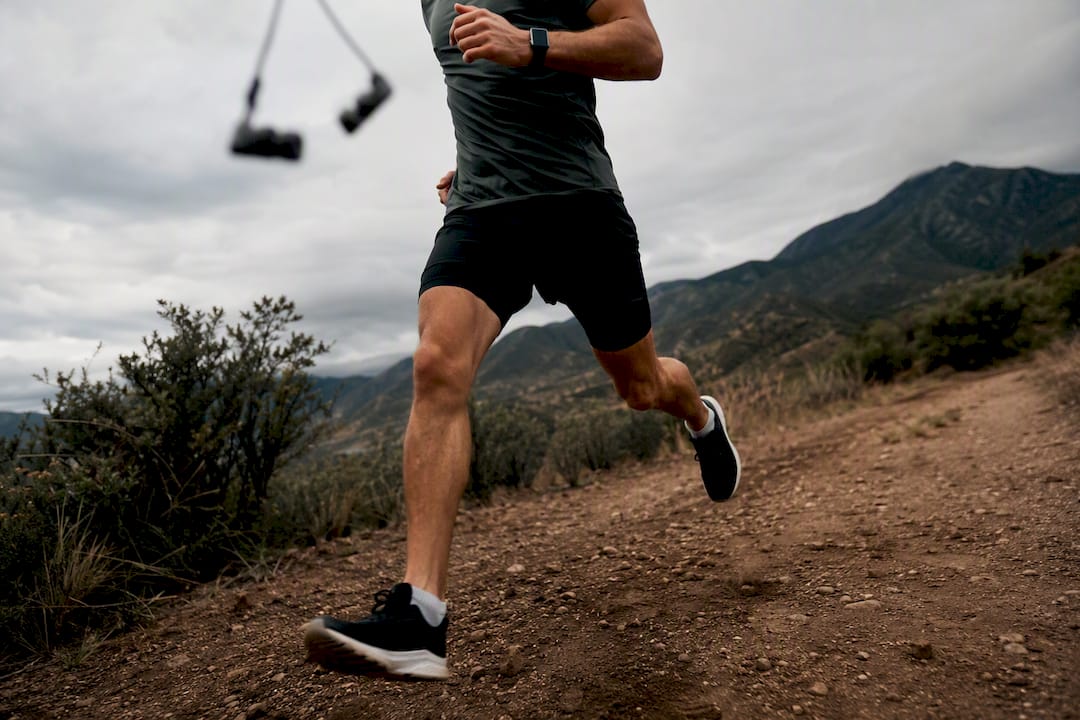
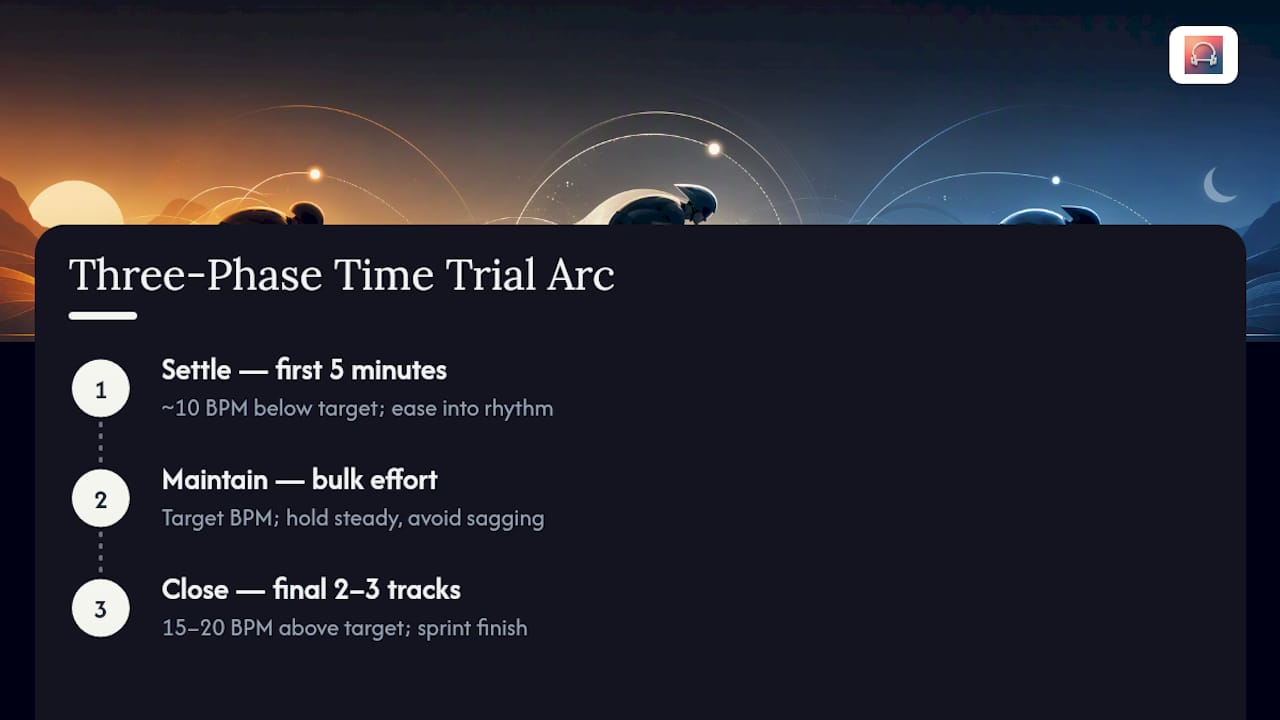
The settle phase, the first several minutes, calls for tracks 5 to 10 BPM below your race cadence. This keeps you from surging out too hard, which is the single most common way time trials go wrong. The maintain phase, the bulk of the effort, should sit exactly at your target cadence BPM, with tracks that have a clear, percussive beat and minimal vocal complexity, since intricate lyrics compete for attention you need for pacing. The surge phase, wherever you plan a push, wants tracks 5 to 8 BPM above baseline. The sprint or final phase, the last 60 to 90 seconds, benefits from fast-tempo tracks: one controlled study found 140 BPM pre-task music produced higher mean power output than slower tempo in short maximal efforts.
Musical features matter as much as raw BPM. Look for:
- A consistent, prominent beat you can feel without concentrating on it
- Percussive bass that reinforces rhythm rather than muddying it
- Simple, repetitive motifs over complex arrangements that demand attention
Short audio stingers, brief rhythmic cues lasting 5 to 15 seconds, help during maximal pushes by lowering the mental load of holding form under fatigue. Drop one right before a planned surge.
If you are building playlists manually and playing them offline, sequence songs by hand into rough BPM blocks and accept some drift between tracks. If your system updates tempo automatically in real time, an adaptive platform can smooth every transition instead of jumping abruptly between songs, which matters more than people expect once fatigue sets in.
Setting Up the Tech: Wearables, Apps, and Playback
The gear question comes down to one thing: how fast can your system react to what your body is actually doing? Latency is the enemy of synchronous music. A half-second lag between your cadence and the beat you hear defeats the purpose.
Cadence sensors, step counters, and heart-rate monitors all feed useful signals, but cadence tends to be the most directly actionable for pacing since it changes moment to moment and maps cleanly to BPM. Heart rate reacts more slowly and works better for effort-based sync than second-by-second tempo matching.
A reliable setup includes:
- Low-latency Bluetooth codecs (aptX Low Latency or similar) to cut lag between sensor and speaker
- Sport-specific earbuds with a secure fit, since dropped buds mid-effort kill your rhythm entirely
- An offline playlist backup in case connectivity fails mid-race
- A wearable that tracks cadence or heart rate accurately, whether Apple Watch, Fitbit, or a dedicated cadence sensor
Bluetooth dropouts are the most common failure point, usually from device interference or a low battery on either end. A metronome app makes a decent emergency backup even without full music sync.
Run a short interval test before race day, ideally 5 to 10 minutes at your actual target cadence, to confirm the BPM sync feels right in practice, not just in theory.
What Kind of Music Actually Works for a Time Trial
Genre matters less than structure, but certain styles consistently deliver the beat clarity and motivational punch that time trial pacing needs. Electronic and dance music dominate cadence-sync playlists because the genre is built around a steady, unwavering beat with minimal tempo drift within a track, which makes BPM matching almost automatic.
Hip-hop and rap work well for the surge and sprint phases specifically, since the genre’s percussive emphasis and aggressive energy tend to raise arousal fast. Rock and metal serve a similar purpose for athletes who respond to intensity over rhythm precision, though the beat can be less consistent track to track.
Pop music sits in an odd middle ground. It is often motivationally strong, familiar melodies you already associate with good feelings, but pop tracks frequently shift tempo within a song for artistic effect, which undercuts the steady sync you want during the maintain phase.
Instrumental and ambient electronic tracks without vocals suit long, grinding maintain phases where you want rhythm without lyrical distraction pulling focus from pacing. This matters more than most athletes expect: complex lyrics compete for the same cognitive bandwidth you need for reading your own effort level.
The honest takeaway is that no single genre is objectively best. What matters is beat consistency, tempo that matches your phase of the effort, and a track you find motivating rather than annoying by minute 20. A song you love at 160 BPM will usually outperform a technically perfect but emotionally flat track at the same tempo.
Sample Playlists and Where to Start
Building a playlist from scratch takes real trial and error, which is why most athletes start with a rough template and adjust. A basic three-phase structure works for most efforts under 30 minutes: five minutes of tracks 10 BPM below target for the settle phase, the bulk of the effort at target BPM, and a final two to three tracks 15 to 20 BPM above target for the close.
For longer efforts, like a 40k time trial or a 45-minute running time trial, marathon-style pacing playlists offer a useful model, since they solve the same problem of holding a steady effort over a long duration without letting energy sag in the middle.
Runners training on a treadmill face a specific version of this problem: the belt sets your cadence rather than the other way around, so treadmill-specific BPM mapping matters more than outdoor guessing. A treadmill speed to BPM chart removes the guesswork of matching belt speed to cadence to tempo.
If you are training for a shorter, harder push, like a sprint finish or a threshold-pace time trial segment, sprint-specific BPM playlists and tempo run BPM guidance both offer starting points built around the higher end of the tempo range.
None of these templates need to be followed exactly. Treat them as a starting cadence match, then adjust the BPM up or down within that ±4 to 10 BPM window until it feels locked to your own stride or pedal stroke, not someone else’s.
Where the Science Runs Into Real Limits
The research on synchronous music is genuinely strong, but it is not universal, and pretending otherwise does readers a disservice. Effect sizes from the largest meta-analysis are real but modest: performance improvements around g = 0.31, perceived exertion improvements around g = 0.22. These are meaningful gains over a season of training, not the difference between an average result and a personal best in a single race.
Individual variation is a bigger limitation than most coverage admits. Cadence-synchronous music tends to help male runners’ pace more consistently, while heart-rate-synchronous music sometimes serves female runners better by extending duration and easing perceived effort rather than pushing pace directly. Neither approach works identically for everyone, and a playlist that transforms one athlete’s time trial might do almost nothing for another.
Competition rules add a real-world wrinkle that lab studies do not address. Many organized time trials, particularly cycling events and some certified road races, restrict or ban headphone use entirely for safety reasons. Check your specific event’s rules before assuming you can run this setup on race day; training sessions carry no such restriction.
Finally, most published trials run in controlled lab settings, treadmills, stationary bikes, not outdoors amid traffic, wind, and pack dynamics. The gap between lab conditions and race day conditions is real, and it is one reason to test your BPM sync repeatedly in training rather than trusting it blind on race morning.
Why This Method Only Works If the Tech Keeps Up
Here is the uncomfortable truth about time trial music: the science is solid, but most people’s execution of it is not. Manually building a BPM-sequenced playlist takes real effort, hunting down tracks at specific tempos, sequencing them by hand, accepting drift between songs. Most athletes try this once, get frustrated by how few high-BPM tracks exist in their preferred genre, and quietly give up, going back to a generic workout playlist that does none of the pacing work the research actually supports.
That gap between what the evidence recommends and what people actually do is the real story here, not the underlying physiology. Algorithmic systems that generate tempo-appropriate music on demand solve the scarcity problem entirely, since they are not limited to whatever tracks happen to exist at your exact target BPM. That is a meaningfully different proposition than curating playlists by hand.
I would also push back on treating cadence sync as automatically superior to heart-rate sync. The field data shows real, sex-linked differences in which method helps more, and locking into cadence sync because it sounds more precise ignores that heart-rate sync sometimes produces the better outcome for extending effort duration. Test both before committing to either for race day.
— Jordan Mills
Get Adaptive BPM Music Without Building It Yourself
Repbeats is built for exactly the problem this guide just walked through: it updates your music’s BPM every single bar in real time, using live cadence and heart-rate data from wearables like Apple Watch and Fitbit, instead of forcing you to hand-pick tracks at fixed tempos.
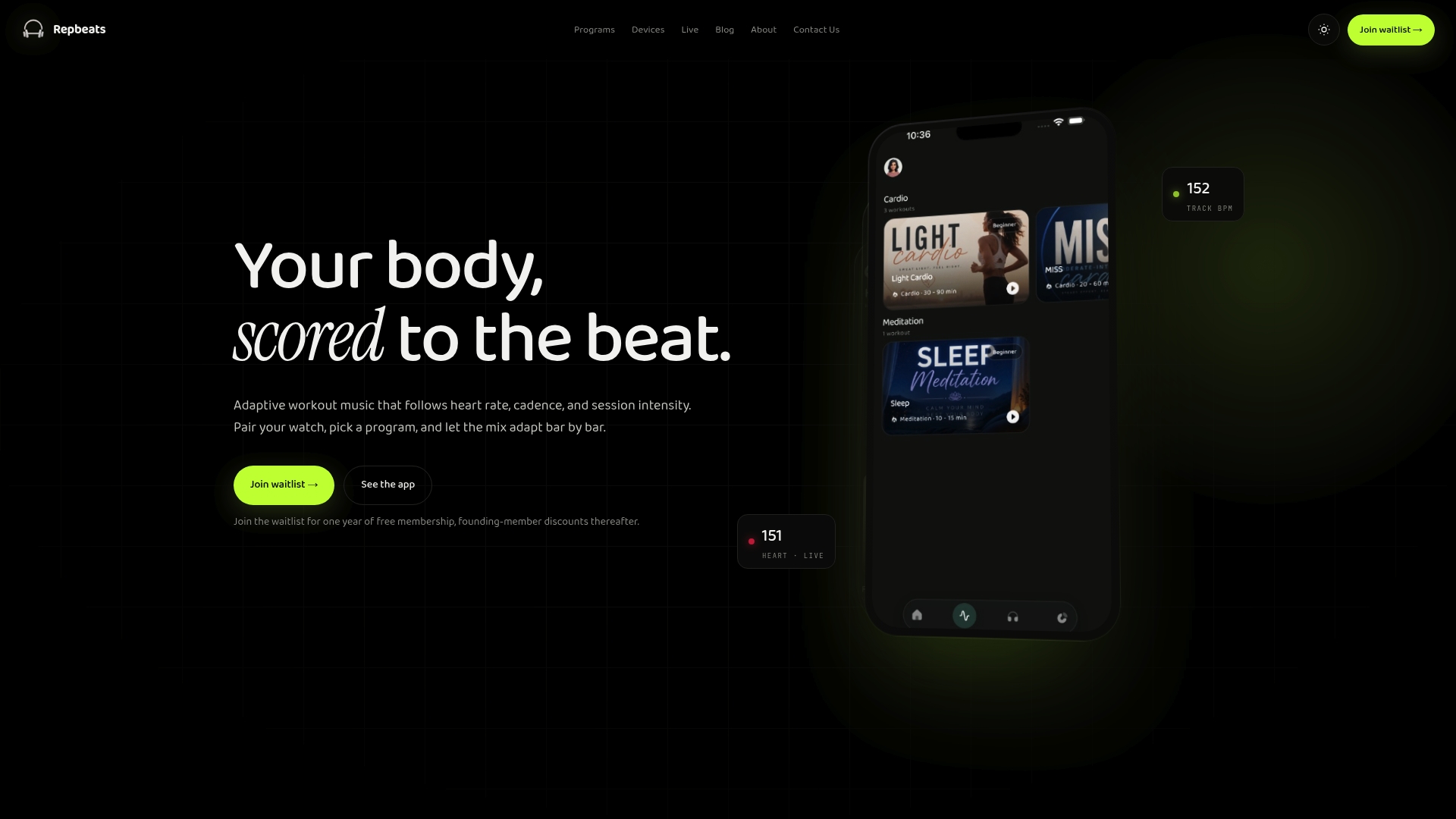
That solves the manual playlist bottleneck directly. Rather than hunting for songs at exactly 168 BPM or accepting jarring transitions between tracks, the auto-DJ system handles the settle, maintain, surge, and sprint phases automatically, ramping tempo up or down as your cadence or heart rate shifts through the effort. It covers running, cycling, and even meditation sessions, with real-time playback control and a searchable music library so you are not locked into one genre. If precise offline tempo tweaks matter to your setup, a tool like TabTasker’s pitch and speed adjuster handles manual BPM shifts for tracks you already own.
If you have been manually assembling playlists and losing the sync somewhere around minute 20, try Repbeats and let the tempo adjust itself for your next hard effort.
Sources
- The heat is on: effects of synchronous music on psychophysiological parameters and running performance in hot and humid conditions
- Effects of synchronous and asynchronous music on heart rate and perceived exertion during aerobic exercise: Pilot study
- On performance and perceived effort in trail runners using sensor control to generate biosynchronous music
- Meta-analytic evidence for music’s benefits in exercise contexts
- Running with music — how to match tempo and boost performance