Dynamic Meditation Music: 4 Session Recipes, Backed by Research
Jordan MillsOctober 12, 2026 · 9 min read

Dynamic Meditation Music: 4 Session Recipes, Backed by Research
Dynamic meditation music is a soundtrack that changes tempo in real time based on your heart rate or cadence, rather than playing a fixed track from start to finish. Used well, it can help you hold a target meditative or exercise intensity and often lowers how hard a session feels compared with a static playlist.
TL;DR:
- Pair an Apple Watch, Fitbit, or similar wearable, enable background and Bluetooth permissions, then run a short test to confirm live data changes playback.
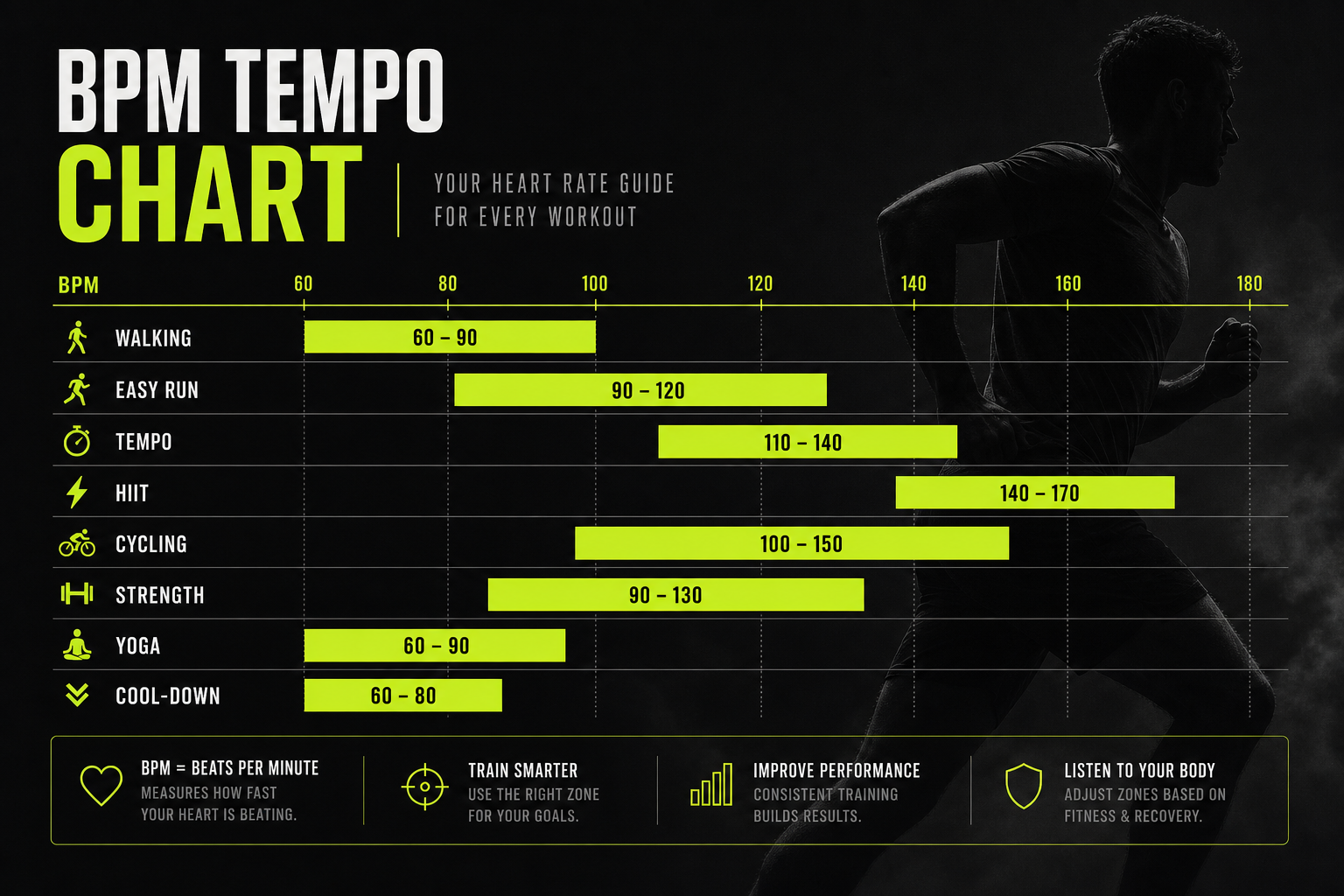
- Use 40 to 70 BPM for seated meditation, 60 to 90 for slow movement, and 120 BPM or higher for steady cardio, then personalize.
- Choose synchronous tracking for breath paced meditation; interval workouts may benefit from brief asynchronous tempo increases that raise arousal before effort peaks.
- For smoother transitions, favor apps that change tempo at bar breaks and use quality time stretching; check Bluetooth and disable battery saving if sync lags.
- Research links beat matched music with lower perceived exertion than asynchronous or no music, while steady beats support pacing and may extend endurance.
Table of Contents
- What dynamic meditation music actually means
- What the research says about synchronous music and effort
- How adaptive music systems translate your body into tempo
- How to set up and run your first adaptive sessions
- Keeping tempo transitions smooth and sessions reliable
- When adaptive meditation music is worth trying
- Try dynamic meditation music with Repbeats
- FAQ
- Sources
What dynamic meditation music actually means
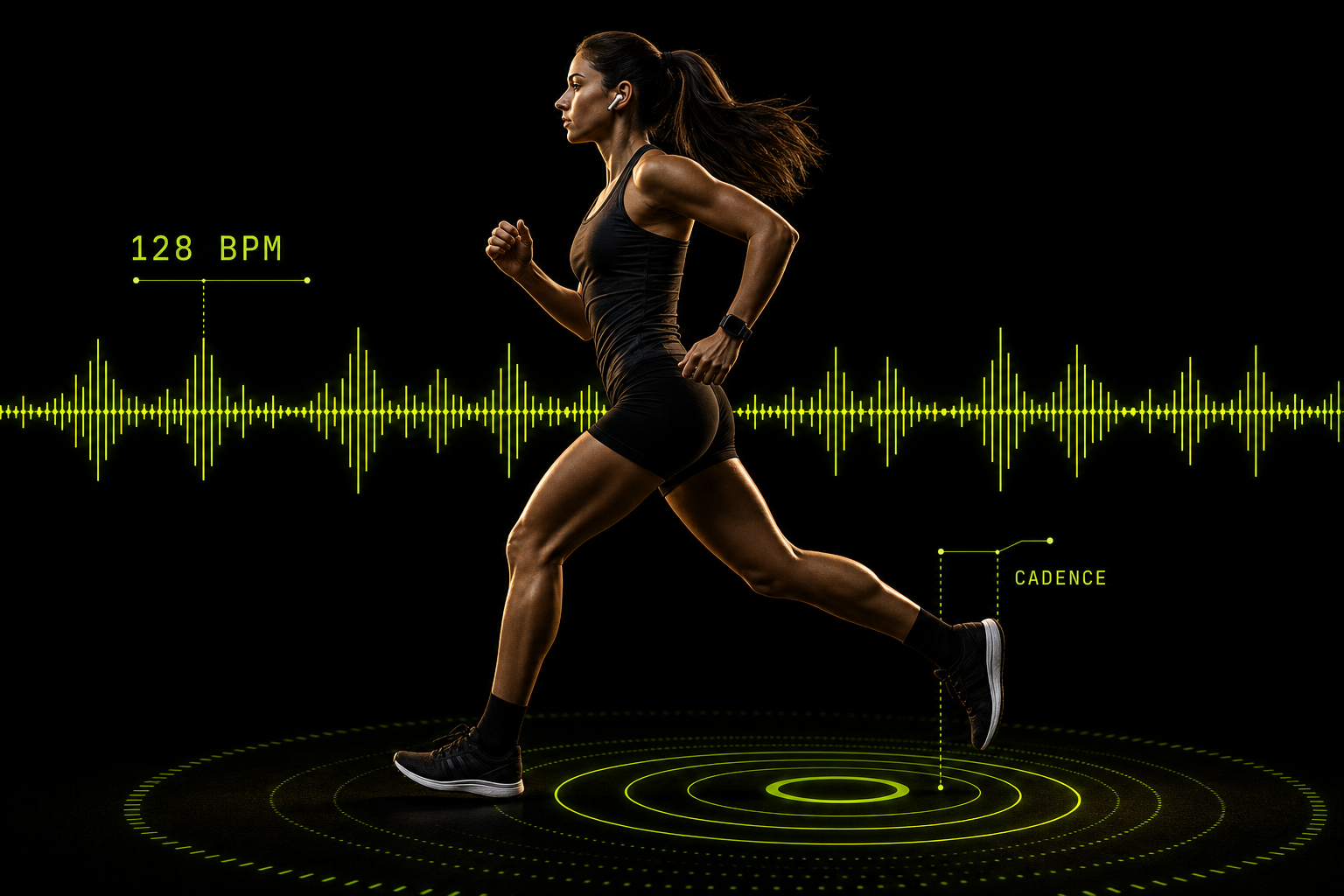
Dynamic meditation music runs on a closed loop: a wearable sends live biometric data, usually heart rate, cadence, or heart rate variability (HRV), to an app, and the app adjusts the music’s beats per minute in response. Tempo ramps up as your effort rises and eases back down as you settle into a breathing pattern or recovery pace. Updates typically land on musical bar breaks rather than mid-phrase, so the shift feels like a key change instead of a skip.
Some apps also offer sync modes: one setting that tracks your biometrics closely, and another that uses tempo more loosely to nudge your arousal level in a chosen direction. Either way, the defining trait is the live feedback loop between your body and the track.
This is worth separating clearly from Osho Dynamic Meditation, a breathing and movement practice with no connection to adaptive audio technology. This article covers only BPM-linked, biometric-responsive tracks used for workouts and meditation sessions, not that unrelated method.
What the research says about synchronous music and effort
A Frontiers in Psychology review found that synchronous music, tempo matched to movement, reduces Rating of Perceived Exertion compared with asynchronous or no music at all, which means the same workout feels easier. Separately, PLOS One research on auditory-motor synchronization found that a prominent, consistent beat matched to cadence supports better pacing and running economy, and when combined with motivational qualities in the music, has been linked to longer time-to-exhaustion.
A few nuances shape how well this works for you:
- A prominent, steady beat matters more for synchronization than musical complexity or production quality.
- Familiar, lyrical tracks tend to feel more motivating, while unfamiliar instrumental tracks may need a higher tempo to produce the same lift in arousal.
- Closed-loop systems that adjust tempo from live biosensor input have shown measurable drops in RPE during short field tasks, not just in lab settings.
Synchronized exercise music has been shown to reduce perceived exertion and extend time-to-exhaustion in controlled studies, which is the core evidence behind why adaptive tempo matters beyond simple motivation.
How adaptive music systems translate your body into tempo
Underneath the experience is a mapping system: your heart rate or cadence gets translated into a target BPM range, and that mapping can be linear (tempo rises proportionally with heart rate), stepped (tempo jumps between a few defined bands), or zone-based (tempo locks to a range tied to a specific training or meditation zone). The app recalculates this target continuously as your biometric data streams in.
Update timing matters as much as the mapping itself. Auto-DJ style systems that adjust BPM bar by bar, rather than mid-phrase, keep the transition from sounding like a skipped beat. Phase alignment, making sure a beat lands on a footstrike or an inhale, adds another layer of smoothness that pure tempo-matching alone doesn’t achieve.
There’s also a meaningful split between two modes. In synchronous mode, tempo follows your biometric signal directly: your heart rate climbs, the music speeds up to match. In asynchronous mode, tempo is used strategically rather than reactively, for example speeding up ahead of a hill or a focus interval to drive your arousal upward rather than mirror it. Meditation sessions tend to favor synchronous mode tuned to breath pace, while interval training often benefits from brief asynchronous pushes.
How to set up and run your first adaptive sessions
Getting started takes a few minutes of setup before your first adaptive session.
- Pair your wearable (Apple Watch, Fitbit, or similar) and enable data sharing with your music app.
- Grant background activity and Bluetooth permissions so the connection doesn’t drop mid-session.
- Pick a session type, meditation, steady cardio, or interval, so the app loads the right tempo range.
- Start with a short test session to confirm the music is actually responding to your live data.
From there, a few starting tempo ranges give you a baseline to personalize:
- Breathing or seated meditation: roughly 40 to 70 BPM, paced to your breath cycle.
- Low-intensity meditative movement, like slow flow or walking meditation: roughly 60 to 90 BPM.
- Steady-state cardio: roughly 120 to 150+ BPM, scaled to your running or cycling cadence.
Treat these as starting points, not fixed rules. Use tempo offsets if the default feels too fast or slow, set a target heart-rate zone and let the app chase it, and run brief A/B sessions, one with adaptive tempo and one with a static playlist, to see which keeps you more engaged. Our guide to mapping heart rate to meditation music walks through this pairing process in more detail, and familiar tracks tend to hold attention better when aesthetic enjoyment matters as much as pacing.
Pro Tip: Run your first session at home with notifications off so you can focus on noticing the tempo shifts rather than troubleshooting distractions.

Keeping tempo transitions smooth and sessions reliable
Aggressive time-stretching, the audio technique that speeds up or slows down a track, can introduce a mechanical, warbled sound when pushed too far, and an instant BPM jump can snap you right out of a meditative state. The fix lives in how the app is built: look for ones that update tempo on musical bar breaks, use quality time-stretch algorithms, and draw from a large enough music library that it isn’t repeatedly stretching the same few tracks to extremes.
- Confirm your Bluetooth connection is stable before starting, since dropouts are a common cause of tempo lag.
- Disable aggressive battery-saving modes on your phone, which can throttle background apps mid-session.
- Use offline caching where available so a weak signal doesn’t interrupt the music.
Pro Tip: If a transition ever sounds glitchy, it’s almost always a connectivity issue, not a flaw in the tempo mapping itself.
When adaptive meditation music is worth trying
Adaptive meditation music tends to pay off most for people who already wear a fitness tracker and want one soundtrack that flexes between calm focus and harder effort, rather than switching playlists by hand. Apps using auto-DJ technology that update BPM bar by bar, paired with Apple Watch or Fitbit integration, show what a mature closed-loop system looks like in practice: the tempo change is nearly invisible, which is the whole point.
My honest advice is to run a short trial before committing to a long session. Try ten minutes of meditative tempo and ten minutes of cardio tempo back to back, and pay attention to whether the shifts feel supportive or distracting. Personalization settings exist for a reason, so adjust before you judge the concept itself.
— Jordan Mills
Try dynamic meditation music with Repbeats
We built our app around the closed-loop idea described above: the music updates BPM bar by bar based on live data from supported wearables, so the music tracks your heart rate and cadence without jarring jumps. Our app covers both meditation and workout modes, so the same adaptive engine can pace different types of sessions.
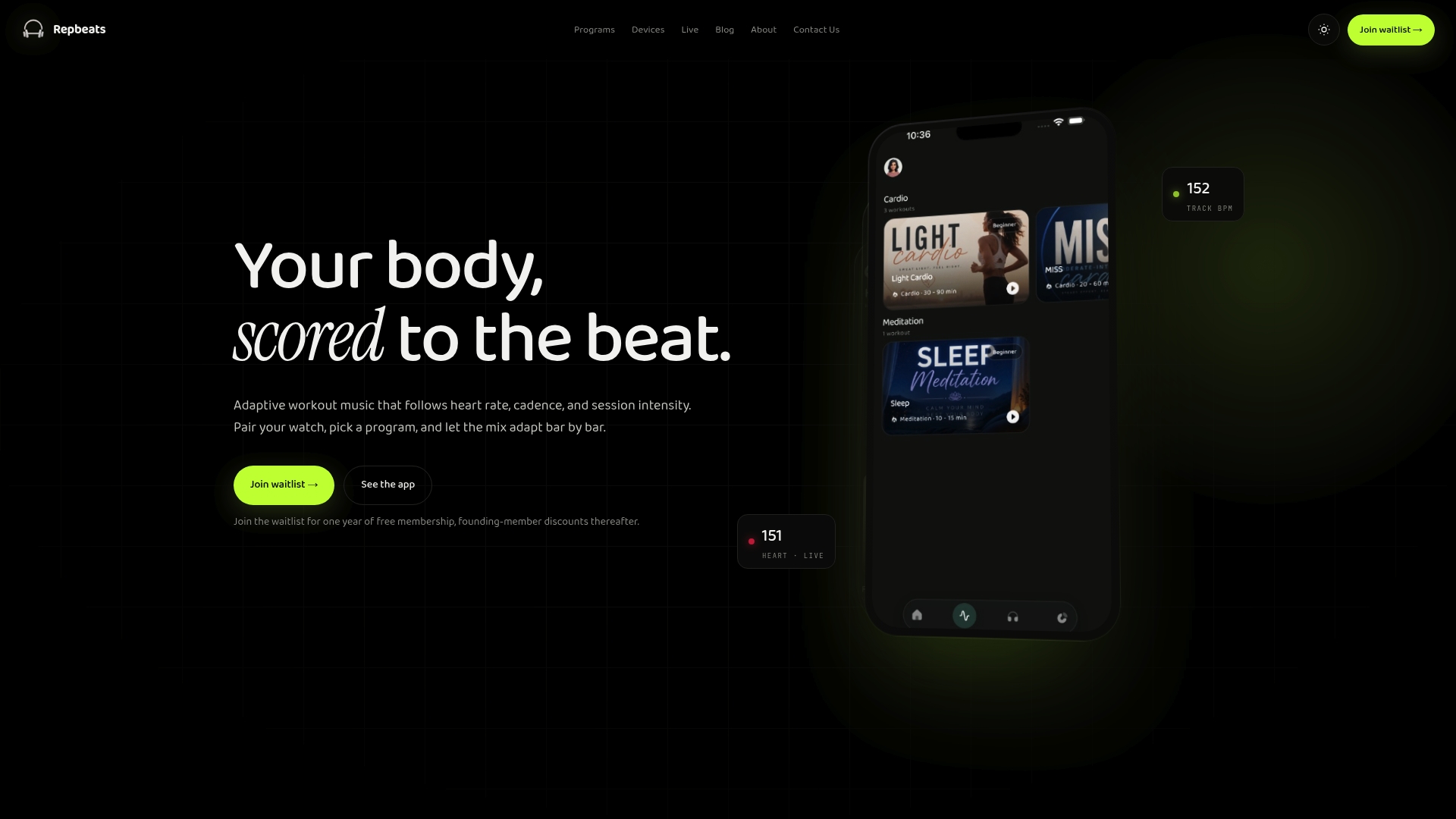
Getting started takes three steps:
- Install the Repbeats app and connect your wearable.
- Grant the permissions it needs to read live heart rate and cadence data.
- Try a 10-minute meditation blend or a guided run to feel the BPM sync in action.
We only access workout data needed to run the adaptive engine, nothing more. Visit the Repbeats app to start your first session.
FAQ
What is dynamic meditation music exactly?
Dynamic meditation music is a track whose tempo changes in real time based on biometric signals like heart rate or cadence, rather than staying fixed. It’s designed to keep you inside a target meditative or exercise intensity zone as your body’s state shifts.
Does synchronous music actually reduce how hard exercise feels?
Yes, research on synchronous music shows it can significantly reduce Rating of Perceived Exertion compared with asynchronous or no music. A separate PLOS One study found that beat-matched cadence music supports better pacing and has been linked to longer time-to-exhaustion.
What BPM range should I use for meditation versus a workout?
Seated or breathing meditation generally works well around 40 to 70 BPM paced to your breath, while low-intensity meditative movement sits closer to 60 to 90 BPM. Steady-state cardio usually needs 120 BPM or higher, scaled to your running or cycling cadence, with all ranges meant as personalized starting points.
How does an app keep tempo changes from sounding jarring?
Well-designed systems update tempo on musical bar breaks instead of mid-phrase and use quality time-stretch algorithms to avoid mechanical artifacts. A large music library also helps, since it reduces how far any single track needs to be stretched.
What should I check if the music stops syncing mid-session?
Start by checking your Bluetooth connection, since dropouts are the most common cause of tempo lag or delay. Also confirm your phone’s battery-saving mode isn’t restricting the app in the background, and try an offline cache if your connection is unreliable.
Sources
- Frontiers in Psychology review on music and exercise (2018)
- PLOS One: The power of auditory-motor synchronization in sports
- MDPI International Journal of Environmental Research and Public Health (2022) on heart-rate-feedback interactive music