Dynamic Workout Music: From 110 BPM Warmups to Wearable Sync
Jordan MillsOctober 14, 2026 · 8 min read

Dynamic Workout Music: From 110 BPM Warmups to Wearable Sync
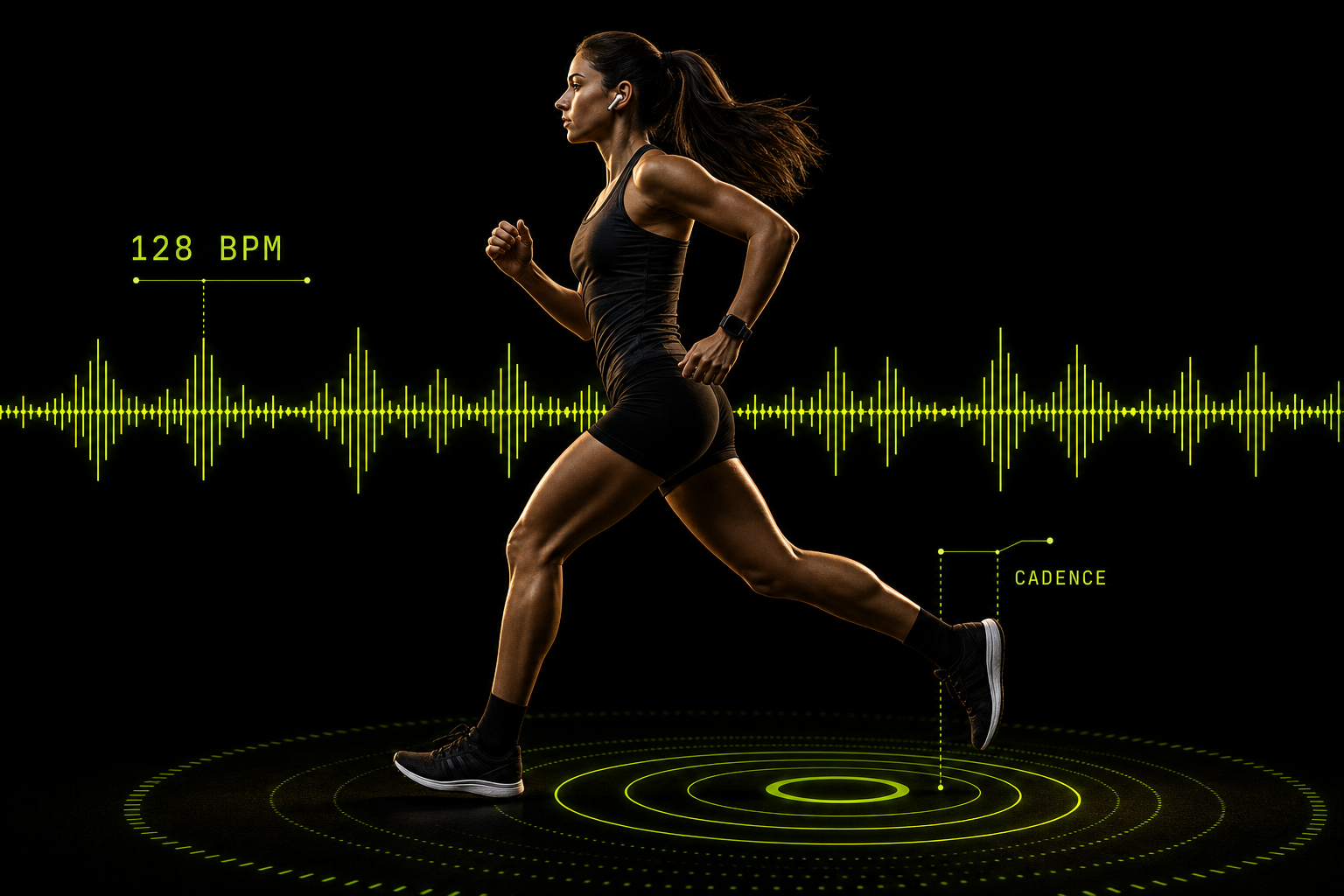
Dynamic workout music is a playlist or live-adaptive soundtrack whose tempo and energy change to match your workout intensity. Music you choose yourself and match to your effort reliably boosts motivation and can lower perceived exertion. Your next step is simple: pick one of the progressive BPM templates below, or use an adaptive app that syncs to your wearable.
TL;DR:
- For steady, submaximal sessions, try 115–125 BPM; benefits fade above roughly 75–80% of maximum heart rate, when effort can outweigh music’s influence.
- For HIIT, start with two tracks at 110–125 BPM, alternate work songs at 160–175 BPM with recovery tracks at 100–115 BPM, then cool down.
- Use 125–145 BPM for compound lifts, a faster cue track to start each EMOM round, and a slow song for rests between heavy sets.
- Use adaptive music for intervals, cadence, or heart rate targets; steady sessions often need only a fixed playlist.
- Keep volume low enough to hear nearby conversation, watch for traffic and gym equipment, and consider single ear or bone conduction headphones.
Table of Contents
- Why does dynamic music help you train harder?
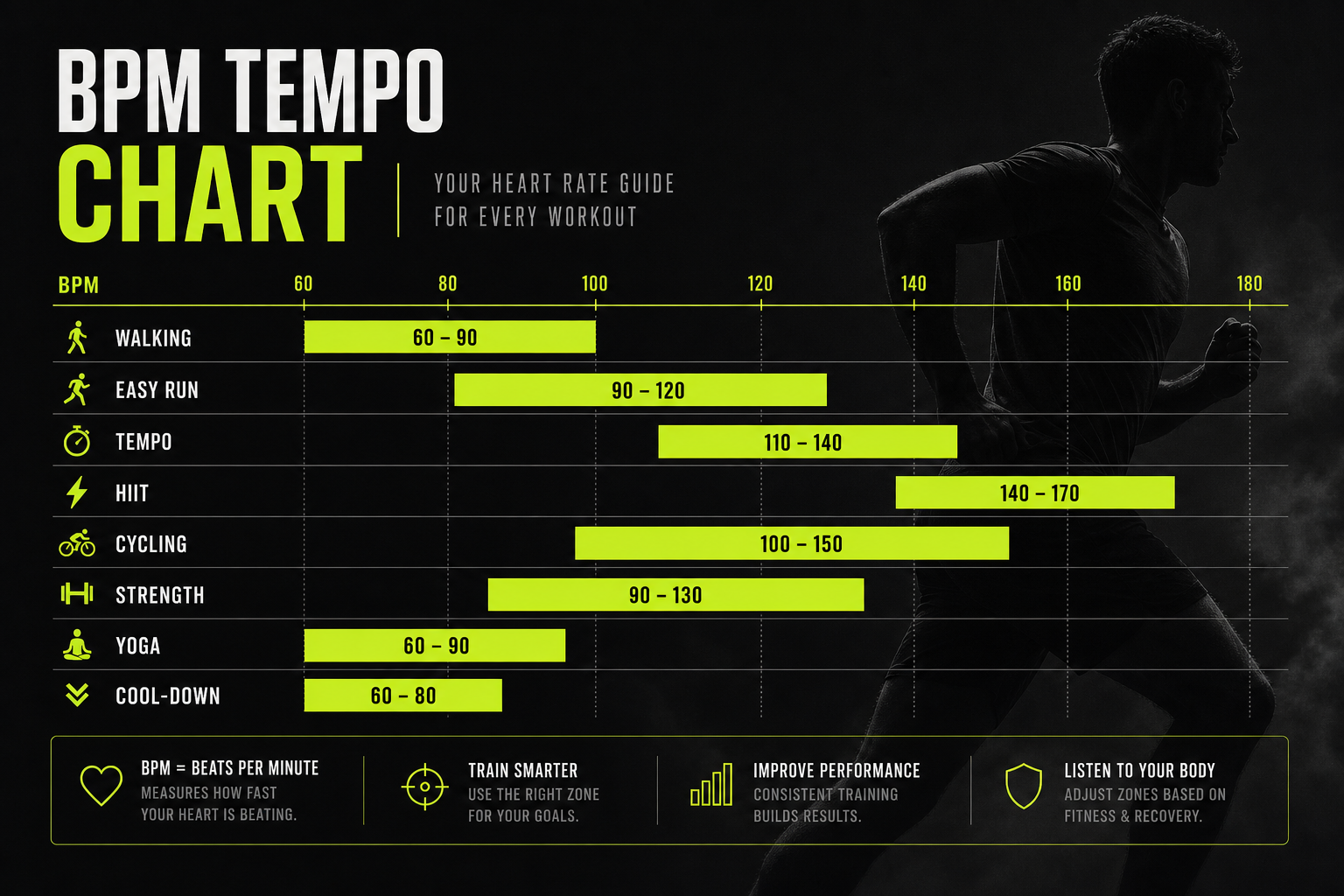
- Which BPM should you pick for each workout?
- Which playlist templates can you copy today?
- How do you build a variable-BPM playlist yourself?
- How does wearable-driven adaptive music work?
- How loud should workout music be, and how do you stay safe?
- What does the research say, and which studies back this up?
- A habit worth trying: the plus-twenty push
- Want the tempo to adjust itself while you train?
- FAQ
- Sources
Why does dynamic music help you train harder?
A systematic review and meta-analysis found that preferred music, compared with non-preferred music or none, increases motivation and positive affect, lowers perceived exertion, and goes with gains in strength endurance, maximal strength, and power output.
Preferred music listening raised motivation (SMD = 0.85) and positive affect (SMD = 1.16) compared with no music or non-preferred music, according to a 2024 meta-analysis. In plain terms, you feel better and the effort feels easier.
There are limits. A review of music preference research reports that the benefits are strongest during submaximal, steady-state exercise, and fade as effort passes roughly 75–80% of max heart rate. When you are grinding at your hardest, the song matters less. When you are warming up or holding a steady pace, it matters a lot. That is why timing and tempo choices count.
Which BPM should you pick for each workout?
Match tempo to what your body is doing in that moment. Medium tempos of about 115–125 BPM often support positive mood during submaximal work, according to a narrative review of music and fitness. Faster tempos help when intensity climbs, and a multilevel meta-analysis found fast music outperforming slow-to-medium music.
Practical BPM ranges are published in ACSM tempo guidelines, and you can measure any song yourself by counting beats per measure.
Use these starting points, then adjust to how the session feels:
- Warm-up: choose an easy, rhythmic tempo.
- Steady-state running or cardio: choose a tempo that feels comfortable and matches your cadence.
- Tempo efforts: choose a driving but controlled tempo.
- Intervals and sprints: use energetic music for work bursts.
- Strength and power sets: choose music with a heavy, punchy beat.
- Cool-down: choose slower music as you wind down.
Which playlist templates can you copy today?
Each template below is a plug-and-play structure. Fill the slots with songs you love, since self-selected tracks tend to work best.
HIIT
- Open with two warm-up tracks at 110–125 BPM.
- Alternate a high-energy track at 160–175 BPM with a recovery track at 100–115 BPM.
- Repeat the pair throughout the workout.
- Finish with a slower cool-down track.
Running
- Warm up for two songs, climbing from 115 to 130 BPM.
- Hold a steady block of songs at a consistent tempo.
- Add a block of songs at a more challenging tempo.
- Cool down with songs that gradually slow down.
Strength circuit
- Use 125–145 BPM tracks for compound lifts and supersets.
- Place a louder, faster cue track at the start of each EMOM round so you know when to move.
- Keep one slow track in reserve for long rests between heavy sets.
How do you build a variable-BPM playlist yourself?
- Find each song’s BPM. Check the tempo in your streaming app’s details, use a BPM lookup site, or count beats over a measured interval and convert to beats per minute.
- Group songs into tempo bands. Make folders for slower, moderate, and faster tracks.
- Order bands for progression. Run from low to high for a climb, or zigzag between bands for intervals.
- Smooth the transitions. Turn on crossfade, and place songs with close BPMs next to each other so the jump feels natural.
- Test and tweak. Do a trial run, note how hard the effort feels, and swap any song that feels like a drag.
Pro Tip: Save your best three songs as a “reset” block. When a session stalls, jump to that block instead of scrolling mid-workout.
How does wearable-driven adaptive music work?

Instead of you managing a playlist, adaptive music reads live signals and changes the soundtrack for you. At a high level, a wearable reports heart rate and cadence, the app compares them with your target zone, and the music tempo shifts to match or nudge your effort.
It helps most in these situations:
- Intervals: the beat rises with each work burst and eases as you recover.
- Cadence cues: the tempo anchors your step rate when you want to hold a rhythm.
- Zone control: the music keeps you from drifting above or below your target heart rate.
For steady, easy sessions, a static playlist is often enough. Adaptive apps can also connect with common wearables and automate tempo changes, so you can stay focused on the workout rather than the screen. Our guide to syncing music to workout intensity walks through the setup, and our piece on how real-time heart rate guides your soundscapes explains the signals.
How loud should workout music be, and how do you stay safe?
Energetic music tempts you to crank the volume. Keep it low enough that you can still hear a person talking next to you, and stay aware of traffic on runs and of weights and equipment in the gym.
- Pick the right earbuds: single-ear use or bone-conduction headphones leave your ears open to the world.
- Check volume before you start: set it at a comfortable level in a quiet moment, then leave it there.
- Use device limits: turn on your phone’s volume limit or hearing-safety setting.
- Prevent interruptions: download playlists for offline use, set crossfade, and lock the queue so a stray tap does not change it.
Pro Tip: Run your first loud-song test while standing still. If you cannot hear your own footsteps, turn it down.
What does the research say, and which studies back this up?
The strongest guidance comes from a few clear sources. The meta-analysis on preferred music found better motivation and mood, lower perceived exertion, and gains in strength and power outcomes.
In a 6-minute all-out running test, preferred music increased distance covered by about 10% and mean running speed by about 14% compared with no music, and a warm-up with music showed roughly 8% improvements.
The ACSM tempo guidance linked above gives you a practical tool for mapping BPM to exercise types. Together, these point to the same habit: choose music you like, match its tempo to the task, and use it in the warm-up as well as the main set.
A habit worth trying: the plus-twenty push
I treat the warm-up and the hard efforts as different soundtracks. Warm up with medium-tempo music, then choose faster music for each interval. Use a single recovery track to reset between efforts rather than a whole slow playlist. It keeps the session simple, and the rising beat tells my legs when to go.
— Jordan Mills
Want the tempo to adjust itself while you train?
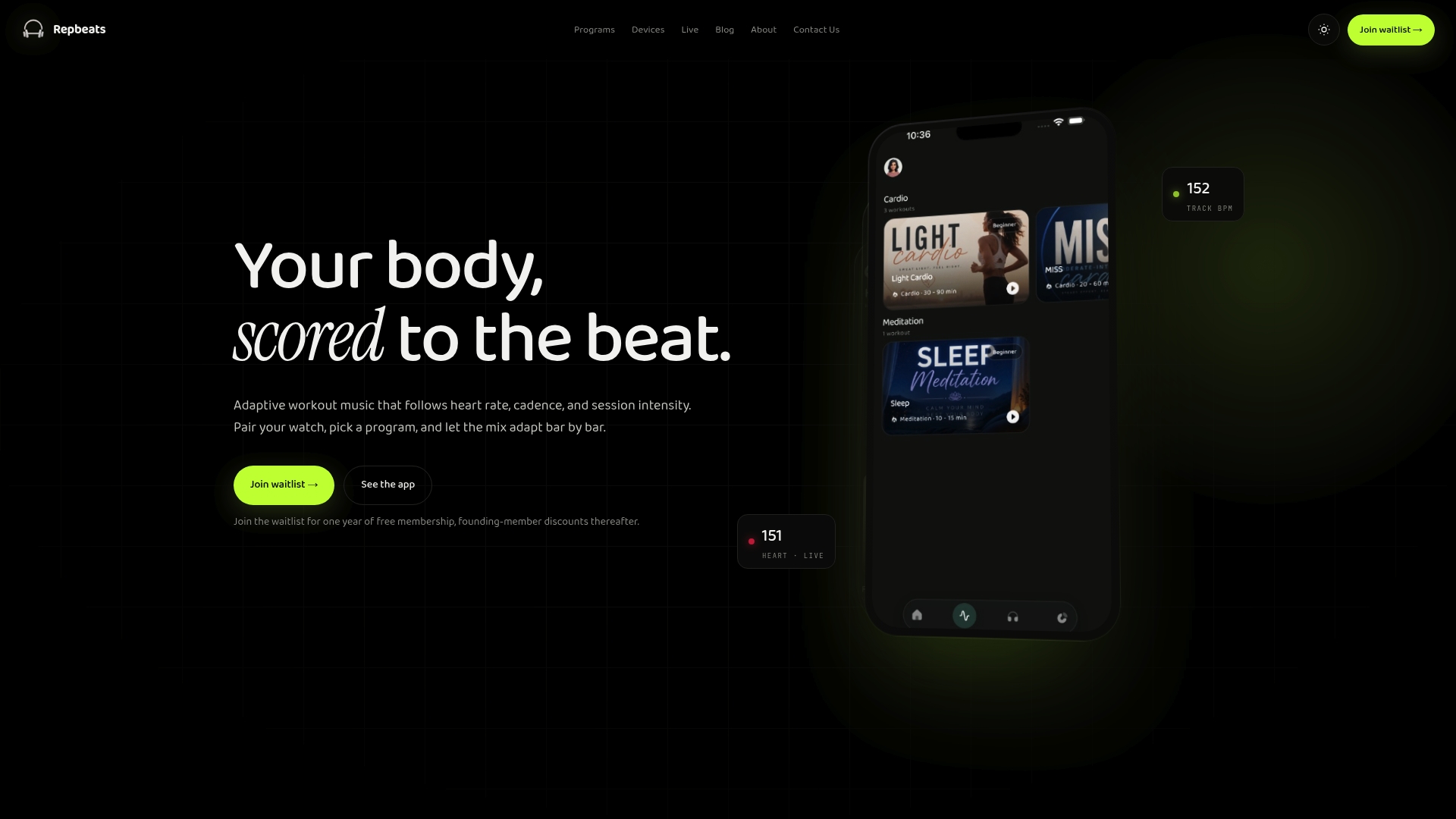
If you would rather skip playlist management, we built Repbeats for exactly that. Our app syncs music tempo to your heart rate, cadence, and session intensity, and our auto-DJ updates the beats per minute every bar so the soundtrack keeps pace with you.
- No manual sorting: we handle tempo changes while you handle the workout.
- Target-zone support: the music helps you stay in the intensity you planned.
- Wearable data: we use live data from popular wearables such as Apple Watch and Fitbit.
Try Repbeats or learn more about the app, and start with the free trial.
FAQ
What is the best type of music to listen to while you exercise?
Music you personally enjoy, with a tempo that fits your effort, works best. Medium tempos of about 115–125 BPM suit steady, submaximal exercise, and faster tracks suit high-intensity work.
Does music have an effect on gym performance?
Yes. Preferred music is linked to higher motivation, better mood, lower perceived exertion, and gains in strength endurance and power output, per a systematic review. The effect is smaller at near-maximal effort.
What is the best hype-up song?
There is no single best song, because personal meaning drives the effect. Pick a track with a strong beat that you already associate with energy, and save it for your hardest effort.
What is the 3-3-3 rule at the gym?
There is no official music rule in the research we cite. A useful playlist can include warm-up, work, and cool-down songs, with the tempo rising and then falling.
Sources
- Frontiersin
- Effects of preferred music listening on physical and psychological parameters in sports: a systematic review and meta-analysis with meta-regression - PMC
- Music Tempo Guidelines for Exercise