AI Workout Music for Wearables That Syncs to Heart Rate in Real Time
Jordan MillsOctober 6, 2026 · 9 min read

AI Workout Music for Wearables That Syncs to Heart Rate in Real Time
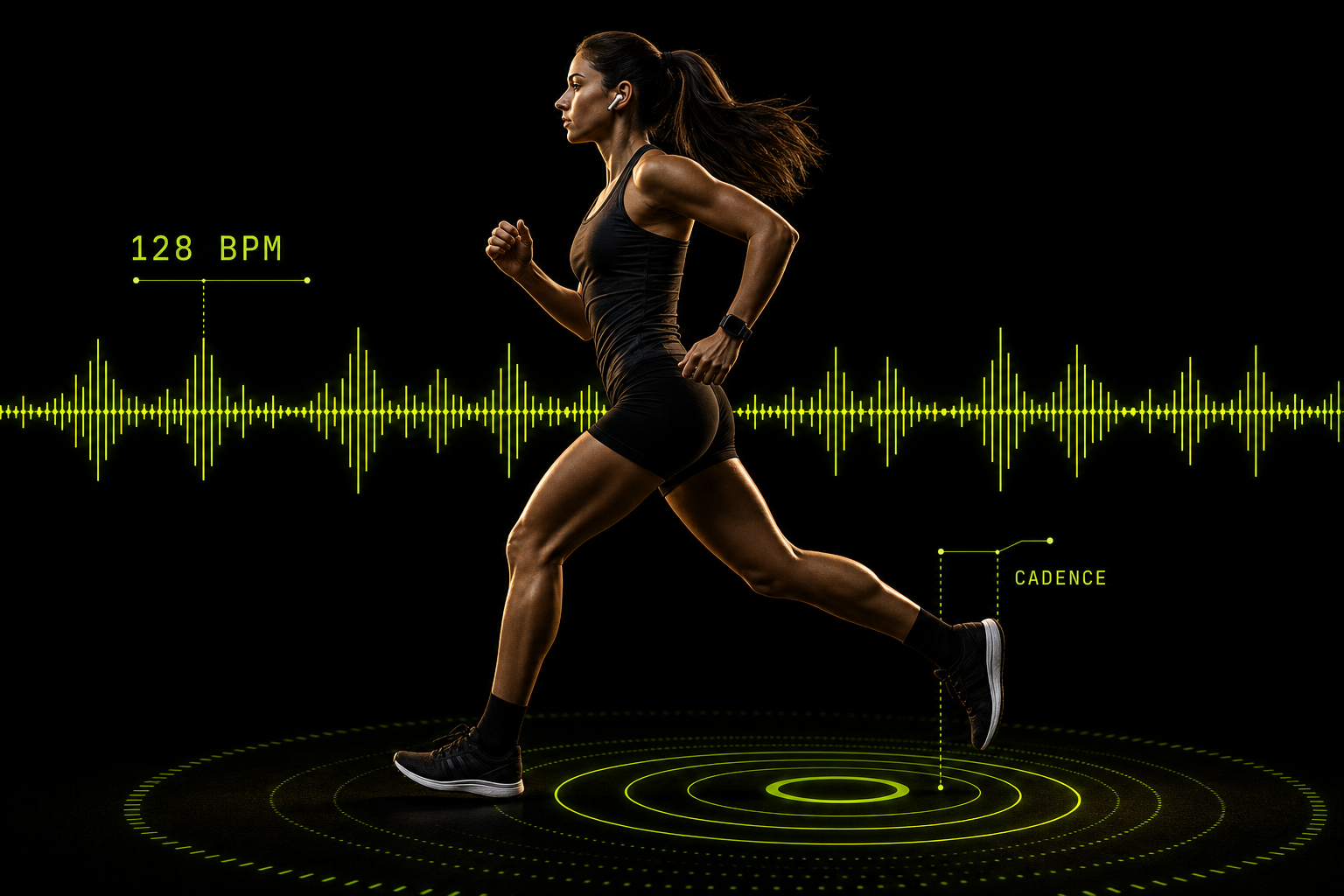
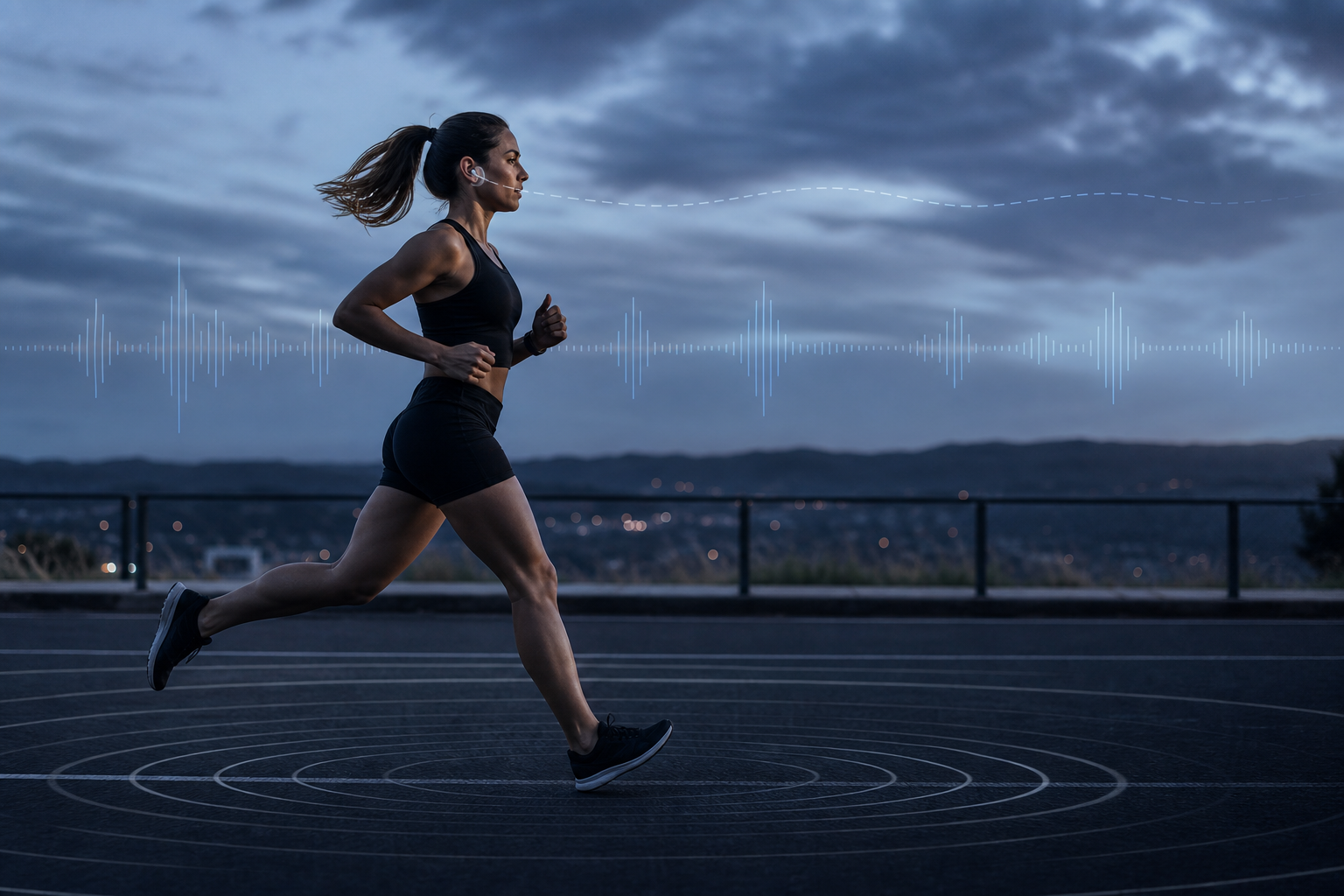
AI workout music, in the sense that matters for wearable users, means tracks that sync their tempo to your live heart rate and cadence and keep adjusting as your effort changes. The practical payoff is that sessions tend to feel more enjoyable and less grueling, which helps you push longer or return more often, especially when combined with effective project management tools for fitness studios to streamline workout planning and delivery. How well it works depends on your wearable’s sensor accuracy and the kind of workout you’re doing.
TL;DR:
- Tempo above 120 BPM in adaptive music significantly enhances workout enjoyment and perceived exertion, mainly influencing effort perception rather than raw output.
- Heart rate syncing performs reliably during steady sessions, while cadence syncing provides tighter synchronization during activities like running, cycling, or high-intensity intervals.
- Wearable accuracy varies by device and activity, with Apple Watch showing among the lowest error rates, but outdoor high-motion efforts may require chest straps for precision.
- Proper setup, including warmup and smoothing adjustments, is crucial for natural, seamless music tempo transitions and avoiding lag or jarring changes.
- Adaptive music works best for steady-state exercises like running or cycling, where effort can settle into a consistent tempo, rather than rapid, unpredictable efforts.
Table of Contents
- How wearable-synced adaptive music actually works
- What the research says about tempo, mood, and performance
- Choosing the right sync method for your workout and wearable
- Setting up adaptive music for reliable, smooth sync
- When adaptive sync struggles and how to fix it
- Why adaptive music earns a place in a training plan
- Try adaptive, wearable-synced music with Repbeats
- FAQ
- Sources
How wearable-synced adaptive music actually works
Adaptive music needs a live feed before it can do anything. Most apps pull heart rate, cadence, or both from Apple HealthKit or Fitbit’s APIs, along with general session intensity if the workout type is known in advance. Apple’s own mirrored session APIs let third-party apps read heart rate, cadence, and cycling power straight from a paired Apple Watch during a live session, which is what makes real-time tempo matching possible without a separate chest strap.
Once the data arrives, the app has to decide how to turn a number into a tempo. Two common approaches exist:
- Direct cadence-to-BPM mapping, where your steps or pedal strokes per minute set the music’s beats per minute almost one to one.
- Heart-rate-zone mapping, where entering a higher zone nudges the tempo up a notch rather than following every beat-to-beat fluctuation.
Raw sensor data is noisy, so most systems apply a short smoothing window before changing tempo, and good auto-DJ engines update BPM bar by bar rather than mid-phrase, so the transition lands on a musical beat instead of cutting the track off awkwardly. Cadence tends to respond faster and with less lag than heart rate, since heart rate naturally trails effort by several seconds, so cadence syncing often feels tighter for sports with a steady, countable rhythm like running or cycling.
What the research says about tempo, mood, and performance
The strongest evidence concerns tempo itself. A meta-analytic review from Brunel University found that fast-tempo music, generally above 120 BPM, produces significantly larger performance and perceived-exertion benefits than slow or moderate tempo music.

Fast tempo (above 120 BPM) shows a meta-analytic effect size of g = 0.38 versus g = 0.21 for slower music, a gap the same review reports as statistically significant. That difference shows up mainly in how hard the workout feels and how much people enjoy it, not necessarily in raw output.
A more recent systematic review and exploratory meta-analysis of personalized interactive music systems looked specifically at adaptive, wearable-linked music and found:
- Meaningful improvements in affective valence (mood during exercise), with an effect size of g = 1.68.
- A smaller but still notable gain in physical activity levels (g = 0.49).
- Tempo acting as a significant moderator of these effects, though study quality varied enough that the authors stopped short of firm conclusions.
The mechanisms behind this involve auditory-motor entrainment (your body naturally syncing movement to a beat), groove and beat salience, and arousal modulation. Put together, the honest expectation is that adaptive music reliably improves how a workout feels and how long you stick with it, while gains in actual metabolic efficiency are less consistent.
Choosing the right sync method for your workout and wearable
Not every activity pairs equally well with heart-rate or cadence syncing, and wearable accuracy itself shifts by activity. A PMC-published validation study tested multiple wrist-worn devices and found heart rate error stayed below 5% for many devices during cycling, while energy expenditure estimates missed acceptable accuracy thresholds across every device tested.
- Cycling: wrist heart rate and cadence both tend to perform well, since the limited wrist motion keeps optical sensors steadier.
- Running and treadmill work: wrist heart rate is often acceptable but can vary by device and stride, so test it before trusting it for precise pacing.
- HIIT and erratic movement: heart rate lags behind sudden effort changes, so cadence mapping or pre-built interval templates usually track better.
- Meditation and low-intensity sessions: heart-rate syncing works well here, since slow, steady readings suit gentle tempo cues for breathing pace.
Separate validation research on wrist-worn heart rate accuracy found that most devices measure heart rate with acceptable error across many lab-based activities, with the Apple Watch showing among the lowest errors, as low as roughly 2% in controlled settings, though optical sensors generally still show 5% to 10% variability depending on intensity.
Pro Tip: If you do interval training with sharp effort spikes, switch your app’s sync input from heart rate to cadence before the session starts rather than mid-workout.

Setting up adaptive music for reliable, smooth sync
Getting the sync to feel natural takes a few minutes of setup, not just pairing a device and hoping for the best.
- Pair your wearable and app, then confirm the live heart rate or cadence feed is actually updating before you start moving.
- Run a short warmup, around five minutes, to check that tempo changes land where you expect and that there’s no noticeable lag between effort and music.
- Enable smoothing, typically a 5 to 10-second window, or a capped BPM change per bar, so tempo shifts feel musical instead of jarring.
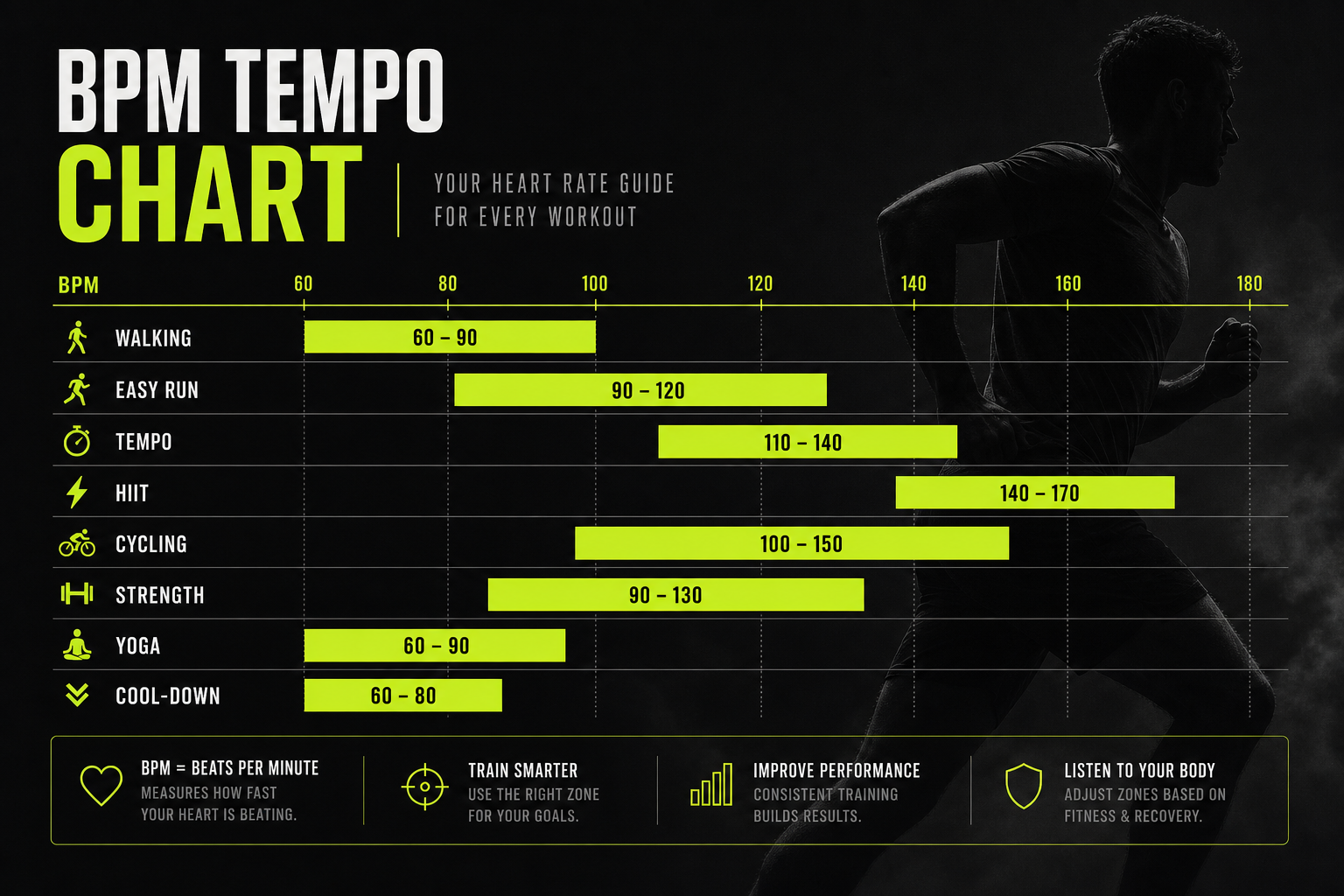
- Set rough tempo targets as a starting point: 90 to 110 BPM for warmups, 110 to 140 BPM for steady efforts, and 140 BPM or higher for intervals, then adjust by feel.
- Check Bluetooth connection stability and headphone latency, and switch to a chest strap if your wrist sensor struggles during high-motion activities.
- Before heading outdoors, confirm volume is safe for traffic awareness and keep a pre-made playlist ready as a fallback if live sync drops out.
Pro Tip: Keep one offline, cadence-mapped playlist saved for runs where Bluetooth or GPS conditions are unreliable, so a dropped connection never stops your momentum.
Our BPM-matched workout templates cover ready-made tempo ranges if you’d rather start from a template than build settings from scratch.
When adaptive sync struggles and how to fix it
Most sync problems trace back to a handful of causes: a loose watch fit causing motion artifact, a dropped Bluetooth connection, or smoothing settings that are too aggressive or too loose for the activity.
- A loose or high-wrist fit often causes erratic heart rate readings. Re-seat the device snugly just above the wrist bone.
- Enabling your wearable’s dedicated workout mode usually improves sensor sampling rate and accuracy.
- If heart-rate sync feels laggy during fast changes, switch to cadence mapping instead.
- A chest strap remains the more reliable option when precision matters, particularly for high-intensity intervals.
- Outdoors, keep ambient awareness, lower your volume to a safe level, and never rely on music alone for pacing near traffic.
Adaptive sync is a poor fit for short explosive sprints and any activity with rapid, erratic heart rate swings, since the data simply can’t keep up with the effort.
Why adaptive music earns a place in a training plan
Adaptive music adds the most value in long steady-state runs, cycling sessions, and meditation, where tempo has time to settle into your actual effort rather than chasing it. I’d judge success less by any single workout’s split times and more by whether sessions feel more enjoyable, run longer, or get repeated more often, since that’s what the affect and adherence research actually supports.
For deeper setup guidance, our posts on cadence-based training plans and adaptive music best practices for athletes go further into specific templates.
**
Try adaptive, wearable-synced music with Repbeats
The described app uses real-time syncing to heart rate and cadence, with auto-DJ technology that updates BPM every bar instead of waiting for a track to end. It connects directly with Apple Watch and Fitbit, so live session data drives the music instead of a fixed playlist guessing at your effort.
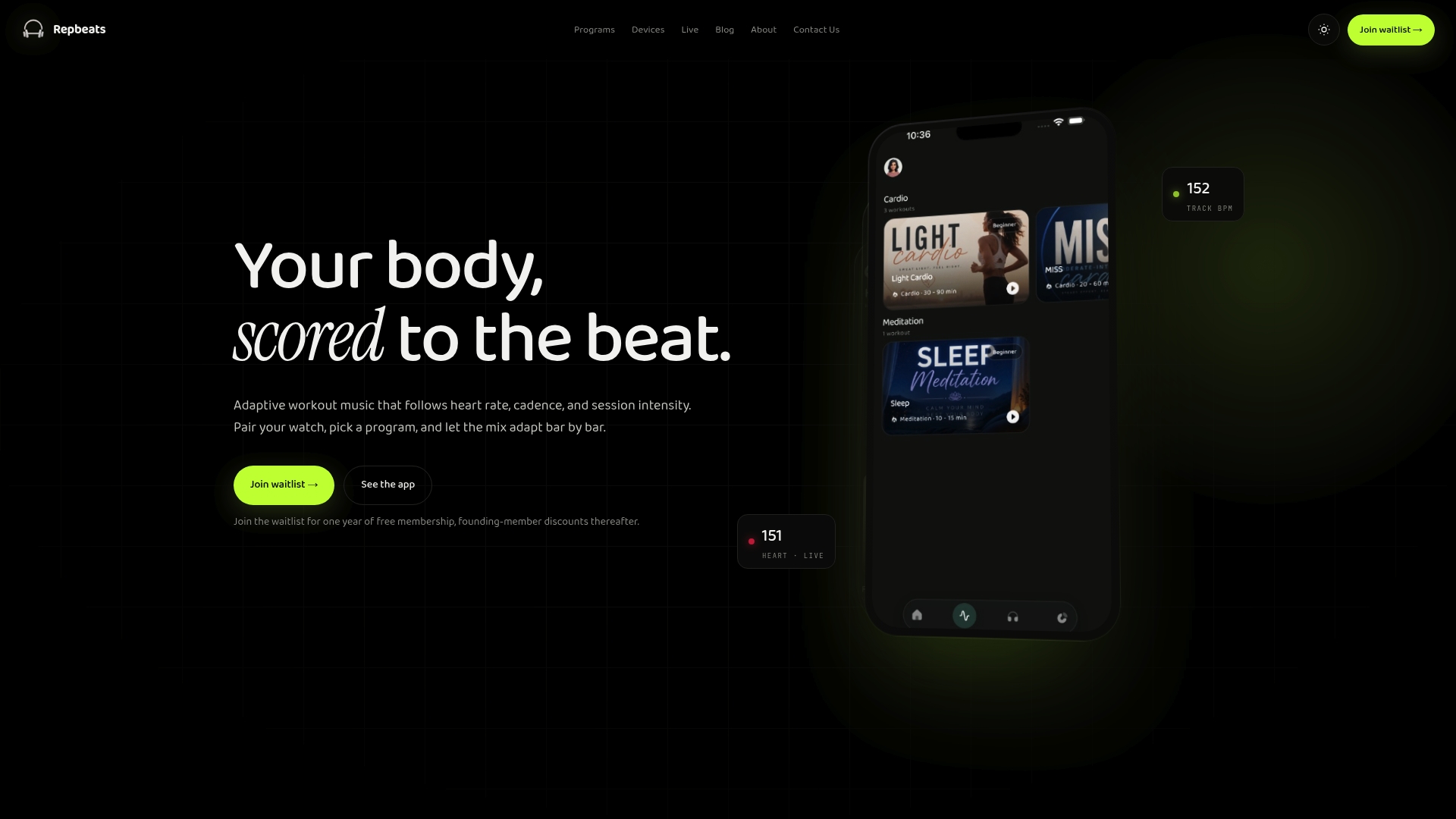
- Real-time tempo matching to heart rate and cadence throughout various workout sessions.
- Bar-by-bar auto-DJ adjustments that keep transitions musical rather than abrupt.
- Integration with popular wearables, so setup can take just minutes.
If you want to see how this feels in practice, start with a guided session through the Repbeats app overview or visit the Repbeats landing page to join the current free trial offer.
FAQ
What makes workout music “adaptive” instead of just a playlist?
Adaptive music continuously adjusts its tempo based on live data from your wearable, typically heart rate or cadence, rather than playing a fixed track order. The tempo changes in near real time as your effort rises or falls during the session.
Does faster music actually improve workout performance?
Research suggests faster tempo, generally above 120 BPM, is linked to larger performance and perceived-exertion benefits than slower tempo, according to a meta-analytic review. The effect shows up mainly in how manageable the effort feels rather than in raw metabolic output.
How accurate is my wearable’s heart rate during exercise?
Accuracy varies by device and activity. Validation studies show the Apple Watch performs among the most accurate wrist-worn devices in lab settings, while optical sensors generally show more variability during high-motion activities like running.
Should I use heart rate or cadence to sync my music?
Cadence tends to sync more tightly during steady, rhythmic activities like running and cycling, since heart rate naturally lags behind sudden effort changes. Heart-rate syncing works well for steadier sessions like meditation or long steady-state cardio.
Can adaptive music replace a coach or training plan?
No, adaptive music is designed to support motivation and enjoyment during a session, not to replace structured coaching or programming. It works best alongside a training plan, helping you sustain effort and stick with sessions more consistently.
Sources
- Brunel meta-analytic review on music tempo and exercise
- Validation evidence on Apple Watch and wrist-worn HR device accuracy
- PIMS systematic review and exploratory meta-analysis (2024)