Why Heart Rate Synced Music Works for Better Workouts
Jordan MillsJuly 17, 2026 · 11 min read

Why Heart Rate Synced Music Works for Better Workouts
TL;DR:
- Heart rate synced music adjusts its tempo in real time to match your heartbeat, improving stress resilience and autonomic balance. It relies on phase-locking to R-R intervals, creating more precise physiological coherence than traditional playlists. This technology enhances workout endurance, reduces anxiety, and supports recovery by continuously syncing with your cardiac cycle through wearable devices.
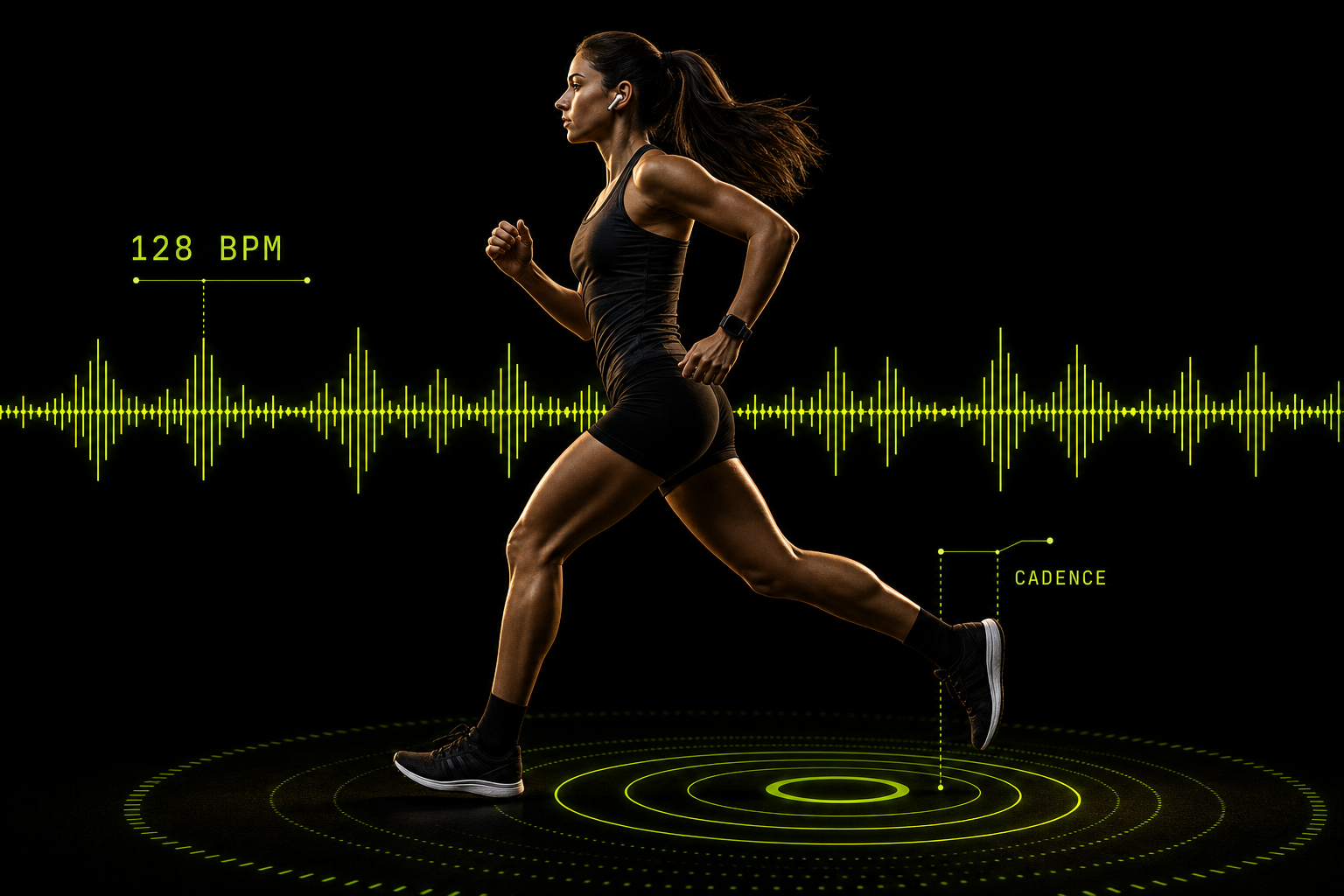
Heart rate synced music is defined as audio that adjusts its tempo in real time to match your cardiac rhythm, creating a feedback loop between sound and physiology. This mechanism, known as rhythmic entrainment, causes the body’s biological rhythms to align with external auditory cues. The result is measurable: heartbeat-synced music improves HRV by an average of 23%, signaling stronger stress resilience. Understanding why heart rate synced music works means understanding how your nervous system, not just your ears, responds to sound.
Why does heart rate synced music work physiologically?
Rhythmic entrainment is not a metaphor. It is a documented neurophysiological process where auditory signals travel from the ear through the brainstem and directly influence autonomic control centers. Auditory stimuli engage limbic and hypothalamic centers that regulate heart rate, breathing, and stress hormones. This pathway bypasses conscious thought entirely, which is why a fast beat can raise your pulse before you even register the song.
The key mechanism is phase-locking. Standard playlists match beats per minute to a target heart rate, but that is a crude approximation. Sophisticated syncing systems phase-lock music to R-R intervals, the precise gaps between heartbeats, to create true physiological coherence. R-R interval matching produces a tighter coupling between the music’s rhythm and the heart’s actual electrical cycle, not just its average speed.
Objective musical structures drive this process more reliably than emotional content. Phrase boundaries in music create stronger physiological entrainment than a song’s emotional feel or lyrical content. This finding reframes how workout music should be selected: architecture matters more than mood.
- Auditory cortex: Processes tempo and rhythm, sending signals downstream to brainstem autonomic nuclei.
- Limbic system: Modulates emotional response and feeds into hypothalamic control of heart rate.
- Hypothalamus: Coordinates autonomic output, directly influencing sympathetic and parasympathetic balance.
- Brainstem: Acts as the relay station connecting auditory input to cardiac and respiratory rhythm generators.
Pro Tip: When choosing music for entrainment, prioritize tracks with clear, consistent phrase structures over tracks with heavy emotional lyrics. Your nervous system responds to rhythm architecture, not lyrical content.
How does synced music improve workout endurance and performance?
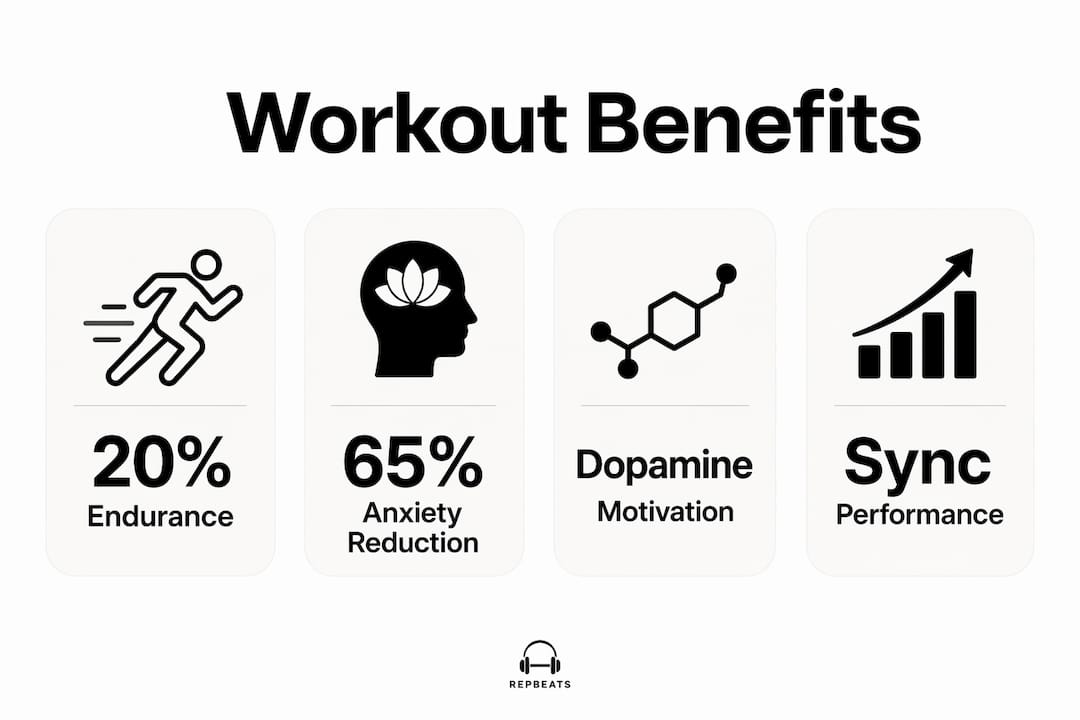
The primary benefit of heart rate music sync is psychological, not physiological. Listening to preferred, high-tempo workout music increases cycling endurance by about 20%, extending exercise duration from roughly 29.8 minutes to 35.6 minutes. That is nearly six additional minutes of work from the same body doing the same effort.

The explanation is dissociation. Synced music pulls attention away from physical discomfort, reducing the brain’s perception of effort without reducing actual energy expenditure. Perceived exertion drops with synced music while physiological cost stays identical. The body works just as hard. The mind simply does not register it as painfully.
Mood enhancement compounds this effect. Music activates dopamine pathways, which increases motivation and delays the mental decision to stop. Runners who train with tempo-matched music report higher energy levels and more positive emotional states during sessions. These psychological gains translate directly into longer, more consistent training blocks over time.
| Outcome | Regular playlist | Heart rate synced music |
|---|---|---|
| Endurance duration | Baseline | Up to 20% longer |
| Perceived exertion | Moderate reduction | Significantly lower |
| HRV improvement | Minimal | Up to 23% increase |
| Anxiety reduction | Modest | Up to 65% reduction |
| Autonomic coherence | Inconsistent | Phase-locked to R-R intervals |
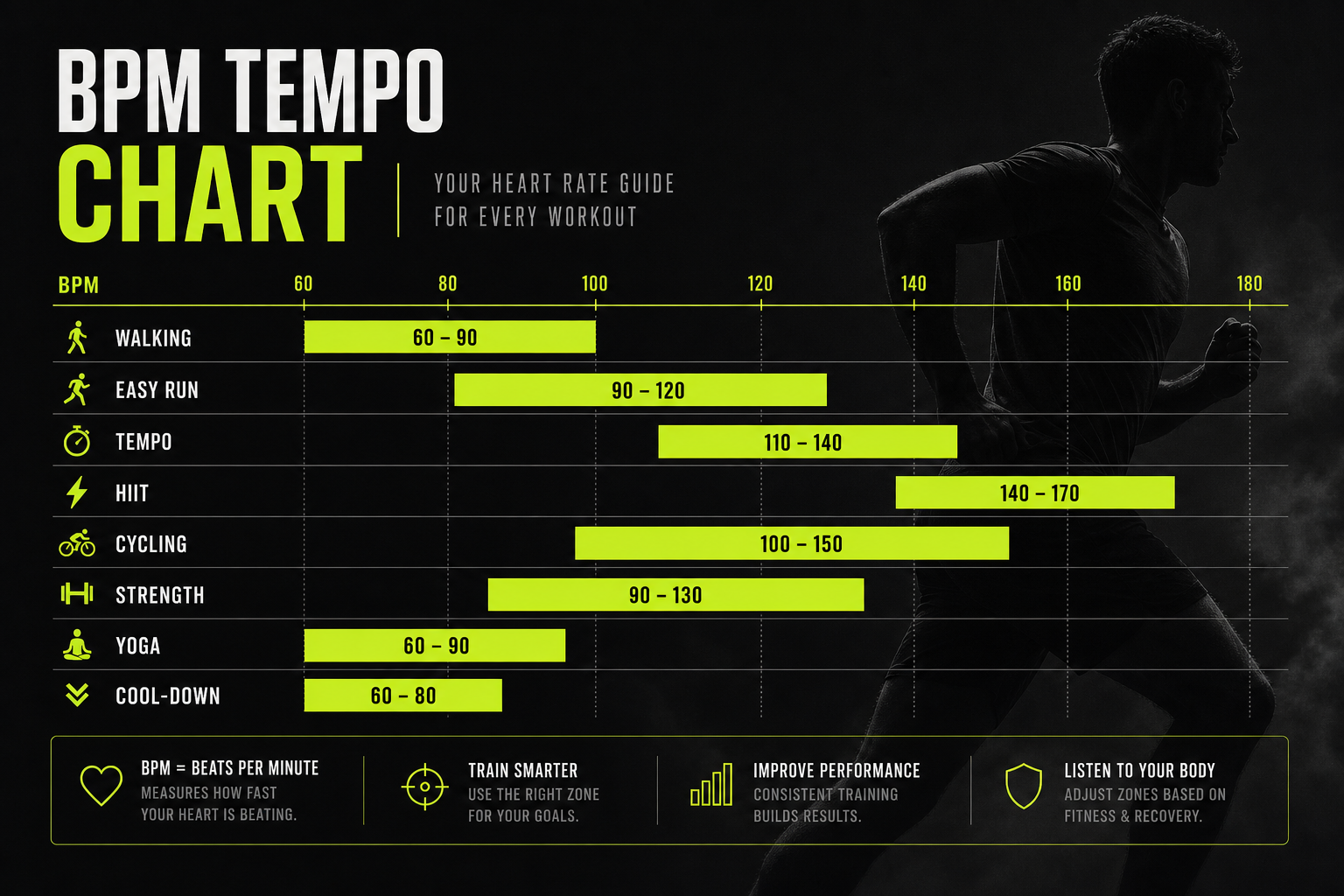
Pro Tip: Set your music tempo zone to match your target heart rate zone before a session. If you train at 150 BPM heart rate, select tracks with 150 BPM or use an app that adjusts tempo automatically. Learn how to build these zones with heart rate music zones guidance from Repbeats.
What makes synced music different from a regular workout playlist?
A standard workout playlist is static. You pick songs with a rough BPM target and hope your effort level matches the beat throughout the session. Heart rate synced music is dynamic. It reads your actual cardiac data and adjusts the music’s tempo every few seconds to maintain alignment with your physiology.
The distinction matters because exercise intensity is never constant. Your heart rate climbs during a sprint and drops during recovery. A fixed-tempo playlist falls out of sync within minutes. Real-time feedback changes the music to maintain physiological coherence across the entire session. Repbeats, for example, updates music BPM every bar using live data from wearables like Apple Watch and Fitbit, keeping the audio locked to your actual cardiac state rather than a pre-set target.
Objective musical architecture drives entrainment more effectively than subjective song preference. This is the critical design insight that separates genuine synchronization from playlist curation. A song you love but that has irregular phrase boundaries will produce weaker entrainment than a less familiar track with clean rhythmic structure. Effective synced music systems account for this by selecting tracks based on measurable musical features, not just genre or mood tags.
User expectations also differ from scientific reality. Many people assume synced music simply means fast songs for fast workouts. True synchronization operates at the level of cardiac cycle timing, phrase-boundary alignment, and autonomic coherence. The difference in outcome is substantial, and understanding it helps you evaluate whether a tool is actually syncing or just shuffling high-BPM tracks.
What are the relaxation and stress reduction benefits?
Heart rate synced music does not only serve high-intensity training. Its effects on the autonomic nervous system make it equally valuable for recovery, meditation, and stress management. Slow-tempo music at 60–80 BPM increases parasympathetic activity, shifting the body away from the fight-or-flight state and toward rest and recovery. This is the physiological basis of adaptive relaxation music.
The anxiety reduction data is striking. Music synchronized to the cardiac cycle can reduce anxiety by up to 65% through enhanced autonomic coherence. That figure reflects a genuine shift in nervous system state, not just a subjective feeling of calm. For athletes, this matters during cooldowns and sleep preparation, not just during workouts.
Heart rate variability is the clearest marker of this effect. Brief music interventions under 30 minutes significantly increase parasympathetic tone and reduce sympathetic dominance. Higher HRV correlates with better recovery, lower resting heart rate, and greater emotional regulation capacity. Synced relaxation music produces these changes faster than silence alone.
- Meditation: Slow-tempo synced music at 60–80 BPM guides breathing rate down and stabilizes heart rhythm during seated practice.
- Post-workout recovery: Parasympathetic activation after intense exercise accelerates the return to baseline heart rate.
- Sleep preparation: Gradual tempo reduction in synced music can mirror the body’s natural cardiac deceleration before sleep.
- Cardiovascular rehabilitation: Controlled tempo music supports regulated heart rate responses in clinical recovery settings.
- Anxiety management: Autonomic coherence created by cardiac-cycle syncing reduces cortisol-driven stress responses outside of exercise.
For those interested in specific examples, heart rate calming soundtracks curated for relaxation demonstrate how tempo selection translates directly into measurable physiological shifts.
How can you use heart rate synced music in your workouts?
The most effective approach starts with wearable integration. Apps that read live heart rate data from Apple Watch, Fitbit, or similar devices can adjust music tempo in real time. Repbeats does this every bar, meaning the BPM shifts continuously rather than in large jumps that break the entrainment effect. This granularity is what separates genuine synchronization from simple BPM filtering.
- Set heart rate zones before your session. Define your warm-up, aerobic, threshold, and recovery zones by heart rate. Assign a BPM range to each zone so the music shifts automatically as your effort changes.
- Choose tracks with clear rhythmic structure. Prioritize music with consistent phrase lengths and strong downbeats. Avoid tracks with irregular time signatures or heavy production effects that obscure the beat.
- Use tempo reduction for cooldowns. Program your app to drop BPM gradually during the final 5–10 minutes of a session. This mirrors the body’s natural cardiac deceleration and accelerates parasympathetic recovery.
- Track HRV trends over time. Use your wearable’s HRV data to assess whether your music strategy is improving stress resilience. A rising HRV trend over weeks confirms that your sessions are producing genuine autonomic adaptation.
- Avoid relying on self-selected music alone. Self-selected music in high-intensity exercise improves psychological states but does not consistently improve objective physical performance. Synced music adds the physiological layer that preference alone cannot deliver.
Pro Tip: Do not set a fixed BPM playlist and call it synced music. True synchronization requires live cardiac data feeding into real-time tempo adjustment. Static playlists, even at the right BPM, miss the R-R interval precision that produces the strongest entrainment effects. Read more about real-time heart rate soundscapes to understand how this works in practice.
Key Takeaways
Heart rate synced music works because rhythmic entrainment aligns musical tempo with cardiac cycles, improving autonomic balance, reducing perceived exertion, and extending endurance through measurable neurophysiological pathways.
| Point | Details |
|---|---|
| Rhythmic entrainment is biological | Auditory signals reach autonomic centers via brainstem pathways, bypassing conscious control. |
| Phase-locking beats BPM matching | Syncing to R-R intervals creates stronger physiological coherence than matching beats per minute alone. |
| Endurance gains are real | Preferred synced music extends exercise duration by up to 20% through psychological dissociation. |
| Relaxation benefits are measurable | Slow-tempo music at 60–80 BPM activates parasympathetic tone and can reduce anxiety by up to 65%. |
| Architecture beats emotion | Objective phrase boundaries drive entrainment more reliably than a song’s emotional content or personal preference. |
The part most fitness apps are still getting wrong
I have spent years watching the fitness technology space treat music as a motivational accessory rather than a physiological tool. The standard assumption is that louder, faster, and more energizing equals better performance. The science says something more specific and more interesting.
What strikes me most is how consistently the research points to architecture over emotion. Athletes and coaches spend enormous energy curating playlists based on how songs feel. The evidence suggests that a track’s phrase boundaries and rhythmic regularity matter more than whether it fires you up emotionally. That is a genuinely counterintuitive finding, and most fitness apps have not caught up to it.
The anxiety reduction data also deserves more attention than it gets. A 65% reduction in anxiety through cardiac-cycle synchronization is a clinical-grade outcome. Yet most discussions of workout music focus entirely on performance metrics. The recovery and stress regulation applications are, in my view, the underexplored frontier of this technology.
The direction I find most promising is granular, bar-by-bar tempo adjustment tied to live wearable data. That is where the gap between a curated playlist and genuine physiological synchronization becomes undeniable. Tools like Repbeats that update BPM every bar are operating at the level of precision the science actually requires. Everything else is approximation.
— Jordan Mills
Repbeats: adaptive music built around your heart rate
Repbeats connects directly to Apple Watch and Fitbit to read your live heart rate and adjust music tempo every bar of every song.
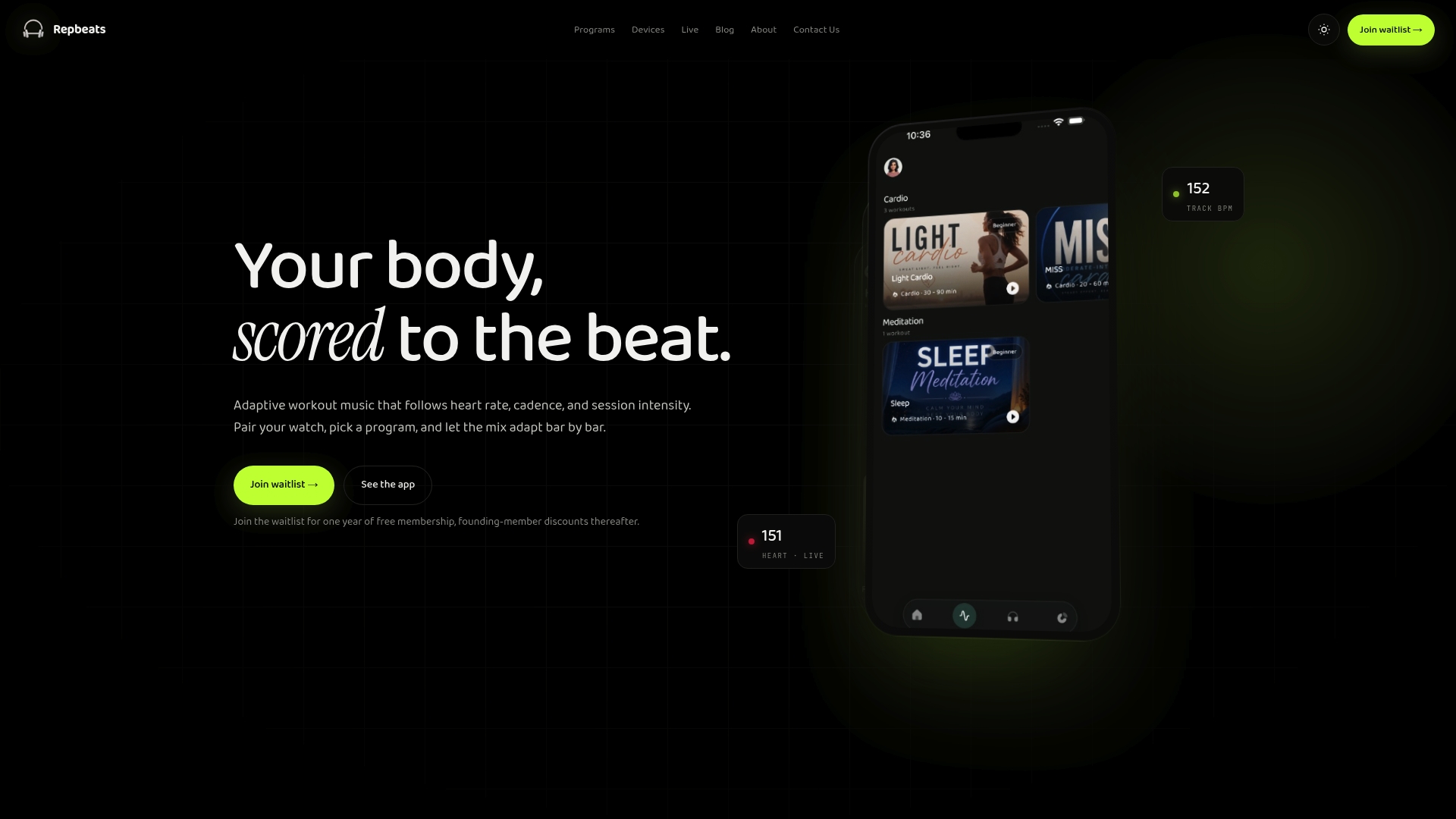
Unlike static playlists, Repbeats uses auto-DJ technology to shift BPM continuously across your warm-up, training, and cooldown phases. The music stays locked to your cardiac state, not a pre-set target. Whether you train for running, cycling, or meditation, the soundtrack adapts as your intensity changes. Athletes looking to apply these principles can start with adaptive workout music practices or go straight to the Repbeats platform to experience real-time synchronization in their next session.
FAQ
What is rhythmic entrainment in music and exercise?
Rhythmic entrainment is the process by which the body’s physiological rhythms, including heart rate and breathing, synchronize with external auditory cues. It operates through auditory-brainstem pathways that connect sound processing directly to autonomic control centers.
Does synced music actually change your heart rate?
Yes. Slow-tempo music at 60–80 BPM increases parasympathetic activity and lowers heart rate, while fast-tempo music raises sympathetic activation. The effect is measurable through heart rate variability data collected during and after sessions.
How much does heart rate synced music improve workout endurance?
Preferred, high-tempo music synchronized to exercise intensity increases endurance by approximately 20%, extending session duration by nearly six minutes in controlled cycling studies.
Is heart rate synced music useful outside of exercise?
Yes. Music synchronized to the cardiac cycle reduces anxiety by up to 65% and significantly improves HRV within sessions under 30 minutes, making it effective for meditation, post-workout recovery, and stress management.
What separates heart rate synced music from a regular BPM playlist?
Genuine synchronization uses phase-locking to R-R intervals and adjusts tempo in real time based on live cardiac data. A standard BPM playlist uses a fixed tempo that cannot respond to changes in your actual heart rate during a session.