How Music Lowers Resting Heart Rate: What Science Says
Jordan MillsJuly 20, 2026 · 8 min read
How Music Lowers Resting Heart Rate: What Science Says
TL;DR:
- Slow-tempo music activates the parasympathetic nervous system and lowers resting heart rate through auditory-brainstem entrainment. Personalized, rhythmically structured music at 60-80 BPM is most effective for promoting cardiovascular relaxation and HRV improvements. Using real-time heart rate monitoring enhances the benefits by dynamically adjusting music to individual responses.
Slow-tempo music genuinely lowers resting heart rate by activating the parasympathetic nervous system, the branch responsible for rest and recovery. Music in the 60–80 BPM range synchronizes with your body’s natural cardiorespiratory rhythms, pulling heart rate downward through a process called entrainment. Fast-tempo music does the opposite, ramping up sympathetic activity and pushing heart rate higher. The practical upshot: what you listen to, and at what tempo, has a measurable effect on your cardiovascular state.
- Slow-tempo music activates the parasympathetic nervous system, reducing heart rate and promoting relaxation, while fast-tempo music increases sympathetic activation and raises heart rate. Entrainment synchronizes music tempo with cardiorespiratory rhythms, guiding the body toward calmer states.
- The effect extends to blood pressure and respiration, not just pulse
How music lowers resting heart rate through the autonomic nervous system
The pathway from your ears to your heart is more direct than most people expect. Sound processing begins in the brainstem, which also governs heart rate and respiration. When you hear slow, rhythmic music, the brainstem integrates that auditory signal with autonomic output, nudging the parasympathetic branch into dominance and slowing heart rate and breathing in tandem.
From the brainstem, the signal travels upward through the auditory cortex and into the limbic system, including the amygdala and hippocampus. These structures feed into the hypothalamic-autonomic axis, which regulates the balance between sympathetic and parasympathetic activity. The vagus nerve, running near the eardrum, responds to musical vibrations and triggers a relaxation response throughout the body.
Heart rate variability (HRV) captures this autonomic balance precisely. Higher HRV reflects stronger parasympathetic tone and better cardiovascular health. Music interventions consistently shift HRV toward higher high-frequency power, the spectral marker of vagal activity, which is why researchers use HRV as the primary measure when studying the effects of music on heart function.
- Brainstem processes auditory rhythm alongside heart rate and respiration control
- Auditory cortex and limbic system modulate hypothalamic-autonomic output
- Vagus nerve responds to musical vibrations, triggering parasympathetic relaxation
- HRV high-frequency power rises with slow, structured music, indicating stronger vagal tone
Which musical characteristics most effectively calm the heart
Tempo is the single most influential acoustic variable. The 65–80 BPM window aligns closely with a typical resting heart rate, enabling cardiorespiratory entrainment. Music at this tempo gives the body a rhythmic anchor to synchronize with, rather than a signal to speed up or slow down against.

Beyond tempo, lower-frequency sounds, roughly in the 40–100 Hz range, increase the cardiac vagal index and improve HRV time-domain measures. Structured rhythms, such as Indian ragas or mantra-based compositions, outperform arrhythmic ambient sounds in promoting parasympathetic activity. Silence during or between musical passages can deepen the relaxation effect further.
Personal preference matters more than most people assume. Participant-selected music consistently outperforms standardized playlists in cardiovascular outcomes, because emotional engagement amplifies the physiological response. A track you find calming will work better than a clinically chosen one you dislike, even if both sit at the same BPM. For curated examples of calming music for heart rate reduction, tempo-matched playlists offer a practical starting point.
- 60–80 BPM tempo range is most effective for parasympathetic activation and heart rate reduction
- Lower-frequency sounds (40–100 Hz) enhance vagal tone and HRV
- Structured, rhythmic music outperforms arrhythmic ambient tracks
- Personally chosen music yields better cardiovascular results than standardized selections
- Sessions of short duration maximize the parasympathetic benefit before sensory adaptation sets in
What recent research confirms about music and heart rate
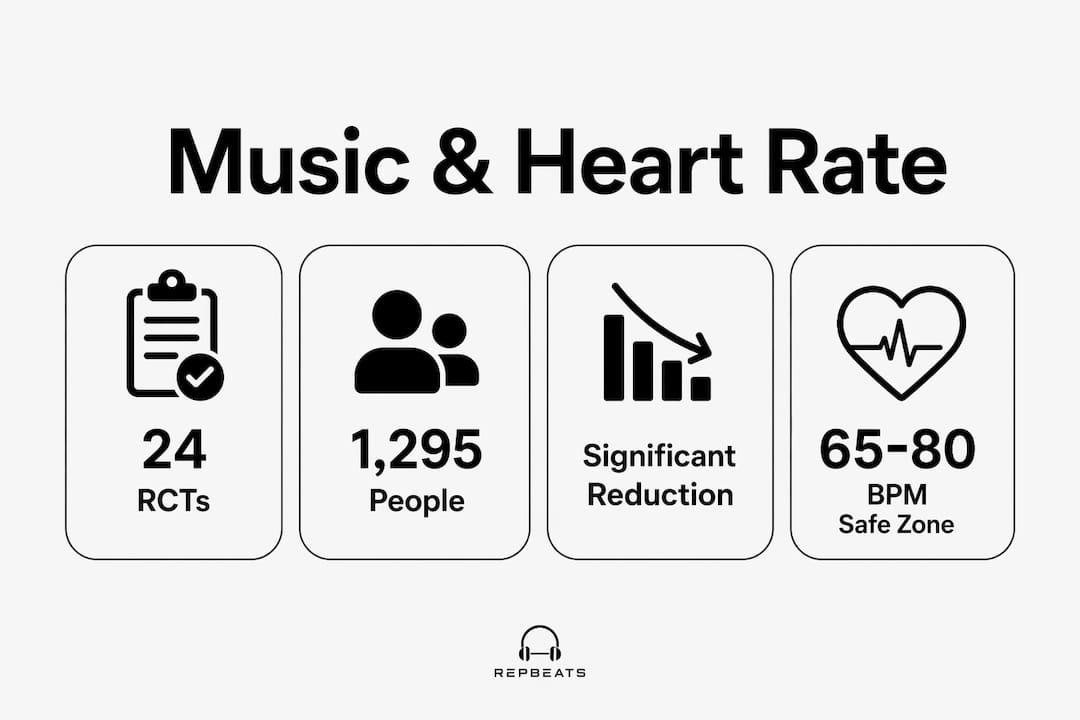
A 2026 meta-analysis of 24 RCTs with 1,295 participants found that structured music intervention significantly increased high-frequency HRV power (HFnu), with a mean difference of 7.05 (p=0.02), while simultaneously decreasing low-frequency power. That shift in spectral balance is a direct marker of parasympathetic dominance. People with stress, anxiety, fear, or sleep disorders showed the most pronounced improvements across multiple HRV parameters.
Session length shapes the outcome. Short-term interventions of 30 minutes or less were particularly effective at enhancing HFnu, while longer sessions risk sensory adaptation that blunts the effect. The interaction between tempo and breathing rate also matters: fast acoustic tempo combined with fast respiration increases mean heart rate and shifts the LF/HF ratio toward sympathetic dominance, confirming that slow music alone is insufficient if breathing remains rapid.
| Research finding | Key detail |
|---|---|
| 2026 meta-analysis (24 RCTs, 1,295 participants) | Music intervention raised HFnu by MD 7.05 (p=0.02), indicating parasympathetic activation |
| Session duration | Sessions of 30 minutes or less maximize HRV benefit; longer sessions diminish returns |
| Tempo-respiration interaction | Fast tempo plus fast breathing raises heart rate; slow tempo requires slow breathing to lower it |
| Participant-selected music | Outperforms standardized playlists in cardiovascular HRV outcomes |
- Slow-tempo music raises HF HRV power, confirming parasympathetic activation
- The 2026 meta-analysis also found a significant decrease in LFnu (MD −4.94, p=0.02), reflecting reduced sympathetic tone
- Breathing rate must slow alongside music tempo for the full heart rate lowering effect to occur
Expert guidance on using music tempo for heart health
The most effective approach pairs the right tempo with deliberate breathing. Matching your music to your resting heart rate, typically 60–80 BPM, gives the entrainment mechanism something to work with. If your breathing stays fast, the parasympathetic benefit shrinks considerably, so slow, diaphragmatic breathing during a music session amplifies the cardiovascular effect.
Timing and consistency matter too. A focused 20–30 minute session, once or twice daily, outperforms a background playlist running for hours. Morning sessions can set a lower autonomic baseline for the day; evening sessions support recovery and sleep onset. The key is treating music as an active intervention rather than ambient noise.
Pro Tip: Use a wearable like Apple Watch or Fitbit to monitor your heart rate in real time during a music session. If your pulse isn’t dropping within the first 10 minutes, the tempo may be too fast or your breathing too shallow. Adjust one variable at a time.
Repbeats takes this principle further with adaptive auto-DJ technology that updates music BPM every bar, synchronized to live heart rate data from wearables. Rather than selecting a static playlist and hoping it matches your current state, the app tracks your actual pulse and adjusts the soundtrack in real time. Understanding how real-time heart rate shapes music selection explains why this approach outperforms fixed-tempo playlists for both relaxation and workout recovery. For meditation specifically, using heart rate for meditation music offers a practical framework for applying these principles.
- Match music tempo to your resting heart rate for entrainment, combine slow-tempo music with slow, diaphragmatic breathing for maximum effect, and keep sessions to moderate lengths to avoid sensory adaptation.
- Choose music you genuinely enjoy; emotional preference amplifies the physiological response
- Use real-time heart rate monitoring to confirm the music is producing the intended effect
Why results vary from person to person
Not everyone responds to music the same way, and the research is clear on this. Autonomic reactivity differs across individuals based on age, baseline HRV, fitness level, and psychological state. Older adults tend to show stronger heart rate reductions from slow music than younger listeners, a pattern visible in clinical data comparing age groups. People with anxiety or sleep disorders consistently show larger HRV improvements than healthy controls.
Emotional associations with specific tracks can override tempo entirely. A song at 65 BPM that carries a stressful memory may raise sympathetic tone rather than lower it. This is why emotional context influences effectiveness beyond tempo alone, and why standardized clinical playlists often underperform self-selected music in trials. The neuroscience behind this interaction, where auditory input intersects with memory and emotion in the limbic system, is explored further in sports psychology research on nervous system regulation.
Music therapy also has practical limits. It works as a complement to cardiovascular care, not a replacement. People with arrhythmias, heart failure, or other diagnosed conditions should treat music-based relaxation as one tool among many, used alongside medical guidance rather than instead of it.
Key Takeaways
Slow-tempo music in the 60–80 BPM range lowers resting heart rate by activating the parasympathetic nervous system through auditory-brainstem entrainment, with the strongest evidence coming from a 2026 meta-analysis of 24 RCTs showing a mean HFnu increase of 7.05 (p=0.02).
| Point | Details |
|---|---|
| Optimal tempo range | Music at 60–80 BPM entrains cardiorespiratory rhythms and promotes parasympathetic dominance. |
| Session length | Sessions of 30 minutes or less maximize HRV benefit; longer sessions risk sensory adaptation. |
| Breathing matters | Slow music only lowers heart rate when breathing also slows; fast respiration blocks the effect. |
| Personal preference wins | Participant-selected music outperforms standardized playlists in cardiovascular HRV outcomes. |
| Individual variability | Older adults and those with stress or anxiety disorders show the strongest heart rate reductions. |
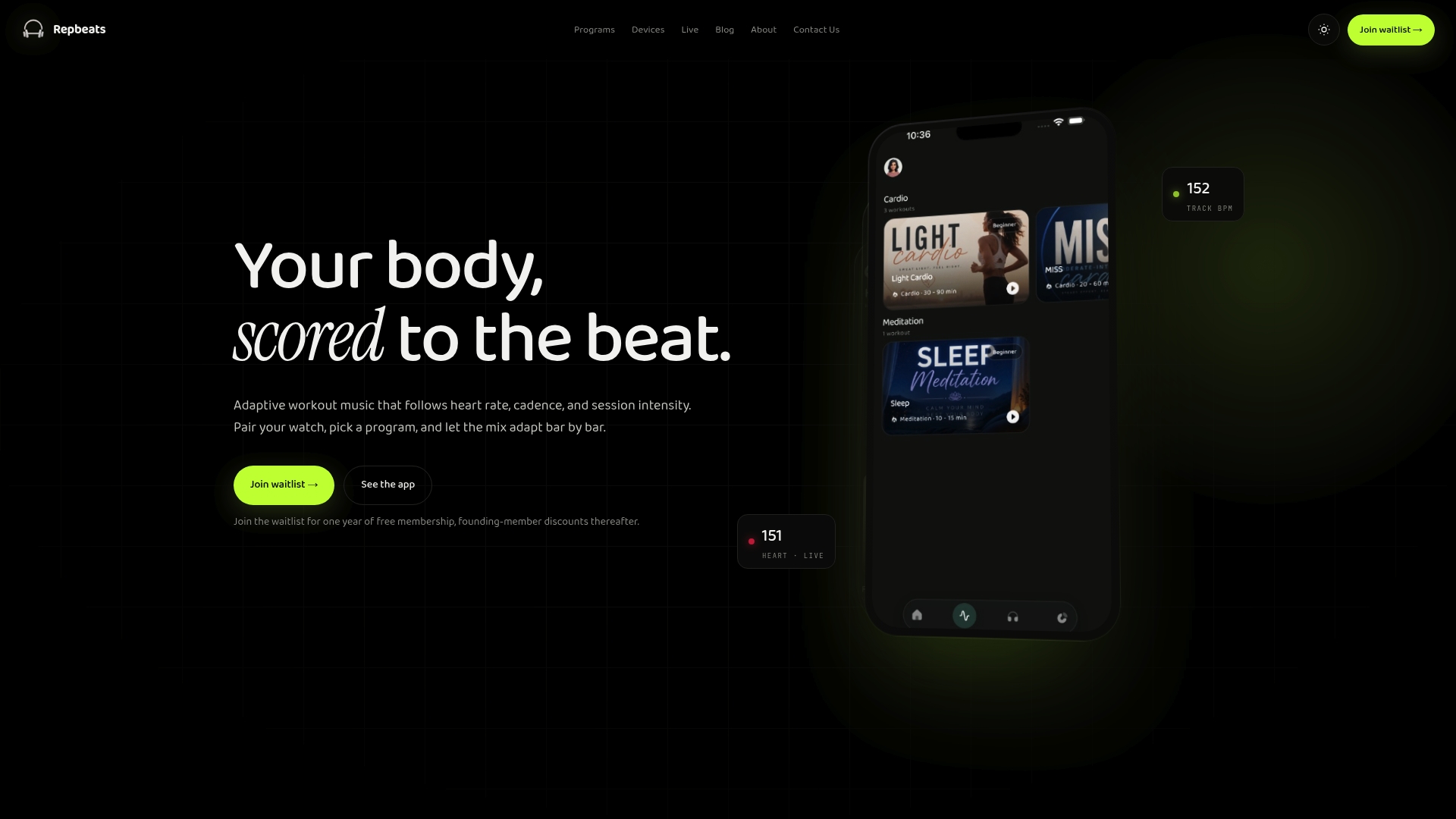
Repbeats syncs music tempo to your live heart rate every bar, turning the science of entrainment into something you can actually feel during a run, a cooldown, or a meditation session. Try adaptive workout music and hear the difference real-time BPM matching makes.