Mindful Cycling Music: How to Pick Tempo and Tracks
Jordan MillsOctober 29, 2026 · 12 min read

Mindful Cycling Music: How to Pick Tempo and Tracks
Mindful cycling music is music you choose on purpose, so it holds your attention on the ride instead of pulling it away. For most riders that means three decisions: a tempo that fits your effort, a structure that follows the shape of your ride, and a volume low enough to keep you aware of the road and kind to your ears. Below is how to make each one, with the numbers research and coaches actually give.
TL;DR
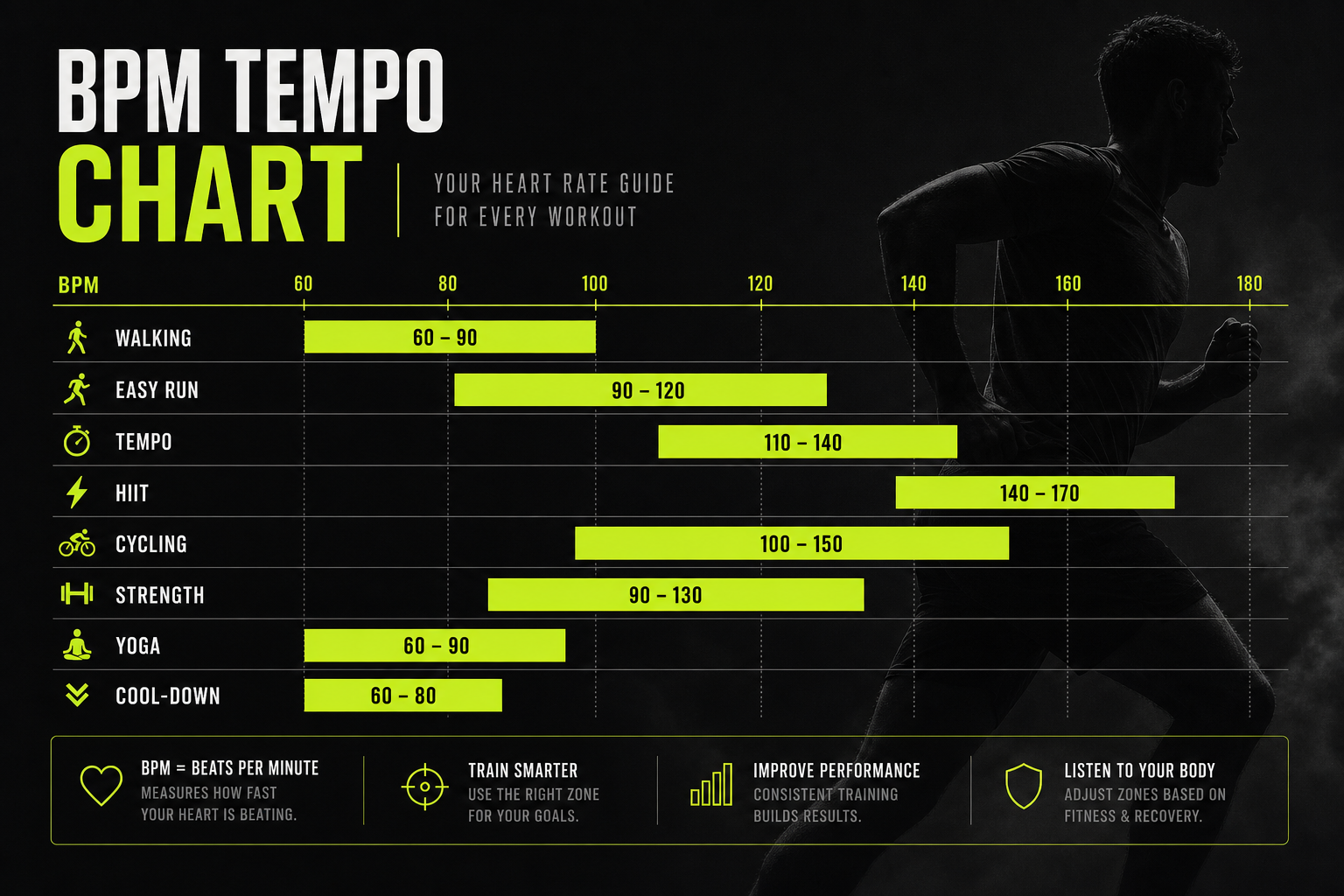
- For relaxed, steady riding, music around 120 to 125 BPM suits roughly 60% of max heart rate. Closer to 135 to 140 BPM suits hard efforts above threshold.
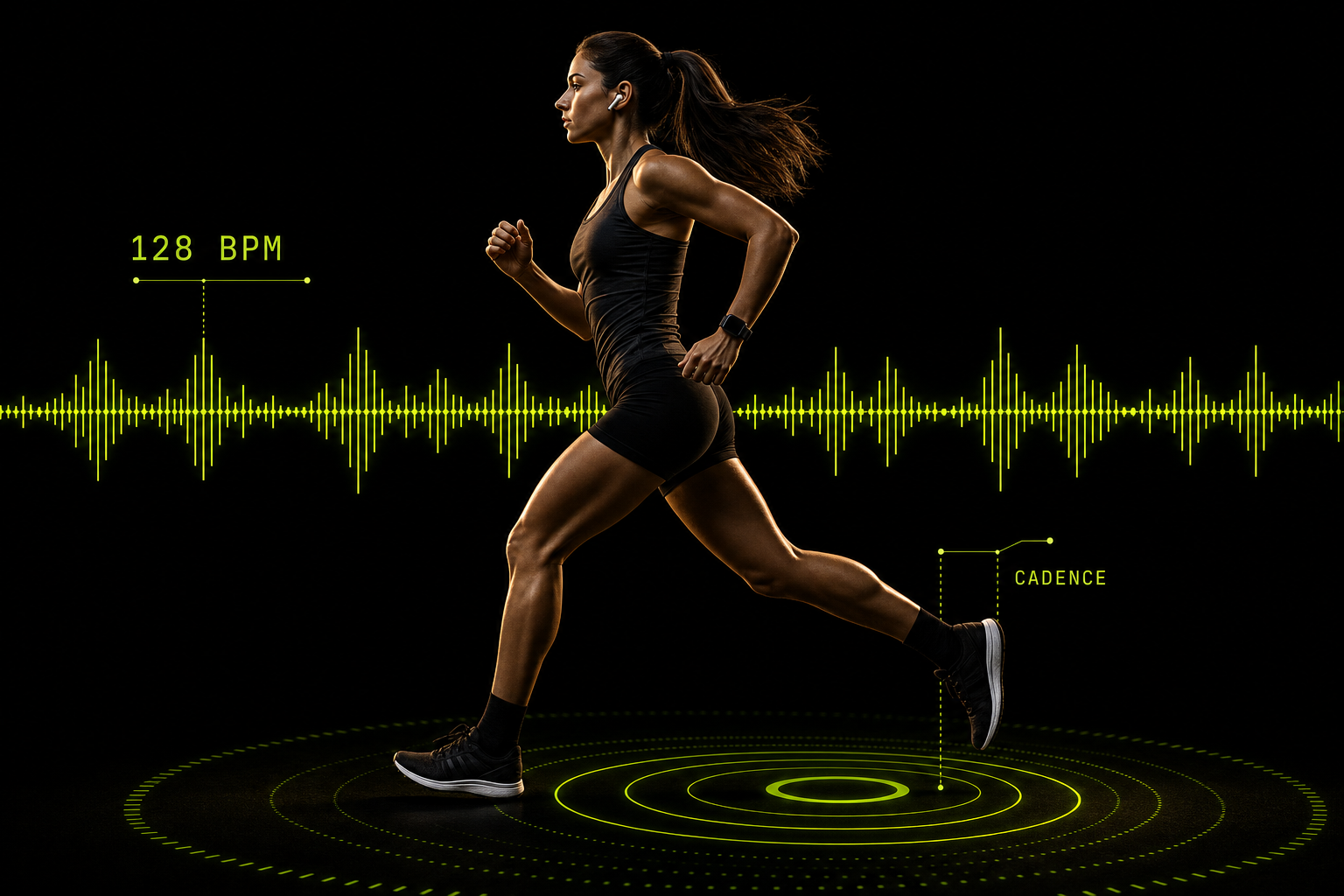
- To sync songs to pedaling, a common starting point is music at about twice your cadence: 64 rpm pairs with 128 BPM, 76 rpm with 152 BPM.
- Music mostly changes how a ride feels, not what it costs your body: studies show lower perceived discomfort and better mood, not magic efficiency.
- Keep volume well below the level where hearing damage starts (85 dB), and know your state’s rules on earbuds before you ride outdoors.
Table of Contents
- What “mindful” means on a bike
- What music actually does for you on the bike
- Match tempo to the ride you want
- Sync songs to your cadence
- Build the ride around the song
- What to look for in a focus or calm playlist
- Our perspective
- Wearables: let your watch carry the numbers
- Try it with Repbeats
- Keep your ears and your awareness
- FAQ
- Sources
What “mindful” means on a bike
A playlist for a mindful ride does a different job than a playlist for a race. The top results for this search are mostly long EDM and pop mixes built to push you harder. That is fine for a sprint session. A mindful ride asks for something else: you notice your breathing, your legs, the road, and the music supports that instead of drowning it out.
Three things make music mindful rather than just loud:
- Intent. You pick the tempo and mood for the ride you are about to do.
- Fit. The beat matches your cadence or your effort, so you are not fighting it.
- Space. Volume leaves room for traffic, wind and your own breathing.
The rest of this guide builds on those three.
What music actually does for you on the bike
It helps to be realistic about the benefits, because they are real but specific.
A 2019 meta-analysis of 139 studies with 3,599 participants found beneficial effects of music on mood (affective valence), physical performance and perceived exertion. On a stationary bike, music alone and music plus video produced the highest enjoyment during and after exercise, even slightly above ventilatory threshold.
The effect is mostly about perception. In a University of Jyväskylä study, 29 recreationally active adults rode about six minutes longer with self-selected music, while heart rate, oxygen uptake, perceived effort and lactate at the end were similar. The researchers frame music as a way to tolerate discomfort and make exercise feel sustainable. Likewise, synchronous music lowered reported limb discomfort in cycling without significantly reducing oxygen uptake, and it raised arousal more than a metronome did.
What this means for you: music will not make pedaling cheaper. It can make the same effort feel more pleasant and easier to stay with, which is exactly what a mindful ride is after.
Match tempo to the ride you want
Tempo is the biggest lever you have. Here is how the evidence breaks down by intensity.
Easy and steady rides
For riding around 60% of max heart rate, Velo’s summary of the research points to roughly 120 to 125 BPM as a comfortable fit. It also reports 120 to 140 BPM as the general motivational sweet spot when you are not syncing to your pedal stroke. Slow music is a poor default: in a study of preferred tempos, slow music was not preferred at any exercise intensity. If you want calm, think steady and warm rather than sleepy.
Hard efforts
Above ventilatory threshold, around 80 to 85% of max heart rate, the same Velo piece gives about 135 to 140 BPM. In a 30-minute stationary test, riders produced significantly more total work only with 140 BPM music than with no music: 47.1 versus 43.4 kJ. Music at 120 BPM did not reach significance.
The American Council on Exercise lists cycling music at roughly 135 to 170 BPM, with a distinct rhythm. That is a broad activity range, not a rule for every rider.
A quick reference
| Ride feel | Typical heart rate | Music tempo to try | Source basis |
|---|---|---|---|
| Relaxed, conversational | About 60% of max | 120 to 125 BPM | Velo summary of research |
| Hard, above threshold | About 80 to 85% of max | 135 to 140 BPM | Velo summary of research |
| Indoor class, 85 to 90 rpm | n/a | 170 to 180 BPM (2:1 rule) | Bicycling, 2025 |
| Heavy climbing, slow pedaling | n/a | 60 to 70 BPM | Ride Shimano, 2025 |
Treat these as starting points. Ten minutes into a ride you will know whether a song feels like it is helping or pushing.
Tempo has a measurable pull
If you are wondering whether the beat really changes how you ride, one study of 12 healthy male students found that music sped up by 10% raised power by 3.5%, while music slowed by 10% cut power by 9.8%. Small sample, but it shows why a mindful rider should pick tempo deliberately: the beat nudges you whether you notice or not.
Sync songs to your cadence
Syncing is the most hands-on form of mindful cycling music. Your pedal stroke becomes part of the rhythm.
The doubling rule. Velo reports that for synchronous riding the practical starting point is music at about twice your target cadence: 57 rpm pairs with 114 BPM, 64 rpm with 128 BPM, and 76 rpm with 152 BPM. At very high cadences near or above 100 rpm, use one pedal revolution per beat instead. Bicycling reports instructors commonly use the same 2:1 relationship, so 85 to 90 rpm means roughly 170 to 180 BPM.

The downstroke method. Ride Shimano suggests matching each downstroke to the beat, with roughly 60 to 70 BPM for controlled, resistance-heavy climbing and 100 to 120 BPM for lighter, faster spinning.
Why it can feel smoother. A research prototype called SoundBike aligned music phase to pedal rhythm, and its preliminary experiment suggested it may help riders hold a steadier cadence than external music alone. It is early research, but it matches what many riders report: when beat and legs agree, you stop thinking about your cadence and just ride.
If you want the math worked out in detail, our guides on matching songs to your RPM and cadence-first tempo music walk through it step by step.
Build the ride around the song
A mindful ride has a shape. Instead of one flat playlist, use the structure of the music as a guide. IDEA Health & Fitness Association describes how cyclists can map a song’s sections in advance: verses for recovery, choruses or crescendos for intensity, cadence or position changes. The song becomes your timekeeper, so you stop checking the clock.
A simple 30-minute outdoor or indoor template:
- Minutes 0 to 5: steady, warm tracks near 120 BPM. Settle in, feel your breathing.
- Minutes 5 to 20: tracks in the 125 to 135 BPM band. Hold a comfortable, even effort.
- Minutes 20 to 25: a few tracks near 135 to 140 BPM if you want a stronger effort. Let choruses mark the harder surges.
- Minutes 25 to 30: drop back to 110 to 120 BPM and spin out.
For climbs, try a slower, heavier beat. Our guide to cadence-matched climb playlists covers the 2-beats-to-1-stroke approach. If your ride is an interval session, the templates for BPM-matched workout music save you from building each playlist by hand.
What to look for in a focus or calm playlist
Research gives tempo numbers, but mood is your call. These criteria hold up in practice:
- Steady pulse, few surprises. Tracks with a clear, regular rhythm are easier to lock onto than songs with sudden tempo shifts or long beatless intros.
- Fewer lyrics for focus rides. Words compete for the same attention you want on your breathing and the road. Instrumental electronic, ambient house or acoustic tracks work well.
- Familiar beats sound right. The Jyväskylä study used self-selected music, so choose tracks you already like rather than whatever a generic mix serves up.
- Consistent loudness. Tracks that swing from quiet to loud tempt you to turn the volume up. Pick sets that stay even.
- Length that fits. Know how many minutes you have, and build to that, so you are not skipping songs mid-ride.
If you want to go the other direction and chase high energy, our EDM cycling workout rides in 20, 30 and 40 minutes show how to structure it.
Our perspective
We built Repbeats around one observation: a static playlist is tuned to the rider you were when you made it. Your cadence drifts, your heart rate climbs on a hill, and a fixed 128 BPM track starts to feel wrong. So our approach is to let the music follow you. Repbeats reads live data from wearables such as Apple Watch and Fitbit, including heart rate, cadence and session intensity, and its auto-DJ adjusts the music’s BPM every bar.
For mindful riding, that matters because you do not have to manage the music. You do not thumb through a phone to find a slower track on a climb. The research above is clear that matching tempo to effort changes how a ride feels, and we think the most mindful thing you can do is remove the decision-making mid-ride so your attention stays on the ride itself. We also limit device access to workout data only, because attention should not cost you privacy.
— Jordan Mills
Wearables: let your watch carry the numbers
You do not need a fancy setup to ride mindfully, but a watch helps you stay in the zone you chose. Apple lists cycling metrics, heart-rate zones, training load and custom work and recovery intervals on its Apple Watch Ultra 3 page, and the watch can select workout-related playlists. Those features track and organize your ride. They do not on their own sync music to your cadence, which is the gap adaptive music fills.
If you are picking a tracker, simplicity matters more than features. This overview of fitness trackers built for simplicity explains what to look for in a reliable, easy-to-read device, a useful lens whatever your age.
Try it with Repbeats
If you would rather ride than build playlists, Repbeats syncs music tempo to your heart rate, cadence and session intensity using your wearable, and it includes meditation programs as well as cardio ones. You can control playback in real time, search the music library and schedule programs.
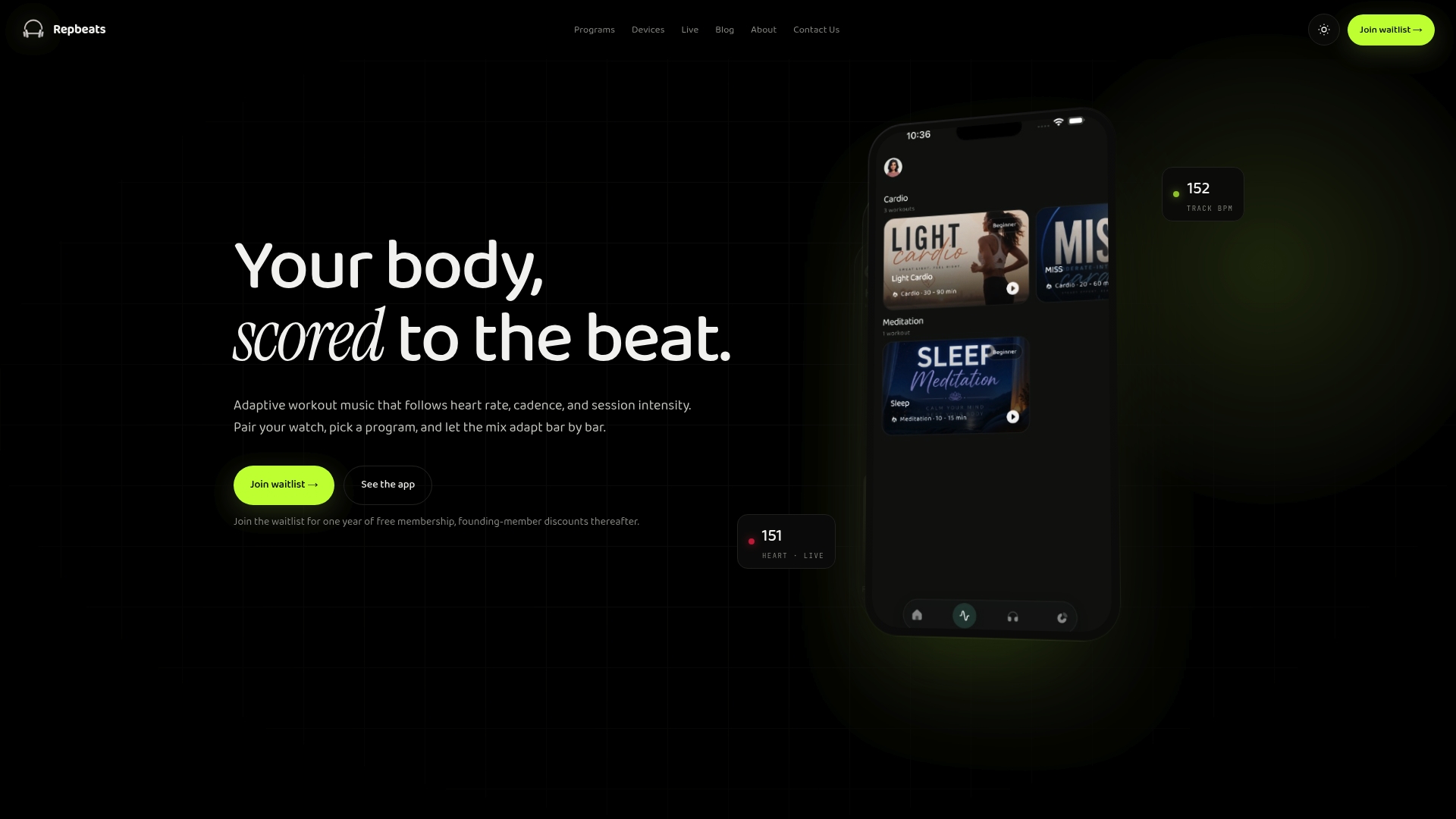
The waitlist launch includes a free year, so you can test it on your regular routes and rides. See how adaptive workout music works and join from the site.
Keep your ears and your awareness
Mindful riding includes the world around you. Two practical points:
Protect your hearing. The CDC says sound at 85 dB or higher can cause hearing loss over time, and that music through headphones at maximum volume can reach 96 to 110 dB, with damage possible within minutes. Both loudness and duration matter. The CDC recommends turning the volume down and taking listening breaks. On a long ride, that means setting the volume low from the start, not raising it as wind noise builds.
Stay aware of traffic. Wind, engines and other riders are information. Use one earbud, or a speaker or bone-conduction setup that leaves your ears open, and keep the volume low enough to hear a car approach. Rules about riding with headphones differ by state, so check your state’s current vehicle code before you ride on roads. For a broader checklist, these road cycling safety tips cover situational awareness for riders.
On busy roads, consider keeping music for bike paths, quiet lanes and the trainer at home.

FAQ
What BPM is best for relaxed cycling?
About 120 to 125 BPM suits easy riding near 60% of max heart rate, according to Velo’s reading of the research. If you are syncing to your pedal stroke instead, double your cadence: a relaxed 60 rpm pairs with about 120 BPM. Adjust by feel.
Does music make cycling easier?
It makes it feel easier, not cost less. Studies show lower perceived discomfort, better mood and longer time to exhaustion with music, while physiological markers stay similar. That is a real benefit for a long or mindful ride.
Should I ride in sync with the beat?
It can help, especially if you want a steady cadence. Start with music at twice your cadence, or one beat per pedal turn above 100 rpm. If matching feels forced on a given day, ride to the mood of the music instead.
Is it safe to wear headphones while cycling?
It depends on where you ride and how you listen. Laws vary by state, so check yours. Whatever the law, keep the volume low, use one ear or open-ear audio, and stay able to hear traffic.
Sources
- Psychophysiological effects of synchronous versus asynchronous music during cycling (PubMed)
- Can High-Intensity Exercise Be More Pleasant? (Journal of Sport and Exercise Psychology)
- Feel the beat, not the burn: Effects of self-selected music (University of Jyväskylä)
- Music in exercise and sport meta-analysis (APA PsycNet)
- Effects of music tempo upon submaximal cycling performance (PubMed)
- Refining music tempo for an ergogenic effect on stationary cycling
- Revisiting the Exercise Heart Rate-Music Tempo Preference Relationship
- ACE-sponsored research: Exploring the effects of music on exercise intensity
- Indoor Cycling: 170-180 BPM Playlist (Bicycling)
- Tune up: How to use music to get the best out of your cycling (Velo)
- Rhythm Riding: How to Ride to the Beat (Ride Shimano)
- The SoundBike: musical sonification strategies
- Synchronize Music With Class Design (IDEA Health & Fitness Association)
- Listen Up! Protect Your Hearing (CDC)
- Protect your hearing this summer and year round (CDC)
- Apple Watch Ultra 3 (Apple)
- Best Fitness Trackers for Independent Seniors
- Road Cycling Safety: How to Ride Smart on Any Road