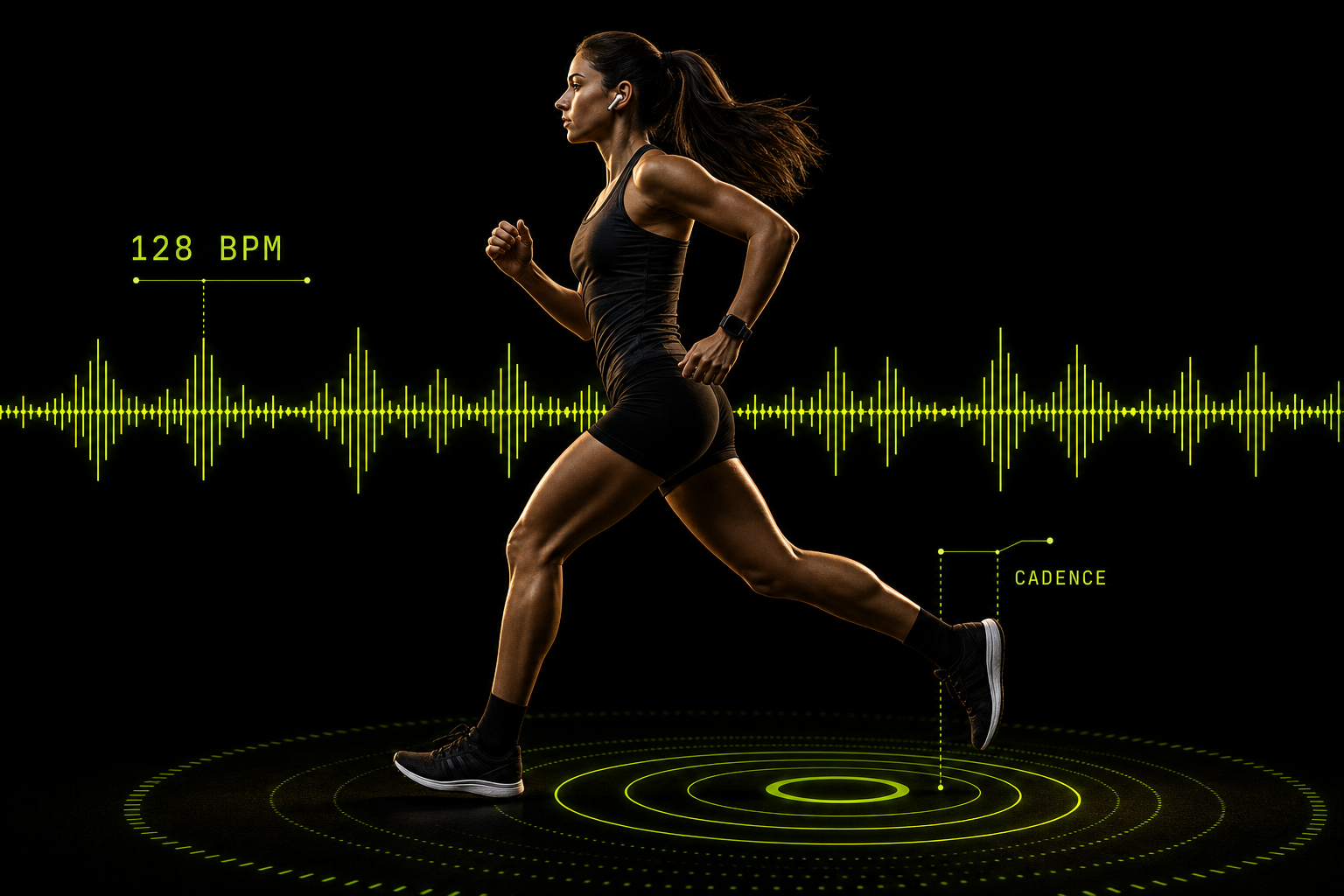
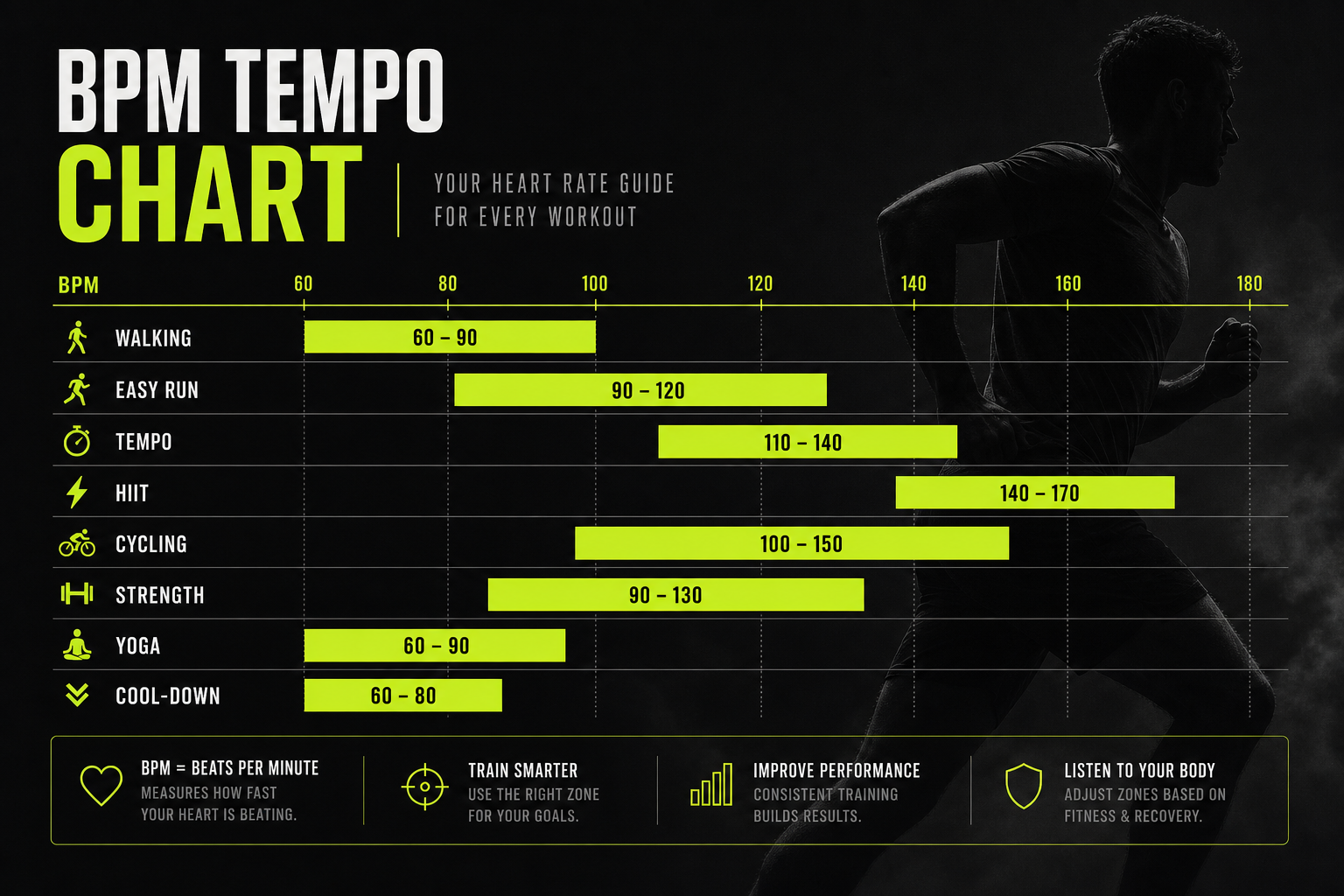
Automate Treadmill Interval Music Around a 130 BPM Baseline
Jordan MillsSeptember 24, 2026 · 9 min read

Automate Treadmill Interval Music Around a 130 BPM Baseline
Use BPM-matched playlists that swap faster tempos for work intervals and slower tempos for recovery, built around a natural baseline tempo that most runners prefer, approximately 130 BPM, adjusting tempo offsets to suit your interval structure. A solid starting template is 2 minutes hard at 138 to 142 BPM, 1 minute easy at 118 to 122 BPM, repeated for 20 to 25 minutes.
TL;DR:
- Using BPM-matched playlists with tempos around 130 BPM can enhance interval training by aligning music with runners’ natural pacing preferences.
- Different interval types require specific BPM ranges, such as 140-165 BPM for Tabata sprints and 100-115 BPM for recovery periods, to optimize motivation and recovery.
- Automating playlist adjustments with wearables and auto-DJ tools can maintain proper tempo throughout varied workout phases, reducing the need for manual track sorting.
- Small tempo adjustments of about 2 to 4% help keep runners synchronized and prevent disruptions during transitions, improving overall running rhythm.
- Choosing tracks with a clear beat, gradually changing tempos, and matching music to training goals enhance pacing and perceived effort during treadmill workouts.
Table of Contents
- Ready-To-Use Treadmill Interval Music Playlists
- How Do You Match BPM to Work and Recovery Intervals?
- How Do You Build a BPM-Matched Treadmill Playlist?
- Quick Fixes for Common Treadmill Playlist Problems
- A Realist’s Take On Chasing the Perfect BPM
- Let Repbeats Handle the Tempo Math For You
- Sources
- FAQ
Ready-To-Use Treadmill Interval Music Playlists
You don’t need to build anything from scratch to start seeing the benefit of treadmill interval music. Ready-made mixes save time, and several styles cover the most common interval formats runners use.
- Tabata power mix (140 to 165 BPM): Short, aggressive tracks built for 20 seconds on, 10 seconds off. Look for electronic or hip-hop tracks with a hard four-on-the-floor kick, since that clarity of beat matters more for this format than melody.
- Aerobic power intervals (120 to 145 BPM range): A mix that alternates 128 to 132 BPM tracks with 118 to 122 BPM tracks fits a 2:1 work to rest ratio well.
- Beginner walk/run intervals (110 to 125 BPM): Slower tempos work better here because the goal is building consistency, not chasing a ceiling. Pop and mid-tempo rock tracks in this range tend to have the clean, steady beat that helps pacing.
- Threshold/sprint sets (150 BPM and up): Sprint intervals with 1:2 or 1:3 rest ratios call for high-energy tracks that hold their intensity without dragging, since the sprint bout itself is short.
- Recovery-focused mixes (100 to 115 BPM): Built specifically for the rest periods between hard efforts, these keep heart rate drifting down rather than spiking it back up.
- Long-interval endurance mix (125 to 135 BPM): For 3 to 5 minute work intervals, a tighter band around the treadmill sweet spot keeps cadence steady over longer stretches.
Streaming platforms carry plenty of playlists labeled “interval workout” or “Tabata,” and they’re a fine starting point. The catch is that most aren’t built around your actual interval lengths or your treadmill pace, so you’ll likely spend time skipping tracks mid-run. That’s the gap a tempo-matched running playlist approach is meant to close.
How Do You Match BPM to Work and Recovery Intervals?
Treadmill runners prefer tempos in a surprisingly narrow window. Research on exercise heart rate and music tempo preference found that preferred tempi for treadmill exercise cluster around 123 to 131 BPM, regardless of how hard the runner is working. That band is your anchor point, not your ceiling.
The 123 to 131 BPM baseline: This range represents the tempo most runners naturally settle into on a treadmill. Push your work-interval tracks above it and drop your recovery tracks below it, rather than picking wildly different genres for each phase.
From there, the ratio of work to rest changes what BPM makes sense. Research on interval training and music tempo backs three templates worth building around:
- Aerobic power (1:0.5 ratio): Two minutes hard, one minute easy. Work tracks run 8 to 12 BPM above your 130 BPM baseline; recovery tracks run 8 to 12 BPM below it.
- Threshold intervals (1:0.5, higher intensity): Similar timing to aerobic power, but work-phase tempo climbs toward 145 to 150 BPM since the effort itself is closer to max sustainable pace.
- Tabata / 20:10 (short, maximal): Work tracks in the 140 to 160+ BPM range, paired with a recovery beat around 100 to 110 BPM, since the rest ratio for sprint-style intervals often runs 1:2 or 1:3.
That research found recovery heart rate commonly settles into a range around 100 to 110 BPM between hard efforts, which corresponds with slower recovery music tempos. Fast-tempo work music paired with medium-tempo recovery music can increase motivation and enjoyment during intervals, while medium-tempo recovery music may reduce perceived exertion during recovery periods, even without changes in physical effort.
How Do You Build a BPM-Matched Treadmill Playlist?
Building one manually is straightforward, if a little tedious. Most streaming platforms and DJ tools display BPM per track, or you can find it through a quick search. From there:
- Sort your library into two folders: work-tempo tracks and recovery-tempo tracks, based on your target BPM ranges.
- Order them in pairs that match your chosen interval template (work track, then recovery track, repeated).
- Set a short crossfade, around 1 to 2 seconds, so the transition between tempos doesn’t jolt your stride.
- Add a buffer track between big tempo jumps rather than snapping straight from 120 BPM to 155 BPM.
- Test the whole sequence at your actual treadmill pace before race day or a real workout, since track order that looks right on paper sometimes feels off mid-stride.
That manual process gets old fast, which is exactly the problem wearable-sync automation solves. Instead of pre-sorting tracks into folders, an app can read your heart rate or cadence live and pick the next track’s tempo on the fly. Some apps use auto-DJ features that update a track’s BPM every bar based on live data from wearables, so the music shifts the moment workout intensity changes, without needing to manually control the device mid-interval. That kind of synchronization matters because a prominent, consistent beat helps runners lock their footfalls to the music, and pairing that rhythmic cue with motivational content has been shown to ease perceived effort during submaximal running.
Pro Tip: Adjust tempo by small increments, about 2 to 4%, rather than large jumps, to allow smooth stride adaptation and prevent disruption of rhythmic synchronization during treadmill running.

Quick Fixes for Common Treadmill Playlist Problems
A few small adjustments separate a playlist that actually helps your pacing from one that just plays in the background.
- Choose tracks with a clear, dominant beat (a strong kick or bassline) over ones with busy, syncopated rhythms. A prominent beat is what your body actually locks onto.
- Keep tempo changes gradual. Shifts under about 4% stay smooth; anything bigger tends to throw off your stride for a few seconds.
- Match tempo to your training goal, not just your top speed. Endurance work responds well to steadier, moderate tempos, while max-effort sprints tolerate more aggressive jumps.
- Set volume so you can still hear treadmill alerts, gym announcements, or anyone talking to you. Full immersion isn’t worth missing a safety cue.
A Realist’s Take On Chasing the Perfect BPM
Here’s what the research doesn’t tell you: your personal tempo sweet spot might sit outside that 123 to 131 BPM band, and that’s fine. The number is a strong starting point backed by real study data, not a rule your legs are obligated to follow. Treat it as a hypothesis to test, not gospel.
My advice: run one interval template for two to four sessions before changing anything. Adjust the BPM by small steps if it feels off, not by scrapping the whole approach after one bad run. And if manually re-sorting playlists sounds like more effort than it’s worth, that’s precisely the case for trying wearable-sync automation instead of fighting with track order by hand.
— Jordan Mills
Let Repbeats Handle the Tempo Math For You
Certain fitness apps can automate playlist adjustments as your pace changes. Instead of requiring users to pre-sort tracks into work and recovery folders, such apps may read live data from popular wearables and update the music’s BPM every bar to match heart rate, cadence, and interval intensity in real time.
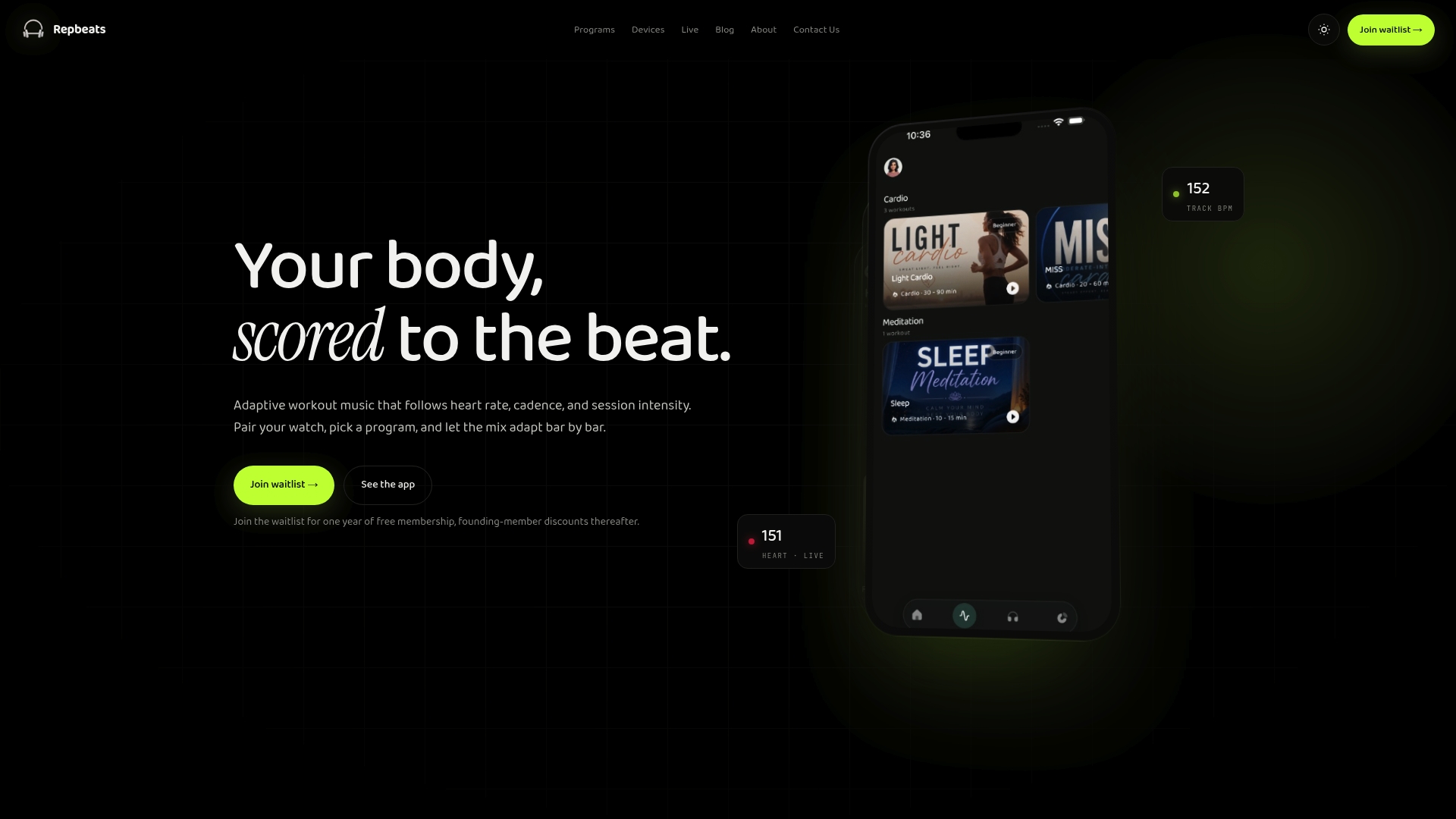
That means the fast-work-track, medium-recovery-track swap covered above happens automatically, whether you’re running a 2:1 aerobic power interval or a 20:10 Tabata set. No more skipping tracks mid-run because the tempo doesn’t fit the phase you’re in. If you want to see how the adaptive music and BPM playlist system works across running, cycling, and meditation sessions, or want more background on how the app is built, that’s the next step worth taking before your next treadmill session.
Sources
This article draws on peer-reviewed research covering treadmill tempo preference, HIIT music timing, and auditory-motor synchronization in running, including work from Sheffield Hallam University, Brunel University, and two studies published in PLOS One.
- On the stability and relevance of the exercise heart rate–music-tempo preference relationship
- Respite–active music in HIIT (Brunel / Karageorghis related research)
- The Power of Auditory-Motor Synchronization in Sports: Enhancing Running Performance by Coupling Cadence with the Right Beats | PLOS One
FAQ
What Songs Are Good for Interval Training?
Songs with a clear, steady beat and a tempo matched to the interval phase work best. Work-phase tracks running 8 to 12 BPM above your baseline (around 138 to 142 BPM off a 130 BPM baseline) and recovery tracks 8 to 12 BPM below it cover most standard interval formats.
What Is a Good Treadmill Interval Session?
A common starting session runs 2 minutes hard, 1 minute easy, repeated for 20 to 25 minutes, which follows the 1:0.5 aerobic power ratio used in interval training research. Beginners often do better starting with a 1:1 ratio and shortening the hard bouts to shorter durations.
What Is the Best Music to Listen to on a Treadmill?
The best treadmill music has a tempo close to your natural stride rate, and research points to 123 to 131 BPM as the range most runners prefer regardless of effort level. For interval work specifically, alternating faster work tracks with slower recovery tracks around that baseline tends to outperform a single fixed tempo. Apps like Repbeats automate that swap using live heart rate and cadence data instead of requiring manual playlist edits.
What Is the 3/12/30 Rule on a Treadmill?
The 3/12/30 rule refers to walking at an incline of 12% and a speed of 3 miles per hour for 30 minutes, a popular steady-state treadmill workout rather than an interval format. It’s unrelated to BPM-based interval structuring, though a steady 110 to 120 BPM playlist can still help maintain a consistent walking cadence through the full 30 minutes.