Types of Running Workout Soundtracks That Boost Performance
Jordan MillsJuly 21, 2026 · 9 min read

Types of Running Workout Soundtracks That Boost Performance
TL;DR:
- Music that matches BPM to workout phase enhances running performance and mental focus. Repbeats provides adaptive playlists synced to real-time heart rate and effort using wearable data. Rotating genres and phase-based playlists prevent fatigue and maintain motivation throughout training.
The most effective running workout soundtracks are organized by BPM range and workout phase, not just by genre or mood. Match your music to your effort level and you will run faster, recover smarter, and stay mentally engaged from the first step to the last.
Here is how the main soundtrack categories break down by intensity:
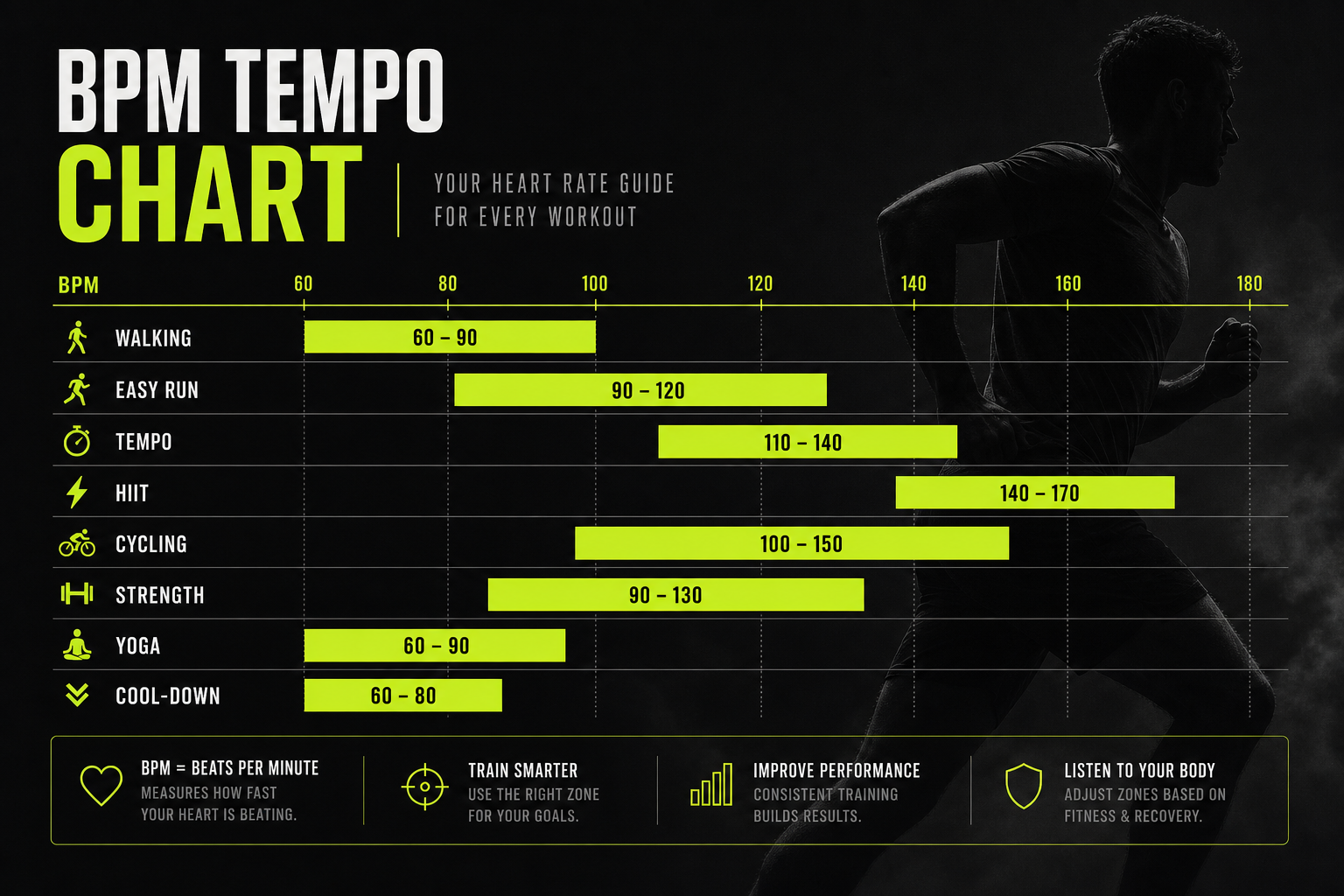
- Warm-up and cool-down: 100–120 BPM, gradual tempo shifts, calming or mid-tempo genres
- Easy and recovery runs: 120–130 BPM, relaxed but rhythmic, ideal for aerobic base building
- Tempo and marathon pace: 140–160 BPM, motivational genres like EDM and hip-hop
- High-intensity intervals and sprints: 160–180+ BPM, aggressive and energizing tracks
Phasing your playlist across warm-up, main effort, and cool-down is what separates a functional soundtrack from a random shuffle. Genre diversity and tempo progression both matter, and the research backs it up.
Table of Contents
- What are the main types of running workout soundtracks?
- 1. Warm-up and cool-down soundtracks
- 2. Easy and recovery run playlists
- 3. Tempo and marathon pace playlists
- 4. High-intensity interval and sprint playlists
- 5. Long-run endurance soundtracks
- 6. HIIT session soundtracks
- 7. Pre-run activation soundtracks
- 8. Lyrical versus instrumental soundtracks
- How does music psychology affect your running performance?
- How Repbeats uses wearable data to personalize your soundtrack
- Best practices for choosing your running soundtracks
- Key Takeaways
- Your soundtrack, built around your effort
What are the main types of running workout soundtracks?
Every runner’s training week includes multiple run types, and each one calls for a different audio approach. Here are the core soundtrack categories, organized from lowest to highest intensity.
1. Warm-up and cool-down soundtracks
A 5–10 minute warm-up at 100–120 BPM primes your nervous system without pushing your pace before your body is ready. Think mid-tempo pop, acoustic tracks, or light electronic grooves. The cool-down mirrors this in reverse: start around 120 BPM and let the tempo descend as your heart rate drops. Lo-fi, ambient, and acoustic genres work well here. Abrupt genre or tempo shifts at either end of a run can disrupt your rhythm and mental focus, so smooth transitions between songs matter as much as the BPM itself.

2. Easy and recovery run playlists
Easy runs sit at 120–130 BPM, matching a conversational cadence. The goal is music that accompanies you without unconsciously pushing you faster. Pop, light hip-hop, and classic rock at this tempo all work. Songs faster than 130 BPM can quietly accelerate your pace, which defeats the purpose of a recovery day. Studies have shown that adults cycling to self-selected music in the 120–140 BPM range can improve endurance compared to silence, highlighting the benefit of the right tempo on performance.
3. Tempo and marathon pace playlists
Tempo runs call for 140–160 BPM music with genuine motivational energy. EDM, hip-hop, and high-energy pop all sit comfortably in this range. The music should feel like it is pulling you forward, not just filling the silence. Nike’s “Running Tempo Mix” on Spotify is a well-known example of this format in practice. At this intensity, lyrical music with assertive vocals can reinforce confidence and grit, particularly during the middle miles when effort starts to compound.
4. High-intensity interval and sprint playlists
This is where you reach for 160–180+ BPM tracks with aggressive, fast-moving energy. Hardstyle, drum and bass, and dubstep all fit the sprint phase. The rapid beat mirrors quick foot turnover and helps maintain cadence even when your lungs are working hard. Keep these tracks short and punchy to match the duration of your intervals. One practical tip from 2026 coaching guidance: skip music during the hardest intervals themselves and use it only for warm-up and recovery periods, so you pace by effort rather than by beat.
5. Long-run endurance soundtracks
Long runs need a different strategy than speed work. The BPM target sits around 120–140, but the real challenge is mental fatigue in the final miles. Reserve a fresh playlist or an album you have been saving for miles 10 and beyond, when attention drifts and form starts to slip. Trance and melodic housework well here because their hypnotic, repetitive structure encourages a “zone-out” state that keeps you moving without demanding active focus.
6. HIIT session soundtracks
High-intensity interval training requires music that matches the push-and-recover cycle. The build-up phase benefits from synthwave or house with increasing tempo and driving bass. The sprint phase calls for hardstyle or drum and bass at maximum energy. Active rest periods work best with mid-tempo funk or nu-disco, something rhythmic but calm enough to let your heart rate drop. Genre choice in HIIT directly affects how well you build momentum and how hard you push during peak efforts.
7. Pre-run activation soundtracks
Five to ten minutes of 130–140 BPM music before any hard session primes your arousal state before the effort begins. Research published in the Journal of Strength and Conditioning Research links pump-up music before exercise to increased motivation and readiness, partly because music triggers dopamine release. This is a short, intentional playlist, not a full workout soundtrack. Three or four high-energy tracks is enough to shift your mental state before you hit the road.
8. Lyrical versus instrumental soundtracks
The choice between lyrics and instrumentals depends on what the run demands. Lyrical tracks with assertive vocals boost confidence and motivation during tempo and easy runs. During concentration-heavy intervals, lyrics can compete with the mental focus required to hold pace and form, so instrumental tracks often work better. Many runners keep a separate instrumental playlist specifically for track workouts and time trials.
How does music psychology affect your running performance?
Music does more than set a pace. It changes how hard the run feels.
The core mechanism is cognitive dissociation: music redirects attention away from physical discomfort, reducing perceived effort. Music tied to positive early-life memories intensifies this effect, which is why a song from your teenage years can hit differently than a track you discovered last week. The emotional association amplifies the psychological benefit beyond what tempo alone can deliver.
Genre plays a specific role in mindset. EDM provides a consistent rhythmic engine for steady-state runs, while motivational hip-hop builds confidence and grit through assertive lyricism and heavy basslines. Classic rock anthems tap into raw, endurance-oriented energy. Upbeat pop shifts focus from effort to enjoyment, which makes it particularly effective for morning runs and easy jogs.
Mental fatigue compounds over long distances, and music novelty is one of the best tools against it. Switching genres every 3–4 songs prevents your brain from habituating to a predictable sound pattern, keeping the cognitive dissociation effect active. A segmented playlist approach preserves this benefit far better than a single massive shuffle.
Pro Tip: Rotate genres every 3–4 songs on runs longer than 45 minutes. Your brain adapts to repetitive sound patterns faster than you expect, and a genre shift acts like a mental reset that extends focus and motivation.
How Repbeats uses wearable data to personalize your soundtrack
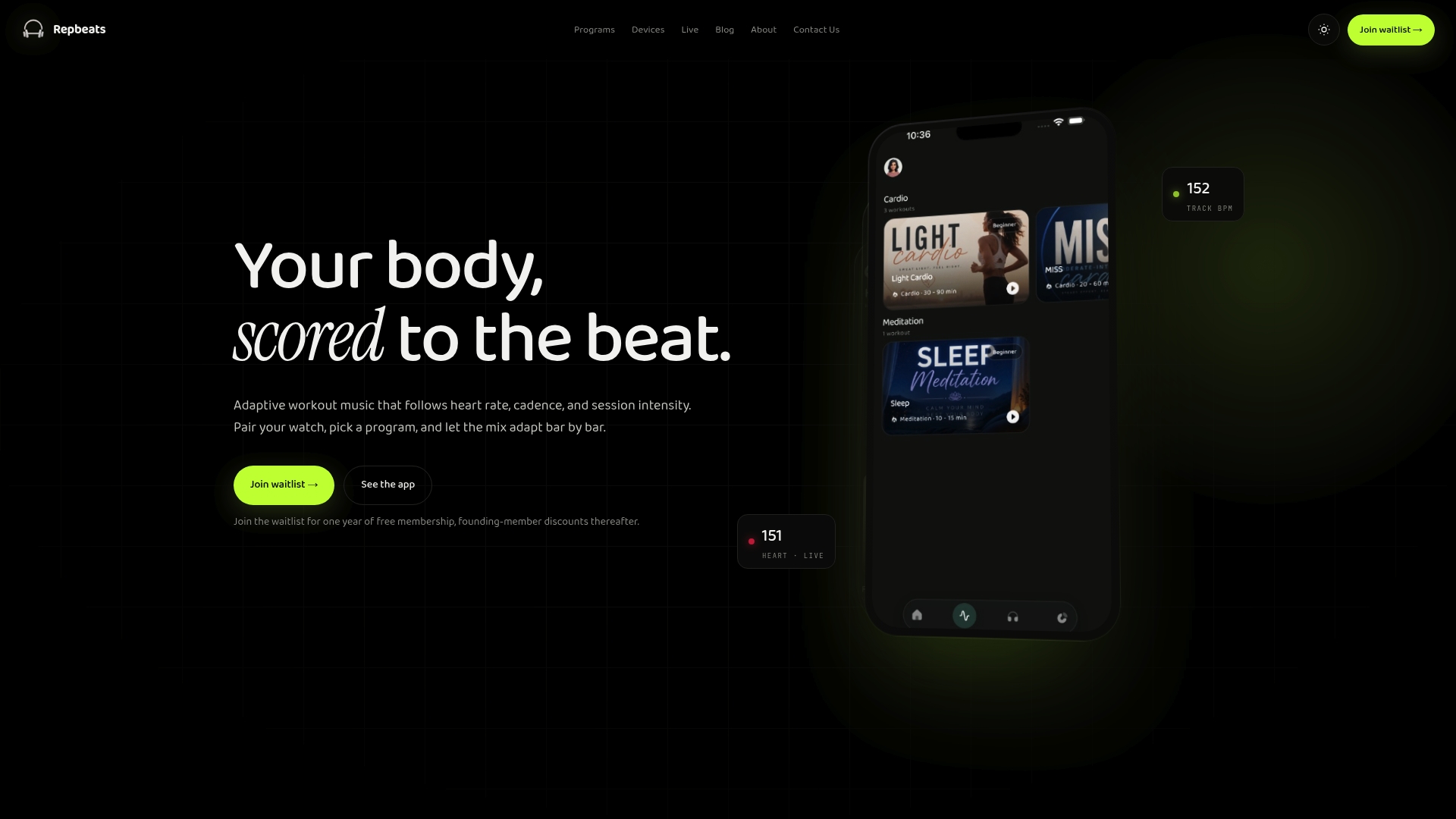
Static playlists, no matter how well structured, cannot respond to what your body is actually doing mid-run. Repbeats solves this with adaptive music technology that reads live data from Apple Watch and Fitbit to sync BPM and volume with real-time workout intensity.
The auto-DJ engine updates the music’s tempo every bar, so the soundtrack evolves with your effort rather than running on a fixed schedule. When your heart rate climbs into an interval zone, the music shifts to match. When you ease into recovery, the tempo drops automatically. This removes the manual work of playlist management and keeps you in your optimal training zone throughout the session.
| Feature | Apple Watch integration | Fitbit integration |
|---|---|---|
| Live heart rate sync | Yes | Yes |
| Cadence tracking | Yes | Yes |
| Auto BPM adjustment | Every bar | Every bar |
| Workout phase detection | Yes | Yes |
| Playlist segmentation | Automatic | Automatic |
Repbeats also factors in emotional user data and wearable-driven personalization to build soundtracks that reflect your history with music, not just your current pace. The result is a playlist that feels personal because it actually is. For runners who want to go deeper on adaptive music best practices, Repbeats publishes detailed guidance on structuring sessions by phase and intensity.
Best practices for choosing your running soundtracks
Putting this all together comes down to a few concrete habits.
- Build separate playlists for easy runs (120–130 BPM), tempo runs (140–160 BPM), and intervals (160–180+ BPM) rather than relying on one large shuffle
- Phase every playlist with a warm-up block at 100–120 BPM, a main effort block at your target pace BPM, and a cool-down block with descending tempo
- Reserve a fresh, high-energy playlist for the final third of long runs when mental fatigue peaks
- Balance lyrical and instrumental tracks based on the cognitive demands of each workout phase
- Use pre-run music at 130–140 BPM for 5–10 minutes before hard sessions to prime your nervous system
- Let adaptive technology handle real-time adjustments when you want to stop managing playlists and just run
Key Takeaways
The most effective running soundtracks match BPM to workout intensity and phase, with adaptive technology from Repbeats taking personalization further than any static playlist can.
| Point | Details |
|---|---|
| BPM by intensity | Easy runs: 120–130 BPM; tempo: 140–160 BPM; intervals and sprints: 160–180+ BPM; long runs: 120–140 BPM. |
| Phase your playlist | Start at 100–120 BPM for warm-up, build to target pace, then descend for cool-down. |
| Genre rotation | Switch genres every 3–4 songs on long runs to prevent mental habituation and sustain focus. |
| Lyrical vs. instrumental | Use lyrical tracks for motivation on easy and tempo runs; switch to instrumental during hard intervals. |
| Repbeats adaptive tech | Repbeats syncs BPM every bar using live Apple Watch and Fitbit data, adjusting automatically to your real-time effort. |
Your soundtrack, built around your effort
Most runners treat music as background noise. The ones who treat it as a training tool, matching tempo to intensity, phasing playlists across workout segments, and rotating genres to stay mentally sharp, get more out of every mile.
Repbeats takes that approach further than a manually built playlist ever could. By pulling live heart rate and cadence data from Apple Watch and Fitbit, it builds a soundtrack that responds to what your body is actually doing, not what you planned in advance. No more pausing mid-run to skip a track that doesn’t fit the moment. The music shifts with you, automatically, every bar. If you want a soundtrack that actually trains with you, try Repbeats and hear the difference on your next run.