Sweet Spot Cycling Music: Tempo, Cadence and Song Picks
Jordan MillsNovember 17, 2026 · 13 min read

Sweet Spot Cycling Music: Tempo, Cadence and Song Picks
The best music for a sweet spot ride is steady, consistent and tied to your pedaling rhythm. Sweet spot work is a long, even effort at about 88–94% of your functional threshold power (FTP, the highest power you can hold for roughly an hour). The music’s job is to keep your cadence smooth for 10 to 20 minutes at a time. The simplest way to do that is to match song tempo to cadence, then let the tempo follow your effort as the ride changes. Repbeats does this live: it reads heart rate and cadence from your wearable and adjusts the music’s BPM bar by bar.
TL;DR
- Sweet spot is 88–94% of FTP, between tempo and threshold. Pick even, steady-energy songs for the main intervals, not songs with big surges.
- For cadence sync, double your target RPM: 85–90 RPM pairs with roughly 170–180 BPM music.
- If you prefer slower music that does not sync to your legs, 120–140 BPM is the range sports psychologist Costas Karageorghis points to.
- Music tempo measurably shifts how hard people ride, so use it on purpose, and keep the pace even.
- Do your sweet spot sessions indoors with music. Outdoors, Karageorghis advises against it.
Table of Contents
- What a sweet spot ride actually feels like
- What the research says about music and cycling effort
- How to match BPM to cadence
- Which songs suit a sweet spot interval
- Putting it together: a 2×20 minute session
- Riding safely with music
- Why a fixed playlist falls short
- Try it on your next sweet spot session
- Frequently asked questions
- Sources
What a sweet spot ride actually feels like
Sweet spot sits between tempo and threshold. TrainerRoad defines it as 88–94% of FTP, with tempo below it at 76–87% and threshold above it at 95–105%. The idea is that it is hard enough to lift your aerobic fitness, yet controlled enough that you can train again soon.
Other sources draw the line slightly differently. The Indoor Cycling Association’s profile has riders hold 88–93% of FTP at a perceived exertion of 6 to 7 out of 10. British Cycling places it at the top of Zone 3 and the bottom of Zone 4. There you can speak only in short sentences, and fatigue builds after 20 to 30 minutes. Typical sessions are 2×20 minutes, or 5 to 20 minute efforts added to a longer ride.
Three facts matter for music:
- The effort is steady. The hard part is holding the same power, often across changing cadences.
- The intervals are long. You need a song sequence that stays interesting for 20 minutes without spiking your effort.
- The intensity is moderately high. At this level music helps you stay in the groove, but it will not do the work for you.
If you do not train with a power meter, a heart rate rule of thumb helps. Wattbike’s guide puts sweet spot at about 75–85% of maximum heart rate and recommends an FTP test before you set power targets.
What the research says about music and cycling effort
Music is not just background here. It changes how hard cycling feels and how long you last.
A 2026 study from the University of Jyväskylä in Finland had 29 recreationally active adults cycle at about 80% of peak power. With their own music at around 120–140 BPM they lasted 35.6 minutes, against 29.8 minutes in silence, about a 20% gain. Heart rate and lactate at the finish were not different. In other words, the music changed how the effort felt, not what the body was doing.
Tempo itself is a lever. In a study by Waterhouse, Hudson and Edwards, speeding up the music by 10% increased distance covered by 2.1%, power by 3.5% and cadence by 0.7%, while slowing it by 10% cut those figures by 3.8%, 9.8% and 5.9%. The riders chose to work harder with faster music and enjoyed it more. The New York Times summary adds that perceived exertion rose only 2.4% with the faster tempo.
Synchrony helps too. At 90% of ventilatory threshold, which is close to the top of the sweet spot range, synchronous music lowered limb discomfort (2.3 against 3.0 in the control condition) and increased arousal. Oxygen uptake did not differ significantly between conditions.
For sweet spot work, the takeaway is practical. A tempo that is a little too slow can quietly pull your power down, and a tempo that drifts fast can tempt you above the target. The goal is music tempo that matches the effort you chose.

How to match BPM to cadence
There are two ways to use tempo, and which one you choose depends on how you like to ride.
Option 1: Synchronize the beat to your pedal stroke
Indoor cycling instructors typically use a 2:1 ratio of BPM to RPM. Pedaling at 85 to 90 RPM pairs with music at 170 to 180 BPM, so each pedal stroke lands on every second beat. The same piece notes that house music’s consistent beat helps riders hold and vary their cadence. The Indoor Cycling Association recommends 170–178 BPM drum ‘n’ bass for a mid-80s to mid-90s cadence.
Karageorghis gives the same logic with a caveat. He suggests doubling your target RPM, so 64 RPM pairs with 128 BPM, but switching to a 1:1 match at very high cadences, for example 98 RPM with a 98 BPM track. Very fast music becomes hard to process when you are working hard.
A worked example: your sweet spot target is 250 watts at 90 RPM. Half-time sync means 180 BPM music. If you climb at 70 RPM, the same rule gives 140 BPM. You do not need a new playlist for every cadence, only a way to change tempo when cadence changes. Our guide on matching songs to your RPM walks through the arithmetic, and the one on BPM divided by two for cadence sensor music covers using a sensor.

Option 2: Use steady music that sets a mood without syncing
Some riders do not want a beat dictating their legs. Karageorghis says asynchronous cycling music has a sweet spot of its own: 120 to 125 BPM at low intensity (around 60% of maximum heart rate) and 135 to 140 BPM above ventilatory threshold, around 80 to 85% of maximum heart rate. The Jyväskylä study’s 120–140 BPM range fits that picture.
Sweet spot sits at the upper end of that heart rate band, so aim for the faster half of the range, around 130–140 BPM, if you do not sync to cadence.
A quick reference:
| Ride type | Approximate BPM (unsynced) | Source note |
|---|---|---|
| Recovery | 100–110 | Bicycling |
| Endurance | 120–130 | Same source |
| Tempo | 140–150 | Same source |
| Intervals | 160+ | Same source |
| Sweet spot, unsynced | about 130–140 | Karageorghis range above |
| Sweet spot, synced to 85–90 RPM | about 170–180 | 2:1 cadence rule above |
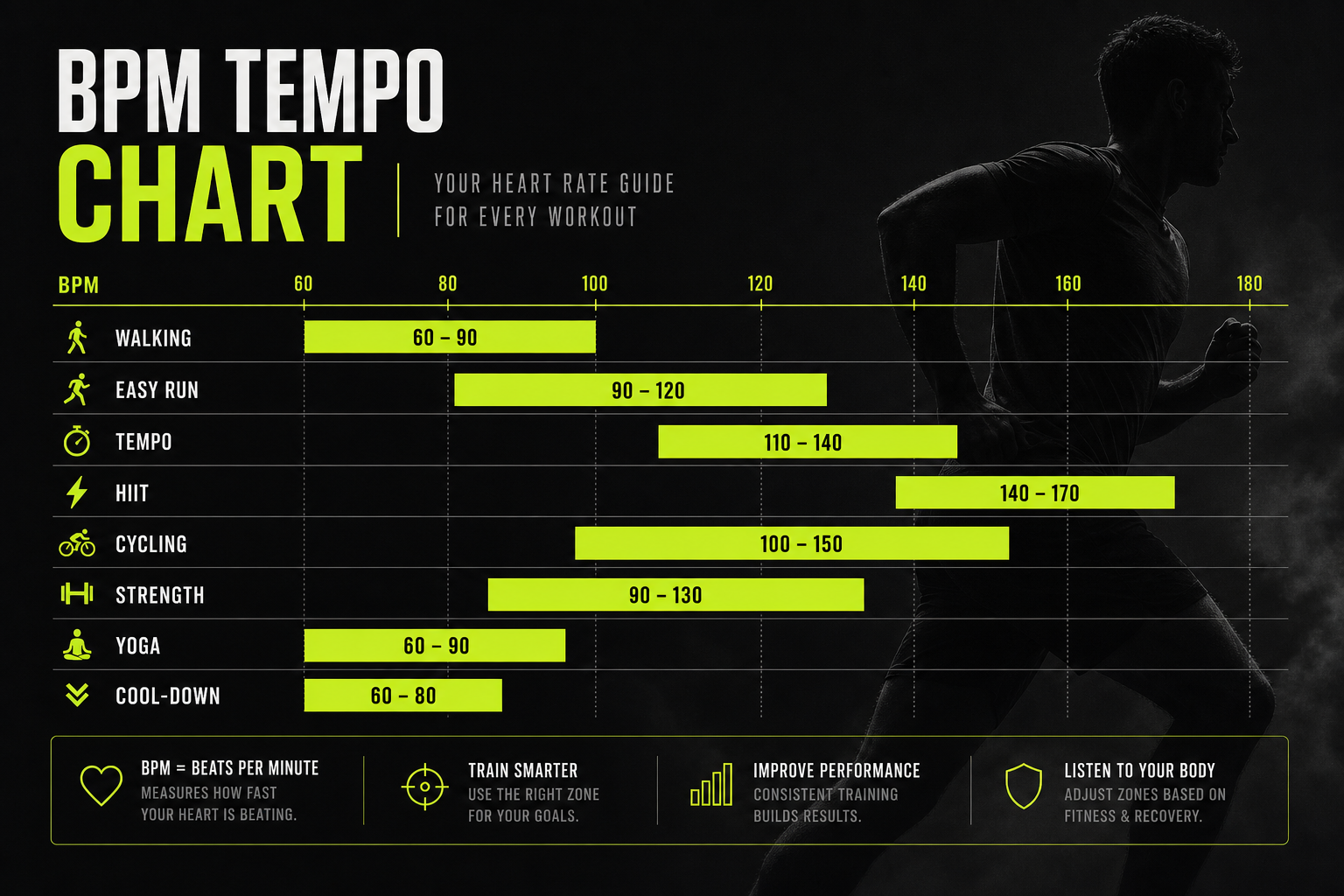
The table shows that “right BPM” depends on whether you sync. If someone says sweet spot needs 140 BPM and someone else says 175 BPM, both can be right. One is describing mood tempo and the other half-time cadence sync. Our tempo chart for every workout type and the guide to cycling training zones and music place sweet spot among the other zones.
Which songs suit a sweet spot interval
BPM gets you in the right range. Song structure decides whether the effort stays even.
IDEA Health & Fitness Association’s class-design guidance says monotonous, flat-energy songs suit steady-state efforts like long climbs, while songs with crescendos work for interval drills. Instrumental music suits warm-ups, and familiar sing-along songs ease recovery. A sweet spot block is steady-state, so the first category is your main pool.
Putting that into a ride:
- Warm-up (10 to 15 minutes): instrumental or mid-tempo tracks. Let cadence climb gradually.
- Interval one (steady): consistent, almost hypnotic tracks. Electronic, house and drum ‘n’ bass fit because the beat does not change.
- Rest between intervals: familiar songs you can sing along to, at a slower tempo, so your heart rate comes down.
- Interval two: repeat the type of track from interval one, possibly with a slightly different groove so it feels fresh.
- Last five minutes: the Indoor Cycling Association suggests ending a 20-minute effort with a familiar, hard-driving song with lyrics. That gives you a lift at the point where fatigue builds most.
Avoid tracks with huge drops or breakdowns in the middle of an interval. They invite you to surge, and then fade. FasCat Coaching’s Frank Overton, who coined the term sweet spot, says intervals should be paced evenly rather than starting hard and fading. A song that nudges you to start hard works against that.
Song length matters as well. A 4-minute track gives you five transitions in a 20-minute interval, and each is a chance to drift off pace. Longer electronic tracks reduce that, and mixing a few shorter lyrical songs with them keeps your mind engaged.
Putting it together: a 2×20 minute session
Here is a sample plan for a rider with an FTP of 250 watts, so the target is about 220 to 235 watts. The wattage is simply 88 to 94% of 250.
- 15 minutes warm-up at an easy effort, 85 to 90 RPM, 100 to 130 BPM music.
- 20 minutes at 220–235 watts. Synced option: 90 RPM and 180 BPM. Unsynced option: 130–140 BPM, steady-energy tracks.
- 5 minutes easy spinning. Familiar songs, 100–110 BPM.
- 20 minutes at 220–235 watts. Same approach. Vary the groove, keep the tempo.
- 10 minutes cool-down. Instrumental or mellow tracks.
Wattbike’s British Cycling coach Lisa Thake says to think quality over quantity: too much sweet spot in a week causes muscle fatigue and the opposite of the result you want. Music that nudges you to ride harder than planned can make that happen, so let your numbers set the pace, not the playlist.
If you want to go deeper on how tempo alters feel across a ride, see how music tempo affects your workout. Riders who struggle with attention on long steady efforts will also find the notes on focus cycling music useful.
Riding safely with music
Sweet spot work suits the indoor trainer, and that is also where music is safest. Karageorghis advises against listening to music while cycling outdoors, calling it potentially very dangerous. Traffic, other riders and your own bike handling all depend on what you can hear. Keep your music for the trainer, a stationary bike or a closed-off area where you can stay fully aware.
He also suggests that recreational riders do two sessions with music for every one without, and rotate playlists every two weeks. A ride without music keeps you tuned in to your breathing and your own sense of effort, which helps you judge pace by feel.
Why a fixed playlist falls short
A static playlist has a built-in problem. Songs have set tempos, but your cadence and heart rate drift through a 20-minute interval. You start at 90 RPM, fatigue creeps in, and by minute 15 you are at 84. The beat stays where it was, and the sync you set up is gone. Manually skipping tracks or editing a playlist while holding 230 watts is distracting.
That is the gap adaptive music fills, and it is why we built Repbeats around it.
What we think about sweet spot music
Sweet spot is a precision effort. The target is narrow, the duration is long and the reward comes from consistency. Music should serve that, not compete with it.
At Repbeats we build the soundtrack around the rider. Our auto-DJ updates the music’s BPM every bar, using live data from your Apple Watch or Fitbit: heart rate, cadence and session intensity. So when your cadence settles into 90 RPM, the music settles with it. When it drifts, the tempo follows rather than leaving you chasing a beat that no longer fits.
We think this is the right way to use what the research shows. Tempo changes how hard people ride, and synchrony lowers perceived discomfort at high intensity. If the tempo can be tied to your cadence and heart rate by default, you get those benefits without managing playlists mid-interval.
Our privacy policy limits device access to workout data only. The app reads what it needs to keep your music in step and nothing more.
Jordan Mills
Try it on your next sweet spot session
If you ride sweet spot intervals indoors, Repbeats can handle the tempo for you. The Repbeats app syncs music tempo to heart rate, cadence and session intensity using data from wearables like Apple Watch and Fitbit, and it includes real-time music control, music library search and program scheduling. Our waitlist launch includes a free year. You can also see how it works on the Repbeats site.
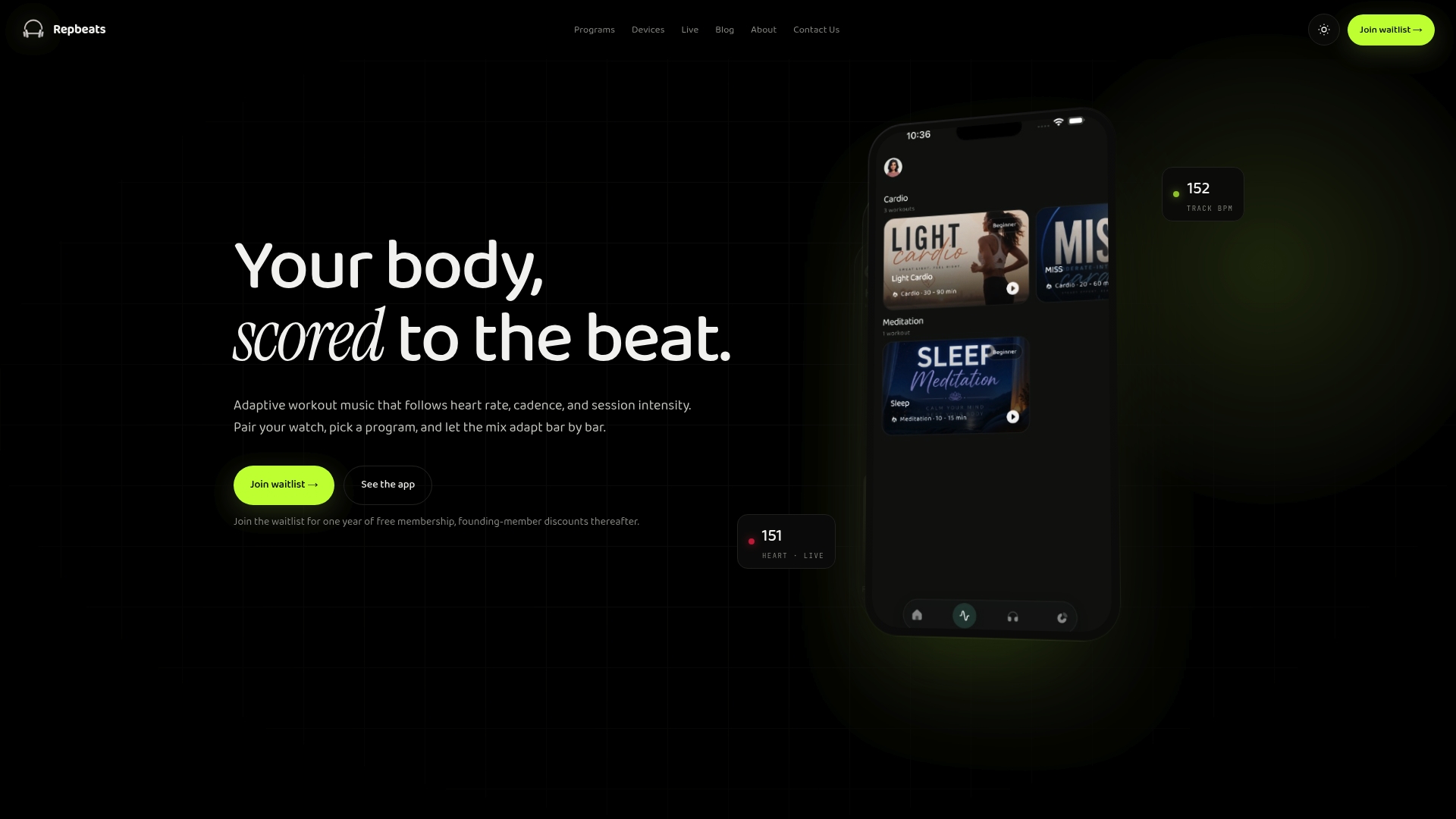
Set your target cadence, start your interval and the music follows your effort bar by bar.
Frequently asked questions
What is the best BPM for sweet spot cycling?
It depends on whether you sync to cadence. If you do, double your RPM: 85 to 90 RPM pairs with about 170 to 180 BPM. If you do not sync, music in the 130 to 140 BPM range matches the upper end of the 120 to 140 BPM window Karageorghis describes for riding at about 80 to 85% of maximum heart rate.
What are sweet spot workouts for cycling?
They are intervals at roughly 88 to 94% of FTP, usually 2×20 minutes or efforts of 5 to 20 minutes added to a longer ride. British Cycling describes the feel as speaking in short sentences, with fatigue building after 20 to 30 minutes. TrainerRoad notes that the cost in fatigue is low enough to repeat several times a week.
What kind of songs work for a steady sweet spot interval?
Choose consistent, flat-energy songs with a steady beat, such as house, techno or drum ‘n’ bass. IDEA’s guidance says these suit steady-state efforts, while songs with crescendos fit interval drills. Save familiar sing-along tracks for the recovery between efforts.
Does music really make you ride harder?
Research says yes. In a 2026 Finnish study, riders at about 80% of peak power lasted 35.6 minutes with music against 29.8 minutes in silence. Faster music also raised power and distance in a separate study, so choose tempo deliberately and let your power numbers set the effort.
Sources
- Sweet Spot Training: The Efficient Way to Get Faster, TrainerRoad
- Quick Profile: That Sweet Spot, Indoor Cycling Association
- Understanding intensity 3: power, British Cycling
- Sweet Spot Training, Wattbike US
- Feel the beat, not the burn, University of Jyväskylä
- Effects of music tempo upon submaximal cycling performance, PubMed
- Phys Ed: Playing Music During Exercise, The New York Times
- Psychophysiological effects of synchronous versus asynchronous music, PubMed
- 170-180 BPM Playlist for Indoor Cycling, Bicycling
- FTP Field Testing Music Tips, Indoor Cycling Association
- Tune up: How to use music to get the best out of your cycling, Velo
- Songs for Bike Riding, Bicycling
- Synchronize Music With Class Design, IDEA Health & Fitness Association
- Sweet Spot Training Explained by the Coach Who Invented It, FasCat Coaching