Cycling Training Zones and Music: Match BPM to Each Zone
Jordan MillsNovember 5, 2026 · 12 min read

Cycling Training Zones and Music: Match BPM to Each Zone
The short answer: use slower music (roughly 100 to 110 BPM) for recovery, 120 to 130 BPM for endurance, 140 to 150 BPM for tempo work, and 160+ BPM for hard intervals. Then check the result against your cadence, because the beat you pedal to matters as much as the genre. Below, we break down each training zone, the music that tends to suit it, how to turn BPM into pedal strokes, and how to keep it safe.
TL;DR
- Training zones are intensity bands, set by heart rate, power or perceived effort. Music works best when its tempo steps up with the zone.
- General guidelines: about 100 to 110 BPM for recovery, 120 to 130 for endurance, 140 to 150 for tempo, and 160+ for high-intensity intervals.
- To match cadence, divide the song’s BPM by two: a 170 BPM track suits about 85 RPM if you pedal once per two beats.
- Indoors, synchronized music is easy to use. Outdoors, safety comes first, so keep volume low or ride without headphones.
- Your heart rate can change faster than a static playlist can, which is why adaptive music that follows live data helps.
Table of Contents
- What cycling training zones are, and why music fits them
- BPM by training zone: a practical map
- Turning BPM into pedal strokes: the cadence link
- Building a ride, zone by zone
- What the research says music can do for a cyclist
- Using music safely
- Finding songs at the right BPM
- Where Repbeats fits
- Our perspective
- FAQ
- Sources
What cycling training zones are, and why music fits them
Training zones are intensity regions that correspond to different physiological processes, and cyclists use them to target specific adaptations. You can set them with heart rate, power or perceived exertion, and BikeRadar describes both three-zone and six-zone models.
The six-zone power model, based on the work of Dr. Andy Coggan, runs from Zone 1 (active recovery, under 55% of threshold power) up to Zone 6 (anaerobic capacity, above 121%). In between sit endurance, tempo, threshold and VO2 max efforts.
The zones are the “what” of a ride. Music is the “how it feels.” A song that is too fast for a recovery spin pulls you into a harder effort than you planned. A song that is too slow in a threshold interval makes it easier to ease off. Matching tempo to zone keeps the soundtrack working for your plan rather than against it.
BPM by training zone: a practical map
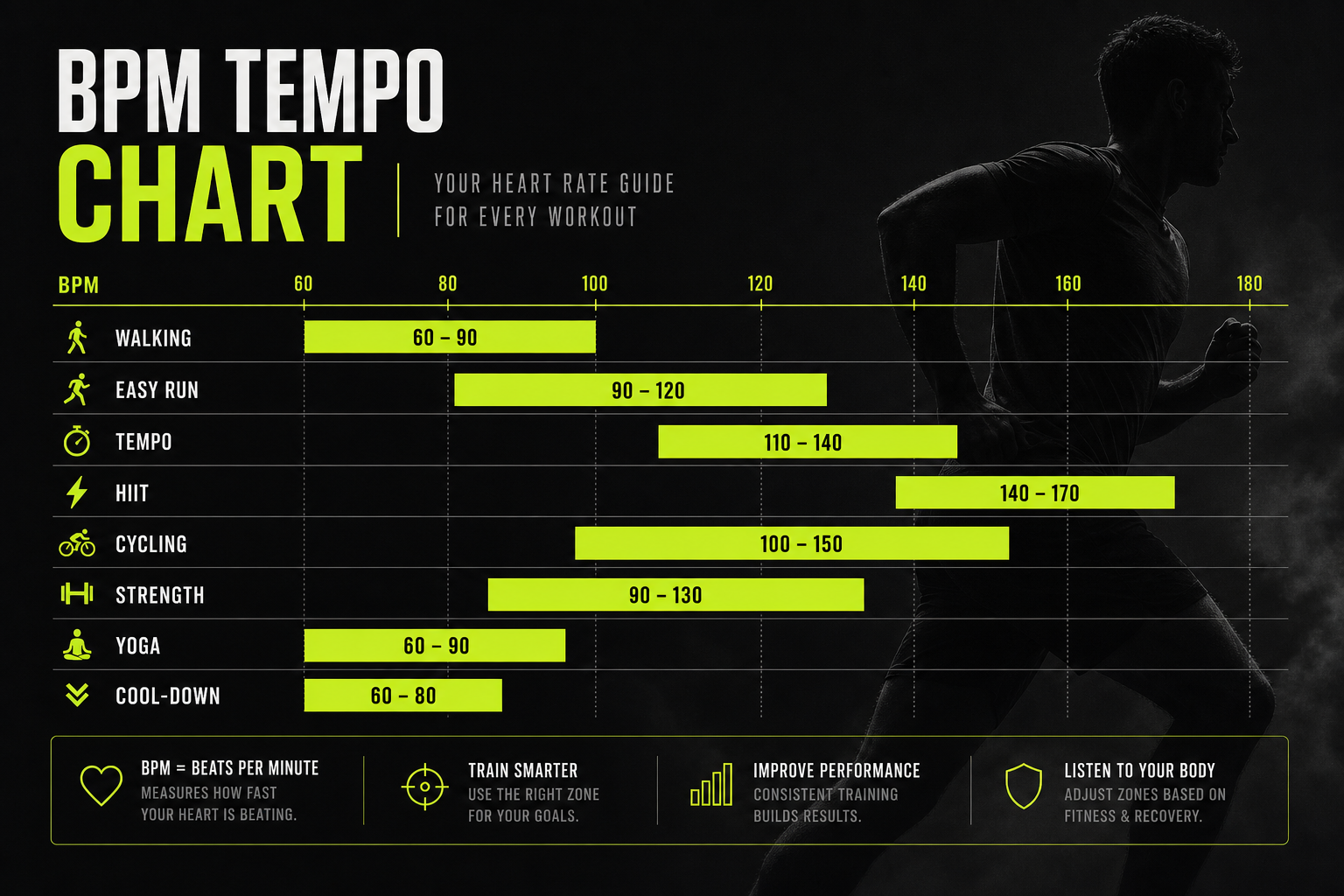
No single number is correct for everyone, but there are widely used ranges. Bicycling’s 2016 guidance suggests roughly these tempos:
| Zone (power model) | Feel | Song tempo to start with |
|---|---|---|
| Zone 1, active recovery | Spinning, easy breathing | About 100 to 110 BPM |
| Zone 2, endurance | Steady, you can talk | About 120 to 130 BPM |
| Zone 3, tempo | Comfortably hard, short sentences | About 140 to 150 BPM |
| Zones 4 to 6, threshold and above | Hard to very hard | About 160+ BPM |
A few notes on reading this table:
- The ranges are starting points. Your height, gear and fitness change how a given tempo feels.
- Other sources give wider bands. ACE’s 2010 summary puts typical cycling music at about 135 to 170 BPM overall, which fits a class setting where most of the ride is moderate to hard.
- For hard efforts above the ventilatory threshold (about 80 to 85% of maximal heart rate), Dr. Costas Karageorghis recommended music around 135 to 140 BPM in a Velo report. So “faster is always better” is not the rule. Pick a tempo you can hold and that feels driving rather than frantic.
If you like to build playlists from a genre you already love, ready-made options can save time. For example, some listeners use upbeat rap playlists as a source of high-tempo tracks for interval blocks, then check each song’s BPM before it goes into the ride.
Turning BPM into pedal strokes: the cadence link
BPM counts beats per minute. Cadence counts pedal revolutions per minute (RPM). They are not the same number, and most songs are too fast to pedal one stroke per beat. The usual fix is a 2:1 ratio: two beats per pedal revolution, so you pedal at half the song’s BPM. We cover this in detail in our guide to BPM divided by two for target RPM.
Some worked examples:
- A 170 BPM song, pedaled at one stroke per two beats, gives 85 RPM. That is a typical steady endurance cadence.
- A 140 BPM song gives 70 RPM, a good fit for a seated climb or a low-cadence strength effort.
- A 180 BPM song gives 90 RPM, a common choice for a brisk tempo block.
- A 120 BPM song gives 60 RPM, which is slow, so for a spin-up you would choose something faster.
So the real question is two steps. First, which cadence does this zone call for? Second, what BPM is double that? Our article on matching songs to your RPM walks through that process, and the cadence sensor guide shows how a sensor can take the guessing out of it.
This also explains why the heart-rate-based table above and a cadence-based approach can seem to disagree. A 160 BPM song yields 80 RPM, which feels easy in a low gear and brutal in a hard one. Zone follows effort, not the number on the screen. Use cadence to pick the song and your zone to pick the gear.

Building a ride, zone by zone
Warm-up and recovery
Start low. Songs around 100 to 110 BPM suit Zone 1 spinning, and you can step up toward 120 BPM as your legs open up. Keep the vocals light and the beat steady. This is also the right pace for cooldowns, when you want your heart rate to come down without a sudden silence.
Endurance rides
Endurance is where most of your weekly volume lives, and it is where music can quietly go wrong. If every track is a banger, you drift into tempo. Songs around 120 to 130 BPM, with few big drops, help you keep a conversational effort. Longer rides benefit from variety in sound but consistency in tempo. Our piece on focus cycling music goes deeper on keeping a steady head and a steady beat over a long session.
Tempo and threshold blocks
Here the tempo climbs to about 140 to 150 BPM and beyond. Indoor instructors often mix tracks with lyrics and instrumental electronic tracks to sustain long efforts, and the Indoor Cycling Association has described this approach for 20-minute FTP field tests. The idea: lyrics for lift, steady electronic rhythm for pace.
Intervals and sprints
For the top zones, 160+ BPM is the common starting range. Short bursts reward songs with a clear build and a drop at the right moment. Time your hard efforts to the chorus or the drop, and your recovery to the verse. Bicycling reports that high-BPM music may help newer riders with lower cadences speed up their pedal stroke.
Climbing
Climbs ask for a lower cadence at higher force. A 2-beats-per-stroke approach with a slower song, around 130 to 150 BPM, gives you a deliberate rhythm. See how to build cadence-matched climb playlists for a full method.
What the research says music can do for a cyclist
The evidence on music and cycling is encouraging, and some of it is specific to pedaling.
- Synchronous music helps efficiency. According to Bicycling, synchronous exercise, where cadence lines up with the tempo, has been found to increase efficiency and motivation while lowering perceived exertion.
- Cadence follows the beat. A 2003 study by Schwartzmiller, published in the Journal of Cardiopulmonary Rehabilitation, found that pedaling cadence and power output changed in parallel with the dominant beat frequency of background music.
- Tempo can move the heart. A 2007 study by Gordon found that speeding up music by 33 percent raised heart rates in rehab patients by 10 to 15 beats per minute.
- Indoor riding is a natural fit. Dr. Karageorghis has said indoor cycling is a perfect application for synchronous music, because the activity is technically simple and exertion is easy to control.
For more on the mechanism, read why music tempo affects exercise and how tempo lowers perceived exertion. If motivation is your sticking point, how music affects cycling motivation and endurance is a good next read.
Using music safely
Two cautions belong right where you act on all of this.
Do not let the playlist set the zone. Exercise scientists have noted that music can make people work harder than intended, and in clinical settings that can be dangerous. If you ride with a heart condition, are returning after illness or take medication that affects heart rate, ask your doctor which heart rate ceiling applies to you, and follow that number over any song. A heart rate monitor or power meter keeps the effort honest.
Outdoors, awareness comes first. Dr. Karageorghis advises against listening to music while cycling outdoors, calling it potentially very dangerous. Laws on headphones while riding differ by state and city in the US, so check your local rules. A practical approach is to save synchronized, headphone-based sessions for the trainer or the gym bike, and keep outdoor rides for natural sound or, if you do use audio, one low-volume speaker with open ears.
One more tip from the same source: for recreational riders, using music in two sessions and riding without it for one can help keep its motivational effect strong.

Finding songs at the right BPM
You have three practical ways to get a playlist that fits your zones:
- Build it by hand. Check the BPM of tracks in your library with a tool such as MixMeister BPM Analyzer, which Bicycling mentions, and sort them into warm-up, endurance, tempo and interval folders.
- Search by BPM. Our guide to finding songs by BPM for wearable-synced workouts shows how to filter a library by tempo.
- Let the music follow you. A fixed playlist assumes you will ride exactly as planned. Real rides rarely go that way: a headwind, a long red light or a hill changes your heart rate within a minute.
For a broader view of the science, see how music tempo affects your workout.
Where Repbeats fits
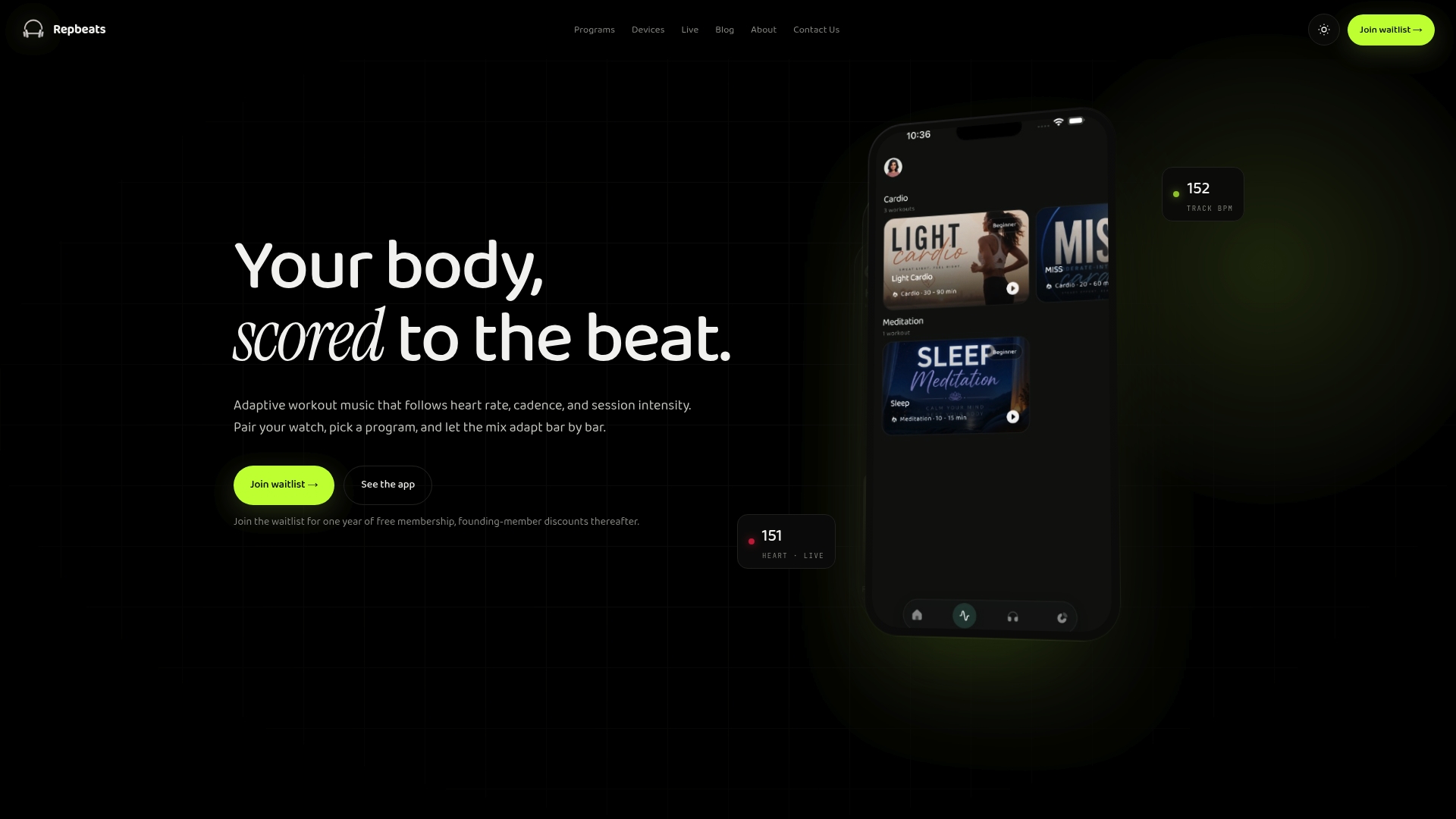
We built Repbeats for exactly this gap between a plan and a live ride. The app syncs music tempo to your heart rate, cadence and session intensity using live data from wearables such as Apple Watch and Fitbit. Its auto-DJ updates the music’s BPM every bar, so as you move from endurance toward tempo, the soundtrack moves with you instead of waiting for the next track on a list.
The app also lets you control playback in real time, search your music library and schedule programs, and it includes meditation programs for recovery days. Our privacy policy limits device access to workout data only.
The Repbeats waitlist launch includes a free year. You can learn more and join on the Repbeats app page.
If you would rather start from the home page, you can find everything at repbeats.com.
Our perspective
Most cycling playlists are built for the ride you intend to do. Few are built for the ride you actually do. Zones are fluid in practice: a gust of wind, a short climb or a long day can push your heart rate up or down before the next song ends.
That is why we think tempo should respond to the rider. When music follows heart rate, cadence and session intensity, it can support each phase of a workout instead of competing with it. Updating the beat every bar keeps changes smooth, so you feel supported rather than jolted.
We designed Repbeats around that idea, for runners, cyclists and meditators who train with a wearable and want their soundtrack to work as part of the plan.
Jordan Mills
FAQ
What BPM is best for cycling Zone 2?
Start around 120 to 130 BPM, the range Bicycling’s guidance associates with endurance. Zone 2 should feel steady and conversational, so choose tracks with few sudden drops. If a song makes you want to surge, it is too intense for the zone.
How do I convert BPM to cycling cadence?
Divide the song’s BPM by two to get the RPM you would pedal at one stroke per two beats. A 170 BPM track suits about 85 RPM. If you prefer a different cadence, pick a song at double that number.
Should I listen to music on outdoor rides?
Safety comes first outdoors. Dr. Karageorghis advises against it, and headphone rules vary by state and city in the US. Indoor sessions on a trainer or gym bike are the easiest place to use synchronized music.
Does faster music make me ride harder?
Often, yes. Studies summarized by ACE found that pedaling cadence and power changed with the beat. That is useful for intervals and a reason to slow your playlist down on easy days.
Sources
- Training zones for cycling: heart rate and power zones, BikeRadar
- What Music Should You Listen To While You Ride?, Bicycling
- Indoor Cycling: 170-180 BPM Playlist, Bicycling
- ACE-sponsored Research: Exploring the Effects of Music on Exercise Intensity
- Tune up: How to use music to get the best out of your cycling, Velo
- FTP Field Testing Music Tips, Indoor Cycling Association