3 Ready Zone 5 Music Templates for Wearable Synced Max Effort
Jordan MillsSeptember 22, 2026 · 11 min read

3 Ready Zone 5 Music Templates for Wearable Synced Max Effort
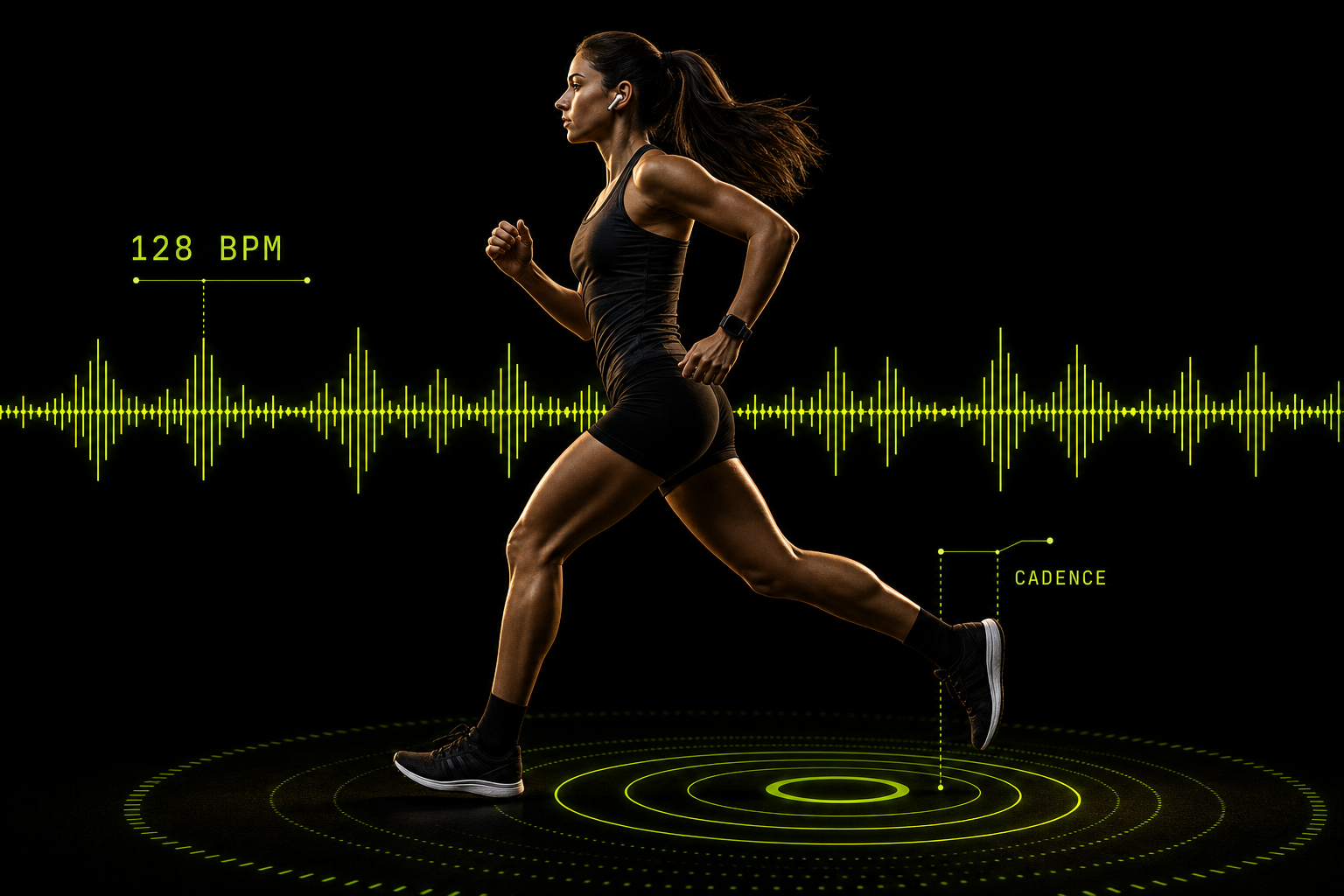
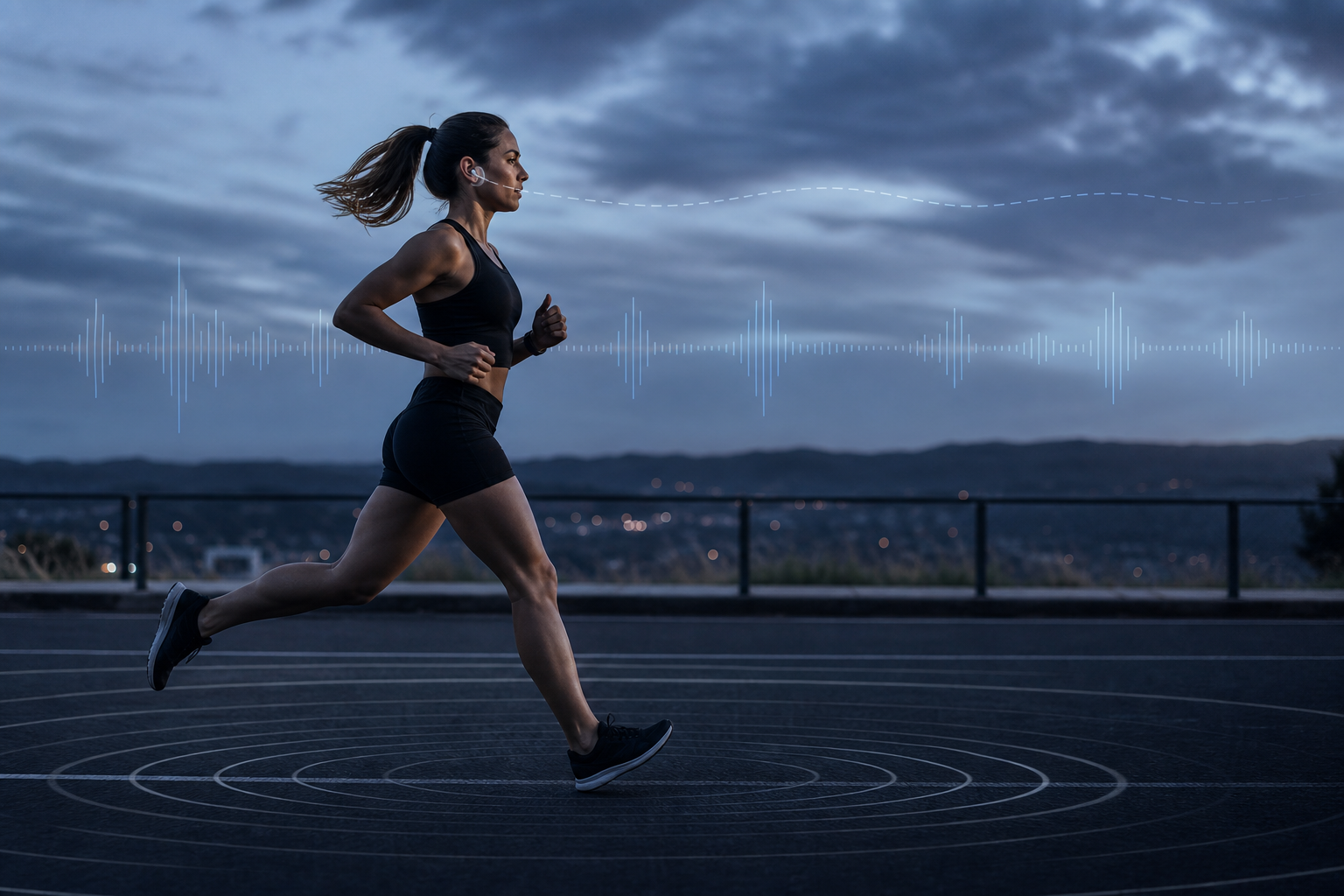
Zone 5 music is high-BPM, wearable-synced music that supports maximal-effort intervals by matching tempo to your heart rate or cadence. The immediate payoff: tracks that climb with you as effort spikes, which research links to lower perceived exertion and better output during short, brutal work bouts. Repbeats builds this directly into its auto-DJ, adjusting BPM bar by bar as your wearable reports live data.
TL;DR:
- Music in Zone 5 typically runs between 130 and 165 BPM, aligning with the 70 to 85% max heart rate range for vigorous effort.
- Fast tempo music has been shown to improve perceived exertion and performance, especially during short, high-intensity intervals.
- Cadence sensors react instantly and are preferred for pacing and terrain changes, while heart rate sensors provide effort tracking but can lag at high intensity.
- For short, maximal efforts, recovery intervals should be long enough to return heart rate towards Zone 2, with warm-up and cool-down phases crucial for safety.
- Repbeats automates tempo shifts based on live wearable data, making it easier to match music to workout intensity without manual playlist adjustments.
Table of Contents
- What Is Zone 5 Music, Exactly? The Heart Rate Science Behind It
- How Wearable-Synced Adaptive Music Actually Works
- Setting Up a Zone 5 Session Safely
- Three Zone 5 Session Templates You Can Run Today
- How Repbeats Applies These Principles in Practice
- Cadence Sync or Heart Rate Sync: Which One Should You Actually Use?
- Try Repbeats for Your Next Zone 5 Session
- Sources
- FAQ
What Is Zone 5 Music, Exactly? The Heart Rate Science Behind It
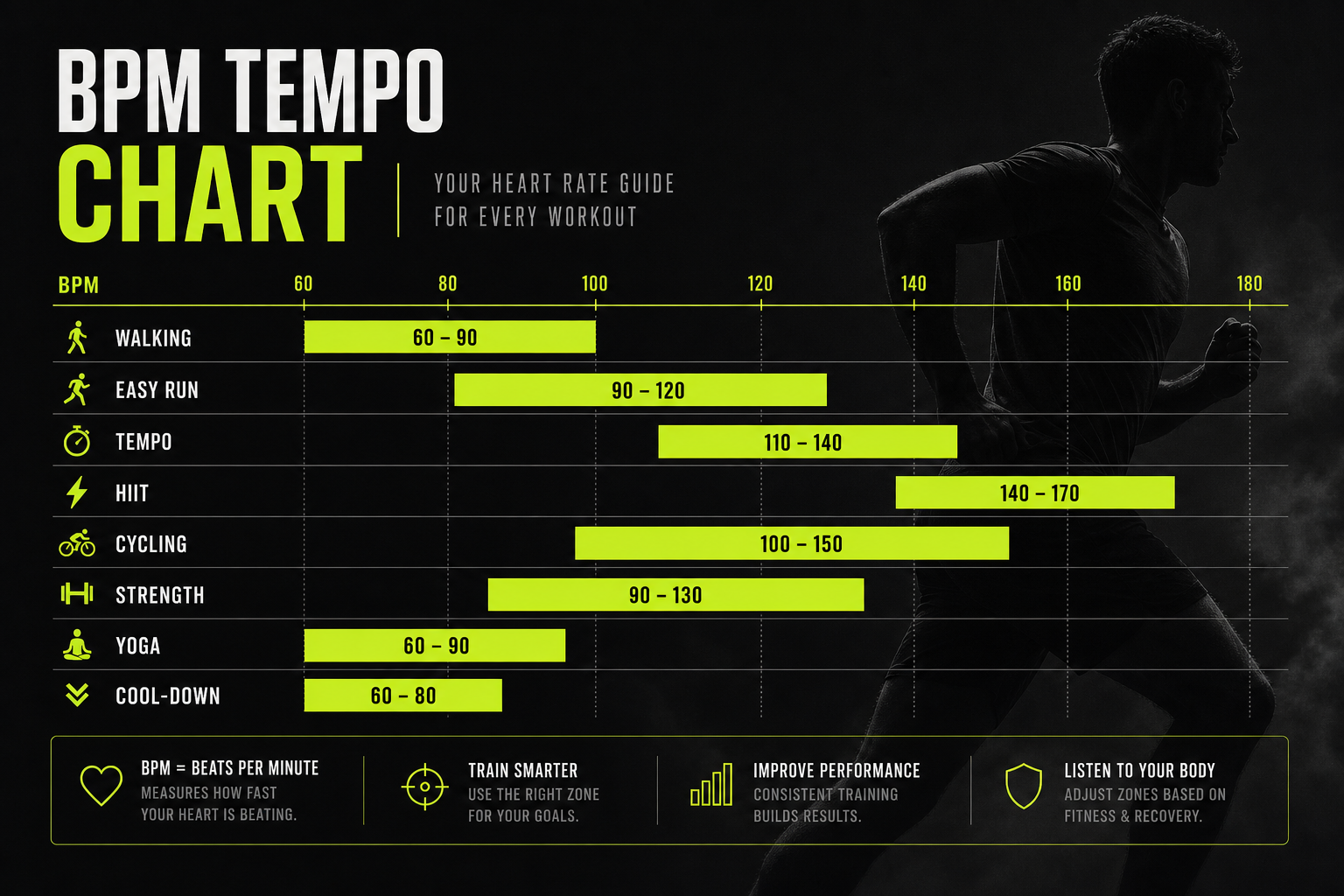
Zone 5 sits at the top of the five-zone heart rate model, typically defined as 70 to 85% of your age-predicted max heart rate during vigorous effort, according to MedlinePlus. For a 40-year-old, that formula (220 minus age) works out to roughly 126 to 153 BPM as a target heart rate. Zone 5 music genre conventions follow a similar logic: tracks built for this zone typically run fast enough to match or nudge that same range, since tempo and heart rate tend to move together during real effort.

The evidence behind fast, synced music is stronger than most people assume. A meta-analysis covering 139 studies found music produces a moderate boost to mood during exercise and a real, measurable lift in physical performance, and fast tempo specifically produced larger benefits than slow or medium tempo, per Brunel University’s meta-analytic review. Separate work found cadence-matched, motivational music increased time to exhaustion while lowering perceived exertion in runners, based on a PLOS One synchronization study.
Key takeaways on the evidence:
- Music’s biggest effect is on how hard the work feels, not necessarily on raw heart rate itself.
- Faster tempo (above roughly 131 BPM) correlates with bigger performance gains than slower tracks.
- Individual variability is large. Some people synchronize their movement to the beat almost automatically; others barely notice tempo at all.
The real limit here: music changes perception and output more reliably than it changes your objective heart rate. Treat it as a performance and motivation tool, not a heart rate control dial, and remember that optical sensors get noisier exactly when you’re pushing hardest.
How Wearable-Synced Adaptive Music Actually Works
Adaptive systems pull from a handful of sensor types, each with tradeoffs. Optical heart rate sensors (the PPG light on the back of your watch) are convenient but prone to lag and motion error at high intensity. Chest straps read electrical signals directly and stay more accurate during max efforts, though fewer people wear them daily. Accelerometer-based cadence sensors track steps or pedal strokes per minute and respond faster than any heart rate sensor, since cadence changes the instant you do.
The mapping process is what turns raw numbers into music. The app assigns HR or cadence bands to BPM ranges (for instance, 150+ BPM heart rate maps to a 155 to 165 BPM track), then swaps or reshapes the music as you cross those bands. Bar-aligned auto-DJ technology waits for a musical bar break before shifting tempo, so the transition lands on a beat instead of cutting mid-phrase. That’s the difference between music that feels alive and a jarring skip.
- Optical HR: convenient, but laggy under extreme intensity.
- Chest strap: more accurate, less lag, more gear to wear.
- Cadence sensor: fastest to react, ideal for pacing-driven work.
Latency is the real enemy of a good adaptive session. Systems that adapt tempo to biosignals in real time need smoothing algorithms to avoid abrupt jumps when a sensor spikes or drops out, a challenge documented in research on biosynchronous music generation. Generative systems like the one described in Sensors’ HEARTBEATS study layer in percussion and bass changes tied to bar breaks, which keeps transitions musical rather than mechanical. For more on how this pipeline works end to end, see how wearables measure exercise intensity for adaptive music.
Pro Tip: If your sensor tends to spike during sprints, favor cadence sync over heart rate sync for that session. Cadence reacts instantly and doesn’t suffer the same lag optical sensors show under max effort.
Setting Up a Zone 5 Session Safely
Zone 5 work is short and intense by design, and the setup matters as much as the playlist. Get this wrong and you’re either undertraining the zone or ignoring warning signs your body is sending.
- Charge and pair first. Confirm your watch or strap has enough battery for the full session, then pair it with your music app before you start moving, not mid-warm-up.
- Pick your sensor type deliberately. Use a chest strap or cadence sensor if you know your optical HR reading gets noisy at high intensity; otherwise your watch is fine for most sessions.
- Warm up properly. Spend 5 to 10 minutes gradually raising heart rate before any Zone 5 work, a baseline recommended by the American Heart Association’s activity planning guidance.
- Bracket intervals with full recovery. Zone 5 reps should be short (20 to 60 seconds) with recovery long enough to bring heart rate back toward Zone 2 before the next rep.
- Cool down with the same 5 to 10 minute window. Let tempo and heart rate step back down together instead of stopping cold.
Watch for these signs and stop immediately: chest pain, unusual shortness of breath, dizziness, or faintness, per the same American Heart Association guidance. If your sensor reading looks erratic (a sudden jump to 200 BPM that doesn’t match how you feel), trust your perceived exertion over the number until you can recalibrate the device between reps.
Three Zone 5 Session Templates You Can Run Today
Each template below pairs an interval structure with a BPM target range, so you can load a playlist or let an adaptive app handle the shifts automatically.
-
Track intervals: 6 × 30 seconds all-out. Target music around 130 to 160 BPM, matched to how your heart rate climbs through the rep. Rest 90 seconds to 2 minutes between reps, enough for heart rate to drop meaningfully before the next effort.
-
Hill repeats: 8 × 45 seconds. Uphill efforts raise perceived exertion faster than heart rate can follow, since HR lags behind sudden grade changes. Map your target BPM to cadence rather than heart rate here, since cadence responds to the terrain change instantly while your HR reading catches up a few seconds later. Recover on the walk or jog back down.
-
Cycling sprints: 10 × 20 seconds. Cadence sync matters most on the bike, where pedal stroke rate is a cleaner, faster signal than heart rate. Aim for a BPM range in the 150s to low 160s during the sprint, dropping sharply during the 40 second recovery between reps.
Progress by adding one or two reps per week rather than shortening recovery, and give yourself at least 48 hours between Zone 5 sessions. For a comparison against gentler interval work, Zone 3 music templates show what a lower-intensity structure looks like by contrast.
How Repbeats Applies These Principles in Practice
Repbeats runs on the same wearable data these templates depend on, pulling live readings from Apple Watch and Fitbit to drive its auto-DJ engine. Instead of a static playlist, the app updates BPM every bar to track your current heart rate, cadence, and session intensity in real time.
- Wearable integration pulls heart rate and cadence directly from your device, no manual tempo selection required.
- Auto-DJ technology shifts tempo at bar breaks, which keeps transitions musical during rapid intensity swings like the ones Zone 5 intervals produce.
- Coverage extends to cardio training programs, with adaptive logic applying during various exercise phases.
Repbeats’ editorial content, including work from author Jordan Mills, focuses specifically on how synchronization and BPM optimization play out across different training zones. You can read more on how real-time heart rate guides adaptive soundscapes for the technical detail behind the auto-DJ approach.
Cadence Sync or Heart Rate Sync: Which One Should You Actually Use?
Pick cadence sync when the goal is pacing or running economy. It reacts the instant your stride or pedal rate changes, with no lag, which makes it the better fit for hill work or anything where terrain throws your heart rate off script.
Choose heart rate sync when the session is about managing effort directly, like straight HIIT intervals where you want the music tracking how hard your body is actually working. If you’re not sure which suits your training better, run one session on cadence and one on heart rate, then compare which felt more locked in and which produced a lower perceived exertion for the same output.

Try Repbeats for Your Next Zone 5 Session
Repbeats is the direct way to get the wearable-synced, high-BPM music this article just walked through, without building a manual playlist for every zone yourself. The auto-DJ updates BPM every bar based on live data from your Apple Watch or Fitbit, and the app pairs that with ready-made Zone templates so you’re not guessing at tempo ranges mid-workout.
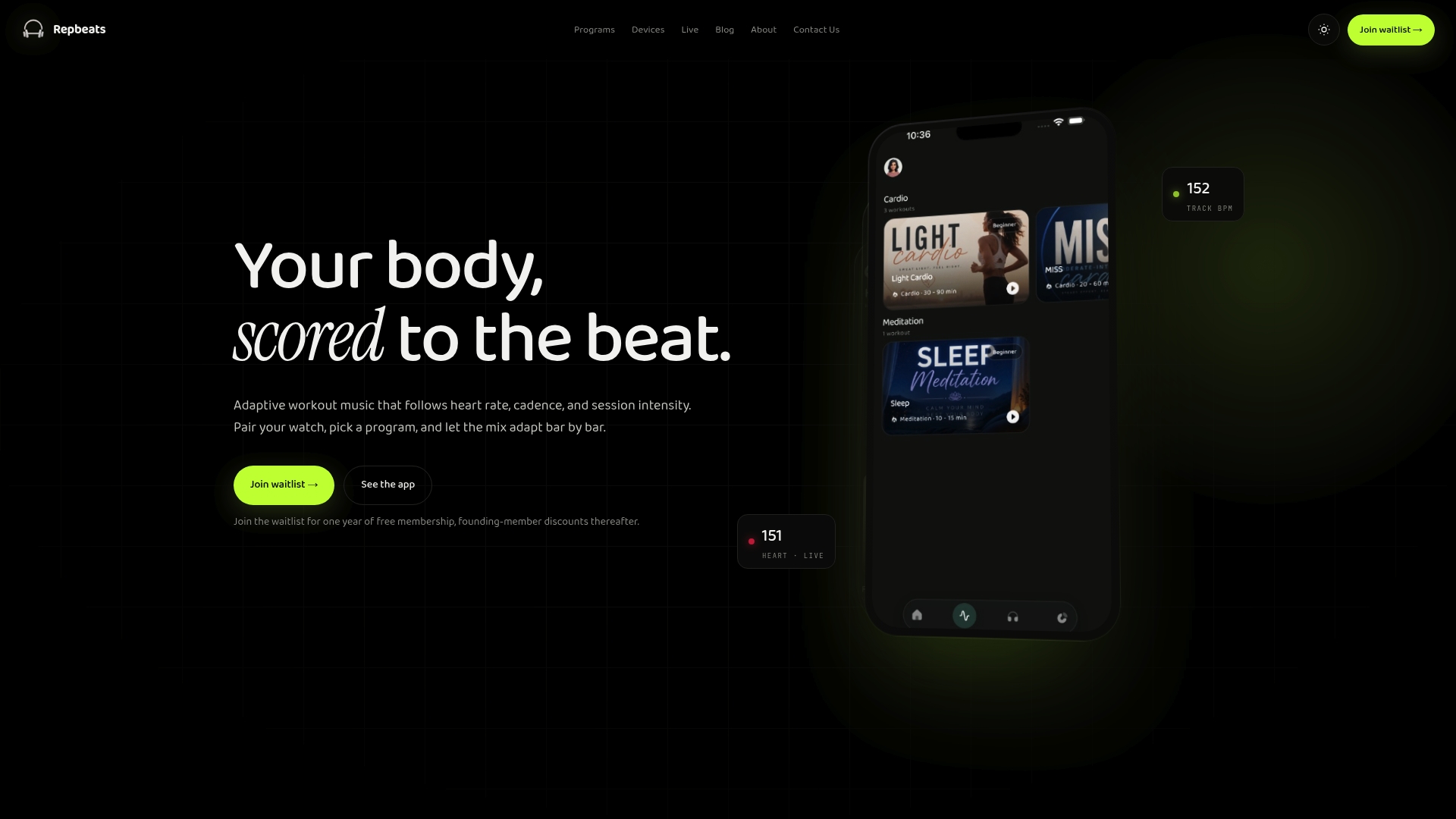
Repbeats’ stated privacy approach limits device access strictly to workout data, nothing broader on your phone or wearable. Getting started is simple: pair your device, pick a Zone 5 template close to what you ran above, and run a conservative first session to see how the tempo shifts feel against your own effort. Check out the Repbeats app to see the full feature set, or head to the main site for details on getting set up.
Sources
For deeper reading on the science behind this article, MedlinePlus covers heart rate zone calculation in detail, while the ACSM fitness trends report tracks how wearable data adoption is reshaping training decisions. The Brunel University meta-analysis and PLOS One synchronization study remain the strongest primary sources on tempo and performance.
- MedlinePlus — Image: Heart rate target zones
- Effects of music in exercise and sport: A meta-analytic review (Brunel University repository)
- PLOS One — Motivational and synchronization effects of music on running performance
- PubMed — Studies on biosynchronous music and exercise
FAQ
What Is Zone 5 Music?
Zone 5 music refers to high-BPM tracks or adaptive playlists synced to a wearable’s heart rate or cadence data, built to support maximal-effort intervals. The tempo typically tracks the 70 to 85% max heart rate range that defines Zone 5 training.
What BPM Should Zone 5 Music Be?
Most Zone 5 tracks run in the 130 to 165 BPM range, roughly matching heart rate in beats per minute during vigorous effort. The exact number depends on your age and max heart rate, since a 40-year-old’s Zone 5 target sits around 126 to 153 BPM while younger athletes run higher.
Does Music Actually Improve Performance During High-Intensity Intervals?
Yes. A meta-analysis of 139 studies found music produces a moderate improvement in both mood and physical performance during exercise, with fast tempo showing the largest effect, according to Brunel University’s review. The effect shows up mainly in how hard the effort feels rather than in a direct change to heart rate.
Should I Use Cadence Sync or Heart Rate Sync for Zone 5 Work?
Use cadence sync for pacing-focused work like hill repeats, since it responds instantly to stride or pedal rate changes. Use heart rate sync for effort-based intervals like straight HIIT, where tracking exertion directly matters more than pacing precision.
How Much Does Repbeats Cost?
Repbeats offers a free trial through its waitlist launch. Current subscription pricing details are available directly on the Repbeats site.