Adaptive Fitness Soundtracks: Examples and Templates
Jordan MillsJuly 28, 2026 · 10 min read

Adaptive Fitness Soundtracks: Examples and Templates
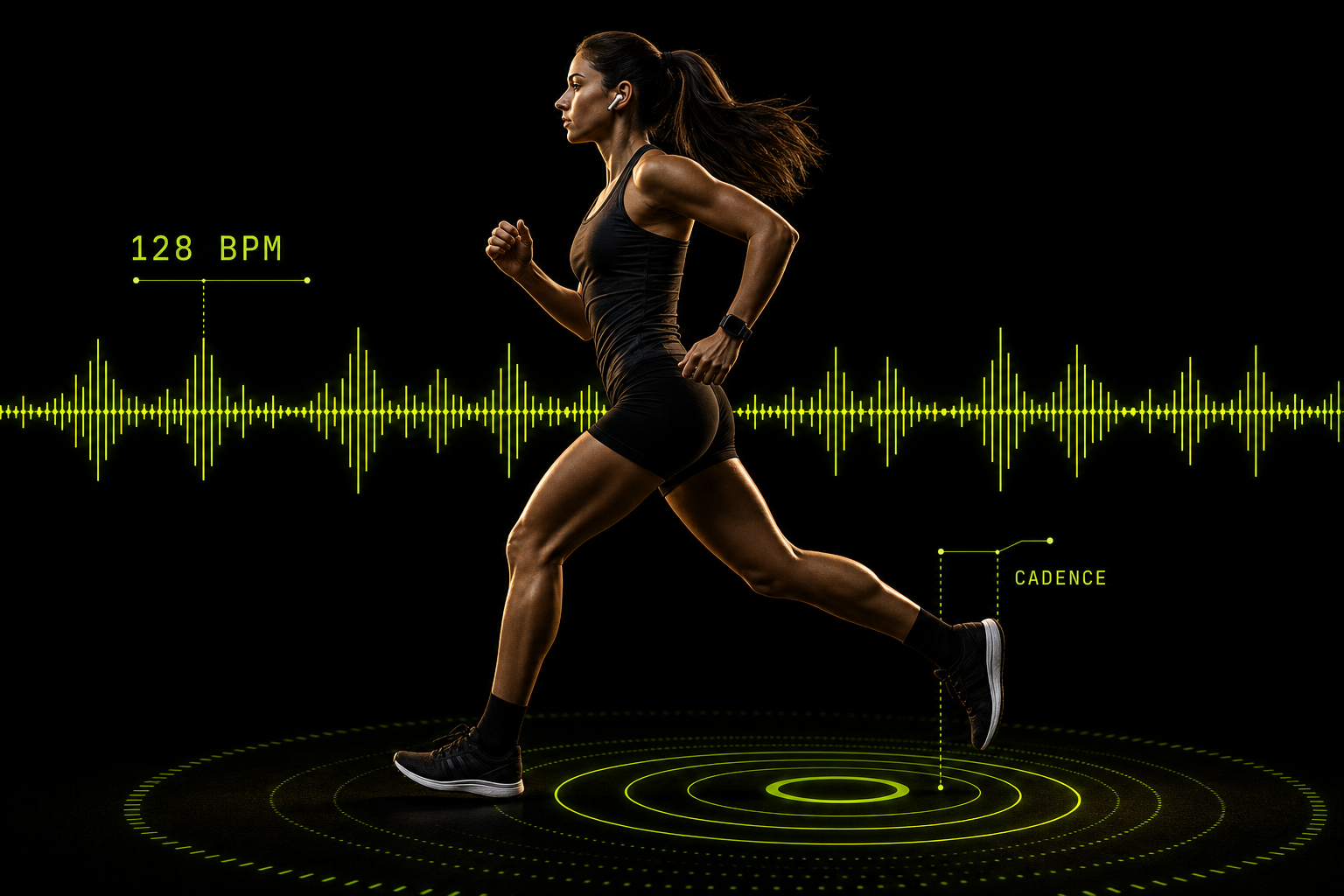
Adaptive fitness soundtracks are dynamic music systems that change tempo, instrumentation, or structure in real time to match your biometric signals or workout plan. In practice, that means the beat nudges upward as your cadence climbs, a high-energy loop locks in during a sprint interval, or the arrangement strips back to ambient layers the moment your heart rate drops into recovery. Repbeats is one of the clearest firsthand examples to try: its auto-DJ engine updates BPM every bar using live data from Apple Watch or Fitbit, so the music evolves with your effort rather than running on a fixed clock.
Table of Contents
- What are examples of adaptive fitness soundtracks?
- Concrete soundtrack examples by workout type
- How to use adaptive soundtracks effectively during workouts
- What the research says about entrainment and performance
- How Repbeats works in practice
- Key Takeaways
- When adaptive music is actually worth it
- Try Repbeats for your next adaptive workout
- Useful sources and further reading
What are examples of adaptive fitness soundtracks?
Adaptive soundtracks work through a signal chain: a sensor captures a biometric input, a mapping rule converts that input into a musical instruction, and the playback engine executes the change. The primary inputs are heart rate, cadence, pace, and workout-plan timers. Each feeds a rule. A cadence-matching rule, for instance, targets a BPM within a few percent of your step rate. A zone-based rule raises instrumentation energy when your heart rate crosses into a high-intensity zone.
Systems like RISE use Music Information Retrieval techniques, including structure-aware segmentation and cutpoint identification, to loop or skip song segments without audible glitches. When no clean cutpoint exists, a filter-based fade or low-pass transition bridges the gap.
Two UX modes exist. Guided mode follows a predefined interval plan, producing the tightest musical alignment but requiring accurate timers. Unguided mode reads live sensor data and adapts on the fly, trading some musical precision for flexibility.
Pro Tip: Set a smoothing window of 3–5 seconds on your sensor-to-music mapping. Without it, a brief heart-rate spike during a single hard step can trigger a tempo jump that feels jarring mid-stride.
Concrete soundtrack examples by workout type
Running
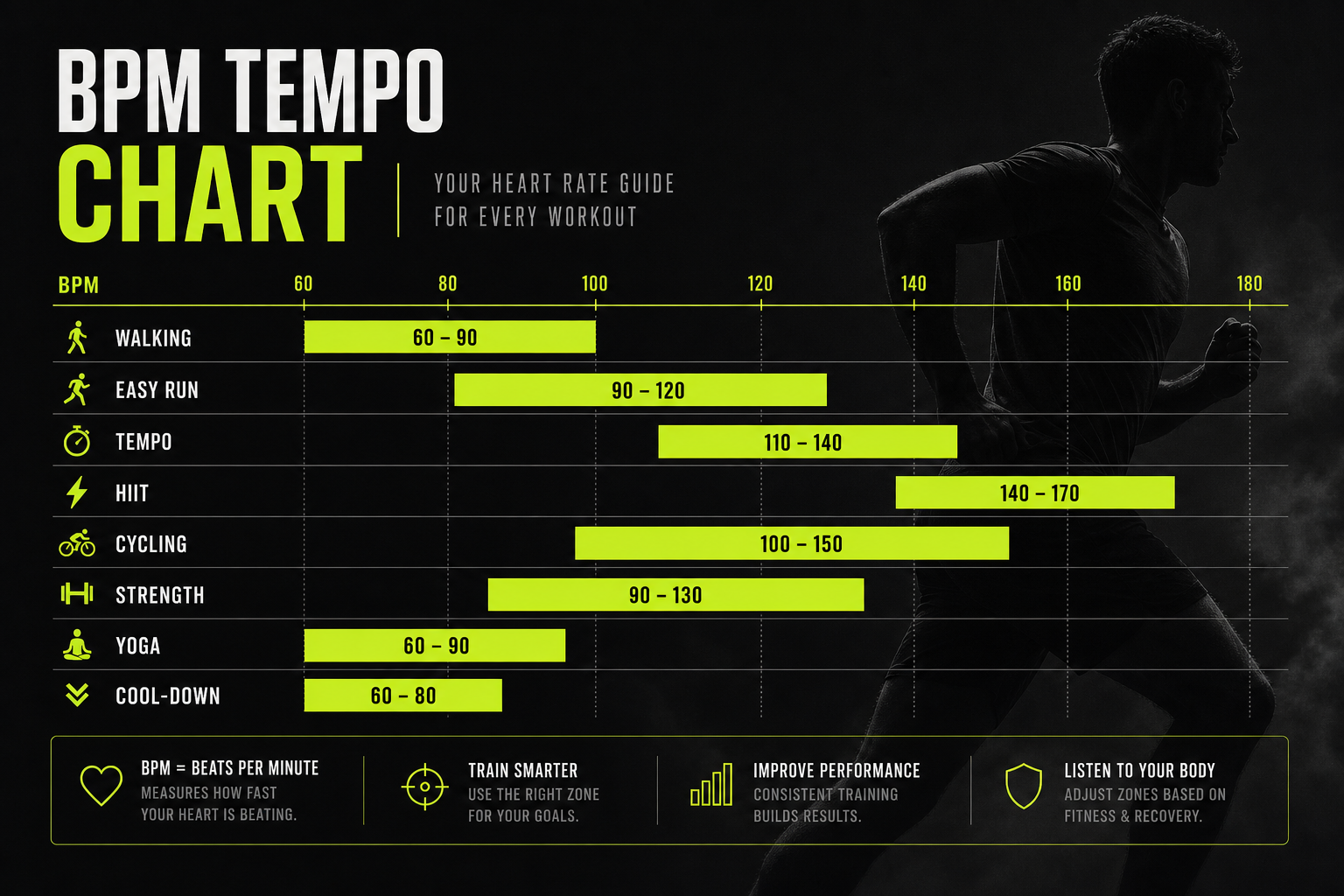
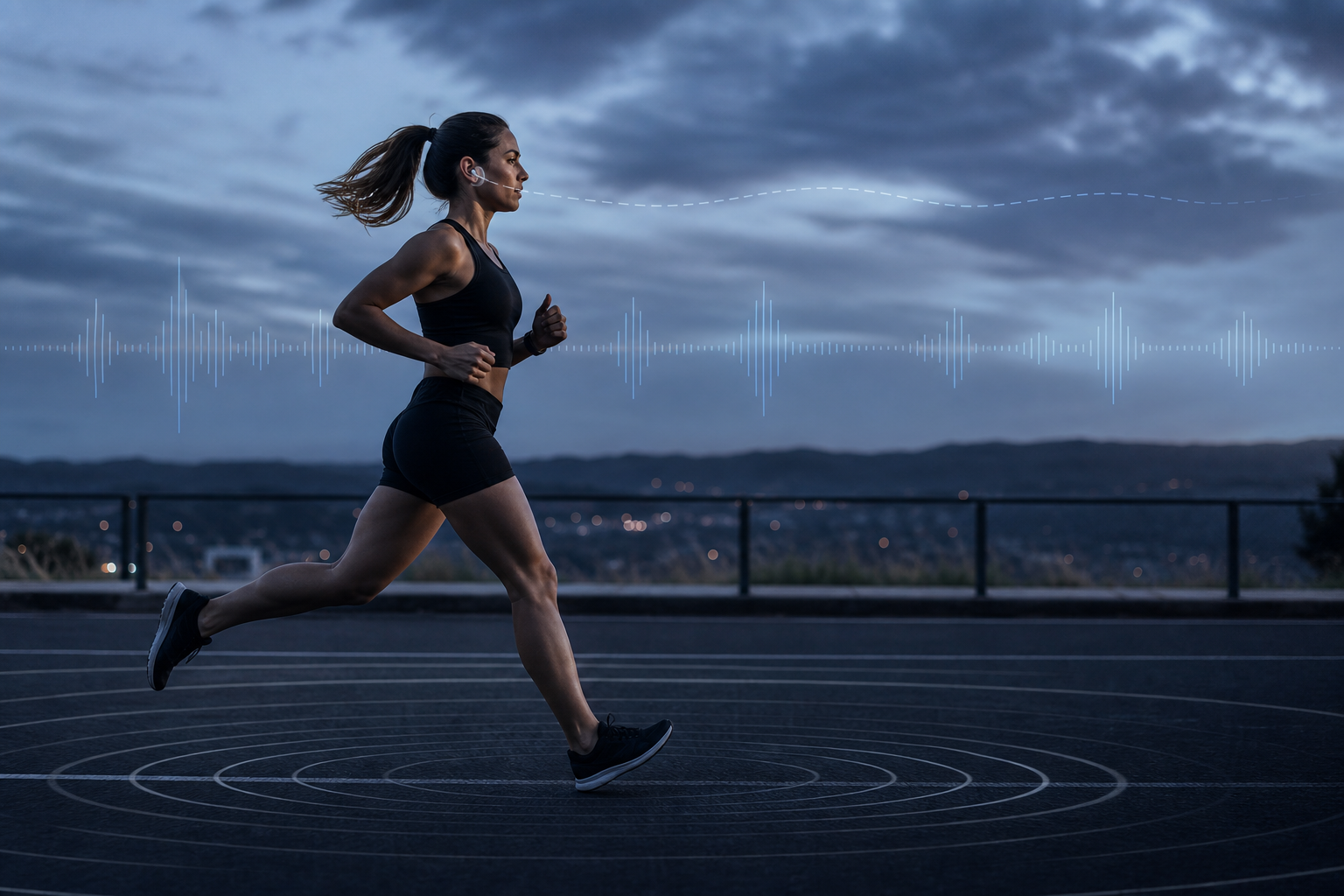
The template: match BPM to cadence, then layer energy as pace increases. At warm-up (easy jog, roughly 150–160 steps per minute), the track sits at a moderate tempo with sparse percussion. As you push into a tempo run, the beat tightens and a driving bassline enters. During a sprint interval, the track locks into a high-energy loop at 170–180 BPM. At cooldown, the arrangement fades to a lighter, melodic texture. Running soundtrack types vary widely, but cadence-matching is the single most reliable anchor.
Cycling
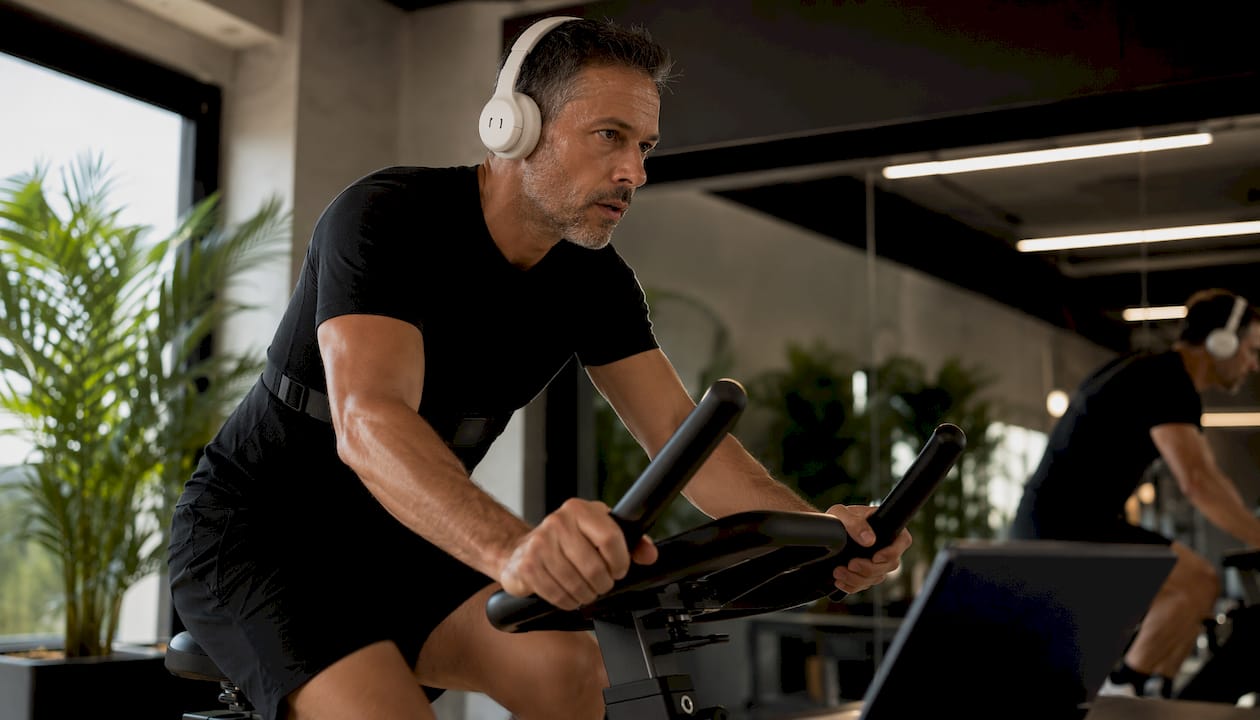
Cadence-aligned beats sustain effort on flat roads and during climbs. A mid-ride tempo bump, triggered when cadence drops below target on a hill, cues the rider to push harder without a coach’s voice. Recovery segments use sustained, lower-energy loops that keep motivation without rushing the heart rate back up. Wearable cadence data is especially clean on a bike because the pedal stroke is metronomic, making BPM alignment more precise than in running.
HIIT
Short, punchy loops fire at interval onset, typically 20–40 seconds of dense percussion and compressed dynamics. The rest period gets a calm, lower-BPM bed, often with reduced instrumentation, so the contrast itself signals the body to recover. The soundtrack for adaptive training in HIIT lives and dies by how crisply the transition lands at the exact second the interval starts.
Strength training
Repetition-paced cues work better here than continuous tempo matching. A looped segment holds consistent tension through a set, then a brief drop in energy marks the rest window. Abrupt tempo jumps during technical lifts, like a clean or snatch, can break concentration, so gradual instrumentation changes are safer than hard BPM cuts.
Yoga and meditation
Slow adaptive ambient layers follow breathing rate and calm heart-rate zones. Micro-adjustments, rather than noticeable tempo shifts, keep the atmosphere stable. A session that opens at 70 BPM with soft pads might ease to 55 BPM as the body settles, with no single moment where the change is perceptible. A BPM range of 60–100 suits the slow, deliberate movements of yoga and stretching.
How to use adaptive soundtracks effectively during workouts
The core principle: set adaptation sensitivity to match both the workout type and your personal tolerance for musical change. A HIIT athlete wants crisp, fast transitions. A yogi wants almost none.
- Pair music zones to training zones. Map your heart-rate zones (Zone 2, Zone 4, etc.) to distinct musical energy levels before the session starts, not during it.
- Use guided mode for strict intervals. When your plan has fixed work-to-rest ratios, guided mode produces the cleanest alignment. Syncing music to workout intensity is most reliable when the plan drives the transitions.
- Use unguided mode for freeform sessions. Long runs, open-water swims, and casual gym circuits benefit from real-time detection without a rigid timer.
- Choose the right sensor. A chest strap gives lower-latency heart-rate data than a wrist sensor, which matters most during high-intensity intervals. For cadence, a wrist accelerometer on a bike or a foot pod on a run is more accurate than optical HR alone.
- Set a fallback behavior. Decide what the soundtrack does when data drops: hold the last tempo, revert to a neutral BPM, or pause. Holding the last tempo is usually the least disruptive option.
- Avoid abrupt tempo jumps during technical movements. Olympic lifts, balance work, and plyometric landings require full attention. Prefer instrumentation changes over BPM cuts in those windows.
Automated sensor tracking removes the guesswork from pairing wearable data to music zones, especially when you are logging multiple sessions per week.
Pro Tip: Run one short 10-minute test session at low intensity before committing to a full training load. Adjust smoothing and zone thresholds based on what you hear, not what the default settings predict.
What the research says about entrainment and performance
Entrainment is the central mechanism: the body’s physical rhythms, cadence and heart rate, subconsciously align with musical tempo and intensity, reducing perceived exertion and extending endurance during intervals. The RISE study is one of the clearest published examples of this applied to adaptive playback.
| Study | Participants | Key outcomes |
|---|---|---|
| RISE (ISMIR 2025) | 12 | High transition naturalness ratings; preference for adaptive over non-adaptive condition |
The RISE study tested guided interval and unguided blocks. Participants initially skeptical of automated music manipulation shifted toward preferring the adaptive condition once they experienced how it preserved flow during effort. Guided mode produced the tightest alignment; unguided mode offered flexibility at some cost to musical naturalness.
Limitations are real: 12 participants is a small sample, and guided mode depends on accurate interval timers. Still, the direction of evidence aligns with broader heart-rate-adaptive music research showing that rhythmic alignment reduces perceived exertion and improves pacing. A personalized fitness soundtrack that tracks your physiology does something a static playlist simply cannot: it responds.
How Repbeats works in practice
Repbeats’ auto-DJ engine updates BPM every bar, pulling live data from Apple Watch or Fitbit to keep the soundtrack locked to your actual effort. Its wearable integration covers both heart rate and cadence, and guided interval templates let you preload a session structure so transitions fire at the right moment.
Here is what a 5K tempo run looks like inside Repbeats:
- Warm-up (0–8 min): Moderate tempo, sparse arrangement, BPM matched to easy-jog cadence around 155.
- Threshold push (8–22 min): BPM climbs with cadence, dense percussion enters, energy layer adds bass. The auto-DJ updates every bar so the shift feels continuous, not stepped.
- Sprint finish (22–27 min): High-energy loop locks in, instrumentation at full density.
- Cooldown (27–35 min): Arrangement strips back, BPM eases down, melodic texture replaces the driving beat.
For setup, pair your Apple Watch or Fitbit before the session and confirm the polling rate is active. Repbeats’ best-practice guide for athletes covers modality-specific settings and recommended smoothing values for each workout type.
Key Takeaways
Adaptive fitness soundtracks that sync to real-time biometrics reduce perceived exertion and improve pacing, with entrainment as the core mechanism and Repbeats as a practical, wearable-ready example to start with.
| Point | Details |
|---|---|
| Entrainment drives results | Aligning musical tempo to cadence and heart rate reduces perceived exertion and sustains endurance. |
| Guided vs. unguided modes | Use guided mode for fixed intervals; use unguided for freeform sessions where flexibility matters more. |
| Sensor choice matters | A chest strap or dedicated cadence sensor gives cleaner data than wrist HR alone during high-intensity work. |
| Test before full load | Run a 10-minute low-intensity session to calibrate smoothing and zone thresholds before a full training block. |
| Repbeats as a starting point | Repbeats’ auto-DJ updates BPM every bar via Apple Watch and Fitbit, making it a direct way to experience adaptive soundtracks. |
When adaptive music is actually worth it
The athletes who gain the most from adaptive soundtracks are interval runners, cadence-driven cyclists, and anyone whose training is structured around heart-rate zones. For those people, the music stops being background noise and starts functioning like a pacer that never misses a split.
Where it adds less value: very short sessions under eight minutes, where the system barely has time to calibrate, and highly technical skill work where any auditory distraction competes with proprioceptive focus. In those cases, a well-curated static playlist or silence is the smarter call.
The honest test is simple. Run three interval sessions with adaptive music and three with a fixed playlist. Log your perceived effort after each. If the adaptive sessions feel easier at the same output, the technology is working for you. If the transitions distract you, dial back the sensitivity. The data from the RISE study suggests most people come around to preferring adaptive alignment once they have a few sessions under their belt, but personal tolerance for musical change varies more than most guides acknowledge.
Try Repbeats for your next adaptive workout
Your soundtrack should work as hard as you do. Repbeats syncs music tempo to your heart rate and cadence in real time, updating BPM every bar so the music matches your effort from warm-up through peak intensity to cooldown. It pairs directly with Apple Watch and Fitbit, and guided interval templates mean you can preload a session structure and let the music handle the rest.
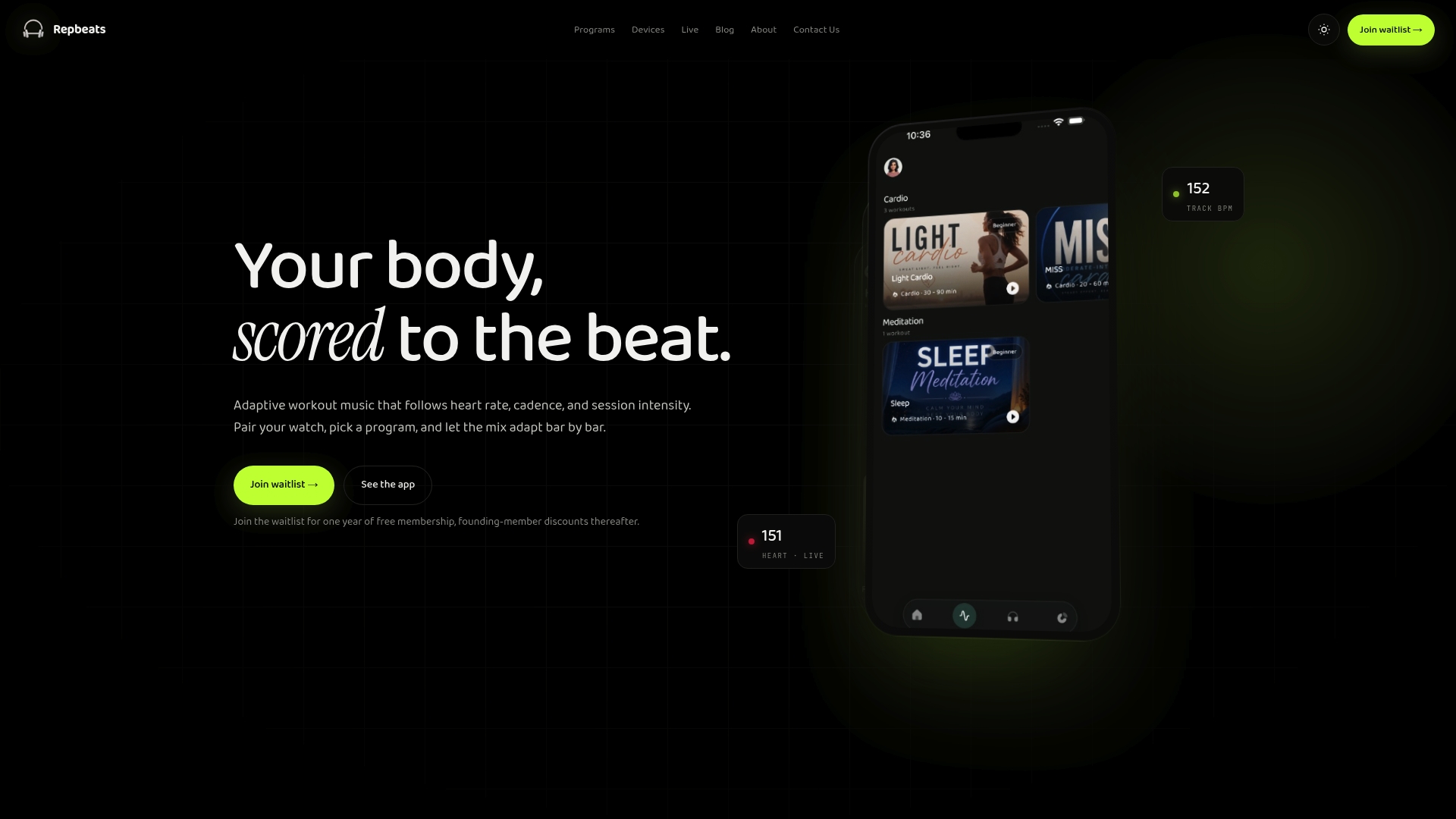
The clearest way to experience what adaptive soundtracks actually feel like is a single short run or interval session with Repbeats running. Start with a 20-minute tempo run, pair your wearable, and notice how the music shifts with your effort rather than against it. Try Repbeats and hear the difference in your next session.
Useful sources and further reading
- RISE: Adaptive Music Playback for Realtime Intensity Synchronization with Exercise — The primary academic paper behind the RISE system; covers MIR techniques, guided and unguided modes, and the 12-participant user study.
- RISE ISMIR 2025 technical PDF — Full technical paper with preprocessing steps, state machine design, and cutpoint selection details.
- What Is Adaptive Workout Music? | Repbeats — Repbeats’ accessible overview of adaptive music mechanics and UX modes.
- Adaptive Music Workout Best Practices for Athletes | Repbeats — Modality-specific setup advice, wearable pairing recommendations, and smoothing guidance.
- AI-Driven Fitness Music That Adapts to Your Heart Rate — Industry perspective on heart-rate-driven tempo and instrumentation changes.
- Repbeats | Adaptive Workout Music & BPM Playlists — Product landing page for wearable integrations, trial options, and guided interval templates.