Runners: Hill Repeat Music That Syncs to Cadence and Heart Rate
Jordan MillsOctober 1, 2026 · 8 min read

Runners: Hill Repeat Music That Syncs to Cadence and Heart Rate
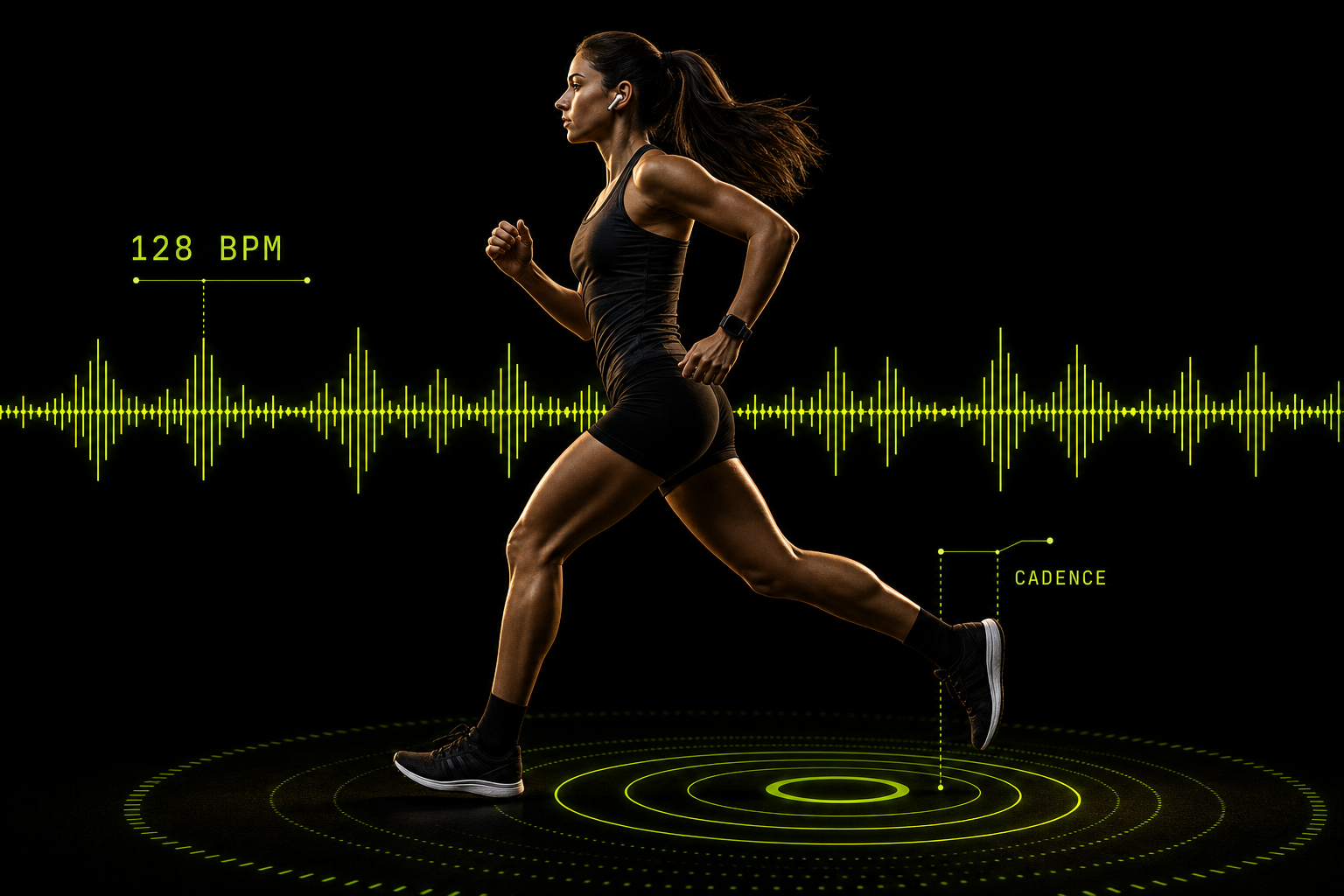
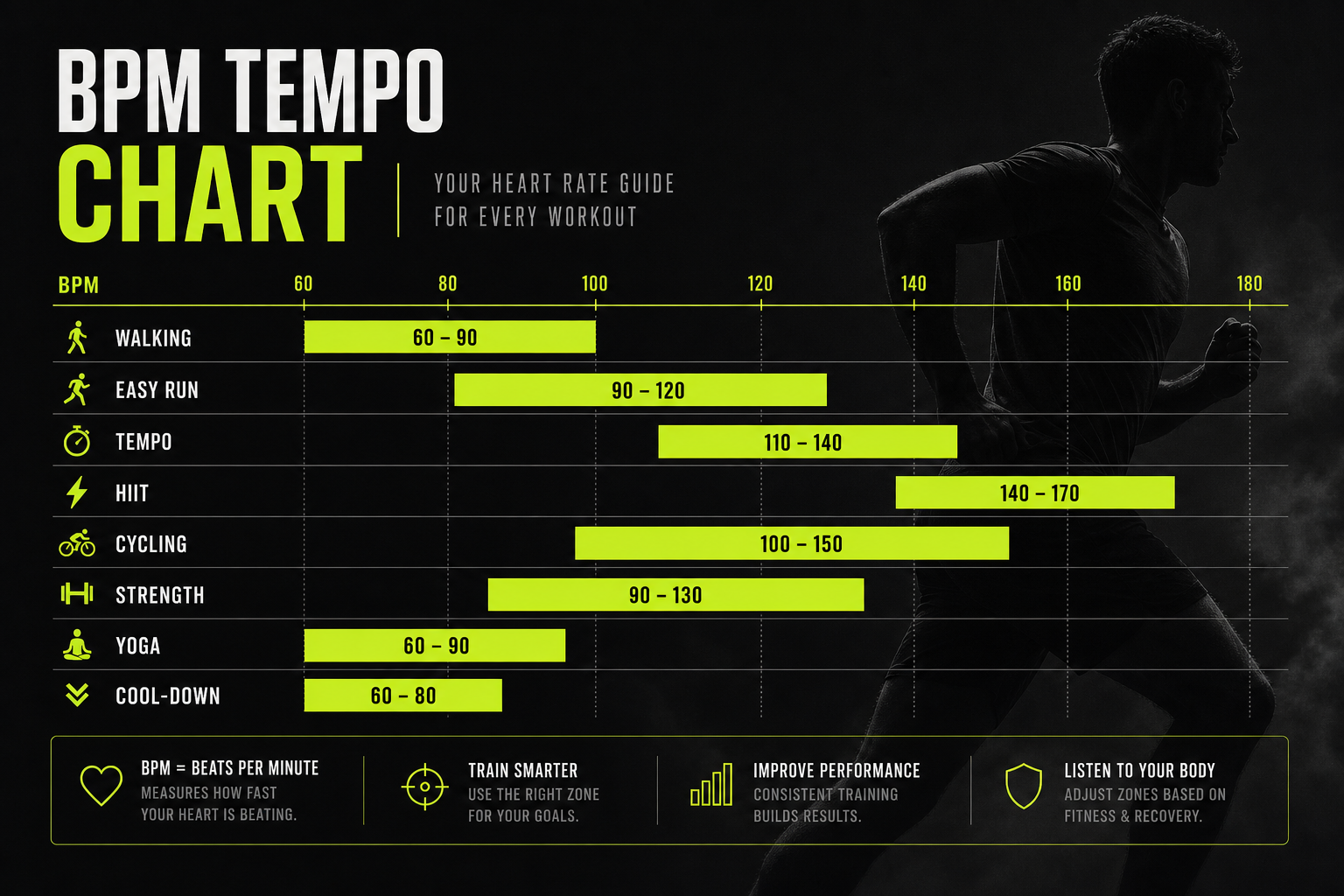
The best music for hill repeats is tempo-matched and intensity-aware. For moderate climbs, aim for roughly 130 to 150 beats per minute; for short, hard reps, push toward 160 to 180-plus BPM. Adaptive music that follows cadence or heart rate, the kind apps like Repbeats offer, keeps reps consistent and tends to lower perceived effort along the way.
TL;DR:
- Higher-intensity hill repeats improve neuromuscular and maximal velocity gains, with steeper grades near 7.6% producing the best performance improvements.
- Matching music BPM to session type, such as 130-145 BPM for steady climbs and 160-180 BPM for short, maximal reps, enhances pacing and arousal accordingly.
- Using cadence-to-beat mapping (1:1 or 2:1) helps synchronize music with stride, depending on pace and workout intensity.
- Adaptive music apps like Repbeats sync tempo to heart rate and cadence in real time, reducing manual playlist management and tempo jarring.
- For technical terrain or short sprints, silence may be preferable, as focus on breathing and form can outweigh the benefits of music.
Table of Contents
- Why tempo and intensity matter for hill repeats
- BPM and tempo ranges for hill-repeat workouts
- Playlist and song-style examples for hill repeats
- How to sync music to your workout: wearables, apps, and simple mapping
- Music-by-session: short hill-repeat session plans with music cues
- Publisher expertise: how Repbeats applies adaptive music to hill repeats
- When music helps and when silence works better
- How Repbeats helps with hill repeats
- Sources
- FAQ
Why tempo and intensity matter for hill repeats
Hill repeats work because they force the body to adapt to resistance and grade. Randomized research on uphill high-intensity intervals shows that trained runners improve aerobic capacity, running economy, and neuromuscular markers after several weeks of structured hill training. A separate 8-week trial on steeper uphill training found that grades near 7.6% produced the largest gains in maximal velocity and 800-meter performance compared with shallower gradients.
Music supports this work in two distinct ways. On longer, steadier climbs, rhythm helps lock in cadence and can make the effort feel more manageable. On short, maximal reps, music mostly raises arousal rather than controlling pace, since breathing and stride turnover happen too fast for a beat to track precisely.
- Music aids pacing on sustained climbs where cadence stays fairly constant.
- Music mainly motivates on short, all-out reps where effort spikes quickly.
BPM and tempo ranges for hill-repeat workouts
Matching tempo to the type of rep you’re running makes the difference between music that helps and music that fights your legs. Dose-response research on uphill interval intensity found that higher-intensity uphill work optimized running economy and neuromuscular gains, while moderate intensities benefited aerobic measures differently, which is one reason a single BPM number doesn’t fit every hill session.
Cadence-to-beat mapping also matters. A 1:1 mapping, one step per beat, gives tight synchronization and suits faster cadences on shorter reps. A 2:1 mapping, two steps per beat, works better for slower uphill cadences, since it keeps the beat from feeling rushed.
| Session type | Typical BPM range | Cadence mapping | When to use |
|---|---|---|---|
| Steady climbs | 130 to 145 BPM | 2:1 | Morning aerobic sessions, longer sustained grades |
| Threshold-length repeats | 145 to 160 BPM | 1:1 or 2:1 | Midday or evening tempo-focused hill sets |
| Short maximal reps | 160 to 180 plus BPM | 1:1 | High-arousal evening sessions, steep short bursts |
Morning steady climbs generally call for calmer, synchronous tempos, while evening high-intensity sessions respond better to driving, higher-BPM tracks that raise arousal.
Playlist and song-style examples for hill repeats
Building a playlist by feel wastes time. A few structural rules make the job faster and the music more useful once you’re climbing.
- Steady-climb blueprint: longer tracks (4 to 6 minutes) with a steady BPM and a pulsing kick drum that doesn’t drift in tempo.
- Threshold-repeats blueprint: mid-BPM tracks with sustained, driving energy that holds through a 1 to 3 minute rep without a slow build-up.
- Short-sprint blueprint: short, high-BPM tracks with punchy, immediate beats that hit hard from the first bar.
The common thread across all three is a consistent downbeat and predictable tempo. Songs with rubato, tempo swings, or long instrumental build-ups tend to break cadence rather than support it. For ready-made examples, Repbeats’ BPM-matched interval playlists and its interval running music guide both translate well to hill-repeat formats, since the pacing logic for flat intervals and hill intervals overlaps closely.
How to sync music to your workout: wearables, apps, and simple mapping
There are three realistic ways to get music matched to a hill session, ranging from manual to fully adaptive.
- Manual BPM playlists: search for songs at your target BPM using a tool like Repbeats’ song-by-BPM finder, then arrange tracks by rep type before you head out.
- Cadence-step mapping: set your watch to show live cadence, then pick a 1:1 or 2:1 beat mapping and adjust tracks mid-run as needed.
- Wearable-synced adaptive apps: connect a smartwatch like Apple Watch or Fitbit to an app that reads heart rate or cadence and adjusts BPM automatically.
Each workflow needs a phone, headphones, and for the last two, a connected smartwatch. Battery drain increases with continuous heart rate streaming, so charge fully before long sessions, and check headphone pairing before you start climbing, since reconnecting mid-hill is a hassle. Partner guides on wearable and headphone integration cover hardware pairing basics if you’re troubleshooting connection drops.
Pro Tip: Test your music workflow on an easy run before race week, since discovering a syncing issue mid-interval costs more than it saves.

Music-by-session: short hill-repeat session plans with music cues
These three templates give concrete starting points you can adjust to your own hill.
- Session A, short steep reps: 8 to 10 reps of 30 to 60 seconds at a steep grade with full recovery walks down. Target 165 to 180 BPM for the climb and drop to a slower, calmer track or no music during recovery.
- Session B, intermediate hill intervals: 6 to 8 reps of 1 to 2 minutes at a moderate grade. Hold 145 to 160 BPM through the climb, switching tracks at the top of each rep rather than mid-effort.
- Session C, long climb strength-endurance: 4 to 6 reps of 2 to 3-plus minutes at a sustained grade. Stay in the 130 to 145 BPM range throughout, favoring a 2:1 cadence mapping to match the slower grinding stride these reps demand.
Coaching guides on hill interval structure describe similar rep and rest patterns across gradients from roughly 2.5% to 7.6%, and those timing windows map directly onto where you’d want a track to start, sustain, or switch.
Publisher expertise: how Repbeats applies adaptive music to hill repeats
Repbeats integrates adaptive music directly with heart rate, cadence, and session intensity rather than relying on a fixed playlist order. Its auto-DJ technology updates BPM every bar, which matters on hill repeats, where effort shifts quickly between climbing and recovery.
- Live wearable data from devices like Apple Watch and Fitbit feeds the app’s tempo adjustments in real time.
- Bar-by-bar BPM updates avoid the jarring tempo jumps that come with manually switching songs mid-rep.
- Blog resources like the threshold run music guide map specific BPM ranges to session types, including the steady climbs covered earlier.
When music helps and when silence works better
During maximal, very short sprints, some runners prefer minimal audio to focus on breathing and form. On technical or uneven terrain, cutting volume for awareness matters more than tempo. Try both approaches across a few sessions and notice which one actually helps you hold form.
— Jordan Mills
How Repbeats helps with hill repeats
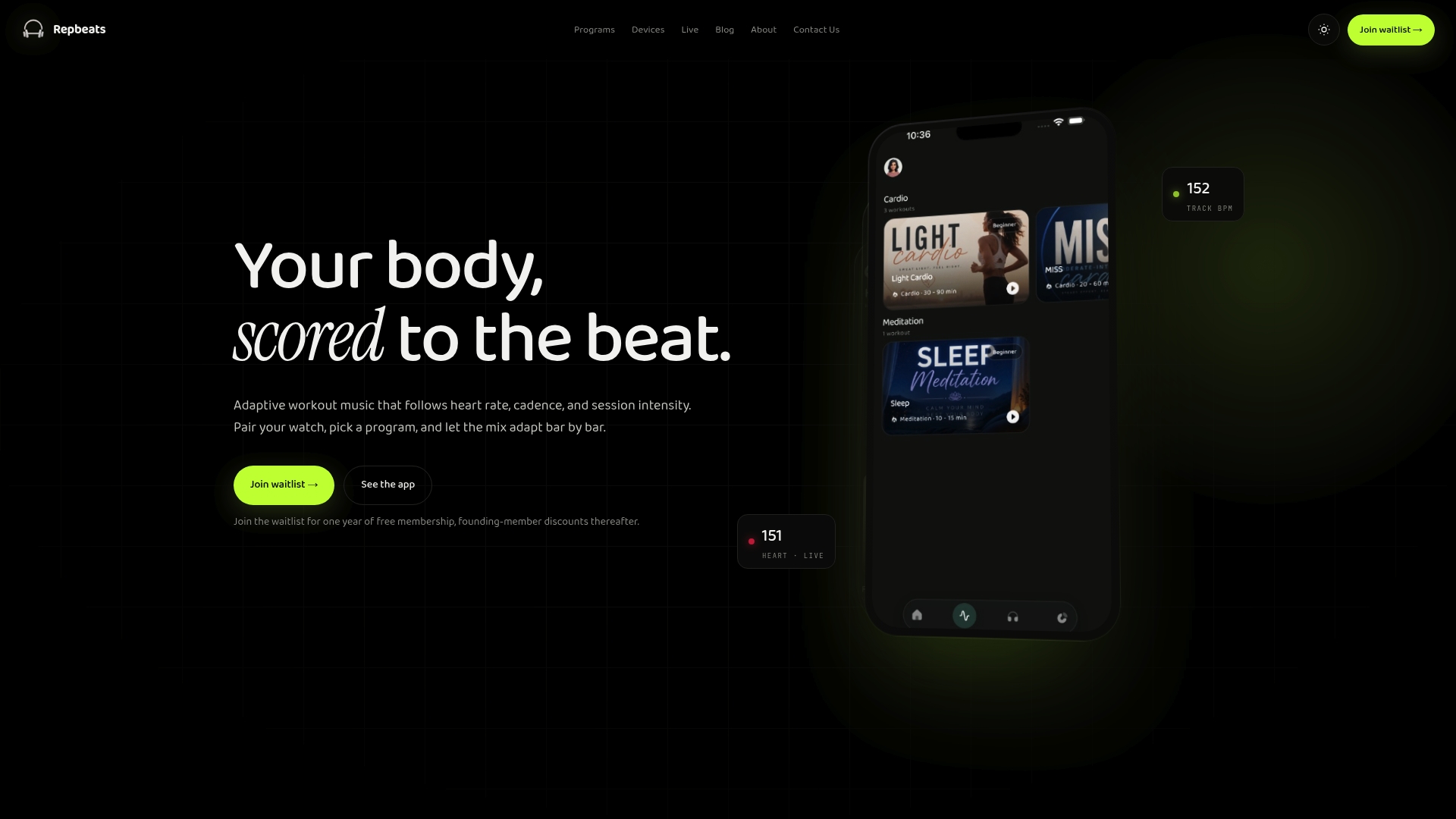
Building and switching playlists mid-workout is exactly the kind of friction that adaptive music is built to remove. Repbeats syncs tempo to your heart rate and cadence through wearables like Apple Watch and Fitbit, and its auto-DJ updates BPM every bar so the transition from a steep rep into recovery doesn’t come with a jarring song change.
- Wearable sync keeps music tied to your actual effort, not a pre-set playlist order.
- Auto-DJ BPM updates mean no manual track switching between reps and recovery.
- The app’s privacy policy limits device access to workout data only.
If you want to try a session with music that adjusts as you climb, visit the Repbeats app page to learn more and get started.
Sources
- Effects of uphill vs. level-grade high-intensity interval training on VO2max and performance — PMC
- The effects of uphill training on the maximal velocity and performance of middle-distance runners — PubMed
- The effects of uphill vs level-grade HIIT on VO2max, Vmax, and Tmax — PubMed
FAQ
What is a good hill grade for repeats?
Coaching guides describe effective hill repeat sets across grades from roughly 2.5% to 7.6%, depending on rep length and goal. Steeper grades near 7.6% tend to favor maximal velocity gains, while shallower grades suit longer, steadier efforts.
How to properly do hill repeats?
Hill repeats involve running a hill at a controlled hard effort, then recovering on the walk or jog back down before repeating. Rep length typically ranges from 30 seconds for steep, fast reps to 2 to 3-plus minutes for strength-endurance sessions, with full recovery between efforts.
Do hill repeats increase VO2 max?
Hill repeats can improve aerobic capacity and running economy, according to randomized research on uphill interval training. Outcomes vary by intensity, with higher-intensity sessions tending to optimize running economy and neuromuscular gains more than moderate ones, per a dose-response study on uphill HIIT.
What are the best hill repeats for cycling?
Cycling-specific hill interval guidance recommends structured sets across a range of gradients with specific rep and rest durations, similar in principle to running protocols. A 12-week strength and power plan for cyclists covers strength-endurance work that pairs well with hill-focused cycling sessions.