Running Music Without a Phone: Sync Cadence or Heart Rate on a Watch
Jordan MillsOctober 9, 2026 · 9 min read

Running Music Without a Phone: Sync Cadence or Heart Rate on a Watch
Yes, you can run completely phone-free with adaptive music that adjusts to your effort. The requirements are simple: Bluetooth headphones paired directly to your watch, and a music app, such as our Repbeats app, that runs on the watch itself with offline tracks or cellular and Wi-Fi streaming enabled. Check your watch model’s storage and streaming support first, since that determines whether this setup works for you.
TL;DR:
- Playback without a phone requires a watch that supports offline downloads or direct streaming, plus Bluetooth headphones paired to the watch.
- A trial found cadence sync improved performance, while heart rate sync reduced perceived effort for some female runners; choose based on session goals.
- Aim for 110 to 140 BPM on steady runs and 130 or more for hard efforts; keep tempo shifts within about 3%.
- Download tracks over Wi Fi before key runs and test for five minutes, checking pairing, playback, battery, and sensor readings.
- Streaming rules depend on the platform: Spotify requires Premium for direct watch streaming, while Apple Watch supports downloaded tracks offline.
Table of Contents
- How wearable adaptive music uses cadence and heart rate to synchronize audio
- Hardware and app checklist for phone-free wearable playback
- Pair headphones, enable watch playback, and start your first phone-free run
- Practical BPM guidance and when to use cadence vs. heart-rate sync
- Quick fixes for pairing, downloads, buffering, and battery issues
- Why phone-free adaptive music changes how you train
- Repbeats: wearable adaptive music that runs phone-free
- FAQ
- Sources
- Research and platform documentation used in this article
How wearable adaptive music uses cadence and heart rate to synchronize audio
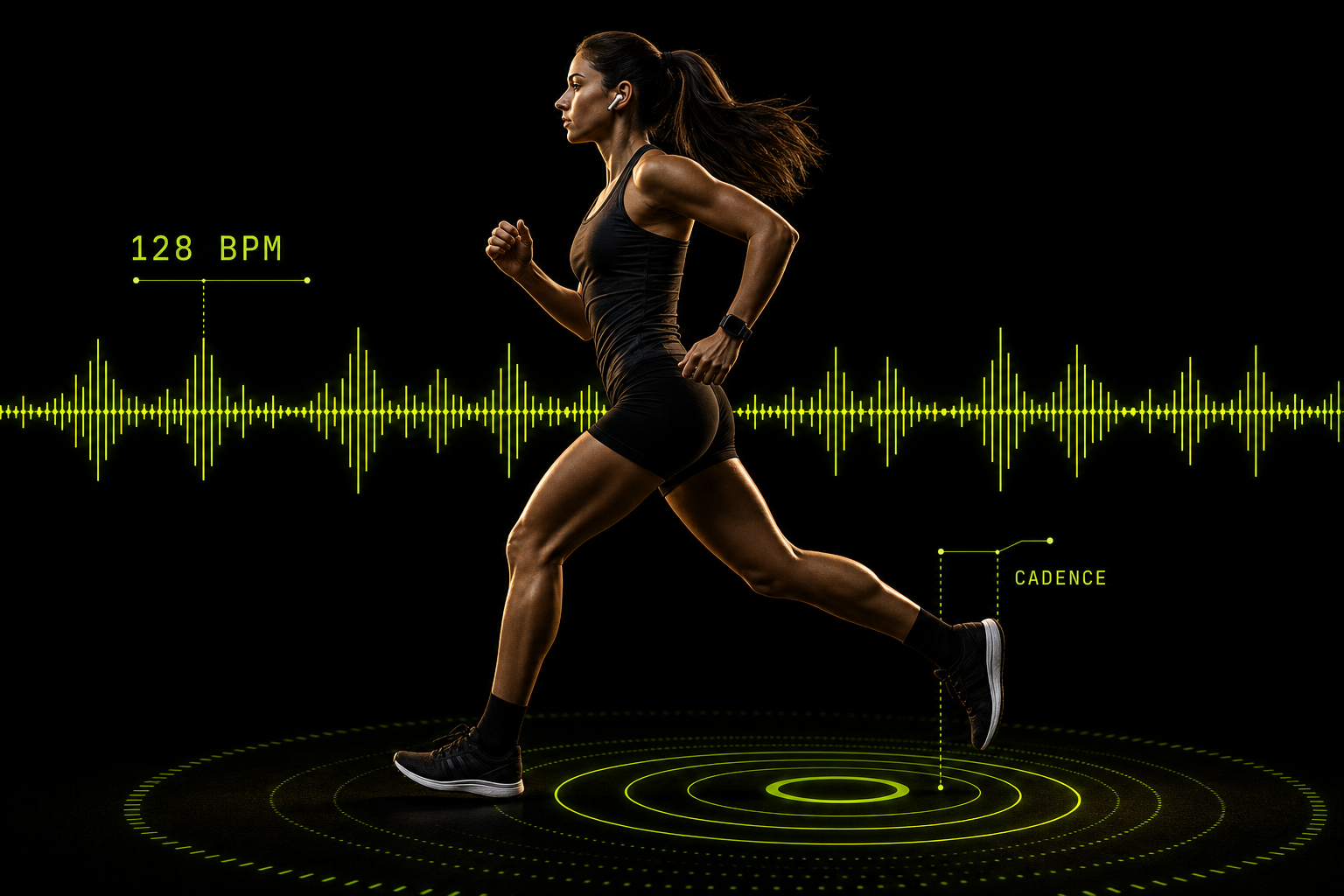
Adaptive running music relies on biosignals your watch already tracks: step cadence and heart rate. Cadence-synchronous systems match the music’s beat to your stride rate so each footfall lands near a beat. Heart-rate-synchronous systems instead adjust tempo and intensity based on your heart rate zone, shifting the sound as your effort climbs or eases.
Both approaches count as “biosignal synchronous” music, meaning the soundtrack responds to your body’s live data rather than playing a fixed, pre-mixed sequence. A randomized trial published on PubMed found that cadence-synchronous music improved running performance, while heart-rate-synchronous music reduced perceived effort for some female runners, showing the two modes serve different purposes depending on the runner and the goal.
The effect depends on how the tempo shifts:
- Cadence-synchronous mode nudges your stride rate toward a target, without you consciously pacing.
- Heart-rate-synchronous mode eases subjective strain by softening or intensifying the track as your heart rate moves.
- Small, gradual tempo changes work better than abrupt jumps, which your stride can perceive and resist.
The research signal: cadence and heart-rate synchronized music can improve performance or lower perceived effort depending on which signal drives the adaptation and who is running.
Hardware and app checklist for phone-free wearable playback
Before you leave your phone at home, confirm three things work together: your watch, your headphones, and your app.
- Watch: check for onboard music storage for offline downloads, native streaming over cellular or Wi-Fi, or support for third-party adaptive apps like ours.
- Headphones: they need to pair directly to the watch over Bluetooth, not just to your phone, and must appear on the watch’s supported device list. Apple Support confirms that downloaded music plays on Apple Watch without the iPhone present, and workout autoplay can be configured so tracks start automatically.
- App: it needs watch-native playback or offline capability, and it should accept cadence or heart-rate input to adapt in real time, which is the core function behind how adaptive auto-DJ technology responds to wearable heart-rate data.
- Settings: confirm battery level, available storage, and workout autoplay before heading out the door.
Pair headphones, enable watch playback, and start your first phone-free run
Getting phone-free music working reliably takes five steps, and skipping any one of them is usually why a run starts silent.
- Prepare your headphones. Clear any old pairings on the headphones themselves and put them into pairing mode.
- Pair directly in the watch’s Bluetooth settings. Most watches cap the number of connected devices, so remove a stale pairing if the list is full before adding new headphones.
- Install your adaptive-music app on the watch and download a starter playlist or BPM program for offline use, or confirm cellular or Wi-Fi streaming is active if you are not downloading content. Spotify’s own watch guidance notes that direct watch streaming requires a Premium subscription and headphones paired to the watch, not the phone.
- Configure workout autoplay or set the app to launch manually, and verify the audio output is routed to the watch, not a phantom phone connection.
- Run a pre-run checklist: battery charge on both watch and headphones, downloaded tracks present, volume set, cadence or heart-rate sensor reading correctly, and basic safety checks like route visibility.
Pro Tip: Do a five-minute test walk around the block before committing to a long run. It catches pairing or playback issues while you’re still close to home.
Following this sequence once sets the pattern for every future run, since the pairing and download settings typically persist until you change headphones or reinstall the app.
Practical BPM guidance and when to use cadence vs. heart-rate sync
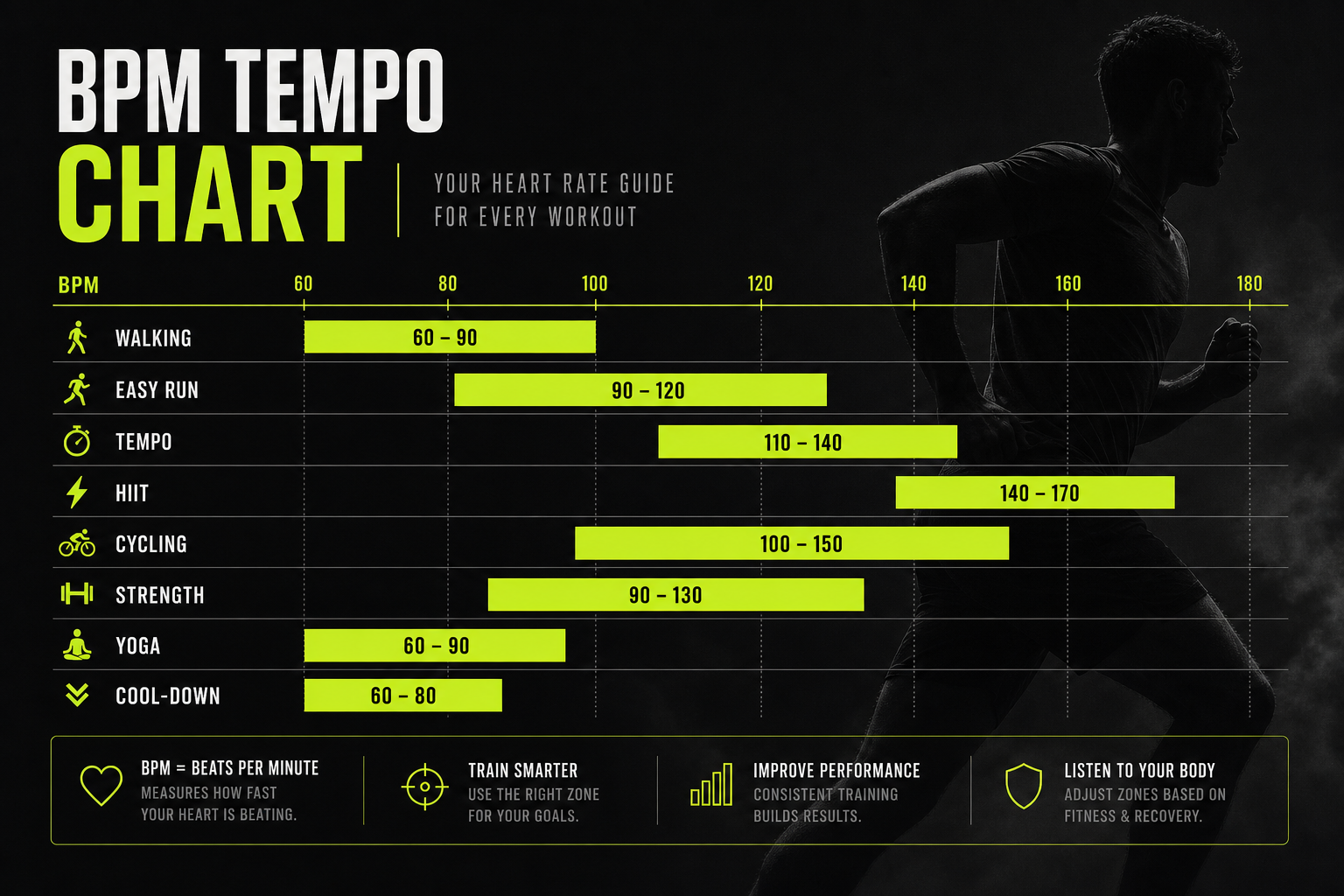
Research and practical guidance point to specific tempo ranges depending on the type of effort. Our BPM guidance for pace-matched running generally places steady efforts around 110 to 140 BPM, with higher-intensity work sitting closer to 130 to 140 BPM. A PLOS One study on auditory-motor synchronization found that tempo-matched music with a clear, consistent beat improved performance and perceived exertion, and the researchers recommended songs at 130 or more BPM for high-intensity work.
Tempo shifts work best kept small. Research on spontaneous cadence entrainment found that tempo changes up to about 3% produced natural cadence adjustments without runners consciously noticing, while bigger jumps crossed a perceptual threshold and lost their effect.
- Use cadence-synchronous mode for pace-stability sessions or cadence drills where you want a consistent stride rate.
- Use heart-rate-synchronous mode on long runs or fatigue-heavy sessions, where easing perceived effort matters more than locking stride.
- Our tempo run BPM guidance suggests syncing music to your threshold pace for structured interval work.
| Run type | Sync mode | BPM focus |
|---|---|---|
| Steady/easy run | Cadence-synchronous | 110 to 140 BPM |
| Tempo/interval | Cadence-synchronous | 130 to 140 BPM |
| Long/fatigue run | Heart-rate-synchronous | Adapts to zone |
Quick fixes for pairing, downloads, buffering, and battery issues
Most phone-free failures trace back to a handful of fixable causes.
- No sound at all: forget the headphone pairing on the watch, restart both devices, and re-pair from the watch’s Bluetooth menu.
- Download failed: confirm free storage space, then re-download over Wi-Fi rather than cellular.
- Choppy or stalled playback: switch from streaming to downloaded tracks, since cellular and Wi-Fi reliability varies by route.
- Draining battery mid-run: lower screen timeout, disable sensors you’re not using, like always-on GPS precision, and carry a small power pack on long efforts.
Pro Tip: Download content the night before a key run over Wi-Fi, so you’re not relying on cellular signal along your route the next morning.
Why phone-free adaptive music changes how you train

Running with adaptive music synced to your watch removes a layer of friction that static playlists never solved: the need to skip, search, or carry a phone just to keep the soundtrack matched to effort. Cadence-synchronous tracks have helped maintain pace during steady efforts without watching a pace alert, and heart-rate-synchronous tracks have made long runs feel less like a grind near the final miles.
The gap between knowing the research and using it well comes down to testing your setup before it matters. Try a short, low-stakes run with downloaded content before a race or a key workout, not during one. That single habit prevents most of the pairing and battery surprises that otherwise show up at the worst time.
— Jordan Mills
Repbeats: wearable adaptive music that runs phone-free
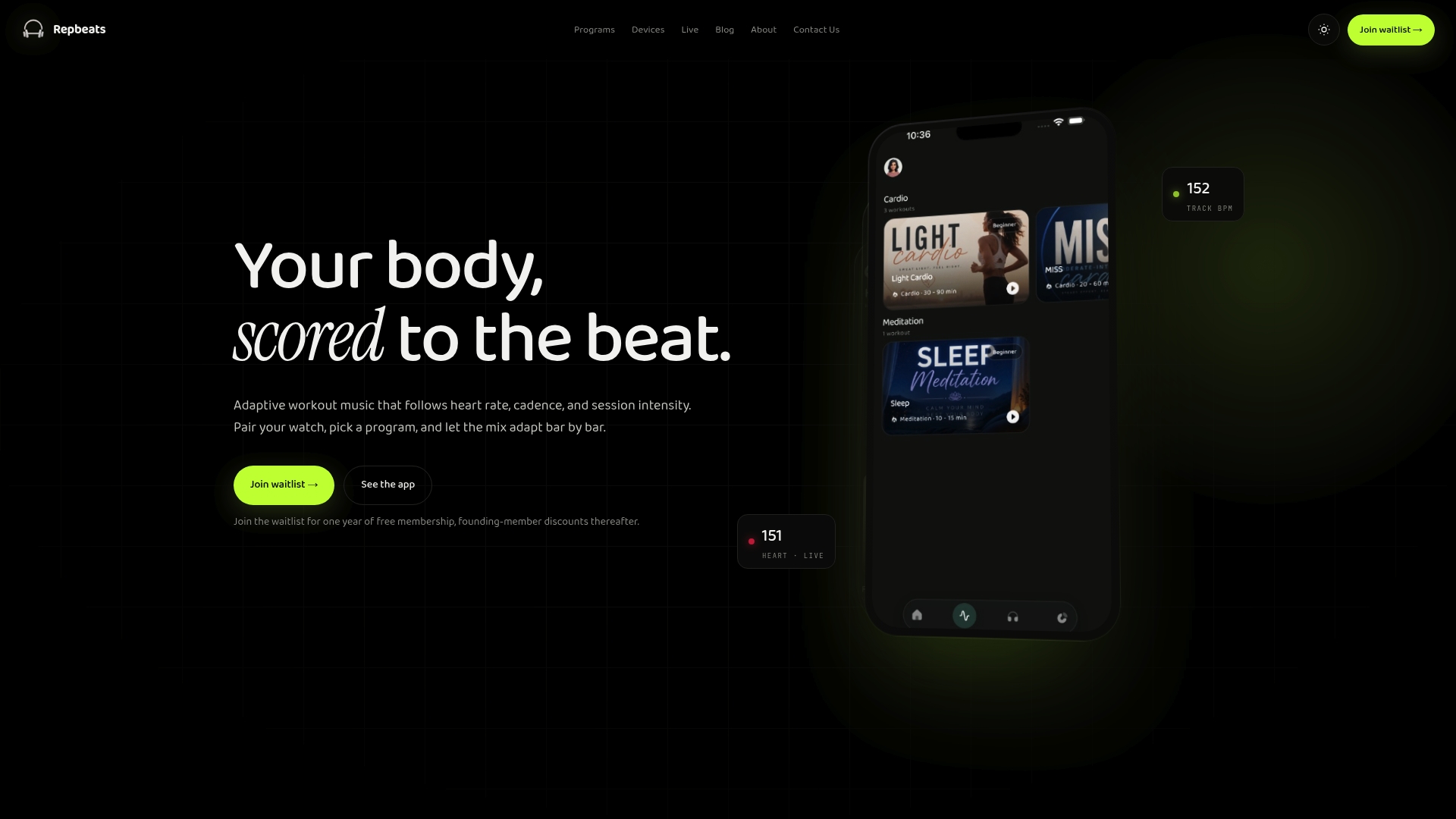
We built the app around the exact setup this article describes: music that matches your heart rate, cadence, and session intensity through live data from wearables, with auto-DJ technology updating BPM bar by bar so the track never feels locked to a fixed playlist.
To get started, we recommend:
- Install the Repbeats app and connect it to your watch.
- Download a starter BPM program before your next run.
- Pair your Bluetooth headphones directly to your watch, not your phone.
- Run a short test session to confirm playback and sensor tracking work together.
Our about page covers the full feature set and current trial details if you want to see how the setup fits your training before your next long run.
FAQ
Can I run with music and no phone at all?
Yes, as long as your watch supports offline downloads or direct streaming and your Bluetooth headphones pair straight to the watch rather than your phone. Confirm both before leaving your phone behind.
Does adaptive music actually improve running performance?
A randomized trial on cadence and heart-rate synchronized music found that cadence-synchronous music improved performance while heart-rate-synchronous music reduced perceived effort for some runners. Results vary by sync mode and by runner, so the right mode depends on your session goal.
What BPM should I use for running?
Steady efforts generally work well around 110 to 140 BPM, with higher-intensity sessions closer to 130 or more BPM, based on practical pace-matched guidance and PLOS One’s findings on high-intensity tempo. The app adjusts within these ranges automatically as your effort shifts.
How do I fix headphones that won’t connect to my watch?
Forget the existing pairing on the watch, restart both devices, and re-pair from the watch’s Bluetooth settings menu. If the device list is full, remove an older pairing first since most watches cap how many Bluetooth devices they manage at once, per Spotify’s watch support guidance.
Do I need a subscription to stream music directly to my watch?
Platform requirements vary. Spotify’s own documentation notes that direct watch streaming requires a Premium subscription, while Apple’s offline download feature lets you play downloaded tracks without any active connection.
Sources
- On performance and perceived effort in trail runners using sensor control to generate biosynchronous music - PubMed
- The power of auditory-motor synchronization in sports: enhancing running performance by coupling cadence with the right beats - PLOS One
- Add music to Apple Watch - Apple Support
- Spotify on Apple Watch - Spotify
Research and platform documentation used in this article
These are the studies and platform support pages referenced above for runners who want to dig deeper into the evidence and setup details behind phone-free adaptive music.