Pre-Race Anxiety Music: What to Play and When to Press Play
Jordan MillsOctober 31, 2026 · 14 min read

Pre-Race Anxiety Music: What to Play and When to Press Play
The best music for pre-race anxiety is calm, steady and familiar: slow tracks with simple rhythms, played in the hours and minutes before the start, chosen by you rather than copied from someone else’s list. Music is a useful tool for nerves, not a cure, and the research is honest about that. This guide covers what to play, when to play it, how to build the playlist and what to do when the headphones don’t help.
TL;DR
- Choose slow, simple, familiar music for the morning of the race. Tempos near your resting heart rate are a sensible target, and louder, faster tracks belong later in the warm-up.
- Pick your own songs. Research on pre-task music recommends athlete-chosen tracks over generic playlists.
- Use music as one tool. Studies are mixed, so pair it with paced breathing, a mantra and logistics you sorted the day before.
- Check your event’s headphone rules. Personal music is often not allowed during competition, so the playlist may need to finish before you cross the start line.
- Build the playlist as a ramp: calm first, meaningful last.
Table of Contents
- Why music can settle pre-race nerves (and where the evidence is thin)
- What to listen to: slow tempos, simple rhythms
- When to press play
- Build a pre-race playlist that is yours
- Can you wear headphones during the race?
- Our perspective: calm music is a heart rate problem
- Try a heart-rate-guided warm-up with Repbeats
- When music does not calm you down
- A sample race-morning routine
- FAQ
- Sources
Why music can settle pre-race nerves (and where the evidence is thin)
Nerves at the start line are normal, and they are not a sign you are underprepared. What matters is what you do with the arousal. Sport psychology texts describe music as a way to steer how athletes read feelings of excitement, pressure or anxiety before competition toward a more positive interpretation. A broader review of the field adds that music can regulate arousal in both directions: softer selections help you psych down, while loud, upbeat music helps you psych up.
The evidence is not airtight, though. A 2023 review of pre-task music concluded that it may help athletes manage competition-related anxiety and benefit performance, although results are inconsistent. One study of relaxing music for anxiety control found that silence or other types of music produced similar reductions in anxiety intensity. And a large meta-analysis concluded that the effects of music in exercise and sport depend on a wide range of musical, personal and situational variables.
In plain terms: music works for many runners, but it works best when it is personal. The same meta-analysis found that listening before physical activity can enhance enjoyment and physiological efficiency across a range of activities. That is a good reason to try it, and a good reason to test it in training instead of trusting a generic list on race morning.
One more point from the research: pre-task music is not only about calming down. A 2023 study found that both fast (140 bpm) and slow (110 bpm) music raised arousal and positive mood compared with no music when played before a task. So the goal is not always “as calm as possible.” The goal is the right level of activation for your event and your temperament.
What to listen to: slow tempos, simple rhythms
If your problem is a racing heart and a churning stomach, aim for music that nudges you down. Guidance from sport psychology suggests soft, slow music with simple rhythms, such as classical pieces, ballads or folk songs. The same source gives examples with their tempos: Canon in D at 72 bpm, Nine Million Bicycles at 82 bpm and Empire at 80 bpm.
A second line of advice is to match the tempo to your body. Relaxing music, often with a tempo close to an athlete’s resting heart rate, can help lower anxiety and support sleep the night before competition. The same course lists ambient or electronic music by Brian Eno or Air, chilled hip-hop by Lupe Fiasco, jazz by Miles Davis and classical music by Vaughan Williams as options.
There is also an argument that calm does not have to mean sleepy. A 2023 piece in Swimming World argued that mellow songs rated about 6 or 7 out of 10 for intensity may be better than high-intensity tracks at lowering stress and cortisol before a race. For longer events, the author suggests calmer music may help an athlete hold a level heart rate and avoid going out too fast. That is written about swimming, but any marathon or half marathon runner who has sprinted the first mile on adrenaline will recognize the problem.
A quick reference by situation
| Situation | What to aim for | Example direction |
|---|---|---|
| Night before, trouble winding down | Very slow, instrumental, near resting heart rate | Ambient, slow classical, soft jazz |
| Race morning, jittery in the kitchen or hotel | Slow to moderate, familiar, little lyrical demand | Ballads, mellow acoustic, 70 to 85 bpm tracks |
| Travel to the start | Steady and neutral, nothing that spikes you | Your usual easy-run playlist |
| Final minutes before the start (where permitted) | Meaningful, motivating, with lyrics that fit a mantra | A song you associate with your best training days |
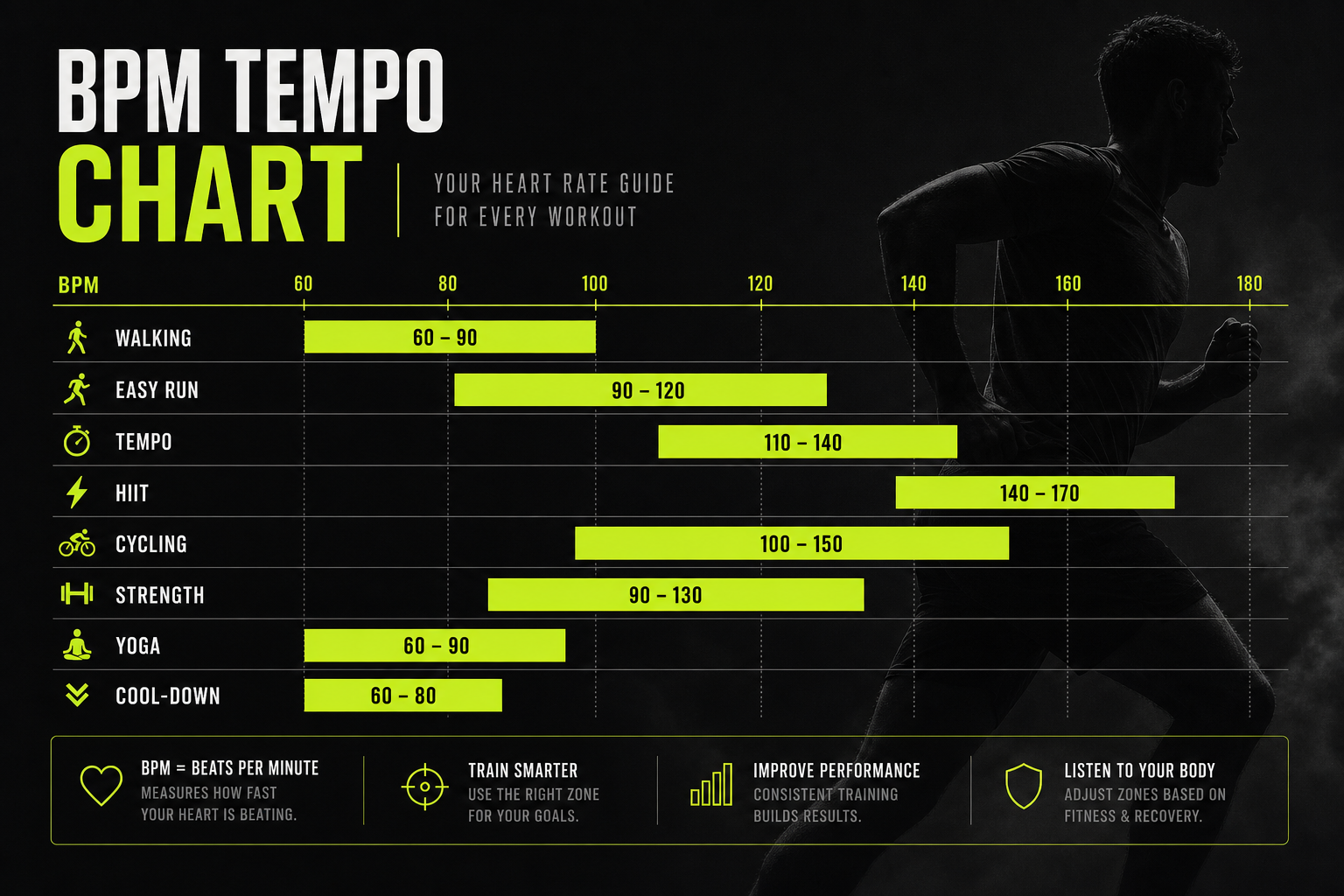
The tempos are a starting point. If a 120 bpm song makes you feel calm because you have heard it on a hundred easy runs, it beats a 70 bpm piece you find boring. For more on how tempo relates to effort, our guide to tempo matching music explains how to think about beats per minute.
When to press play
Timing matters as much as track choice. Think in three windows.

The night before. Relaxing music can be part of a bedtime routine that promotes sleep. Keep the volume low, and treat it as one part of a wind-down routine, not a sleep fix on its own.
Race morning. This is where most anxiety peaks. Use your calm playlist while you eat, dress and travel. Planning the practical side ahead of time also helps: World Athletics notes that sorting out transport and kit in advance removes some common sources of pre-competition nerves. Music works better when it is not competing with a missing bib or a parking scramble.
The last minutes. The minutes just before competition can be stressful, and music can help athletes stay focused. This is also when motivational lyrics can prompt a personal mantra. Lyrics matter less during hard training, but they can be useful in these final minutes.
There is no research-backed magic duration. A practical approach is to listen for as long as you would naturally spend settling, often 20 to 40 minutes, and to rehearse that routine on a few long runs so it feels automatic.
Build a pre-race playlist that is yours
Researchers consistently warn against one-size-fits-all lists. The 2023 pre-task music review recommends that athletes select their preferred music with a guiding rationale to account for individual variability, and that coaches let athletes choose instead of imposing standard selections. Another overview suggests assembling a wide selection of tracks with a strong rhythm, positive lyrics and a style suited to your taste and cultural upbringing.
Here is a process that follows that advice.
- Collect 25 to 30 candidates. Include songs you already associate with calm, with good training days and with finishing strong.
- Rate each track. Researchers studying runners suggest the Brunel Music Rating Inventory-2 (BMRI-2) as a way to identify potentially motivating tracks for anyone using music to regulate emotion. You do not need the formal questionnaire. Ask the same kinds of questions: does the rhythm suit the moment, does the song carry good associations, would it feel right at the start line?
- Sort into three zones. Calm (the night before and morning), neutral (travel), and lift (the final minutes).
- Order it as a ramp. Playlists should build toward the mindset you want, and the most inspirational or meaningful track belongs at the end.
- Test it on a long run or a dress rehearsal. Play the calm section before an actual long run and note your heart rate and mood. Cut anything that irritates you.
Be aware of personal associations. Music can affect emotion through lyrics or personal extramusical associations as well as through rhythm, so a song tied to a bad breakup or a failed race may undo the effect no matter how gentle the tempo.
Can you wear headphones during the race?
Often you cannot. Personal in-task music is frequently not permitted in competition, for example in track and field. Road races differ by organizer, and some allow one earbud or none. Read your event’s athlete guide, not a forum thread, and confirm the rule before race week.
If headphones are banned, the pre-race routine is where music does its work. Finish the playlist before you check your bag or step into the corral. If you can run with music, keep the volume low enough to hear volunteers, traffic and other runners.
For racing and training with music in general, our notes on 5K race music cover the tempo-matching question once the gun goes off.
Our perspective: calm music is a heart rate problem
At Repbeats we build adaptive music that follows live data from wearables such as Apple Watch and Fitbit, adjusting tempo to heart rate, cadence and session intensity. That work has shaped how we think about pre-race music.
Most advice treats the pre-race playlist as a static list. But nerves are not static. Your heart rate on the drive to the start is different from your heart rate in the corral, and a track that calms you at minute five may be wrong at minute thirty. The useful question is not “which song is calming,” it is “what is my body doing right now, and what does it need next?”

That is why we think of the pre-race window as a ramp, not a mood. Start with tempos close to resting heart rate, watch your wrist, and move upward only as your heart rate settles and you are ready to lift. If you are using a wearable already, the data is there to guide you. If you are not, a simple version works: check your pulse once, choose slow music, check again after ten minutes.
We also believe in choice. Research on pre-task music favors athlete-selected music, and we agree. Software can match tempo, but only you know which songs mean something. Use technology for the tempo and your own taste for the soul. Our piece on why wearable data drives adaptive music explains the approach in more depth.
— Jordan Mills
Try a heart-rate-guided warm-up with Repbeats
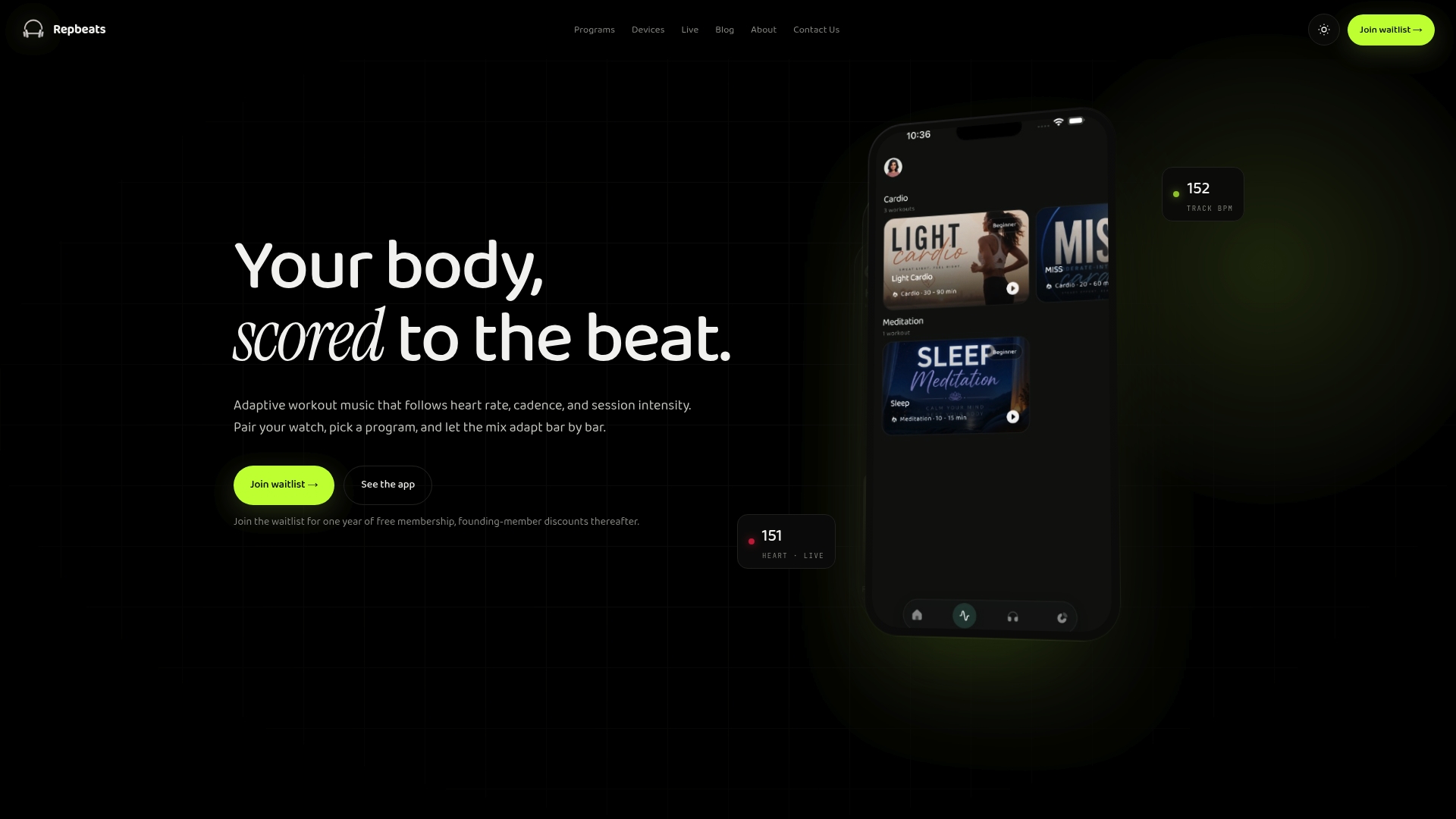
If you want the tempo to follow your body instead of guessing, the Repbeats app pairs with wearables like Apple Watch and Fitbit and updates the music’s beats per minute every bar. It covers cardio programs and meditation programs, so you can use it for the calm-down before an event as well as the shakeout run after. The app has a free trial, and the waitlist launch includes a free year.
Want to see how it works first? Our guide to AI workout music that syncs to heart rate walks through the idea, and you can start at repbeats.com.
For the calm end of the spectrum, our guide to cooldown meditation music covers slower ranges that also work for night-before wind-downs.
When music does not calm you down
Some runners put on a perfect playlist and still feel their stomach flip. That is normal, and the research supports a backup plan.
Breathe on purpose. Runner’s World reports that simple breathing techniques can regulate heart rate and settle the nervous system before a race. The American College of Sports Medicine describes mindful paced breathing, such as a four-second inhale and a six-second exhale, as a way to balance the nervous system and manage stress. Try five minutes in the car or the corral.
Use a mantra. The same Runner’s World piece suggests repeating a confidence-building phrase, remembering why you love running, reframing discomfort, and relaxing your face while keeping your eyes forward. Short and specific beats long and clever. “Smooth and steady” is enough.
Name it as excitement. Studies cited by one coaching site found that people who labeled a stressful feeling as excitement felt more excited and performed better than those who tried to calm down, though the evidence for races specifically is indirect. It is worth a try, not a promise.
Validate first, then fix. The American College of Sports Medicine suggests that normalizing the struggle and validating feelings before trying to fix anxiety often reduces the pressure athletes feel. Telling yourself “of course I’m nervous, this matters to me” is a legitimate first step.
Ground yourself with the 3-3-3 rule. This is a simple grounding exercise: name three things you can see, listen for three sounds, then move three parts of your body, which pulls attention away from racing thoughts and into the present. It was not designed for runners, but it fits neatly into a minute in the corral, and it costs nothing.
If anxiety before races is severe, keeps you from starting or spills into everyday life, talk to a licensed therapist or a sport psychologist. Persistent anxiety is a health matter, and a coach or playlist is not a replacement for professional care.
A sample race-morning routine
Here is how the pieces fit together for a runner with a morning start. Adjust the times to your event.
- Night before: Lay out kit, bib and food. Play slow instrumental music at low volume while you wind down.
- Wake-up to breakfast: Calm playlist, tempos near resting heart rate. No news, no social media.
- Travel: Neutral, familiar music. Arrive early enough that parking and bag check are not a source of panic.
- Thirty minutes out: Five minutes of paced breathing, then one round of 3-3-3.
- Warm-up: Move to moderate tempos. This is the point to start lifting energy.
- Corral: Your one meaningful song, plus your mantra. Take headphones off if the rules require it.
If you train with a tempo-driven playlist, such as for treadmill work, the treadmill running music guide shows how a steady tempo can become a cue for your pace and calm.
FAQ
What songs should I listen to before a race?
Choose songs you already know and like, and match them to the moment. For the morning, slow tracks around 70 to 85 bpm with simple rhythms, such as Canon in D or soft ballads, are a good starting point. For the last minutes, pick one meaningful, motivating song that helps you say your mantra.
What is the music that calms anxiety?
Slow, soft music with simple rhythms and little lyrical demand, often with a tempo close to your resting heart rate. Classical, ambient and mellow jazz are common choices. Studies are mixed, and silence sometimes works just as well, so test your picks in training.
What is the 3-3-3 anxiety rule?
It is a grounding technique. You name three things you can see, identify three sounds you hear, and move three parts of your body. It shifts attention from worry to your surroundings, and you can do it in a minute at the start area.
How do I calm pre-race anxiety?
Combine tools instead of relying on one. Prepare logistics the day before, play calm music in the morning, practice paced breathing, and use a short mantra. Treat the nerves as normal, and see a professional if they are intense or constant.
Can I listen to music during the race?
It depends on the event. Many competitions restrict personal music, so read the athlete guide before race week. If headphones are banned, finish your playlist during the warm-up and rely on your mantra and breathing once you start.
Sources
- 23.5: How to Apply Music in Sport
- Music in Sport and Exercise: An Update on Research and Application
- The effects of pre-task music on exercise performance
- The effects of relaxing music for anxiety control on competitive anxiety
- Effects of Music in Exercise and Sport: A Meta-Analytic Review
- Put Some Music on: The Effects of pre-Task Music Tempo
- Music for competition, My Athletics
- The Argument for Calmer Music in Pre-Race Rituals, Swimming World
- Five tips to help you deal with pre-competition nerves, World Athletics
- Effects of music interventions on emotional states and running performance
- Prerace Jitters: How to Turn Nerves Into Race-Day Confidence, Runner’s World
- Multidisciplinary Care for Elite Athlete Performance, ACSM
- Mental Health and Heart Rate Variability, ACSM
- Pre-Race Nerves: How to Use Anxiety Instead of Fighting It
- Understanding the 3-3-3 Rule of Anxiety